FUNDAMENTALS OF
MANAGEMENT
Dr. Syed Amin Tabish
FRCP, FACP, FAMS, MD HA (AIIMS)
Postdoc Fellowship, Bristol University (England)
Doctorate in Educational Leadership (USA)
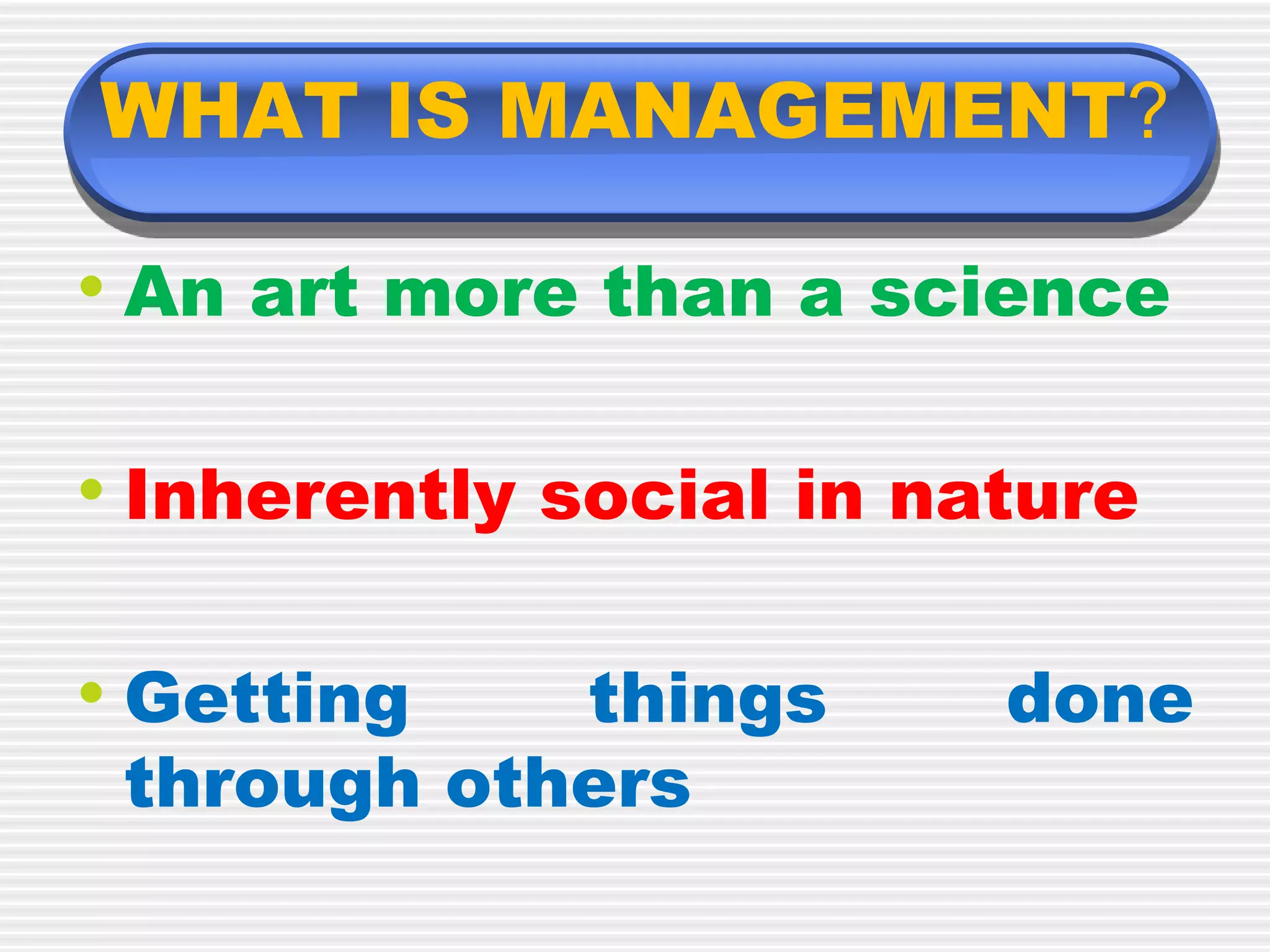
WHAT IS MANAGEMENT?
• An art more than a science
• Inherently social in nature
• Getting things done
through others
Copyright © 2005
Prentice Hall, Inc.
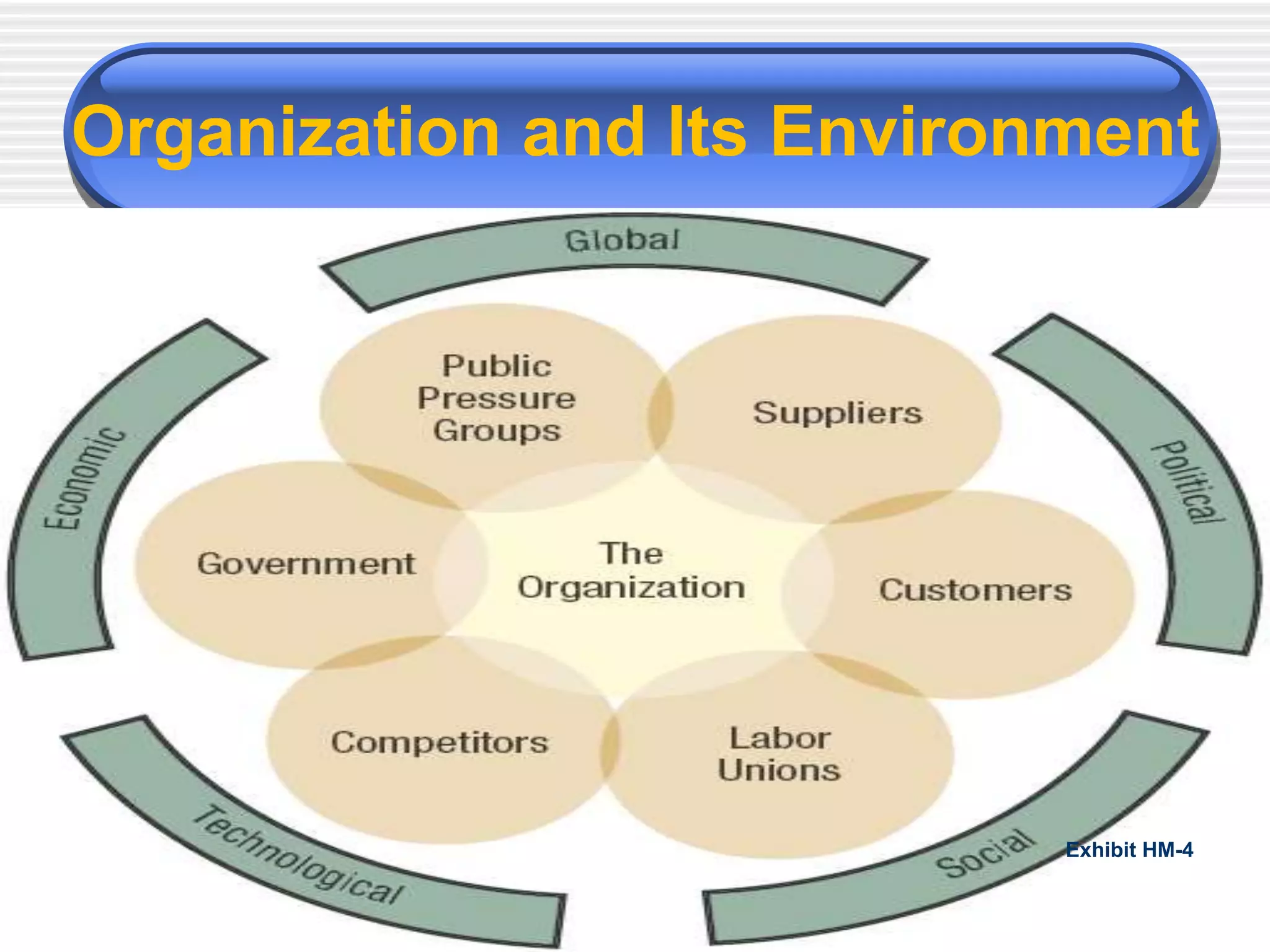
Organization and Its Environment
Exhibit HM-4
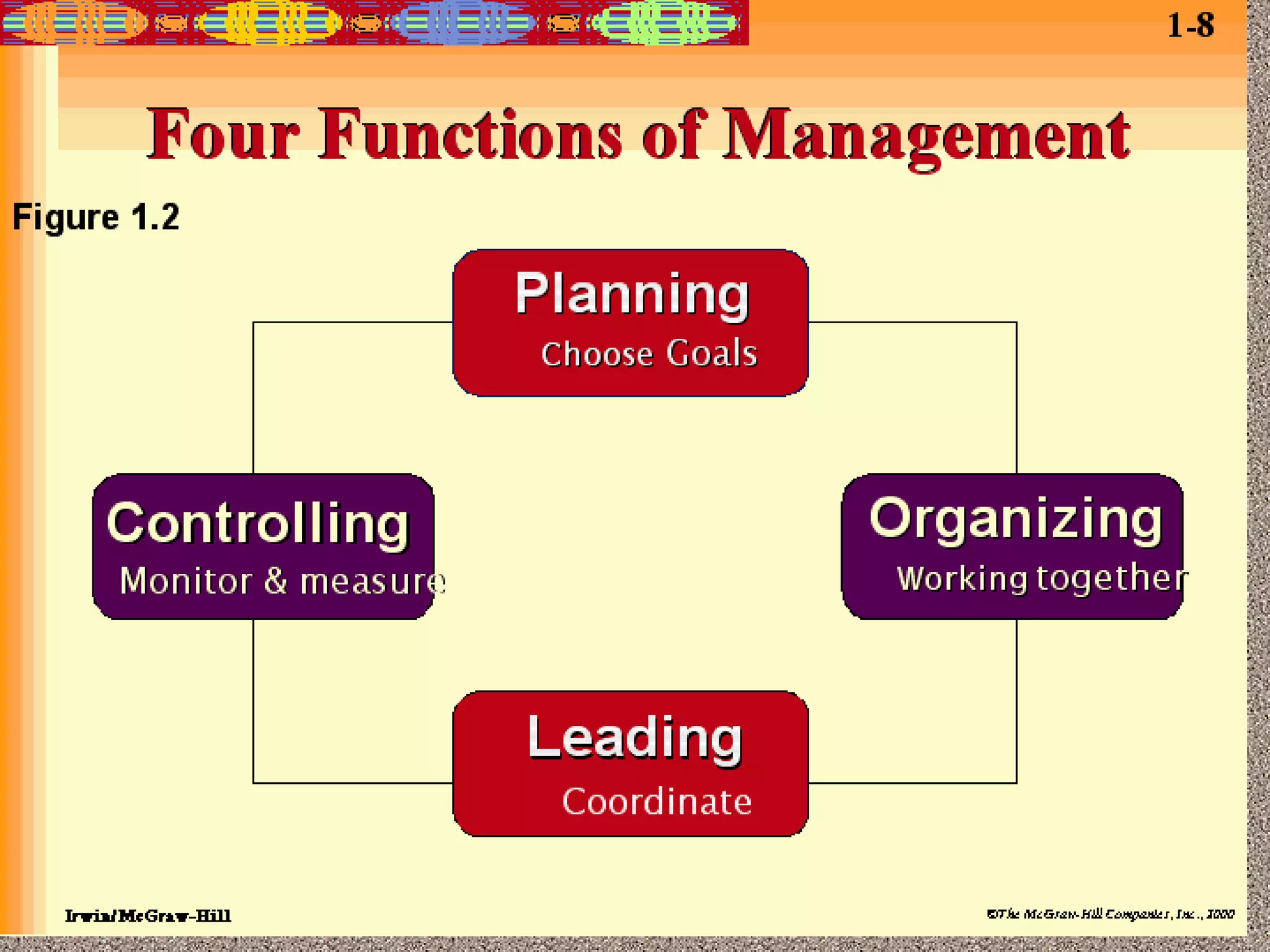
FOUR FUNCTIONS
• First stated by Henri Fayol(1841-1925)-French
CEO
• Now stated as
 1. Planning
 2. Organizing
 3. Leading
 4. Controlling
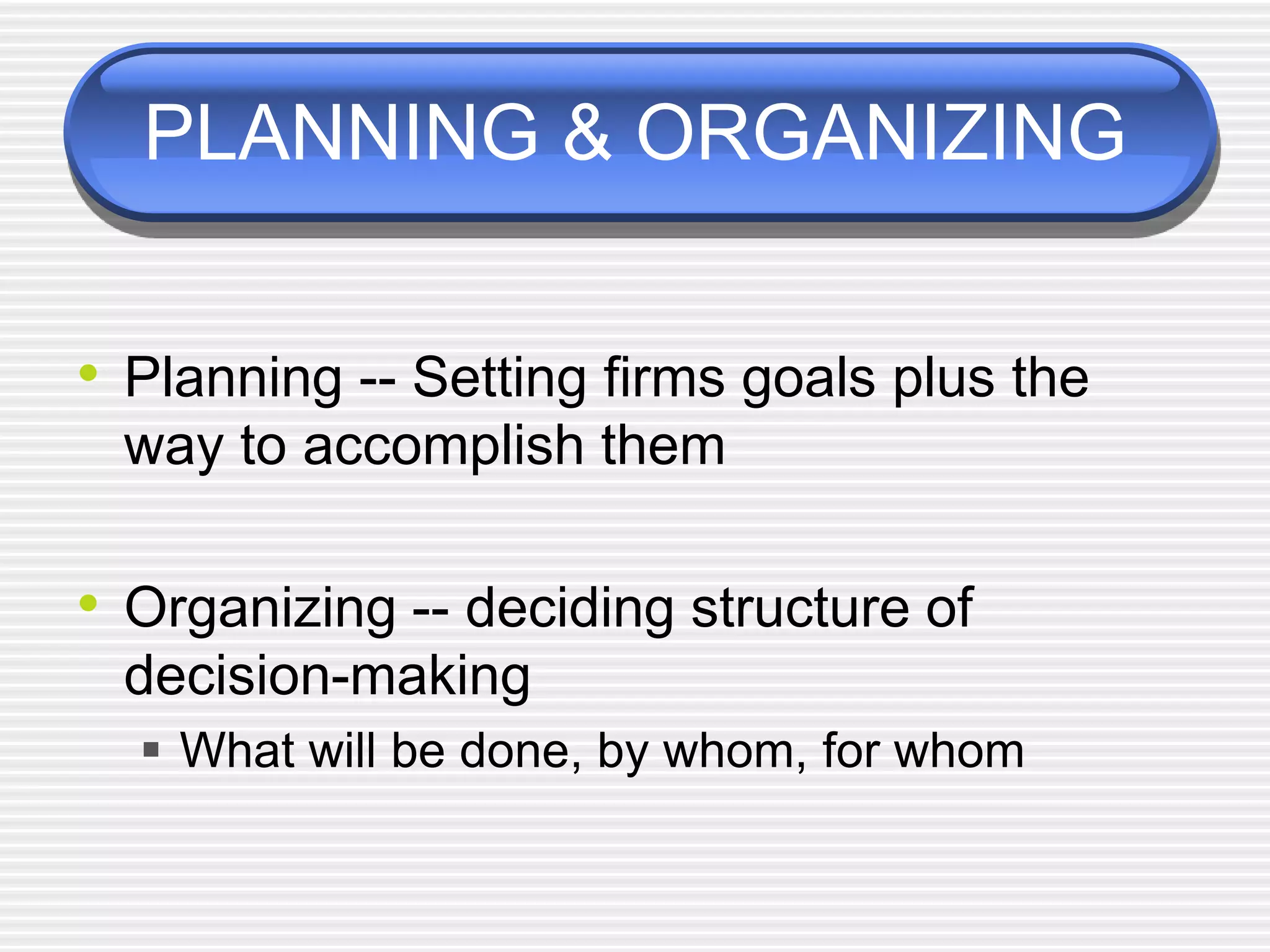
PLANNING & ORGANIZING
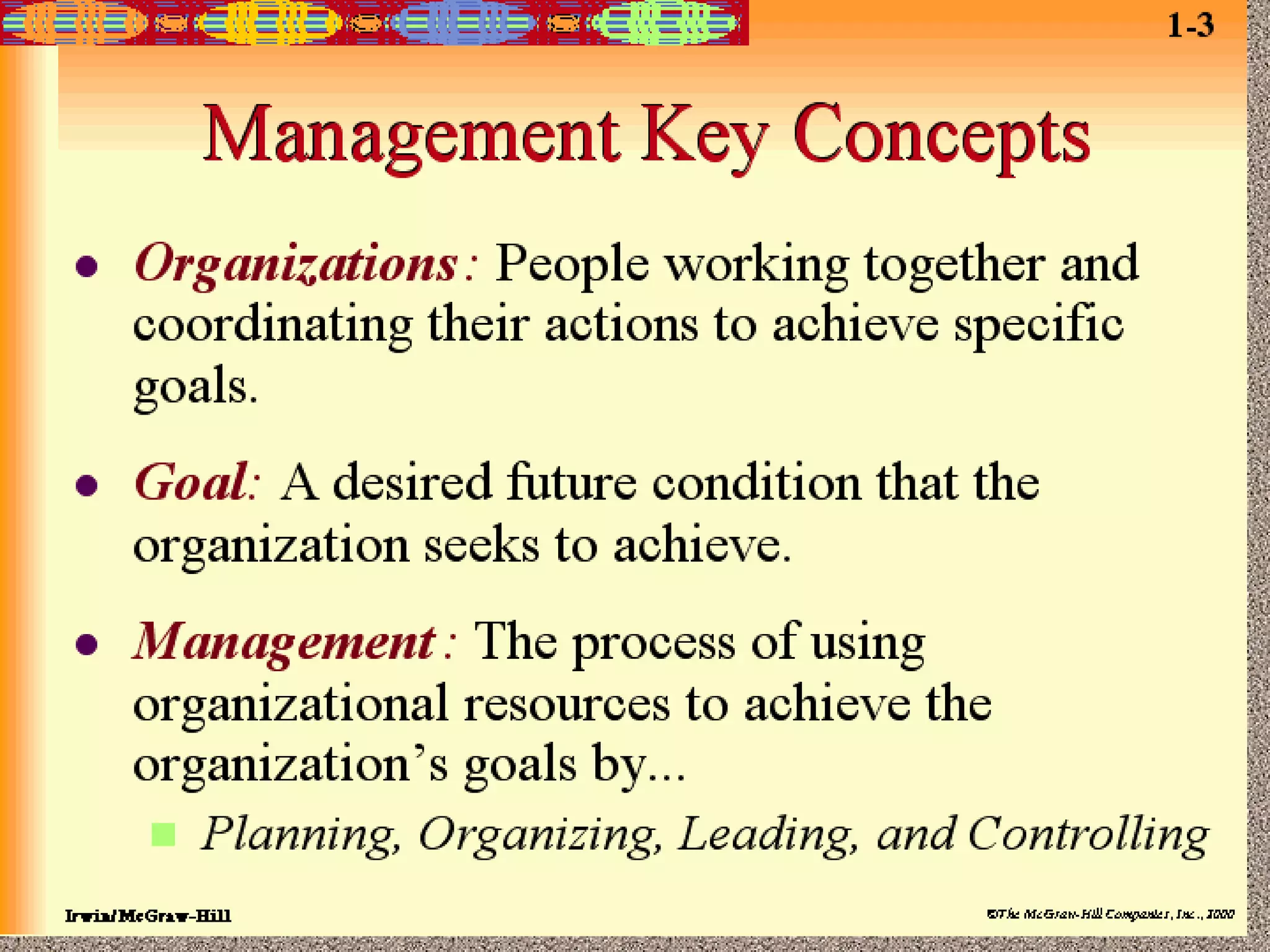
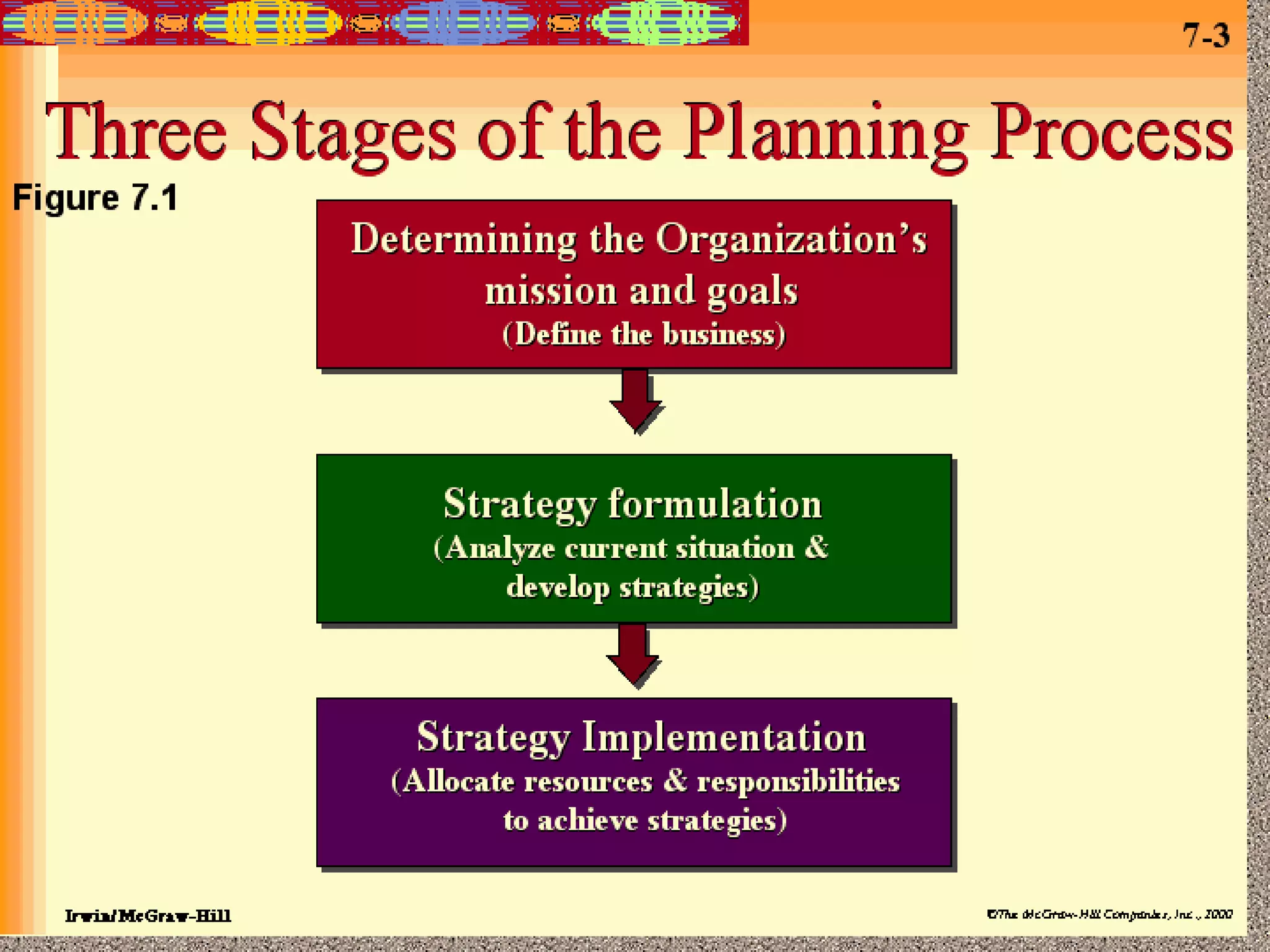
• Planning -- Setting firms goals plus the
way to accomplish them
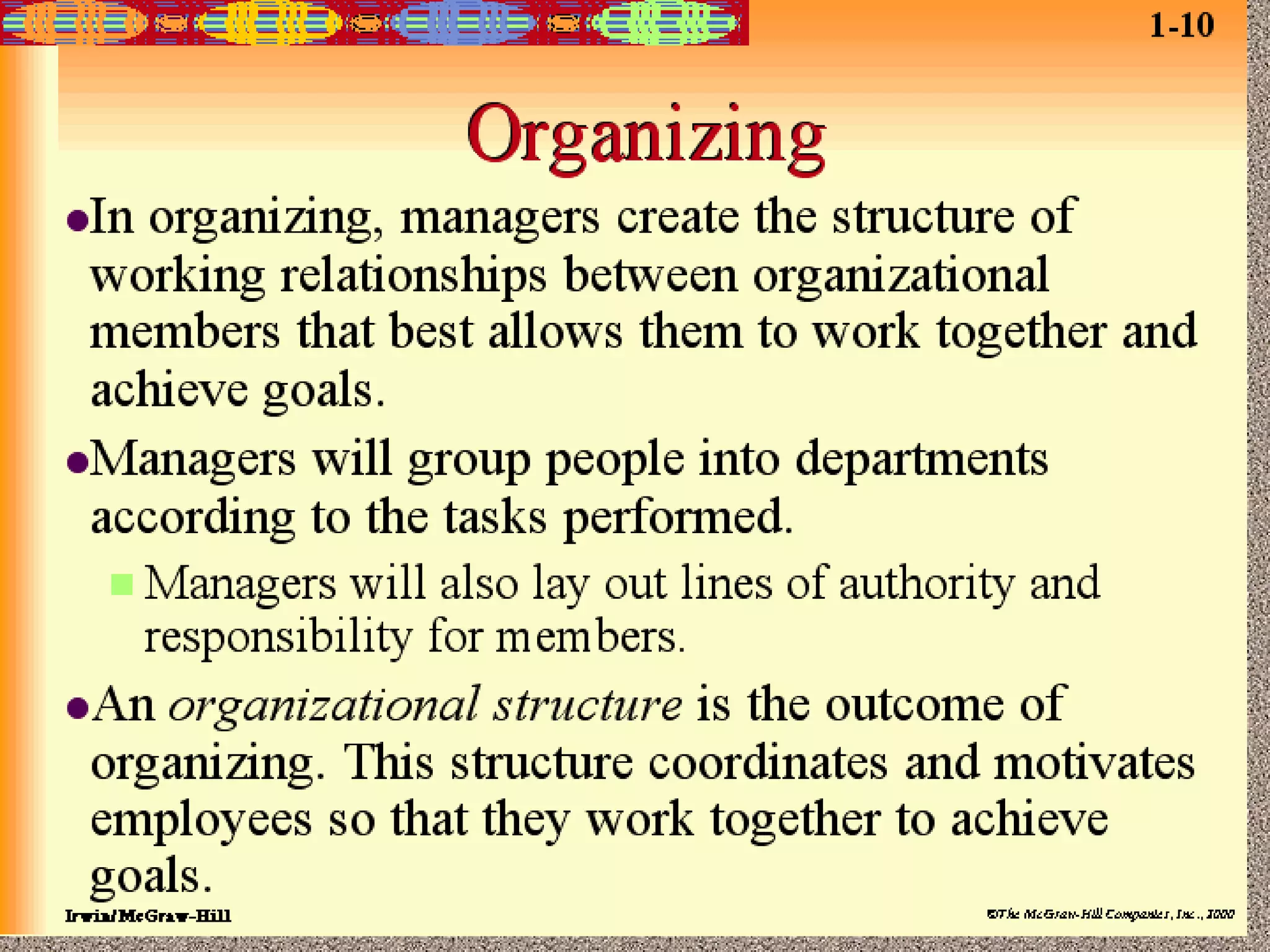
• Organizing -- deciding structure of
decision-making
 What will be done, by whom, for whom
LEADING & CONTROLLING
• Leading-- Motivating employees to achieve
firm’s objectives
• Controlling --
 Monitoring progress toward goals
 Taking corrective action
TYPES OF MANAGERS
• 1. TOP MANAGERS
• 2. MIDDLE MANAGERS
• 3. FIRST-LINE MANAGERS
• 4. TEAM LEADERS
MINTZBERG’S ROLES OF
MANAGERS
• 1. INTERPERSONAL
• 2. INFORMATIONAL
• 3. DECISIONAL
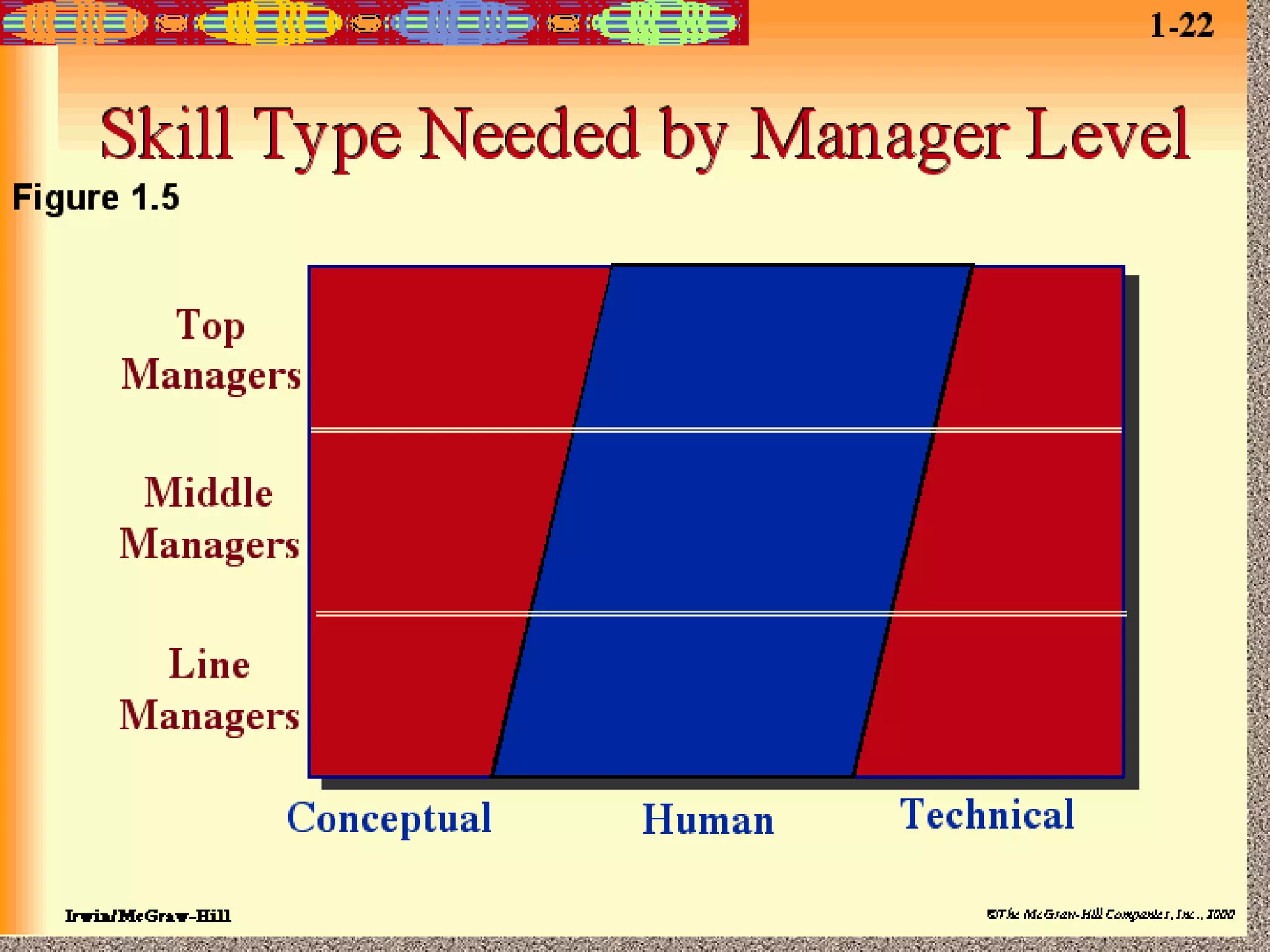
ESSENTIAL SKILLS FOR
MANAGERS
• 1. TECHNICAL SKILLS
• 2. HUMAN SKILLS
• 3. CONCEPTUAL SKILLS
ADDED ESSENTIAL
• MOTIVATION TO MANAGE
 How enthusiastic is an employee to manage
the work of others
 After all getting work done through others is
what management is all about
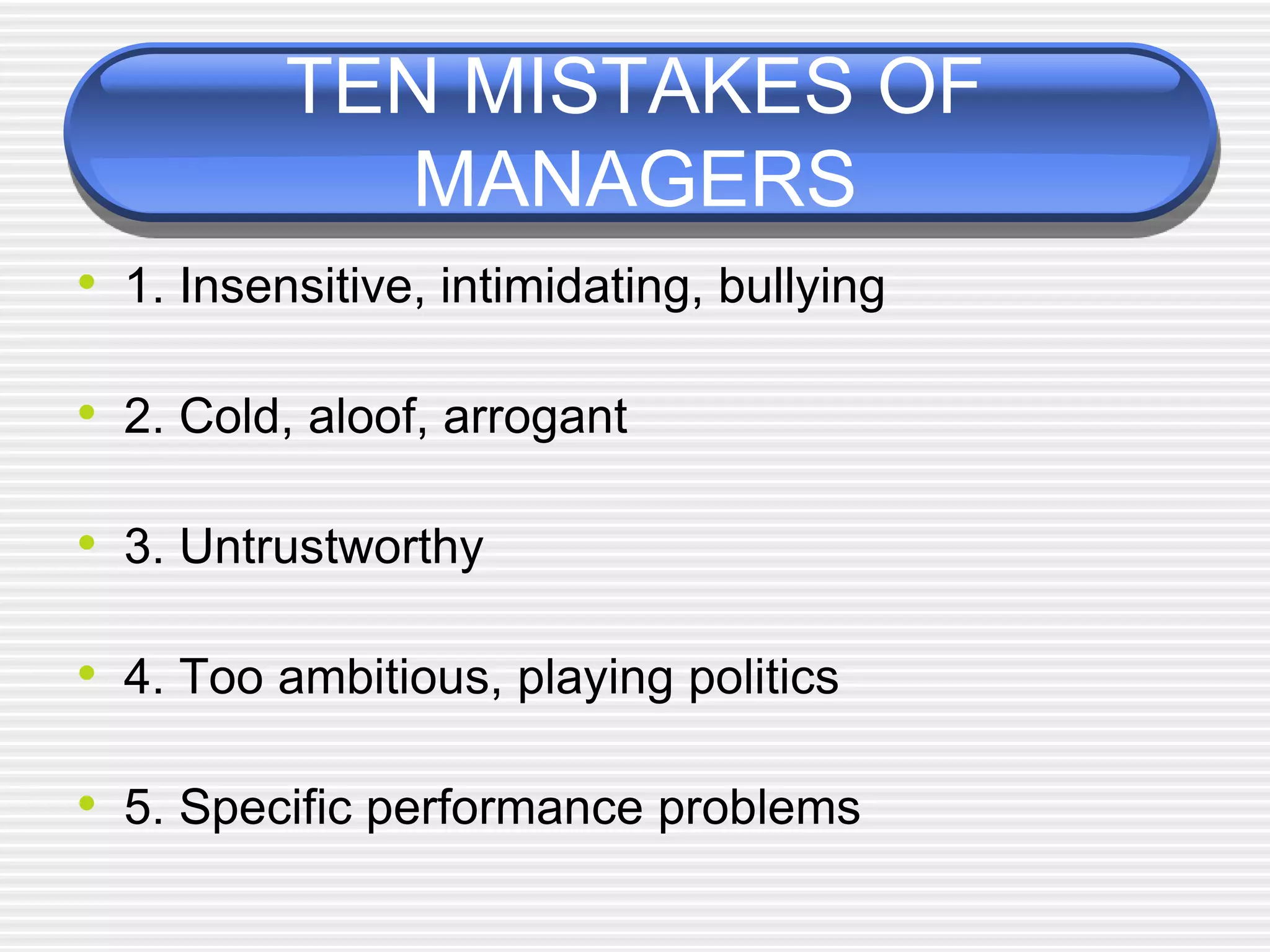
TEN MISTAKES OF
MANAGERS
• 1. Insensitive, intimidating, bullying
• 2. Cold, aloof, arrogant
• 3. Untrustworthy
• 4. Too ambitious, playing politics
• 5. Specific performance problems
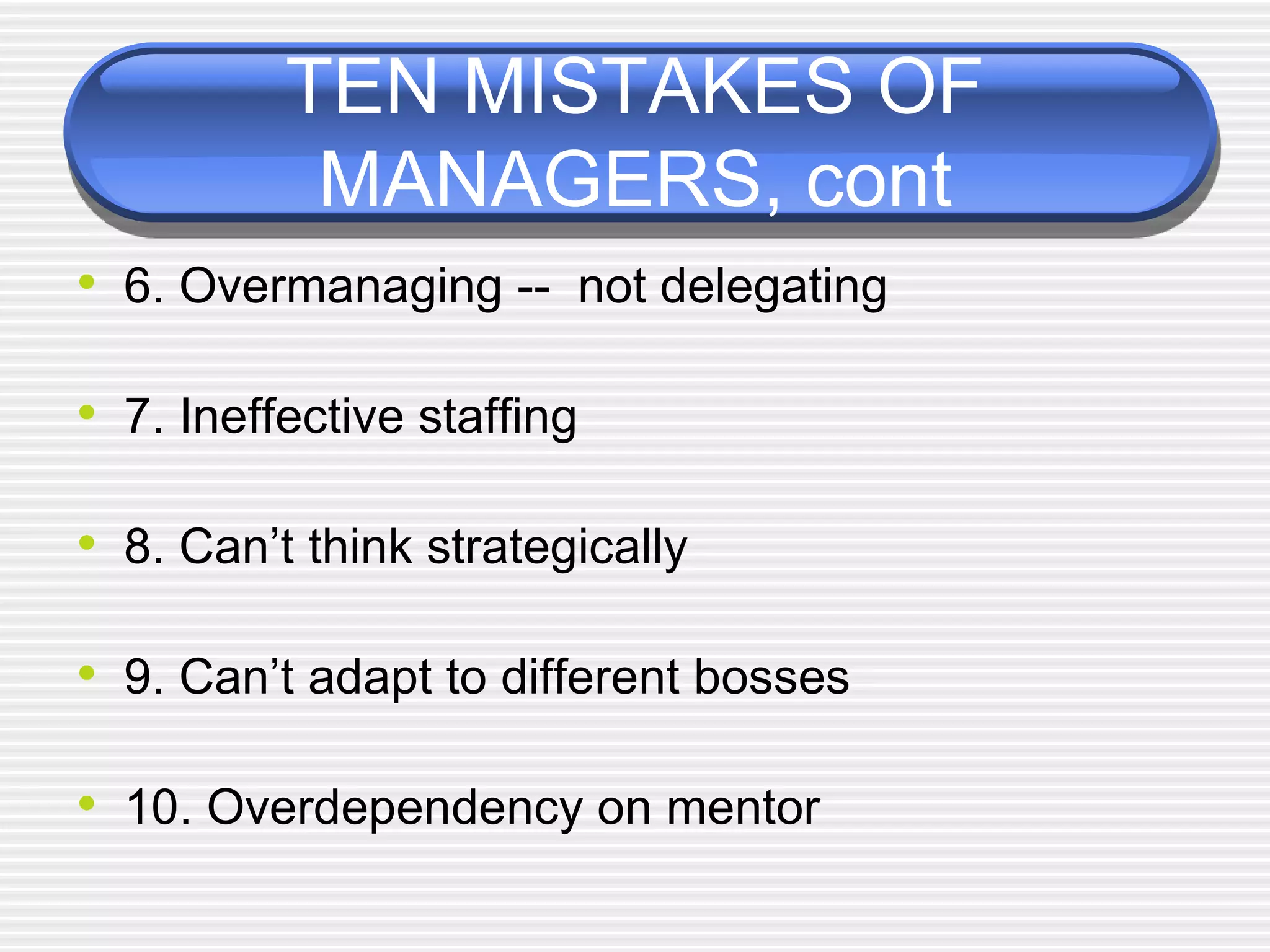
TEN MISTAKES OF
MANAGERS, cont
• 6. Overmanaging -- not delegating
• 7. Ineffective staffing
• 8. Can’t think strategically
• 9. Can’t adapt to different bosses
• 10. Overdependency on mentor
COMPETITIVE ADVANTAGE
THROUGH PEOPLE
• PRODUCT OR SERVICE BEING EQUAL
• ADVANTAGE RESTS WITH EMPLOYEES WHO
ARE BETTER, MORE COMMITTED
• EMPHASIZES SOCIAL NATURE OF THE FIRM
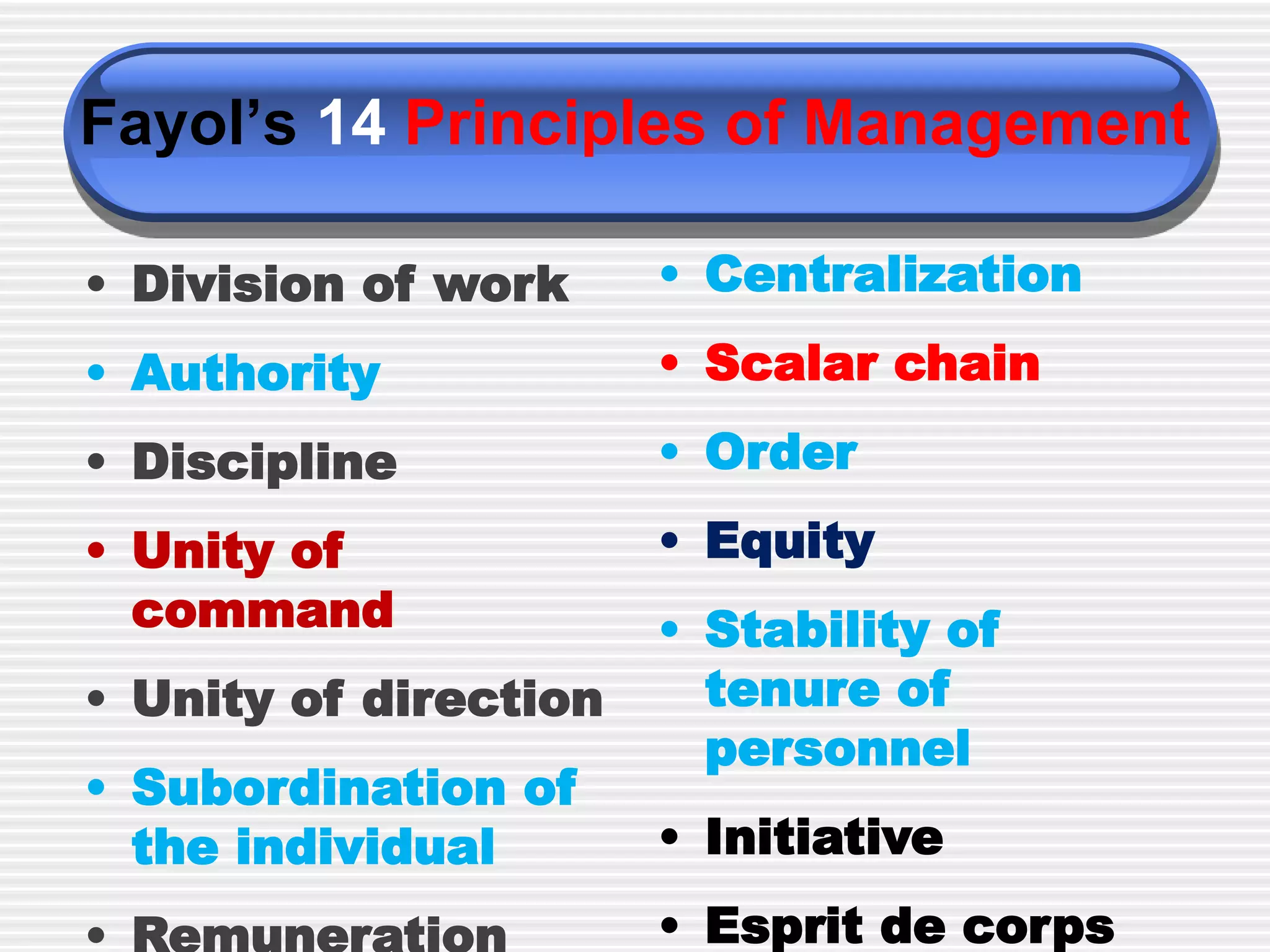
Fayol’s 14 Principles of Management
• Division of work
• Authority
• Discipline
• Unity of
command
• Unity of direction
• Subordination of
the individual
• Centralization
• Scalar chain
• Order
• Equity
• Stability of
tenure of
personnel
• Initiative
• Esprit de corps

Fundamentals of Management

  • 1.
    FUNDAMENTALS OF MANAGEMENT Dr. SyedAmin Tabish FRCP, FACP, FAMS, MD HA (AIIMS) Postdoc Fellowship, Bristol University (England) Doctorate in Educational Leadership (USA)
  • 2.
    WHAT IS MANAGEMENT? •An art more than a science • Inherently social in nature • Getting things done through others
  • 4.
    Copyright © 2005 PrenticeHall, Inc. Organization and Its Environment Exhibit HM-4
  • 6.
    FOUR FUNCTIONS • Firststated by Henri Fayol(1841-1925)-French CEO • Now stated as  1. Planning  2. Organizing  3. Leading  4. Controlling
  • 8.
    PLANNING & ORGANIZING •Planning -- Setting firms goals plus the way to accomplish them • Organizing -- deciding structure of decision-making  What will be done, by whom, for whom
  • 11.
    LEADING & CONTROLLING •Leading-- Motivating employees to achieve firm’s objectives • Controlling --  Monitoring progress toward goals  Taking corrective action
  • 26.
    TYPES OF MANAGERS •1. TOP MANAGERS • 2. MIDDLE MANAGERS • 3. FIRST-LINE MANAGERS • 4. TEAM LEADERS
  • 29.
    MINTZBERG’S ROLES OF MANAGERS •1. INTERPERSONAL • 2. INFORMATIONAL • 3. DECISIONAL
  • 31.
    ESSENTIAL SKILLS FOR MANAGERS •1. TECHNICAL SKILLS • 2. HUMAN SKILLS • 3. CONCEPTUAL SKILLS
  • 34.
    ADDED ESSENTIAL • MOTIVATIONTO MANAGE  How enthusiastic is an employee to manage the work of others  After all getting work done through others is what management is all about
  • 43.
    TEN MISTAKES OF MANAGERS •1. Insensitive, intimidating, bullying • 2. Cold, aloof, arrogant • 3. Untrustworthy • 4. Too ambitious, playing politics • 5. Specific performance problems
  • 44.
    TEN MISTAKES OF MANAGERS,cont • 6. Overmanaging -- not delegating • 7. Ineffective staffing • 8. Can’t think strategically • 9. Can’t adapt to different bosses • 10. Overdependency on mentor
  • 45.
    COMPETITIVE ADVANTAGE THROUGH PEOPLE •PRODUCT OR SERVICE BEING EQUAL • ADVANTAGE RESTS WITH EMPLOYEES WHO ARE BETTER, MORE COMMITTED • EMPHASIZES SOCIAL NATURE OF THE FIRM
  • 46.
    Fayol’s 14 Principlesof Management • Division of work • Authority • Discipline • Unity of command • Unity of direction • Subordination of the individual • Centralization • Scalar chain • Order • Equity • Stability of tenure of personnel • Initiative • Esprit de corps