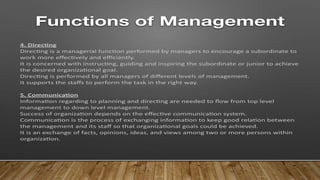
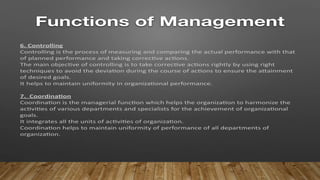
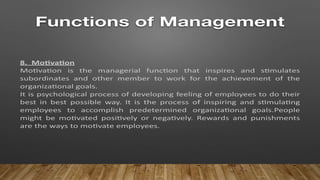
FUNCTIONS OF MANAGEMENT
 History back to human civilization
 Group activity to attain objectives
 Direct, co-ordinate and integrate individual activity
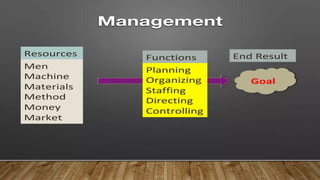
 Utilizing the resources like men, material machines, money etc
 Profit maximization or continuous growth and survival
 No under developed countries bu poor management of resources
MEANING
Management
means
directing and controlling a group of people or
an organization to reach a goal.
Management often means the deployment and manipulation of
humanresources,financialresources,technologicalresources,andnatural
resources.
In other word Management can also mean the person or people who manage,
the managers,the organization and coordination of the activities of a business
in order to achieve defined objectives.
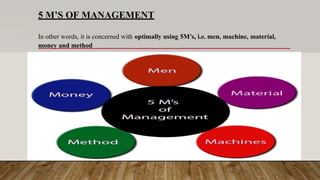
5 M’S OF MANAGEMENT
In other words, it is concerned with optimally using 5M’s, i.e. men, machine, material,
money and method
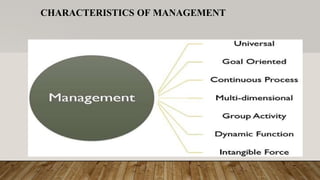
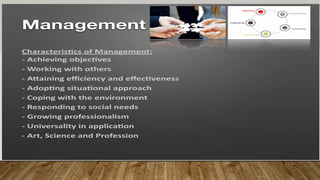
CHARACTERISTICS OF MANAGEMENT
LEVELS OF MANAGEMENT
• Top-Level Management: This is the highest level in the organizational hierarchy, which includes Board
of Directors and Chief Executives. They are responsible for defining the objectives, formulating plans,
strategies and policies.
• Middle-Level Management: It is the second and most important level in the corporate ladder, as it
creates a link between the top and lower-level management. It includes departmental and division
heads and managers who are responsible for implementing and controlling plans and strategies which
are formulated by the top executives.
• Lower Level Management: Otherwise called as functional or operational level management. It
includes first-line managers, foreman, supervisors. As lower-level management directly interacts with
the workers, it plays a crucial role in the organization because it helps in reducing wastage and idle time
of the workers, improving the quality and quantity of output.
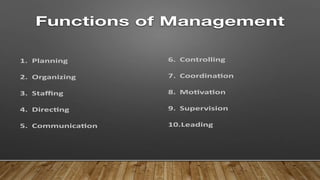
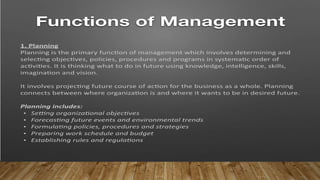
FUNCTIONS OF MANAGEMENT
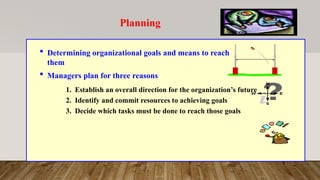
Planning
 Determining organizational goals and means to reach
them
 Managers plan for three reasons
1. Establish an overall direction for the organization’s future
2. Identify and commit resources to achieving goals
3. Decide which tasks must be done to reach those goals
First Factor of Management: Planning
• Defining goals and tackling them
• Defines future of organization- long-
term plans
• Develops strategic plans
• Long-term and effects entire
organization
• Bridges gap between what
organization is and what it wants to be
• Tactical plans
• Translate strategic plans into specific
actions- who, what, where, etc.
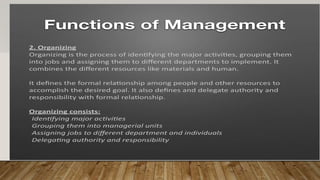
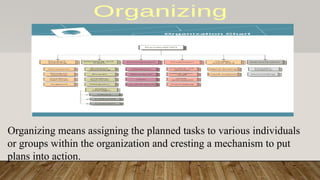
Organizing means assigning the planned tasks to various individuals
or groups within the organization and cresting a mechanism to put
plans into action.
Organizing
• Decides how to best implement the
plans
• Decides how an organization is
structured
• Assigns authority and responsibility
• Works to acquire resources
• Decides coordination
PRINCIPLES OF MANAGEMENT
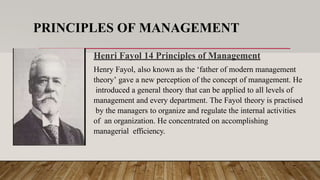
Henri Fayol 14 Principles of Management
Henry Fayol, also known as the ‘father of modern management
theory’ gave a new perception of the concept of management. He
introduced a general theory that can be applied to all levels of
management and every department. The Fayol theory is practised
by the managers to organize and regulate the internal activities
of an organization. He concentrated on accomplishing
managerial efficiency.
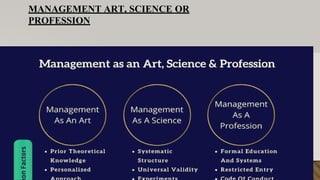
MANAGEMENT ART, SCIENCE OR
PROFESSION
•THANK
YOU

FUNCTIONS-of-management revised pptx.pptx

  • 1.
  • 2.
     History backto human civilization  Group activity to attain objectives  Direct, co-ordinate and integrate individual activity  Utilizing the resources like men, material machines, money etc  Profit maximization or continuous growth and survival  No under developed countries bu poor management of resources
  • 3.
    MEANING Management means directing and controllinga group of people or an organization to reach a goal. Management often means the deployment and manipulation of humanresources,financialresources,technologicalresources,andnatural resources. In other word Management can also mean the person or people who manage, the managers,the organization and coordination of the activities of a business in order to achieve defined objectives.
  • 7.
    5 M’S OFMANAGEMENT In other words, it is concerned with optimally using 5M’s, i.e. men, machine, material, money and method
  • 8.
  • 11.
  • 12.
    • Top-Level Management:This is the highest level in the organizational hierarchy, which includes Board of Directors and Chief Executives. They are responsible for defining the objectives, formulating plans, strategies and policies. • Middle-Level Management: It is the second and most important level in the corporate ladder, as it creates a link between the top and lower-level management. It includes departmental and division heads and managers who are responsible for implementing and controlling plans and strategies which are formulated by the top executives. • Lower Level Management: Otherwise called as functional or operational level management. It includes first-line managers, foreman, supervisors. As lower-level management directly interacts with the workers, it plays a crucial role in the organization because it helps in reducing wastage and idle time of the workers, improving the quality and quantity of output.
  • 13.
  • 15.
    Planning  Determining organizationalgoals and means to reach them  Managers plan for three reasons 1. Establish an overall direction for the organization’s future 2. Identify and commit resources to achieving goals 3. Decide which tasks must be done to reach those goals
  • 16.
    First Factor ofManagement: Planning • Defining goals and tackling them • Defines future of organization- long- term plans • Develops strategic plans • Long-term and effects entire organization • Bridges gap between what organization is and what it wants to be • Tactical plans • Translate strategic plans into specific actions- who, what, where, etc.
  • 18.
    Organizing means assigningthe planned tasks to various individuals or groups within the organization and cresting a mechanism to put plans into action.
  • 19.
    Organizing • Decides howto best implement the plans • Decides how an organization is structured • Assigns authority and responsibility • Works to acquire resources • Decides coordination
  • 24.
    PRINCIPLES OF MANAGEMENT HenriFayol 14 Principles of Management Henry Fayol, also known as the ‘father of modern management theory’ gave a new perception of the concept of management. He introduced a general theory that can be applied to all levels of management and every department. The Fayol theory is practised by the managers to organize and regulate the internal activities of an organization. He concentrated on accomplishing managerial efficiency.
  • 27.
  • 28.

Editor's Notes

  • #16 Title: Time Management. Authored by: geralt. Located at: https://pixabay.com/en/time-time-management-stopwatch-3222267/ License: CC0- No Rights Reserved