Fundamental Movement Skills Aled Hughes (BE’d Hons – Human Movement Studies) June 2006
Why is physical activity so important ? Promotes healthy growth and development  e.g. strong bones and muscles, flexibility, balance, posture, cardiovascular fitness and achieving and maintaining a healthy weight Helps make important connections between different parts of the brain that develop memory and language Provides opportunities to develop social skills and to make friends Helps with relaxation and sleep Develops self esteem Benefits of physical activity in young children
“  If We Take Care In The Beginning,  the End Will Take Care Of Itself!
Why FMS’ s are important Fundamental movement skills provide the foundation for all athletic maturity and are seen as the building blocks  from which  sports-specific skills are developed.
Why fundamental movement skills? Fundamental movement skills are specific gross motor movements that involve different body parts such as feet, legs, trunk, hands, arms and head Children need to be taught fundamental movement skills - they don’t acquire them naturally Children that learn  fundamental movement skills  are more likely to participate in and play different games, sports and recreational activities offered in the school years and in the community
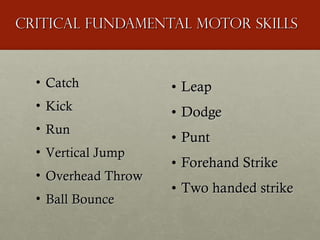
Critical fundamental motor skills Leap Dodge Punt Forehand Strike Two handed strike Catch Kick Run Vertical Jump Overhead Throw  Ball Bounce
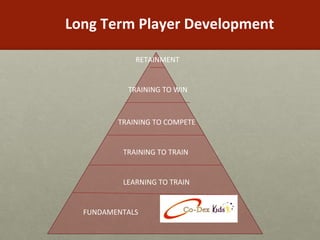
FUNDAMENTALS LEARNING TO TRAIN TRAINING TO TRAIN TRAINING TO COMPETE TRAINING TO WIN RETAINMENT Long Term Player Development
“ Children who possess inadequate motor skills are often relegated to a life of exclusion from the organised and free play experiences of their peers, and subsequently, to a lifetime of inactivity because of their frustrations in early movement behaviour”. (Seefeldt, Haubenstricker & Reuchlien 1979, cited in Graham, Holt, Hale & Parker 2001)
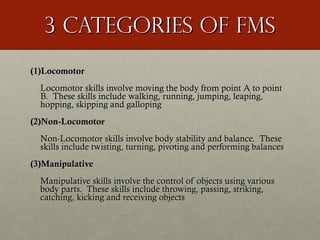
3 CATEGORIES OF FMS (1)Locomotor Locomotor skills involve moving the body from point A to point B.  These skills include walking, running, jumping, leaping, hopping, skipping and galloping (2)Non-Locomotor Non-Locomotor skills involve body stability and balance.  These skills include twisting, turning, pivoting and performing balances (3)Manipulative Manipulative skills involve the control of objects using various body parts.  These skills include throwing, passing, striking, catching, kicking and receiving objects
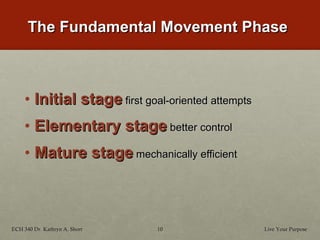
The Fundamental Movement Phase Initial stage   first goal-oriented attempts Elementary stage   better control Mature stage   mechanically efficient Live Your Purpose ECH 340 Dr. Kathryn A. Short
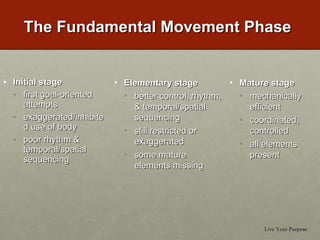
The Fundamental Movement Phase Initial stage  first goal-oriented attempts exaggerated/inhibited use of body poor rhythm & temporal/spatial sequencing Live Your Purpose Elementary stage  better control, rhythm, & temporal/spatial sequencing still restricted or exaggerated some mature elements missing Mature stage  mechanically efficient coordinated, controlled all elements present
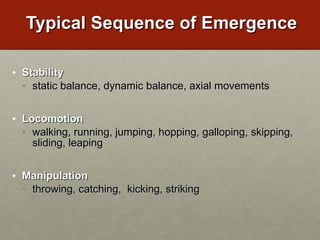
Typical Sequence of Emergence  Stability   static balance, dynamic balance, axial movements Locomotion   walking, running, jumping, hopping, galloping, skipping, sliding, leaping Manipulation  throwing, catching,  kicking, striking
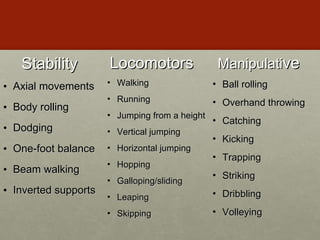
Stability Axial movements Body rolling Dodging One-foot balance Beam walking Inverted supports Walking Running Jumping from a height  Vertical jumping  Horizontal jumping  Hopping Galloping/sliding Leaping Skipping Locomotors Ball rolling Overhand throwing Catching Kicking Trapping Striking Dribbling Volleying Manipulati ve
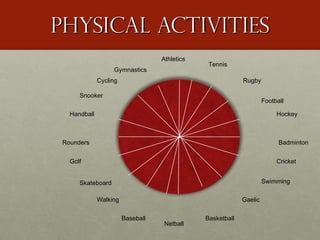
Physical activities Cycling Snooker Handball Rounders Golf Skateboard Walking Baseball Netball Athletics Tennis Basketball Gaelic Swimming Cricket Badminton Hockey Rugby Football Gymnastics
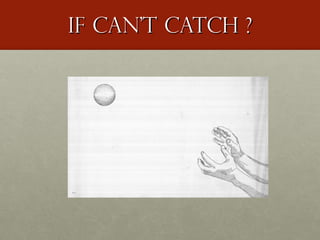
If Can’t catch ?
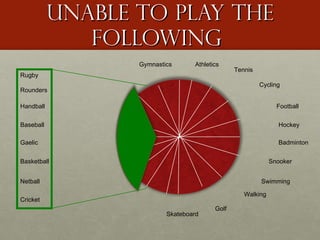
Unable to play the following  Cycling Snooker Handball Rounders Golf Skateboard Walking Baseball Netball Athletics Tennis Basketball Gaelic Swimming Cricket Badminton Hockey Rugby Football Gymnastics
www,codexkids.com

Fundamental Movement Skills

  • 1.
    Fundamental Movement SkillsAled Hughes (BE’d Hons – Human Movement Studies) June 2006
  • 2.
    Why is physicalactivity so important ? Promotes healthy growth and development e.g. strong bones and muscles, flexibility, balance, posture, cardiovascular fitness and achieving and maintaining a healthy weight Helps make important connections between different parts of the brain that develop memory and language Provides opportunities to develop social skills and to make friends Helps with relaxation and sleep Develops self esteem Benefits of physical activity in young children
  • 3.
    “ IfWe Take Care In The Beginning, the End Will Take Care Of Itself!
  • 4.
    Why FMS’ sare important Fundamental movement skills provide the foundation for all athletic maturity and are seen as the building blocks from which sports-specific skills are developed.
  • 5.
    Why fundamental movementskills? Fundamental movement skills are specific gross motor movements that involve different body parts such as feet, legs, trunk, hands, arms and head Children need to be taught fundamental movement skills - they don’t acquire them naturally Children that learn fundamental movement skills are more likely to participate in and play different games, sports and recreational activities offered in the school years and in the community
  • 6.
    Critical fundamental motorskills Leap Dodge Punt Forehand Strike Two handed strike Catch Kick Run Vertical Jump Overhead Throw Ball Bounce
  • 7.
    FUNDAMENTALS LEARNING TOTRAIN TRAINING TO TRAIN TRAINING TO COMPETE TRAINING TO WIN RETAINMENT Long Term Player Development
  • 8.
    “ Children whopossess inadequate motor skills are often relegated to a life of exclusion from the organised and free play experiences of their peers, and subsequently, to a lifetime of inactivity because of their frustrations in early movement behaviour”. (Seefeldt, Haubenstricker & Reuchlien 1979, cited in Graham, Holt, Hale & Parker 2001)
  • 9.
    3 CATEGORIES OFFMS (1)Locomotor Locomotor skills involve moving the body from point A to point B. These skills include walking, running, jumping, leaping, hopping, skipping and galloping (2)Non-Locomotor Non-Locomotor skills involve body stability and balance. These skills include twisting, turning, pivoting and performing balances (3)Manipulative Manipulative skills involve the control of objects using various body parts. These skills include throwing, passing, striking, catching, kicking and receiving objects
  • 10.
    The Fundamental MovementPhase Initial stage first goal-oriented attempts Elementary stage better control Mature stage mechanically efficient Live Your Purpose ECH 340 Dr. Kathryn A. Short
  • 11.
    The Fundamental MovementPhase Initial stage first goal-oriented attempts exaggerated/inhibited use of body poor rhythm & temporal/spatial sequencing Live Your Purpose Elementary stage better control, rhythm, & temporal/spatial sequencing still restricted or exaggerated some mature elements missing Mature stage mechanically efficient coordinated, controlled all elements present
  • 12.
    Typical Sequence ofEmergence Stability static balance, dynamic balance, axial movements Locomotion walking, running, jumping, hopping, galloping, skipping, sliding, leaping Manipulation throwing, catching, kicking, striking
  • 13.
    Stability Axial movementsBody rolling Dodging One-foot balance Beam walking Inverted supports Walking Running Jumping from a height Vertical jumping Horizontal jumping Hopping Galloping/sliding Leaping Skipping Locomotors Ball rolling Overhand throwing Catching Kicking Trapping Striking Dribbling Volleying Manipulati ve
  • 14.
    Physical activities CyclingSnooker Handball Rounders Golf Skateboard Walking Baseball Netball Athletics Tennis Basketball Gaelic Swimming Cricket Badminton Hockey Rugby Football Gymnastics
  • 15.
  • 16.
    Unable to playthe following Cycling Snooker Handball Rounders Golf Skateboard Walking Baseball Netball Athletics Tennis Basketball Gaelic Swimming Cricket Badminton Hockey Rugby Football Gymnastics
  • 17.