Fundamental
Movement
Patterns
Fundamental Movement Patterns
- patterns that allow the body to be
coordinated in those simple, basic
movement patterns of lateral motion,
weight transfer, forward motion, up and
down motion, and coordinating upper
and lower body movements.
A. What are the 7
fundamental
movement patterns?
There are seven basic movements the
human body can perform and all other
exercises are merely variations of these
seven:
1. Pull
- consists of pulling a weight toward
your body or your body towards your
hands.
2. Push
- movement involves
pushing a weight away
from your body or your
body away from an object.
3. Squat
- considered to be the most
complex movement the
human body is capable of.
4. Lunge
- involves your body in a
less stable position of one
foot further forward than
the other.
5. Hinge
- are executed by kicking your
butt back and leaning your torso
forward while maintain a neutral
spine—like when picking up
something off the floor.
6. Rotation
-is unique from the other six
movements because of the plane that
it works in.
-the other exercises involve moving
forward and backward or side to side,
yet rotation involves twisting at the
core.
7. Gait
-which is the technique of
walking.
-this might seem trivial, but
walking is a fundamental
movement.
B. Breathing and
Bracing Techniques
•Breathing
- mostly focusing on a long and
relaxing exhale and proper
inhale to use breathing to set the
position of our ribcage and
pelvis. This is a lower threshold
activity.
•Bracing:
- forceful holding of breath
that uses a higher threshold
strategy to stabilize the
thorax and pelvis.
Breathing
Technique
Deep Breathing
•Get comfortable. You can lie on your
back in bed or on the floor with a
pillow under your head and knees.
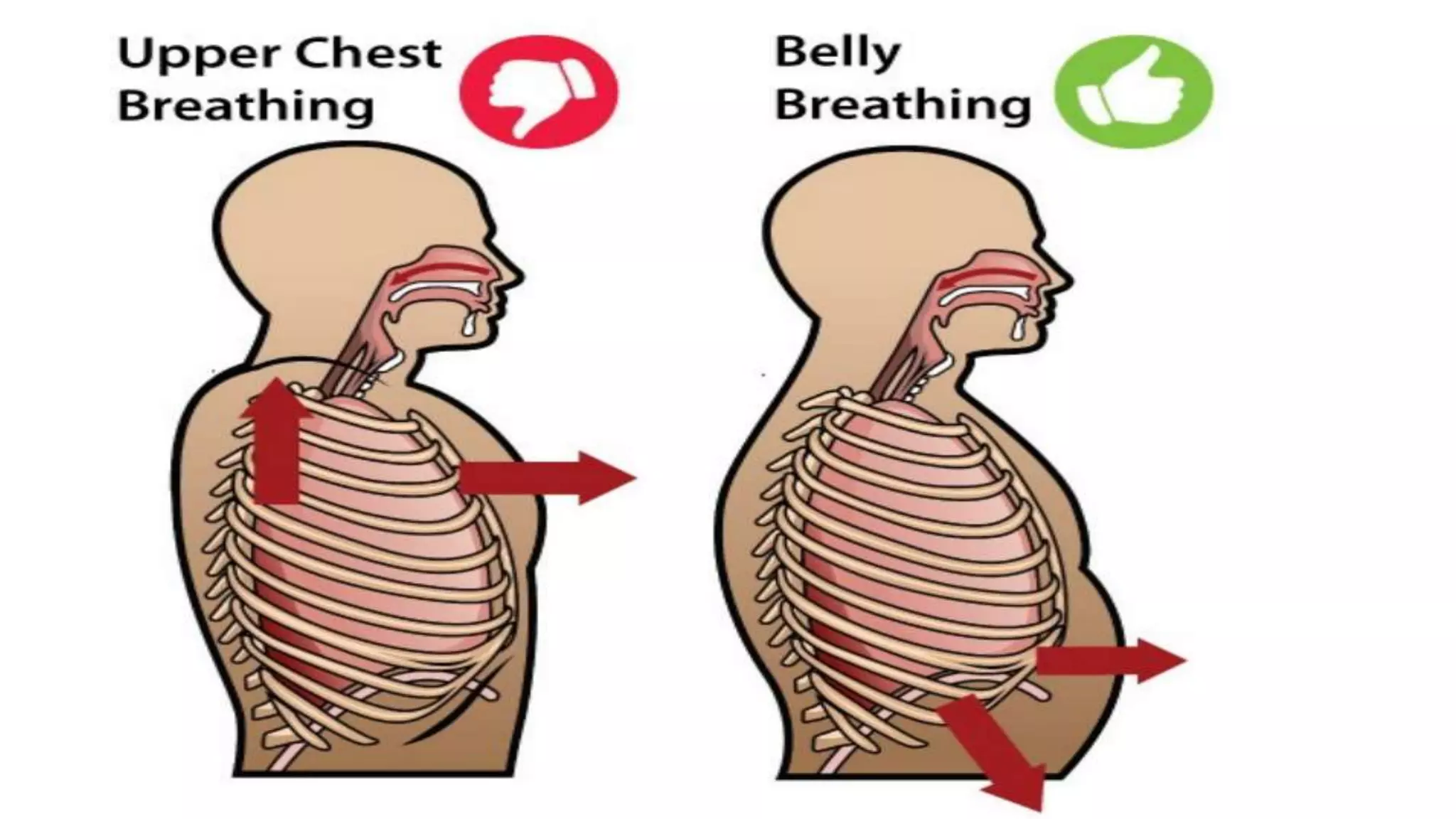
•Breathe in through your nose. Let
your belly fill with air.
•Breathe out through your nose.
•Place one hand on your
belly.
•As you breathe in, feel your
belly rise.
•Take three more full, deep
breaths.
Muscle contractions
- are defined by changes in
the length of the muscle
during contraction.
Types of Muscle
Contractions
•Isotonic contractions
- generate force by changing
the length of the muscle and
can be concentric
contractions or eccentric
contractions.
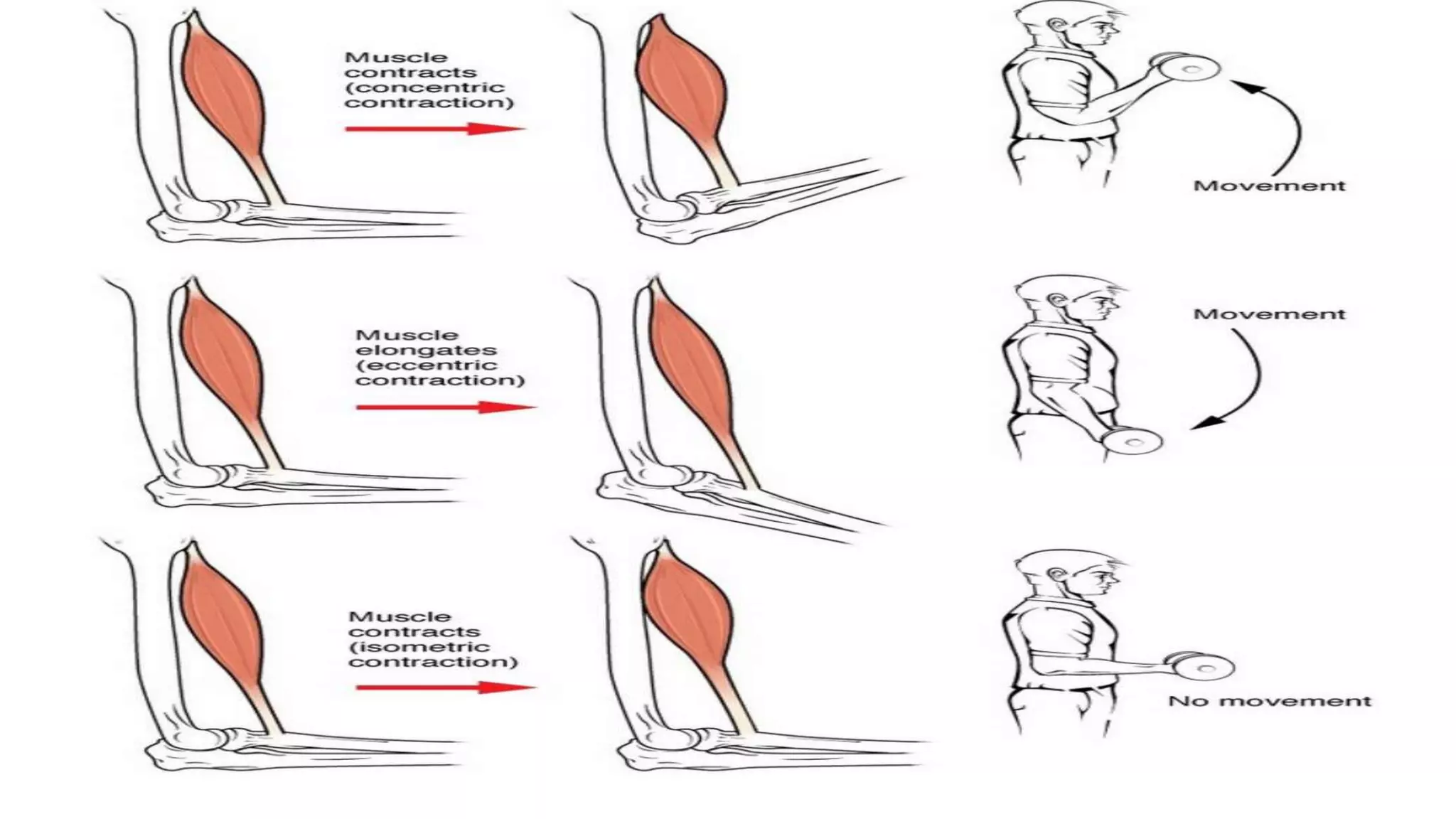
•Concentric contraction
- causes muscles to
shorten, thereby
generating force.
•Eccentric contractions
- cause muscles to
elongate in response to a
greater opposing force.
•Isometric contractions
- generate force without
changing the length of
the muscle.
Here are two
examples of bracing
in action:
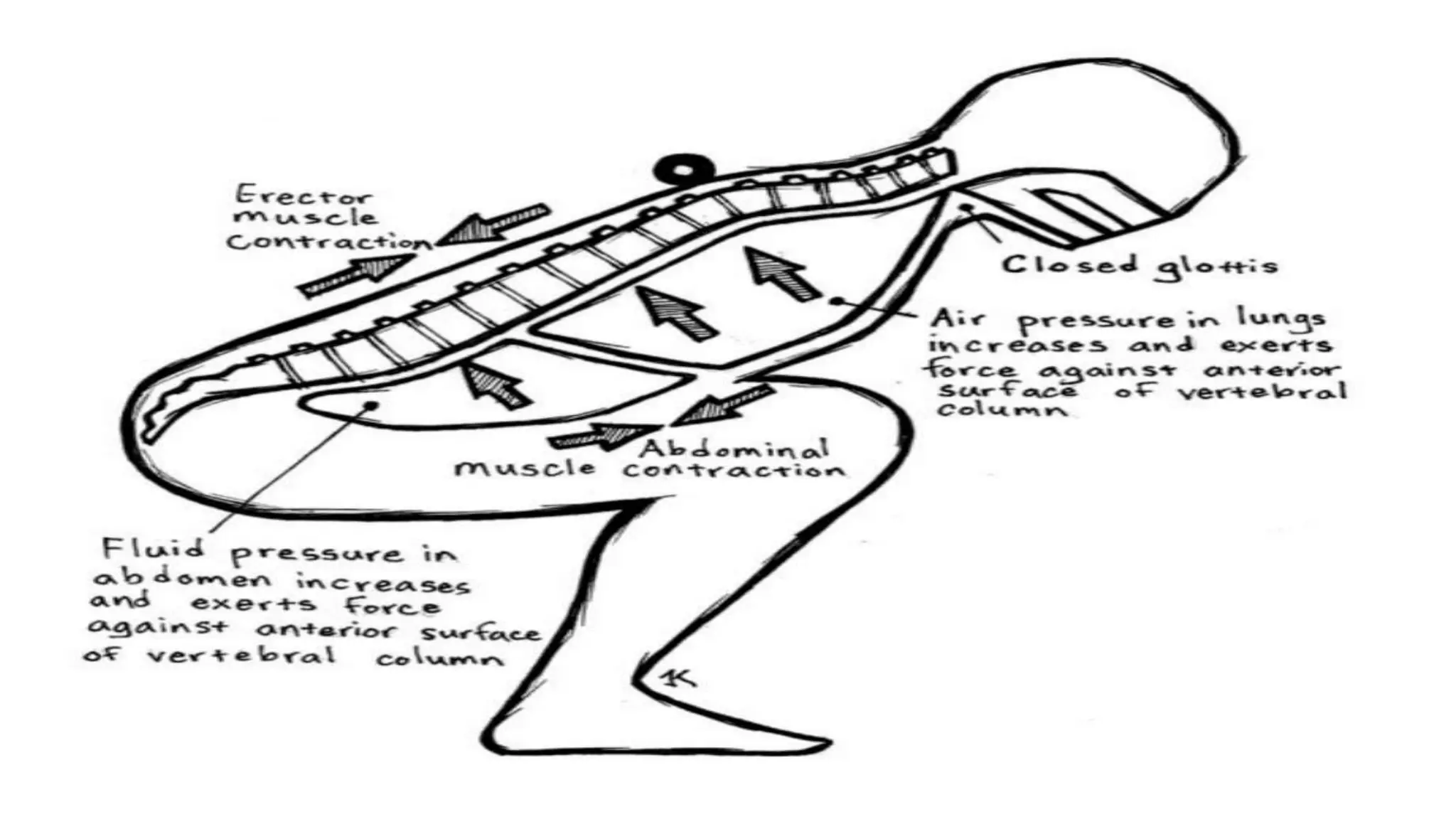
1. Heavy Squat
- lifter will breathe in about 70% of their
maximum air volume, pull their shoulders down
towards the pelvis, and compress their rib cage
while contracting the abs. When this setup is
complete the lifter will then initiate the squat
staying pressurized during the down and up
phases of the squat. After standing the lifter will
exhale then re-bracing and repeat for the
reminding reps.
2. Standing up from a chair
-getting up from a chair a person will start
by stiffening the core mildly, about 10%
core contraction, lift the chest up slightly,
lean forward though the hips to transfer
the weight to the feet then pull the hips
through to complete the stand. Once
standing the brace is released.
The follow is a list from least
amount to most of brace
required and is by no means
exhaustive, it’s only to give
you a perspective on the range
of applied bracing.
•Tying your shoe
•Balance on one foot for 10 seconds
•Carrying a 5 lb weight
•Getting up from the floor
•Picking up a lawnmower
•Pushing a car to the side of the
road
•Flexing the abdominals
Flexibility is defined as the range of
motion of your joints or the ability of
your joints to move freely.
- it also refers to the mobility of your
muscles, which allows for more
movement around the joints

Fundamental-Movement-Patterns.pptx

  • 1.
  • 2.
    Fundamental Movement Patterns -patterns that allow the body to be coordinated in those simple, basic movement patterns of lateral motion, weight transfer, forward motion, up and down motion, and coordinating upper and lower body movements.
  • 3.
    A. What arethe 7 fundamental movement patterns?
  • 4.
    There are sevenbasic movements the human body can perform and all other exercises are merely variations of these seven: 1. Pull - consists of pulling a weight toward your body or your body towards your hands.
  • 5.
    2. Push - movementinvolves pushing a weight away from your body or your body away from an object.
  • 6.
    3. Squat - consideredto be the most complex movement the human body is capable of.
  • 7.
    4. Lunge - involvesyour body in a less stable position of one foot further forward than the other.
  • 8.
    5. Hinge - areexecuted by kicking your butt back and leaning your torso forward while maintain a neutral spine—like when picking up something off the floor.
  • 9.
    6. Rotation -is uniquefrom the other six movements because of the plane that it works in. -the other exercises involve moving forward and backward or side to side, yet rotation involves twisting at the core.
  • 10.
    7. Gait -which isthe technique of walking. -this might seem trivial, but walking is a fundamental movement.
  • 11.
  • 12.
    •Breathing - mostly focusingon a long and relaxing exhale and proper inhale to use breathing to set the position of our ribcage and pelvis. This is a lower threshold activity.
  • 13.
    •Bracing: - forceful holdingof breath that uses a higher threshold strategy to stabilize the thorax and pelvis.
  • 14.
  • 15.
    Deep Breathing •Get comfortable.You can lie on your back in bed or on the floor with a pillow under your head and knees. •Breathe in through your nose. Let your belly fill with air. •Breathe out through your nose.
  • 16.
    •Place one handon your belly. •As you breathe in, feel your belly rise. •Take three more full, deep breaths.
  • 18.
    Muscle contractions - aredefined by changes in the length of the muscle during contraction.
  • 19.
  • 20.
    •Isotonic contractions - generateforce by changing the length of the muscle and can be concentric contractions or eccentric contractions.
  • 21.
    •Concentric contraction - causesmuscles to shorten, thereby generating force.
  • 22.
    •Eccentric contractions - causemuscles to elongate in response to a greater opposing force.
  • 23.
    •Isometric contractions - generateforce without changing the length of the muscle.
  • 25.
    Here are two examplesof bracing in action:
  • 26.
    1. Heavy Squat -lifter will breathe in about 70% of their maximum air volume, pull their shoulders down towards the pelvis, and compress their rib cage while contracting the abs. When this setup is complete the lifter will then initiate the squat staying pressurized during the down and up phases of the squat. After standing the lifter will exhale then re-bracing and repeat for the reminding reps.
  • 28.
    2. Standing upfrom a chair -getting up from a chair a person will start by stiffening the core mildly, about 10% core contraction, lift the chest up slightly, lean forward though the hips to transfer the weight to the feet then pull the hips through to complete the stand. Once standing the brace is released.
  • 29.
    The follow isa list from least amount to most of brace required and is by no means exhaustive, it’s only to give you a perspective on the range of applied bracing.
  • 30.
    •Tying your shoe •Balanceon one foot for 10 seconds •Carrying a 5 lb weight •Getting up from the floor •Picking up a lawnmower •Pushing a car to the side of the road
  • 31.
    •Flexing the abdominals Flexibilityis defined as the range of motion of your joints or the ability of your joints to move freely. - it also refers to the mobility of your muscles, which allows for more movement around the joints