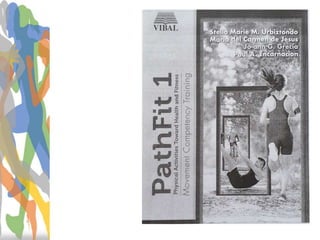
PathFit 1: Movement Competency
Training
---------------------------------------------------------------------------------------------------------
MATILDE M. CORTAN
POLANGUI COMMUNITY COLLEGE
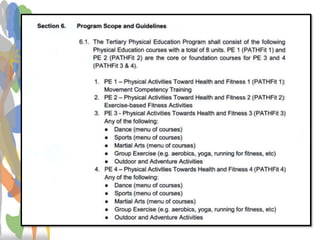
PathFit 1
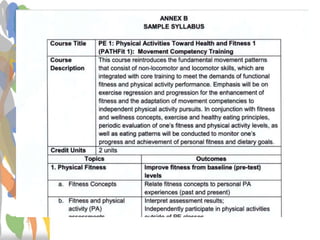
• Physical Activity towards Health and
Fitness (PATHFit or Pathfit)
• Tertiary PE (PE 1-4)
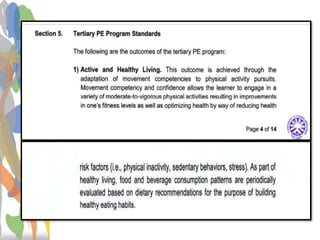
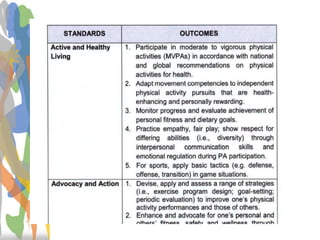
• Tertiary PE program has Active and
Healthy Living as one of its outcomes.
This is achieved through the adaptation
of movement competencies to physical
activity pursuits.
PathFit 1
• Movement competency and
confidence allows the learner to
engage in a variety of moderate-to-
vigorous physical activities resulting in
improvements in one’s fitness levels as
well as optimizing health by way of
reducing health risk factors (i.e.,
physical inactivity, sedentary
behaviors, stress).
PathFit 1
• As part of healthy living, food and
beverage consumption patterns are
periodically evaluated based on
dietary recommendations for the
purpose of building healthy eating
habits (CMO 39 Series of 2021).
PathFit 1
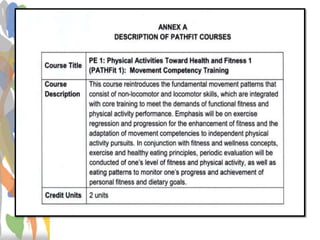
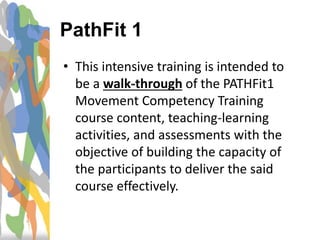
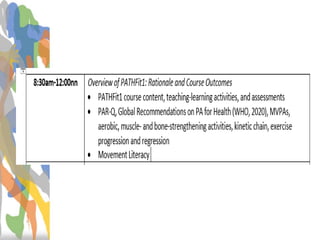
• This intensive training is intended to
be a walk-through of the PATHFit1
Movement Competency Training
course content, teaching-learning
activities, and assessments with the
objective of building the capacity of
the participants to deliver the said
course effectively.
PathFit 1
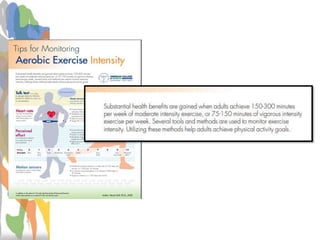
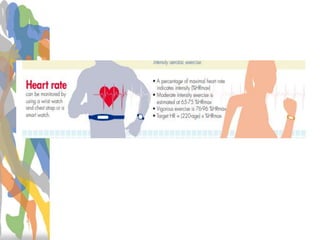
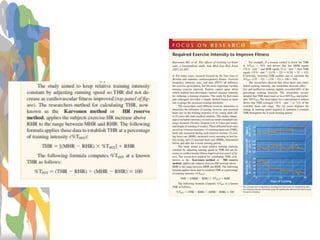
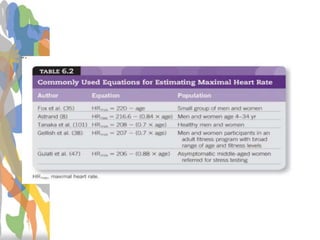
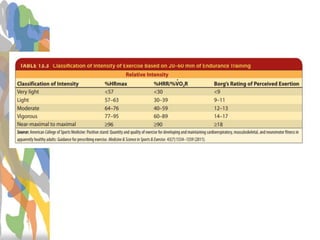
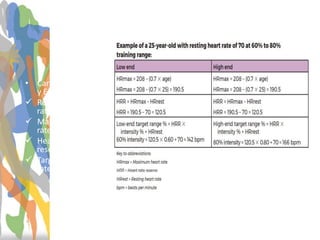
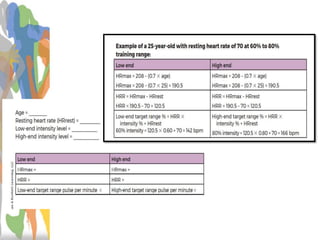
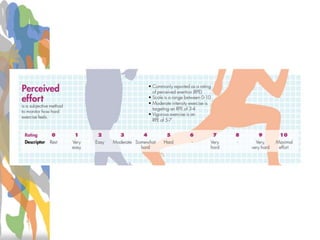
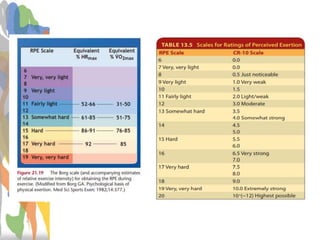
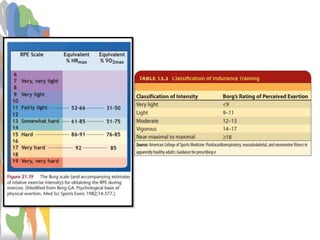
Heart Rate
• Cardiorespirator
y Endurance
 Resting heart
rate (RHR)
 Maximum heart
rate (HRmax)
 Hear rate
reserve (HRR)
 Target heart
rate (THR)
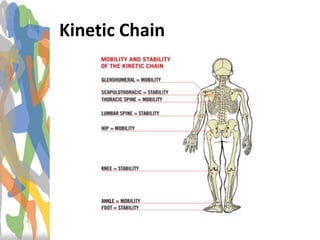
Kinetic Chain
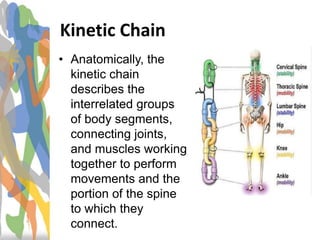
• Anatomically, the
kinetic chain
describes the
interrelated groups
of body segments,
connecting joints,
and muscles working
together to perform
movements and the
portion of the spine
to which they
connect.
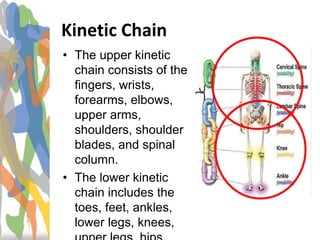
Kinetic Chain
• The upper kinetic
chain consists of the
fingers, wrists,
forearms, elbows,
upper arms,
shoulders, shoulder
blades, and spinal
column.
• The lower kinetic
chain includes the
toes, feet, ankles,
lower legs, knees,
Kinetic Chain
Exercise Selection
Movement Literacy
• "Movement Literacy is your ability to
read and write movement patterns."
• - Movement literacy means that "not
only can you identify movement
patterns, you can reproduce it as
easily as another person."
• - "Most of your questions about fitness
may be inappropriate if you can't read
and write movement patterns."
•
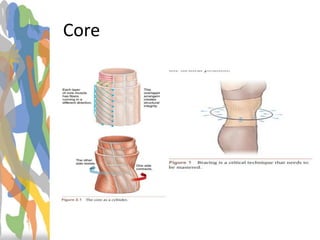
Core
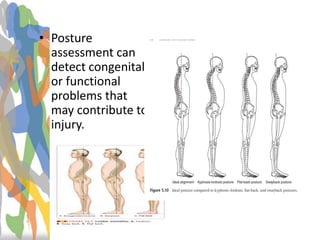
Posture
• Posture
assessment can
detect congenital
or functional
problems that
may contribute to
injury.
Terms
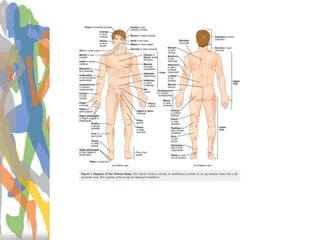
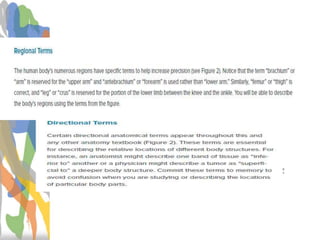
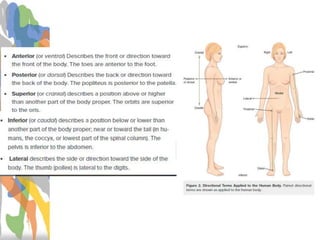
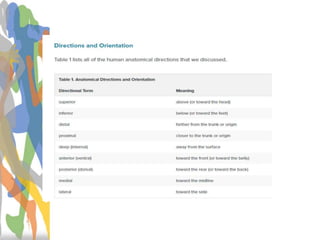
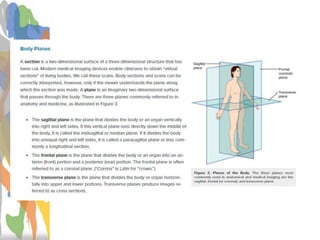
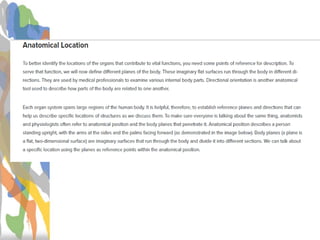
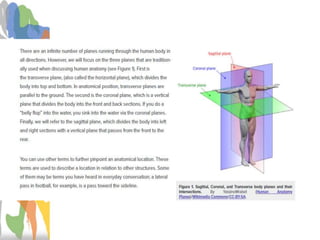
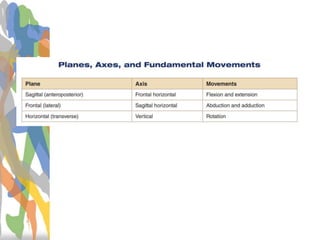
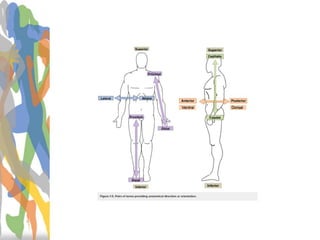
• Anatomical reference position
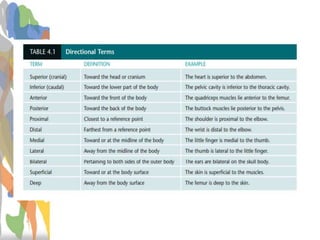
• Directional terms
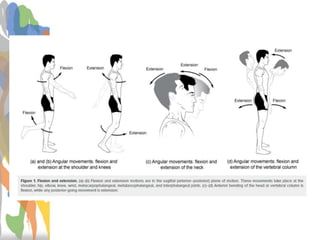
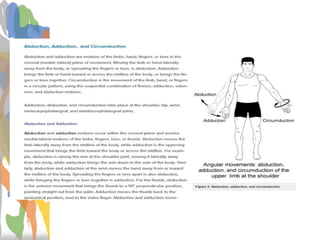
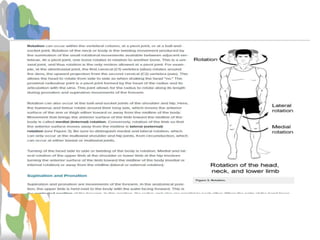
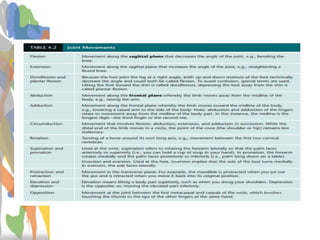
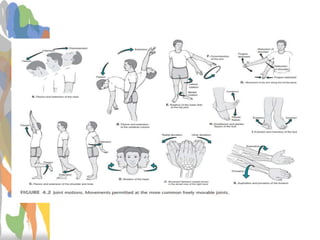
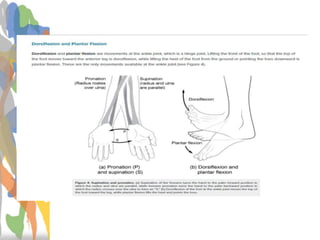
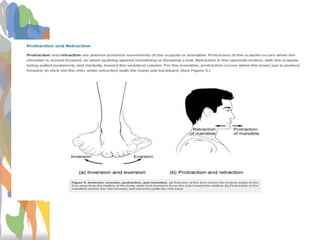
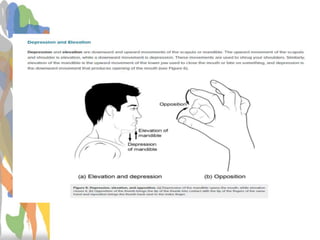
• Movement terms
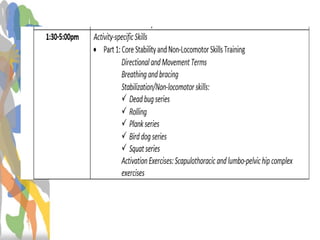
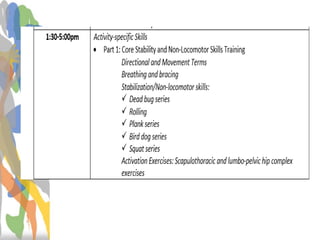
Part 1
Core stability and
non-locomotor skills training
Core stability
Non-locomotor
or stabilization skills
Breathing and Bracing
Core Stability Exercises
 Deadbug series
 Rolling
 Plank series
 Bird dog series
Deadbug Series
Key Points:
• Exercise Progression & Regression
• Spotting techniques
Turning/Rolling/Twisting
Scapulothoracic Exercises
Key Points:
• Activation
• Shoulder mobility
• Y-T-W
Lumbo-pelvic Exercises
Key Points:
• Activation
• Glute hip bridge
Plank Series
 Elbow/Low plank
 Straight arm/High plank
 Front & side
Bird Dog Series
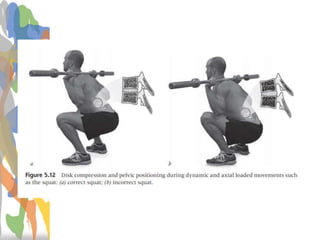
Squat Sequence
Training Guidelines
• Static position for an extended time
• Progress by increasing the time/reps;
narrow base of support; unstable surface
and application of external resistance (e.g.
load)
• Mastery of technique prior to progression
•
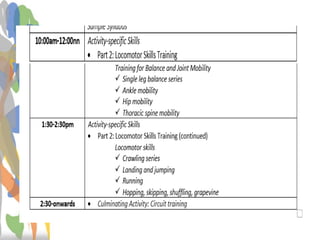
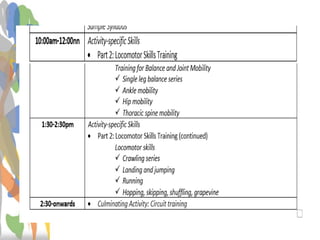
Part 2
Locomotor skills training
Crawling series
 Crawling vs. creeping
 Linear and lateral movements
Exercises for Balance
• Static vs. dynamic balance
Joint mobility exercises
Locomotor skills
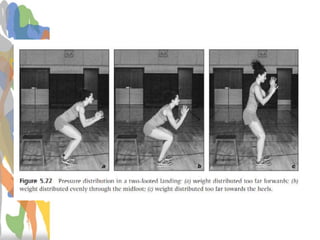
 Land
• step-down
• reverse drop
 Jump
Locomotor skills
 Linear & lateral movements
 Run
• arm action
• leg action
Locomotor skills
 Slide/shuffle
 Backpedal
Locomotor skills
 Hop
 Step-hop
 Skip
 Leap
Part 3
Core strength training
Primary movement patterns
Part 3
Core strength training
Primary movement patterns
in resistance training
(lower and upper body)
Lower body exercises
 Squat
 Hinge
 Lunge
Squat
Hinge
Lunge
Upper body exercises
 Push & pull
 Vertical & horizontal
Horizontal push
Horizontal pull
Vertical push
Vertical pull
Movement Competency Screen
(M. Kritz, 2012)
• Squat
• Lunge and twist
• Push-ups
• Bend and pull
• Single leg squat
Primary movement patterns
in resistance training
• Lower vs. upper body exercises
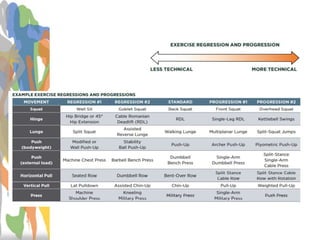
• Lower body: squat, lunge, hinge
• Upper body: push & pull; horizontal and vertical
directions
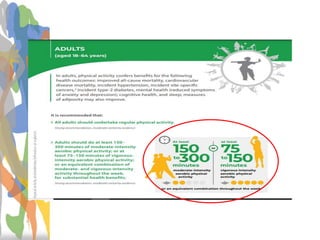
• Body weight and external load
• Exercise program variables: set, rep, load & rest interval
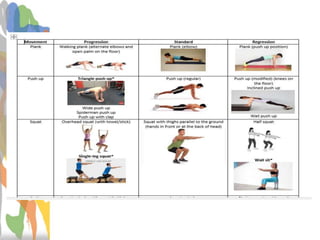
• Exercise regression & progression
Training Guidelines for
Musculoskeletal Fitness
• Set, rep, load & rest interval
• Training frequency & duration
• Training volume
• Balance

PathFit1_Handout-edited-2-1.pptx