Downloaded
from
www.annualreviews.org.
Guest
(guest)
IP:
14.245.8.218
On:
Wed,
20
Nov
2024
03:24:28
FO11CH05_Granato ARjats.cls February 28, 2020 12:51
Annual Review of Food Science and Technology
Functional Foods: Product
Development, Technological
Trends, Efficacy Testing,
and Safety
Daniel Granato,1
Francisco J. Barba,2
Danijela Bursać Kovačević,3
José M. Lorenzo,4
Adriano G. Cruz,5
and Predrag Putnik3
1
Innovative Food System, Production Systems Unit, Natural Resources Institute Finland (Luke),
FI-0250 Espoo, Finland; email: daniel.granato@luke.fi
2
Nutrition and Food Science Area, Preventive Medicine and Public Health, Food Sciences,
Toxicology and Forensic Medicine Department, Faculty of Pharmacy, Universitat de València,
46100 Burjassot, València, Spain
3
Faculty of Food Technology and Biotechnology, University of Zagreb, 10000 Zagreb, Croatia
4
Centro Tecnológico de la Carne de Galicia, Parque Tecnológico de Galicia, San Cibrao das
Vinas, 32900 Ourense, Spain
5
Department of Food, Federal Institute of Science, Education and Technology of Rio de Janeiro
(IFRJ), 20260-100 Rio de Janeiro, Brazil
Annu. Rev. Food Sci. Technol. 2020. 11:93–118
First published as a Review in Advance on
January 6, 2020
The Annual Review of Food Science and Technology is
online at food.annualreviews.org
https://doi.org/10.1146/annurev-food-032519-
051708
Copyright © 2020 by Annual Reviews.
All rights reserved
Keywords
nutraceuticals, probiotics, health-promoting foods, metabolic syndrome,
oxidative stress, food innovation
Abstract
Functional foods is a very popular term in the social and scientific media;
consequently, food producers have invested resources in the development of
processed foods that may provide added functional benefits to consumers’
well-being. Because of intrinsic regulation and end-of-use purposes in dif-
ferent countries, worldwide meanings and definitions of this term are still
unclear. Hence, here we standardize this definition and propose a guideline
to attest that some ingredients or foods truly deserve this special designation.
Furthermore, focus is directed at the most recent studies and practical guide-
lines that can be used to develop and test the efficacy of potentially functional
foods and ingredients. The most widespread functional ingredients, such
as polyunsaturated fatty acids (PUFAs), probiotics/prebiotics/synbiotics,
93
Downloaded
from
www.annualreviews.org.
Guest
(guest)
IP:
14.245.8.218
On:
Wed,
20
Nov
2024
03:24:28
FO11CH05_Granato ARjats.cls February 28, 2020 12:51
and antioxidants, and their technological means of delivery in food products are described. The
review discusses the steps that food companies should take to ensure that their developed food
product is truly functional.
INTRODUCTION
It is widely known that foods are sources of vitamins and minerals that support bodily functions
and health (e.g., breathing, energy production, immune response). Foods are mainly consumed as
cell substrates for energy and cell differentiation and proliferation and as the basis for chemical
barriers against cell oxidation. Within many types of foods, foods for specific dietary purposes
(e.g., light, diet, low-fat) and those categorized as functional foods are the main categories studied
in the past 20 years.
The term functional foods was first used in Japan in the 1980s, but their definition is often
misunderstood because they are regulated but not legally recognized in most countries, result-
ing in no statutory definition (Ye et al. 2018). However, recently, Granato et al. (2017) defined
functional foods as industrially processed or natural foods that when regularly consumed within a
diverse diet at efficacious levels have potentially positive effects on health beyond basic nutrition.
Additionally, before health claims are made for certain foods, randomized, double-blind, placebo-
controlled clinical trials are necessary to establish functional efficacy (Assmann et al. 2014). This
definition narrows the widespread use of the term functional such that without a proper clinical
trial and substantial experimental evidence of safety (i.e., toxicology) and functionality, no fresh,
unprocessed, or processed food can be regarded as functional.
In addition to their nutritional value as a conventional food, functional foods help in the pro-
motion of optimal health conditions and may reduce the risks of one or more noncommunicable
diseases, such as dyslipidemia, cancer, type-2 diabetes, stroke, and cardiovascular disease (CVD).
However, to be functional, a food should be validated in intervention trials to comply with the
regulations in each country, e.g., the Brazilian Health Regulatory Agency (ANVISA) in Brazil, the
European Food Safety Authority (EFSA) in the European Union, and the Food and Drug Ad-
ministration (FDA) in the United States (Brown et al. 2018, Cassidy et al. 2018, Mak et al. 2018).
Together with the definition of functional foods, the main inclusion criteria for a certain functional
claim for an ingredient or food on a food label are food safety, free access with no need for medi-
cal prescription (or medical advice), and evidence of health benefits when regularly consumed in
a balanced diet (Eur. Parliam. 2006, Lenssen et al. 2018).
Although the definition and the basic criteria are understandable and comprehensive, many
researchers still have misconceptions regarding terminology associated with functional foods.
Some authors declare foods or ingredients functional when they are manufactured using poten-
tially functional substances recovered from industrial by-products (Dalle Zotte & Szendrő 2011,
Tahergorabi et al. 2015) or by adopting certain technological processes (Gutiérrez 2018), whereas
others provide a functional food claim based on enrichment with essential minerals (Adadi et al.
2019). Furthermore, some authors still use the phrase “prevention of diseases” even though func-
tional foods neither prevent nor cure any diseases, as other intrinsic and extrinsic factors (e.g.,
genetic factors, physical inactivity, caloric density and variety, hormones, age) play an important
role in the etiology of noncommunicable diseases (Chibisov et al. 2019, Rao et al. 2019). Similarly,
many authors declare foods or ingredients functional based on in vitro or animal-based protocols
(Çalışkantürk Karataş et al. 2017, Gouw et al. 2017, Rana et al. 2015), whereas others confuse the
difference between conventional and functional foods (Fedacko et al. 2019). Thus, it is important
to note that functional foods are not medications, as they do not heal/cure/prevent diseases.
94 Granato et al.
Downloaded
from
www.annualreviews.org.
Guest
(guest)
IP:
14.245.8.218
On:
Wed,
20
Nov
2024
03:24:28
FO11CH05_Granato ARjats.cls February 28, 2020 12:51
Consumers today demand foods that are sustainably produced and processed, deemed safe,
fresh, and natural, and have nutritional value (Putnik et al. 2018b). As with all newly designed food
products, functional food development is expensive, difficult, and laborious (Musina et al. 2017).
From January 1990 to June 2018, the most studied functional foods and ingredients, as bib-
liometrically evaluated by Yeung et al. (2018) analyzing the most cited and searched items in the
literature, were prebiotics, probiotics, and antioxidants. As the functional food era is just begin-
ning, the main aims of this review are to provide a definition and classification of functional foods,
exemplify the most recent and relevant studies, and propose practical guidelines that can be used
to develop and test the efficacy of potential functional foods/ingredients. The review is intended to
provide an overview of the most interesting functional ingredients, such as polyunsaturated fatty
acids (PUFAs), probiotics/prebiotics/synbiotics, and antioxidants, their technological means for
delivery to food products, and their health-promoting properties. Finally, the review discusses the
steps that food companies should follow to ensure that their developed food product is compliant
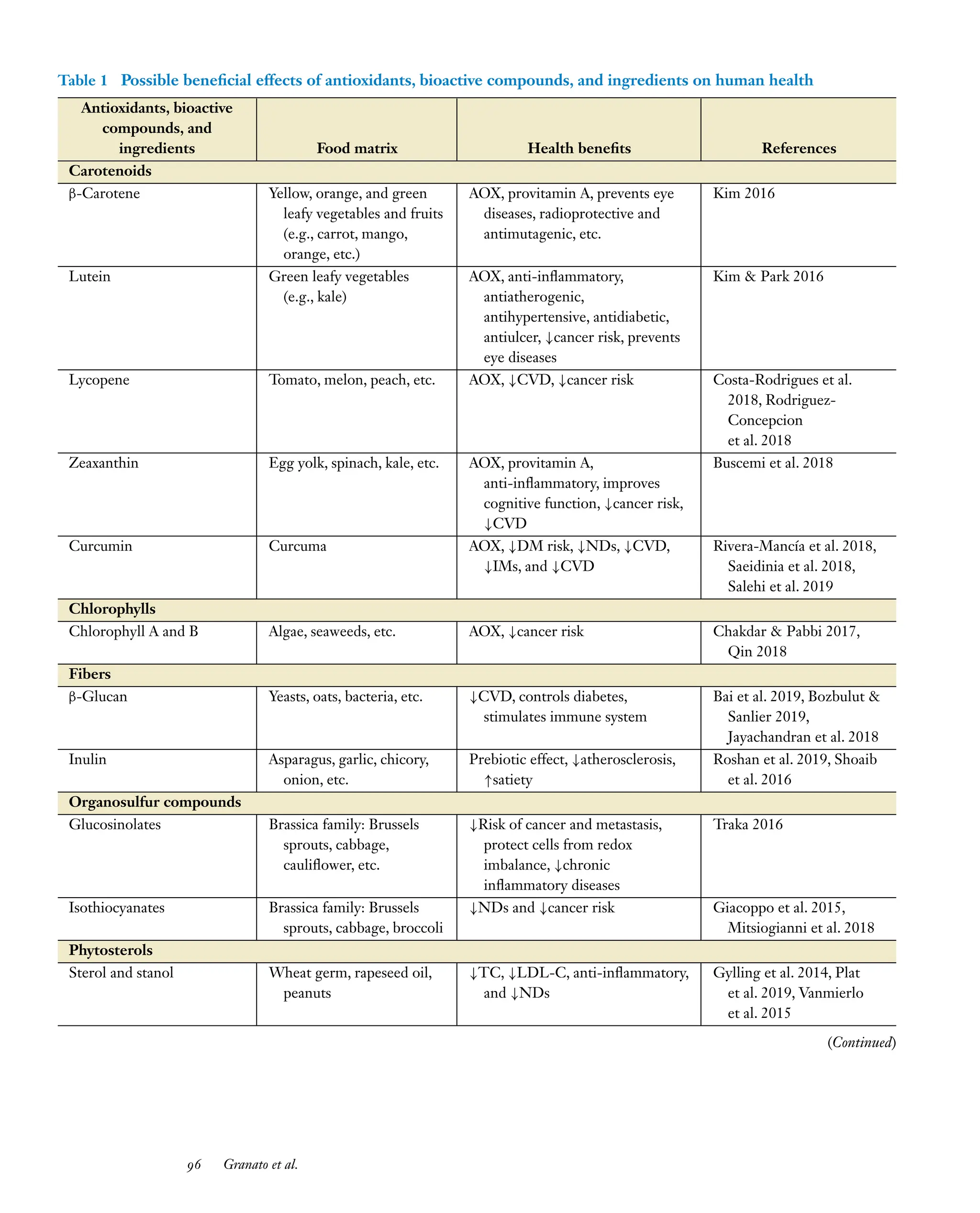
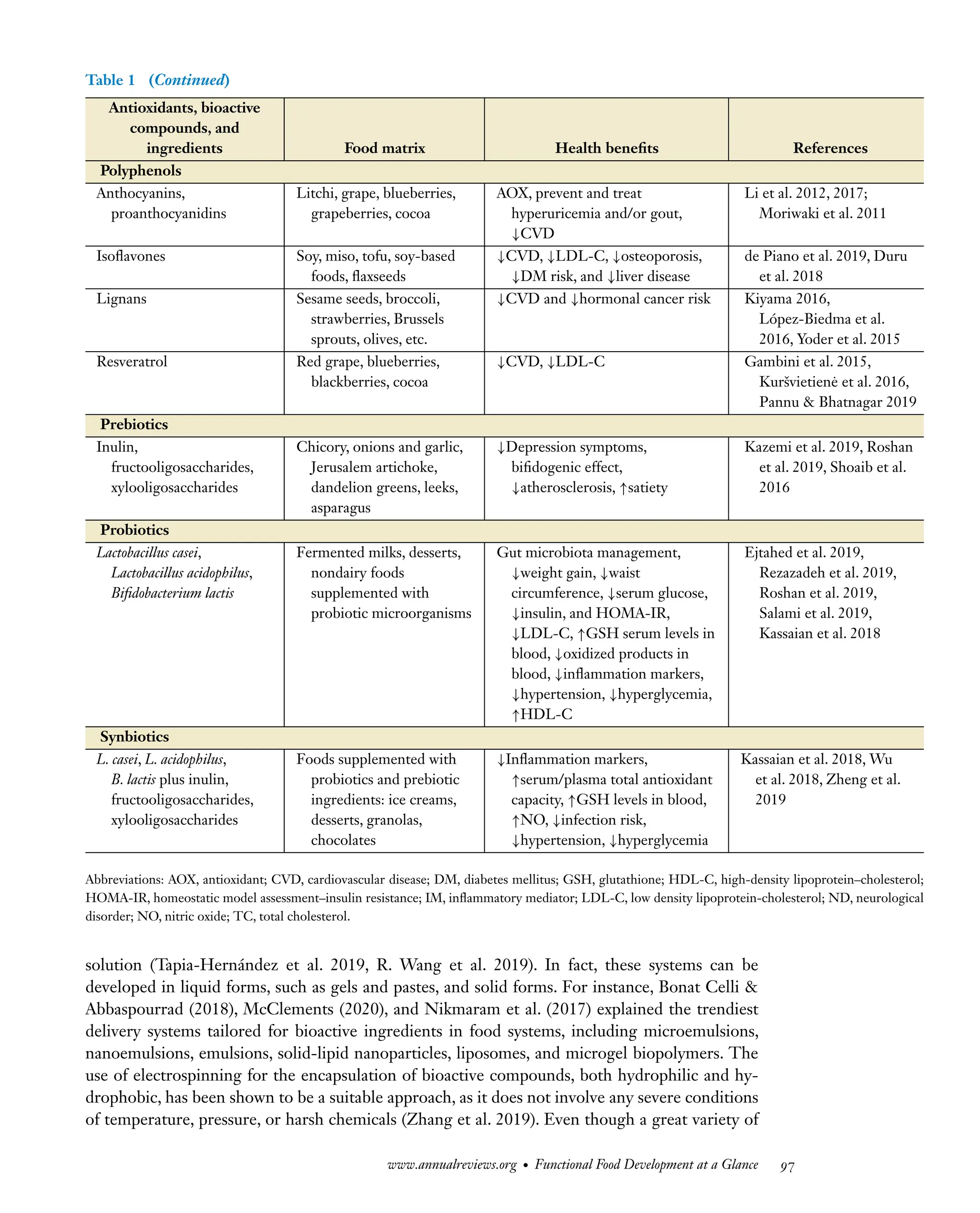
with the definition of functional. Table 1 was assembled to give an in-depth look into the main
bioactive compounds (and food sources) and food ingredients that have recognized functional
effects in humans.
FUNCTIONAL FOODS: DEVELOPMENT AND TRENDS
Trends in Novel Functional Food Products
The functional food market (United States, Japan, Asia Pacific, and European Union) is a lucrative
niche of food production and is projected to grow globally. It is anticipated to reach $304.5 billion
by 2020, with an average annual growth rate of 8.5% (Bogue et al. 2017). The most common func-
tional food products on the market include yogurt (digestive health), cereals (cardiac health), mar-
garines/butters (cholesterol metabolism), and energy/protein bars and drinks (hunger reduction)
(Bogue et al. 2017). Below, we discuss certain innovative technologies used to develop potentially
functional foods as well as technological tools that deliver bioactive ingredients/compounds.
Innovative processing technologies as a tool for development of novel functional foods.
The development of functional foods is essential for food companies and includes the design, op-
timization, and development of different formulations as well as the processing techniques that are
applied to food products before they are delivered to the market. For instance, the use of thermal
processing has a decisive influence on the bioavailability of nutrients and bioactive compounds
present in food (Koubaa et al. 2018). Over the past two decades, innovative processing technolo-
gies (e.g., high hydrostatic pressure, pulsed electric fields, ultrasounds, microwaves) have emerged
as suitable food-processing alternatives (Bursać Kovačević et al. 2018). These sustainable tech-
nologies provide better preservation of native nutrients in fruits and vegetables, avoid microbial
growth, and utilize less energy, and they can be applied to the exploitation of by-products while
being eco-friendly (Putnik et al. 2017). Hence, they have positive impacts from the functional
point of view as well as in the development of new functional products. There is a significant
influx of various governmental funding for research, development, and implementation of such
technologies in current and new food processing.
Tools to deliver target compounds. The use of bioactive compounds for the development of
functional foods is conditioned, in most cases, by low solubility and reduced stability and bioavail-
ability. To overcome these problems, the use of oral administration systems based on nanopar-
ticles or microparticles containing bioactive compounds or essential minerals can be an effective
www.annualreviews.org • Functional Food Development at a Glance 95
Downloaded
from
www.annualreviews.org.
Guest
(guest)
IP:
14.245.8.218
On:
Wed,
20
Nov
2024
03:24:28
FO11CH05_Granato ARjats.cls February 28, 2020 12:51
Table 1 Possible beneficial effects of antioxidants, bioactive compounds, and ingredients on human health
Antioxidants, bioactive
compounds, and
ingredients Food matrix Health benefits References
Carotenoids
β-Carotene Yellow, orange, and green
leafy vegetables and fruits
(e.g., carrot, mango,
orange, etc.)
AOX, provitamin A, prevents eye
diseases, radioprotective and
antimutagenic, etc.
Kim 2016
Lutein Green leafy vegetables
(e.g., kale)
AOX, anti-inflammatory,
antiatherogenic,
antihypertensive, antidiabetic,
antiulcer, ↓cancer risk, prevents
eye diseases
Kim & Park 2016
Lycopene Tomato, melon, peach, etc. AOX, ↓CVD, ↓cancer risk Costa-Rodrigues et al.
2018, Rodriguez-
Concepcion
et al. 2018
Zeaxanthin Egg yolk, spinach, kale, etc. AOX, provitamin A,
anti-inflammatory, improves
cognitive function, ↓cancer risk,
↓CVD
Buscemi et al. 2018
Curcumin Curcuma AOX, ↓DM risk, ↓NDs, ↓CVD,
↓IMs, and ↓CVD
Rivera-Mancía et al. 2018,
Saeidinia et al. 2018,
Salehi et al. 2019
Chlorophylls
Chlorophyll A and B Algae, seaweeds, etc. AOX, ↓cancer risk Chakdar & Pabbi 2017,
Qin 2018
Fibers
β-Glucan Yeasts, oats, bacteria, etc. ↓CVD, controls diabetes,
stimulates immune system
Bai et al. 2019, Bozbulut &
Sanlier 2019,
Jayachandran et al. 2018
Inulin Asparagus, garlic, chicory,
onion, etc.
Prebiotic effect, ↓atherosclerosis,
↑satiety
Roshan et al. 2019, Shoaib
et al. 2016
Organosulfur compounds
Glucosinolates Brassica family: Brussels
sprouts, cabbage,
cauliflower, etc.
↓Risk of cancer and metastasis,
protect cells from redox
imbalance, ↓chronic
inflammatory diseases
Traka 2016
Isothiocyanates Brassica family: Brussels
sprouts, cabbage, broccoli
↓NDs and ↓cancer risk Giacoppo et al. 2015,
Mitsiogianni et al. 2018
Phytosterols
Sterol and stanol Wheat germ, rapeseed oil,
peanuts
↓TC, ↓LDL-C, anti-inflammatory,
and ↓NDs
Gylling et al. 2014, Plat
et al. 2019, Vanmierlo
et al. 2015
(Continued)
96 Granato et al.
Downloaded
from
www.annualreviews.org.
Guest
(guest)
IP:
14.245.8.218
On:
Wed,
20
Nov
2024
03:24:28
FO11CH05_Granato ARjats.cls February 28, 2020 12:51
Table 1 (Continued)
Antioxidants, bioactive
compounds, and
ingredients Food matrix Health benefits References
Polyphenols
Anthocyanins,
proanthocyanidins
Litchi, grape, blueberries,
grapeberries, cocoa
AOX, prevent and treat
hyperuricemia and/or gout,
↓CVD
Li et al. 2012, 2017;
Moriwaki et al. 2011
Isoflavones Soy, miso, tofu, soy-based
foods, flaxseeds
↓CVD, ↓LDL-C, ↓osteoporosis,
↓DM risk, and ↓liver disease
de Piano et al. 2019, Duru
et al. 2018
Lignans Sesame seeds, broccoli,
strawberries, Brussels
sprouts, olives, etc.
↓CVD and ↓hormonal cancer risk Kiyama 2016,
López-Biedma et al.
2016, Yoder et al. 2015
Resveratrol Red grape, blueberries,
blackberries, cocoa
↓CVD, ↓LDL-C Gambini et al. 2015,
Kuršvietienė et al. 2016,
Pannu & Bhatnagar 2019
Prebiotics
Inulin,
fructooligosaccharides,
xylooligosaccharides
Chicory, onions and garlic,
Jerusalem artichoke,
dandelion greens, leeks,
asparagus
↓Depression symptoms,
bifidogenic effect,
↓atherosclerosis, ↑satiety
Kazemi et al. 2019, Roshan
et al. 2019, Shoaib et al.
2016
Probiotics
Lactobacillus casei,
Lactobacillus acidophilus,
Bifidobacterium lactis
Fermented milks, desserts,
nondairy foods
supplemented with
probiotic microorganisms
Gut microbiota management,
↓weight gain, ↓waist
circumference, ↓serum glucose,
↓insulin, and HOMA-IR,
↓LDL-C, ↑GSH serum levels in
blood, ↓oxidized products in
blood, ↓inflammation markers,
↓hypertension, ↓hyperglycemia,
↑HDL-C
Ejtahed et al. 2019,
Rezazadeh et al. 2019,
Roshan et al. 2019,
Salami et al. 2019,
Kassaian et al. 2018
Synbiotics
L. casei, L. acidophilus,
B. lactis plus inulin,
fructooligosaccharides,
xylooligosaccharides
Foods supplemented with
probiotics and prebiotic
ingredients: ice creams,
desserts, granolas,
chocolates
↓Inflammation markers,
↑serum/plasma total antioxidant
capacity, ↑GSH levels in blood,
↑NO, ↓infection risk,
↓hypertension, ↓hyperglycemia
Kassaian et al. 2018, Wu
et al. 2018, Zheng et al.
2019
Abbreviations: AOX, antioxidant; CVD, cardiovascular disease; DM, diabetes mellitus; GSH, glutathione; HDL-C, high-density lipoprotein–cholesterol;
HOMA-IR, homeostatic model assessment–insulin resistance; IM, inflammatory mediator; LDL-C, low density lipoprotein-cholesterol; ND, neurological
disorder; NO, nitric oxide; TC, total cholesterol.
solution (Tapia-Hernández et al. 2019, R. Wang et al. 2019). In fact, these systems can be
developed in liquid forms, such as gels and pastes, and solid forms. For instance, Bonat Celli &
Abbaspourrad (2018), McClements (2020), and Nikmaram et al. (2017) explained the trendiest
delivery systems tailored for bioactive ingredients in food systems, including microemulsions,
nanoemulsions, emulsions, solid-lipid nanoparticles, liposomes, and microgel biopolymers. The
use of electrospinning for the encapsulation of bioactive compounds, both hydrophilic and hy-
drophobic, has been shown to be a suitable approach, as it does not involve any severe conditions
of temperature, pressure, or harsh chemicals (Zhang et al. 2019). Even though a great variety of
www.annualreviews.org • Functional Food Development at a Glance 97
Downloaded
from
www.annualreviews.org.
Guest
(guest)
IP:
14.245.8.218
On:
Wed,
20
Nov
2024
03:24:28
FO11CH05_Granato ARjats.cls February 28, 2020 12:51
studies was carried out to develop stable systems that increase the solubility, stability, and bioavail-
ability of bioactive compounds, one of the biggest challenges that remains is the difficulty of
scaling the laboratory results up to commercial levels. Issues often occur as the ingredients or pro-
cessing operations are not commercially practical. Likewise, there is the downside that after the
addition of functional compounds, the matrices that incorporate bioactive compounds may
lose flavor, texture, appearance, and stability. Furthermore, the development of an adequate
administration system is expensive because there must be rigorous testing on humans and animals
to evaluate accurately their bioavailability and potential toxicity. For example, it is necessary to
evaluate whether the administration of a bioactive-rich system allows the bioactive compound(s)
to be stable and biologically active during transit through the gastrointestinal tract and its
subsequent absorption.
BIOACTIVE INGREDIENTS FOR FUNCTIONAL
FOOD DEVELOPMENT
Probiotics, Prebiotics, and Synbiotics
By definition, probiotics are ingested living microorganisms that in adequate amounts induce
health benefits in the host (Hill et al. 2014). To be considered probiotic, the microorganism (e.g.,
Lactobacillus and Bifidobacterium genera) must survive an acidic environment and exposure to bile
salts found in the human body while having a good capacity for absorption in the intestine and a
clear link to some health marker in clinical trials (Champagne et al. 2018). Similarly, prebiotics are
consumed so that microorganisms can selectively utilize them and provide health benefits to the
host (Gibson et al. 2017). Prebiotics have the ability to improve the survival, growth, metabolism,
and beneficial health activities of probiotics in the digestive system. The most known examples
from the diet are nonactive food constituents that move to the colon and are selectively fermented,
such as lactulose, galactooligosaccharides, fructooligosaccharides, xylooligosaccharides, and inulin
as well as their hydrolysates. Finally, synbiotics are a combination of probiotics and prebiotics that
provides beneficial effects to the host by efficiently improving the survival of live microbes in the
digestive tract compared to either probiotics or prebiotics alone (Mohanty et al. 2018). Interest-
ingly, the best-case scenario for synbiotics is that each constituent (pro- and prebiotic) has a bene-
ficial additive effect. The synbiotic terminology is divided into complementary (i.e., the prebiotic
component is not necessarily fermented by the probiotic strain and could theoretically support
other members of the gastrointestinal microbiota without registering any ecological advantage to
the probiotic strain) and synergistic (i.e., prebiotic ingredient is added to a food formulation with
the specific purpose of supporting the growth of the probiotic strain) (Krumbeck et al. 2018).
Regarding the technological applications of probiotics, prebiotics, and synbiotics, much at-
tention is dedicated to delivery strategies that are able to increase their chemical stability and
viability during shelf life (Sanders & Marco 2010). Hence, the development of solutions to im-
prove a product’s stability throughout storage conditions is required. Some of these alternatives
are the manufacture of nondairy foods (Ranadheera et al. 2018), microencapsulation of probiotic
microorganisms and their introduction to unfermented foods (Panghal et al. 2018), assessment
of novel sources of prebiotic ingredients (Dávila et al. 2019, de Borba Gurpilhares et al. 2019,
Zeng et al. 2018), assessment of different functional effects (Chen et al. 2018), and engineering of
edible coatings for probiotic bacteria entrapment and delivery (P. Singh et al. 2019). Regardless
of technology, it is important to perform clinical trials to evaluate efficacy, correct dosage, and
consequence of long-term exposure to probiotics, prebiotics, and/or synbiotics in humans.
Recently, paraprobiotics, which are inactivated probiotic microorganisms that are able to pro-
vide health benefits, have drawn attention (de Almada et al. 2016). However, the mechanisms of
98 Granato et al.
Downloaded
from
www.annualreviews.org.
Guest
(guest)
IP:
14.245.8.218
On:
Wed,
20
Nov
2024
03:24:28
FO11CH05_Granato ARjats.cls February 28, 2020 12:51
such actions are not completely elucidated, so this requires additional in vitro studies and clinical
trials to understand the interactions between the physiological effects of paraprobiotics in humans
(Nishida et al. 2017, Sawada et al. 2016).
More recently, postbiotics were defined as soluble compounds or metabolic by-products that
are released by bacteria during their lives or after their lysis in the gastrointestinal tract (Aguilar-
Toalá et al. 2018). Short-chain fatty acids, enzymes, peptides, endo- and exopolysaccharides, and
cell-surface proteins are included in this group. Some health benefits of postbiotics include the
lowering of low-density lipoprotein cholesterol (LDL-C) and antioxidant, immunomodulatory,
and antimicrobial effects, as described by Aguilar-Toalá et al. (2018) and Foo et al. (2019). How-
ever, the mechanisms of action are not fully elucidated. Therefore, it is important to provide op-
timal processing parameters that guarantee the maximum production, isolation, and purification
as well as correct dosage of postbiotics.
Antioxidants
Beginning in the 1930s, antioxidants (i.e., ascorbic acid and tocopherols) were solely used as ad-
ditives to prevent oxidation of oils/fats in foods with high concentrations of lipids (Carocho et al.
2018). In the 1970s, clinical trials revealed those dietary antioxidants inhibited the oxidation pro-
cesses and prevented oxidative stress in related diseases. From this moment onward, the use of
antioxidants soared worldwide, not only as food additives but also as dietary supplements, because
of their beneficial effects in humans (Cömert & Gökmen 2018).
Halliwell & Gutteridge (2015, p. 77) stated that “an antioxidant is a substance that, when
present at a low concentration compared with that of an oxidizable substrate in the medium, in-
hibits oxidation of the substrate.” Under this classification, phenolic compounds (e.g., flavonoids,
phenolic acids, stilbenoids, coumarins, lignoids), carotenoids (e.g., carotenes and xanthophylls),
terpenoids (e.g., monoterpenes, triterpenes, and sesquiterpenes), and some lipids (e.g., tocopherols
and tocotrienols) are considered antioxidant agents. From the physiological perspective, there are
three different mechanisms for protecting cells/organs: (a) single-electron transfer, (b) hydrogen-
atom transfer, and (c) transition metal chelation. According to the place of origin, antioxidants may
be endogenous (e.g., catalase, glutathione reductase, superoxide dismutase) or exogenous (toco-
pherols, carotenoids, phenolic compounds, and terpenoids). More details on these topics can be
found elsewhere (Granato et al. 2018b, Pellegrini et al. 2019).
Multiple publications have associated higher consumption of fruits and vegetables (rich
with antioxidants) with a lower risk of all-cause mortality, particularly cardiovascular mortality
(Parohan et al. 2019). Additional studies reported that a significant inverse association is com-
monly observed for cardiovascular mortality with higher consumption of fruits and vegetables,
whereas this was not associated with risk of cancer mortality (Nguyen et al. 2016). In a recent study
conducted by Du et al. (2017), authors concluded that regular consumers of fruits (≥4 days/week)
versus nonregular consumers had 27% lower all-cause mortality, 34% lower CVD mortality, 17%
lower digestive tract cancer mortality, and 42% lower mortality from chronic obstructive pul-
monary disease. More importantly, there was a log-linear dose–response relationship between the
amounts of consumed fruits and the lower mortality index.
In a prospective and observational study with septic Spanish patients (n = 319), serum an-
tioxidant capacity (SAC) was correlated with mortality rate. Authors found that lower SAC levels
during the first week of sepsis are associated with higher lipid peroxidation, sepsis severity, and
sepsis mortality, and they could be used as a prognostic biomarker (Lorente et al. 2018). Similarly,
two prospective cohort studies of middle-aged and elderly Chinese adults (n = 134,358) in urban
Shanghai were carried out to assess the effects of intake of ascorbic acid and β-carotene as dietary
www.annualreviews.org • Functional Food Development at a Glance 99
Downloaded
from
www.annualreviews.org.
Guest
(guest)
IP:
14.245.8.218
On:
Wed,
20
Nov
2024
03:24:28
FO11CH05_Granato ARjats.cls February 28, 2020 12:51
supplements (consumed continuously at least three times per week for longer than two months).
Authors observed significant inverse associations among consumption of total dietary β-carotene
and ascorbic acid with the risk of CVD mortality (Zhao et al. 2017).
Initially, because data for antioxidants showed that they delayed the onset of oxidative reac-
tions both in vitro and in vivo, sales of dietary antioxidants as antiaging agents in the 2000s gained
more momentum and more marketing. A large database containing the oxygen radical absorbance
capacity (ORAC) of more than 1,000 foods was released by the US Department of Agriculture
(USDA) in 2012, only to be removed from their website after stating that in vitro measurement of
antioxidant capacity (i.e.,ORAC) has no physiological relevance in humans.In addition,the USDA
discouraged the use of ORAC on supplements and foods for marketing purposes. Halliwell (2012)
also stated that the consumption of large doses of antioxidants (e.g., pills and tablets) generally
failed to prevent human diseases, in part because they do not decrease oxidative damage in vivo.
Additionally, an overdose of dietary antioxidants could present pro-oxidant effects, thus causing
deleterious effects in humans, which is not desired (Sarangarajan et al. 2017). For instance, with
cancer patients, Khurana et al. (2018) concluded that several randomized clinical trials showed that
the consumption of antioxidants during chemotherapy decreased the effectiveness of the medical
treatment. Gostner et al. (2015) reviewed the pros and cons of dietary antioxidant intake and con-
cluded that the overall uptake of antioxidants exceeds the recommended requirements. Some of
these compounds include food additives such as vitamins, colorants, flavoring agents, and preser-
vatives that are often strong antioxidants. In addition, dietary antioxidants lower leptin, thus in-
terfering with satiety regulation and, consequently, trigger food intake (Gostner et al. 2015).
Another main issue in food science is finding antioxidants and chemically measuring their an-
tioxidant effectiveness by multiple in vitro and ex vivo methods (Fidelis et al. 2018, Jiao et al.
2018). We also need to optimize their extraction conditions to obtain more target compounds
from different food and herbal sources (Escher et al. 2018, Ochiai et al. 2019, Santos et al. 2018).
As assessments,in vitro chemical assays have several disadvantages and pitfalls (Schaich et al.2015);
cell-based methods (i.e., cytotoxic and antiproliferative effects) may be the new, reliable assays for
the antioxidant activity of food-based extracts (Kellett et al. 2018). Recently, Xiao (2018) evoked
the need to strengthen the legitimacy of studies with the chemical stability of polyphenols when
these substances are tested for anticarcinogenic and antiproliferative activities in cell-based meth-
ods. The author stated that some polyphenols are not stable and potentially may produce unsafe
end products without any bioactivity.
Currently, continuous demand from modern consumers is pushing the food industry to de-
crease or even eliminate the use of synthetic additives in manufacturing; thus, numerous research
and technological applications have switched to focus on natural counterparts. Hence, bioactive
compounds are extracted from herbs, foods, and industrial by-products so they can be applied
as antioxidants in food production (Chen & Xu 2019). These extracts are obtained using either
water or ethanol (or their binary combination) and are then assessed to identify physicochemical
and functional properties (Ochiai et al. 2019, Shi et al. 2019). Consequently, they can be applied
in the production of different foods, such as dairy products (Granato et al. 2018a, Karnopp et al.
2017), meat-based foods (Bajpai et al. 2019), oil-in-water emulsions (Elder et al. 2019), edible oil
(Utama-ang et al. 2017), protein concentrates from marine microalgae (Kazir et al. 2019), bread
(Mikulec et al. 2019), crackers and bars (Gamel et al. 2019), and snacks (Ramírez-Jiménez et al.
2018) as well as packaging materials (Rambabu et al. 2019).
Although in vitro chemical and cell-based methods may provide a quantitative result (e.g.,
high in antioxidants), clinical and epidemiological data are inconclusive at this point. Thus, more
research is needed to confirm or refute the hypothesis that foods rich in antioxidants can be con-
sidered functional foods. The final message should be clear: High chemical antioxidant activity
100 Granato et al.
Downloaded
from
www.annualreviews.org.
Guest
(guest)
IP:
14.245.8.218
On:
Wed,
20
Nov
2024
03:24:28
FO11CH05_Granato ARjats.cls February 28, 2020 12:51
measured by different in vitro methods may not be translated to in vivo antioxidant activity,
and, therefore, foods with high chemical antioxidant activity cannot be automatically considered
functional.
Polyunsaturated Fatty Acids
PUFAs with multiple double bonds in the main carbon skeleton are widely present in foods, where
they play an important role in human metabolism. Among the several PUFAs, n-3 and n-6 are the
most studied families because of their nutritional importance and their biological functions. The
scientific literature is largely composed of studies regarding essential PUFA, particularly linolenic
(LA; 18:2, n-6), alpha-linolenic (ALA; 18:3, n-3), the long-chain PUFA (LCPUFA) eicosapen-
taenoic acid (EPA; 20:5, n-3), and docosahexaenoic acid (DHA; 22:6, n-3). To exploit the potential
health benefits associated with the consumption of such compounds, focus is given to their dietary
sources, which include oilseeds, cereals, fish, and fish oil (Kaur et al. 2012).
PUFAs are also associated with many health benefits; for example, there is a well-known as-
sociation between a high proportion of PUFAs (particularly long-chain n-3 PUFAs) and reduced
risk for CVDs. The protective effect of these fatty acids is even more evident when measuring
the amounts from the diet (Sekikawa et al. 2015). Sekikawa et al. (2015) compared clinical tri-
als from Japan and the United States and found that although a cardiovascular protective effect
was reported in Japan, most studies from the United States did not report the same beneficial
effects (high consumption in Japan versus low consumption in the United States). Another PUFA
health benefit is their positive effects against inflammation. The consumption of small amounts
of n-3 PUFAs (1.8 g of EPA + 1.3 g of DHA/day) for 21 days has been associated with reduced
levels of airway inflammatory markers among adults with asthma and hyperpnoea-induced bron-
choconstriction (Williams et al. 2017). Furthermore, a recent review and meta-analysis supported
the central role of PUFAs in the reduction of inflammation biomarkers, especially for C-reactive
protein production among type-2 diabetes mellitus carriers (Lin et al. 2016).
The current strategy to develop PUFA functional foods is mainly focused on the addition of
one or a combination of PUFAs from natural sources to foods to increase their individual and
total content. It is important to explore alternative strategies to produce functional foods contain-
ing PUFAs from less common sources as well as to introduce these substances into unexplored
food products. This includes considering new physiological processes along with those that are al-
ready known. Exploring other PUFA involvement in LCPUFA synthesis is an interesting strategy
because it would favor nutritional benefits while promoting health. Stearidonic acid (SDA; 18:4,
n-3) is an interesting option for further studies among PUFAs because of the potential increase
in EPA synthesis (at nutritional level) and the potential for reducing risks of cancer and CVDs
and improving inflammatory status in vivo (Cardoso et al. 2018, Whelan 2009). In addition, SDA
also improved glucose disposal in insulin-resistant monkeys, indicating that human studies are
necessary to confirm this functional effect (Kavanagh et al. 2013).
It is also important to develop the current PUFA sources and explore new ones. Less common
sources of PUFA for the functional food industry are algae, microorganisms, krill (Delarue &
Guriec 2014), insects (Belluco et al. 2013), and even the liver of domesticated species (Gheysen
et al. 2018). The addition of PUFAs, particularly n-3 PUFAs, requires an appropriate benchmark
to fulfill nutritional requirements and consequently provide scientific support for the development
of novel PUFA functional foods.Regarding the risk of CVD,the n-3 index is defined as the percent
sum of EPA and DHA, which indicates undesirable (0–4%), intermediate (4–8%), and desirable
(>8%) fatty acid profiles (Harris et al. 2007).
The current challenges in the manufacture of PUFA functional foods are the susceptibility to
oxidative reactions and changes in sensory properties and texture ( Jiménez-Martín et al. 2015,
www.annualreviews.org • Functional Food Development at a Glance 101
Downloaded
from
www.annualreviews.org.
Guest
(guest)
IP:
14.245.8.218
On:
Wed,
20
Nov
2024
03:24:28
FO11CH05_Granato ARjats.cls February 28, 2020 12:51
Lorenzo et al. 2016). Some of the most relevant factors to consider in oxidative stabilization of
PUFAs are the presence and composition of physical barriers and droplet size, the presence of an-
tioxidant compounds, and exposure to high temperatures, UV radiation, and atmospheric oxygen
(Kaushik et al. 2015).
To overcome the issues imposed by processing and storage, multiple strategies have been
explored, such as the use of antioxidants (Espinosa et al. 2015, Qiu et al. 2017), encapsulation
approaches (e.g., freeze-drying, spray-drying, and spray granulation) (Anwar & Kunz 2011),
coacervation (Eratte et al. 2014), electrospray (Gómez-Mascaraque & López-Rubio 2016), and
microgels (Chen et al. 2017). Furthermore, the evaluation of such strategies in food systems has
shown promising results regarding product quality (Munekata et al. 2017, Penko et al. 2015).
Finally, the most recent products supplemented with PUFAs and subjected to clinical trials
were yogurt and juice (Ottestad et al. 2016), margarine (Burak et al. 2017), spreads and vegetable
oils (Vafeiadou et al. 2015), cooked rice (Sun et al. 2016), and a multicomponent meal composed
of a muffin and a strawberry-flavored milkshake (Chang et al. 2016, Teng et al. 2015). The variety
of PUFA functional products that show a successful association with health benefits are important
facts that support PUFAs’ role as one of the main functional ingredients.
Phytosterols
Phytosterols and stanols are lipophilic compounds that are naturally found in plants in the free un-
bound form or covalently bound via an ester or glycosidic bond. These compounds are associated
with fluidity and the permeability of vegetable cell membranes (Moreau et al. 2018). From a chem-
ical standpoint, phytosterols and stanols have structures and roles similar to those of cholesterol
in animal cells. The main phytosterols from vegetable oils, nuts, seeds, cereals, fruits, and veg-
etables are stanol, campesterol, sitosterol, stigmasterol, sitostanol, and campestanol (Alkhalf et al.
2018, Putnik et al. 2019, Vu et al. 2019, M. Wang et al. 2019). Because of chemical similarity to
cholesterol, phytosterols and stanols have been clinically shown to reduce cholesterol absorption
(which reduces serum cholesterol) both in vitro and in vivo (Danesi et al. 2016, Yi et al. 2016). The
mechanism associated with the reduction of serum cholesterol by phytosterols is the inhibition of
cholesterol absorption in the intestinal tract. In addition, it is suggested that phytosterols decrease
the activity of lipases and cholesterol esterases on cholesterol, induce the formation of insoluble
mixed crystals by cocrystallization with cholesterol, and compete for dietary mixed micelles at the
physiological level (Trautwein et al. 2003).
Because of the inhibitory effects of phytosterols on cholesterol at physiological and molecular
levels, several studies were dedicated to evaluating the impact on cardiovascular biomarkers, such
as the hypocholesterolemic effect. As circulating cholesterol, especially LDL-C, is one of the ma-
jor risk factors for CVD, impeding cholesterol absorption potentially leads to a reduced risk of
heart diseases (Ferguson et al. 2018). Phytosterols and stanols are toxicologically safe at standard
concentrations found in natural and processed foods (up to 20 g/day).
Many studies have shown that phytosterols and stanols confer other health-promoting effects,
e.g., improving immune response to cancer recognition; affecting hormone-dependent endocrine
tumor growth (Shahzad et al. 2017); acting as chemical antioxidants, free-radical scavengers, and
anti-inflammatory constituents in vitro (Alkhalf et al. 2018); and functioning as cytotoxicants
against NIH/3T3, HeLa, and MCF-7 tumor cells (Ayaz et al. 2019), by participating in differ-
ent physiological pathways. A meta-analysis was conducted by Rocha et al. (2016) in which the
authors concluded that the consumption of <10 g/day of phytosterols (average of 2.24 g/day)
for more than two weeks did not change the C-reactive protein (inflammation marker), high-
density lipoprotein (HDL), and triacylglycerol levels in humans (Rocha et al. 2016). Conversely,
Devaraj et al. (2011) performed a clinical trial with 72 healthy volunteers that received either plain
102 Granato et al.
Downloaded
from
www.annualreviews.org.
Guest
(guest)
IP:
14.245.8.218
On:
Wed,
20
Nov
2024
03:24:28
FO11CH05_Granato ARjats.cls February 28, 2020 12:51
orange juice or plant sterol–rich orange juice (2 g/480 mL per day) and analyzed the inflamma-
tion markers [interleukin (IL)-1b and IL-6 tumor necrosis factor alpha (TNF-α), IL-8, and IL-
10)] after 8 weeks of treatment. There were significant reductions in IL-1b and IL-6 levels with
sterol-fortified orange juice versus the baseline group. The authors concluded that the sterol-
fortified orange juice was able to effectively lower biomarkers of inflammation in healthy human
volunteers.
Because of strong evidence that phytosterols and stanols have beneficial effects in humans,
various lawmakers permitted the use of these compounds in foods and made them eligible to bear
the disease risk–reduction claims on the food labels (Kalliny & Zawistowski 2019). Regarding
phytosterols as functional foods, several clinical trials supported the use of this class of compounds
in different lipid-rich products. Some of these foods include margarine (Law 2000), milk and
processed dairy products (Clifton et al. 2004, Ribas et al. 2017), fruit juices (Abd-Razak et al. 2019),
sterol-based oleogels (Martins et al. 2019), soy drinks (Weidner et al. 2008), and phytosterol-rich
chocolate (Botelho et al. 2014).
The current research trends associated with the addition of phytosterols/stanols during food
manufacturing are related to two main topics: oxidative instability and physiological delivery to
assure bioavailability in humans. Therefore, current technological demands center research on the
technological means for their delivery. As a result, modern approaches emerged, such as encapsu-
lation by spray-drying with different carrying agents (Di Battista et al. 2017), supercritical carbon
dioxide impregnation of phytosterols into nanoporous starch aerogels (Ubeyitogullari & Ciftci
2017), and complex coacervation (Comunian et al. 2017). These methods were shown to enhance
their chemical stability toward oxidation in foods, which influences food shelf life and sensory
properties. Phytosterols/stanols must be finely dispersed prior to exposure to bile salts, preferably
in particles smaller than 25 μm, to reduce the sandy mouthfeel while still favoring their incorpo-
ration into the micellar phase in the intestine. Owing to their hydrophobic and water-insoluble
nature, phytosterols/stanols have difficulties forming stable dispersions, which limits their use in
intermediate or final aqueous-based food products (Di Battista et al. 2018).
However, more studies are necessary to overcome some drawbacks in the production of func-
tional foods with plant sterols. The first limitation is the possible reduction in physiological ab-
sorption of fat-soluble antioxidants and bioactive dietary compounds. For instance, the absorption
of carotenoids, tocopherols, and lipophilic vitamins has been shown to be limited by phytosterols
(Rocha et al. 2011). Another relevant aspect is oxidation of plant sterols during preparation of the
foods and during storage with formation of hydroxy, epoxy, keto, and triol derivatives, collectively
known as phytosterol oxidation products (POPs) (O’Callaghan et al. 2014). Chemical and enzy-
matic pro-oxidants in food and the human body can induce the formation of 7-keto-sitosterol,
7-keto-campesterol, and 7β-OH- and 7α-OH-oxyphytosterols. Such compounds induced impor-
tant physiological modifications in animal models, such as liver hyperplasia (Liang et al. 2011). In
addition, POPs have no beneficial effects on lowering total cholesterol in vivo. Thus, limiting the
oxidation of plant sterols in final products is an essential technological focus for functional food
manufacturing.
TOOLS TO EVALUATE THE BIOLOGICAL EFFECTS AND SAFETY
OF FUNCTIONAL FOODS: TESTING EFFICACY AND SAFETY
As mentioned above, a new functional food must be clinically evaluated to prove it is beneficial to
humans and to corroborate safety. The assessment of functionality and the health-claim formula-
tions of potentially functional foods and ingredients should be based on in vivo testing.These steps
are necessary to select proper biomarkers to evaluate the existence and magnitude of potential
www.annualreviews.org • Functional Food Development at a Glance 103
Downloaded
from
www.annualreviews.org.
Guest
(guest)
IP:
14.245.8.218
On:
Wed,
20
Nov
2024
03:24:28
FO11CH05_Granato ARjats.cls February 28, 2020 12:51
health benefits (or deleterious effects related to safety). In vitro and animal models cannot estab-
lish cause-and-effect in humans, but they do provide supportive evidence for functionality and are
related to the functional substance. A double-blind randomized controlled clinical trial (RCT)
with placebo controls, with either a parallel (one treatment is evaluated) or cross-over method (≥2
products are assessed with a washout period) is the gold standard for clinical research (Weaver &
Miller 2017) to assess the health claims and safety of potential functional foods (Nieburg 2013).
RCTs eliminate problems with bias and confounding in the research while allowing the causal
inference that provides lawmakers with facts to permit health claims on medicinal and food labels.
More details on clinical study design can be found in the epidemiologic literature (Ahrens &
Pigeot 2014). Therefore, the full details regarding the experimental methodology and precise and
in-depth discussion of the obtained data are necessary to reflect on the quality of the foods with
functional claims. This ensures evidence-based, unbiased judgment of the validity and reliability
of the results. Furthermore, the data should be published in a peer-reviewed scientific journal
to allow for a critical assessment by the scientific community (Kamioka et al. 2019). Valid and
reliable results generated by the RCT should be passed to the public and government and focus
on the protection of public health.
However, if a food product is already known and widely studied, a systematic review of this
food or its functional substance(s), preferably by meta-analysis, may be acceptable. After a careful
and rigorous analysis, experts from the FDA or EFSA must reach an evidence-based agreement
(consensus) to determine whether or not the food/ingredient claim is supported (Frestedt 2017,
Lenssen et al. 2018). For instance, the claim that apple juice is a functional food because it contains
(+)-catechins and some anthocyanins, which are well-known protectants of the cardiovascular sys-
tem, is unsupported. Rather, human RCTs are needed to validate that this matrix reliably modu-
lates a certain physiological function (versus placebo juice) to legally claim functional properties
on the food label (Tanemura et al. 2018).
RCTs need significant human and financial resources and must integrate work essential for
obtaining precise and reliable results from multidisciplinary areas (e.g., the nutrition, food engi-
neering, pharmacology, and medical sectors) (Granato et al. 2017). Apart from such basic require-
ments, Brown et al. (2018) mentioned additional technical difficulties that confront the research
team. These challenges are found in each of the three distinct phases of a trial: the initial organi-
zation of the trial, running the trial, and, finally, the dissemination of the data following successful
completion of the trial. Thus, performing clinical trials is not a quick and easy business. Those
working in the technological, nutritional, and medical areas need to work closely to deliver results
that can be used by scientists and lawmakers as well as the food sector in research and development
(Tanemura et al. 2018).
Efficacy and safety tests of new ingredients and potential functional foods must incorporate
many epidemiologic principles that are commonly used in the medical and pharmaceutical sec-
tors. Ideally, the test should be carefully planned RCTs and take into consideration the important
technical and practical parameters to ensure that obtained information is relevant and leads to
reliable and valid conclusions (Brown et al. 2018).
FUTURE PERSPECTIVES: FUNCTIONAL FOOD ERA
Development of Functional Foods for Cardiovascular Function
According to the World Health Organization (WHO 2017), CVDs are disorders of the heart
and blood vessels and mainly include coronary heart disease, cerebrovascular disease (stroke),
rheumatic heart disease, peripheral vascular disease, heart failure, cardiomyopathies, and hyper-
tension. Every year, 17 million people die globally of CVD, particularly from heart attacks and
104 Granato et al.
Downloaded
from
www.annualreviews.org.
Guest
(guest)
IP:
14.245.8.218
On:
Wed,
20
Nov
2024
03:24:28
FO11CH05_Granato ARjats.cls February 28, 2020 12:51
strokes, representing approximately 80% of CVD deaths and approximately 32% of all global
deaths. Although heart attacks and strokes are major killers in all parts of the world, 80% of pre-
mature deaths from these causes could be prevented by controlling the main risk factors: tobacco
consumption,unhealthy/unbalanced dieting (including the excessive consumption of ethanol),and
lack of physical activity (WHO 2017).
A balanced and healthy diet, regular physical activity, moderate consumption of alcohol, and
smoking abstinence are the classic approaches to preventing CVDs and remaining at low risk for
inflammatory-type diseases. In practice, approximately 23% of the world population suffers from
metabolic syndrome, a serious health condition composed of at least three of the following five
health risk factors: obesity, dyslipidemia, hypertension, hyperglycemia, or diabetes (Am. Heart
Assoc. 2016). Metabolic syndrome places the world population at higher risk for diseases and
morbidities that are related to fatty buildups in artery walls (atherosclerosis). The main causes
of metabolic syndrome are overweight and obesity, physical inactivity, genetic factors, and older
age. However, it is not uncommon that in young adults (and even some youngsters), inappropriate
eating habits and lifestyle can induce the onset of metabolic syndrome (Mohamed 2014).
Opportunities to formulate food products that can deliver specific health benefits regarding
CVDs and fulfill basic nutritional requirements (conventional food) have been pursued over the
past two decades (Ejike et al. 2017, Kurtz et al. 2018). Evidence is mounting that greater consump-
tion of potentially functional foods can significantly reduce morbidity/mortality associated with
CVDs by modulating specific biomarkers (Bitok & Sabaté 2018, Fedacko et al. 2019). In this inter-
disciplinary view, considerable medical and scientific interest was dedicated to the identification of
foods with demonstrated in vivo (humans) functional effects that can help decrease abnormalities
and onset of CVDs.
The development of processed foods with low sodium content is a good strategy to control salt-
induced hypertension in humans (Davis 2019). These foods are classified as foods for special needs
and cannot be categorized as functional. New ingredients have emerged as potentially functional
for CVDs, such as bioactive peptides obtained from various origins.
Peptides are small compounds, comprising 2–20 amino acids, that have been produced for
possible food development (Gallego et al. 2018). For instance, bioactive peptides from microalgae
were tested and showed antioxidant and antihypertensive properties (Ejike et al. 2017). Similarly,
peptides from hydrolyzed brewer’s yeast possess antioxidants and angiotensin-I converting en-
zyme (ACE-I) as shown in vitro and in vivo (Amorim et al. 2019). Peptides produced during milk
fermentation with probiotic microorganisms displayed antihypertensive effects (normalization of
blood pressure) in spontaneously hypertensive rats (Ahtesh et al. 2018). Peptides from cowpea dis-
played antioxidant activity and inhibited cholesterol synthesis and cholesterol solubilization into
micelles in vitro (Marques et al. 2015).
According to Arnoldi et al. (2019), the main critical steps for the identification of new func-
tional peptides are the hydrolysis, purification, and separation of peptides that are tested with the
target food matrix. To ensure safety, initial in vitro and in vivo screening tests (chemical and cell-
based) are needed. Recommendations for some specific functionalities of purified fractions and/or
isolated peptides (e.g., inhibition of ACE-I; antioxidant activity) include the correct identification
of chemical structure together with clinical trials for the validation of the biological activities
(preferably multicentric RCT).
A good example is Montoro-García et al.’s (2017) RCT, which followed 40 healthy Spanish
individuals (with untreated high–normal blood pressure) to assess the functional effects of a dry-
cured ham rich in bioactive peptides. Individuals received either dry-cured ham (80 g/day for
one month) or cooked, uncured ham (negative control). The intake of dry-cured ham decreased
the total cholesterol, fasting glucose, LDL-C, and triacylglycerol levels. No statistical difference
www.annualreviews.org • Functional Food Development at a Glance 105
Downloaded
from
www.annualreviews.org.
Guest
(guest)
IP:
14.245.8.218
On:
Wed,
20
Nov
2024
03:24:28
FO11CH05_Granato ARjats.cls February 28, 2020 12:51
(p > 0.05) was observed for HDL cholesterol (HDL-C), triacylglycerol/HDL, and LDL/HDL
index. This study showed that a functional product can be developed to replace the consumption
of peptides via pills with functional foods as part of a balanced diet.
Because most people do not consume enough fruits and vegetables in their diet, the use of
isolated chemical compounds, commonly called nutraceuticals, added in capsules and tablets has
emerged. Classical studies still focus on the evidence that such chemical compounds isolated from
food sources present some functional properties, so they may reduce the risks of CVDs by modu-
lating cardiac, endothelial, and/or vascular functions (Mak et al. 2018). Among these compounds,
carotenoids are the most known and used nutraceuticals (Yeung et al. 2018).
Lycopene consumed up to 30 mg/day for up to 60 days was shown to reduce total cholesterol,
triacylglycerols, Apo-B, and LDL-C levels and elevate HDL-C and Apo A1 levels and the activity
of LDL receptors (Costa-Rodrigues et al. 2018, Kulczyński et al. 2017). Astaxanthin doses of up
to 20 mg/day for up to 4 months decreased the total cholesterol, LDL, and Apo B levels in over-
weight patients (Choi et al. 2011). Nutraceutical astaxanthin administration in dosages of 0, 6, and
12 mg/day for 8 weeks versus placebo presented lipid-modulating activity, antioxidant, and anti-
inflammatory effects in type-2 diabetes while decreasing total cholesterol, triacylglycerol, IL-6,
TNF-α, and LDL levels (Chan et al. 2019).
β-Carotene inhibited LDL-C oxidation in a concentration-dependent manner (2.5, 12.5, and
25 mg/L) during an in vitro cell–based protocol (Carpenter et al. 1997). However, an RCT with
type-2 diabetics showed that a mixture of palm carotenoids (21 mg/day) administered for eight
weeks had no effects on vascular function or CVD risk factors (Stonehouse et al. 2016). Bacchetti
et al. (2019) analyzed the dietary intake of carotenoids and total antioxidant capacity (TAC) of
healthy subjects (n = 83; 40 ± 10 years) for 15 days using a food frequency questionnaire and
measured the plasma levels of β-carotene, TAC, lipid hydroperoxides, and oxidized LDL (ox-
LDL)-C. Here, it is important to note that the uptake of ox-LDL-C by macrophages inside the
arterial wall is a crucial step for the development of atherosclerotic disease (Zuliani et al. 2013).
Therefore, any food or isolated compound that tends to decrease the ox-LDL in humans may
be important in decreasing the incidence of CVDs. The results showed significant correlations
between the individual ox-LDL and β-carotene (r = −0.41, p ≤ 0.01), β-carotene and TAC in
plasma (r = 0.34, p ≤ 0.05), and plasma hydroperoxides and TAC (r = −0.42, p ≤ 0.05) or plasma
hydroperoxides with β-carotene (r = −0.37, p ≤ 0.05).
Another cross-sectional study was performed among non-overweight Japanese (n = 951; 30–
79 years) and looked at associated dietary patterns and risk factors for CVDs (Higuchi et al. 2015).
The authors observed that serum β-carotene levels were inversely correlated with smoking status,
insulin resistance, and low insulin sensitivity. Indeed, β-carotene is a carotenoid with recognized
in vivo antioxidant and anti-inflammatory activities; thus, it can decrease oxygen/nitrogen reactive
species that cause insulin resistance and pancreatic β-cell dysfunction (Facchini et al. 2000). The
consumption of green/yellow vegetables, dairy foods, and fruits were the main food groups linked
to the higher serum β-carotene levels. These results showed that carotenoids not only increased
the TAC of plasma but also modulated lipid metabolism and thus are useful for decreasing the
risks of CVDs.
TECHNOLOGICAL ASPECTS: EXTRACTION OF RAW MATERIALS
FOR FUNCTIONAL FOOD PRODUCTION
As mentioned above, one of the main raw materials for functional food production is the biologi-
cally active compounds, which are chemically diverse and extracted from various sources. Accord-
ingly, it is not surprising that numerous extraction technologies employed for recovering bioactive
106 Granato et al.
Downloaded
from
www.annualreviews.org.
Guest
(guest)
IP:
14.245.8.218
On:
Wed,
20
Nov
2024
03:24:28
FO11CH05_Granato ARjats.cls February 28, 2020 12:51
compounds generally fall into one of two main categories: conventional extractions and, less fre-
quently used in industry, innovative alternatives. Some of these alternative technologies are called
novel or emerging, which might be a misleading label because many of them have been known for
quite some time and are commonly used in various fields other than food production (e.g., plasma
technology in medicine).
Appropriate extraction technology for each type of target compound should be employed.
Other than conventional technologies, the most commonly applied extraction technologies in-
clude microwave-assisted extraction,ultrasound-assisted extraction,high-pressure-assisted extrac-
tion, high-voltage electric discharge–assisted extraction, pulsed electric field–assisted extraction,
and supercritical fluid extraction (Poojary et al. 2017). No matter the technology used, policy
makers, consumers, and industry strongly favor functional food production using green concepts,
which are sensitive to environmental concerns and engineer safe and high-quality, environmen-
tally friendly food products (Chemat et al. 2015). Details about the appropriateness of each tech-
nology for particular target compounds can be found elsewhere (Putnik et al. 2018b).
Even though conventional extraction is a widely applied technology, it is not usually sustain-
able, as it comes with the problem of toxic waste disposal. Also, their thermal treatments tend to
denature certain portions of unstable, but valuable, compounds. In contrast, the abovementioned
alternatives to conventional extraction are faster and sustainable, selective, and thermally sensi-
tive; however, on the downside, they are less tested for industrial scale-up and have higher initial
implementation costs, making them less favored by industry. To tackle this problem, governmen-
tal grant donors provide funds for the development and testing of innovative solutions for the
industry. One good example is the 3D-SustJuice project (hurdle technology and 3D printing for
sustainable fruit juice processing and preservation) funded by the Croatian Science Foundation.
The 3D-SustJuice project employs innovative and sustainable technology to develop, implement,
and promote the use of safer and more environmentally friendly food manufacturing.
Aside from having miscellaneous sources of raw materials, one of the main challenges is to
define the most appropriate extraction technology. One issue to be overcome is the objective
comparison of different technologies that employ different sources of energy and other engineer-
ing aspects. For instance, conventional extraction technologies (e.g., solid–liquid extraction) are
affordable but time-consuming (i.e., batch-based process), whereas novel electrotechnologies are
faster (e.g., continuous processes) but with lower yield. Statistical optimization studies should be
conducted in detail to change this reality.
The current research offers few unbiased comparisons of diverse multiple extraction tech-
nologies in which the influence of each parameter can be clearly singled out. Ideally, an objective
comparison should be based on the same raw material that accounts for climate, chemotype, and
harvesting effects. Second, regardless of the extraction type, there should be some objective way
to evaluate the usefulness of dissimilar extraction technologies. Recently, the use of extraction
rate to compare different extraction technologies was proposed (Putnik et al. 2018a). Putnik et al.
(2018a) compared the milligrams of a target compound in a gram of a dry matter that is extracted
in one minute of high hydrostatic pressure extraction. Essentially, this represents the extraction
rate, obtained via liquid chromatography, of a given compound. In other words, extraction rate,
quantified as velocity of extraction, can be applied to most of the available extraction technologies
or those that contain the two most common parameters, extraction time and amount of extracted
compound. Similar approaches can provide other relevant rates as objective sources of variation,
similar to heating or pressurizing rates, to valorize their usefulness in the extraction of relevant
compounds.
Mathematically speaking, associating extraction rate data with those for energy balance can be
a useful foundation for estimating resource cost–benefit for extraction of bioactive compounds.
www.annualreviews.org • Functional Food Development at a Glance 107
Downloaded
from
www.annualreviews.org.
Guest
(guest)
IP:
14.245.8.218
On:
Wed,
20
Nov
2024
03:24:28
FO11CH05_Granato ARjats.cls February 28, 2020 12:51
This and other similar concepts should fill the gap in the literature and provide industry with
useful tools for optimizing their production. After comparing the extractions, the best alternative
should be complemented with statistical optimization of the extraction parameters (e.g., solvent
type, particle size, vegetal-to-solvent ratio, time and temperature of extraction, pressure) for the
most cost-effective production with the best-quality extracts. For this particular step, authors are
referred to Croarkin (2013).
COMMENTS AND FUTURE PROSPECTS
Functional foods, beverages, and ingredients will play a decisive role in human nutrition as long
as the concept of functional foods is widespread in the general population. Because of financial
burdens, governments worldwide should incentivize the establishment of companies that are de-
voted to the research and development of foods that can actively have potentially positive effects
on human health beyond basic nutrition. Food scientists and technologists should bear in mind
that functional foods require in vitro, in vivo (animals), and clinical trials to support any health
claims. Without these prerequisites, the developed food is only nutritious rather than functional.
Food scientists should associate with professionals in other fields to gain a multidisciplinary view
of foods and study their impacts on human metabolism. A strong alliance between science, tech-
nology, and health is the best way to understand and create functional foods.
Extracting technologies should be used and experimental conditions should be optimized to
increase the yield and chemical stability of these chemical compounds. New research focusing on
the application of natural extracts in different food matrices and the impact on sensory, physico-
chemical, rheological, and functional properties should be studied in detail. Overall, we still have
a long way to go to understand the relationships between functional chemical compounds, and
their dosage, safety, stability, delivery systems, and price. In fact, considering the current scien-
tific advancements in human nutrition and food science, the functional food market must still be
explored from the technologic and marketing standpoints.
DISCLOSURE STATEMENT
The authors are not aware of any affiliations, memberships, funding, or financial holdings that
might be perceived as affecting the objectivity of this review.
ACKNOWLEDGMENTS
P. Putnik and D. Bursać Kovačević wish to thank the Croatian Science Foundation for support
through the funding of project number IP-2019-04-2105.
LITERATURE CITED
Abd-Razak NH, Chew YMJ, Bird MR. 2019. Membrane fouling during the fractionation of phytosterols iso-
lated from orange juice. Food Bioprod. Process. 113:10–21
Adadi P, Barakova NV, Muravyov KY, Krivoshapkina EF. 2019. Designing selenium functional foods and
beverages: a review. Food Res. Int. 120:708–25
Aguilar-Toalá JE, Garcia-Varela R, Garcia HS, Mata-Haro V, González-Córdova AF, et al. 2018. Postbiotics:
an evolving term within the functional foods field. Trends Food Sci. Technol. 75:105–14
Ahrens W, Pigeot I. 2014. Handbook of Epidemiology. New York: Springer
Ahtesh FB, Stojanovska L, Apostolopoulos V. 2018. Anti-hypertensive peptides released from milk proteins
by probiotics. Maturitas 115:103–9
108 Granato et al.
Downloaded
from
www.annualreviews.org.
Guest
(guest)
IP:
14.245.8.218
On:
Wed,
20
Nov
2024
03:24:28
FO11CH05_Granato ARjats.cls February 28, 2020 12:51
Alkhalf MI,Alansari WS,Ibrahim EA,Elhalwagy MEA.2018.Anti-oxidant,anti-inflammatory and anti-cancer
activities of avocado (Persea americana) fruit and seed extract. J. King Saud Univ. Sci. 31(4):1358–62
Am. Heart Assoc. 2016. What is metabolic syndrome? American Heart Association. https://www.heart.org/
en/health-topics/metabolic-syndrome/about-metabolic-syndrome
Amorim M, Marques C, Pereira JO, Guardão L, Martins MJ, et al. 2019. Antihypertensive effect of spent
brewer yeast peptide. Process Biochem. 76:213–18
Anwar SH, Kunz B. 2011. The influence of drying methods on the stabilization of fish oil microcapsules:
comparison of spray granulation, spray drying, and freeze drying. J. Food Eng. 105:367–78
Arnoldi A, Carmen L, Aiello G. 2019. Cholesterol-reducing foods: proteins and peptides. See Varelis et al.
2019, pp. 323–29
Assmann G, Buono P, Daniele A, Della Valle E, Farinaro E, et al. 2014. Functional foods and cardiometabolic
diseases. Nutr. Metab. Cardiovasc. Dis. 24:1272–300
Ayaz M, Sadiq A, Wadood A, Junaid M, Ullah F, Zaman Khan N. 2019. Cytotoxicity and molecular docking
studies on phytosterols isolated from Polygonum hydropiper L. Steroids 141:30–35
Bacchetti T, Turco I, Urbano A, Morresi C, Ferretti G. 2019. Relationship of fruit and vegetable intake to
dietary antioxidant capacity and markers of oxidative stress: a sex-related study. Nutrition 61:164–72
Bai J, Ren Y, Li Y, Fan M, Qian H, et al. 2019. Physiological functionalities and mechanisms of β-glucans.
Trends Food Sci. Technol. 88:57–66
Bajpai VK, Park I, Lee J, Shukla S, Nile SH, et al. 2019. Antioxidant and antimicrobial efficacy of a biflavonoid,
amentoflavone from Nandina domestica in vitro and in minced chicken meat and apple juice food models.
Food Chem. 271:239–47
Belluco S, Losasso C, Maggioletti M, Alonzi CC, Paoletti MG, Ricci A. 2013. Edible insects in a food safety
and nutritional perspective: a critical review. Compr. Rev. Food. Sci. Food Saf. 12:296–313
Bitok E, Sabaté J. 2018. Nuts and cardiovascular disease. Prog. Cardiovasc. Dis. 61:33–37
Bogue J, Collins O, Troy AJ. 2017. Market analysis and concept development of functional foods. Dev. New
Funct. Food Nutraceutical Prod. 2017:29–45
Bonat Celli G, Abbaspourrad A. 2018. Tailoring delivery system functionality using microfluidics. Annu. Rev.
Food. Sci. Technol. 9:481–501
Botelho PB, Galasso M, Dias V, Mandrioli M, Lobato LP, et al. 2014. Oxidative stability of functional
phytosterol-enriched dark chocolate. LWT Food Sci. Technol. 55:444–51
Bozbulut R, Sanlier N. 2019. Promising effects of β-glucans on glyceamic control in diabetes. Trends Food Sci.
Technol. 83:159–66
Brown L, Caligiuri SPB, Brown D, Pierce GN. 2018. Clinical trials using functional foods provide unique
challenges. J. Funct. Foods 45:233–38
Burak C, Wolffram S, Zur B, Langguth P, Fimmers R, et al. 2017. Effects of the flavonol quercetin and α-
linolenic acid on n-3 PUFA status in metabolically healthy men and women: a randomised, double-
blinded, placebo-controlled, crossover trial. Br. J. Nutr. 117:698–711
Bursać Kovačević D, Maras M, Barba FJ, Granato D, Roohinejad S, et al. 2018. Innovative technologies for
the recovery of phytochemicals from Stevia rebaudiana Bertoni leaves: a review. Food Chem. 268:513–
21
Buscemi S, Corleo D, Di Pace F, Petroni M, Satriano A, Marchesini G. 2018. The effect of lutein on eye and
extra-eye health. Nutrients 10(9):e1321
Çalışkantürk Karataş S, Günay D, Sayar S. 2017. In vitro evaluation of whole faba bean and its seed coat as a
potential source of functional food components. Food Chem. 230:182–88
Cardoso C, Martinho JP, Lopes PA, Martins S, Correia J, et al. 2018. Stearidonic acid combined with alpha-
linolenic acid improves lipemic and neurological markers in a rat model subject to a hypercaloric diet.
Prostaglandins Leukot. Essent. Fatty Acids 135:137–46
Carocho M, Morales P, Ferreira ICFR. 2018. Antioxidants: reviewing the chemistry, food applications, legis-
lation and role as preservatives. Trends Food Sci. Technol. 71:107–20
Carpenter KLH, Van Der Veen C, Hird R, Dennis IF, Ding T, Mitchinson MJ. 1997. The carotenoids
β-carotene, canthaxanthin and zeaxanthin inhibit macrophage-mediated LDL oxidation. FEBS Lett.
401:262–66
www.annualreviews.org • Functional Food Development at a Glance 109
Downloaded
from
www.annualreviews.org.
Guest
(guest)
IP:
14.245.8.218
On:
Wed,
20
Nov
2024
03:24:28
FO11CH05_Granato ARjats.cls February 28, 2020 12:51
Cassidy YM, McSorley EM, Allsopp PJ. 2018. Effect of soluble dietary fibre on postprandial blood glucose
response and its potential as a functional food ingredient. J. Funct. Foods 46:423–39
Chakdar H, Pabbi S. 2017. Algal pigments for human health and cosmeceuticals. Algal Green Chem. 2017:171–
88
Champagne CP, Gomes da Cruz A, Daga M. 2018. Strategies to improve the functionality of probiotics in
supplements and foods. Curr. Nutr. Food. Sci. 22:160–66
Chan K-C, Chen S-C, Chen P-C. 2019. Astaxanthin attenuated thrombotic risk factors in type 2 diabetic
patients. J. Funct. Foods 53:22–27
Chang C-Y, Kanthimathi MS, Tan AT-B, Nesaretnam K, Teng K-T. 2016. The amount and types of fatty
acids acutely affect insulin, glycemic and gastrointestinal peptide responses but not satiety in metabolic
syndrome subjects. Eur. J. Nutr. 57:179–90
Chemat F, Rombaut N, Fabiano-Tixier A-S, Pierson JT, Bily A. 2015. Green extraction: from concepts to
research, education, and economical opportunities. In Green Extraction of Natural Products, ed. F Chemat,
J Strube, pp. 1–36. Weinheim, Ger.: Wiley-VCH
Chen B, Xu M. 2019. Natural antioxidants in foods. See Varelis et al. 2019, pp. 180–88
Chen F, Liang L, Zhang Z, Deng Z, Decker EA, McClements DJ. 2017. Inhibition of lipid oxidation in na-
noemulsions and filled microgels fortified with omega-3 fatty acids using casein as a natural antioxidant.
Food Hydrocoll. 63:240–48
Chen ME, Su CH, Yang JS, Lu CC, Hou YC, et al. 2018. Baicalin, baicalein, and Lactobacillus rhamnosus JB3
alleviated Helicobacter pylori infections in vitro and in vivo. J. Food Sci. 83:3118–25
Chibisov S, Singh M, Singh RB, Halabi G, Horiuchi R, Takahashi T. 2019. Functional food security for pre-
vention of obesity and metabolic syndrome. See R Singh et al. 2019, pp. 145–56
Choi HD, Youn YK, Shin WG. 2011. Positive effects of astaxanthin on lipid profiles and oxidative stress in
overweight subjects. Plant Foods Hum. Nutr. 66:363–69
Clifton PM, Noakes M, Sullivan D, Erichsen N, Ross D, et al. 2004. Cholesterol-lowering effects of plant
sterol esters differ in milk, yoghurt, bread and cereal. Eur. J. Clin. Nutr. 58:503–9
Cömert ED, Gökmen V. 2018. Evolution of food antioxidants as a core topic of food science for a century.
Food Res. Int. 105:76–93
Comunian TA, Chaves IE, Thomazini M, Moraes ICF, Ferro-Furtado R, et al. 2017. Development of func-
tional yogurt containing free and encapsulated echium oil, phytosterol and sinapic acid. Food Chem.
237:948–56
Costa-Rodrigues J, Pinho O, Monteiro PRR. 2018. Can lycopene be considered an effective protection against
cardiovascular disease? Food Chem. 245:1148–53
Croarkin C. 2013. NIST SEMATECH e-Handbook of Statistical Methods. NIST/SEMATECH. http://www.
itl.nist.gov/div898/handbook/
Dalle Zotte A, Szendrő Z. 2011. The role of rabbit meat as functional food. Meat Sci. 88:319–31
Danesi F, Gómez-Caravaca AM, De Biase D, Verardo V, Bordoni A. 2016. New insight into the cholesterol-
lowering effect of phytosterols in rat cardiomyocytes. Food Res. Int. 89:1056–63
Dávila I, Gullón B, Alonso JL, Labidi J, Gullón P. 2019. Vine shoots as new source for the manufacture of
prebiotic oligosaccharides. Carbohydr. Polym. 207:34–43
Davis LL. 2019. Hypertension: how low to go when treating older adults. J. Nurse Pract. 15:1–6
de Almada CN, Almada CN, Martinez RCR, Sant’Ana AS. 2016. Paraprobiotics: evidences on their ability to
modify biological responses, inactivation methods and perspectives on their application in foods. Trends
Food Sci. Technol. 58:96–114
de Borba Gurpilhares D, Cinelli LP, Simas NK, Pessoa A Jr., Sette LD. 2019. Marine prebiotics: polysaccha-
rides and oligosaccharides obtained by using microbial enzymes. Food Chem. 280:175–86
De Piano A, Masquio DCL, Dâmaso AR. 2019. The effects of soy products and isoflavones in metabolic
syndrome and nonalcoholic fatty liver disease. In Bioactive Food as Dietary Interventions for Diabetes, ed.
R Watson, VR Preedy, pp. 121–36. Amsterdam: Elsevier
Delarue J, Guriec N. 2014. Opportunities to enhance alternative sources of long-chain n-3 fatty acids within
the diet. Proc. Nutr. Soc. 73:376–84
Devaraj S, Jialal I, Rockwood J, Zak D. 2011. Effect of orange juice and beverage with phytosterols on cy-
tokines and PAI-1 activity. Clin. Nutr. 30:668–71
110 Granato et al.
Downloaded
from
www.annualreviews.org.
Guest
(guest)
IP:
14.245.8.218
On:
Wed,
20
Nov
2024
03:24:28
FO11CH05_Granato ARjats.cls February 28, 2020 12:51
Di Battista CA, Constenla D, Ramírez Rigo MV, Piña J. 2017. Process analysis and global optimization for
the microencapsulation of phytosterols by spray drying. Powder Technol. 321:55–65
Di Battista CA,Ramírez-Rigo MV,Piña J.2018.Microencapsulation of phytosterols by spray drying.In Studies
in Natural Products Chemistry, ed. Atta-ur-Rahman, pp. 437–68. Amsterdam: Elsevier
Du H, Li L, Bennett D, Yang L, Guo Y, et al. 2017. Fresh fruit consumption and all-cause and cause-specific
mortality: findings from the China Kadoorie Biobank. Int. J. Epidemiol. 46:1444–55
Duru KC, Kovaleva EG, Danilova IG, Van Der Bijl P, Belousova AV. 2018. The potential beneficial role of
isoflavones in type 2 diabetes mellitus. Nutr. Res. 59:1–15
Ejike CECC, Collins SA, Balasuriya N, Swanson AK, Mason B, Udenigwe CC. 2017. Prospects of microalgae
proteins in producing peptide-based functional foods for promoting cardiovascular health. Trends Food
Sci. Technol. 59:30–36
Ejtahed H-S, Angoorani P, Soroush A-R, Atlasi R, Hasani-Ranjbar S, et al. 2019. Probiotics supplementa-
tion for the obesity management; a systematic review of animal studies and clinical trials. J. Funct. Foods
52:228–42
Elder AS, Coupland JN, Elias RJ. 2019. Antioxidant activity of a winterized, acetonic rye bran extract contain-
ing alkylresorcinols in oil-in-water emulsions. Food Chem. 272:174–81
Eratte D,Wang B,Dowling K,Barrow CJ,Adhikari BP.2014.Complex coacervation with whey protein isolate
and gum arabic for the microencapsulation of omega-3 rich tuna oil. Food Funct. 5:2743–50
Escher GB, Santos JS, Rosso ND, Marques MB, Azevedo L, et al. 2018. Chemical study, antioxidant, anti-
hypertensive, and cytotoxic/cytoprotective activities of Centaurea cyanus L. petals aqueous extract. Food
Chem. Toxicol. 118:439–53
Espinosa RR, Inchingolo R, Alencar SM, Rodriguez-Estrada MT, Castro IA. 2015. Antioxidant activity of
phenolic compounds added to a functional emulsion containing omega-3 fatty acids and plant sterol
esters. Food Chem. 182:95–104
Eur. Parliam. 2006. Regulation (EC) No 1924/2006 of the European Parliament and of the Council of
20 December 2006 on nutrition and health claims made on foods. Off. J. Eur. Union 404:409–25
Facchini FS, Humphreys MH, Donascimento CA, Abbasi F, Reaven GM. 2000. Relation between insulin
resistance and plasma concentrations of lipid hydroperoxides, carotenoids, and tocopherols. Am. J. Clin.
Nutr. 72:776–79
Fedacko J, Singhal S, Singh RB, Hristova K, Itharat A, Halabi G. 2019. Functional food security for prevention
of cardiovascular diseases. See R Singh et al. 2019, pp. 167–83
Ferguson JJA, Stojanovski E, MacDonald-Wicks L, Garg ML. 2018. Curcumin potentiates cholesterol-
lowering effects of phytosterols in hypercholesterolaemic individuals. A randomised controlled trial.
Metabolism 82:22–35
Fidelis M, Santos JS, Escher GB, Vieira do Carmo M, Azevedo L, et al. 2018. In vitro antioxidant and antihy-
pertensive compounds from camu-camu (Myrciaria dubia McVaugh, Myrtaceae) seed coat: a multivariate
structure-activity study. Food Chem. Toxicol. 120:479–90
Foo HL, Loh TC, Abdul Mutalib NE, Rahim RA. 2019. The myth and therapeutic potentials of postbi-
otics. In Microbiome and Metabolome in Diagnosis, Therapy, and Other Strategic Applications, ed. J Faintuch,
S Faintuch, pp. 201–19. Cambridge, MA: Academic
Frestedt JL. 2017. Similarities and difference between clinical trials for foods and drugs. Austin J. Nutri. Food.
Sci. 5(1):1086
Gallego M, Mora L, Toldrá F. 2018. Health relevance of antihypertensive peptides in foods. Curr. Nutr. Food.
Sci. 19:8–14
Gambini J, Inglés M, Olaso G, Lopez-Grueso R, Bonet-Costa V, et al. 2015. Properties of resveratrol: in vitro
and in vivo studies about metabolism, bioavailability, and biological effects in animal models and humans.
Oxid. Med. Cell Longev. 2015:837042
Gamel TH, Wright AJ, Tucker AJ, Pickard M, Rabalski I, et al. 2019. Absorption and metabolites of an-
thocyanins and phenolic acids after consumption of purple wheat crackers and bars by healthy adults.
J. Cereal Sci. 86:60–68
Gheysen L,Bernaerts T,Bruneel C,Goiris K,Van Durme J,et al.2018.Impact of processing on n-3 LC-PUFA
in model systems enriched with microalgae. Food Chem. 268:441–50
www.annualreviews.org • Functional Food Development at a Glance 111
Downloaded
from
www.annualreviews.org.
Guest
(guest)
IP:
14.245.8.218
On:
Wed,
20
Nov
2024
03:24:28
FO11CH05_Granato ARjats.cls February 28, 2020 12:51
Giacoppo S, Galuppo M, Montaut S, Iori R, Rollin P, et al. 2015. An overview on neuroprotective effects of
isothiocyanates for the treatment of neurodegenerative diseases. Fitoterapia 106:12–21
Gibson GR, Hutkins R, Sanders ME, Prescott SL, Reimer RA, et al. 2017. Expert consensus document: the
International Scientific Association for Probiotics And Prebiotics (ISAPP) consensus statement on the
definition and scope of prebiotics. Nat. Rev. Gastroenterol. Hepatol. 14(8):491–502
Gómez-Mascaraque LG, López-Rubio A. 2016. Protein-based emulsion electrosprayed micro- and submi-
croparticles for the encapsulation and stabilization of thermosensitive hydrophobic bioactives. J. Colloid
Interface Sci. 465:259–70
Gostner JM, Becker K, Ueberall F, Fuchs D. 2015. The good and bad of antioxidant foods: an immunological
perspective. Food Chem. Toxicol. 80:72–79
Gouw VP, Jung J, Zhao Y. 2017. Functional properties, bioactive compounds, and in vitro gastrointestinal
digestion study of dried fruit pomace powders as functional food ingredients. LWT Food Sci. Technol.
80:136–44
Granato D, Nunes DS, Barba FJ. 2017. An integrated strategy between food chemistry, biology, nutrition,
pharmacology, and statistics in the development of functional foods: a proposal. Trends Food Sci. Technol.
62:13–22
Granato D, Santos JS, Salem RDS, Mortazavian AM, Rocha RS, Cruz AG. 2018a. Effects of herbal extracts
on quality traits of yogurts, cheeses, fermented milks, and ice creams: a technological perspective. Curr.
Nutr. Food. Sci. 19:1–7
Granato D, Shahidi F, Wrolstad R, Kilmartin P, Melton LD, et al. 2018b. Antioxidant activity, total phenolics
and flavonoids contents: Should we ban in vitro screening methods? Food Chem. 264:471–75
Gutiérrez TJ. 2018. Plantain flours as potential raw materials for the development of gluten-free functional
foods. Carbohydr. Polym. 202:265–79
Gylling H, Plat J, Turley S, Ginsberg HN, Ellegård L, et al. 2014. Plant sterols and plant stanols in the man-
agement of dyslipidaemia and prevention of cardiovascular disease. Atherosclerosis 232:346–60
Halliwell B. 2012. Free radicals and antioxidants: updating a personal view. Nutr. Rev. 70:257–65
Halliwell B, Gutteridge JMC. 2015. Antioxidant defenses synthesized in vivo. In Free Radicals in Biology and
Medicine, ed. B Halliwell, JMC Gutteridge, pp. 77–152. Oxford, UK: Oxford Univ. Press. 5th ed.
Harris WS, Pottala JV, Sands SA, Jones PG. 2007. Comparison of the effects of fish and fish-oil capsules on
the n–3 fatty acid content of blood cells and plasma phospholipids. Am. J. Clin. Nutr. 86:1621–25
Higuchi K, Saito I, Maruyama K, Eguchi E, Mori H, et al. 2015. Associations of serum β-carotene and retinol
concentrations with insulin resistance: the Toon Health Study. Nutrition 31:975–80
Hill C, Guarner F, Reid G, Gibson GR, Merenstein DJ, et al. 2014. The International Scientific Association
for Probiotics and Prebiotics consensus statement on the scope and appropriate use of the term probiotic.
Nat. Rev. Gastroenterol. Hepatol. 11:506–14
Jayachandran M, Chen J, Chung SSM, Xu B. 2018. A critical review on the impacts of β-glucans on gut
microbiota and human health. J. Nutr. Biochem. 61:101–10
Jiao Y, Kilmartin PA, Fan M, Quek SY. 2018. Assessment of phenolic contributors to antioxidant activity of
new kiwifruit cultivars using cyclic voltammetry combined with HPLC. Food Chem. 268:77–85
Jiménez-Martín E, Pérez-Palacios T, Carrascal JR, Rojas TA. 2015. Enrichment of chicken nuggets with mi-
croencapsulated omega-3 fish oil: effect of frozen storage time on oxidative stability and sensory quality.
Food Bioprocess. Tech. 9:285–97
Kalliny S, Zawistowski J. 2019. Phytosterols and phytostanols. See Varelis et al. 2019, pp. 289–99
Kamioka H, Tsutani K, Origasa H, Yoshizaki T, Kitayuguchi J, et al. 2019. Quality of systematic reviews of
the foods with function claims in Japan: comparative before-and after-evaluation of verification reports
by the consumer affairs agency. Nutrients 11(7):E1583
Karnopp AR, Oliveira KG, De Andrade EF, Postingher BM, Granato D. 2017. Optimization of an organic
yogurt based on sensorial, nutritional, and functional perspectives. Food Chem. 233:401–11
Kassaian N, Feizi A, Aminorroaya A, Amini M. 2018. Probiotic and synbiotic supplementation could im-
prove metabolic syndrome in prediabetic adults: a randomized controlled trial. Diabetes Metab. Syndr.
13(5):2991–96
Kaur N, Chugh V, Gupta AK. 2012. Essential fatty acids as functional components of foods: a review. J. Food
Sci. Technol. 51:2289–303
112 Granato et al.
Downloaded
from
www.annualreviews.org.
Guest
(guest)
IP:
14.245.8.218
On:
Wed,
20
Nov
2024
03:24:28
FO11CH05_Granato ARjats.cls February 28, 2020 12:51
Kaushik P, Dowling K, Barrow CJ, Adhikari B. 2015. Microencapsulation of omega-3 fatty acids: a review of
microencapsulation and characterization methods. J. Funct. Foods 19:868–81
Kavanagh K, Flynn DM, Jenkins KA, Wilson MD, Chilton FH. 2013. Stearidonic and γ-linolenic acids in
echium oil improves glucose disposal in insulin resistant monkeys. Prostaglandins Leukot. Essent. Fatty
Acids 89:39–45
Kazemi A, Noorbala AA, Azam K, Djafarian K. 2019. Effect of prebiotic and probiotic supplementation on
circulating pro-inflammatory cytokines and urinary cortisol levels in patients with major depressive dis-
order: a double-blind, placebo-controlled randomized clinical trial. J. Funct. Foods 52:596–602
Kazir M, Abuhassira Y, Robin A, Nahor O, Luo J, et al. 2019. Extraction of proteins from two marine macroal-
gae, Ulva sp. and Gracilaria sp., for food application, and evaluating digestibility, amino acid composition
and antioxidant properties of the protein concentrates. Food Hydrocoll. 87:194–203
Kellett ME, Greenspan P, Pegg RB. 2018. Modification of the cellular antioxidant activity (CAA) assay to
study phenolic antioxidants in a Caco-2 cell line. Food Chem. 244:359–63
Khurana RK, Jain A, Jain A, Sharma T, Singh B, Kesharwani P. 2018. Administration of antioxidants in cancer:
debate of the decade. Drug Discov. Today 23:763–70
Kim JK. 2016. An update on the potential health benefits of carotenes. EXCLI J. 15:1–4
Kim JK, Park SU. 2016. Current results on the potential health benefits of lutein. EXCLI J. 15:308–14
Kiyama R. 2016. Biological effects induced by estrogenic activity of lignans. Trends Food Sci. Technol. 54:186–96
Koubaa M, Barba FJ, Bursać Kovačević D, Putnik P, Santos MD, et al. 2018. Pulsed electric field processing
of fruit juices. In Fruit Juices: Extraction, Composition, Quality, and Analysis, ed. G Rajauria, BK Tiwari,
pp. 437–49. London: Academic
Krumbeck JA, Walter J, Hutkins RW. 2018. Synbiotics for improved human health: recent developments,
challenges, and opportunities. Annu. Rev. Food. Sci. Technol. 9:451–79
Kulczyński B, Gramza-Michałowska A, Kobus-Cisowska J, Kmiecik D. 2017. The role of carotenoids in the
prevention and treatment of cardiovascular disease: current state of knowledge. J. Funct. Foods 38:45–
65
Kuršvietienė L,Stanevičienė I,Mongirdienė A,Bernatonienė J.2016.Multiplicity of effects and health benefits
of resveratrol. Medicina 52:148–55
Kurtz TW, Dicarlo SE, Pravenec M, Morris RC. 2018. Functional foods for augmenting nitric oxide activity
and reducing the risk for salt-induced hypertension and cardiovascular disease in Japan. Int. J. Cardiol.
72:42–49
Law MR. 2000. Plant sterol and stanol margarines and health. West. J. Med. 173:43–47
Lenssen KGM, Bast A, De Boer A. 2018. Clarifying the health claim assessment procedure of EFSA will
benefit functional food innovation. J. Funct. Foods 47:386–96
Li S, Li X, Shpigelman A, Lorenzo JM, Montesano D, Barba FJ. 2017. Direct and indirect measurements of
enhanced phenolic bioavailability from litchi pericarp procyanidins by Lactobacillus casei-01. Food Funct.
8:2760–70
Li S, Xiao J, Chen L, Hu C, Chen P, et al. 2012. Identification of A-series oligomeric procyanidins from
pericarp of Litchi chinensis by FT-ICR-MS and LC-MS. Food Chem. 135:31–38
Liang YT, Wong WT, Guan L, Tian XY, Ma KY, et al. 2011. Effect of phytosterols and their oxidation prod-
ucts on lipoprotein profiles and vascular function in hamster fed a high cholesterol diet. Atherosclerosis
219:124–33
Lin N, Shi J-J, Li Y-M, Zhang X-Y, Chen Y, et al. 2016. What is the impact of n-3 PUFAs on inflammation
markers in Type 2 diabetic mellitus populations?: a systematic review and meta-analysis of randomized
controlled trials. Lipids Health Dis. 15:133
López-Biedma A, Sánchez-Quesada C, Delgado-Rodríguez M, Gaforio JJ. 2016. The biological activities of
natural lignans from olives and virgin olive oils: a review. J. Funct. Foods 26:36–47
Lorente L, Martín MM, Pérez-Cejas A, Abreu-González P, López RO, et al. 2018. Serum total antioxidant
capacity during the first week of sepsis and mortality. J. Crit. Care. 47:139–44
Lorenzo JM, Munekata PES, Pateiro M, Campagnol PCB, Domínguez R. 2016. Healthy Spanish salchichón
enriched with encapsulated n-3 long chain fatty acids in konjac glucomannan matrix.Food Res.Int.89:289–
95
www.annualreviews.org • Functional Food Development at a Glance 113
Downloaded
from
www.annualreviews.org.
Guest
(guest)
IP:
14.245.8.218
On:
Wed,
20
Nov
2024
03:24:28
FO11CH05_Granato ARjats.cls February 28, 2020 12:51
Mak K-K, Tan J-J, Marappan P, Balijepalli MK, Choudhury H, et al. 2018. Galangin’s potential as a functional
food ingredient. J. Funct. Foods 46:490–503
Marques MR, Soares Freitas RAM, Corrêa Carlos AC, Siguemoto ÉS, Fontanari GG, Arêas JAG. 2015. Pep-
tides from cowpea present antioxidant activity, inhibit cholesterol synthesis and its solubilisation into
micelles. Food Chem. 168:288–93
Martins AJ,Cerqueira MA,Pastrana LM,Cunha RL,Vicente AA.2019.Sterol-based oleogels’ characterization
envisioning food applications. J. Sci. Food Agric. 99(7):3318–25
McClements DJ. 2020. Advances in nanoparticle and microparticle delivery systems for increasing the dis-
persibility, stability, and bioactivity of phytochemicals. Biotechnol. Adv. 38:S0734-9750(18)30136-8
Mikulec A, Kowalski S, Sabat R, Skoczylas Ł, Tabaszewska M, Wywrocka-Gurgul A. 2019. Hemp flour as a
valuable component for enriching physicochemical and antioxidant properties of wheat bread. LWT Food
Sci. Technol. 102:164–72
Mitsiogianni M, Amery T, Franco R, Zoumpourlis V, Pappa A, Panayiotidis MI. 2018. From chemo-
prevention to epigenetic regulation: the role of isothiocyanates in skin cancer prevention. Pharmacol.
Ther. 190:187–201
Mohamed S. 2014. Functional foods against metabolic syndrome (obesity, diabetes, hypertension and dyslipi-
demia) and cardiovascular disease. Trends Food Sci. Technol. 35:114–28
Mohanty D, Misra S, Mohapatra S, Sahu PS. 2018. Prebiotics and synbiotics: recent concepts in nutrition.
Food Biosci. 26:152–60
Montoro-García S, Zafrilla-Rentero MP, Celdrán-De Haro FM, Piñero-De Armas JJ, Toldrá F, et al. 2017.
Effects of dry-cured ham rich in bioactive peptides on cardiovascular health: a randomized controlled
trial. J. Funct. Foods 38:160–67
Moreau RA, Nyström L, Whitaker BD, Winkler-Moser JK, Baer DJ, et al. 2018. Phytosterols and their deriva-
tives: structural diversity, distribution, metabolism, analysis, and health-promoting uses. Prog. Lipid Res.
70:35–61
Moriwaki Y, Okuda C, Yamamoto A, Ka T, Tsutsumi Z, et al. 2011. Effects of Oligonol®, an oligomerized
polyphenol formulated from lychee fruit, on serum concentration and urinary excretion of uric acid.
J. Funct. Foods 3:13–16
Munekata PES, Domínguez R, Franco D, Bermúdez R, Trindade MA, Lorenzo JM. 2017. Effect of natural
antioxidants in Spanish salchichón elaborated with encapsulated n-3 long chain fatty acids in konjac
glucomannan matrix. Meat Sci. 124:54–60
Musina O, Putnik P, Koubaa M, Barba FJ, Greiner R, et al. 2017. Application of modern computer algebra
systems in food formulations and development: a case study. Trends Food Sci. Technol. 64:48–59
Nguyen B, Bauman A, Gale J, Banks E, Kritharides L, Ding D. 2016. Fruit and vegetable consumption and
all-cause mortality: evidence from a large Australian cohort study. Int. J. Behav. Nutr. Phys. Act. 13:9
Nieburg O. 2013. Clinical trial tips to win an EFSA health claim. NUTRAingredients. https://www.
nutraingredients.com/Article/2013/05/31/EFSA-health-claim-Clinical-trials-tips
Nikmaram N, Roohinejad S, Hashemi S, Koubaa M, Barba FJ, et al. 2017. Emulsion-based systems for fabrica-
tion of electrospun nanofibers: food, pharmaceutical and biomedical applications. RSC Adv. 7:28951–64
Nishida K, Sawada D, Kuwano Y, Tanaka H, Sugawara T, et al. 2017. Daily administration of paraprobiotic
Lactobacillus gasseri CP2305 ameliorates chronic stress-associated symptoms in Japanese medical students.
J. Funct. Foods 36:112–21
O’Callaghan Y, McCarthy FO, O’Brien NM. 2014. Recent advances in phytosterol oxidation products.
Biochem. Biophys. Res. Commun. 446:786–91
Ochiai M, Takeuchi T, Nozaki T, Ishihara KO, Matsuo T. 2019. Kaempferia parviflora ethanol extract, a peroxi-
some proliferator-activated receptor γ ligand-binding agonist,improves glucose tolerance and suppresses
fat accumulation in diabetic NSY mice. J. Food Sci. 84:339–48
Ottestad I, Nordvi B, Vogt G, Holck M, Halvorsen B, et al. 2016. Bioavailability of n-3 fatty acids from n-
3-enriched foods and fish oil with different oxidative quality in healthy human subjects: a randomised
single-meal cross-over study. J. Nutr. Sci. 5:e43
Panghal A, Janghu S, Virkar K, Gat Y, Kumar V, Chhikara N. 2018. Potential non-dairy probiotic products:
a healthy approach. Food Biosci. 21:80–89
114 Granato et al.
Downloaded
from
www.annualreviews.org.
Guest
(guest)
IP:
14.245.8.218
On:
Wed,
20
Nov
2024
03:24:28
FO11CH05_Granato ARjats.cls February 28, 2020 12:51
Pannu N, Bhatnagar A. 2019. Resveratrol: from enhanced biosynthesis and bioavailability to multitargeting
chronic diseases. Biomed. Pharmacother. 109:2237–51
Parohan M, Anjom-Shoae J, Nasiri M, Khodadost M, Khatibi SR, Sadeghi O. 2019. Dietary total antioxidant
capacity and mortality from all causes, cardiovascular disease and cancer: a systematic review and dose–
response meta-analysis of prospective cohort studies. Eur. J. Nutr. 58(6):2175–89
Pellegrini N, Vitaglione P, Granato D, Fogliano V. 2019. Twenty-five years of total antioxidant capacity
measurement of foods and biological fluids: merits and limitations. J. Sci. Food Agric. https://doi.org/
10.1002/jsfa.9550
Penko A, Polak T, Lušnic Polak M, Požrl T, Kakovič D, et al. 2015. Oxidative stability of n-3-enriched chicken
patties under different package-atmosphere conditions. Food Chem. 168:372–82
Plat J, Baumgartner S, Vanmierlo T, Lütjohann D, Calkins KL, et al. 2019. Plant-based sterols and stanols in
health & disease: “Consequences of human development in a plant-based environment?” Prog. Lipid Res.
74:87–102
Poojary MM, Putnik P, Bursać Kovačević D, Barba FJ, Lorenzo JM, et al. 2017. Stability and extraction of
bioactive sulfur compounds from Allium genus processed by traditional and innovative technologies.
J. Food Compos. Anal. 61:28–39
Putnik P, Bursać Kovačević D, Ježek D, Šustić I, Zorić Z, Dragović-Uzelac V. 2018a. High-pressure recovery
of anthocyanins from grape skin pomace (Vitis vinifera cv. Teran) at moderate temperature. J. Food Process.
Preserv. 42(1):e13342
Putnik P,Bursać Kovačević D,Režek Jambrak A,Barba F,Cravotto G,et al.2017.Innovative “green”and novel
strategies for the extraction of bioactive added value compounds from citrus wastes: a review. Molecules
22(5):E680
Putnik P, Gabrić D, Roohinejad S, Barba FJ, Granato D, et al. 2019. An overview of organosulfur compounds
from Allium spp.: from processing and preservation to evaluation of their bioavailability, antimicrobial,
and anti-inflammatory properties. Food Chem. 276:680–91
Putnik P, Lorenzo J, Barba F, Roohinejad S, Režek Jambrak A, et al. 2018b. Novel food processing and ex-
traction technologies of high-added value compounds from plant materials. Foods 7(7):E106
Qin Y. 2018. Health benefits of bioactive seaweed substances. In Bioactive Seaweeds for Food Applications: Natural
Ingredients for Healthy Diets, ed. Y Qin, pp. 179–200. London: Academic
Qiu X, Jacobsen C, Villeneuve P, Durand E, Sørensen A-DM. 2017. Effects of different lipophilized ferulate
esters in fish oil-enriched milk: partitioning, interaction, protein, and lipid oxidation. J. Agric. Food Chem.
65:9496–505
Rambabu K, Bharath G, Banat F, Show PL, Cocoletzi HH. 2019. Mango leaf extract incorporated chitosan
antioxidant film for active food packaging. Int. J. Biol. Macromol. 126:1234–43
Ramírez-Jiménez AK, Gaytán-Martínez M, Morales-Sánchez E, Loarca-Piña G. 2018. Functional properties
and sensory value of snack bars added with common bean flour as a source of bioactive compounds. LWT
Food Sci. Technol. 89:674–80
Rana S, Gupta S, Rana A, Bhushan S. 2015. Functional properties, phenolic constituents and antioxidant po-
tential of industrial apple pomace for utilization as active food ingredient. Food Sci. Hum. Wellness 4:180–
87
Ranadheera CS, Naumovski N, Ajlouni S. 2018. Non-bovine milk products as emerging probiotic carriers:
recent developments and innovations. Curr. Nutr. Food. Sci. 22:109–14
Rao SS, Singh RB, Takahashi T, Juneja LR, Fedacko J, Shewale AR. 2019. Economic burden of noncom-
municable diseases and economic cost of functional foods for prevention. See R Singh et al. 2019, pp.
57–68
Rezazadeh L, Gargari BP, Jafarabadi MA, Alipour B. 2019. Effects of probiotic yogurt on glycemic indexes
and endothelial dysfunction markers in patients with metabolic syndrome. Nutrition 62:162–68
Ribas SA, Sichieri R, Moreira ASB, Souza DO, Cabral CTF, et al. 2017. Phytosterol-enriched milk lowers
LDL-cholesterol levels in Brazilian children and adolescents: double-blind, cross-over trial. Nutr. Metab.
Cardiovasc. Dis. 27:971–77
Rivera-Mancía S, Trujillo J, Chaverri JP. 2018. Utility of curcumin for the treatment of diabetes mellitus:
evidence from preclinical and clinical studies. J. Nutr. Intermed. Metab. 14:29–41
www.annualreviews.org • Functional Food Development at a Glance 115
Downloaded
from
www.annualreviews.org.
Guest
(guest)
IP:
14.245.8.218
On:
Wed,
20
Nov
2024
03:24:28
FO11CH05_Granato ARjats.cls February 28, 2020 12:51
Rocha M, Banuls C, Bellod L, Jover A, Victor VM, Hernandez-Mijares A. 2011. A review on the role of
phytosterols: new insights into cardiovascular risk. Curr. Pharm. Des. 17:4061–75
Rocha VZ, Ras RT, Gagliardi AC, Mangili LC, Trautwein EA, Santos RD. 2016. Effects of phytosterols on
markers of inflammation: a systematic review and meta-analysis. Atherosclerosis 248:76–83
Rodriguez-Concepcion M, Avalos J, Bonet ML, Boronat A, Gomez-Gomez L, et al. 2018. A global perspective
on carotenoids: metabolism, biotechnology, and benefits for nutrition and health. Prog. Lipid Res. 70:62–
93
Roshan H,Ghaedi E,Rahmani J,Barati M,Najafi M,et al.2019.Effects of probiotics and synbiotic supplemen-
tation on antioxidant status: a meta-analysis of randomized clinical trials. Clin. Nutr. ESPEN 30:81–88
Saeidinia A, Keihanian F, Butler AE, Bagheri RK, Atkin SL, Sahebkar A. 2018. Curcumin in heart failure: a
choice for complementary therapy? Pharmacol. Res. 131:112–19
Salami M, Kouchaki E, Asemi Z, Tamtaji OR. 2019. How probiotic bacteria influence the motor and mental
behaviors as well as immunological and oxidative biomarkers in multiple sclerosis? A double blind clinical
trial. J. Funct. Foods 52:8–13
Salehi B, Stojanović-Radić Z, Matejić J, Sharifi-Rad M, Anil Kumar NV, et al. 2019. The therapeutic potential
of curcumin: a review of clinical trials. Eur. J. Med. Chem. 163:527–45
Sanders ME, Marco ML. 2010. Food formats for effective delivery of probiotics. Annu. Rev. Food. Sci. Technol.
1:65–85
Santos JS,Deolindo CTP,Hoffmann JF,Chaves FC,Do Prado-Silva L,et al.2018.Optimized Camellia sinensis
var.sinensis,Ilex paraguariensis,and Aspalathus linearis blend presents high antioxidant and antiproliferative
activities in a beverage model. Food Chem. 254:348–58
Sarangarajan R, Meera S, Rukkumani R, Sankar P, Anuradha G. 2017. Antioxidants: friend or foe? Asian Pac.
J. Trop. Med. 10:1111–16
Sawada D, Sugawara T, Ishida Y, Aihara K, Aoki Y, et al. 2016. Effect of continuous ingestion of a beverage
prepared with Lactobacillus gasseri CP2305 inactivated by heat treatment on the regulation of intestinal
function. Food Res. Int. 79:33–39
Schaich KM, Tian X, Xie J. 2015. Hurdles and pitfalls in measuring antioxidant efficacy: a critical evaluation
of ABTS, DPPH, and ORAC assays. J. Funct. Foods 14:111–25
Sekikawa A, Doyle MF, Kuller LH. 2015. Recent findings of long-chain n-3 polyunsaturated fatty acids (LCn-
3 PUFAs) on atherosclerosis and coronary heart disease (CHD) contrasting studies in Western countries
to Japan. Trends Cardiovasc. Med. 25:717–23
Shahzad N, Khan W, Shadab MD, Ali A, Saluja SS, et al. 2017. Phytosterols as a natural anticancer agent:
current status and future perspective. Biomed. Pharmacother. 88:786–94
Shi YZ, Liu YC, Zheng YF, Chen YF, Si JJ, et al. 2019. Ethanol extract of Chinese propolis attenuates
early diabetic retinopathy by protecting the blood–retinal barrier in streptozotocin-induced diabetic rats.
J. Food Sci. 84:358–69
Shoaib M, Shehzad A, Omar M, Rakha A, Raza H, et al. 2016. Inulin: properties, health benefits and food
applications. Carbohydr. Polym. 147:444–54
Singh P, Magalhães S, Alves L, Antunes F, Miguel M, et al. 2019. Cellulose-based edible films for probiotic
entrapment. Food Hydrocoll. 88:68–74
Singh R, Watson R, Takahashi T, ed. 2019. The Role of Functional Food Security In Global Health. London:
Academic
Stonehouse W, Brinkworth GD, Thompson CH, Abeywardena MY. 2016. Short term effects of palm-
tocotrienol and palm-carotenes on vascular function and cardiovascular disease risk: a randomised con-
trolled trial. Atherosclerosis 254:205–14
Sun L, Tan KWJ, Lim JZ, Magkos F, Henry CJ. 2016. Dietary fat and carbohydrate quality have independent
effects on postprandial glucose and lipid responses. Eur. J. Nutr. 57:243–50
Tahergorabi R, Matak KE, Jaczynski J. 2015. Fish protein isolate: development of functional foods with nu-
traceutical ingredients. J. Funct. Foods 18:746–56
Tanemura N, Hamadate N, Urushihara H. 2018. Evaluation of randomized controlled trials of foods
with functional claims request: the learning outcomes from studies in Japan. J. Funct. Foods 42:248–
53
116 Granato et al.
Downloaded
from
www.annualreviews.org.
Guest
(guest)
IP:
14.245.8.218
On:
Wed,
20
Nov
2024
03:24:28
FO11CH05_Granato ARjats.cls February 28, 2020 12:51
Tapia-Hernández JA, Del-Toro-Sánchez CL, Cinco-Moroyoqui FJ, Ruiz-Cruz S, Juárez J, et al. 2019. Gallic
acid–loaded zein nanoparticles by electrospraying process. J. Food Sci. 84(4):818–31
Teng K-T, Chang C-Y, Kanthimathi MS, Tan ATB, Nesaretnam K. 2015. Effects of amount and type of
dietary fats on postprandial lipemia and thrombogenic markers in individuals with metabolic syndrome.
Atherosclerosis 242:281–87
Traka MH. 2016. Health benefits of glucosinolates. Adv. Bot. Res. 80:247–79
Trautwein EA, Duchateau GSMJE, Lin Y, Mel’nikov SM, Molhuizen HOF, Ntanios FY. 2003. Proposed
mechanisms of cholesterol-lowering action of plant sterols. Eur. J. Lipid Sci. Technol. 105:171–85
Ubeyitogullari A, Ciftci ON. 2017. Generating phytosterol nanoparticles in nanoporous bioaerogels via su-
percritical carbon dioxide impregnation: effect of impregnation conditions. J. Food Eng. 207:99–107
Utama-Ang N, Phawatwiangnak K, Naruenartwongsakul S, Samakradhamrongthai R. 2017. Antioxidative
effect of Assam tea (Camellia sinesis var. assamica) extract on rice bran oil and its application in breakfast
cereal. Food Chem. 221:1733–40
Vafeiadou K,Weech M,Altowaijri H,Todd S,Yaqoob P,et al.2015.Replacement of saturated with unsaturated
fats had no impact on vascular function but beneficial effects on lipid biomarkers, E-selectin, and blood
pressure: results from the randomized, controlled Dietary Intervention and VAScular function (DIVAS)
study. Am. J. Clin. Nutr. 102:40–48
Vanmierlo T, Bogie JFJ, Mailleux J, Vanmol J, Lütjohann D, et al. 2015. Plant sterols: friend or foe in CNS
disorders? Prog. Lipid Res. 58:26–39
Varelis P, Melton LD, Shahidi F. 2019. Encyclopedia of Food Chemistry. Amsterdam: Elsevier
Vu DC, Lei Z, Sumner LW, Coggeshall MV, Lin C-H. 2019. Identification and quantification of phytosterols
in black walnut kernels. J. Food Compos. Anal. 75:61–69
Wang M, Zhang L, Wu X, Zhao Y, Wu L, Lu B. 2019. Quantitative determination of free and esterified
phytosterol profile in nuts and seeds commonly consumed in China by SPE/GC–MS. LWT Food Sci.
Technol. 100:355–61
Wang R, Xu P, Yue M, Chen Z, Wang T. 2019. Coordination of Fe(II) to eugenol to engineer self-assembled
emulsions by rice proteins for iron fortification. J. Food Sci. 84:276–83
Weaver CM, Miller JW. 2017. Challenges in conducting clinical nutrition research. Nutr. Rev. 75:491–99
Weidner C, Krempf M, Bard J-M, Cazaubiel M, Bell D. 2008. Cholesterol lowering effect of a soy drink
enriched with plant sterols in a French population with moderate hypercholesterolemia. Lipids Health
Dis. 7:35
Whelan J. 2009. Dietary stearidonic acid is a long chain (n-3) polyunsaturated fatty acid with potential health
benefits. J. Nutr. 139:5–10
Williams NC, Hunter KA, Shaw DE, Jackson KG, Sharpe GR, Johnson MA. 2017. Comparable reductions
in hyperpnoea-induced bronchoconstriction and markers of airway inflammation after supplementation
with 6·2 and 3·1 g/d of long-chain n-3 PUFA in adults with asthma. Br. J. Nutr. 117:1379–89
World Health Organ. (WHO). 2017. Cardiovascular diseases (CVDs). WHO. https://www.who.int/en/
news-room/fact-sheets/detail/cardiovascular-diseases-(cvds)
Wu X-D, Liu M-M, Liang X, Hu N, Huang W. 2018. Effects of perioperative supplementation with pro-/
synbiotics on clinical outcomes in surgical patients: a meta-analysis with trial sequential analysis of ran-
domized controlled trials. Clin. Nutr. 37:505–15
Xiao J. 2018. Stability of dietary polyphenols: It’s never too late to mend? Food Chem. Toxicol. 119:3–5
Ye Q, Georges N, Selomulya C. 2018. Microencapsulation of active ingredients in functional foods: from
research stage to commercial food products. Trends Food Sci. Technol. 78:167–79
Yeung AWK, Mocan A, Atanasov AG. 2018. Let food be thy medicine and medicine be thy food: a bibliometric
analysis of the most cited papers focusing on nutraceuticals and functional foods. Food Chem. 269:455–
65
Yi J, Knudsen TA, Nielsen A-L, Duelund L, Christensen M, et al. 2016. Inhibition of cholesterol transport in
an intestine cell model by pine-derived phytosterols. Chem. Phys. Lipids. 200:62–73
Yoder SC, Lancaster SM, Hullar MAJ, Lampe JW. 2015. Gut microbial metabolism of plant lignans: influence
on human health. In Diet–Microbe Interactions in the Gut: Effects on Human Health and Disease, ed. K Tuohy,
D Del Rio, pp. 103–17. London: Academic
www.annualreviews.org • Functional Food Development at a Glance 117
Downloaded
from
www.annualreviews.org.
Guest
(guest)
IP:
14.245.8.218
On:
Wed,
20
Nov
2024
03:24:28
FO11CH05_Granato ARjats.cls February 28, 2020 12:51
Zeng Y, Zhang J, Zhang Y, Men Y, Zhang B, Sun Y. 2018. Prebiotic, immunomodulating, and antifatigue
effects of konjac oligosaccharide. J. Food Sci. 83:3110–17
Zhang C, Li Y, Wang P, Zhang A, Feng F, Zhang H. 2019. Electrospinning of bilayer emulsions: the role of
gum arabic as a coating layer in the gelatin-stabilized emulsions. Food Hydrocoll. 94:38–47
Zhao L-G, Shu X-O, Li H-L, Zhang W, Gao J, et al. 2017. Dietary antioxidant vitamins intake and mortality:
a report from two cohort studies of Chinese adults in Shanghai. J. Epidemiol. 27:89–97
Zheng HJ, Guo J, Jia Q, Huang YS, Huang W-J, et al. 2019. The effect of probiotic and synbiotic supplemen-
tation on biomarkers of inflammation and oxidative stress in diabetic patients: a systematic review and
meta-analysis of randomized controlled trials. Pharmacol. Res. 142:303–13
Zuliani G, Morieri ML, Volpato S, Vigna GB, Bosi C, et al. 2013. Determinants and clinical significance of
plasma oxidized LDLs in older individuals. A 9 years follow-up study. Atherosclerosis 226:201–7
118 Granato et al.

Functional Foods Product Product Development, Technological Trends, Efficacy Testing, and Safety

  • 1.
    Downloaded from www.annualreviews.org. Guest (guest) IP: 14.245.8.218 On: Wed, 20 Nov 2024 03:24:28 FO11CH05_Granato ARjats.cls February28, 2020 12:51 Annual Review of Food Science and Technology Functional Foods: Product Development, Technological Trends, Efficacy Testing, and Safety Daniel Granato,1 Francisco J. Barba,2 Danijela Bursać Kovačević,3 José M. Lorenzo,4 Adriano G. Cruz,5 and Predrag Putnik3 1 Innovative Food System, Production Systems Unit, Natural Resources Institute Finland (Luke), FI-0250 Espoo, Finland; email: daniel.granato@luke.fi 2 Nutrition and Food Science Area, Preventive Medicine and Public Health, Food Sciences, Toxicology and Forensic Medicine Department, Faculty of Pharmacy, Universitat de València, 46100 Burjassot, València, Spain 3 Faculty of Food Technology and Biotechnology, University of Zagreb, 10000 Zagreb, Croatia 4 Centro Tecnológico de la Carne de Galicia, Parque Tecnológico de Galicia, San Cibrao das Vinas, 32900 Ourense, Spain 5 Department of Food, Federal Institute of Science, Education and Technology of Rio de Janeiro (IFRJ), 20260-100 Rio de Janeiro, Brazil Annu. Rev. Food Sci. Technol. 2020. 11:93–118 First published as a Review in Advance on January 6, 2020 The Annual Review of Food Science and Technology is online at food.annualreviews.org https://doi.org/10.1146/annurev-food-032519- 051708 Copyright © 2020 by Annual Reviews. All rights reserved Keywords nutraceuticals, probiotics, health-promoting foods, metabolic syndrome, oxidative stress, food innovation Abstract Functional foods is a very popular term in the social and scientific media; consequently, food producers have invested resources in the development of processed foods that may provide added functional benefits to consumers’ well-being. Because of intrinsic regulation and end-of-use purposes in dif- ferent countries, worldwide meanings and definitions of this term are still unclear. Hence, here we standardize this definition and propose a guideline to attest that some ingredients or foods truly deserve this special designation. Furthermore, focus is directed at the most recent studies and practical guide- lines that can be used to develop and test the efficacy of potentially functional foods and ingredients. The most widespread functional ingredients, such as polyunsaturated fatty acids (PUFAs), probiotics/prebiotics/synbiotics, 93
  • 2.
    Downloaded from www.annualreviews.org. Guest (guest) IP: 14.245.8.218 On: Wed, 20 Nov 2024 03:24:28 FO11CH05_Granato ARjats.cls February28, 2020 12:51 and antioxidants, and their technological means of delivery in food products are described. The review discusses the steps that food companies should take to ensure that their developed food product is truly functional. INTRODUCTION It is widely known that foods are sources of vitamins and minerals that support bodily functions and health (e.g., breathing, energy production, immune response). Foods are mainly consumed as cell substrates for energy and cell differentiation and proliferation and as the basis for chemical barriers against cell oxidation. Within many types of foods, foods for specific dietary purposes (e.g., light, diet, low-fat) and those categorized as functional foods are the main categories studied in the past 20 years. The term functional foods was first used in Japan in the 1980s, but their definition is often misunderstood because they are regulated but not legally recognized in most countries, result- ing in no statutory definition (Ye et al. 2018). However, recently, Granato et al. (2017) defined functional foods as industrially processed or natural foods that when regularly consumed within a diverse diet at efficacious levels have potentially positive effects on health beyond basic nutrition. Additionally, before health claims are made for certain foods, randomized, double-blind, placebo- controlled clinical trials are necessary to establish functional efficacy (Assmann et al. 2014). This definition narrows the widespread use of the term functional such that without a proper clinical trial and substantial experimental evidence of safety (i.e., toxicology) and functionality, no fresh, unprocessed, or processed food can be regarded as functional. In addition to their nutritional value as a conventional food, functional foods help in the pro- motion of optimal health conditions and may reduce the risks of one or more noncommunicable diseases, such as dyslipidemia, cancer, type-2 diabetes, stroke, and cardiovascular disease (CVD). However, to be functional, a food should be validated in intervention trials to comply with the regulations in each country, e.g., the Brazilian Health Regulatory Agency (ANVISA) in Brazil, the European Food Safety Authority (EFSA) in the European Union, and the Food and Drug Ad- ministration (FDA) in the United States (Brown et al. 2018, Cassidy et al. 2018, Mak et al. 2018). Together with the definition of functional foods, the main inclusion criteria for a certain functional claim for an ingredient or food on a food label are food safety, free access with no need for medi- cal prescription (or medical advice), and evidence of health benefits when regularly consumed in a balanced diet (Eur. Parliam. 2006, Lenssen et al. 2018). Although the definition and the basic criteria are understandable and comprehensive, many researchers still have misconceptions regarding terminology associated with functional foods. Some authors declare foods or ingredients functional when they are manufactured using poten- tially functional substances recovered from industrial by-products (Dalle Zotte & Szendrő 2011, Tahergorabi et al. 2015) or by adopting certain technological processes (Gutiérrez 2018), whereas others provide a functional food claim based on enrichment with essential minerals (Adadi et al. 2019). Furthermore, some authors still use the phrase “prevention of diseases” even though func- tional foods neither prevent nor cure any diseases, as other intrinsic and extrinsic factors (e.g., genetic factors, physical inactivity, caloric density and variety, hormones, age) play an important role in the etiology of noncommunicable diseases (Chibisov et al. 2019, Rao et al. 2019). Similarly, many authors declare foods or ingredients functional based on in vitro or animal-based protocols (Çalışkantürk Karataş et al. 2017, Gouw et al. 2017, Rana et al. 2015), whereas others confuse the difference between conventional and functional foods (Fedacko et al. 2019). Thus, it is important to note that functional foods are not medications, as they do not heal/cure/prevent diseases. 94 Granato et al.
  • 3.
    Downloaded from www.annualreviews.org. Guest (guest) IP: 14.245.8.218 On: Wed, 20 Nov 2024 03:24:28 FO11CH05_Granato ARjats.cls February28, 2020 12:51 Consumers today demand foods that are sustainably produced and processed, deemed safe, fresh, and natural, and have nutritional value (Putnik et al. 2018b). As with all newly designed food products, functional food development is expensive, difficult, and laborious (Musina et al. 2017). From January 1990 to June 2018, the most studied functional foods and ingredients, as bib- liometrically evaluated by Yeung et al. (2018) analyzing the most cited and searched items in the literature, were prebiotics, probiotics, and antioxidants. As the functional food era is just begin- ning, the main aims of this review are to provide a definition and classification of functional foods, exemplify the most recent and relevant studies, and propose practical guidelines that can be used to develop and test the efficacy of potential functional foods/ingredients. The review is intended to provide an overview of the most interesting functional ingredients, such as polyunsaturated fatty acids (PUFAs), probiotics/prebiotics/synbiotics, and antioxidants, their technological means for delivery to food products, and their health-promoting properties. Finally, the review discusses the steps that food companies should follow to ensure that their developed food product is compliant with the definition of functional. Table 1 was assembled to give an in-depth look into the main bioactive compounds (and food sources) and food ingredients that have recognized functional effects in humans. FUNCTIONAL FOODS: DEVELOPMENT AND TRENDS Trends in Novel Functional Food Products The functional food market (United States, Japan, Asia Pacific, and European Union) is a lucrative niche of food production and is projected to grow globally. It is anticipated to reach $304.5 billion by 2020, with an average annual growth rate of 8.5% (Bogue et al. 2017). The most common func- tional food products on the market include yogurt (digestive health), cereals (cardiac health), mar- garines/butters (cholesterol metabolism), and energy/protein bars and drinks (hunger reduction) (Bogue et al. 2017). Below, we discuss certain innovative technologies used to develop potentially functional foods as well as technological tools that deliver bioactive ingredients/compounds. Innovative processing technologies as a tool for development of novel functional foods. The development of functional foods is essential for food companies and includes the design, op- timization, and development of different formulations as well as the processing techniques that are applied to food products before they are delivered to the market. For instance, the use of thermal processing has a decisive influence on the bioavailability of nutrients and bioactive compounds present in food (Koubaa et al. 2018). Over the past two decades, innovative processing technolo- gies (e.g., high hydrostatic pressure, pulsed electric fields, ultrasounds, microwaves) have emerged as suitable food-processing alternatives (Bursać Kovačević et al. 2018). These sustainable tech- nologies provide better preservation of native nutrients in fruits and vegetables, avoid microbial growth, and utilize less energy, and they can be applied to the exploitation of by-products while being eco-friendly (Putnik et al. 2017). Hence, they have positive impacts from the functional point of view as well as in the development of new functional products. There is a significant influx of various governmental funding for research, development, and implementation of such technologies in current and new food processing. Tools to deliver target compounds. The use of bioactive compounds for the development of functional foods is conditioned, in most cases, by low solubility and reduced stability and bioavail- ability. To overcome these problems, the use of oral administration systems based on nanopar- ticles or microparticles containing bioactive compounds or essential minerals can be an effective www.annualreviews.org • Functional Food Development at a Glance 95
  • 4.
    Downloaded from www.annualreviews.org. Guest (guest) IP: 14.245.8.218 On: Wed, 20 Nov 2024 03:24:28 FO11CH05_Granato ARjats.cls February28, 2020 12:51 Table 1 Possible beneficial effects of antioxidants, bioactive compounds, and ingredients on human health Antioxidants, bioactive compounds, and ingredients Food matrix Health benefits References Carotenoids β-Carotene Yellow, orange, and green leafy vegetables and fruits (e.g., carrot, mango, orange, etc.) AOX, provitamin A, prevents eye diseases, radioprotective and antimutagenic, etc. Kim 2016 Lutein Green leafy vegetables (e.g., kale) AOX, anti-inflammatory, antiatherogenic, antihypertensive, antidiabetic, antiulcer, ↓cancer risk, prevents eye diseases Kim & Park 2016 Lycopene Tomato, melon, peach, etc. AOX, ↓CVD, ↓cancer risk Costa-Rodrigues et al. 2018, Rodriguez- Concepcion et al. 2018 Zeaxanthin Egg yolk, spinach, kale, etc. AOX, provitamin A, anti-inflammatory, improves cognitive function, ↓cancer risk, ↓CVD Buscemi et al. 2018 Curcumin Curcuma AOX, ↓DM risk, ↓NDs, ↓CVD, ↓IMs, and ↓CVD Rivera-Mancía et al. 2018, Saeidinia et al. 2018, Salehi et al. 2019 Chlorophylls Chlorophyll A and B Algae, seaweeds, etc. AOX, ↓cancer risk Chakdar & Pabbi 2017, Qin 2018 Fibers β-Glucan Yeasts, oats, bacteria, etc. ↓CVD, controls diabetes, stimulates immune system Bai et al. 2019, Bozbulut & Sanlier 2019, Jayachandran et al. 2018 Inulin Asparagus, garlic, chicory, onion, etc. Prebiotic effect, ↓atherosclerosis, ↑satiety Roshan et al. 2019, Shoaib et al. 2016 Organosulfur compounds Glucosinolates Brassica family: Brussels sprouts, cabbage, cauliflower, etc. ↓Risk of cancer and metastasis, protect cells from redox imbalance, ↓chronic inflammatory diseases Traka 2016 Isothiocyanates Brassica family: Brussels sprouts, cabbage, broccoli ↓NDs and ↓cancer risk Giacoppo et al. 2015, Mitsiogianni et al. 2018 Phytosterols Sterol and stanol Wheat germ, rapeseed oil, peanuts ↓TC, ↓LDL-C, anti-inflammatory, and ↓NDs Gylling et al. 2014, Plat et al. 2019, Vanmierlo et al. 2015 (Continued) 96 Granato et al.
  • 5.
    Downloaded from www.annualreviews.org. Guest (guest) IP: 14.245.8.218 On: Wed, 20 Nov 2024 03:24:28 FO11CH05_Granato ARjats.cls February28, 2020 12:51 Table 1 (Continued) Antioxidants, bioactive compounds, and ingredients Food matrix Health benefits References Polyphenols Anthocyanins, proanthocyanidins Litchi, grape, blueberries, grapeberries, cocoa AOX, prevent and treat hyperuricemia and/or gout, ↓CVD Li et al. 2012, 2017; Moriwaki et al. 2011 Isoflavones Soy, miso, tofu, soy-based foods, flaxseeds ↓CVD, ↓LDL-C, ↓osteoporosis, ↓DM risk, and ↓liver disease de Piano et al. 2019, Duru et al. 2018 Lignans Sesame seeds, broccoli, strawberries, Brussels sprouts, olives, etc. ↓CVD and ↓hormonal cancer risk Kiyama 2016, López-Biedma et al. 2016, Yoder et al. 2015 Resveratrol Red grape, blueberries, blackberries, cocoa ↓CVD, ↓LDL-C Gambini et al. 2015, Kuršvietienė et al. 2016, Pannu & Bhatnagar 2019 Prebiotics Inulin, fructooligosaccharides, xylooligosaccharides Chicory, onions and garlic, Jerusalem artichoke, dandelion greens, leeks, asparagus ↓Depression symptoms, bifidogenic effect, ↓atherosclerosis, ↑satiety Kazemi et al. 2019, Roshan et al. 2019, Shoaib et al. 2016 Probiotics Lactobacillus casei, Lactobacillus acidophilus, Bifidobacterium lactis Fermented milks, desserts, nondairy foods supplemented with probiotic microorganisms Gut microbiota management, ↓weight gain, ↓waist circumference, ↓serum glucose, ↓insulin, and HOMA-IR, ↓LDL-C, ↑GSH serum levels in blood, ↓oxidized products in blood, ↓inflammation markers, ↓hypertension, ↓hyperglycemia, ↑HDL-C Ejtahed et al. 2019, Rezazadeh et al. 2019, Roshan et al. 2019, Salami et al. 2019, Kassaian et al. 2018 Synbiotics L. casei, L. acidophilus, B. lactis plus inulin, fructooligosaccharides, xylooligosaccharides Foods supplemented with probiotics and prebiotic ingredients: ice creams, desserts, granolas, chocolates ↓Inflammation markers, ↑serum/plasma total antioxidant capacity, ↑GSH levels in blood, ↑NO, ↓infection risk, ↓hypertension, ↓hyperglycemia Kassaian et al. 2018, Wu et al. 2018, Zheng et al. 2019 Abbreviations: AOX, antioxidant; CVD, cardiovascular disease; DM, diabetes mellitus; GSH, glutathione; HDL-C, high-density lipoprotein–cholesterol; HOMA-IR, homeostatic model assessment–insulin resistance; IM, inflammatory mediator; LDL-C, low density lipoprotein-cholesterol; ND, neurological disorder; NO, nitric oxide; TC, total cholesterol. solution (Tapia-Hernández et al. 2019, R. Wang et al. 2019). In fact, these systems can be developed in liquid forms, such as gels and pastes, and solid forms. For instance, Bonat Celli & Abbaspourrad (2018), McClements (2020), and Nikmaram et al. (2017) explained the trendiest delivery systems tailored for bioactive ingredients in food systems, including microemulsions, nanoemulsions, emulsions, solid-lipid nanoparticles, liposomes, and microgel biopolymers. The use of electrospinning for the encapsulation of bioactive compounds, both hydrophilic and hy- drophobic, has been shown to be a suitable approach, as it does not involve any severe conditions of temperature, pressure, or harsh chemicals (Zhang et al. 2019). Even though a great variety of www.annualreviews.org • Functional Food Development at a Glance 97
  • 6.
    Downloaded from www.annualreviews.org. Guest (guest) IP: 14.245.8.218 On: Wed, 20 Nov 2024 03:24:28 FO11CH05_Granato ARjats.cls February28, 2020 12:51 studies was carried out to develop stable systems that increase the solubility, stability, and bioavail- ability of bioactive compounds, one of the biggest challenges that remains is the difficulty of scaling the laboratory results up to commercial levels. Issues often occur as the ingredients or pro- cessing operations are not commercially practical. Likewise, there is the downside that after the addition of functional compounds, the matrices that incorporate bioactive compounds may lose flavor, texture, appearance, and stability. Furthermore, the development of an adequate administration system is expensive because there must be rigorous testing on humans and animals to evaluate accurately their bioavailability and potential toxicity. For example, it is necessary to evaluate whether the administration of a bioactive-rich system allows the bioactive compound(s) to be stable and biologically active during transit through the gastrointestinal tract and its subsequent absorption. BIOACTIVE INGREDIENTS FOR FUNCTIONAL FOOD DEVELOPMENT Probiotics, Prebiotics, and Synbiotics By definition, probiotics are ingested living microorganisms that in adequate amounts induce health benefits in the host (Hill et al. 2014). To be considered probiotic, the microorganism (e.g., Lactobacillus and Bifidobacterium genera) must survive an acidic environment and exposure to bile salts found in the human body while having a good capacity for absorption in the intestine and a clear link to some health marker in clinical trials (Champagne et al. 2018). Similarly, prebiotics are consumed so that microorganisms can selectively utilize them and provide health benefits to the host (Gibson et al. 2017). Prebiotics have the ability to improve the survival, growth, metabolism, and beneficial health activities of probiotics in the digestive system. The most known examples from the diet are nonactive food constituents that move to the colon and are selectively fermented, such as lactulose, galactooligosaccharides, fructooligosaccharides, xylooligosaccharides, and inulin as well as their hydrolysates. Finally, synbiotics are a combination of probiotics and prebiotics that provides beneficial effects to the host by efficiently improving the survival of live microbes in the digestive tract compared to either probiotics or prebiotics alone (Mohanty et al. 2018). Interest- ingly, the best-case scenario for synbiotics is that each constituent (pro- and prebiotic) has a bene- ficial additive effect. The synbiotic terminology is divided into complementary (i.e., the prebiotic component is not necessarily fermented by the probiotic strain and could theoretically support other members of the gastrointestinal microbiota without registering any ecological advantage to the probiotic strain) and synergistic (i.e., prebiotic ingredient is added to a food formulation with the specific purpose of supporting the growth of the probiotic strain) (Krumbeck et al. 2018). Regarding the technological applications of probiotics, prebiotics, and synbiotics, much at- tention is dedicated to delivery strategies that are able to increase their chemical stability and viability during shelf life (Sanders & Marco 2010). Hence, the development of solutions to im- prove a product’s stability throughout storage conditions is required. Some of these alternatives are the manufacture of nondairy foods (Ranadheera et al. 2018), microencapsulation of probiotic microorganisms and their introduction to unfermented foods (Panghal et al. 2018), assessment of novel sources of prebiotic ingredients (Dávila et al. 2019, de Borba Gurpilhares et al. 2019, Zeng et al. 2018), assessment of different functional effects (Chen et al. 2018), and engineering of edible coatings for probiotic bacteria entrapment and delivery (P. Singh et al. 2019). Regardless of technology, it is important to perform clinical trials to evaluate efficacy, correct dosage, and consequence of long-term exposure to probiotics, prebiotics, and/or synbiotics in humans. Recently, paraprobiotics, which are inactivated probiotic microorganisms that are able to pro- vide health benefits, have drawn attention (de Almada et al. 2016). However, the mechanisms of 98 Granato et al.
  • 7.
    Downloaded from www.annualreviews.org. Guest (guest) IP: 14.245.8.218 On: Wed, 20 Nov 2024 03:24:28 FO11CH05_Granato ARjats.cls February28, 2020 12:51 such actions are not completely elucidated, so this requires additional in vitro studies and clinical trials to understand the interactions between the physiological effects of paraprobiotics in humans (Nishida et al. 2017, Sawada et al. 2016). More recently, postbiotics were defined as soluble compounds or metabolic by-products that are released by bacteria during their lives or after their lysis in the gastrointestinal tract (Aguilar- Toalá et al. 2018). Short-chain fatty acids, enzymes, peptides, endo- and exopolysaccharides, and cell-surface proteins are included in this group. Some health benefits of postbiotics include the lowering of low-density lipoprotein cholesterol (LDL-C) and antioxidant, immunomodulatory, and antimicrobial effects, as described by Aguilar-Toalá et al. (2018) and Foo et al. (2019). How- ever, the mechanisms of action are not fully elucidated. Therefore, it is important to provide op- timal processing parameters that guarantee the maximum production, isolation, and purification as well as correct dosage of postbiotics. Antioxidants Beginning in the 1930s, antioxidants (i.e., ascorbic acid and tocopherols) were solely used as ad- ditives to prevent oxidation of oils/fats in foods with high concentrations of lipids (Carocho et al. 2018). In the 1970s, clinical trials revealed those dietary antioxidants inhibited the oxidation pro- cesses and prevented oxidative stress in related diseases. From this moment onward, the use of antioxidants soared worldwide, not only as food additives but also as dietary supplements, because of their beneficial effects in humans (Cömert & Gökmen 2018). Halliwell & Gutteridge (2015, p. 77) stated that “an antioxidant is a substance that, when present at a low concentration compared with that of an oxidizable substrate in the medium, in- hibits oxidation of the substrate.” Under this classification, phenolic compounds (e.g., flavonoids, phenolic acids, stilbenoids, coumarins, lignoids), carotenoids (e.g., carotenes and xanthophylls), terpenoids (e.g., monoterpenes, triterpenes, and sesquiterpenes), and some lipids (e.g., tocopherols and tocotrienols) are considered antioxidant agents. From the physiological perspective, there are three different mechanisms for protecting cells/organs: (a) single-electron transfer, (b) hydrogen- atom transfer, and (c) transition metal chelation. According to the place of origin, antioxidants may be endogenous (e.g., catalase, glutathione reductase, superoxide dismutase) or exogenous (toco- pherols, carotenoids, phenolic compounds, and terpenoids). More details on these topics can be found elsewhere (Granato et al. 2018b, Pellegrini et al. 2019). Multiple publications have associated higher consumption of fruits and vegetables (rich with antioxidants) with a lower risk of all-cause mortality, particularly cardiovascular mortality (Parohan et al. 2019). Additional studies reported that a significant inverse association is com- monly observed for cardiovascular mortality with higher consumption of fruits and vegetables, whereas this was not associated with risk of cancer mortality (Nguyen et al. 2016). In a recent study conducted by Du et al. (2017), authors concluded that regular consumers of fruits (≥4 days/week) versus nonregular consumers had 27% lower all-cause mortality, 34% lower CVD mortality, 17% lower digestive tract cancer mortality, and 42% lower mortality from chronic obstructive pul- monary disease. More importantly, there was a log-linear dose–response relationship between the amounts of consumed fruits and the lower mortality index. In a prospective and observational study with septic Spanish patients (n = 319), serum an- tioxidant capacity (SAC) was correlated with mortality rate. Authors found that lower SAC levels during the first week of sepsis are associated with higher lipid peroxidation, sepsis severity, and sepsis mortality, and they could be used as a prognostic biomarker (Lorente et al. 2018). Similarly, two prospective cohort studies of middle-aged and elderly Chinese adults (n = 134,358) in urban Shanghai were carried out to assess the effects of intake of ascorbic acid and β-carotene as dietary www.annualreviews.org • Functional Food Development at a Glance 99
  • 8.
    Downloaded from www.annualreviews.org. Guest (guest) IP: 14.245.8.218 On: Wed, 20 Nov 2024 03:24:28 FO11CH05_Granato ARjats.cls February28, 2020 12:51 supplements (consumed continuously at least three times per week for longer than two months). Authors observed significant inverse associations among consumption of total dietary β-carotene and ascorbic acid with the risk of CVD mortality (Zhao et al. 2017). Initially, because data for antioxidants showed that they delayed the onset of oxidative reac- tions both in vitro and in vivo, sales of dietary antioxidants as antiaging agents in the 2000s gained more momentum and more marketing. A large database containing the oxygen radical absorbance capacity (ORAC) of more than 1,000 foods was released by the US Department of Agriculture (USDA) in 2012, only to be removed from their website after stating that in vitro measurement of antioxidant capacity (i.e.,ORAC) has no physiological relevance in humans.In addition,the USDA discouraged the use of ORAC on supplements and foods for marketing purposes. Halliwell (2012) also stated that the consumption of large doses of antioxidants (e.g., pills and tablets) generally failed to prevent human diseases, in part because they do not decrease oxidative damage in vivo. Additionally, an overdose of dietary antioxidants could present pro-oxidant effects, thus causing deleterious effects in humans, which is not desired (Sarangarajan et al. 2017). For instance, with cancer patients, Khurana et al. (2018) concluded that several randomized clinical trials showed that the consumption of antioxidants during chemotherapy decreased the effectiveness of the medical treatment. Gostner et al. (2015) reviewed the pros and cons of dietary antioxidant intake and con- cluded that the overall uptake of antioxidants exceeds the recommended requirements. Some of these compounds include food additives such as vitamins, colorants, flavoring agents, and preser- vatives that are often strong antioxidants. In addition, dietary antioxidants lower leptin, thus in- terfering with satiety regulation and, consequently, trigger food intake (Gostner et al. 2015). Another main issue in food science is finding antioxidants and chemically measuring their an- tioxidant effectiveness by multiple in vitro and ex vivo methods (Fidelis et al. 2018, Jiao et al. 2018). We also need to optimize their extraction conditions to obtain more target compounds from different food and herbal sources (Escher et al. 2018, Ochiai et al. 2019, Santos et al. 2018). As assessments,in vitro chemical assays have several disadvantages and pitfalls (Schaich et al.2015); cell-based methods (i.e., cytotoxic and antiproliferative effects) may be the new, reliable assays for the antioxidant activity of food-based extracts (Kellett et al. 2018). Recently, Xiao (2018) evoked the need to strengthen the legitimacy of studies with the chemical stability of polyphenols when these substances are tested for anticarcinogenic and antiproliferative activities in cell-based meth- ods. The author stated that some polyphenols are not stable and potentially may produce unsafe end products without any bioactivity. Currently, continuous demand from modern consumers is pushing the food industry to de- crease or even eliminate the use of synthetic additives in manufacturing; thus, numerous research and technological applications have switched to focus on natural counterparts. Hence, bioactive compounds are extracted from herbs, foods, and industrial by-products so they can be applied as antioxidants in food production (Chen & Xu 2019). These extracts are obtained using either water or ethanol (or their binary combination) and are then assessed to identify physicochemical and functional properties (Ochiai et al. 2019, Shi et al. 2019). Consequently, they can be applied in the production of different foods, such as dairy products (Granato et al. 2018a, Karnopp et al. 2017), meat-based foods (Bajpai et al. 2019), oil-in-water emulsions (Elder et al. 2019), edible oil (Utama-ang et al. 2017), protein concentrates from marine microalgae (Kazir et al. 2019), bread (Mikulec et al. 2019), crackers and bars (Gamel et al. 2019), and snacks (Ramírez-Jiménez et al. 2018) as well as packaging materials (Rambabu et al. 2019). Although in vitro chemical and cell-based methods may provide a quantitative result (e.g., high in antioxidants), clinical and epidemiological data are inconclusive at this point. Thus, more research is needed to confirm or refute the hypothesis that foods rich in antioxidants can be con- sidered functional foods. The final message should be clear: High chemical antioxidant activity 100 Granato et al.
  • 9.
    Downloaded from www.annualreviews.org. Guest (guest) IP: 14.245.8.218 On: Wed, 20 Nov 2024 03:24:28 FO11CH05_Granato ARjats.cls February28, 2020 12:51 measured by different in vitro methods may not be translated to in vivo antioxidant activity, and, therefore, foods with high chemical antioxidant activity cannot be automatically considered functional. Polyunsaturated Fatty Acids PUFAs with multiple double bonds in the main carbon skeleton are widely present in foods, where they play an important role in human metabolism. Among the several PUFAs, n-3 and n-6 are the most studied families because of their nutritional importance and their biological functions. The scientific literature is largely composed of studies regarding essential PUFA, particularly linolenic (LA; 18:2, n-6), alpha-linolenic (ALA; 18:3, n-3), the long-chain PUFA (LCPUFA) eicosapen- taenoic acid (EPA; 20:5, n-3), and docosahexaenoic acid (DHA; 22:6, n-3). To exploit the potential health benefits associated with the consumption of such compounds, focus is given to their dietary sources, which include oilseeds, cereals, fish, and fish oil (Kaur et al. 2012). PUFAs are also associated with many health benefits; for example, there is a well-known as- sociation between a high proportion of PUFAs (particularly long-chain n-3 PUFAs) and reduced risk for CVDs. The protective effect of these fatty acids is even more evident when measuring the amounts from the diet (Sekikawa et al. 2015). Sekikawa et al. (2015) compared clinical tri- als from Japan and the United States and found that although a cardiovascular protective effect was reported in Japan, most studies from the United States did not report the same beneficial effects (high consumption in Japan versus low consumption in the United States). Another PUFA health benefit is their positive effects against inflammation. The consumption of small amounts of n-3 PUFAs (1.8 g of EPA + 1.3 g of DHA/day) for 21 days has been associated with reduced levels of airway inflammatory markers among adults with asthma and hyperpnoea-induced bron- choconstriction (Williams et al. 2017). Furthermore, a recent review and meta-analysis supported the central role of PUFAs in the reduction of inflammation biomarkers, especially for C-reactive protein production among type-2 diabetes mellitus carriers (Lin et al. 2016). The current strategy to develop PUFA functional foods is mainly focused on the addition of one or a combination of PUFAs from natural sources to foods to increase their individual and total content. It is important to explore alternative strategies to produce functional foods contain- ing PUFAs from less common sources as well as to introduce these substances into unexplored food products. This includes considering new physiological processes along with those that are al- ready known. Exploring other PUFA involvement in LCPUFA synthesis is an interesting strategy because it would favor nutritional benefits while promoting health. Stearidonic acid (SDA; 18:4, n-3) is an interesting option for further studies among PUFAs because of the potential increase in EPA synthesis (at nutritional level) and the potential for reducing risks of cancer and CVDs and improving inflammatory status in vivo (Cardoso et al. 2018, Whelan 2009). In addition, SDA also improved glucose disposal in insulin-resistant monkeys, indicating that human studies are necessary to confirm this functional effect (Kavanagh et al. 2013). It is also important to develop the current PUFA sources and explore new ones. Less common sources of PUFA for the functional food industry are algae, microorganisms, krill (Delarue & Guriec 2014), insects (Belluco et al. 2013), and even the liver of domesticated species (Gheysen et al. 2018). The addition of PUFAs, particularly n-3 PUFAs, requires an appropriate benchmark to fulfill nutritional requirements and consequently provide scientific support for the development of novel PUFA functional foods.Regarding the risk of CVD,the n-3 index is defined as the percent sum of EPA and DHA, which indicates undesirable (0–4%), intermediate (4–8%), and desirable (>8%) fatty acid profiles (Harris et al. 2007). The current challenges in the manufacture of PUFA functional foods are the susceptibility to oxidative reactions and changes in sensory properties and texture ( Jiménez-Martín et al. 2015, www.annualreviews.org • Functional Food Development at a Glance 101
  • 10.
    Downloaded from www.annualreviews.org. Guest (guest) IP: 14.245.8.218 On: Wed, 20 Nov 2024 03:24:28 FO11CH05_Granato ARjats.cls February28, 2020 12:51 Lorenzo et al. 2016). Some of the most relevant factors to consider in oxidative stabilization of PUFAs are the presence and composition of physical barriers and droplet size, the presence of an- tioxidant compounds, and exposure to high temperatures, UV radiation, and atmospheric oxygen (Kaushik et al. 2015). To overcome the issues imposed by processing and storage, multiple strategies have been explored, such as the use of antioxidants (Espinosa et al. 2015, Qiu et al. 2017), encapsulation approaches (e.g., freeze-drying, spray-drying, and spray granulation) (Anwar & Kunz 2011), coacervation (Eratte et al. 2014), electrospray (Gómez-Mascaraque & López-Rubio 2016), and microgels (Chen et al. 2017). Furthermore, the evaluation of such strategies in food systems has shown promising results regarding product quality (Munekata et al. 2017, Penko et al. 2015). Finally, the most recent products supplemented with PUFAs and subjected to clinical trials were yogurt and juice (Ottestad et al. 2016), margarine (Burak et al. 2017), spreads and vegetable oils (Vafeiadou et al. 2015), cooked rice (Sun et al. 2016), and a multicomponent meal composed of a muffin and a strawberry-flavored milkshake (Chang et al. 2016, Teng et al. 2015). The variety of PUFA functional products that show a successful association with health benefits are important facts that support PUFAs’ role as one of the main functional ingredients. Phytosterols Phytosterols and stanols are lipophilic compounds that are naturally found in plants in the free un- bound form or covalently bound via an ester or glycosidic bond. These compounds are associated with fluidity and the permeability of vegetable cell membranes (Moreau et al. 2018). From a chem- ical standpoint, phytosterols and stanols have structures and roles similar to those of cholesterol in animal cells. The main phytosterols from vegetable oils, nuts, seeds, cereals, fruits, and veg- etables are stanol, campesterol, sitosterol, stigmasterol, sitostanol, and campestanol (Alkhalf et al. 2018, Putnik et al. 2019, Vu et al. 2019, M. Wang et al. 2019). Because of chemical similarity to cholesterol, phytosterols and stanols have been clinically shown to reduce cholesterol absorption (which reduces serum cholesterol) both in vitro and in vivo (Danesi et al. 2016, Yi et al. 2016). The mechanism associated with the reduction of serum cholesterol by phytosterols is the inhibition of cholesterol absorption in the intestinal tract. In addition, it is suggested that phytosterols decrease the activity of lipases and cholesterol esterases on cholesterol, induce the formation of insoluble mixed crystals by cocrystallization with cholesterol, and compete for dietary mixed micelles at the physiological level (Trautwein et al. 2003). Because of the inhibitory effects of phytosterols on cholesterol at physiological and molecular levels, several studies were dedicated to evaluating the impact on cardiovascular biomarkers, such as the hypocholesterolemic effect. As circulating cholesterol, especially LDL-C, is one of the ma- jor risk factors for CVD, impeding cholesterol absorption potentially leads to a reduced risk of heart diseases (Ferguson et al. 2018). Phytosterols and stanols are toxicologically safe at standard concentrations found in natural and processed foods (up to 20 g/day). Many studies have shown that phytosterols and stanols confer other health-promoting effects, e.g., improving immune response to cancer recognition; affecting hormone-dependent endocrine tumor growth (Shahzad et al. 2017); acting as chemical antioxidants, free-radical scavengers, and anti-inflammatory constituents in vitro (Alkhalf et al. 2018); and functioning as cytotoxicants against NIH/3T3, HeLa, and MCF-7 tumor cells (Ayaz et al. 2019), by participating in differ- ent physiological pathways. A meta-analysis was conducted by Rocha et al. (2016) in which the authors concluded that the consumption of <10 g/day of phytosterols (average of 2.24 g/day) for more than two weeks did not change the C-reactive protein (inflammation marker), high- density lipoprotein (HDL), and triacylglycerol levels in humans (Rocha et al. 2016). Conversely, Devaraj et al. (2011) performed a clinical trial with 72 healthy volunteers that received either plain 102 Granato et al.
  • 11.
    Downloaded from www.annualreviews.org. Guest (guest) IP: 14.245.8.218 On: Wed, 20 Nov 2024 03:24:28 FO11CH05_Granato ARjats.cls February28, 2020 12:51 orange juice or plant sterol–rich orange juice (2 g/480 mL per day) and analyzed the inflamma- tion markers [interleukin (IL)-1b and IL-6 tumor necrosis factor alpha (TNF-α), IL-8, and IL- 10)] after 8 weeks of treatment. There were significant reductions in IL-1b and IL-6 levels with sterol-fortified orange juice versus the baseline group. The authors concluded that the sterol- fortified orange juice was able to effectively lower biomarkers of inflammation in healthy human volunteers. Because of strong evidence that phytosterols and stanols have beneficial effects in humans, various lawmakers permitted the use of these compounds in foods and made them eligible to bear the disease risk–reduction claims on the food labels (Kalliny & Zawistowski 2019). Regarding phytosterols as functional foods, several clinical trials supported the use of this class of compounds in different lipid-rich products. Some of these foods include margarine (Law 2000), milk and processed dairy products (Clifton et al. 2004, Ribas et al. 2017), fruit juices (Abd-Razak et al. 2019), sterol-based oleogels (Martins et al. 2019), soy drinks (Weidner et al. 2008), and phytosterol-rich chocolate (Botelho et al. 2014). The current research trends associated with the addition of phytosterols/stanols during food manufacturing are related to two main topics: oxidative instability and physiological delivery to assure bioavailability in humans. Therefore, current technological demands center research on the technological means for their delivery. As a result, modern approaches emerged, such as encapsu- lation by spray-drying with different carrying agents (Di Battista et al. 2017), supercritical carbon dioxide impregnation of phytosterols into nanoporous starch aerogels (Ubeyitogullari & Ciftci 2017), and complex coacervation (Comunian et al. 2017). These methods were shown to enhance their chemical stability toward oxidation in foods, which influences food shelf life and sensory properties. Phytosterols/stanols must be finely dispersed prior to exposure to bile salts, preferably in particles smaller than 25 μm, to reduce the sandy mouthfeel while still favoring their incorpo- ration into the micellar phase in the intestine. Owing to their hydrophobic and water-insoluble nature, phytosterols/stanols have difficulties forming stable dispersions, which limits their use in intermediate or final aqueous-based food products (Di Battista et al. 2018). However, more studies are necessary to overcome some drawbacks in the production of func- tional foods with plant sterols. The first limitation is the possible reduction in physiological ab- sorption of fat-soluble antioxidants and bioactive dietary compounds. For instance, the absorption of carotenoids, tocopherols, and lipophilic vitamins has been shown to be limited by phytosterols (Rocha et al. 2011). Another relevant aspect is oxidation of plant sterols during preparation of the foods and during storage with formation of hydroxy, epoxy, keto, and triol derivatives, collectively known as phytosterol oxidation products (POPs) (O’Callaghan et al. 2014). Chemical and enzy- matic pro-oxidants in food and the human body can induce the formation of 7-keto-sitosterol, 7-keto-campesterol, and 7β-OH- and 7α-OH-oxyphytosterols. Such compounds induced impor- tant physiological modifications in animal models, such as liver hyperplasia (Liang et al. 2011). In addition, POPs have no beneficial effects on lowering total cholesterol in vivo. Thus, limiting the oxidation of plant sterols in final products is an essential technological focus for functional food manufacturing. TOOLS TO EVALUATE THE BIOLOGICAL EFFECTS AND SAFETY OF FUNCTIONAL FOODS: TESTING EFFICACY AND SAFETY As mentioned above, a new functional food must be clinically evaluated to prove it is beneficial to humans and to corroborate safety. The assessment of functionality and the health-claim formula- tions of potentially functional foods and ingredients should be based on in vivo testing.These steps are necessary to select proper biomarkers to evaluate the existence and magnitude of potential www.annualreviews.org • Functional Food Development at a Glance 103
  • 12.
    Downloaded from www.annualreviews.org. Guest (guest) IP: 14.245.8.218 On: Wed, 20 Nov 2024 03:24:28 FO11CH05_Granato ARjats.cls February28, 2020 12:51 health benefits (or deleterious effects related to safety). In vitro and animal models cannot estab- lish cause-and-effect in humans, but they do provide supportive evidence for functionality and are related to the functional substance. A double-blind randomized controlled clinical trial (RCT) with placebo controls, with either a parallel (one treatment is evaluated) or cross-over method (≥2 products are assessed with a washout period) is the gold standard for clinical research (Weaver & Miller 2017) to assess the health claims and safety of potential functional foods (Nieburg 2013). RCTs eliminate problems with bias and confounding in the research while allowing the causal inference that provides lawmakers with facts to permit health claims on medicinal and food labels. More details on clinical study design can be found in the epidemiologic literature (Ahrens & Pigeot 2014). Therefore, the full details regarding the experimental methodology and precise and in-depth discussion of the obtained data are necessary to reflect on the quality of the foods with functional claims. This ensures evidence-based, unbiased judgment of the validity and reliability of the results. Furthermore, the data should be published in a peer-reviewed scientific journal to allow for a critical assessment by the scientific community (Kamioka et al. 2019). Valid and reliable results generated by the RCT should be passed to the public and government and focus on the protection of public health. However, if a food product is already known and widely studied, a systematic review of this food or its functional substance(s), preferably by meta-analysis, may be acceptable. After a careful and rigorous analysis, experts from the FDA or EFSA must reach an evidence-based agreement (consensus) to determine whether or not the food/ingredient claim is supported (Frestedt 2017, Lenssen et al. 2018). For instance, the claim that apple juice is a functional food because it contains (+)-catechins and some anthocyanins, which are well-known protectants of the cardiovascular sys- tem, is unsupported. Rather, human RCTs are needed to validate that this matrix reliably modu- lates a certain physiological function (versus placebo juice) to legally claim functional properties on the food label (Tanemura et al. 2018). RCTs need significant human and financial resources and must integrate work essential for obtaining precise and reliable results from multidisciplinary areas (e.g., the nutrition, food engi- neering, pharmacology, and medical sectors) (Granato et al. 2017). Apart from such basic require- ments, Brown et al. (2018) mentioned additional technical difficulties that confront the research team. These challenges are found in each of the three distinct phases of a trial: the initial organi- zation of the trial, running the trial, and, finally, the dissemination of the data following successful completion of the trial. Thus, performing clinical trials is not a quick and easy business. Those working in the technological, nutritional, and medical areas need to work closely to deliver results that can be used by scientists and lawmakers as well as the food sector in research and development (Tanemura et al. 2018). Efficacy and safety tests of new ingredients and potential functional foods must incorporate many epidemiologic principles that are commonly used in the medical and pharmaceutical sec- tors. Ideally, the test should be carefully planned RCTs and take into consideration the important technical and practical parameters to ensure that obtained information is relevant and leads to reliable and valid conclusions (Brown et al. 2018). FUTURE PERSPECTIVES: FUNCTIONAL FOOD ERA Development of Functional Foods for Cardiovascular Function According to the World Health Organization (WHO 2017), CVDs are disorders of the heart and blood vessels and mainly include coronary heart disease, cerebrovascular disease (stroke), rheumatic heart disease, peripheral vascular disease, heart failure, cardiomyopathies, and hyper- tension. Every year, 17 million people die globally of CVD, particularly from heart attacks and 104 Granato et al.
  • 13.
    Downloaded from www.annualreviews.org. Guest (guest) IP: 14.245.8.218 On: Wed, 20 Nov 2024 03:24:28 FO11CH05_Granato ARjats.cls February28, 2020 12:51 strokes, representing approximately 80% of CVD deaths and approximately 32% of all global deaths. Although heart attacks and strokes are major killers in all parts of the world, 80% of pre- mature deaths from these causes could be prevented by controlling the main risk factors: tobacco consumption,unhealthy/unbalanced dieting (including the excessive consumption of ethanol),and lack of physical activity (WHO 2017). A balanced and healthy diet, regular physical activity, moderate consumption of alcohol, and smoking abstinence are the classic approaches to preventing CVDs and remaining at low risk for inflammatory-type diseases. In practice, approximately 23% of the world population suffers from metabolic syndrome, a serious health condition composed of at least three of the following five health risk factors: obesity, dyslipidemia, hypertension, hyperglycemia, or diabetes (Am. Heart Assoc. 2016). Metabolic syndrome places the world population at higher risk for diseases and morbidities that are related to fatty buildups in artery walls (atherosclerosis). The main causes of metabolic syndrome are overweight and obesity, physical inactivity, genetic factors, and older age. However, it is not uncommon that in young adults (and even some youngsters), inappropriate eating habits and lifestyle can induce the onset of metabolic syndrome (Mohamed 2014). Opportunities to formulate food products that can deliver specific health benefits regarding CVDs and fulfill basic nutritional requirements (conventional food) have been pursued over the past two decades (Ejike et al. 2017, Kurtz et al. 2018). Evidence is mounting that greater consump- tion of potentially functional foods can significantly reduce morbidity/mortality associated with CVDs by modulating specific biomarkers (Bitok & Sabaté 2018, Fedacko et al. 2019). In this inter- disciplinary view, considerable medical and scientific interest was dedicated to the identification of foods with demonstrated in vivo (humans) functional effects that can help decrease abnormalities and onset of CVDs. The development of processed foods with low sodium content is a good strategy to control salt- induced hypertension in humans (Davis 2019). These foods are classified as foods for special needs and cannot be categorized as functional. New ingredients have emerged as potentially functional for CVDs, such as bioactive peptides obtained from various origins. Peptides are small compounds, comprising 2–20 amino acids, that have been produced for possible food development (Gallego et al. 2018). For instance, bioactive peptides from microalgae were tested and showed antioxidant and antihypertensive properties (Ejike et al. 2017). Similarly, peptides from hydrolyzed brewer’s yeast possess antioxidants and angiotensin-I converting en- zyme (ACE-I) as shown in vitro and in vivo (Amorim et al. 2019). Peptides produced during milk fermentation with probiotic microorganisms displayed antihypertensive effects (normalization of blood pressure) in spontaneously hypertensive rats (Ahtesh et al. 2018). Peptides from cowpea dis- played antioxidant activity and inhibited cholesterol synthesis and cholesterol solubilization into micelles in vitro (Marques et al. 2015). According to Arnoldi et al. (2019), the main critical steps for the identification of new func- tional peptides are the hydrolysis, purification, and separation of peptides that are tested with the target food matrix. To ensure safety, initial in vitro and in vivo screening tests (chemical and cell- based) are needed. Recommendations for some specific functionalities of purified fractions and/or isolated peptides (e.g., inhibition of ACE-I; antioxidant activity) include the correct identification of chemical structure together with clinical trials for the validation of the biological activities (preferably multicentric RCT). A good example is Montoro-García et al.’s (2017) RCT, which followed 40 healthy Spanish individuals (with untreated high–normal blood pressure) to assess the functional effects of a dry- cured ham rich in bioactive peptides. Individuals received either dry-cured ham (80 g/day for one month) or cooked, uncured ham (negative control). The intake of dry-cured ham decreased the total cholesterol, fasting glucose, LDL-C, and triacylglycerol levels. No statistical difference www.annualreviews.org • Functional Food Development at a Glance 105
  • 14.
    Downloaded from www.annualreviews.org. Guest (guest) IP: 14.245.8.218 On: Wed, 20 Nov 2024 03:24:28 FO11CH05_Granato ARjats.cls February28, 2020 12:51 (p > 0.05) was observed for HDL cholesterol (HDL-C), triacylglycerol/HDL, and LDL/HDL index. This study showed that a functional product can be developed to replace the consumption of peptides via pills with functional foods as part of a balanced diet. Because most people do not consume enough fruits and vegetables in their diet, the use of isolated chemical compounds, commonly called nutraceuticals, added in capsules and tablets has emerged. Classical studies still focus on the evidence that such chemical compounds isolated from food sources present some functional properties, so they may reduce the risks of CVDs by modu- lating cardiac, endothelial, and/or vascular functions (Mak et al. 2018). Among these compounds, carotenoids are the most known and used nutraceuticals (Yeung et al. 2018). Lycopene consumed up to 30 mg/day for up to 60 days was shown to reduce total cholesterol, triacylglycerols, Apo-B, and LDL-C levels and elevate HDL-C and Apo A1 levels and the activity of LDL receptors (Costa-Rodrigues et al. 2018, Kulczyński et al. 2017). Astaxanthin doses of up to 20 mg/day for up to 4 months decreased the total cholesterol, LDL, and Apo B levels in over- weight patients (Choi et al. 2011). Nutraceutical astaxanthin administration in dosages of 0, 6, and 12 mg/day for 8 weeks versus placebo presented lipid-modulating activity, antioxidant, and anti- inflammatory effects in type-2 diabetes while decreasing total cholesterol, triacylglycerol, IL-6, TNF-α, and LDL levels (Chan et al. 2019). β-Carotene inhibited LDL-C oxidation in a concentration-dependent manner (2.5, 12.5, and 25 mg/L) during an in vitro cell–based protocol (Carpenter et al. 1997). However, an RCT with type-2 diabetics showed that a mixture of palm carotenoids (21 mg/day) administered for eight weeks had no effects on vascular function or CVD risk factors (Stonehouse et al. 2016). Bacchetti et al. (2019) analyzed the dietary intake of carotenoids and total antioxidant capacity (TAC) of healthy subjects (n = 83; 40 ± 10 years) for 15 days using a food frequency questionnaire and measured the plasma levels of β-carotene, TAC, lipid hydroperoxides, and oxidized LDL (ox- LDL)-C. Here, it is important to note that the uptake of ox-LDL-C by macrophages inside the arterial wall is a crucial step for the development of atherosclerotic disease (Zuliani et al. 2013). Therefore, any food or isolated compound that tends to decrease the ox-LDL in humans may be important in decreasing the incidence of CVDs. The results showed significant correlations between the individual ox-LDL and β-carotene (r = −0.41, p ≤ 0.01), β-carotene and TAC in plasma (r = 0.34, p ≤ 0.05), and plasma hydroperoxides and TAC (r = −0.42, p ≤ 0.05) or plasma hydroperoxides with β-carotene (r = −0.37, p ≤ 0.05). Another cross-sectional study was performed among non-overweight Japanese (n = 951; 30– 79 years) and looked at associated dietary patterns and risk factors for CVDs (Higuchi et al. 2015). The authors observed that serum β-carotene levels were inversely correlated with smoking status, insulin resistance, and low insulin sensitivity. Indeed, β-carotene is a carotenoid with recognized in vivo antioxidant and anti-inflammatory activities; thus, it can decrease oxygen/nitrogen reactive species that cause insulin resistance and pancreatic β-cell dysfunction (Facchini et al. 2000). The consumption of green/yellow vegetables, dairy foods, and fruits were the main food groups linked to the higher serum β-carotene levels. These results showed that carotenoids not only increased the TAC of plasma but also modulated lipid metabolism and thus are useful for decreasing the risks of CVDs. TECHNOLOGICAL ASPECTS: EXTRACTION OF RAW MATERIALS FOR FUNCTIONAL FOOD PRODUCTION As mentioned above, one of the main raw materials for functional food production is the biologi- cally active compounds, which are chemically diverse and extracted from various sources. Accord- ingly, it is not surprising that numerous extraction technologies employed for recovering bioactive 106 Granato et al.
  • 15.
    Downloaded from www.annualreviews.org. Guest (guest) IP: 14.245.8.218 On: Wed, 20 Nov 2024 03:24:28 FO11CH05_Granato ARjats.cls February28, 2020 12:51 compounds generally fall into one of two main categories: conventional extractions and, less fre- quently used in industry, innovative alternatives. Some of these alternative technologies are called novel or emerging, which might be a misleading label because many of them have been known for quite some time and are commonly used in various fields other than food production (e.g., plasma technology in medicine). Appropriate extraction technology for each type of target compound should be employed. Other than conventional technologies, the most commonly applied extraction technologies in- clude microwave-assisted extraction,ultrasound-assisted extraction,high-pressure-assisted extrac- tion, high-voltage electric discharge–assisted extraction, pulsed electric field–assisted extraction, and supercritical fluid extraction (Poojary et al. 2017). No matter the technology used, policy makers, consumers, and industry strongly favor functional food production using green concepts, which are sensitive to environmental concerns and engineer safe and high-quality, environmen- tally friendly food products (Chemat et al. 2015). Details about the appropriateness of each tech- nology for particular target compounds can be found elsewhere (Putnik et al. 2018b). Even though conventional extraction is a widely applied technology, it is not usually sustain- able, as it comes with the problem of toxic waste disposal. Also, their thermal treatments tend to denature certain portions of unstable, but valuable, compounds. In contrast, the abovementioned alternatives to conventional extraction are faster and sustainable, selective, and thermally sensi- tive; however, on the downside, they are less tested for industrial scale-up and have higher initial implementation costs, making them less favored by industry. To tackle this problem, governmen- tal grant donors provide funds for the development and testing of innovative solutions for the industry. One good example is the 3D-SustJuice project (hurdle technology and 3D printing for sustainable fruit juice processing and preservation) funded by the Croatian Science Foundation. The 3D-SustJuice project employs innovative and sustainable technology to develop, implement, and promote the use of safer and more environmentally friendly food manufacturing. Aside from having miscellaneous sources of raw materials, one of the main challenges is to define the most appropriate extraction technology. One issue to be overcome is the objective comparison of different technologies that employ different sources of energy and other engineer- ing aspects. For instance, conventional extraction technologies (e.g., solid–liquid extraction) are affordable but time-consuming (i.e., batch-based process), whereas novel electrotechnologies are faster (e.g., continuous processes) but with lower yield. Statistical optimization studies should be conducted in detail to change this reality. The current research offers few unbiased comparisons of diverse multiple extraction tech- nologies in which the influence of each parameter can be clearly singled out. Ideally, an objective comparison should be based on the same raw material that accounts for climate, chemotype, and harvesting effects. Second, regardless of the extraction type, there should be some objective way to evaluate the usefulness of dissimilar extraction technologies. Recently, the use of extraction rate to compare different extraction technologies was proposed (Putnik et al. 2018a). Putnik et al. (2018a) compared the milligrams of a target compound in a gram of a dry matter that is extracted in one minute of high hydrostatic pressure extraction. Essentially, this represents the extraction rate, obtained via liquid chromatography, of a given compound. In other words, extraction rate, quantified as velocity of extraction, can be applied to most of the available extraction technologies or those that contain the two most common parameters, extraction time and amount of extracted compound. Similar approaches can provide other relevant rates as objective sources of variation, similar to heating or pressurizing rates, to valorize their usefulness in the extraction of relevant compounds. Mathematically speaking, associating extraction rate data with those for energy balance can be a useful foundation for estimating resource cost–benefit for extraction of bioactive compounds. www.annualreviews.org • Functional Food Development at a Glance 107
  • 16.
    Downloaded from www.annualreviews.org. Guest (guest) IP: 14.245.8.218 On: Wed, 20 Nov 2024 03:24:28 FO11CH05_Granato ARjats.cls February28, 2020 12:51 This and other similar concepts should fill the gap in the literature and provide industry with useful tools for optimizing their production. After comparing the extractions, the best alternative should be complemented with statistical optimization of the extraction parameters (e.g., solvent type, particle size, vegetal-to-solvent ratio, time and temperature of extraction, pressure) for the most cost-effective production with the best-quality extracts. For this particular step, authors are referred to Croarkin (2013). COMMENTS AND FUTURE PROSPECTS Functional foods, beverages, and ingredients will play a decisive role in human nutrition as long as the concept of functional foods is widespread in the general population. Because of financial burdens, governments worldwide should incentivize the establishment of companies that are de- voted to the research and development of foods that can actively have potentially positive effects on human health beyond basic nutrition. Food scientists and technologists should bear in mind that functional foods require in vitro, in vivo (animals), and clinical trials to support any health claims. Without these prerequisites, the developed food is only nutritious rather than functional. Food scientists should associate with professionals in other fields to gain a multidisciplinary view of foods and study their impacts on human metabolism. A strong alliance between science, tech- nology, and health is the best way to understand and create functional foods. Extracting technologies should be used and experimental conditions should be optimized to increase the yield and chemical stability of these chemical compounds. New research focusing on the application of natural extracts in different food matrices and the impact on sensory, physico- chemical, rheological, and functional properties should be studied in detail. Overall, we still have a long way to go to understand the relationships between functional chemical compounds, and their dosage, safety, stability, delivery systems, and price. In fact, considering the current scien- tific advancements in human nutrition and food science, the functional food market must still be explored from the technologic and marketing standpoints. DISCLOSURE STATEMENT The authors are not aware of any affiliations, memberships, funding, or financial holdings that might be perceived as affecting the objectivity of this review. ACKNOWLEDGMENTS P. Putnik and D. Bursać Kovačević wish to thank the Croatian Science Foundation for support through the funding of project number IP-2019-04-2105. LITERATURE CITED Abd-Razak NH, Chew YMJ, Bird MR. 2019. Membrane fouling during the fractionation of phytosterols iso- lated from orange juice. Food Bioprod. Process. 113:10–21 Adadi P, Barakova NV, Muravyov KY, Krivoshapkina EF. 2019. Designing selenium functional foods and beverages: a review. Food Res. Int. 120:708–25 Aguilar-Toalá JE, Garcia-Varela R, Garcia HS, Mata-Haro V, González-Córdova AF, et al. 2018. Postbiotics: an evolving term within the functional foods field. Trends Food Sci. Technol. 75:105–14 Ahrens W, Pigeot I. 2014. Handbook of Epidemiology. New York: Springer Ahtesh FB, Stojanovska L, Apostolopoulos V. 2018. Anti-hypertensive peptides released from milk proteins by probiotics. Maturitas 115:103–9 108 Granato et al.
  • 17.
    Downloaded from www.annualreviews.org. Guest (guest) IP: 14.245.8.218 On: Wed, 20 Nov 2024 03:24:28 FO11CH05_Granato ARjats.cls February28, 2020 12:51 Alkhalf MI,Alansari WS,Ibrahim EA,Elhalwagy MEA.2018.Anti-oxidant,anti-inflammatory and anti-cancer activities of avocado (Persea americana) fruit and seed extract. J. King Saud Univ. Sci. 31(4):1358–62 Am. Heart Assoc. 2016. What is metabolic syndrome? American Heart Association. https://www.heart.org/ en/health-topics/metabolic-syndrome/about-metabolic-syndrome Amorim M, Marques C, Pereira JO, Guardão L, Martins MJ, et al. 2019. Antihypertensive effect of spent brewer yeast peptide. Process Biochem. 76:213–18 Anwar SH, Kunz B. 2011. The influence of drying methods on the stabilization of fish oil microcapsules: comparison of spray granulation, spray drying, and freeze drying. J. Food Eng. 105:367–78 Arnoldi A, Carmen L, Aiello G. 2019. Cholesterol-reducing foods: proteins and peptides. See Varelis et al. 2019, pp. 323–29 Assmann G, Buono P, Daniele A, Della Valle E, Farinaro E, et al. 2014. Functional foods and cardiometabolic diseases. Nutr. Metab. Cardiovasc. Dis. 24:1272–300 Ayaz M, Sadiq A, Wadood A, Junaid M, Ullah F, Zaman Khan N. 2019. Cytotoxicity and molecular docking studies on phytosterols isolated from Polygonum hydropiper L. Steroids 141:30–35 Bacchetti T, Turco I, Urbano A, Morresi C, Ferretti G. 2019. Relationship of fruit and vegetable intake to dietary antioxidant capacity and markers of oxidative stress: a sex-related study. Nutrition 61:164–72 Bai J, Ren Y, Li Y, Fan M, Qian H, et al. 2019. Physiological functionalities and mechanisms of β-glucans. Trends Food Sci. Technol. 88:57–66 Bajpai VK, Park I, Lee J, Shukla S, Nile SH, et al. 2019. Antioxidant and antimicrobial efficacy of a biflavonoid, amentoflavone from Nandina domestica in vitro and in minced chicken meat and apple juice food models. Food Chem. 271:239–47 Belluco S, Losasso C, Maggioletti M, Alonzi CC, Paoletti MG, Ricci A. 2013. Edible insects in a food safety and nutritional perspective: a critical review. Compr. Rev. Food. Sci. Food Saf. 12:296–313 Bitok E, Sabaté J. 2018. Nuts and cardiovascular disease. Prog. Cardiovasc. Dis. 61:33–37 Bogue J, Collins O, Troy AJ. 2017. Market analysis and concept development of functional foods. Dev. New Funct. Food Nutraceutical Prod. 2017:29–45 Bonat Celli G, Abbaspourrad A. 2018. Tailoring delivery system functionality using microfluidics. Annu. Rev. Food. Sci. Technol. 9:481–501 Botelho PB, Galasso M, Dias V, Mandrioli M, Lobato LP, et al. 2014. Oxidative stability of functional phytosterol-enriched dark chocolate. LWT Food Sci. Technol. 55:444–51 Bozbulut R, Sanlier N. 2019. Promising effects of β-glucans on glyceamic control in diabetes. Trends Food Sci. Technol. 83:159–66 Brown L, Caligiuri SPB, Brown D, Pierce GN. 2018. Clinical trials using functional foods provide unique challenges. J. Funct. Foods 45:233–38 Burak C, Wolffram S, Zur B, Langguth P, Fimmers R, et al. 2017. Effects of the flavonol quercetin and α- linolenic acid on n-3 PUFA status in metabolically healthy men and women: a randomised, double- blinded, placebo-controlled, crossover trial. Br. J. Nutr. 117:698–711 Bursać Kovačević D, Maras M, Barba FJ, Granato D, Roohinejad S, et al. 2018. Innovative technologies for the recovery of phytochemicals from Stevia rebaudiana Bertoni leaves: a review. Food Chem. 268:513– 21 Buscemi S, Corleo D, Di Pace F, Petroni M, Satriano A, Marchesini G. 2018. The effect of lutein on eye and extra-eye health. Nutrients 10(9):e1321 Çalışkantürk Karataş S, Günay D, Sayar S. 2017. In vitro evaluation of whole faba bean and its seed coat as a potential source of functional food components. Food Chem. 230:182–88 Cardoso C, Martinho JP, Lopes PA, Martins S, Correia J, et al. 2018. Stearidonic acid combined with alpha- linolenic acid improves lipemic and neurological markers in a rat model subject to a hypercaloric diet. Prostaglandins Leukot. Essent. Fatty Acids 135:137–46 Carocho M, Morales P, Ferreira ICFR. 2018. Antioxidants: reviewing the chemistry, food applications, legis- lation and role as preservatives. Trends Food Sci. Technol. 71:107–20 Carpenter KLH, Van Der Veen C, Hird R, Dennis IF, Ding T, Mitchinson MJ. 1997. The carotenoids β-carotene, canthaxanthin and zeaxanthin inhibit macrophage-mediated LDL oxidation. FEBS Lett. 401:262–66 www.annualreviews.org • Functional Food Development at a Glance 109
  • 18.
    Downloaded from www.annualreviews.org. Guest (guest) IP: 14.245.8.218 On: Wed, 20 Nov 2024 03:24:28 FO11CH05_Granato ARjats.cls February28, 2020 12:51 Cassidy YM, McSorley EM, Allsopp PJ. 2018. Effect of soluble dietary fibre on postprandial blood glucose response and its potential as a functional food ingredient. J. Funct. Foods 46:423–39 Chakdar H, Pabbi S. 2017. Algal pigments for human health and cosmeceuticals. Algal Green Chem. 2017:171– 88 Champagne CP, Gomes da Cruz A, Daga M. 2018. Strategies to improve the functionality of probiotics in supplements and foods. Curr. Nutr. Food. Sci. 22:160–66 Chan K-C, Chen S-C, Chen P-C. 2019. Astaxanthin attenuated thrombotic risk factors in type 2 diabetic patients. J. Funct. Foods 53:22–27 Chang C-Y, Kanthimathi MS, Tan AT-B, Nesaretnam K, Teng K-T. 2016. The amount and types of fatty acids acutely affect insulin, glycemic and gastrointestinal peptide responses but not satiety in metabolic syndrome subjects. Eur. J. Nutr. 57:179–90 Chemat F, Rombaut N, Fabiano-Tixier A-S, Pierson JT, Bily A. 2015. Green extraction: from concepts to research, education, and economical opportunities. In Green Extraction of Natural Products, ed. F Chemat, J Strube, pp. 1–36. Weinheim, Ger.: Wiley-VCH Chen B, Xu M. 2019. Natural antioxidants in foods. See Varelis et al. 2019, pp. 180–88 Chen F, Liang L, Zhang Z, Deng Z, Decker EA, McClements DJ. 2017. Inhibition of lipid oxidation in na- noemulsions and filled microgels fortified with omega-3 fatty acids using casein as a natural antioxidant. Food Hydrocoll. 63:240–48 Chen ME, Su CH, Yang JS, Lu CC, Hou YC, et al. 2018. Baicalin, baicalein, and Lactobacillus rhamnosus JB3 alleviated Helicobacter pylori infections in vitro and in vivo. J. Food Sci. 83:3118–25 Chibisov S, Singh M, Singh RB, Halabi G, Horiuchi R, Takahashi T. 2019. Functional food security for pre- vention of obesity and metabolic syndrome. See R Singh et al. 2019, pp. 145–56 Choi HD, Youn YK, Shin WG. 2011. Positive effects of astaxanthin on lipid profiles and oxidative stress in overweight subjects. Plant Foods Hum. Nutr. 66:363–69 Clifton PM, Noakes M, Sullivan D, Erichsen N, Ross D, et al. 2004. Cholesterol-lowering effects of plant sterol esters differ in milk, yoghurt, bread and cereal. Eur. J. Clin. Nutr. 58:503–9 Cömert ED, Gökmen V. 2018. Evolution of food antioxidants as a core topic of food science for a century. Food Res. Int. 105:76–93 Comunian TA, Chaves IE, Thomazini M, Moraes ICF, Ferro-Furtado R, et al. 2017. Development of func- tional yogurt containing free and encapsulated echium oil, phytosterol and sinapic acid. Food Chem. 237:948–56 Costa-Rodrigues J, Pinho O, Monteiro PRR. 2018. Can lycopene be considered an effective protection against cardiovascular disease? Food Chem. 245:1148–53 Croarkin C. 2013. NIST SEMATECH e-Handbook of Statistical Methods. NIST/SEMATECH. http://www. itl.nist.gov/div898/handbook/ Dalle Zotte A, Szendrő Z. 2011. The role of rabbit meat as functional food. Meat Sci. 88:319–31 Danesi F, Gómez-Caravaca AM, De Biase D, Verardo V, Bordoni A. 2016. New insight into the cholesterol- lowering effect of phytosterols in rat cardiomyocytes. Food Res. Int. 89:1056–63 Dávila I, Gullón B, Alonso JL, Labidi J, Gullón P. 2019. Vine shoots as new source for the manufacture of prebiotic oligosaccharides. Carbohydr. Polym. 207:34–43 Davis LL. 2019. Hypertension: how low to go when treating older adults. J. Nurse Pract. 15:1–6 de Almada CN, Almada CN, Martinez RCR, Sant’Ana AS. 2016. Paraprobiotics: evidences on their ability to modify biological responses, inactivation methods and perspectives on their application in foods. Trends Food Sci. Technol. 58:96–114 de Borba Gurpilhares D, Cinelli LP, Simas NK, Pessoa A Jr., Sette LD. 2019. Marine prebiotics: polysaccha- rides and oligosaccharides obtained by using microbial enzymes. Food Chem. 280:175–86 De Piano A, Masquio DCL, Dâmaso AR. 2019. The effects of soy products and isoflavones in metabolic syndrome and nonalcoholic fatty liver disease. In Bioactive Food as Dietary Interventions for Diabetes, ed. R Watson, VR Preedy, pp. 121–36. Amsterdam: Elsevier Delarue J, Guriec N. 2014. Opportunities to enhance alternative sources of long-chain n-3 fatty acids within the diet. Proc. Nutr. Soc. 73:376–84 Devaraj S, Jialal I, Rockwood J, Zak D. 2011. Effect of orange juice and beverage with phytosterols on cy- tokines and PAI-1 activity. Clin. Nutr. 30:668–71 110 Granato et al.
  • 19.
    Downloaded from www.annualreviews.org. Guest (guest) IP: 14.245.8.218 On: Wed, 20 Nov 2024 03:24:28 FO11CH05_Granato ARjats.cls February28, 2020 12:51 Di Battista CA, Constenla D, Ramírez Rigo MV, Piña J. 2017. Process analysis and global optimization for the microencapsulation of phytosterols by spray drying. Powder Technol. 321:55–65 Di Battista CA,Ramírez-Rigo MV,Piña J.2018.Microencapsulation of phytosterols by spray drying.In Studies in Natural Products Chemistry, ed. Atta-ur-Rahman, pp. 437–68. Amsterdam: Elsevier Du H, Li L, Bennett D, Yang L, Guo Y, et al. 2017. Fresh fruit consumption and all-cause and cause-specific mortality: findings from the China Kadoorie Biobank. Int. J. Epidemiol. 46:1444–55 Duru KC, Kovaleva EG, Danilova IG, Van Der Bijl P, Belousova AV. 2018. The potential beneficial role of isoflavones in type 2 diabetes mellitus. Nutr. Res. 59:1–15 Ejike CECC, Collins SA, Balasuriya N, Swanson AK, Mason B, Udenigwe CC. 2017. Prospects of microalgae proteins in producing peptide-based functional foods for promoting cardiovascular health. Trends Food Sci. Technol. 59:30–36 Ejtahed H-S, Angoorani P, Soroush A-R, Atlasi R, Hasani-Ranjbar S, et al. 2019. Probiotics supplementa- tion for the obesity management; a systematic review of animal studies and clinical trials. J. Funct. Foods 52:228–42 Elder AS, Coupland JN, Elias RJ. 2019. Antioxidant activity of a winterized, acetonic rye bran extract contain- ing alkylresorcinols in oil-in-water emulsions. Food Chem. 272:174–81 Eratte D,Wang B,Dowling K,Barrow CJ,Adhikari BP.2014.Complex coacervation with whey protein isolate and gum arabic for the microencapsulation of omega-3 rich tuna oil. Food Funct. 5:2743–50 Escher GB, Santos JS, Rosso ND, Marques MB, Azevedo L, et al. 2018. Chemical study, antioxidant, anti- hypertensive, and cytotoxic/cytoprotective activities of Centaurea cyanus L. petals aqueous extract. Food Chem. Toxicol. 118:439–53 Espinosa RR, Inchingolo R, Alencar SM, Rodriguez-Estrada MT, Castro IA. 2015. Antioxidant activity of phenolic compounds added to a functional emulsion containing omega-3 fatty acids and plant sterol esters. Food Chem. 182:95–104 Eur. Parliam. 2006. Regulation (EC) No 1924/2006 of the European Parliament and of the Council of 20 December 2006 on nutrition and health claims made on foods. Off. J. Eur. Union 404:409–25 Facchini FS, Humphreys MH, Donascimento CA, Abbasi F, Reaven GM. 2000. Relation between insulin resistance and plasma concentrations of lipid hydroperoxides, carotenoids, and tocopherols. Am. J. Clin. Nutr. 72:776–79 Fedacko J, Singhal S, Singh RB, Hristova K, Itharat A, Halabi G. 2019. Functional food security for prevention of cardiovascular diseases. See R Singh et al. 2019, pp. 167–83 Ferguson JJA, Stojanovski E, MacDonald-Wicks L, Garg ML. 2018. Curcumin potentiates cholesterol- lowering effects of phytosterols in hypercholesterolaemic individuals. A randomised controlled trial. Metabolism 82:22–35 Fidelis M, Santos JS, Escher GB, Vieira do Carmo M, Azevedo L, et al. 2018. In vitro antioxidant and antihy- pertensive compounds from camu-camu (Myrciaria dubia McVaugh, Myrtaceae) seed coat: a multivariate structure-activity study. Food Chem. Toxicol. 120:479–90 Foo HL, Loh TC, Abdul Mutalib NE, Rahim RA. 2019. The myth and therapeutic potentials of postbi- otics. In Microbiome and Metabolome in Diagnosis, Therapy, and Other Strategic Applications, ed. J Faintuch, S Faintuch, pp. 201–19. Cambridge, MA: Academic Frestedt JL. 2017. Similarities and difference between clinical trials for foods and drugs. Austin J. Nutri. Food. Sci. 5(1):1086 Gallego M, Mora L, Toldrá F. 2018. Health relevance of antihypertensive peptides in foods. Curr. Nutr. Food. Sci. 19:8–14 Gambini J, Inglés M, Olaso G, Lopez-Grueso R, Bonet-Costa V, et al. 2015. Properties of resveratrol: in vitro and in vivo studies about metabolism, bioavailability, and biological effects in animal models and humans. Oxid. Med. Cell Longev. 2015:837042 Gamel TH, Wright AJ, Tucker AJ, Pickard M, Rabalski I, et al. 2019. Absorption and metabolites of an- thocyanins and phenolic acids after consumption of purple wheat crackers and bars by healthy adults. J. Cereal Sci. 86:60–68 Gheysen L,Bernaerts T,Bruneel C,Goiris K,Van Durme J,et al.2018.Impact of processing on n-3 LC-PUFA in model systems enriched with microalgae. Food Chem. 268:441–50 www.annualreviews.org • Functional Food Development at a Glance 111
  • 20.
    Downloaded from www.annualreviews.org. Guest (guest) IP: 14.245.8.218 On: Wed, 20 Nov 2024 03:24:28 FO11CH05_Granato ARjats.cls February28, 2020 12:51 Giacoppo S, Galuppo M, Montaut S, Iori R, Rollin P, et al. 2015. An overview on neuroprotective effects of isothiocyanates for the treatment of neurodegenerative diseases. Fitoterapia 106:12–21 Gibson GR, Hutkins R, Sanders ME, Prescott SL, Reimer RA, et al. 2017. Expert consensus document: the International Scientific Association for Probiotics And Prebiotics (ISAPP) consensus statement on the definition and scope of prebiotics. Nat. Rev. Gastroenterol. Hepatol. 14(8):491–502 Gómez-Mascaraque LG, López-Rubio A. 2016. Protein-based emulsion electrosprayed micro- and submi- croparticles for the encapsulation and stabilization of thermosensitive hydrophobic bioactives. J. Colloid Interface Sci. 465:259–70 Gostner JM, Becker K, Ueberall F, Fuchs D. 2015. The good and bad of antioxidant foods: an immunological perspective. Food Chem. Toxicol. 80:72–79 Gouw VP, Jung J, Zhao Y. 2017. Functional properties, bioactive compounds, and in vitro gastrointestinal digestion study of dried fruit pomace powders as functional food ingredients. LWT Food Sci. Technol. 80:136–44 Granato D, Nunes DS, Barba FJ. 2017. An integrated strategy between food chemistry, biology, nutrition, pharmacology, and statistics in the development of functional foods: a proposal. Trends Food Sci. Technol. 62:13–22 Granato D, Santos JS, Salem RDS, Mortazavian AM, Rocha RS, Cruz AG. 2018a. Effects of herbal extracts on quality traits of yogurts, cheeses, fermented milks, and ice creams: a technological perspective. Curr. Nutr. Food. Sci. 19:1–7 Granato D, Shahidi F, Wrolstad R, Kilmartin P, Melton LD, et al. 2018b. Antioxidant activity, total phenolics and flavonoids contents: Should we ban in vitro screening methods? Food Chem. 264:471–75 Gutiérrez TJ. 2018. Plantain flours as potential raw materials for the development of gluten-free functional foods. Carbohydr. Polym. 202:265–79 Gylling H, Plat J, Turley S, Ginsberg HN, Ellegård L, et al. 2014. Plant sterols and plant stanols in the man- agement of dyslipidaemia and prevention of cardiovascular disease. Atherosclerosis 232:346–60 Halliwell B. 2012. Free radicals and antioxidants: updating a personal view. Nutr. Rev. 70:257–65 Halliwell B, Gutteridge JMC. 2015. Antioxidant defenses synthesized in vivo. In Free Radicals in Biology and Medicine, ed. B Halliwell, JMC Gutteridge, pp. 77–152. Oxford, UK: Oxford Univ. Press. 5th ed. Harris WS, Pottala JV, Sands SA, Jones PG. 2007. Comparison of the effects of fish and fish-oil capsules on the n–3 fatty acid content of blood cells and plasma phospholipids. Am. J. Clin. Nutr. 86:1621–25 Higuchi K, Saito I, Maruyama K, Eguchi E, Mori H, et al. 2015. Associations of serum β-carotene and retinol concentrations with insulin resistance: the Toon Health Study. Nutrition 31:975–80 Hill C, Guarner F, Reid G, Gibson GR, Merenstein DJ, et al. 2014. The International Scientific Association for Probiotics and Prebiotics consensus statement on the scope and appropriate use of the term probiotic. Nat. Rev. Gastroenterol. Hepatol. 11:506–14 Jayachandran M, Chen J, Chung SSM, Xu B. 2018. A critical review on the impacts of β-glucans on gut microbiota and human health. J. Nutr. Biochem. 61:101–10 Jiao Y, Kilmartin PA, Fan M, Quek SY. 2018. Assessment of phenolic contributors to antioxidant activity of new kiwifruit cultivars using cyclic voltammetry combined with HPLC. Food Chem. 268:77–85 Jiménez-Martín E, Pérez-Palacios T, Carrascal JR, Rojas TA. 2015. Enrichment of chicken nuggets with mi- croencapsulated omega-3 fish oil: effect of frozen storage time on oxidative stability and sensory quality. Food Bioprocess. Tech. 9:285–97 Kalliny S, Zawistowski J. 2019. Phytosterols and phytostanols. See Varelis et al. 2019, pp. 289–99 Kamioka H, Tsutani K, Origasa H, Yoshizaki T, Kitayuguchi J, et al. 2019. Quality of systematic reviews of the foods with function claims in Japan: comparative before-and after-evaluation of verification reports by the consumer affairs agency. Nutrients 11(7):E1583 Karnopp AR, Oliveira KG, De Andrade EF, Postingher BM, Granato D. 2017. Optimization of an organic yogurt based on sensorial, nutritional, and functional perspectives. Food Chem. 233:401–11 Kassaian N, Feizi A, Aminorroaya A, Amini M. 2018. Probiotic and synbiotic supplementation could im- prove metabolic syndrome in prediabetic adults: a randomized controlled trial. Diabetes Metab. Syndr. 13(5):2991–96 Kaur N, Chugh V, Gupta AK. 2012. Essential fatty acids as functional components of foods: a review. J. Food Sci. Technol. 51:2289–303 112 Granato et al.
  • 21.
    Downloaded from www.annualreviews.org. Guest (guest) IP: 14.245.8.218 On: Wed, 20 Nov 2024 03:24:28 FO11CH05_Granato ARjats.cls February28, 2020 12:51 Kaushik P, Dowling K, Barrow CJ, Adhikari B. 2015. Microencapsulation of omega-3 fatty acids: a review of microencapsulation and characterization methods. J. Funct. Foods 19:868–81 Kavanagh K, Flynn DM, Jenkins KA, Wilson MD, Chilton FH. 2013. Stearidonic and γ-linolenic acids in echium oil improves glucose disposal in insulin resistant monkeys. Prostaglandins Leukot. Essent. Fatty Acids 89:39–45 Kazemi A, Noorbala AA, Azam K, Djafarian K. 2019. Effect of prebiotic and probiotic supplementation on circulating pro-inflammatory cytokines and urinary cortisol levels in patients with major depressive dis- order: a double-blind, placebo-controlled randomized clinical trial. J. Funct. Foods 52:596–602 Kazir M, Abuhassira Y, Robin A, Nahor O, Luo J, et al. 2019. Extraction of proteins from two marine macroal- gae, Ulva sp. and Gracilaria sp., for food application, and evaluating digestibility, amino acid composition and antioxidant properties of the protein concentrates. Food Hydrocoll. 87:194–203 Kellett ME, Greenspan P, Pegg RB. 2018. Modification of the cellular antioxidant activity (CAA) assay to study phenolic antioxidants in a Caco-2 cell line. Food Chem. 244:359–63 Khurana RK, Jain A, Jain A, Sharma T, Singh B, Kesharwani P. 2018. Administration of antioxidants in cancer: debate of the decade. Drug Discov. Today 23:763–70 Kim JK. 2016. An update on the potential health benefits of carotenes. EXCLI J. 15:1–4 Kim JK, Park SU. 2016. Current results on the potential health benefits of lutein. EXCLI J. 15:308–14 Kiyama R. 2016. Biological effects induced by estrogenic activity of lignans. Trends Food Sci. Technol. 54:186–96 Koubaa M, Barba FJ, Bursać Kovačević D, Putnik P, Santos MD, et al. 2018. Pulsed electric field processing of fruit juices. In Fruit Juices: Extraction, Composition, Quality, and Analysis, ed. G Rajauria, BK Tiwari, pp. 437–49. London: Academic Krumbeck JA, Walter J, Hutkins RW. 2018. Synbiotics for improved human health: recent developments, challenges, and opportunities. Annu. Rev. Food. Sci. Technol. 9:451–79 Kulczyński B, Gramza-Michałowska A, Kobus-Cisowska J, Kmiecik D. 2017. The role of carotenoids in the prevention and treatment of cardiovascular disease: current state of knowledge. J. Funct. Foods 38:45– 65 Kuršvietienė L,Stanevičienė I,Mongirdienė A,Bernatonienė J.2016.Multiplicity of effects and health benefits of resveratrol. Medicina 52:148–55 Kurtz TW, Dicarlo SE, Pravenec M, Morris RC. 2018. Functional foods for augmenting nitric oxide activity and reducing the risk for salt-induced hypertension and cardiovascular disease in Japan. Int. J. Cardiol. 72:42–49 Law MR. 2000. Plant sterol and stanol margarines and health. West. J. Med. 173:43–47 Lenssen KGM, Bast A, De Boer A. 2018. Clarifying the health claim assessment procedure of EFSA will benefit functional food innovation. J. Funct. Foods 47:386–96 Li S, Li X, Shpigelman A, Lorenzo JM, Montesano D, Barba FJ. 2017. Direct and indirect measurements of enhanced phenolic bioavailability from litchi pericarp procyanidins by Lactobacillus casei-01. Food Funct. 8:2760–70 Li S, Xiao J, Chen L, Hu C, Chen P, et al. 2012. Identification of A-series oligomeric procyanidins from pericarp of Litchi chinensis by FT-ICR-MS and LC-MS. Food Chem. 135:31–38 Liang YT, Wong WT, Guan L, Tian XY, Ma KY, et al. 2011. Effect of phytosterols and their oxidation prod- ucts on lipoprotein profiles and vascular function in hamster fed a high cholesterol diet. Atherosclerosis 219:124–33 Lin N, Shi J-J, Li Y-M, Zhang X-Y, Chen Y, et al. 2016. What is the impact of n-3 PUFAs on inflammation markers in Type 2 diabetic mellitus populations?: a systematic review and meta-analysis of randomized controlled trials. Lipids Health Dis. 15:133 López-Biedma A, Sánchez-Quesada C, Delgado-Rodríguez M, Gaforio JJ. 2016. The biological activities of natural lignans from olives and virgin olive oils: a review. J. Funct. Foods 26:36–47 Lorente L, Martín MM, Pérez-Cejas A, Abreu-González P, López RO, et al. 2018. Serum total antioxidant capacity during the first week of sepsis and mortality. J. Crit. Care. 47:139–44 Lorenzo JM, Munekata PES, Pateiro M, Campagnol PCB, Domínguez R. 2016. Healthy Spanish salchichón enriched with encapsulated n-3 long chain fatty acids in konjac glucomannan matrix.Food Res.Int.89:289– 95 www.annualreviews.org • Functional Food Development at a Glance 113
  • 22.
    Downloaded from www.annualreviews.org. Guest (guest) IP: 14.245.8.218 On: Wed, 20 Nov 2024 03:24:28 FO11CH05_Granato ARjats.cls February28, 2020 12:51 Mak K-K, Tan J-J, Marappan P, Balijepalli MK, Choudhury H, et al. 2018. Galangin’s potential as a functional food ingredient. J. Funct. Foods 46:490–503 Marques MR, Soares Freitas RAM, Corrêa Carlos AC, Siguemoto ÉS, Fontanari GG, Arêas JAG. 2015. Pep- tides from cowpea present antioxidant activity, inhibit cholesterol synthesis and its solubilisation into micelles. Food Chem. 168:288–93 Martins AJ,Cerqueira MA,Pastrana LM,Cunha RL,Vicente AA.2019.Sterol-based oleogels’ characterization envisioning food applications. J. Sci. Food Agric. 99(7):3318–25 McClements DJ. 2020. Advances in nanoparticle and microparticle delivery systems for increasing the dis- persibility, stability, and bioactivity of phytochemicals. Biotechnol. Adv. 38:S0734-9750(18)30136-8 Mikulec A, Kowalski S, Sabat R, Skoczylas Ł, Tabaszewska M, Wywrocka-Gurgul A. 2019. Hemp flour as a valuable component for enriching physicochemical and antioxidant properties of wheat bread. LWT Food Sci. Technol. 102:164–72 Mitsiogianni M, Amery T, Franco R, Zoumpourlis V, Pappa A, Panayiotidis MI. 2018. From chemo- prevention to epigenetic regulation: the role of isothiocyanates in skin cancer prevention. Pharmacol. Ther. 190:187–201 Mohamed S. 2014. Functional foods against metabolic syndrome (obesity, diabetes, hypertension and dyslipi- demia) and cardiovascular disease. Trends Food Sci. Technol. 35:114–28 Mohanty D, Misra S, Mohapatra S, Sahu PS. 2018. Prebiotics and synbiotics: recent concepts in nutrition. Food Biosci. 26:152–60 Montoro-García S, Zafrilla-Rentero MP, Celdrán-De Haro FM, Piñero-De Armas JJ, Toldrá F, et al. 2017. Effects of dry-cured ham rich in bioactive peptides on cardiovascular health: a randomized controlled trial. J. Funct. Foods 38:160–67 Moreau RA, Nyström L, Whitaker BD, Winkler-Moser JK, Baer DJ, et al. 2018. Phytosterols and their deriva- tives: structural diversity, distribution, metabolism, analysis, and health-promoting uses. Prog. Lipid Res. 70:35–61 Moriwaki Y, Okuda C, Yamamoto A, Ka T, Tsutsumi Z, et al. 2011. Effects of Oligonol®, an oligomerized polyphenol formulated from lychee fruit, on serum concentration and urinary excretion of uric acid. J. Funct. Foods 3:13–16 Munekata PES, Domínguez R, Franco D, Bermúdez R, Trindade MA, Lorenzo JM. 2017. Effect of natural antioxidants in Spanish salchichón elaborated with encapsulated n-3 long chain fatty acids in konjac glucomannan matrix. Meat Sci. 124:54–60 Musina O, Putnik P, Koubaa M, Barba FJ, Greiner R, et al. 2017. Application of modern computer algebra systems in food formulations and development: a case study. Trends Food Sci. Technol. 64:48–59 Nguyen B, Bauman A, Gale J, Banks E, Kritharides L, Ding D. 2016. Fruit and vegetable consumption and all-cause mortality: evidence from a large Australian cohort study. Int. J. Behav. Nutr. Phys. Act. 13:9 Nieburg O. 2013. Clinical trial tips to win an EFSA health claim. NUTRAingredients. https://www. nutraingredients.com/Article/2013/05/31/EFSA-health-claim-Clinical-trials-tips Nikmaram N, Roohinejad S, Hashemi S, Koubaa M, Barba FJ, et al. 2017. Emulsion-based systems for fabrica- tion of electrospun nanofibers: food, pharmaceutical and biomedical applications. RSC Adv. 7:28951–64 Nishida K, Sawada D, Kuwano Y, Tanaka H, Sugawara T, et al. 2017. Daily administration of paraprobiotic Lactobacillus gasseri CP2305 ameliorates chronic stress-associated symptoms in Japanese medical students. J. Funct. Foods 36:112–21 O’Callaghan Y, McCarthy FO, O’Brien NM. 2014. Recent advances in phytosterol oxidation products. Biochem. Biophys. Res. Commun. 446:786–91 Ochiai M, Takeuchi T, Nozaki T, Ishihara KO, Matsuo T. 2019. Kaempferia parviflora ethanol extract, a peroxi- some proliferator-activated receptor γ ligand-binding agonist,improves glucose tolerance and suppresses fat accumulation in diabetic NSY mice. J. Food Sci. 84:339–48 Ottestad I, Nordvi B, Vogt G, Holck M, Halvorsen B, et al. 2016. Bioavailability of n-3 fatty acids from n- 3-enriched foods and fish oil with different oxidative quality in healthy human subjects: a randomised single-meal cross-over study. J. Nutr. Sci. 5:e43 Panghal A, Janghu S, Virkar K, Gat Y, Kumar V, Chhikara N. 2018. Potential non-dairy probiotic products: a healthy approach. Food Biosci. 21:80–89 114 Granato et al.
  • 23.
    Downloaded from www.annualreviews.org. Guest (guest) IP: 14.245.8.218 On: Wed, 20 Nov 2024 03:24:28 FO11CH05_Granato ARjats.cls February28, 2020 12:51 Pannu N, Bhatnagar A. 2019. Resveratrol: from enhanced biosynthesis and bioavailability to multitargeting chronic diseases. Biomed. Pharmacother. 109:2237–51 Parohan M, Anjom-Shoae J, Nasiri M, Khodadost M, Khatibi SR, Sadeghi O. 2019. Dietary total antioxidant capacity and mortality from all causes, cardiovascular disease and cancer: a systematic review and dose– response meta-analysis of prospective cohort studies. Eur. J. Nutr. 58(6):2175–89 Pellegrini N, Vitaglione P, Granato D, Fogliano V. 2019. Twenty-five years of total antioxidant capacity measurement of foods and biological fluids: merits and limitations. J. Sci. Food Agric. https://doi.org/ 10.1002/jsfa.9550 Penko A, Polak T, Lušnic Polak M, Požrl T, Kakovič D, et al. 2015. Oxidative stability of n-3-enriched chicken patties under different package-atmosphere conditions. Food Chem. 168:372–82 Plat J, Baumgartner S, Vanmierlo T, Lütjohann D, Calkins KL, et al. 2019. Plant-based sterols and stanols in health & disease: “Consequences of human development in a plant-based environment?” Prog. Lipid Res. 74:87–102 Poojary MM, Putnik P, Bursać Kovačević D, Barba FJ, Lorenzo JM, et al. 2017. Stability and extraction of bioactive sulfur compounds from Allium genus processed by traditional and innovative technologies. J. Food Compos. Anal. 61:28–39 Putnik P, Bursać Kovačević D, Ježek D, Šustić I, Zorić Z, Dragović-Uzelac V. 2018a. High-pressure recovery of anthocyanins from grape skin pomace (Vitis vinifera cv. Teran) at moderate temperature. J. Food Process. Preserv. 42(1):e13342 Putnik P,Bursać Kovačević D,Režek Jambrak A,Barba F,Cravotto G,et al.2017.Innovative “green”and novel strategies for the extraction of bioactive added value compounds from citrus wastes: a review. Molecules 22(5):E680 Putnik P, Gabrić D, Roohinejad S, Barba FJ, Granato D, et al. 2019. An overview of organosulfur compounds from Allium spp.: from processing and preservation to evaluation of their bioavailability, antimicrobial, and anti-inflammatory properties. Food Chem. 276:680–91 Putnik P, Lorenzo J, Barba F, Roohinejad S, Režek Jambrak A, et al. 2018b. Novel food processing and ex- traction technologies of high-added value compounds from plant materials. Foods 7(7):E106 Qin Y. 2018. Health benefits of bioactive seaweed substances. In Bioactive Seaweeds for Food Applications: Natural Ingredients for Healthy Diets, ed. Y Qin, pp. 179–200. London: Academic Qiu X, Jacobsen C, Villeneuve P, Durand E, Sørensen A-DM. 2017. Effects of different lipophilized ferulate esters in fish oil-enriched milk: partitioning, interaction, protein, and lipid oxidation. J. Agric. Food Chem. 65:9496–505 Rambabu K, Bharath G, Banat F, Show PL, Cocoletzi HH. 2019. Mango leaf extract incorporated chitosan antioxidant film for active food packaging. Int. J. Biol. Macromol. 126:1234–43 Ramírez-Jiménez AK, Gaytán-Martínez M, Morales-Sánchez E, Loarca-Piña G. 2018. Functional properties and sensory value of snack bars added with common bean flour as a source of bioactive compounds. LWT Food Sci. Technol. 89:674–80 Rana S, Gupta S, Rana A, Bhushan S. 2015. Functional properties, phenolic constituents and antioxidant po- tential of industrial apple pomace for utilization as active food ingredient. Food Sci. Hum. Wellness 4:180– 87 Ranadheera CS, Naumovski N, Ajlouni S. 2018. Non-bovine milk products as emerging probiotic carriers: recent developments and innovations. Curr. Nutr. Food. Sci. 22:109–14 Rao SS, Singh RB, Takahashi T, Juneja LR, Fedacko J, Shewale AR. 2019. Economic burden of noncom- municable diseases and economic cost of functional foods for prevention. See R Singh et al. 2019, pp. 57–68 Rezazadeh L, Gargari BP, Jafarabadi MA, Alipour B. 2019. Effects of probiotic yogurt on glycemic indexes and endothelial dysfunction markers in patients with metabolic syndrome. Nutrition 62:162–68 Ribas SA, Sichieri R, Moreira ASB, Souza DO, Cabral CTF, et al. 2017. Phytosterol-enriched milk lowers LDL-cholesterol levels in Brazilian children and adolescents: double-blind, cross-over trial. Nutr. Metab. Cardiovasc. Dis. 27:971–77 Rivera-Mancía S, Trujillo J, Chaverri JP. 2018. Utility of curcumin for the treatment of diabetes mellitus: evidence from preclinical and clinical studies. J. Nutr. Intermed. Metab. 14:29–41 www.annualreviews.org • Functional Food Development at a Glance 115
  • 24.
    Downloaded from www.annualreviews.org. Guest (guest) IP: 14.245.8.218 On: Wed, 20 Nov 2024 03:24:28 FO11CH05_Granato ARjats.cls February28, 2020 12:51 Rocha M, Banuls C, Bellod L, Jover A, Victor VM, Hernandez-Mijares A. 2011. A review on the role of phytosterols: new insights into cardiovascular risk. Curr. Pharm. Des. 17:4061–75 Rocha VZ, Ras RT, Gagliardi AC, Mangili LC, Trautwein EA, Santos RD. 2016. Effects of phytosterols on markers of inflammation: a systematic review and meta-analysis. Atherosclerosis 248:76–83 Rodriguez-Concepcion M, Avalos J, Bonet ML, Boronat A, Gomez-Gomez L, et al. 2018. A global perspective on carotenoids: metabolism, biotechnology, and benefits for nutrition and health. Prog. Lipid Res. 70:62– 93 Roshan H,Ghaedi E,Rahmani J,Barati M,Najafi M,et al.2019.Effects of probiotics and synbiotic supplemen- tation on antioxidant status: a meta-analysis of randomized clinical trials. Clin. Nutr. ESPEN 30:81–88 Saeidinia A, Keihanian F, Butler AE, Bagheri RK, Atkin SL, Sahebkar A. 2018. Curcumin in heart failure: a choice for complementary therapy? Pharmacol. Res. 131:112–19 Salami M, Kouchaki E, Asemi Z, Tamtaji OR. 2019. How probiotic bacteria influence the motor and mental behaviors as well as immunological and oxidative biomarkers in multiple sclerosis? A double blind clinical trial. J. Funct. Foods 52:8–13 Salehi B, Stojanović-Radić Z, Matejić J, Sharifi-Rad M, Anil Kumar NV, et al. 2019. The therapeutic potential of curcumin: a review of clinical trials. Eur. J. Med. Chem. 163:527–45 Sanders ME, Marco ML. 2010. Food formats for effective delivery of probiotics. Annu. Rev. Food. Sci. Technol. 1:65–85 Santos JS,Deolindo CTP,Hoffmann JF,Chaves FC,Do Prado-Silva L,et al.2018.Optimized Camellia sinensis var.sinensis,Ilex paraguariensis,and Aspalathus linearis blend presents high antioxidant and antiproliferative activities in a beverage model. Food Chem. 254:348–58 Sarangarajan R, Meera S, Rukkumani R, Sankar P, Anuradha G. 2017. Antioxidants: friend or foe? Asian Pac. J. Trop. Med. 10:1111–16 Sawada D, Sugawara T, Ishida Y, Aihara K, Aoki Y, et al. 2016. Effect of continuous ingestion of a beverage prepared with Lactobacillus gasseri CP2305 inactivated by heat treatment on the regulation of intestinal function. Food Res. Int. 79:33–39 Schaich KM, Tian X, Xie J. 2015. Hurdles and pitfalls in measuring antioxidant efficacy: a critical evaluation of ABTS, DPPH, and ORAC assays. J. Funct. Foods 14:111–25 Sekikawa A, Doyle MF, Kuller LH. 2015. Recent findings of long-chain n-3 polyunsaturated fatty acids (LCn- 3 PUFAs) on atherosclerosis and coronary heart disease (CHD) contrasting studies in Western countries to Japan. Trends Cardiovasc. Med. 25:717–23 Shahzad N, Khan W, Shadab MD, Ali A, Saluja SS, et al. 2017. Phytosterols as a natural anticancer agent: current status and future perspective. Biomed. Pharmacother. 88:786–94 Shi YZ, Liu YC, Zheng YF, Chen YF, Si JJ, et al. 2019. Ethanol extract of Chinese propolis attenuates early diabetic retinopathy by protecting the blood–retinal barrier in streptozotocin-induced diabetic rats. J. Food Sci. 84:358–69 Shoaib M, Shehzad A, Omar M, Rakha A, Raza H, et al. 2016. Inulin: properties, health benefits and food applications. Carbohydr. Polym. 147:444–54 Singh P, Magalhães S, Alves L, Antunes F, Miguel M, et al. 2019. Cellulose-based edible films for probiotic entrapment. Food Hydrocoll. 88:68–74 Singh R, Watson R, Takahashi T, ed. 2019. The Role of Functional Food Security In Global Health. London: Academic Stonehouse W, Brinkworth GD, Thompson CH, Abeywardena MY. 2016. Short term effects of palm- tocotrienol and palm-carotenes on vascular function and cardiovascular disease risk: a randomised con- trolled trial. Atherosclerosis 254:205–14 Sun L, Tan KWJ, Lim JZ, Magkos F, Henry CJ. 2016. Dietary fat and carbohydrate quality have independent effects on postprandial glucose and lipid responses. Eur. J. Nutr. 57:243–50 Tahergorabi R, Matak KE, Jaczynski J. 2015. Fish protein isolate: development of functional foods with nu- traceutical ingredients. J. Funct. Foods 18:746–56 Tanemura N, Hamadate N, Urushihara H. 2018. Evaluation of randomized controlled trials of foods with functional claims request: the learning outcomes from studies in Japan. J. Funct. Foods 42:248– 53 116 Granato et al.
  • 25.
    Downloaded from www.annualreviews.org. Guest (guest) IP: 14.245.8.218 On: Wed, 20 Nov 2024 03:24:28 FO11CH05_Granato ARjats.cls February28, 2020 12:51 Tapia-Hernández JA, Del-Toro-Sánchez CL, Cinco-Moroyoqui FJ, Ruiz-Cruz S, Juárez J, et al. 2019. Gallic acid–loaded zein nanoparticles by electrospraying process. J. Food Sci. 84(4):818–31 Teng K-T, Chang C-Y, Kanthimathi MS, Tan ATB, Nesaretnam K. 2015. Effects of amount and type of dietary fats on postprandial lipemia and thrombogenic markers in individuals with metabolic syndrome. Atherosclerosis 242:281–87 Traka MH. 2016. Health benefits of glucosinolates. Adv. Bot. Res. 80:247–79 Trautwein EA, Duchateau GSMJE, Lin Y, Mel’nikov SM, Molhuizen HOF, Ntanios FY. 2003. Proposed mechanisms of cholesterol-lowering action of plant sterols. Eur. J. Lipid Sci. Technol. 105:171–85 Ubeyitogullari A, Ciftci ON. 2017. Generating phytosterol nanoparticles in nanoporous bioaerogels via su- percritical carbon dioxide impregnation: effect of impregnation conditions. J. Food Eng. 207:99–107 Utama-Ang N, Phawatwiangnak K, Naruenartwongsakul S, Samakradhamrongthai R. 2017. Antioxidative effect of Assam tea (Camellia sinesis var. assamica) extract on rice bran oil and its application in breakfast cereal. Food Chem. 221:1733–40 Vafeiadou K,Weech M,Altowaijri H,Todd S,Yaqoob P,et al.2015.Replacement of saturated with unsaturated fats had no impact on vascular function but beneficial effects on lipid biomarkers, E-selectin, and blood pressure: results from the randomized, controlled Dietary Intervention and VAScular function (DIVAS) study. Am. J. Clin. Nutr. 102:40–48 Vanmierlo T, Bogie JFJ, Mailleux J, Vanmol J, Lütjohann D, et al. 2015. Plant sterols: friend or foe in CNS disorders? Prog. Lipid Res. 58:26–39 Varelis P, Melton LD, Shahidi F. 2019. Encyclopedia of Food Chemistry. Amsterdam: Elsevier Vu DC, Lei Z, Sumner LW, Coggeshall MV, Lin C-H. 2019. Identification and quantification of phytosterols in black walnut kernels. J. Food Compos. Anal. 75:61–69 Wang M, Zhang L, Wu X, Zhao Y, Wu L, Lu B. 2019. Quantitative determination of free and esterified phytosterol profile in nuts and seeds commonly consumed in China by SPE/GC–MS. LWT Food Sci. Technol. 100:355–61 Wang R, Xu P, Yue M, Chen Z, Wang T. 2019. Coordination of Fe(II) to eugenol to engineer self-assembled emulsions by rice proteins for iron fortification. J. Food Sci. 84:276–83 Weaver CM, Miller JW. 2017. Challenges in conducting clinical nutrition research. Nutr. Rev. 75:491–99 Weidner C, Krempf M, Bard J-M, Cazaubiel M, Bell D. 2008. Cholesterol lowering effect of a soy drink enriched with plant sterols in a French population with moderate hypercholesterolemia. Lipids Health Dis. 7:35 Whelan J. 2009. Dietary stearidonic acid is a long chain (n-3) polyunsaturated fatty acid with potential health benefits. J. Nutr. 139:5–10 Williams NC, Hunter KA, Shaw DE, Jackson KG, Sharpe GR, Johnson MA. 2017. Comparable reductions in hyperpnoea-induced bronchoconstriction and markers of airway inflammation after supplementation with 6·2 and 3·1 g/d of long-chain n-3 PUFA in adults with asthma. Br. J. Nutr. 117:1379–89 World Health Organ. (WHO). 2017. Cardiovascular diseases (CVDs). WHO. https://www.who.int/en/ news-room/fact-sheets/detail/cardiovascular-diseases-(cvds) Wu X-D, Liu M-M, Liang X, Hu N, Huang W. 2018. Effects of perioperative supplementation with pro-/ synbiotics on clinical outcomes in surgical patients: a meta-analysis with trial sequential analysis of ran- domized controlled trials. Clin. Nutr. 37:505–15 Xiao J. 2018. Stability of dietary polyphenols: It’s never too late to mend? Food Chem. Toxicol. 119:3–5 Ye Q, Georges N, Selomulya C. 2018. Microencapsulation of active ingredients in functional foods: from research stage to commercial food products. Trends Food Sci. Technol. 78:167–79 Yeung AWK, Mocan A, Atanasov AG. 2018. Let food be thy medicine and medicine be thy food: a bibliometric analysis of the most cited papers focusing on nutraceuticals and functional foods. Food Chem. 269:455– 65 Yi J, Knudsen TA, Nielsen A-L, Duelund L, Christensen M, et al. 2016. Inhibition of cholesterol transport in an intestine cell model by pine-derived phytosterols. Chem. Phys. Lipids. 200:62–73 Yoder SC, Lancaster SM, Hullar MAJ, Lampe JW. 2015. Gut microbial metabolism of plant lignans: influence on human health. In Diet–Microbe Interactions in the Gut: Effects on Human Health and Disease, ed. K Tuohy, D Del Rio, pp. 103–17. London: Academic www.annualreviews.org • Functional Food Development at a Glance 117
  • 26.
    Downloaded from www.annualreviews.org. Guest (guest) IP: 14.245.8.218 On: Wed, 20 Nov 2024 03:24:28 FO11CH05_Granato ARjats.cls February28, 2020 12:51 Zeng Y, Zhang J, Zhang Y, Men Y, Zhang B, Sun Y. 2018. Prebiotic, immunomodulating, and antifatigue effects of konjac oligosaccharide. J. Food Sci. 83:3110–17 Zhang C, Li Y, Wang P, Zhang A, Feng F, Zhang H. 2019. Electrospinning of bilayer emulsions: the role of gum arabic as a coating layer in the gelatin-stabilized emulsions. Food Hydrocoll. 94:38–47 Zhao L-G, Shu X-O, Li H-L, Zhang W, Gao J, et al. 2017. Dietary antioxidant vitamins intake and mortality: a report from two cohort studies of Chinese adults in Shanghai. J. Epidemiol. 27:89–97 Zheng HJ, Guo J, Jia Q, Huang YS, Huang W-J, et al. 2019. The effect of probiotic and synbiotic supplemen- tation on biomarkers of inflammation and oxidative stress in diabetic patients: a systematic review and meta-analysis of randomized controlled trials. Pharmacol. Res. 142:303–13 Zuliani G, Morieri ML, Volpato S, Vigna GB, Bosi C, et al. 2013. Determinants and clinical significance of plasma oxidized LDLs in older individuals. A 9 years follow-up study. Atherosclerosis 226:201–7 118 Granato et al.