GLT SARASWATI BAL MANDIR
NEHRU NAGAR , NEW DELHI-65
FROM THE
BEGINNING OF
TIMEBY
RASHMI AND TANU
INTRODUCTION
 The progress which we have written
records is know as Historic Period. But the
man had lived on the earth for millions of
years before he developed the art of
writting. The study of history is the study of
entire human past which started million of
years ago. It is continous
phenomenon.The achivements of the
human society can be known from the
records of some kinds or the The period
man is called the Pre- Historic Period.
SOURCES CAN PROVED
HISTORY
 Religious books =
The Ramayan, Bibals,
Mahabharat, Quran that are
known about history.
 Monuments =
History depends on situated
things. The TajMahal,
Redfort, JammaMajid are
situated by ShahJhan
COINS= COINS ARE ALSO KNOWN ABOUT
THE HISTORY. THE CLAY COINS, COPPER
COINS, SILVER AND GOLD COINS .
BEGINNING OF HUMAN
EXISTENCE
 Several forms of humans emerged and then
disappeared . Human beings
resembling the present day
humans called Homo Sapiens or modern
humans originated about 160,000 years ago.
 During this long period of human history, men
obtained food by gathering plant produce or
by hunting .
• Man also learnt to make crude stone tools and
to communicate with one another.
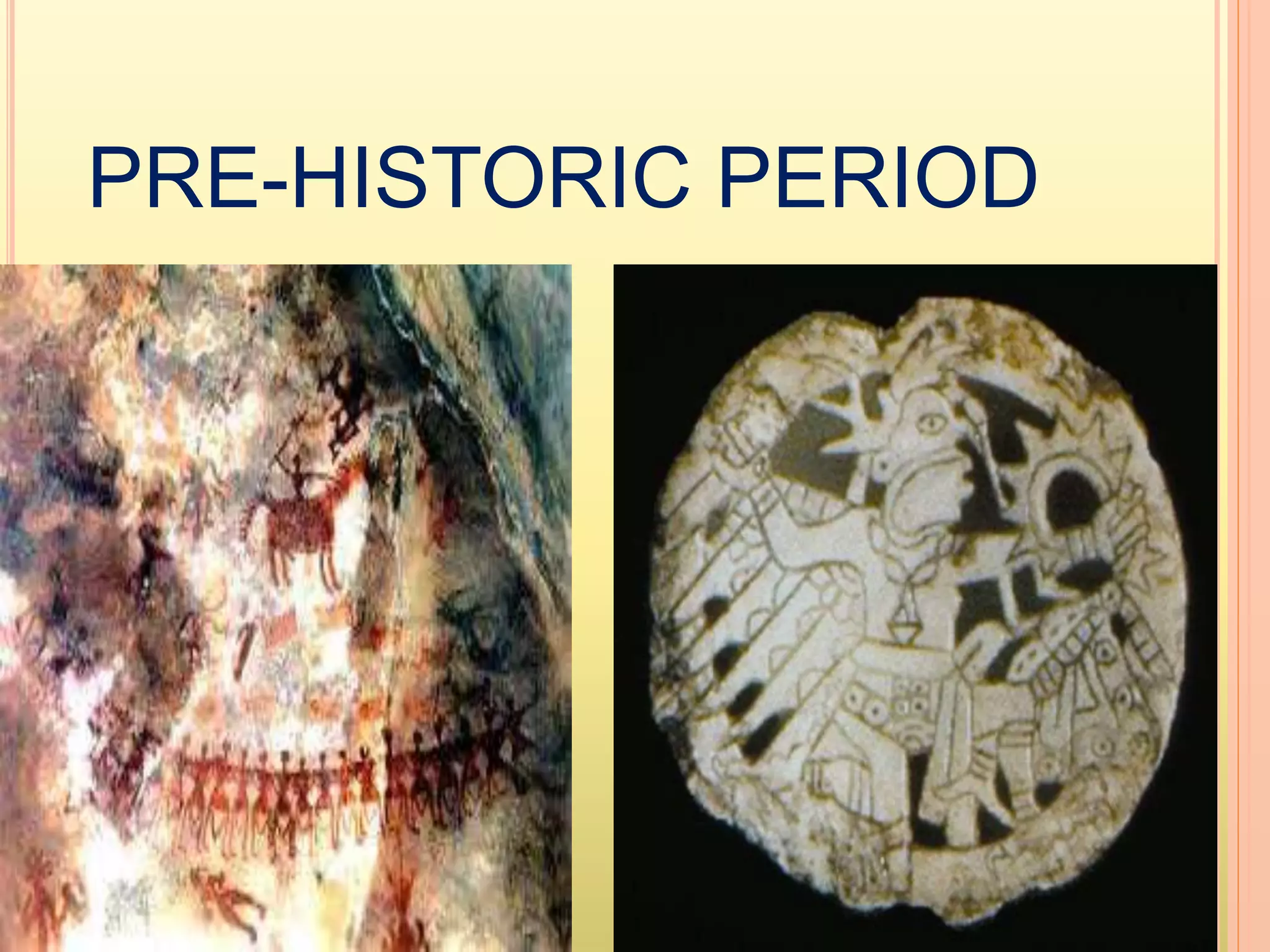
PRE-HISTORIC PERIOD
These excavations led to the discovery of
human fossils, old tools, pottery and bones of
ancient human beings and animals.
We had little knowledge about the pre
historic times until the 19th century when
the archaeologists began excavations at
the places where the pre-historic men
might have lived.
 On the basis of the information thus gathered
from these things, the archaeologists and the
scholars have brought to light the way men
lived in the pre-historic age.
PRE-HISTORIC PERIOD
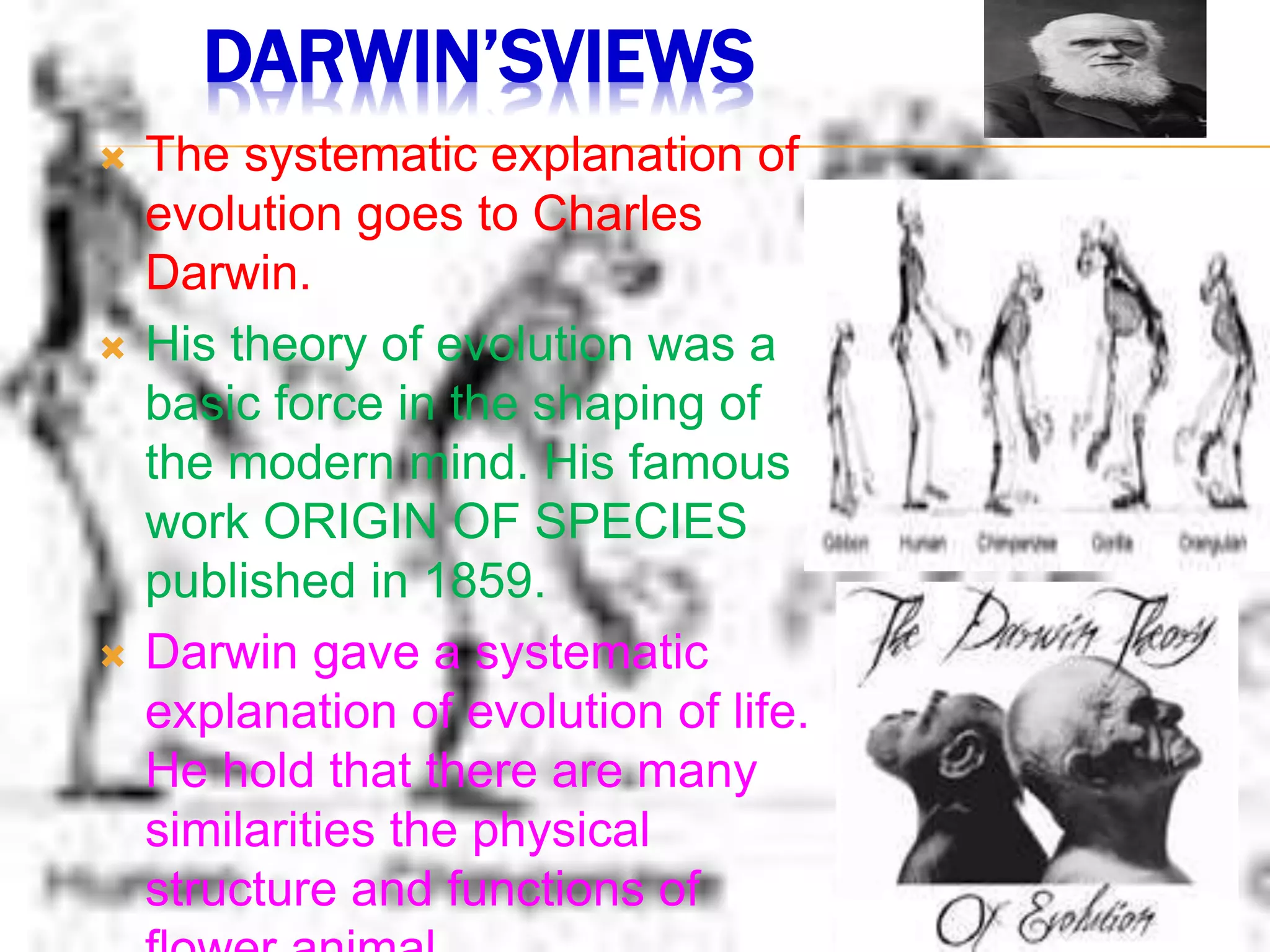
DARWIN’SVIEWS
 The systematic explanation of
evolution goes to Charles
Darwin.
 His theory of evolution was a
basic force in the shaping of
the modern mind. His famous
work ORIGIN OF SPECIES
published in 1859.
 Darwin gave a systematic
explanation of evolution of life.
He hold that there are many
similarities the physical
structure and functions of
THE METHODS OF EXCAVATION
The archaeologists dig the places
concerned with patience and utmost
care with the pick axes and spades.
First, they remove the dust from
above and around the objects with a
knife and then brush them. They do
not disturb their positions and original
forms.
METHODS EMPLOYED FOR
EXPLORATION BY THE
ARCHAEOLOGISTS.
 Many things which could help us in acquiring
the knowledge about the culture of early men
were damaged or perished within a short
period. There are, however, certain factors
which help in preserving the articles which
would otherwise perish in short period. For
example in a pit full of snow in Siberia, the
archaeologists discovered a pre-historic
mammals.
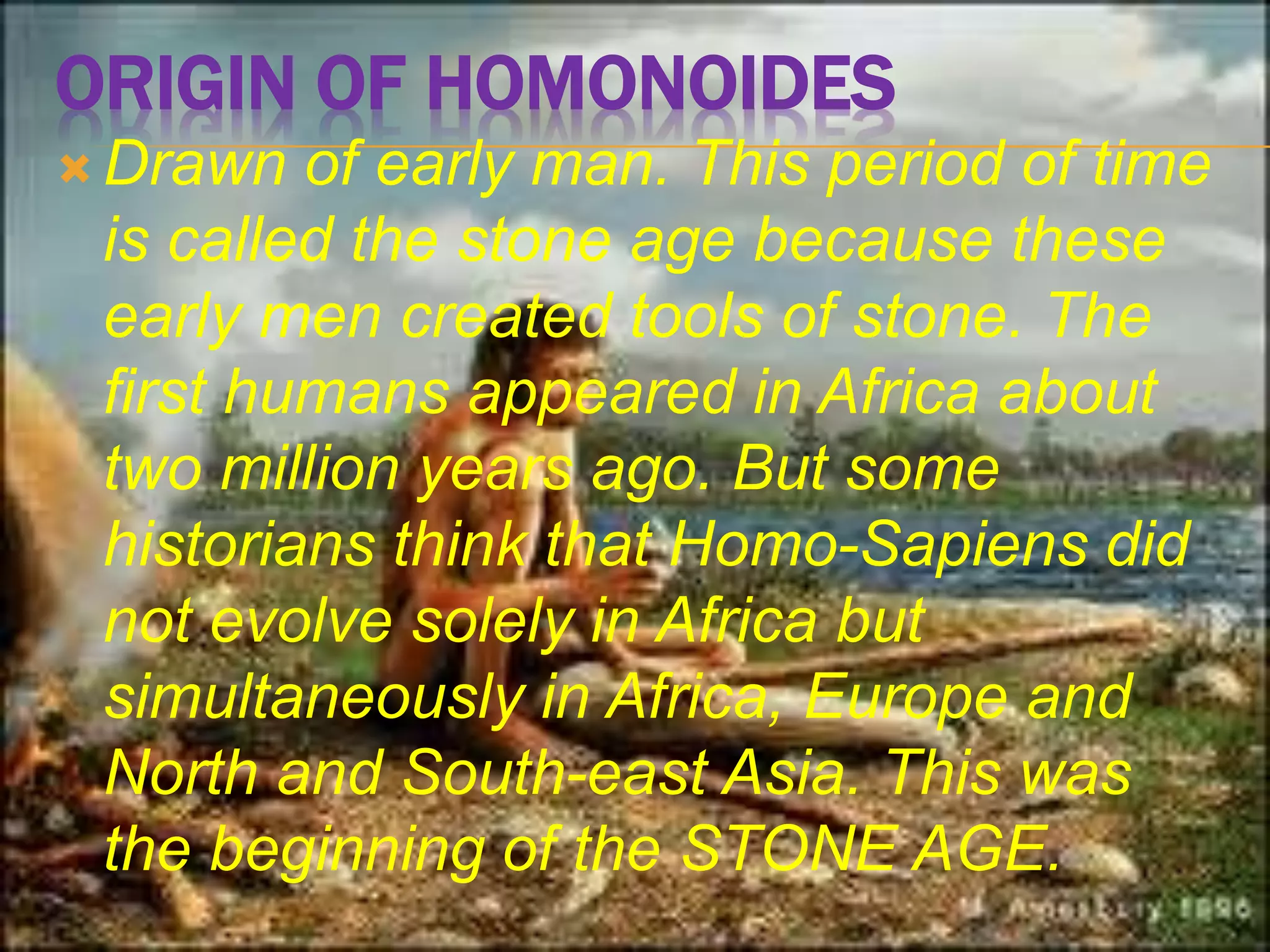
ORIGIN OF HOMONOIDES
 Drawn of early man. This period of time
is called the stone age because these
early men created tools of stone. The
first humans appeared in Africa about
two million years ago. But some
historians think that Homo-Sapiens did
not evolve solely in Africa but
simultaneously in Africa, Europe and
North and South-east Asia. This was
the beginning of the STONE AGE.
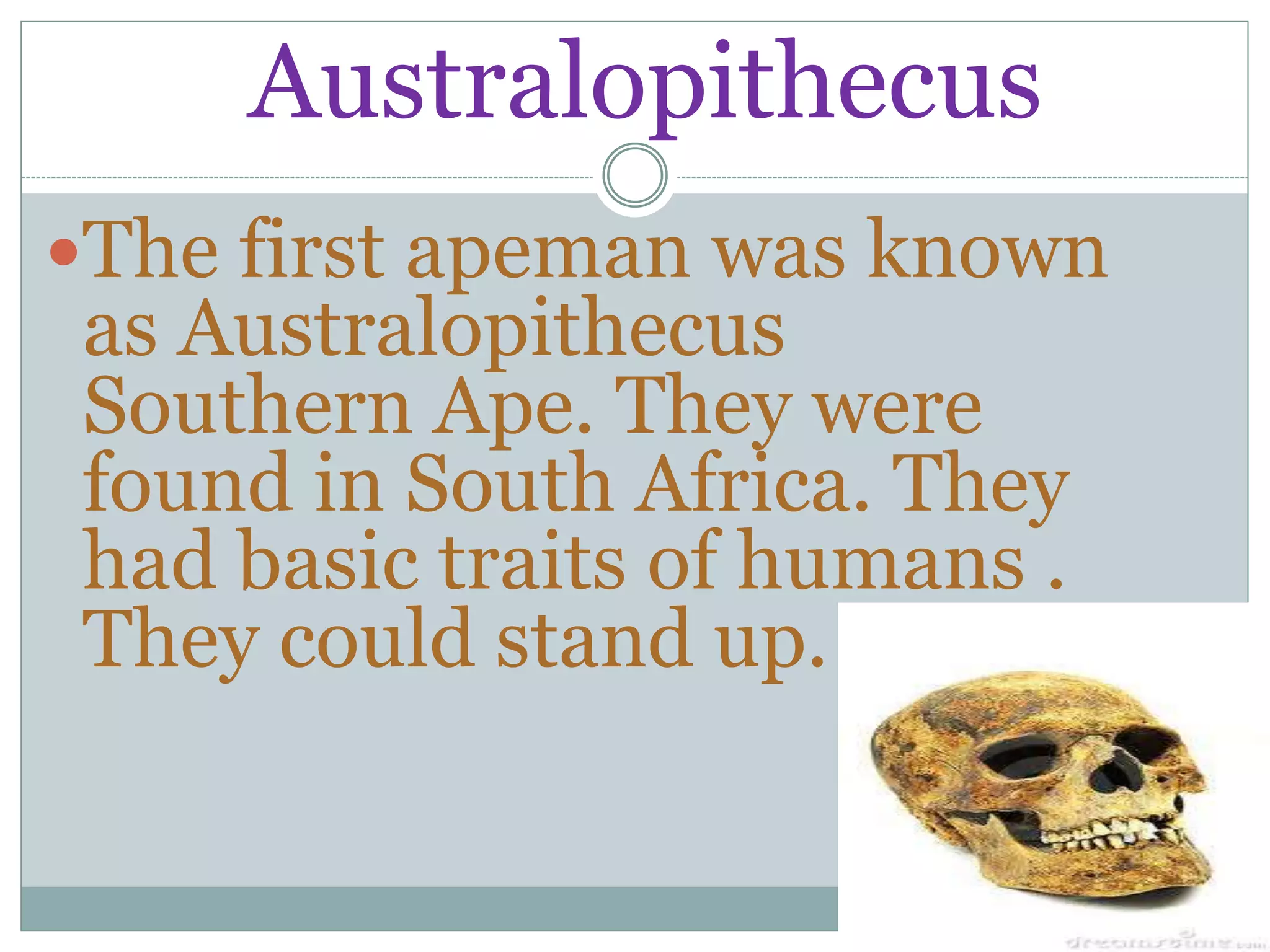
Australopithecus
The first apeman was known
as Australopithecus
Southern Ape. They were
found in South Africa. They
had basic traits of humans .
They could stand up.
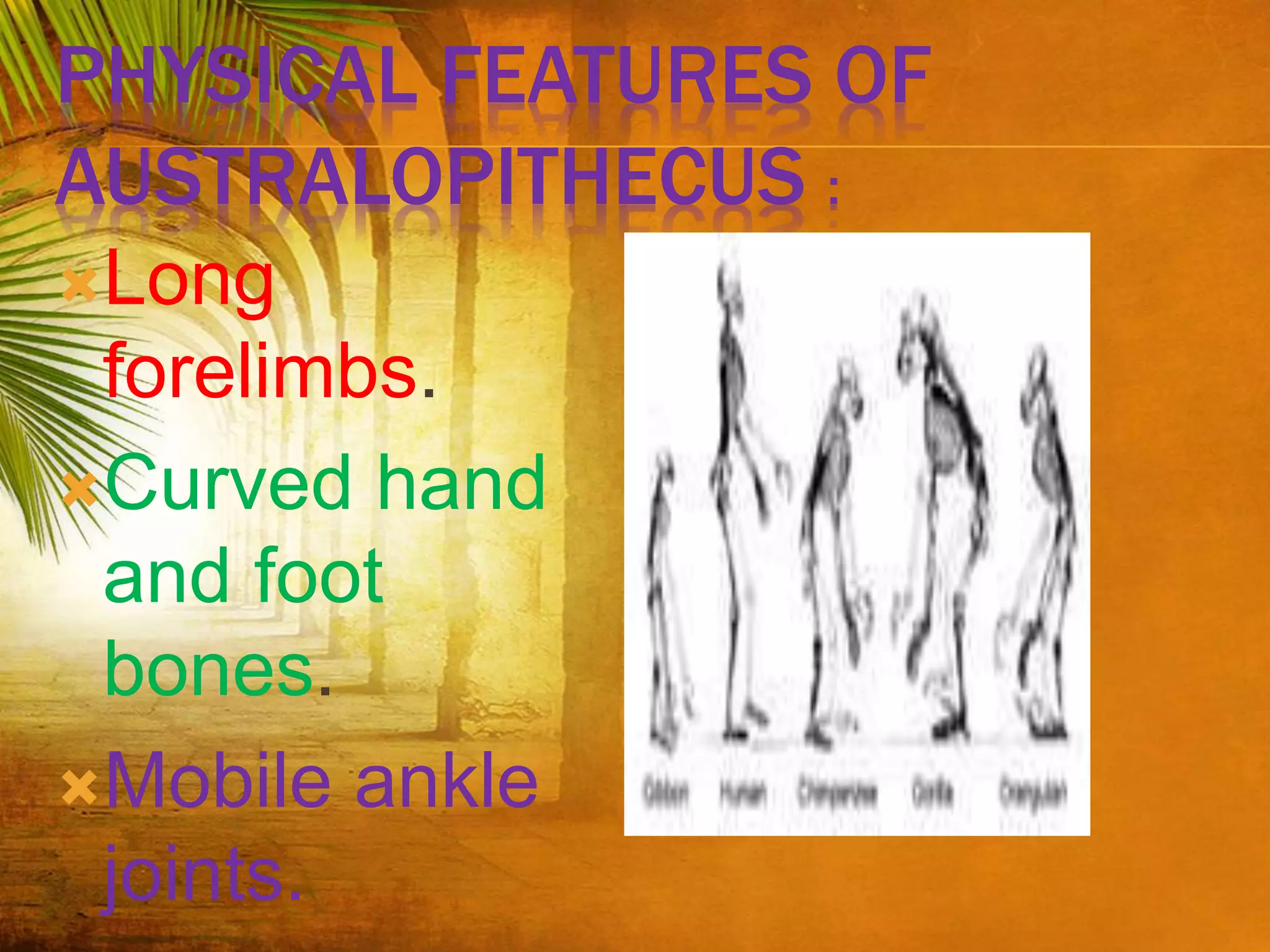
PHYSICAL FEATURES OF
AUSTRALOPITHECUS :
Long
forelimbs.
Curved hand
and foot
bones.
Mobile ankle
joints.
NEOLITHIC PERIODS
From 10,000 of years the human
survives by hunting food gathering
they left behind the Pelolithic age and
entered the new Neolithic age.
Neolithic man make tools of ground
stone which where more durable than
earlier tools and made important
invention like plough and the wheel
which appeared towards the end of
the neolithic age.
Agriculture become a full time occupation the
wild animals and plants become larger and
provided more food the few centers of this
agriculture revolution the new way of life
gradually spread over most of the globe
Another region for the late beginning of
agriculture was the scarcity of plants and
animals suitable for domestic animal . They
use animals for agriculture and transformed
into food producers.
FOSSILS
 Remains of a very
old animals , plants
or humans which
have turned into
stones are known
as Fossils.
 Fossils are often
embedded in rock.
They are preserved
for millions of
years.
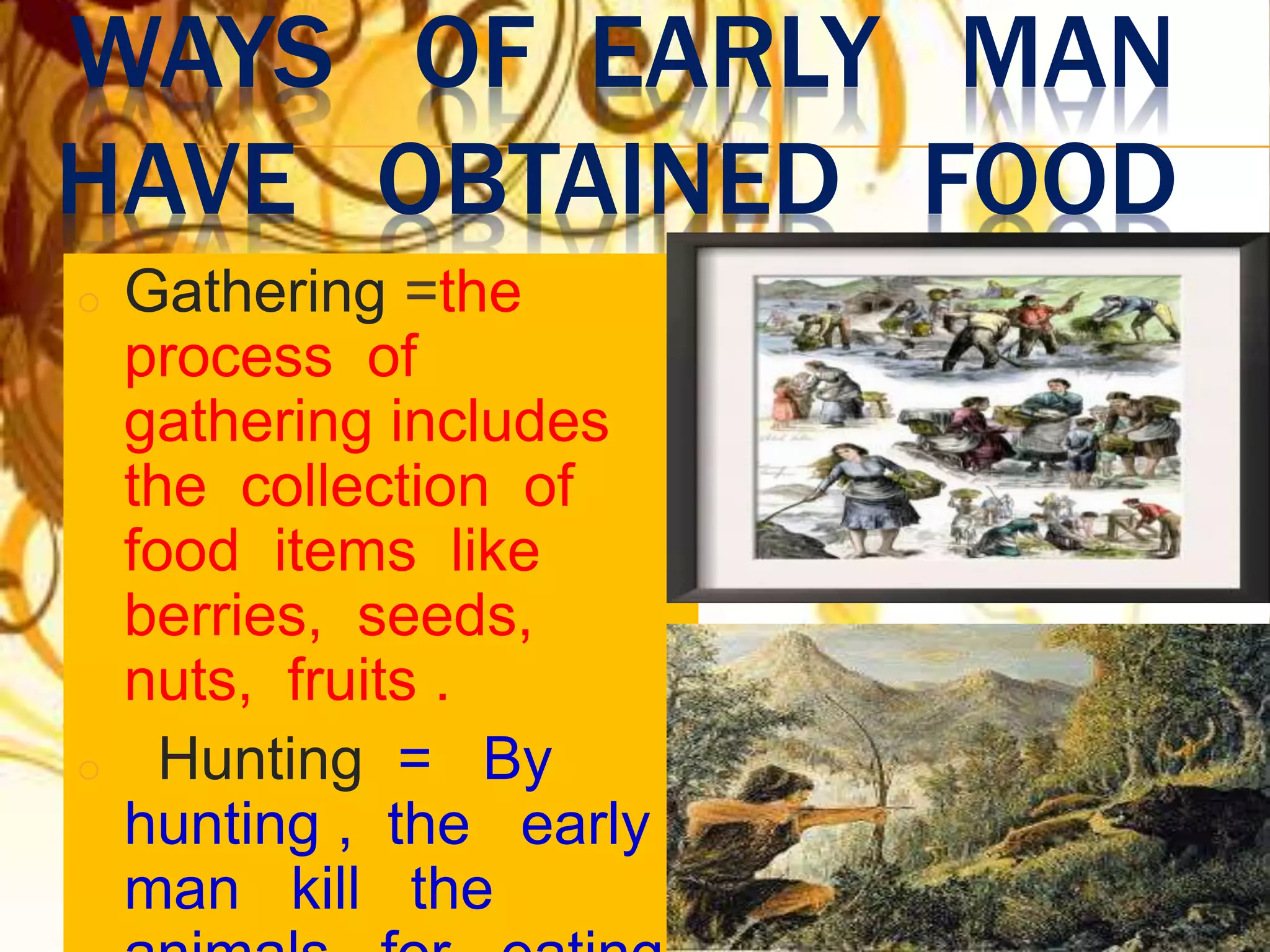
WAYS OF EARLY MAN
HAVE OBTAINED FOOD
o Gathering =the
process of
gathering includes
the collection of
food items like
berries, seeds,
nuts, fruits .
o Hunting = By
hunting , the early
man kill the
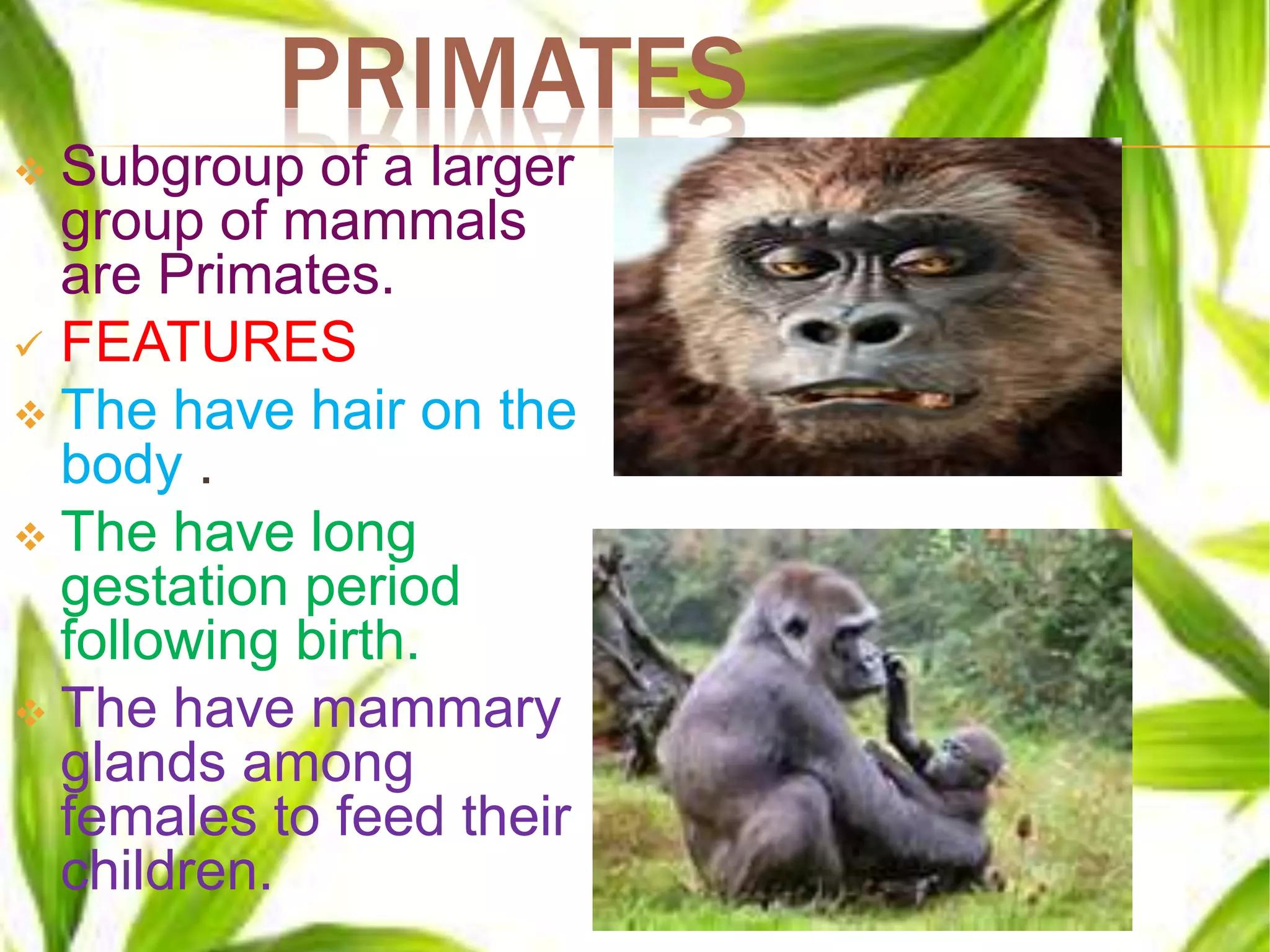
PRIMATES
 Subgroup of a larger
group of mammals
are Primates.
 FEATURES
 The have hair on the
body .
 The have long
gestation period
following birth.
 The have mammary
glands among
females to feed their
children.
CONCLUSION
From the begning

From the begning

  • 1.
    GLT SARASWATI BALMANDIR NEHRU NAGAR , NEW DELHI-65
  • 2.
  • 3.
    INTRODUCTION  The progresswhich we have written records is know as Historic Period. But the man had lived on the earth for millions of years before he developed the art of writting. The study of history is the study of entire human past which started million of years ago. It is continous phenomenon.The achivements of the human society can be known from the records of some kinds or the The period man is called the Pre- Historic Period.
  • 4.
    SOURCES CAN PROVED HISTORY Religious books = The Ramayan, Bibals, Mahabharat, Quran that are known about history.  Monuments = History depends on situated things. The TajMahal, Redfort, JammaMajid are situated by ShahJhan
  • 5.
    COINS= COINS AREALSO KNOWN ABOUT THE HISTORY. THE CLAY COINS, COPPER COINS, SILVER AND GOLD COINS .
  • 6.
    BEGINNING OF HUMAN EXISTENCE Several forms of humans emerged and then disappeared . Human beings resembling the present day humans called Homo Sapiens or modern humans originated about 160,000 years ago.  During this long period of human history, men obtained food by gathering plant produce or by hunting .
  • 7.
    • Man alsolearnt to make crude stone tools and to communicate with one another.
  • 8.
    PRE-HISTORIC PERIOD These excavationsled to the discovery of human fossils, old tools, pottery and bones of ancient human beings and animals. We had little knowledge about the pre historic times until the 19th century when the archaeologists began excavations at the places where the pre-historic men might have lived.  On the basis of the information thus gathered from these things, the archaeologists and the scholars have brought to light the way men lived in the pre-historic age.
  • 9.
  • 10.
    DARWIN’SVIEWS  The systematicexplanation of evolution goes to Charles Darwin.  His theory of evolution was a basic force in the shaping of the modern mind. His famous work ORIGIN OF SPECIES published in 1859.  Darwin gave a systematic explanation of evolution of life. He hold that there are many similarities the physical structure and functions of
  • 11.
    THE METHODS OFEXCAVATION The archaeologists dig the places concerned with patience and utmost care with the pick axes and spades. First, they remove the dust from above and around the objects with a knife and then brush them. They do not disturb their positions and original forms.
  • 12.
    METHODS EMPLOYED FOR EXPLORATIONBY THE ARCHAEOLOGISTS.  Many things which could help us in acquiring the knowledge about the culture of early men were damaged or perished within a short period. There are, however, certain factors which help in preserving the articles which would otherwise perish in short period. For example in a pit full of snow in Siberia, the archaeologists discovered a pre-historic mammals.
  • 13.
    ORIGIN OF HOMONOIDES Drawn of early man. This period of time is called the stone age because these early men created tools of stone. The first humans appeared in Africa about two million years ago. But some historians think that Homo-Sapiens did not evolve solely in Africa but simultaneously in Africa, Europe and North and South-east Asia. This was the beginning of the STONE AGE.
  • 14.
    Australopithecus The first apemanwas known as Australopithecus Southern Ape. They were found in South Africa. They had basic traits of humans . They could stand up.
  • 15.
    PHYSICAL FEATURES OF AUSTRALOPITHECUS: Long forelimbs. Curved hand and foot bones. Mobile ankle joints.
  • 16.
    NEOLITHIC PERIODS From 10,000of years the human survives by hunting food gathering they left behind the Pelolithic age and entered the new Neolithic age. Neolithic man make tools of ground stone which where more durable than earlier tools and made important invention like plough and the wheel which appeared towards the end of the neolithic age.
  • 17.
    Agriculture become afull time occupation the wild animals and plants become larger and provided more food the few centers of this agriculture revolution the new way of life gradually spread over most of the globe Another region for the late beginning of agriculture was the scarcity of plants and animals suitable for domestic animal . They use animals for agriculture and transformed into food producers.
  • 18.
    FOSSILS  Remains ofa very old animals , plants or humans which have turned into stones are known as Fossils.  Fossils are often embedded in rock. They are preserved for millions of years.
  • 19.
    WAYS OF EARLYMAN HAVE OBTAINED FOOD o Gathering =the process of gathering includes the collection of food items like berries, seeds, nuts, fruits . o Hunting = By hunting , the early man kill the
  • 20.
    PRIMATES  Subgroup ofa larger group of mammals are Primates.  FEATURES  The have hair on the body .  The have long gestation period following birth.  The have mammary glands among females to feed their children.
  • 21.