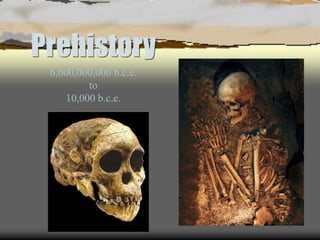
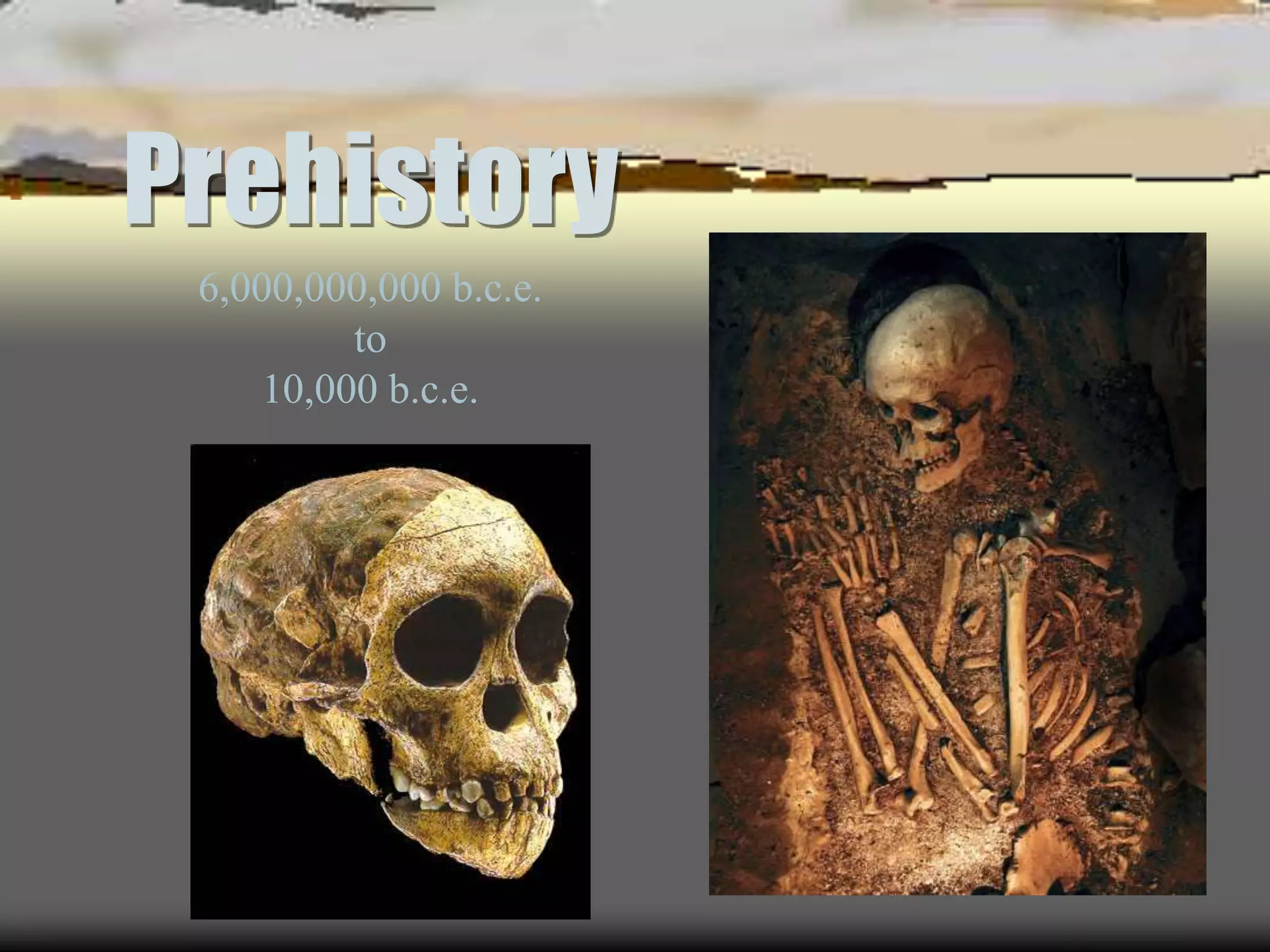
Prehistory
6,000,000,000 b.c.e.
to
10,000 b.c.e.
Who studies prehistory?
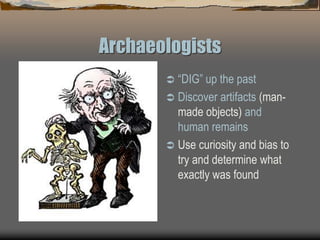
Archaeologists
 “DIG” up the past
 Discover artifacts (man-
made objects) and
human remains
 Use curiosity and bias to
try and determine what
exactly was found
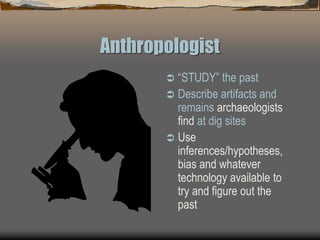
Anthropologist
 “STUDY” the past
 Describe artifacts and
remains archaeologists
find at dig sites
 Use
inferences/hypotheses,
bias and whatever
technology available to
try and figure out the
past
Historian
 “TELLS” about the past
 Uses the information the
Archaeologist and
Anthropologist gathered
to tell about the past
 Uses whatever
technology and
resources that are
available to share the
story of the past
You
 “LEARN” about the past
 Using everything that the
previous professionals have
done for you; and being
curious, look at the material
and give an effort to make
sense of the past
 Use resources, ask
questions and simply be
curious about the past
 You’re the “puzzle maker”,
put it together!
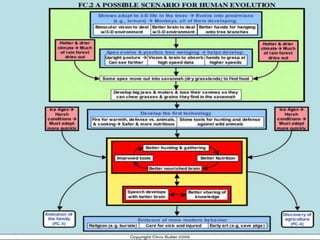
The “Real” Prehistory!
Where do we begin?
How long ago was it?
Was it creation or evolution?
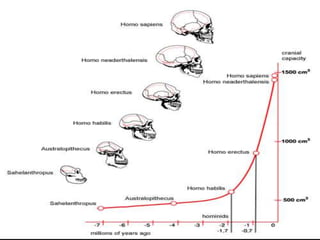
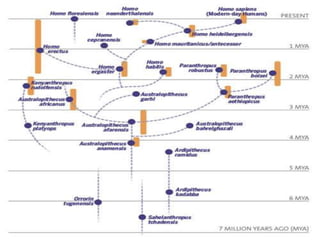
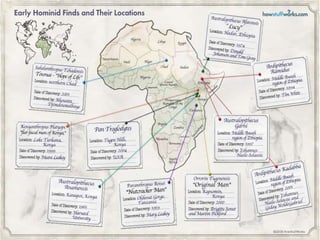
What hominids or people lived
during that time?
Those are all good questions, but
let’s get to the real stuff
uncovered and discussed by
archaeologists, anthropologists
and historians…
shall we…
have fun and be curious…
What is prehistory?
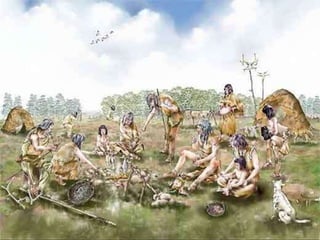
Prehistory is the time period before written records
were kept by people.
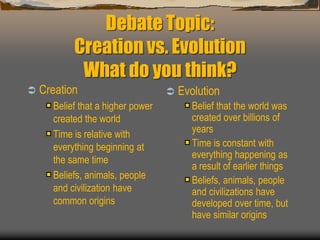
Debate Topic:
Creation vs. Evolution
What do you think?
 Creation
Belief that a higher power
created the world
Time is relative with
everything beginning at
the same time
Beliefs, animals, people
and civilization have
common origins
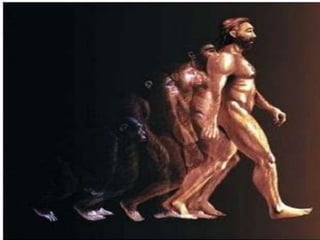
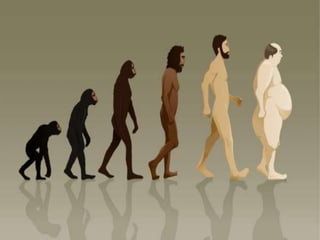
 Evolution
Belief that the world was
created over billions of
years
Time is constant with
everything happening as
a result of earlier things
Beliefs, animals, people
and civilizations have
developed over time, but
have similar origins
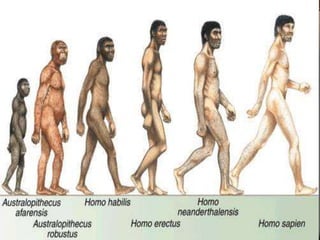
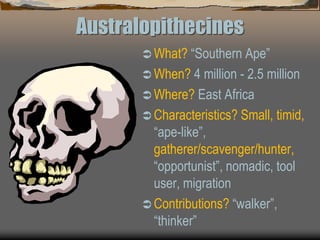
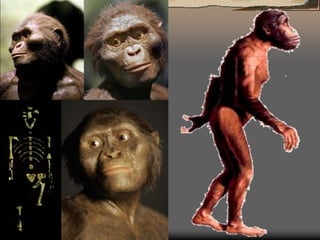
Australopithecines
 What? “Southern Ape”
 When? 4 million - 2.5 million
 Where? East Africa
 Characteristics? Small, timid,
“ape-like”,
gatherer/scavenger/hunter,
“opportunist”, nomadic, tool
user, migration
 Contributions? “walker”,
“thinker”
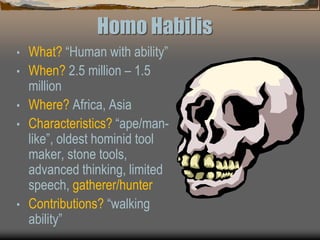
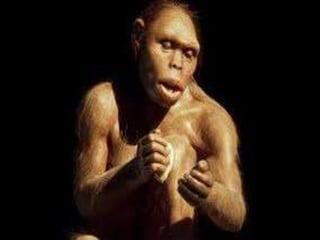
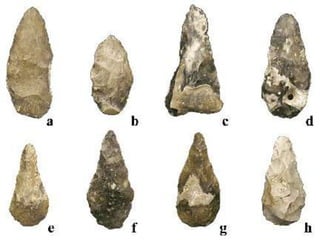
Homo Habilis
• What? “Human with ability”
• When? 2.5 million – 1.5
million
• Where? Africa, Asia
• Characteristics? “ape/man-
like”, oldest hominid tool
maker, stone tools,
advanced thinking, limited
speech, gatherer/hunter
• Contributions? “walking
ability”
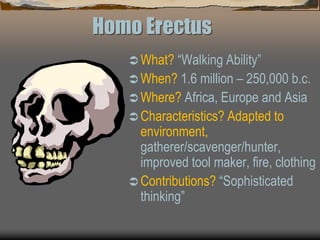
Homo Erectus
 What? “Walking Ability”
 When? 1.6 million – 250,000 b.c.
 Where? Africa, Europe and Asia
 Characteristics? Adapted to
environment,
gatherer/scavenger/hunter,
improved tool maker, fire, clothing
 Contributions? “Sophisticated
thinking”
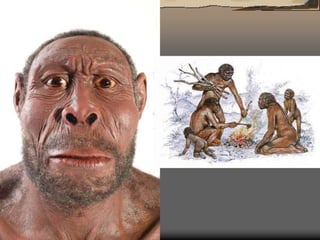
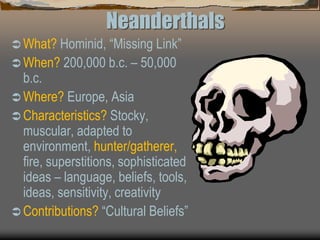
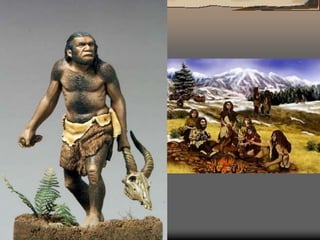
Neanderthals
 What? Hominid, “Missing Link”
 When? 200,000 b.c. – 50,000
b.c.
 Where? Europe, Asia
 Characteristics? Stocky,
muscular, adapted to
environment, hunter/gatherer,
fire, superstitions, sophisticated
ideas – language, beliefs, tools,
ideas, sensitivity, creativity
 Contributions? “Cultural Beliefs”
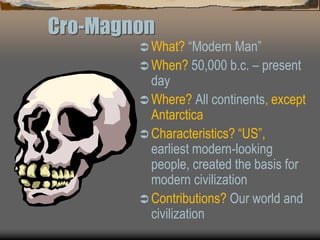
Cro-Magnon
 What? “Modern Man”
 When? 50,000 b.c. – present
day
 Where? All continents, except
Antarctica
 Characteristics? “US”,
earliest modern-looking
people, created the basis for
modern civilization
 Contributions? Our world and
civilization
Eras of Prehistory
Concepts to know –
Paleolithic – Old Stone Age
4.5 million y.a. - 12,000 y.a.
Mesolithic – Middle Stone Age
12,000 y.a. – 10,000 y.a.
Neolithic – New Stone Age
10,000 y.a. – 8,000 y.a.
Paleolithic Era
 Paleolithic means “Old Stone Age”
 About 4,500,000 years ago to 12,000 years ago
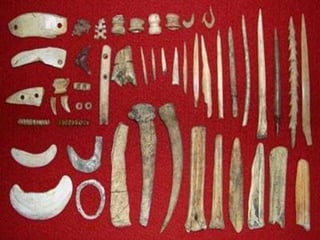
 Simple stone/bone tools, nomadic, small groups,
“survival” mentality, scavenger/gatherer/hunter
 Hominid vs. Early People
 Australopithecines, Homo Halibis, Homo
Erectus, Neanderthal and Cro-Magnon
Mesolithic Era
 Means “Middle Stone Age”
 About 12,000 years ago to 10,000 years ago
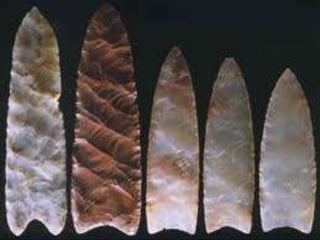
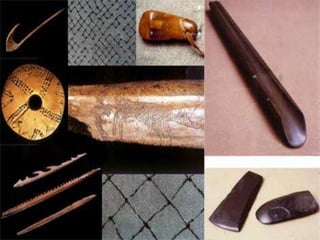
 Improved methods of tool making (polished
stone), semi-nomadic, animism, artwork and
beliefs, life after death, hunter/gatherer/early
farming experimentation
 Advancements of early human groupings
(Neanderthal and Cro-Magnon)
 Major movement toward creation of civilization
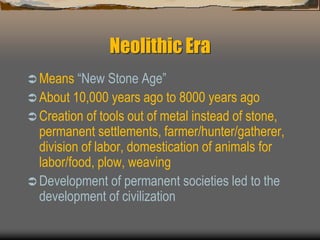
Neolithic Era
 Means “New Stone Age”
 About 10,000 years ago to 8000 years ago
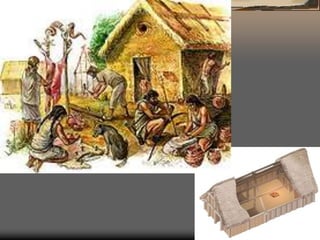
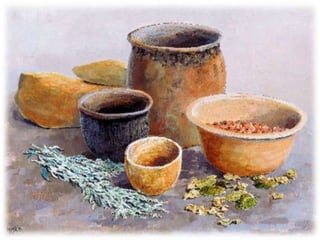
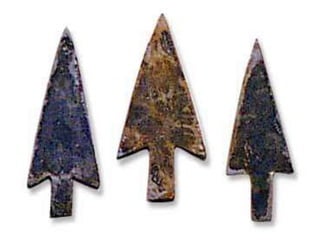
 Creation of tools out of metal instead of stone,
permanent settlements, farmer/hunter/gatherer,
division of labor, domestication of animals for
labor/food, plow, weaving
 Development of permanent societies led to the
development of civilization
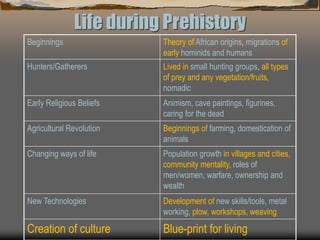
Life during Prehistory
Beginnings Theory of African origins, migrations of
early hominids and humans
Hunters/Gatherers Lived in small hunting groups, all types
of prey and any vegetation/fruits,
nomadic
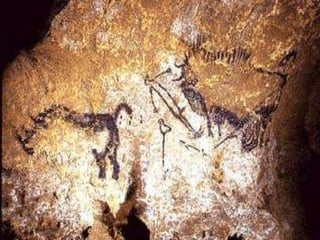
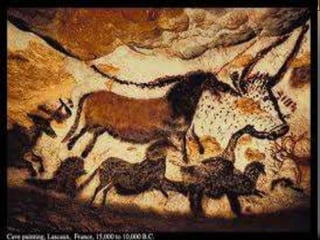
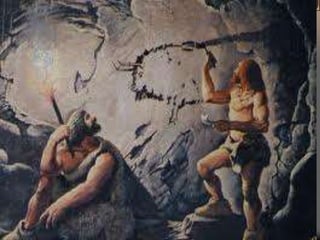
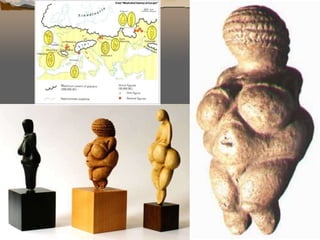
Early Religious Beliefs Animism, cave paintings, figurines,
caring for the dead
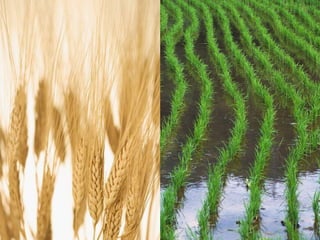
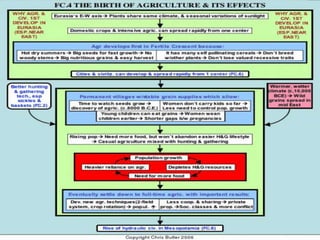
Agricultural Revolution Beginnings of farming, domestication of
animals
Changing ways of life Population growth in villages and cities,
community mentality, roles of
men/women, warfare, ownership and
wealth
New Technologies Development of new skills/tools, metal
working, plow, workshops, weaving
Creation of culture Blue-print for living
*** IMPORTANT CONCEPT
TO UNDERSTAND***
ASSIMILATION:
Blending of cultures
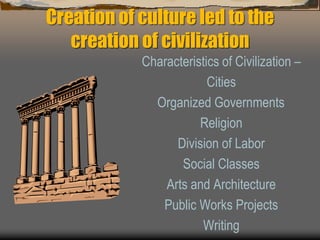
Creation of culture led to the
creation of civilization
Characteristics of Civilization –
Cities
Organized Governments
Religion
Division of Labor
Social Classes
Arts and Architecture
Public Works Projects
Writing
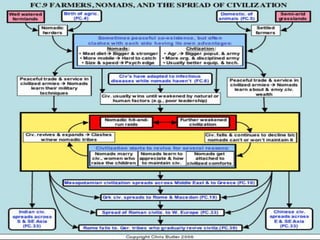
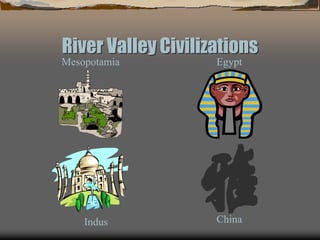
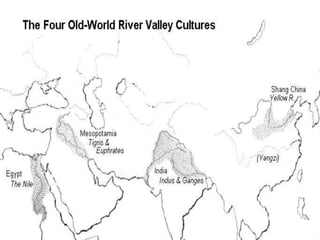
River Valley Civilizations
Mesopotamia Egypt
Indus China
PREHISTORY
6,000,000,000 b.c.e.
to
10,000 b.c.e.

Prehistory.ppt

  • 1.
  • 2.
  • 3.
    Archaeologists  “DIG” upthe past  Discover artifacts (man- made objects) and human remains  Use curiosity and bias to try and determine what exactly was found
  • 4.
    Anthropologist  “STUDY” thepast  Describe artifacts and remains archaeologists find at dig sites  Use inferences/hypotheses, bias and whatever technology available to try and figure out the past
  • 5.
    Historian  “TELLS” aboutthe past  Uses the information the Archaeologist and Anthropologist gathered to tell about the past  Uses whatever technology and resources that are available to share the story of the past
  • 6.
    You  “LEARN” aboutthe past  Using everything that the previous professionals have done for you; and being curious, look at the material and give an effort to make sense of the past  Use resources, ask questions and simply be curious about the past  You’re the “puzzle maker”, put it together!
  • 7.
  • 9.
    Where do webegin? How long ago was it? Was it creation or evolution? What hominids or people lived during that time?
  • 10.
    Those are allgood questions, but let’s get to the real stuff uncovered and discussed by archaeologists, anthropologists and historians… shall we… have fun and be curious…
  • 11.
    What is prehistory? Prehistoryis the time period before written records were kept by people.
  • 12.
    Debate Topic: Creation vs.Evolution What do you think?  Creation Belief that a higher power created the world Time is relative with everything beginning at the same time Beliefs, animals, people and civilization have common origins  Evolution Belief that the world was created over billions of years Time is constant with everything happening as a result of earlier things Beliefs, animals, people and civilizations have developed over time, but have similar origins
  • 19.
    Australopithecines  What? “SouthernApe”  When? 4 million - 2.5 million  Where? East Africa  Characteristics? Small, timid, “ape-like”, gatherer/scavenger/hunter, “opportunist”, nomadic, tool user, migration  Contributions? “walker”, “thinker”
  • 21.
    Homo Habilis • What?“Human with ability” • When? 2.5 million – 1.5 million • Where? Africa, Asia • Characteristics? “ape/man- like”, oldest hominid tool maker, stone tools, advanced thinking, limited speech, gatherer/hunter • Contributions? “walking ability”
  • 23.
    Homo Erectus  What?“Walking Ability”  When? 1.6 million – 250,000 b.c.  Where? Africa, Europe and Asia  Characteristics? Adapted to environment, gatherer/scavenger/hunter, improved tool maker, fire, clothing  Contributions? “Sophisticated thinking”
  • 25.
    Neanderthals  What? Hominid,“Missing Link”  When? 200,000 b.c. – 50,000 b.c.  Where? Europe, Asia  Characteristics? Stocky, muscular, adapted to environment, hunter/gatherer, fire, superstitions, sophisticated ideas – language, beliefs, tools, ideas, sensitivity, creativity  Contributions? “Cultural Beliefs”
  • 27.
    Cro-Magnon  What? “ModernMan”  When? 50,000 b.c. – present day  Where? All continents, except Antarctica  Characteristics? “US”, earliest modern-looking people, created the basis for modern civilization  Contributions? Our world and civilization
  • 29.
    Eras of Prehistory Conceptsto know – Paleolithic – Old Stone Age 4.5 million y.a. - 12,000 y.a. Mesolithic – Middle Stone Age 12,000 y.a. – 10,000 y.a. Neolithic – New Stone Age 10,000 y.a. – 8,000 y.a.
  • 30.
    Paleolithic Era  Paleolithicmeans “Old Stone Age”  About 4,500,000 years ago to 12,000 years ago  Simple stone/bone tools, nomadic, small groups, “survival” mentality, scavenger/gatherer/hunter  Hominid vs. Early People  Australopithecines, Homo Halibis, Homo Erectus, Neanderthal and Cro-Magnon
  • 37.
    Mesolithic Era  Means“Middle Stone Age”  About 12,000 years ago to 10,000 years ago  Improved methods of tool making (polished stone), semi-nomadic, animism, artwork and beliefs, life after death, hunter/gatherer/early farming experimentation  Advancements of early human groupings (Neanderthal and Cro-Magnon)  Major movement toward creation of civilization
  • 41.
    Neolithic Era  Means“New Stone Age”  About 10,000 years ago to 8000 years ago  Creation of tools out of metal instead of stone, permanent settlements, farmer/hunter/gatherer, division of labor, domestication of animals for labor/food, plow, weaving  Development of permanent societies led to the development of civilization
  • 45.
    Life during Prehistory BeginningsTheory of African origins, migrations of early hominids and humans Hunters/Gatherers Lived in small hunting groups, all types of prey and any vegetation/fruits, nomadic Early Religious Beliefs Animism, cave paintings, figurines, caring for the dead Agricultural Revolution Beginnings of farming, domestication of animals Changing ways of life Population growth in villages and cities, community mentality, roles of men/women, warfare, ownership and wealth New Technologies Development of new skills/tools, metal working, plow, workshops, weaving Creation of culture Blue-print for living
  • 51.
    *** IMPORTANT CONCEPT TOUNDERSTAND*** ASSIMILATION: Blending of cultures
  • 52.
    Creation of cultureled to the creation of civilization Characteristics of Civilization – Cities Organized Governments Religion Division of Labor Social Classes Arts and Architecture Public Works Projects Writing
  • 54.
  • 56.

Editor's Notes

  • #56 Where are the 4 Cradles of Civilization (River Valley Civilizations)? What similarities does each RVC have in common with the others? (knowledge)