Download to read offline

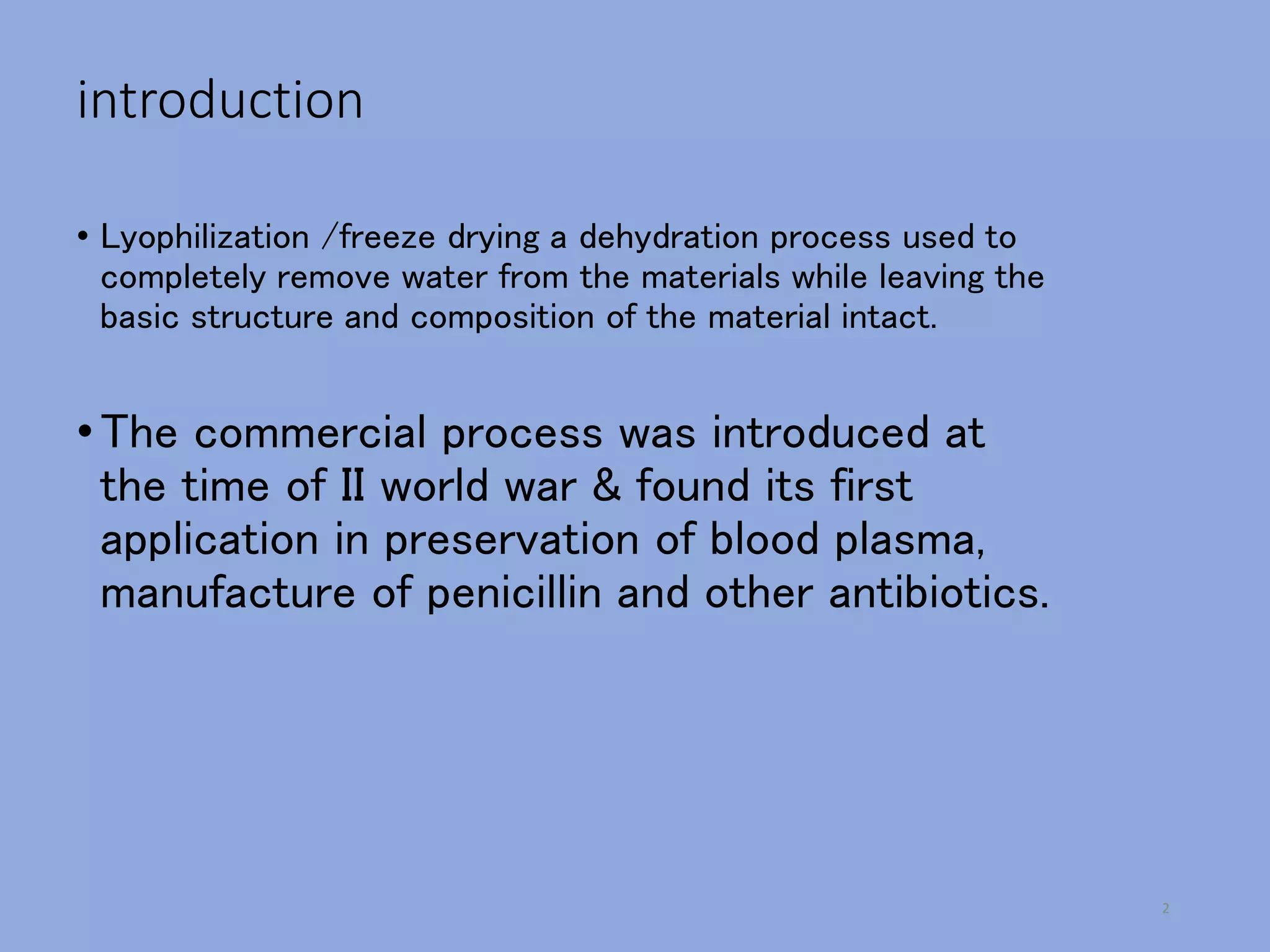
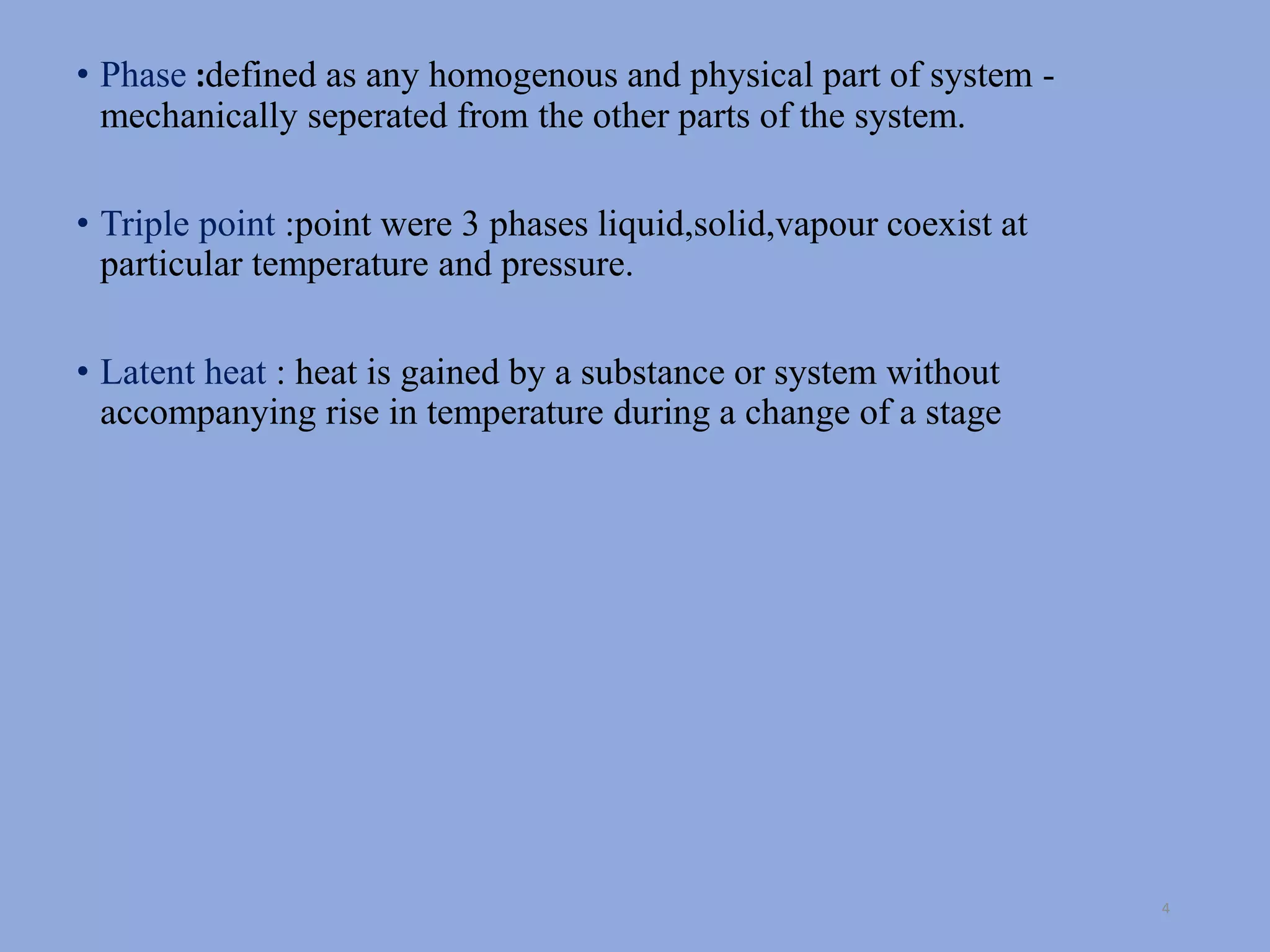


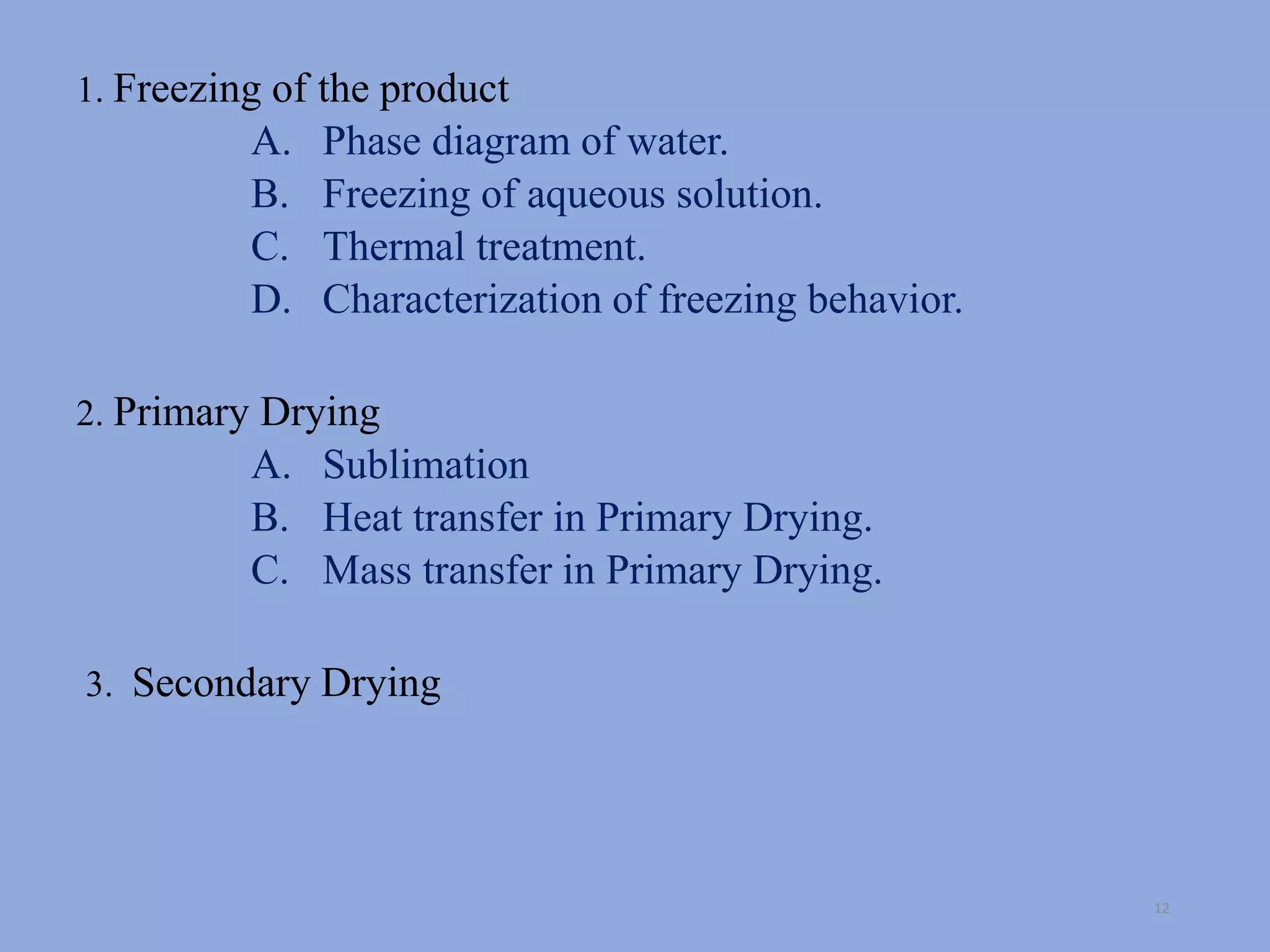




Freeze drying, or lyophilization, is a dehydration process that removes water from materials while preserving their structure, initially applied during WWII for blood plasma and antibiotics. The process involves freezing the product, followed by primary and secondary drying phases, where water is sublimated under vacuum and residual moisture is removed, respectively. Although it has the advantage of preserving thermolabile materials, the method is slow, complicated, and costly, making it suitable only for specific valuable products.


