UNIVERSITY OF THE ARMED FORCES
SOCIO-EDUCATIONAL PROJECTS
TOTAL QUALITY MANAGEMENT IN EDUCATION
CHAPTER 15: “FRAMEWORK”
DAYANA CRISTINA TAMAYO
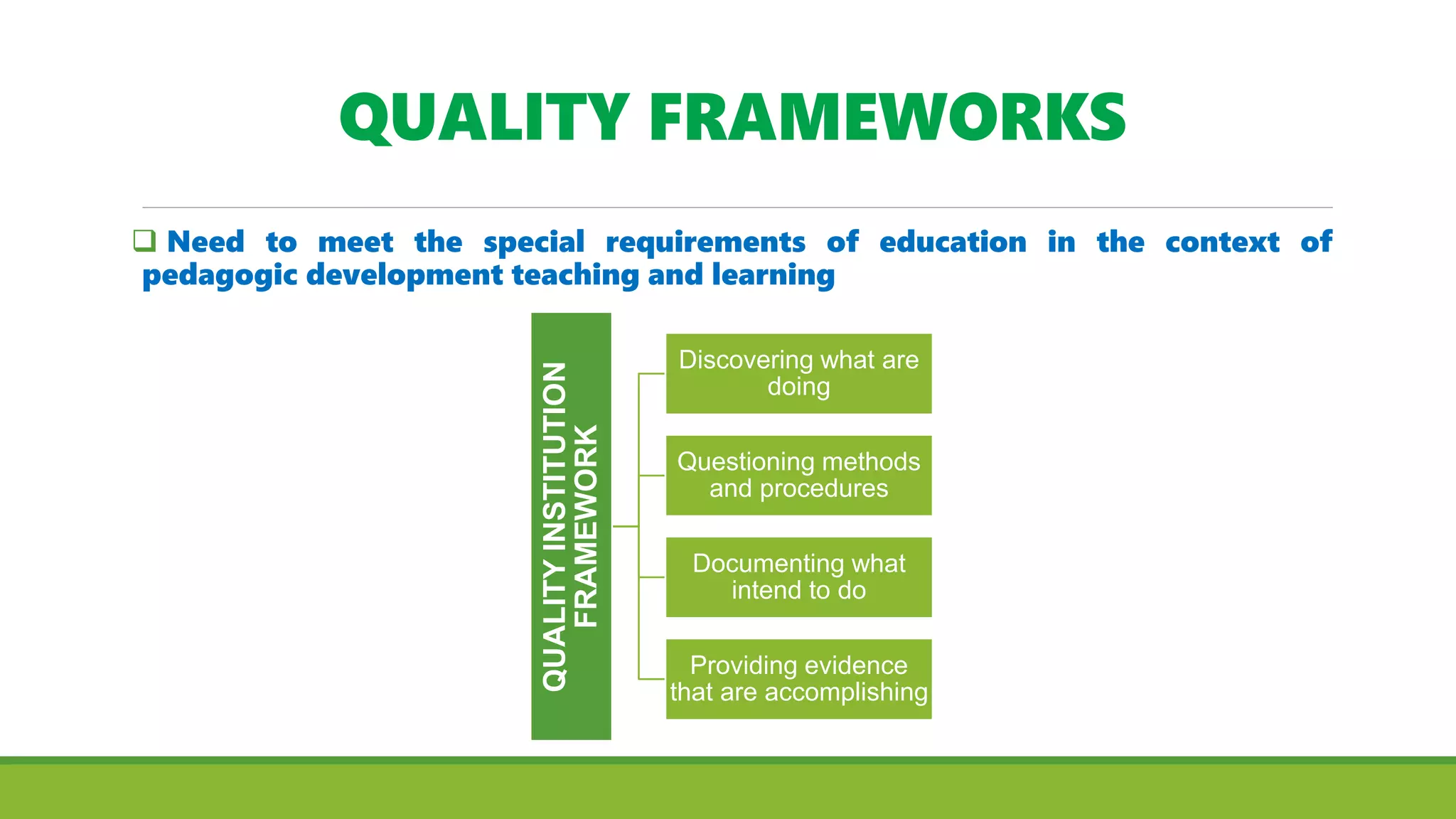
QUALITY FRAMEWORKS
 Need to meet the special requirements of education in the context of
pedagogic development teaching and learning
QUALITYINSTITUTION
FRAMEWORK
Discovering what are
doing
Questioning methods
and procedures
Documenting what
intend to do
Providing evidence
that are accomplishing
COMPONENTS IN A QUALITY
FRAMEWORK
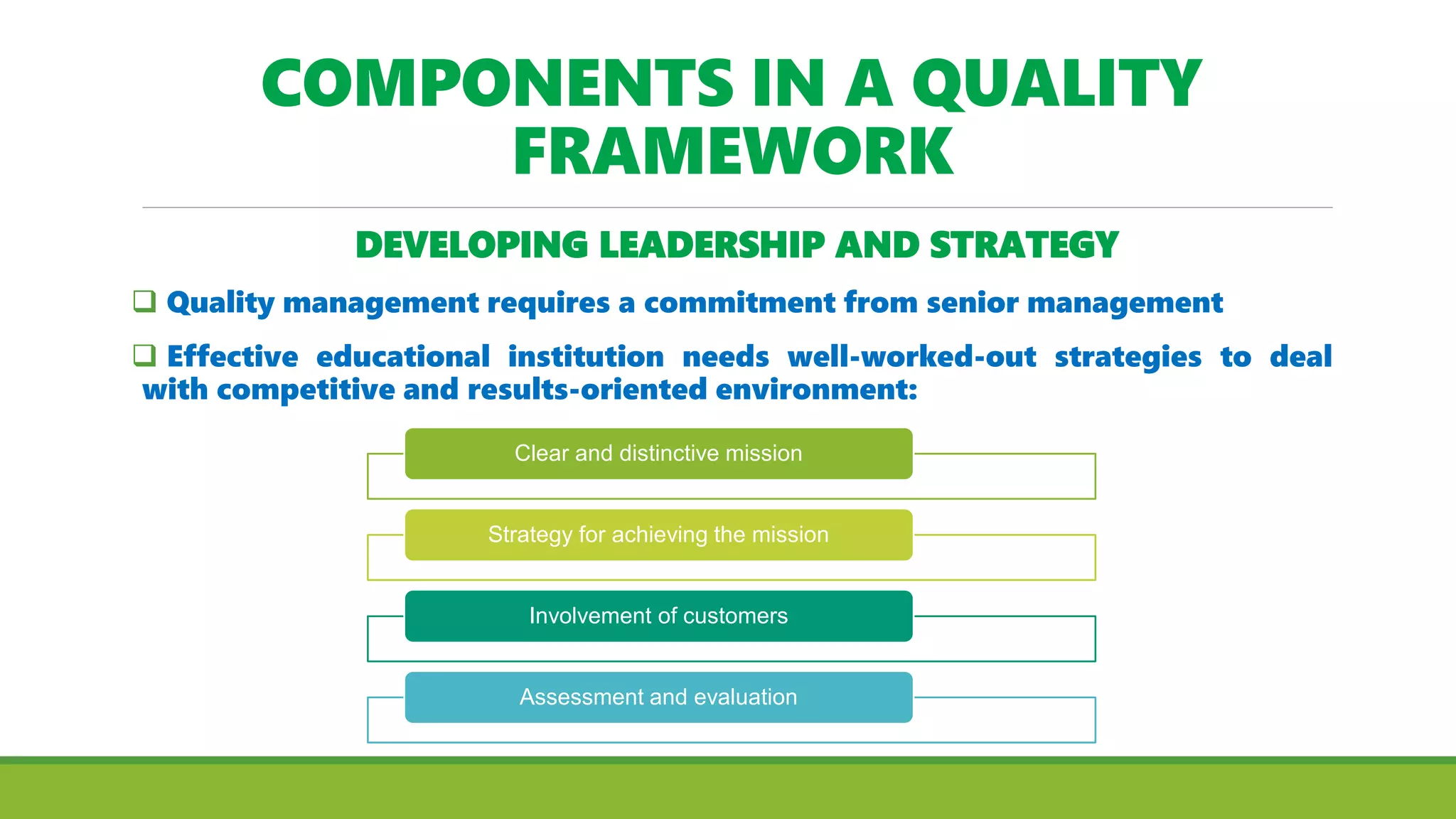
DEVELOPING LEADERSHIP AND STRATEGY
 Quality management requires a commitment from senior management
 Effective educational institution needs well-worked-out strategies to deal
with competitive and results-oriented environment:
Clear and distinctive mission
Strategy for achieving the mission
Involvement of customers
Assessment and evaluation
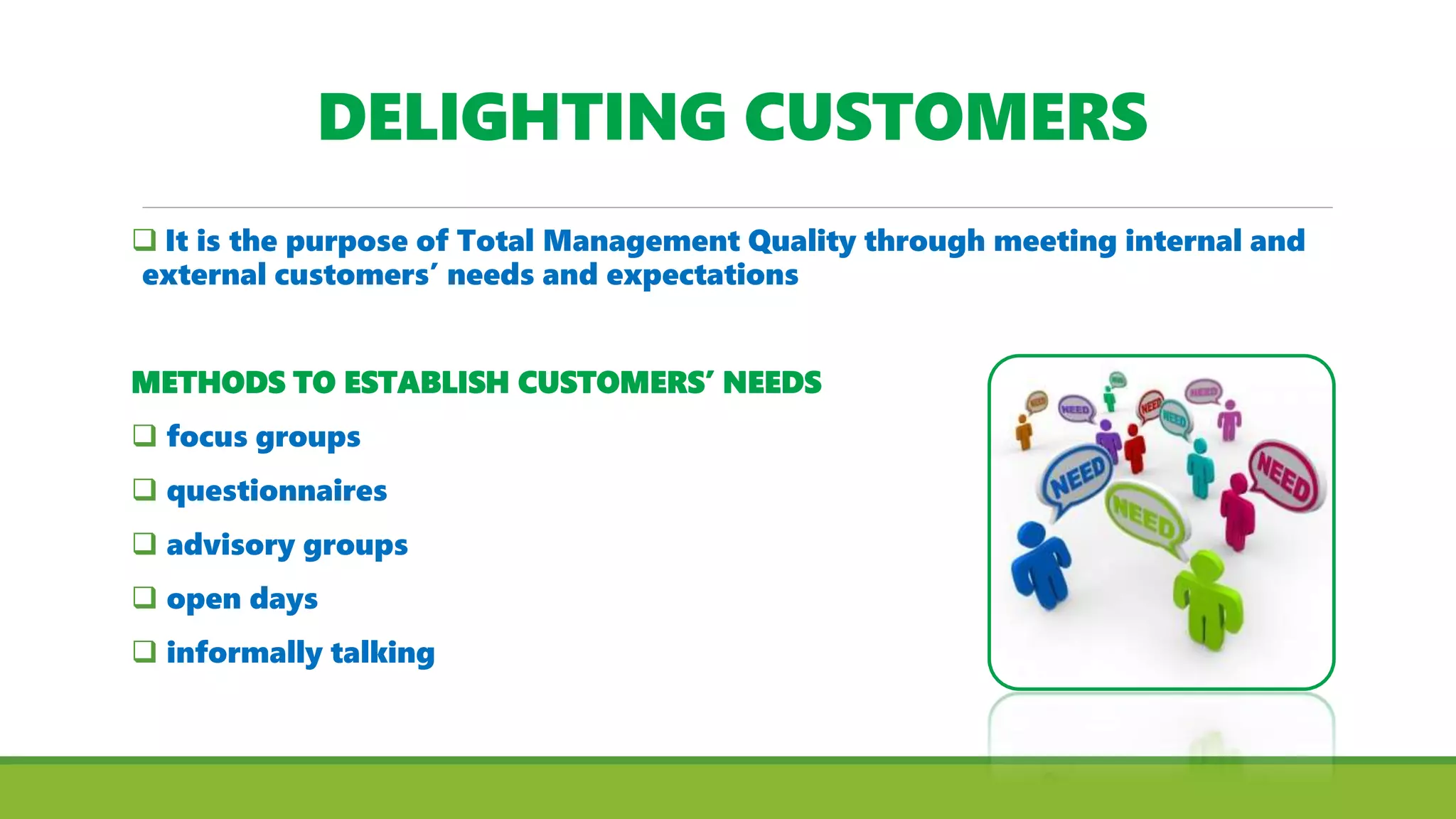
DELIGHTING CUSTOMERS
 It is the purpose of Total Management Quality through meeting internal and
external customers’ needs and expectations
METHODS TO ESTABLISH CUSTOMERS’ NEEDS
 focus groups
 questionnaires
 advisory groups
 open days
 informally talking
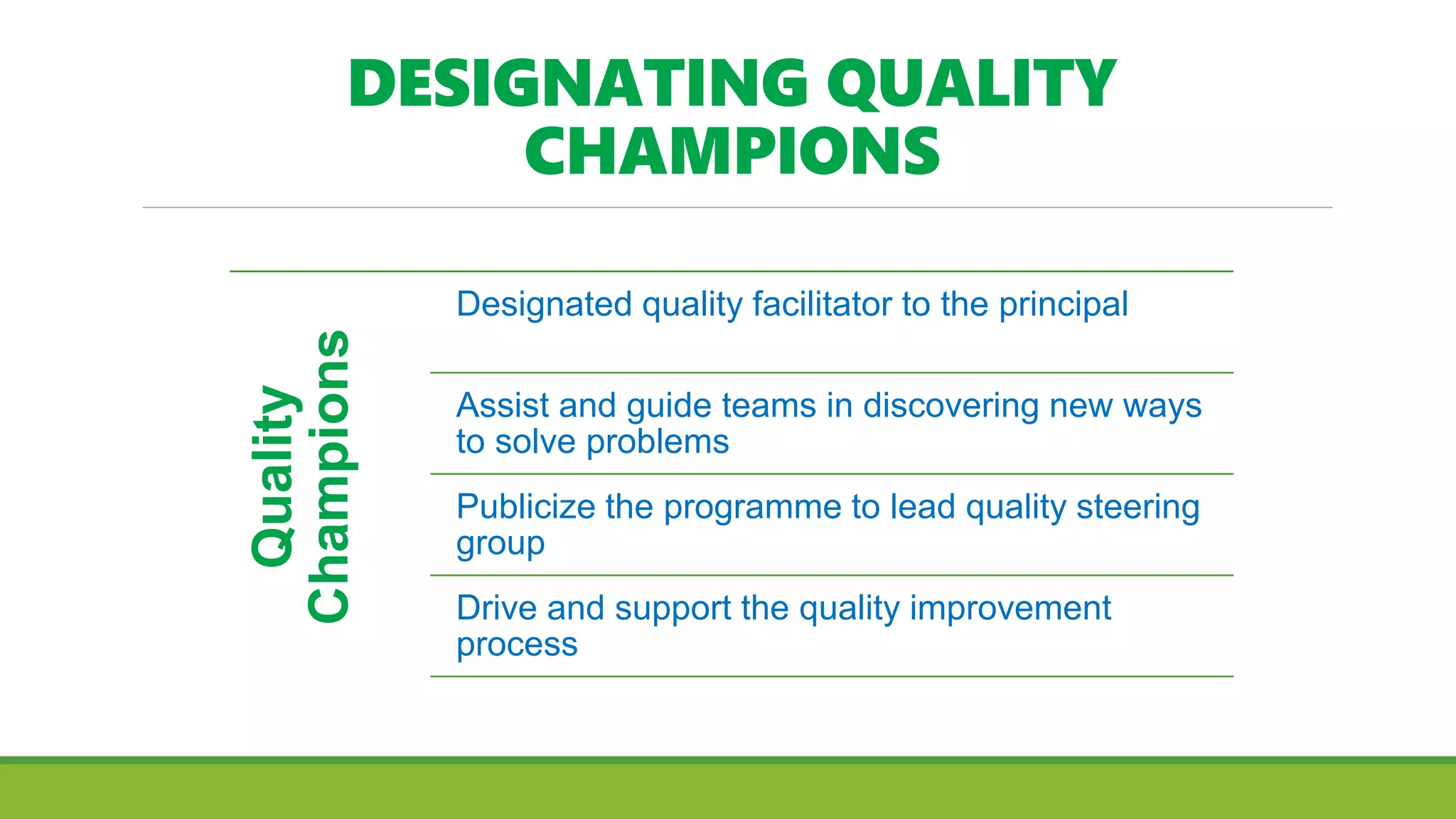
DESIGNATING QUALITY
CHAMPIONS
Quality
Champions
Designated quality facilitator to the principal
Assist and guide teams in discovering new ways
to solve problems
Publicize the programme to lead quality steering
group
Drive and support the quality improvement
process
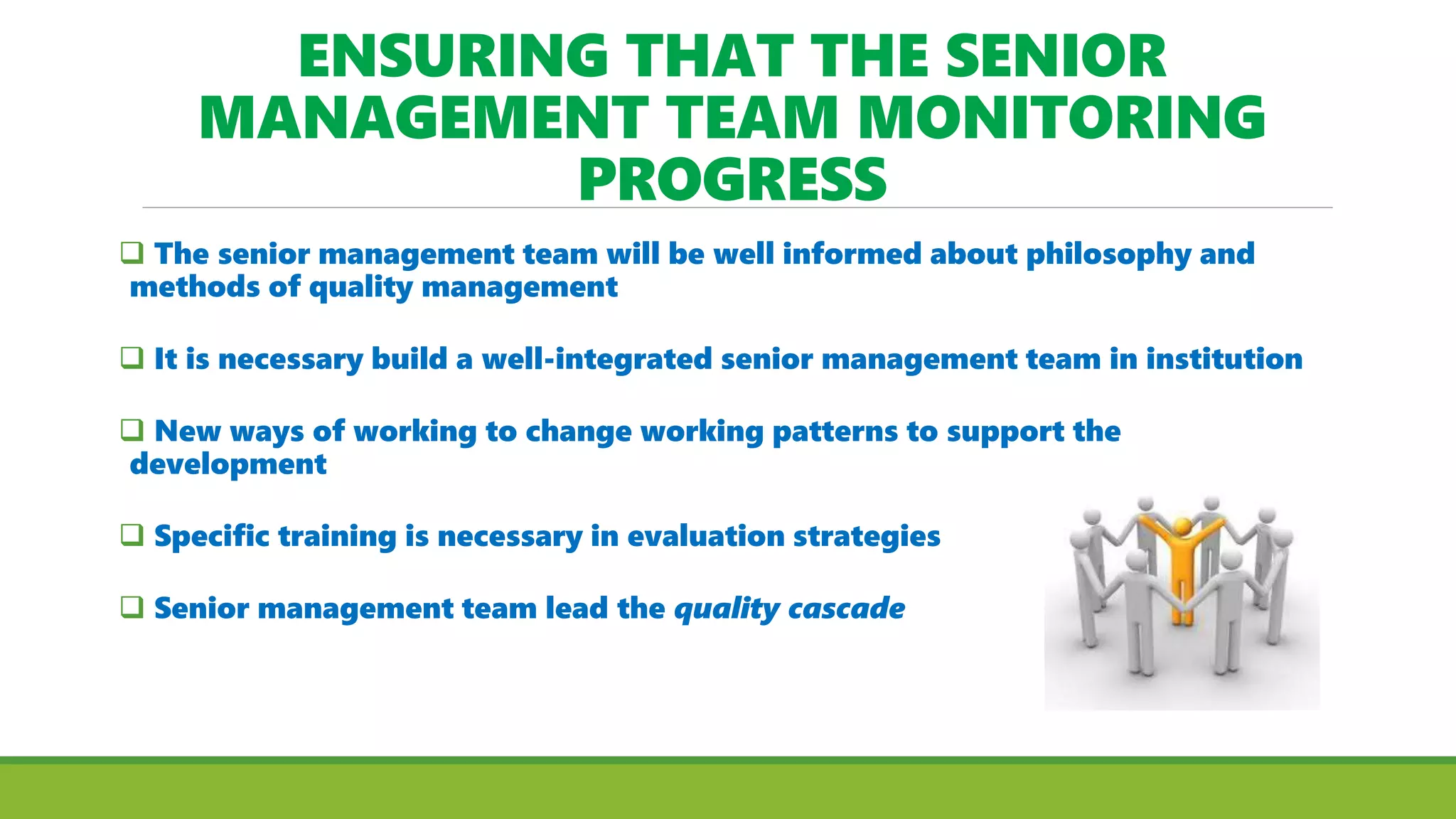
ENSURING THAT THE SENIOR
MANAGEMENT TEAM MONITORING
PROGRESS
 The senior management team will be well informed about philosophy and
methods of quality management
 It is necessary build a well-integrated senior management team in institution
 New ways of working to change working patterns to support the
development
 Specific training is necessary in evaluation strategies
 Senior management team lead the quality cascade
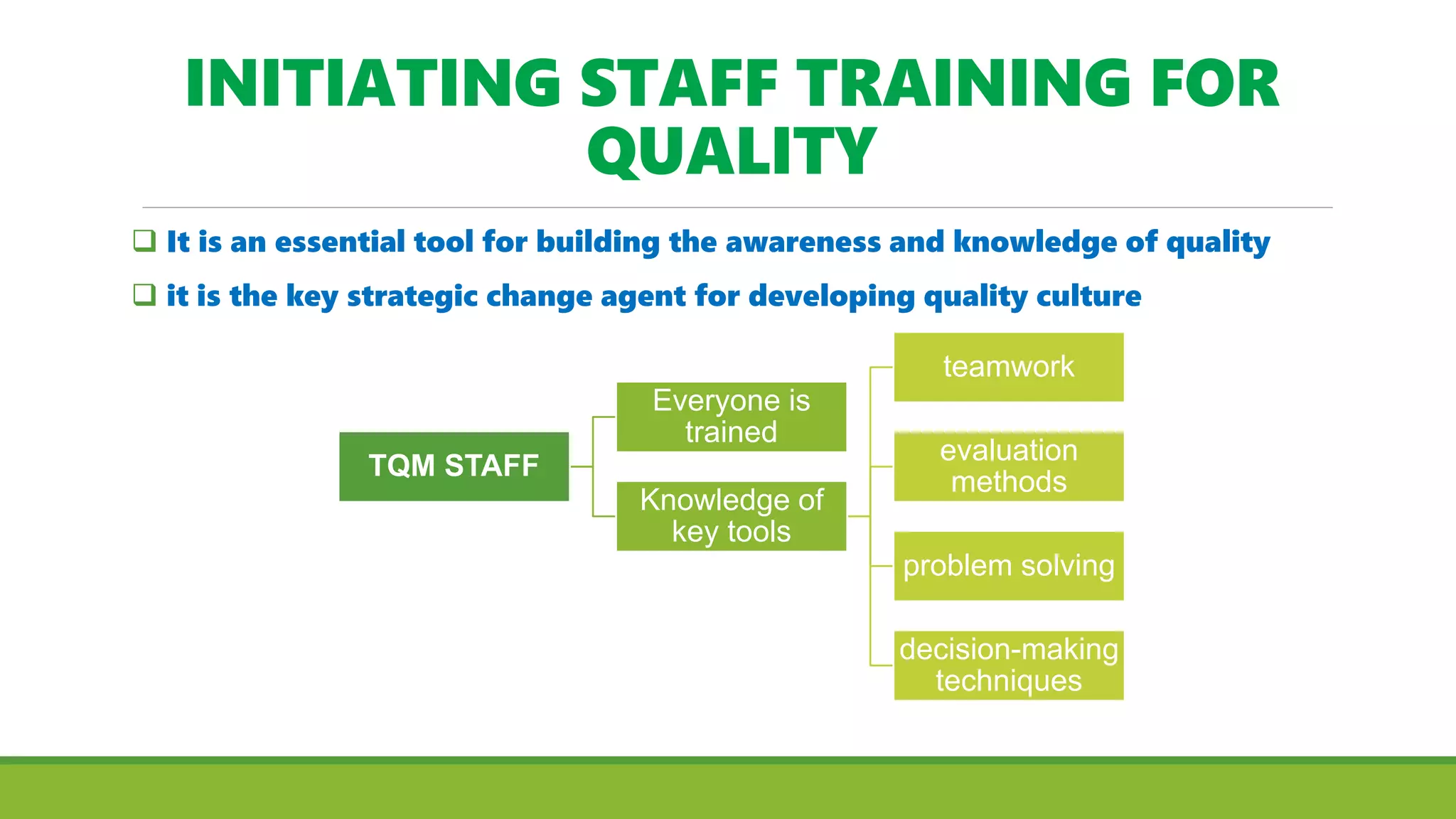
INITIATING STAFF TRAINING FOR
QUALITY
 It is an essential tool for building the awareness and knowledge of quality
 it is the key strategic change agent for developing quality culture
TQM STAFF
Everyone is
trained
Knowledge of
key tools
teamwork
evaluation
methods
problem solving
decision-making
techniques
MONITORING THE DELIVERY OF
CURRICULUM
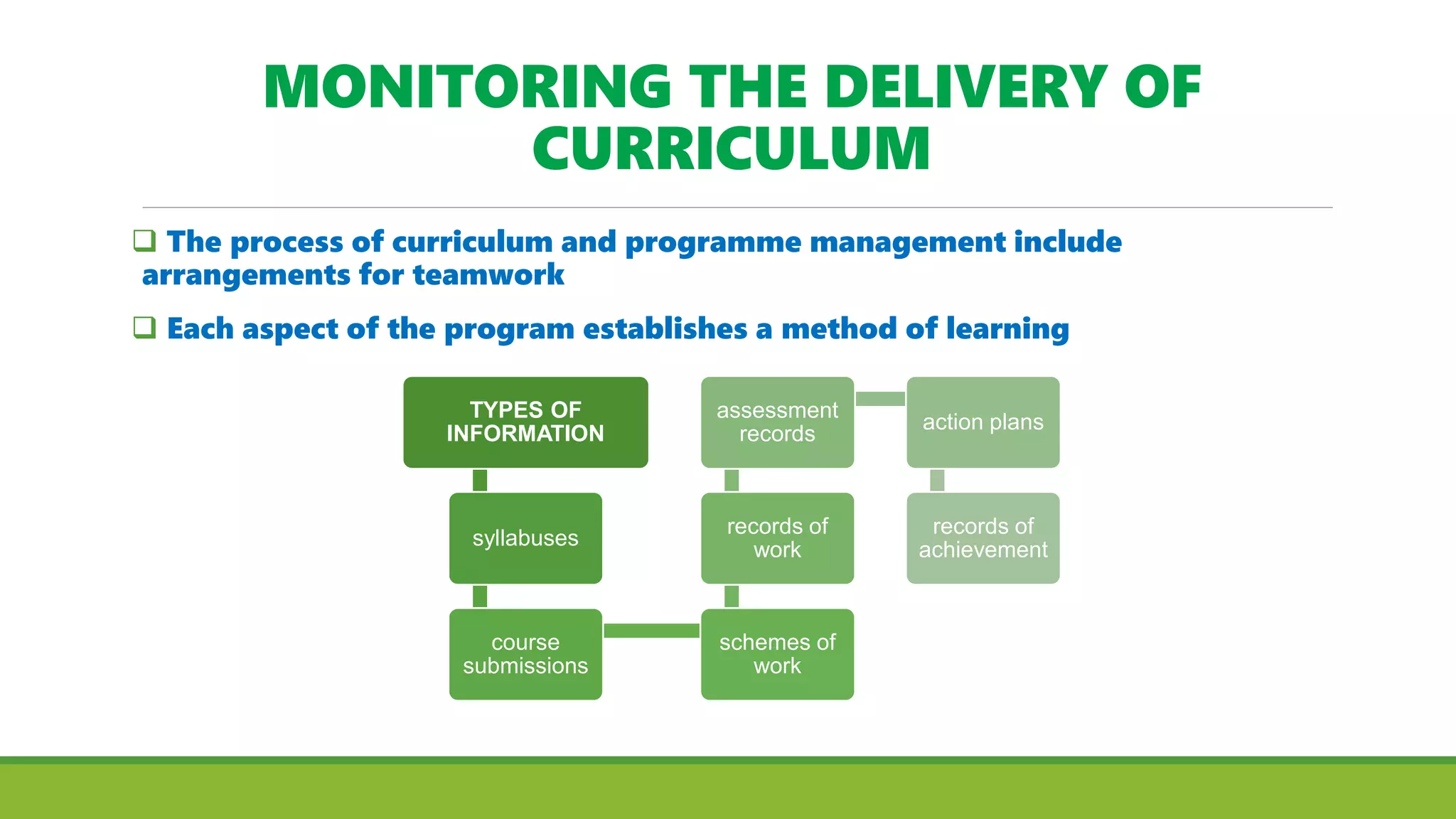
 The process of curriculum and programme management include
arrangements for teamwork
 Each aspect of the program establishes a method of learning
TYPES OF
INFORMATION
syllabuses
course
submissions
schemes of
work
records of
work
assessment
records
action plans
records of
achievement
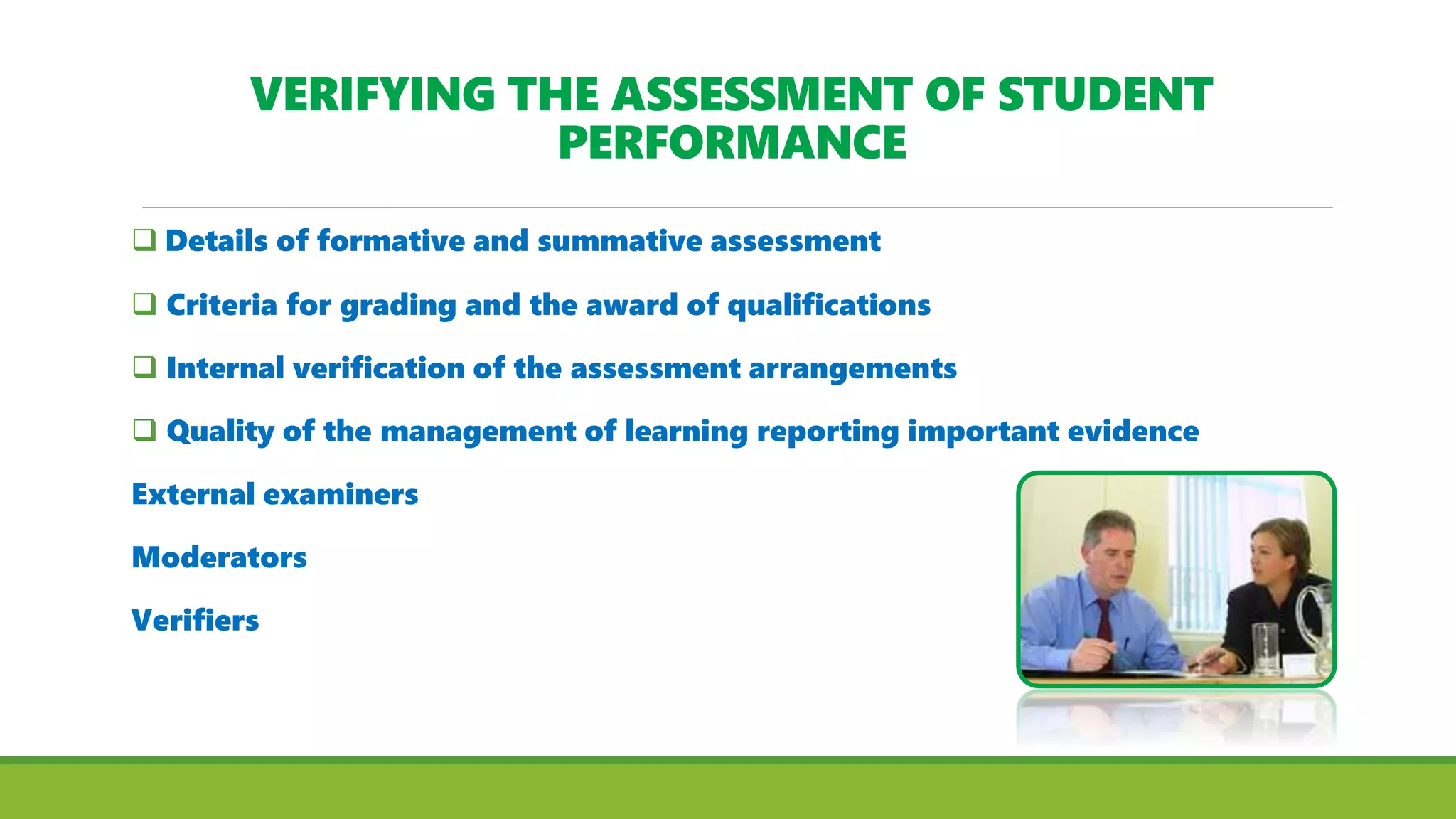
VERIFYING THE ASSESSMENT OF STUDENT
PERFORMANCE
 Details of formative and summative assessment
 Criteria for grading and the award of qualifications
 Internal verification of the assessment arrangements
 Quality of the management of learning reporting important evidence
External examiners
Moderators
Verifiers
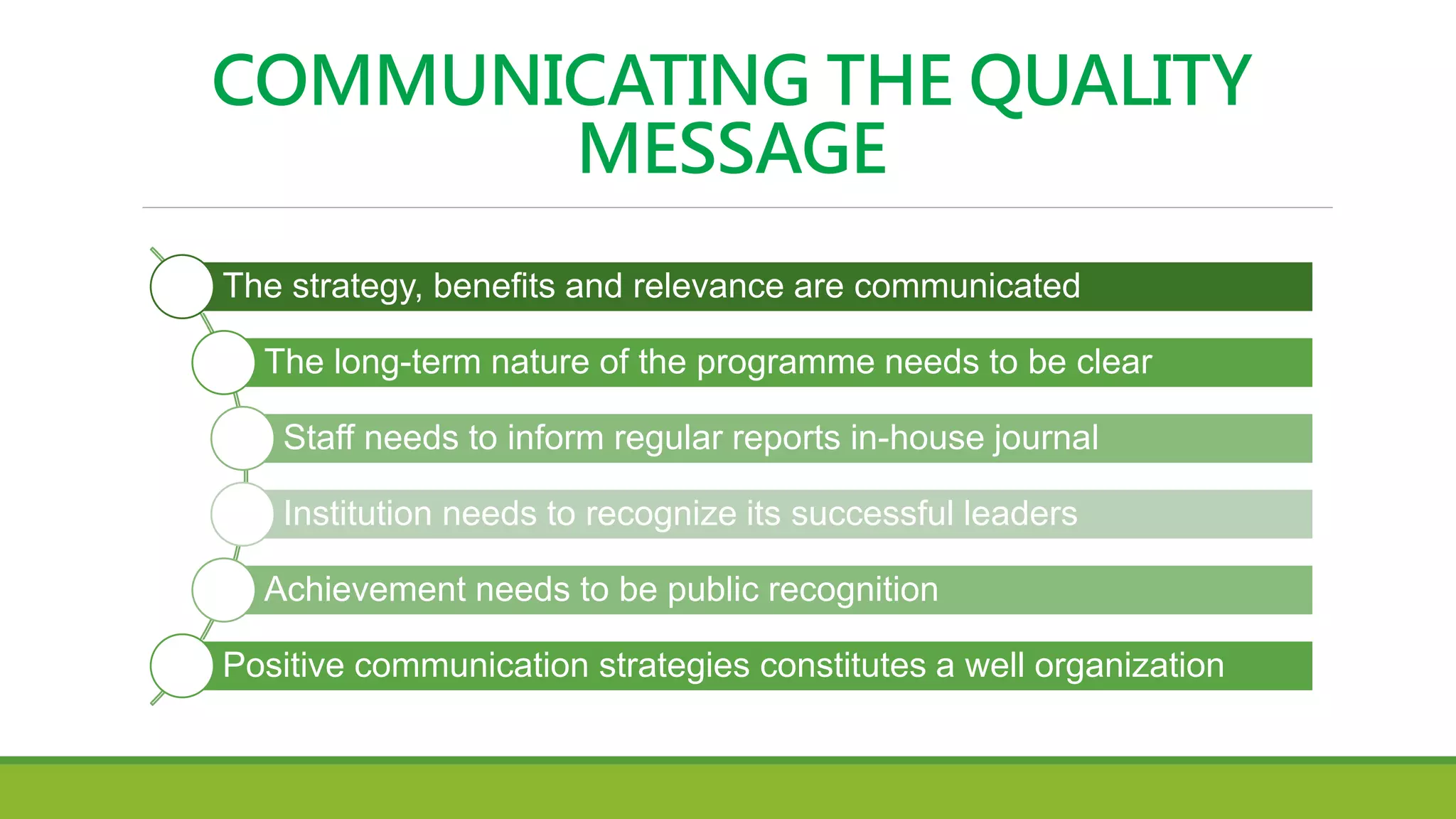
COMMUNICATING THE QUALITY
MESSAGE
The strategy, benefits and relevance are communicated
The long-term nature of the programme needs to be clear
Staff needs to inform regular reports in-house journal
Institution needs to recognize its successful leaders
Achievement needs to be public recognition
Positive communication strategies constitutes a well organization
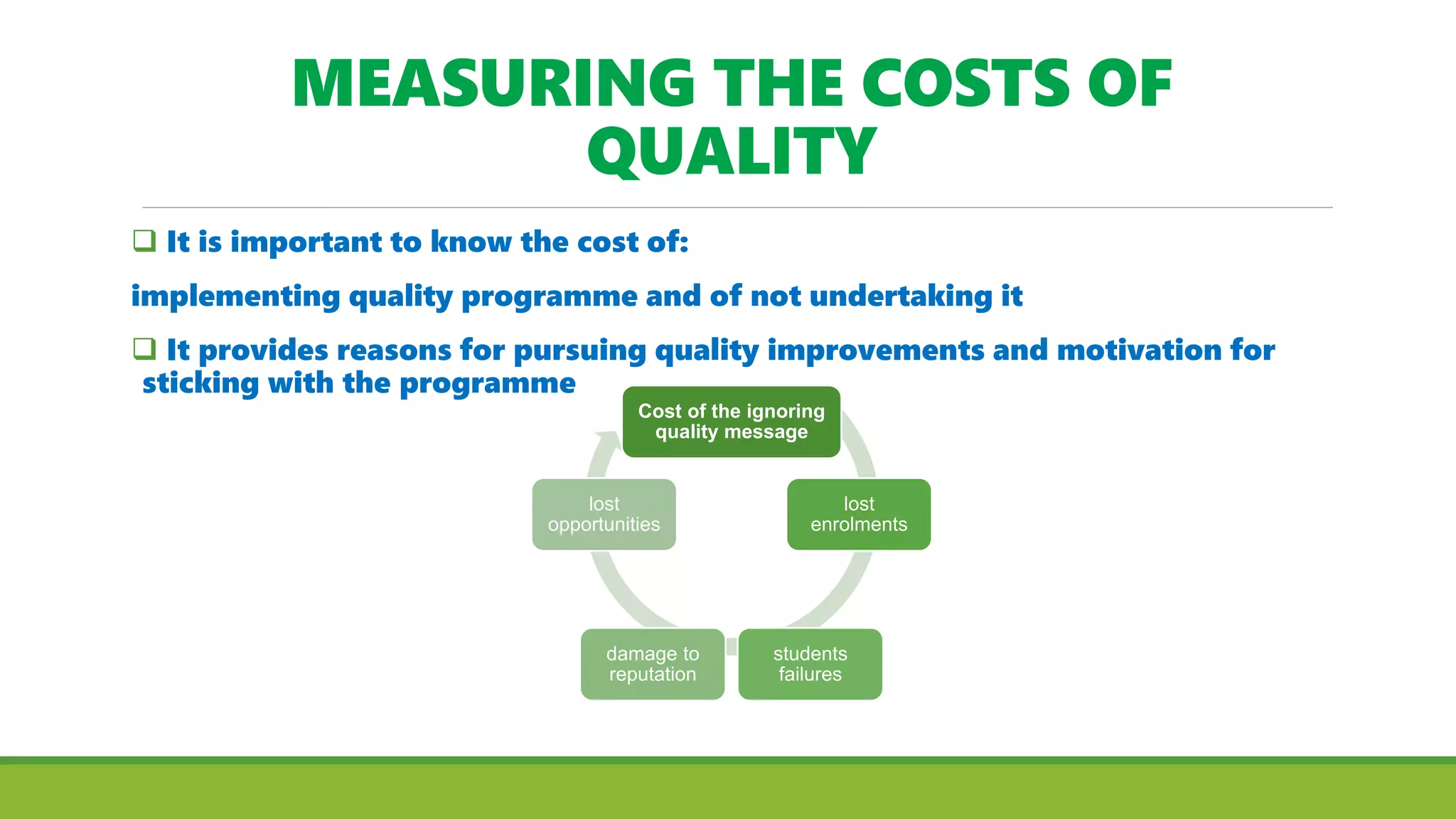
MEASURING THE COSTS OF
QUALITY
 It is important to know the cost of:
implementing quality programme and of not undertaking it
 It provides reasons for pursuing quality improvements and motivation for
sticking with the programme
Cost of the ignoring
quality message
lost
enrolments
students
failures
damage to
reputation
lost
opportunities
TEAMWORK
 It links teacher professionalism to the quality development process
 It helps that innovation and change become an accepted fact of life
 The key factor of it in the framework is the recognition of internal customer
chain
 Teams clarify issues and ideas in order to construct directions and policy
 It provides organization and contributions to the quality improvement
process
 Teamwork for teaching a modern curriculum requires integration of academic
staff and support staff
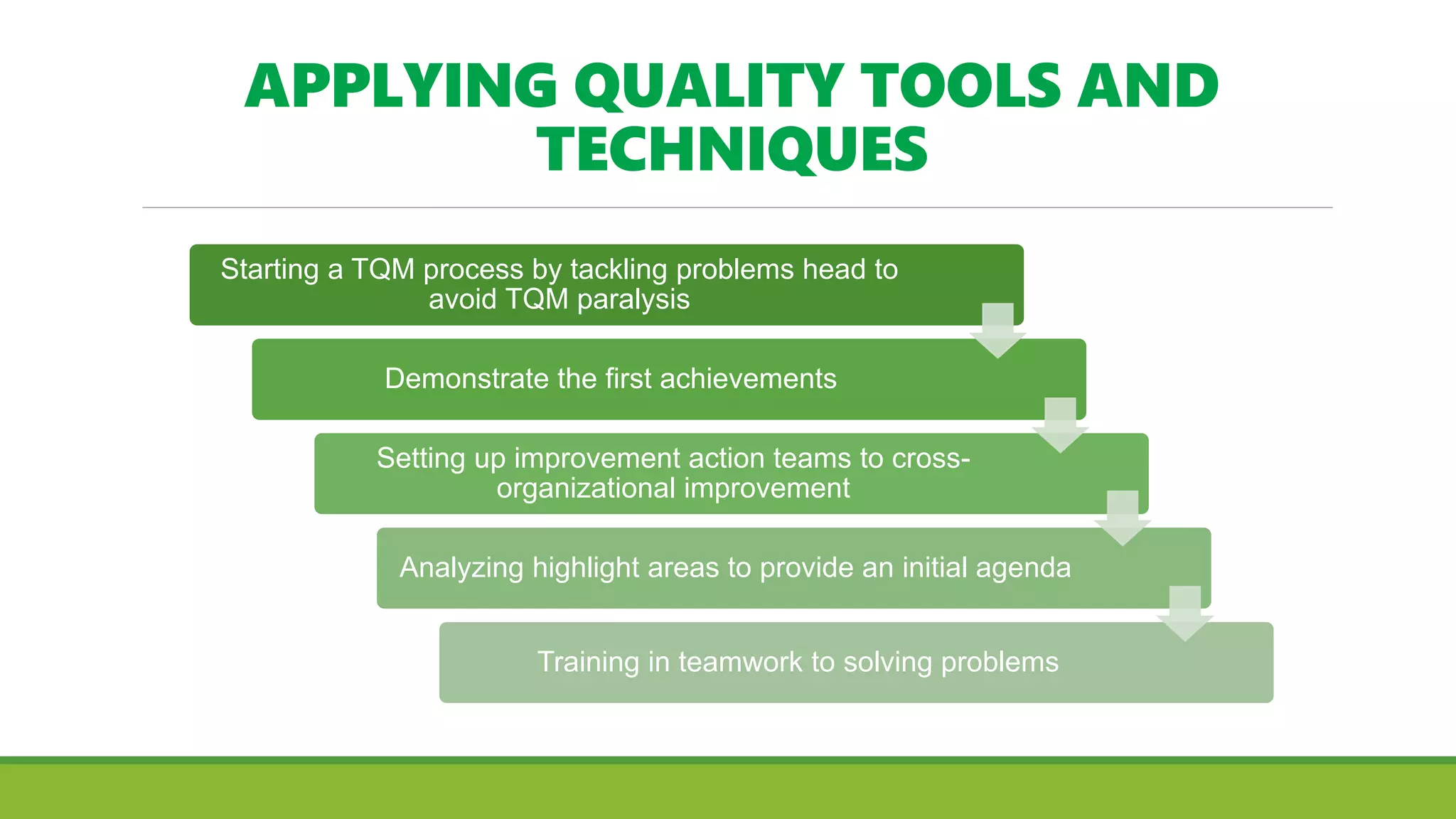
APPLYING QUALITY TOOLS AND
TECHNIQUES
Starting a TQM process by tackling problems head to
avoid TQM paralysis
Demonstrate the first achievements
Setting up improvement action teams to cross-
organizational improvement
Analyzing highlight areas to provide an initial agenda
Training in teamwork to solving problems
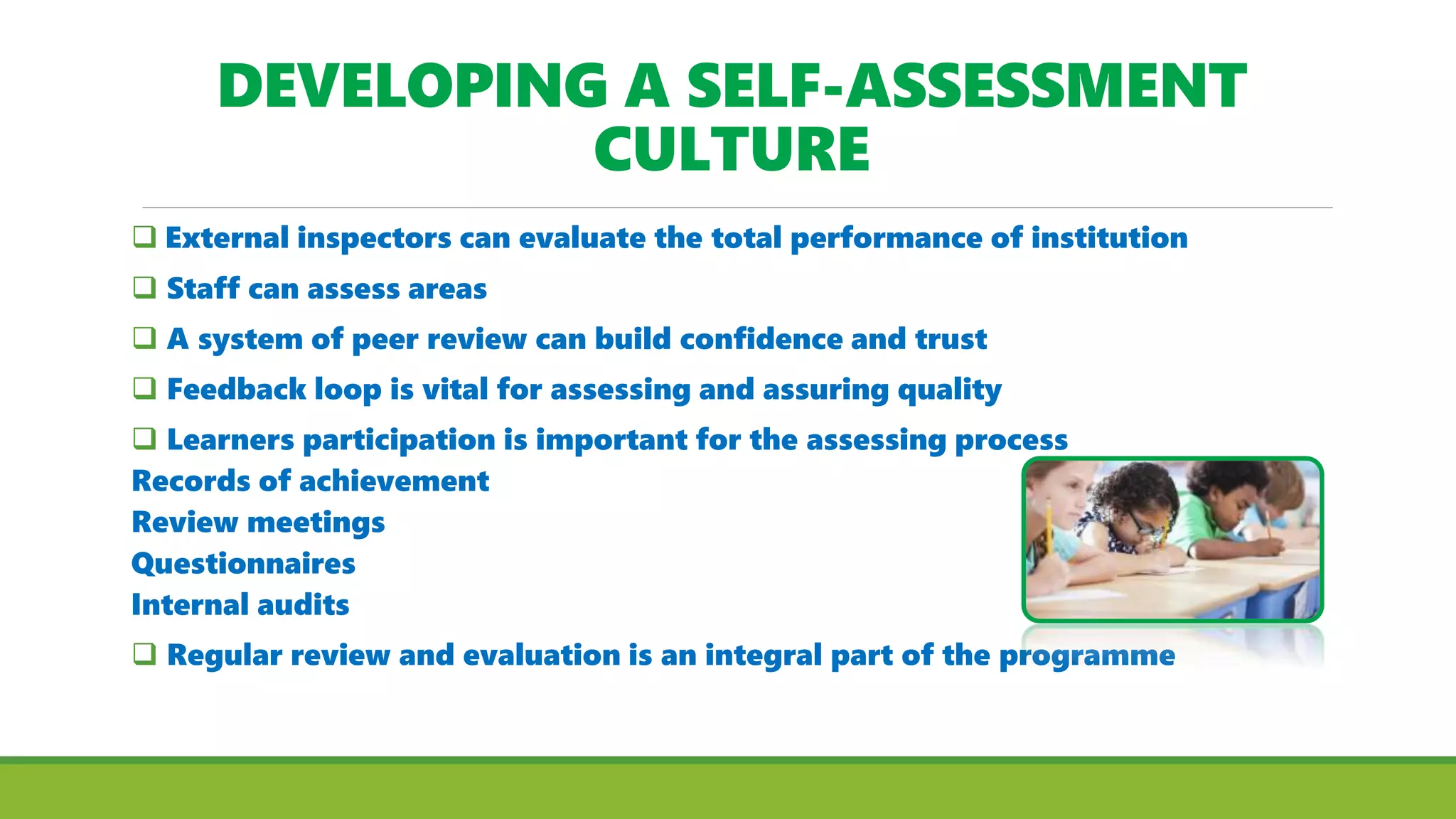
DEVELOPING A SELF-ASSESSMENT
CULTURE
 External inspectors can evaluate the total performance of institution
 Staff can assess areas
 A system of peer review can build confidence and trust
 Feedback loop is vital for assessing and assuring quality
 Learners participation is important for the assessing process
Records of achievement
Review meetings
Questionnaires
Internal audits
 Regular review and evaluation is an integral part of the programme
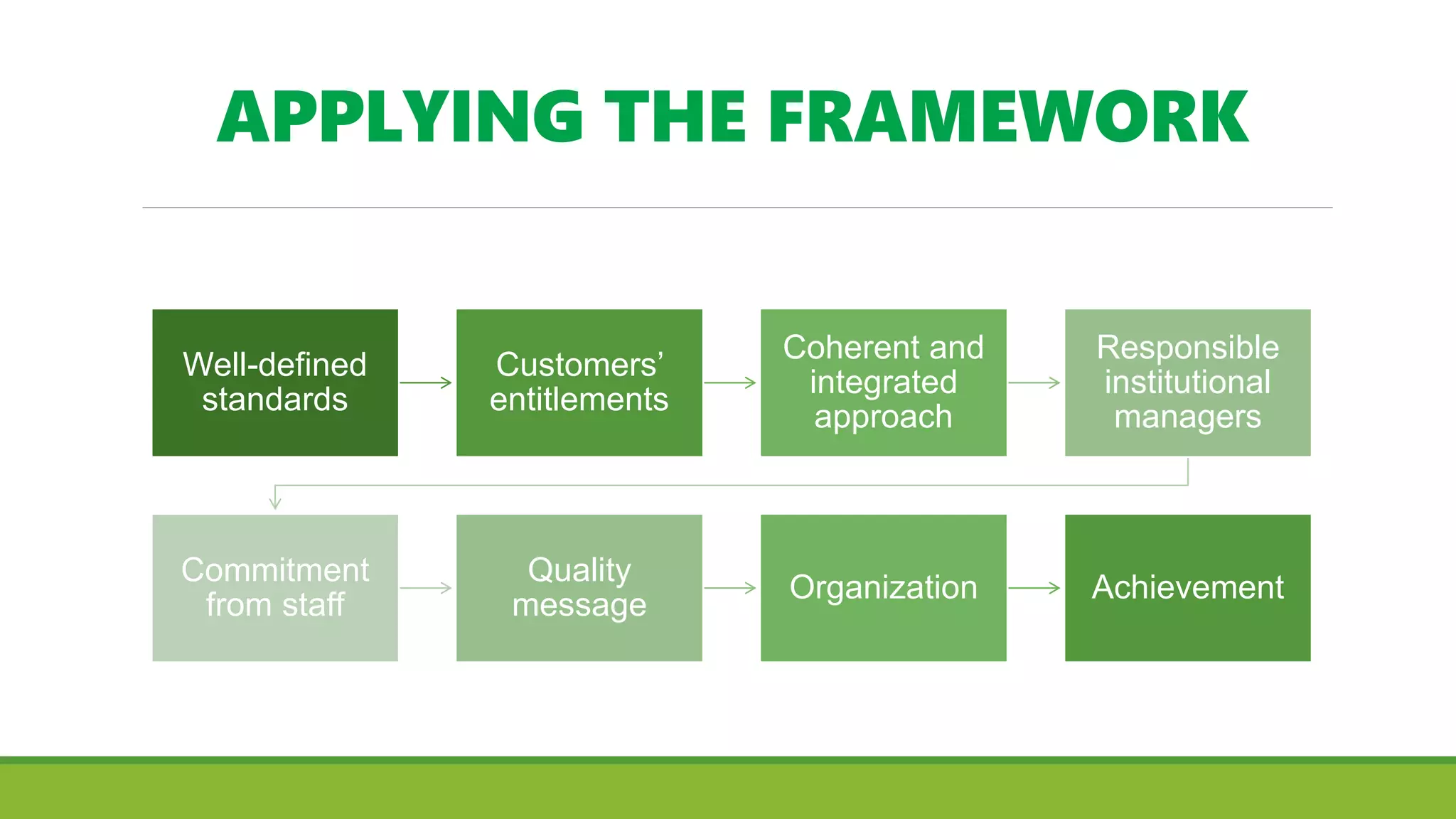
APPLYING THE FRAMEWORK
Well-defined
standards
Customers’
entitlements
Coherent and
integrated
approach
Responsible
institutional
managers
Commitment
from staff
Quality
message
Organization Achievement

"Framework" in a Total Quality Management in Education

  • 1.
    UNIVERSITY OF THEARMED FORCES SOCIO-EDUCATIONAL PROJECTS TOTAL QUALITY MANAGEMENT IN EDUCATION CHAPTER 15: “FRAMEWORK” DAYANA CRISTINA TAMAYO
  • 2.
    QUALITY FRAMEWORKS  Needto meet the special requirements of education in the context of pedagogic development teaching and learning QUALITYINSTITUTION FRAMEWORK Discovering what are doing Questioning methods and procedures Documenting what intend to do Providing evidence that are accomplishing
  • 3.
    COMPONENTS IN AQUALITY FRAMEWORK DEVELOPING LEADERSHIP AND STRATEGY  Quality management requires a commitment from senior management  Effective educational institution needs well-worked-out strategies to deal with competitive and results-oriented environment: Clear and distinctive mission Strategy for achieving the mission Involvement of customers Assessment and evaluation
  • 4.
    DELIGHTING CUSTOMERS  Itis the purpose of Total Management Quality through meeting internal and external customers’ needs and expectations METHODS TO ESTABLISH CUSTOMERS’ NEEDS  focus groups  questionnaires  advisory groups  open days  informally talking
  • 5.
    DESIGNATING QUALITY CHAMPIONS Quality Champions Designated qualityfacilitator to the principal Assist and guide teams in discovering new ways to solve problems Publicize the programme to lead quality steering group Drive and support the quality improvement process
  • 6.
    ENSURING THAT THESENIOR MANAGEMENT TEAM MONITORING PROGRESS  The senior management team will be well informed about philosophy and methods of quality management  It is necessary build a well-integrated senior management team in institution  New ways of working to change working patterns to support the development  Specific training is necessary in evaluation strategies  Senior management team lead the quality cascade
  • 7.
    INITIATING STAFF TRAININGFOR QUALITY  It is an essential tool for building the awareness and knowledge of quality  it is the key strategic change agent for developing quality culture TQM STAFF Everyone is trained Knowledge of key tools teamwork evaluation methods problem solving decision-making techniques
  • 8.
    MONITORING THE DELIVERYOF CURRICULUM  The process of curriculum and programme management include arrangements for teamwork  Each aspect of the program establishes a method of learning TYPES OF INFORMATION syllabuses course submissions schemes of work records of work assessment records action plans records of achievement
  • 9.
    VERIFYING THE ASSESSMENTOF STUDENT PERFORMANCE  Details of formative and summative assessment  Criteria for grading and the award of qualifications  Internal verification of the assessment arrangements  Quality of the management of learning reporting important evidence External examiners Moderators Verifiers
  • 10.
    COMMUNICATING THE QUALITY MESSAGE Thestrategy, benefits and relevance are communicated The long-term nature of the programme needs to be clear Staff needs to inform regular reports in-house journal Institution needs to recognize its successful leaders Achievement needs to be public recognition Positive communication strategies constitutes a well organization
  • 11.
    MEASURING THE COSTSOF QUALITY  It is important to know the cost of: implementing quality programme and of not undertaking it  It provides reasons for pursuing quality improvements and motivation for sticking with the programme Cost of the ignoring quality message lost enrolments students failures damage to reputation lost opportunities
  • 12.
    TEAMWORK  It linksteacher professionalism to the quality development process  It helps that innovation and change become an accepted fact of life  The key factor of it in the framework is the recognition of internal customer chain  Teams clarify issues and ideas in order to construct directions and policy  It provides organization and contributions to the quality improvement process  Teamwork for teaching a modern curriculum requires integration of academic staff and support staff
  • 13.
    APPLYING QUALITY TOOLSAND TECHNIQUES Starting a TQM process by tackling problems head to avoid TQM paralysis Demonstrate the first achievements Setting up improvement action teams to cross- organizational improvement Analyzing highlight areas to provide an initial agenda Training in teamwork to solving problems
  • 14.
    DEVELOPING A SELF-ASSESSMENT CULTURE External inspectors can evaluate the total performance of institution  Staff can assess areas  A system of peer review can build confidence and trust  Feedback loop is vital for assessing and assuring quality  Learners participation is important for the assessing process Records of achievement Review meetings Questionnaires Internal audits  Regular review and evaluation is an integral part of the programme
  • 15.
    APPLYING THE FRAMEWORK Well-defined standards Customers’ entitlements Coherentand integrated approach Responsible institutional managers Commitment from staff Quality message Organization Achievement