UNIVERSITY OF THE ARMED
FORCES
CONTEMPORARY AMERICAN POETRY
BRITISH AND AMERICAN LITERATURE
DAYANA CRISTINA TAMAYO
CONTEMPORARY
AMERICAN POETRY
(1945 – 1990)
TRADICIONALISM
Established forms and diction using rhyme or set of metrical pattern
• Precise
• Realistic
• Witty
• Rhetorical diction
• Fluency
• Verbal pyrotechnics
• Rhyme and meters
• Originality
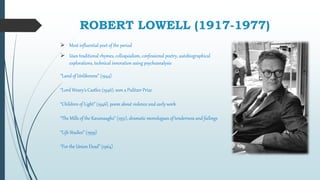
ROBERT LOWELL (1917-1977)
 Most influential poet of the period
 Uses traditional rhymes, colloquialism, confessional poetry, autobiographical
explorations, technical innovation using psychoanalysis
“Land of Unlikeness” (1944)
“Lord Weary’s Castle2 (1946), won a Pulitzer Prize
“Children of Light” (1946), poem about violence and early work
“The Mills of the Kavanaughs” (1951), dramatic monologues of tenderness and failings
“Life Studies” (1959)
“For the Union Dead” (1964)
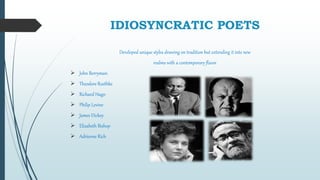
IDIOSYNCRATIC POETS
Developed unique styles drawing on tradition but extending it into new
realms with a contemporary flavor
 John Berryman
 Theodore Roethke
 Richard Hugo
 Philip Levine
 James Dickey
 Elizabeth Bishop
 Adrienne Rich
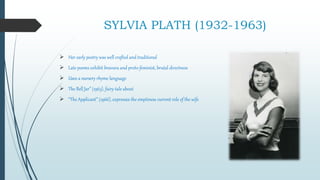
SYLVIA PLATH (1932-1963)
 Her early poetry was well crafted and traditional
 Late poems exhibit bravura and proto-feminist, brutal directness
 Uses a nursery rhyme language
 The Bell Jar” (1963), fairy-tale about
 “The Applicant” (1966), expresses the emptiness current role of the wife
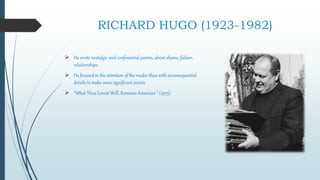
RICHARD HUGO (1923-1982)
 He wrote nostalgic and confessional poems, about shame, failure,
relationships.
 He focused in the attention of the reader than with inconsequential
details to make more significant points
 “What Thou Lovest Well, Remains American ” (1975)
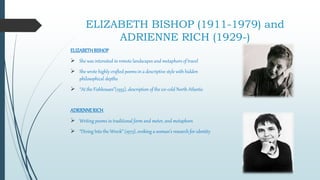
ELIZABETH BISHOP (1911-1979) and
ADRIENNE RICH (1929-)
ELIZABETHBISHOP
 She was interested in remote landscapes and metaphors of travel
 She wrote highly crafted poems in a descriptive style with hidden
philosophical depths
 “At the Fishhouses”(1955), description of the ice-cold North Atlantic
ADRIENNERICH
 Writing poems in traditional form and meter, and metaphors
 “Diving Into the Wreck” (1973), evoking a woman’s research for identity
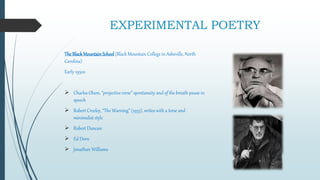
EXPERIMENTAL POETRY
The Black Mountain School (Black Mountain College in Asheville, North
Carolina)
Early 1950s
 Charles Olson, “projective verse” spontaneity and of the breath pause in
speech
 Robert Creeley, “The Warning” (1955), writes with a terse and
minimalist style
 Robert Duncan
 Ed Dorn
 Jonathan Williams
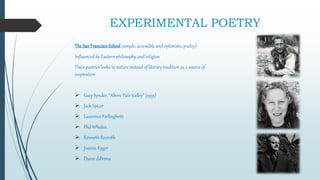
EXPERIMENTAL POETRY
The San FranciscoSchool(simple, accessible and optimistic poetry)
Influenced by Eastern philosophy and religion
Their poetries looks to nature instead of literary tradition as a source of
inspiration
 Gary Synder, “Above Pate Valley” (1955)
 Jack Spicer
 Lawrence Ferlinghetti
 Phil Whalen
 Kenneth Rexroth
 Joanne Kyger
 Diane diPrima
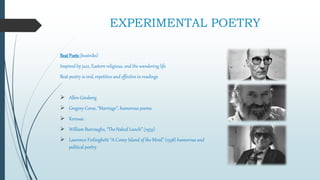
EXPERIMENTAL POETRY
Beat Poets (beatniks)
Inspired by jazz, Eastern religious, and the wandering life
Beat poetry is oral, repetitive and effective in readings
 Allen Ginsberg
 Gregory Corso, “Marriage”, humorous poems
 Kerouac
 William Burroughs, “The Naked Lunch” (1959)
 Lawrence Ferlinghetti “A Coney Island of the Mind” (1958) humorous and
political poetry
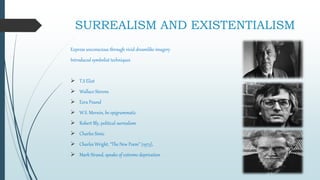
SURREALISM AND
EXISTENTIALISM
Express unconscious through vivid dreamlike imagery
Introduced symbolist techniques
 T.S Eliot
 Wallace Stevens
 Ezra Pound
 W.S. Merwin, be epigrammatic
 Robert Bly, political surrealism
 Charles Simic
 Charles Wright, “The New Poem” (1973),
 Mark Strand, speaks of extreme deprivation
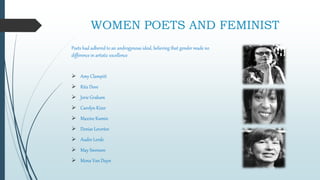
WOMEN POETS AND FEMINIST
Poets had adhered to an androgynous ideal, believing that gender made no
difference in artistic excellence
 Amy Clampitt
 Rita Dove
 Jorie Graham
 Carolyn Kizer
 Maxine Kumin
 Denise Levertov
 Audre Lorde
 May Swenson
 Mona Van Duyn

Contemporary American Poetry

  • 1.
    UNIVERSITY OF THEARMED FORCES CONTEMPORARY AMERICAN POETRY BRITISH AND AMERICAN LITERATURE DAYANA CRISTINA TAMAYO
  • 2.
    CONTEMPORARY AMERICAN POETRY (1945 –1990) TRADICIONALISM Established forms and diction using rhyme or set of metrical pattern • Precise • Realistic • Witty • Rhetorical diction • Fluency • Verbal pyrotechnics • Rhyme and meters • Originality
  • 3.
    ROBERT LOWELL (1917-1977) Most influential poet of the period  Uses traditional rhymes, colloquialism, confessional poetry, autobiographical explorations, technical innovation using psychoanalysis “Land of Unlikeness” (1944) “Lord Weary’s Castle2 (1946), won a Pulitzer Prize “Children of Light” (1946), poem about violence and early work “The Mills of the Kavanaughs” (1951), dramatic monologues of tenderness and failings “Life Studies” (1959) “For the Union Dead” (1964)
  • 4.
    IDIOSYNCRATIC POETS Developed uniquestyles drawing on tradition but extending it into new realms with a contemporary flavor  John Berryman  Theodore Roethke  Richard Hugo  Philip Levine  James Dickey  Elizabeth Bishop  Adrienne Rich
  • 5.
    SYLVIA PLATH (1932-1963) Her early poetry was well crafted and traditional  Late poems exhibit bravura and proto-feminist, brutal directness  Uses a nursery rhyme language  The Bell Jar” (1963), fairy-tale about  “The Applicant” (1966), expresses the emptiness current role of the wife
  • 6.
    RICHARD HUGO (1923-1982) He wrote nostalgic and confessional poems, about shame, failure, relationships.  He focused in the attention of the reader than with inconsequential details to make more significant points  “What Thou Lovest Well, Remains American ” (1975)
  • 7.
    ELIZABETH BISHOP (1911-1979)and ADRIENNE RICH (1929-) ELIZABETHBISHOP  She was interested in remote landscapes and metaphors of travel  She wrote highly crafted poems in a descriptive style with hidden philosophical depths  “At the Fishhouses”(1955), description of the ice-cold North Atlantic ADRIENNERICH  Writing poems in traditional form and meter, and metaphors  “Diving Into the Wreck” (1973), evoking a woman’s research for identity
  • 8.
    EXPERIMENTAL POETRY The BlackMountain School (Black Mountain College in Asheville, North Carolina) Early 1950s  Charles Olson, “projective verse” spontaneity and of the breath pause in speech  Robert Creeley, “The Warning” (1955), writes with a terse and minimalist style  Robert Duncan  Ed Dorn  Jonathan Williams
  • 9.
    EXPERIMENTAL POETRY The SanFranciscoSchool(simple, accessible and optimistic poetry) Influenced by Eastern philosophy and religion Their poetries looks to nature instead of literary tradition as a source of inspiration  Gary Synder, “Above Pate Valley” (1955)  Jack Spicer  Lawrence Ferlinghetti  Phil Whalen  Kenneth Rexroth  Joanne Kyger  Diane diPrima
  • 10.
    EXPERIMENTAL POETRY Beat Poets(beatniks) Inspired by jazz, Eastern religious, and the wandering life Beat poetry is oral, repetitive and effective in readings  Allen Ginsberg  Gregory Corso, “Marriage”, humorous poems  Kerouac  William Burroughs, “The Naked Lunch” (1959)  Lawrence Ferlinghetti “A Coney Island of the Mind” (1958) humorous and political poetry
  • 11.
    SURREALISM AND EXISTENTIALISM Express unconsciousthrough vivid dreamlike imagery Introduced symbolist techniques  T.S Eliot  Wallace Stevens  Ezra Pound  W.S. Merwin, be epigrammatic  Robert Bly, political surrealism  Charles Simic  Charles Wright, “The New Poem” (1973),  Mark Strand, speaks of extreme deprivation
  • 12.
    WOMEN POETS ANDFEMINIST Poets had adhered to an androgynous ideal, believing that gender made no difference in artistic excellence  Amy Clampitt  Rita Dove  Jorie Graham  Carolyn Kizer  Maxine Kumin  Denise Levertov  Audre Lorde  May Swenson  Mona Van Duyn