UNIVERSITY OF THE ARMED
FORCES
CINEMA APPRECIATION
UNIT 4: “FILM – MAKING COMPLETION”
DAYANA CRISTINA TAMAYO
4.1 LITERATURE AND CINEMA
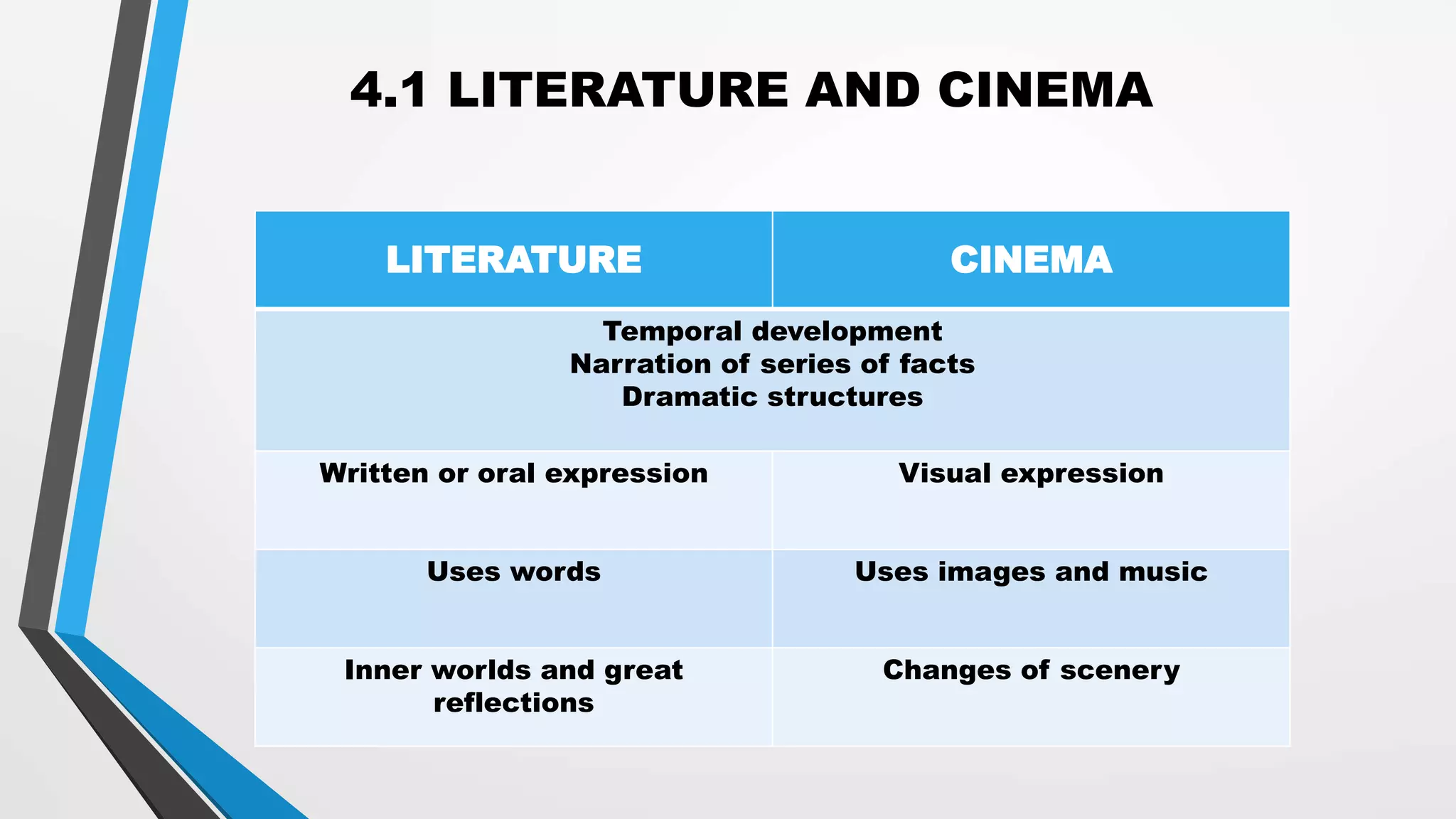
LITERATURE CINEMA
Temporal development
Narration of series of facts
Dramatic structures
Written or oral expression Visual expression
Uses words Uses images and music
Inner worlds and great
reflections
Changes of scenery
4.1 LITERATURE AND CINEMA
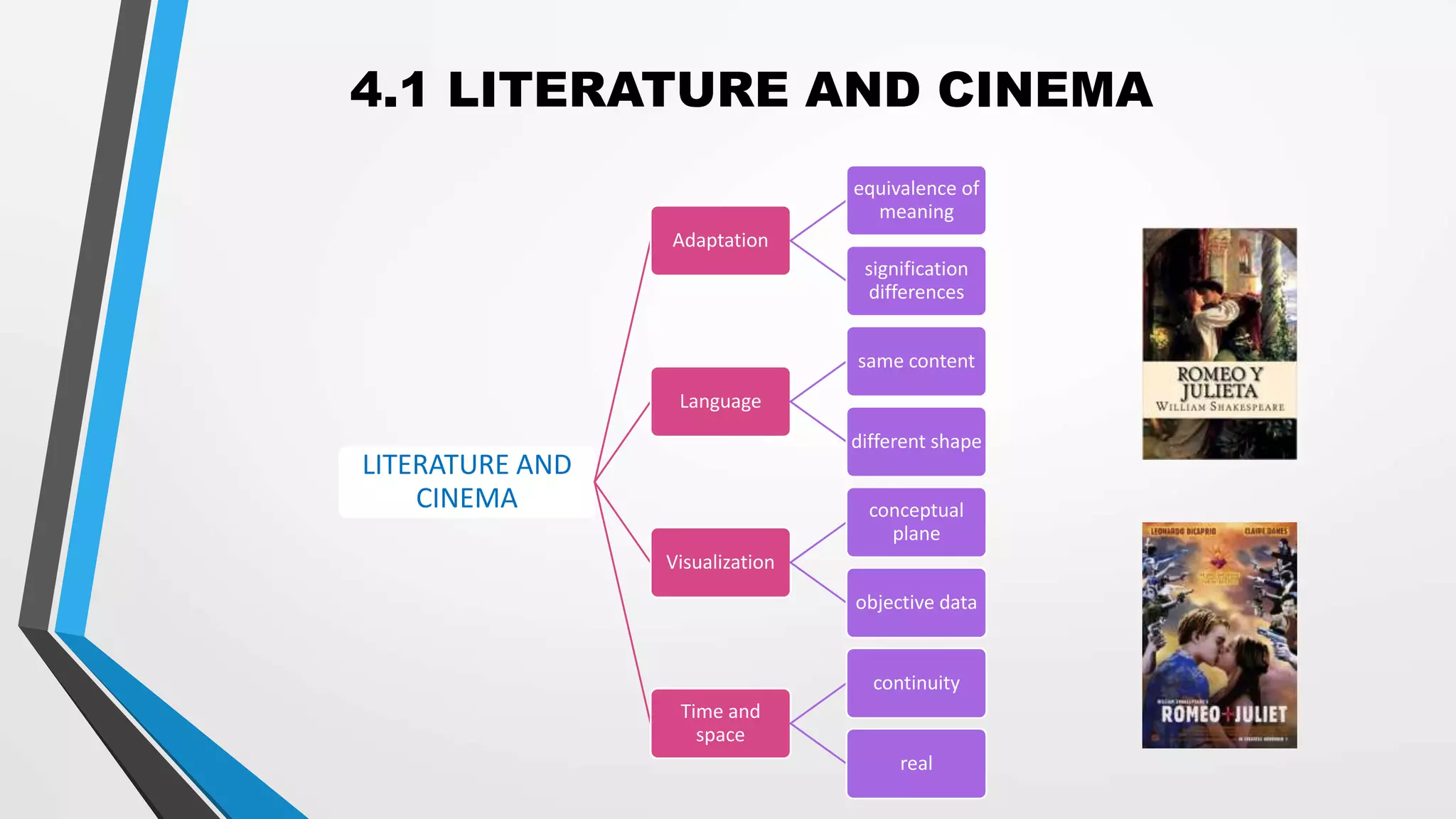
LITERATURE AND
CINEMA
Adaptation
equivalence of
meaning
signification
differences
Language
same content
different shape
Visualization
conceptual
plane
objective data
Time and
space
continuity
real
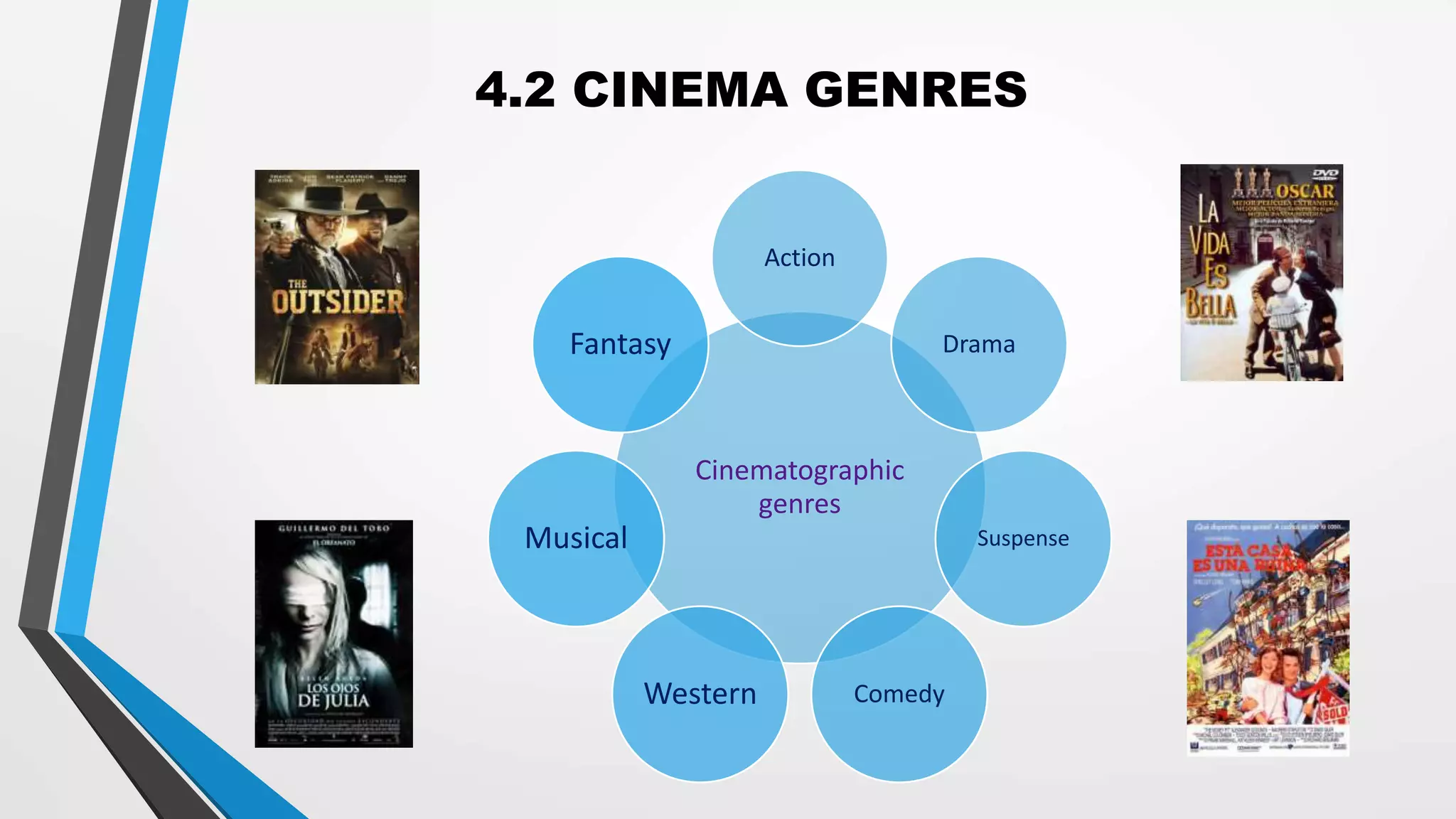
4.2 CINEMA GENRES
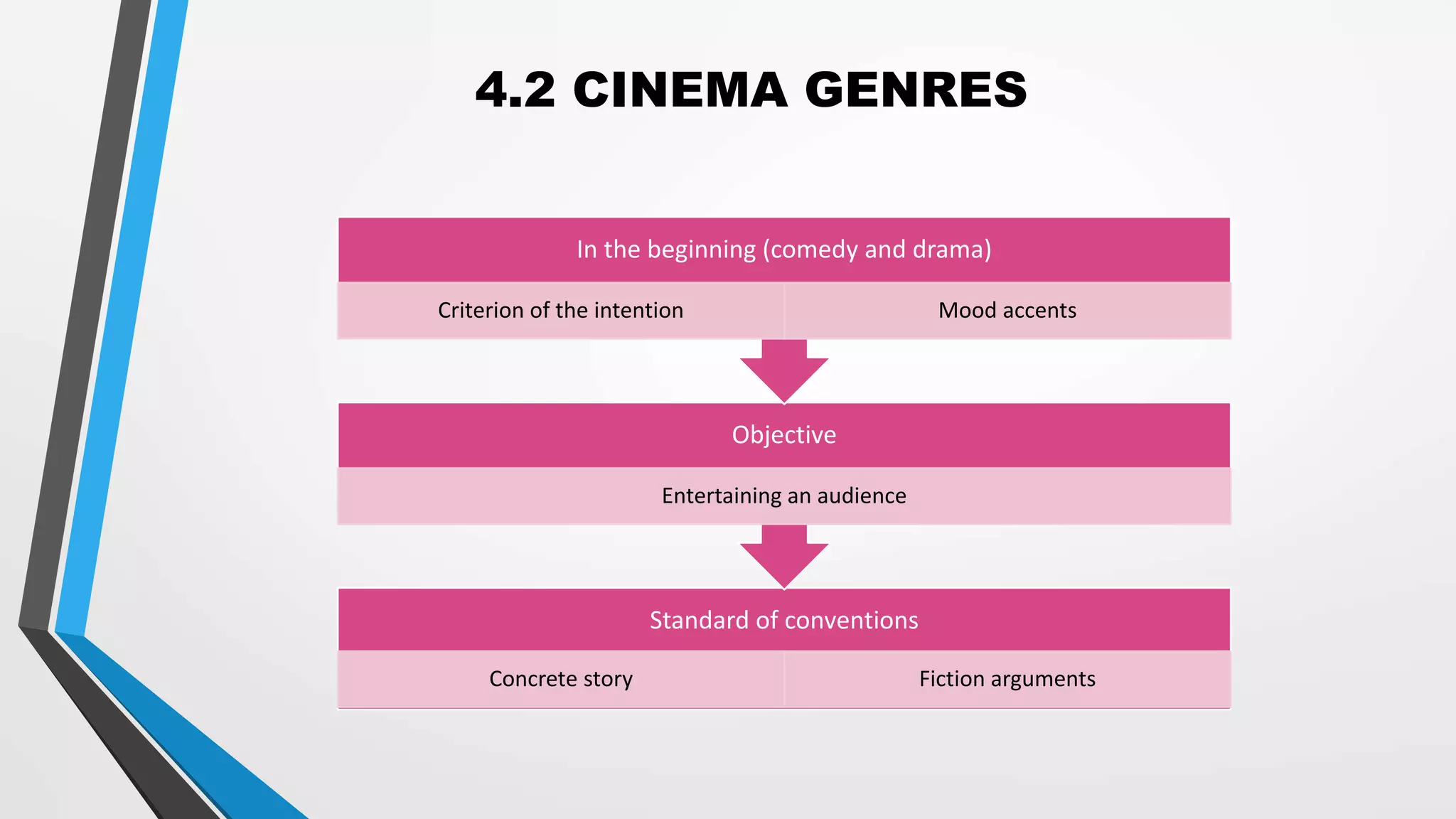
Standard of conventions
Concrete story Fiction arguments
Objective
Entertaining an audience
In the beginning (comedy and drama)
Criterion of the intention Mood accents
4.2 CINEMA GENRES
Cinematographic
genres
Action
Drama
Suspense
ComedyWestern
Musical
Fantasy
4.3 COMPLETION EXERCISES
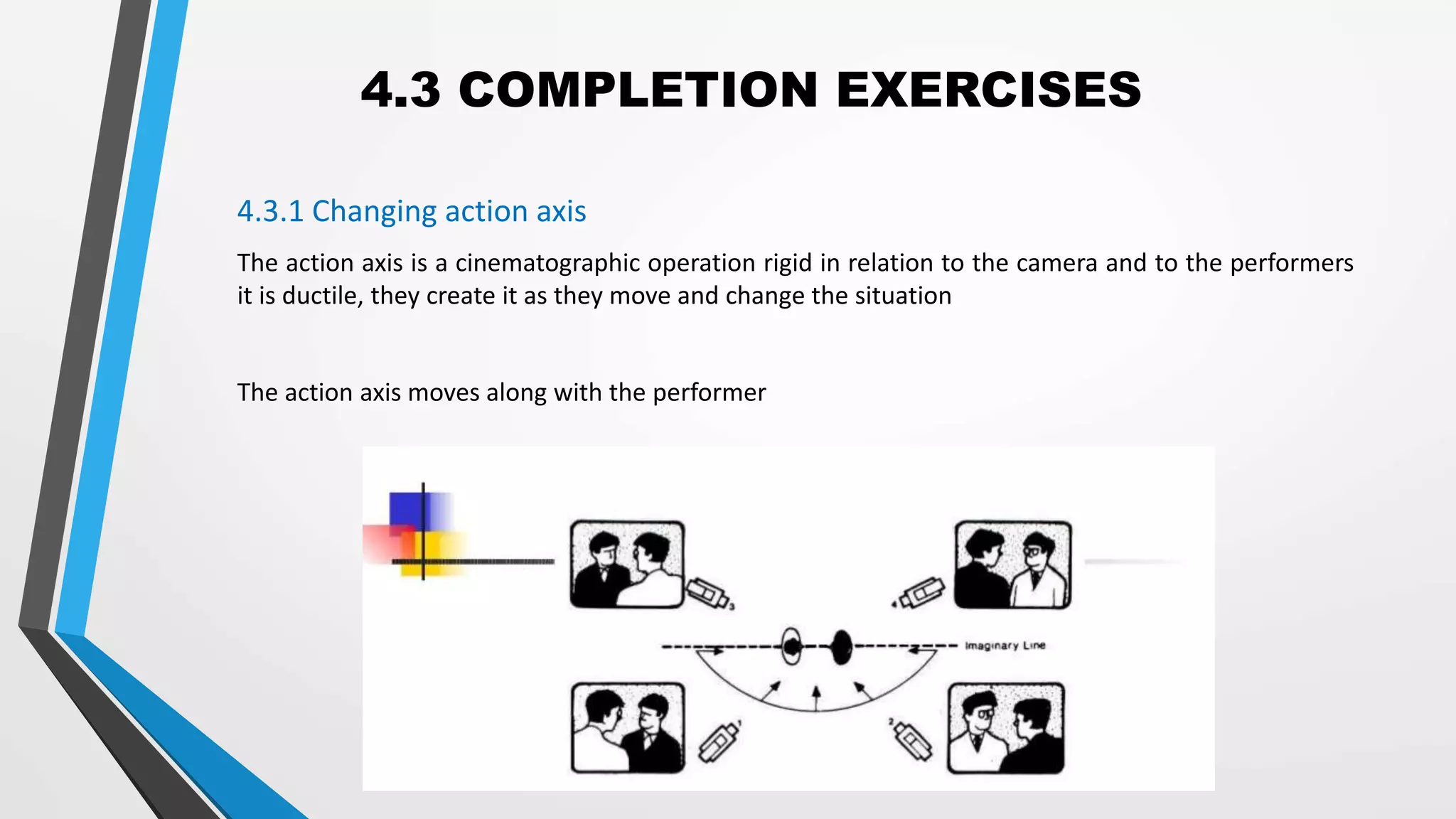
4.3.1 Changing action axis
The action axis is a cinematographic operation rigid in relation to the camera and to the performers
it is ductile, they create it as they move and change the situation
The action axis moves along with the performer
4.3 COMPLETION EXERCISES
4.3.2 The Script: Five Essential Questions
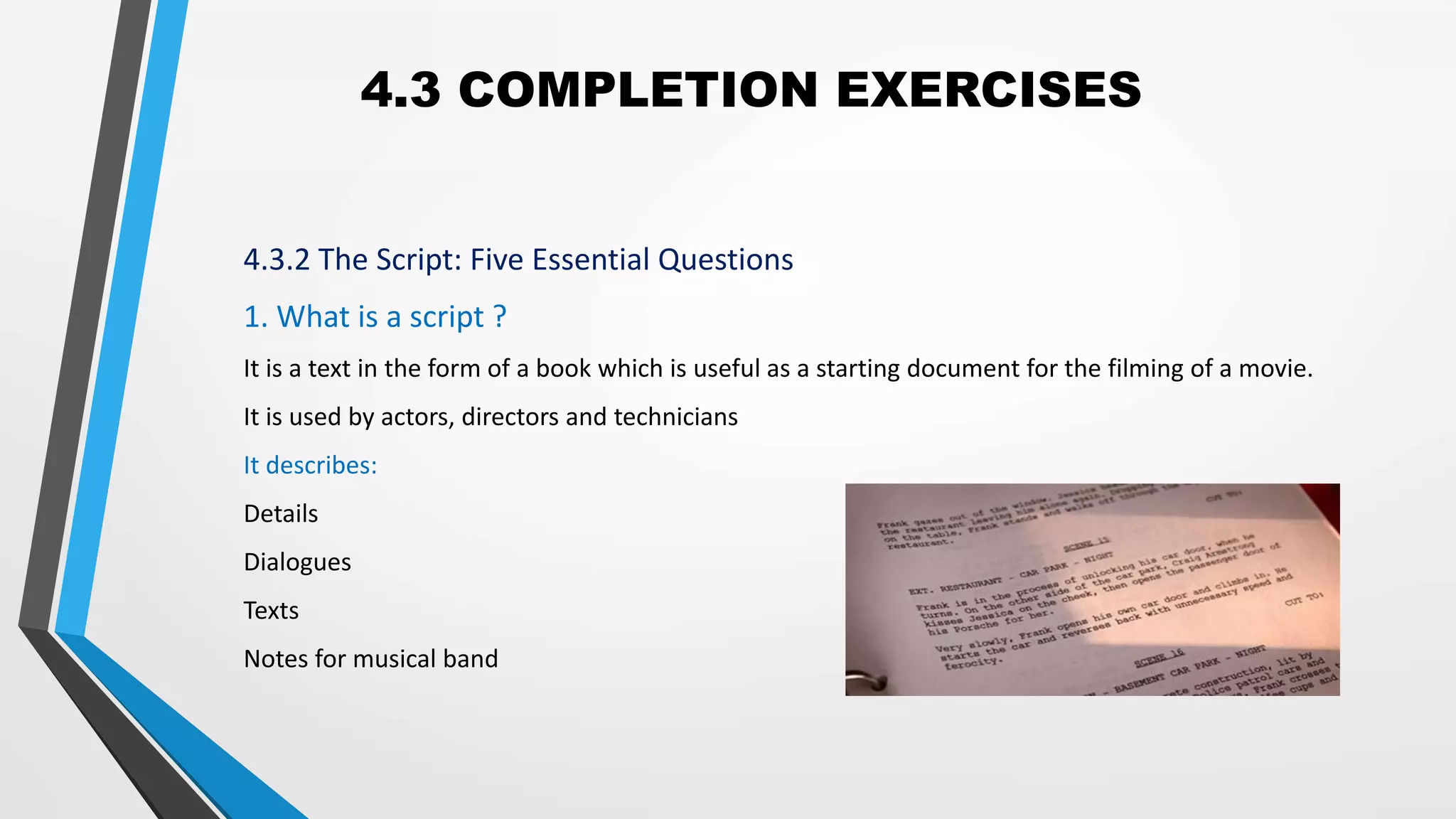
1. What is a script ?
It is a text in the form of a book which is useful as a starting document for the filming of a movie.
It is used by actors, directors and technicians
It describes:
Details
Dialogues
Texts
Notes for musical band
4.3 COMPLETION EXERCISES
4.3.2 The Script: Five Essential Questions
2. What is it used for?
Director articulate scene
Performer analyze personages’ character
Production manager make up a plan
Photography director imagine chromatic climates
Artistic director construct environments
4.3 COMPLETION EXERCISES
4.3.2 The Script: Five Essential Questions
3. How is it written down?
decoration to put up
performers and “stunts” to be hired
dialogues to be pronounced
music to be composed and played
elements of camera and sound that are required
assistants and auxiliary staff
transportation means and even insurances to avoid risks
4. What are its limitations?
The relation between scriptwriter- director
4.3 COMPLETION EXERCISES
4.3.2 The Script: Five Essential Questions
5. Can its technique be learned?
Observation of reality and prior work
Level the stages for writing exercising
Narrative ordering
Admit mistakes
Original creativity

Film-making completion

  • 1.
    UNIVERSITY OF THEARMED FORCES CINEMA APPRECIATION UNIT 4: “FILM – MAKING COMPLETION” DAYANA CRISTINA TAMAYO
  • 2.
    4.1 LITERATURE ANDCINEMA LITERATURE CINEMA Temporal development Narration of series of facts Dramatic structures Written or oral expression Visual expression Uses words Uses images and music Inner worlds and great reflections Changes of scenery
  • 3.
    4.1 LITERATURE ANDCINEMA LITERATURE AND CINEMA Adaptation equivalence of meaning signification differences Language same content different shape Visualization conceptual plane objective data Time and space continuity real
  • 4.
    4.2 CINEMA GENRES Standardof conventions Concrete story Fiction arguments Objective Entertaining an audience In the beginning (comedy and drama) Criterion of the intention Mood accents
  • 5.
  • 6.
    4.3 COMPLETION EXERCISES 4.3.1Changing action axis The action axis is a cinematographic operation rigid in relation to the camera and to the performers it is ductile, they create it as they move and change the situation The action axis moves along with the performer
  • 7.
    4.3 COMPLETION EXERCISES 4.3.2The Script: Five Essential Questions 1. What is a script ? It is a text in the form of a book which is useful as a starting document for the filming of a movie. It is used by actors, directors and technicians It describes: Details Dialogues Texts Notes for musical band
  • 8.
    4.3 COMPLETION EXERCISES 4.3.2The Script: Five Essential Questions 2. What is it used for? Director articulate scene Performer analyze personages’ character Production manager make up a plan Photography director imagine chromatic climates Artistic director construct environments
  • 9.
    4.3 COMPLETION EXERCISES 4.3.2The Script: Five Essential Questions 3. How is it written down? decoration to put up performers and “stunts” to be hired dialogues to be pronounced music to be composed and played elements of camera and sound that are required assistants and auxiliary staff transportation means and even insurances to avoid risks 4. What are its limitations? The relation between scriptwriter- director
  • 10.
    4.3 COMPLETION EXERCISES 4.3.2The Script: Five Essential Questions 5. Can its technique be learned? Observation of reality and prior work Level the stages for writing exercising Narrative ordering Admit mistakes Original creativity