TRAINING FOR
  QUALITY

      Presented By
      Ms. Nidhi Kukreja
      Mr. Mohnish Madkaikar
INTRODUCTION
 What   is Quality ?

 What   is Training ?

 Why    Training for quality ?

 Conventional    training and modern training methods

 Physical   training and Virtual training

 Paid   training and On-job training
Garment Production Flow chart
           Fabric Washing


           Fabric Bitting


              Cutting

Quality
Control        Sewing


              Finishing


              Packing


              Dispatch
MANAGEMENT OF QUALITY
        TRAINING

   A delineation of responsibilities for who contributes and
    in what ways

   A strong and unswerving focus on the customer –
    Internal and External

   A plan established with clear strategies and tactics for
    quality training

   A budget to fund the plan
RESPONSIBILITIES
Training for Quality and TQM system the training supports can succeed
only if there is accountability and responsibility for its implementation
and effectiveness


   Executive leadership – The executive team bears the responsibility
    for creating a quality culture in the organization

   Human resource – The Human Resource (HR Dept.) bears the
    responsibility for implementing the Quality training strategy

   The quality professionals – The quality professionals (Quality
    Dept.) bear the responsibility to collaborate with the HR
    professionals to share their technical expertise on quality
FOCUSING ON THE CUSTOMER
  While drafting a Training program following factors
 should be taken into account for effective and positive
 deployment of the plan

 • Customer Need

 • Customer Expectation

 • Customer Satisfaction

 • Customer Perception
DEVELOPING A TRAINING PLAN FOR
QUALITY
   Quality Awareness –
     Why quality is important
     What quality means in our environment
     How quality affects our daily work
     Where we can begin to apply quality concepts and techniques


   Executive education –
     Modular   training
     Just – in – time training
     Mentoring
     Lecture by peers
     Self Study
     Conferences
RESOURCES
   There must be a purposeful effort to identify the staffing and
    materials funding necessary to achieve quality training goals
   There has to resource commitment made that is visible and
    actionable for carrying out the training program

   Resources include the following factors :
     Budgeting     -
         Any training program requires a dedicated financial commitment
         They need to be committed specifically to a strategy and tactics that

          support training for quality
     Staffing   – Various staffing structures are as follows
         Centralized
         Hun and Spoke

         Decentralized

         Shared

         External quality consultants
CURRICULUM DESIGN
   Curriculum design is the mainstay of a successful quality training
    system
   The process by which the subject matter is selected and shaped into
    a curriculum is of critical concern

   Key elements of this process are :
       Analysis of customer needs – Trainee needs

       Instructional design – It consists of developing specific learning events or
        educational techniques that can assist an individual in translating written
        words into knowledge

       Content development – It is influenced by performance needs , Job
        requirements and Audience

       Pilot testing – Once the content is developed the Quality training should be
        pilot tested with a group of objective participants
IMPLEMENTATION AND
DELIVERY
   Training for quality is usually delivered in two steps :
       Implementation of planning and preparation
       Delivery
   Instructional Techniques – Before selecting delivery media
    the implementation designer must decide the instructional
    techniques will be most appropriate for delivering the training
   Delivery systems, media , Devices –
       Live lectures
       Audience response system
       Workbooks and course study
       Audio tape
       Live video
       Recorded video tape
       Multimedia control
   External Vs Internal sourcing

     For  maximum training effectiveness the quality of
      the delivery system and especially that of the trainer
      is very important

     For  this reason the sourcing of delivery system and
      trainers is an important decision while implementing
      the plan

     The   decision usually depends on two factors:
       The size of the training budget
       Training policy
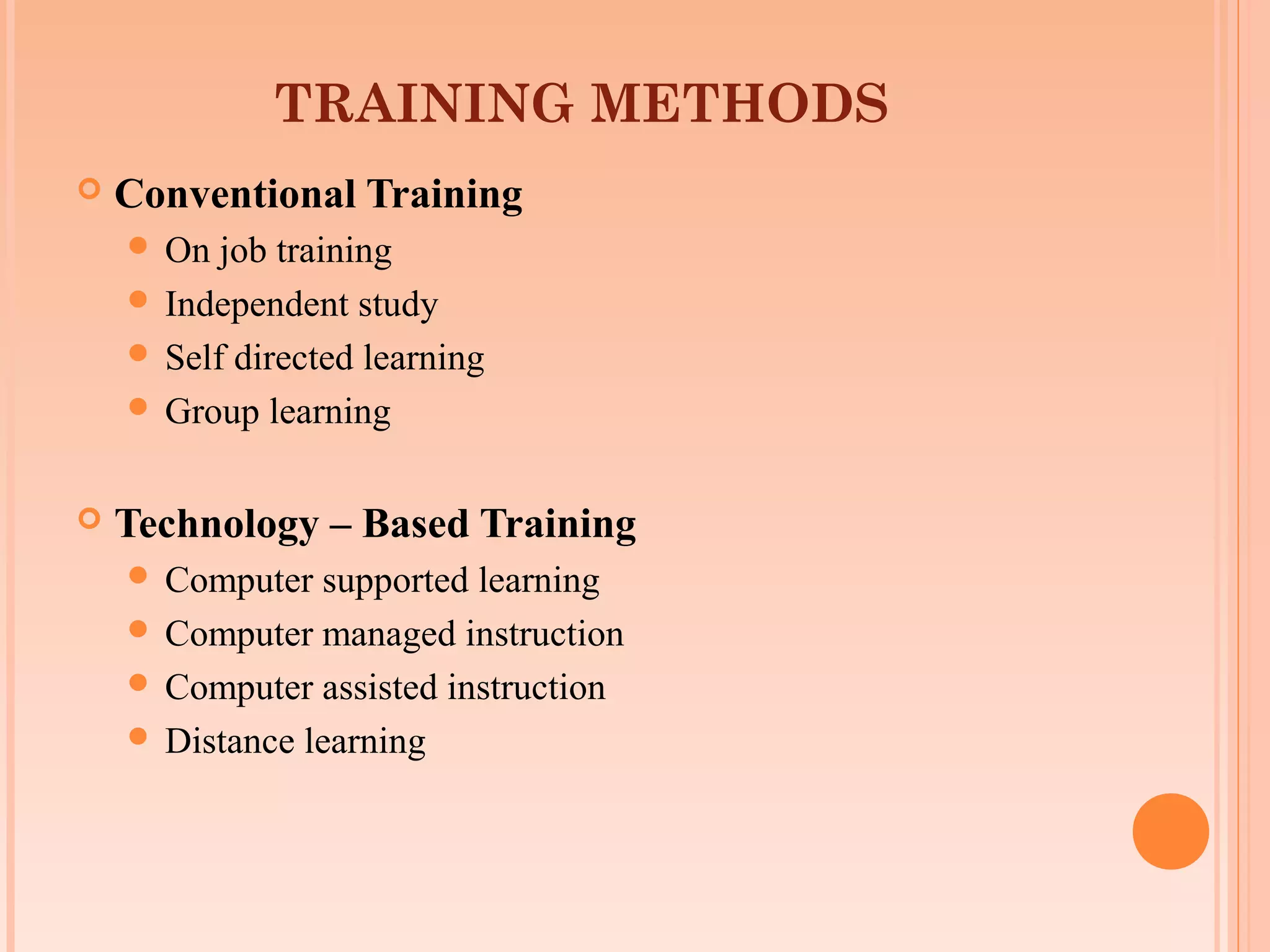
TRAINING METHODS
   Conventional Training
     On  job training
     Independent study
     Self directed learning
     Group learning


   Technology – Based Training
     Computer  supported learning
     Computer managed instruction
     Computer assisted instruction
     Distance learning
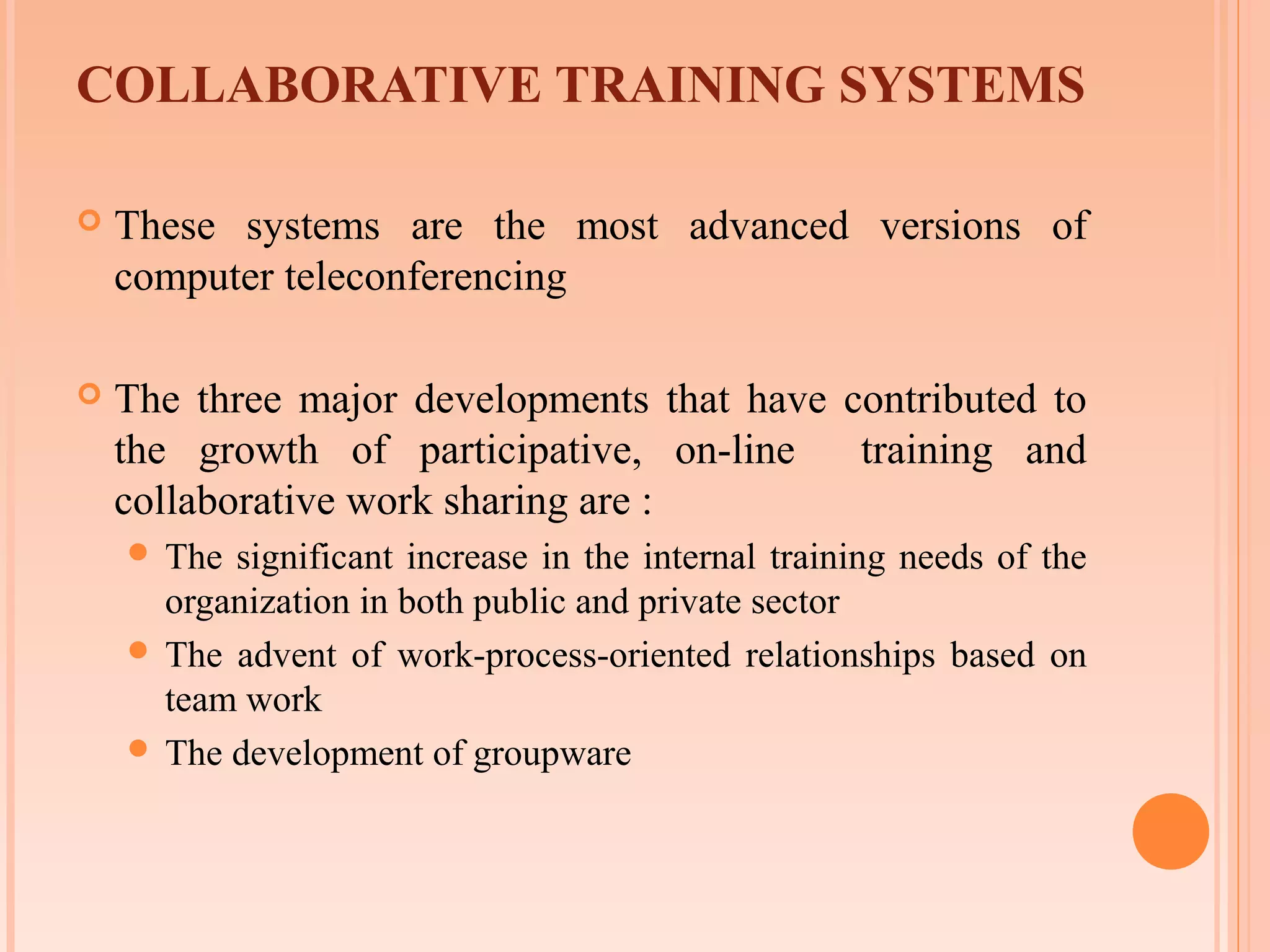
COLLABORATIVE TRAINING SYSTEMS

   These systems are the most advanced versions of
    computer teleconferencing

   The three major developments that have contributed to
    the growth of participative, on-line    training and
    collaborative work sharing are :
     The significant increase in the internal training needs of the
      organization in both public and private sector
     The advent of work-process-oriented relationships based on
      team work
     The development of groupware
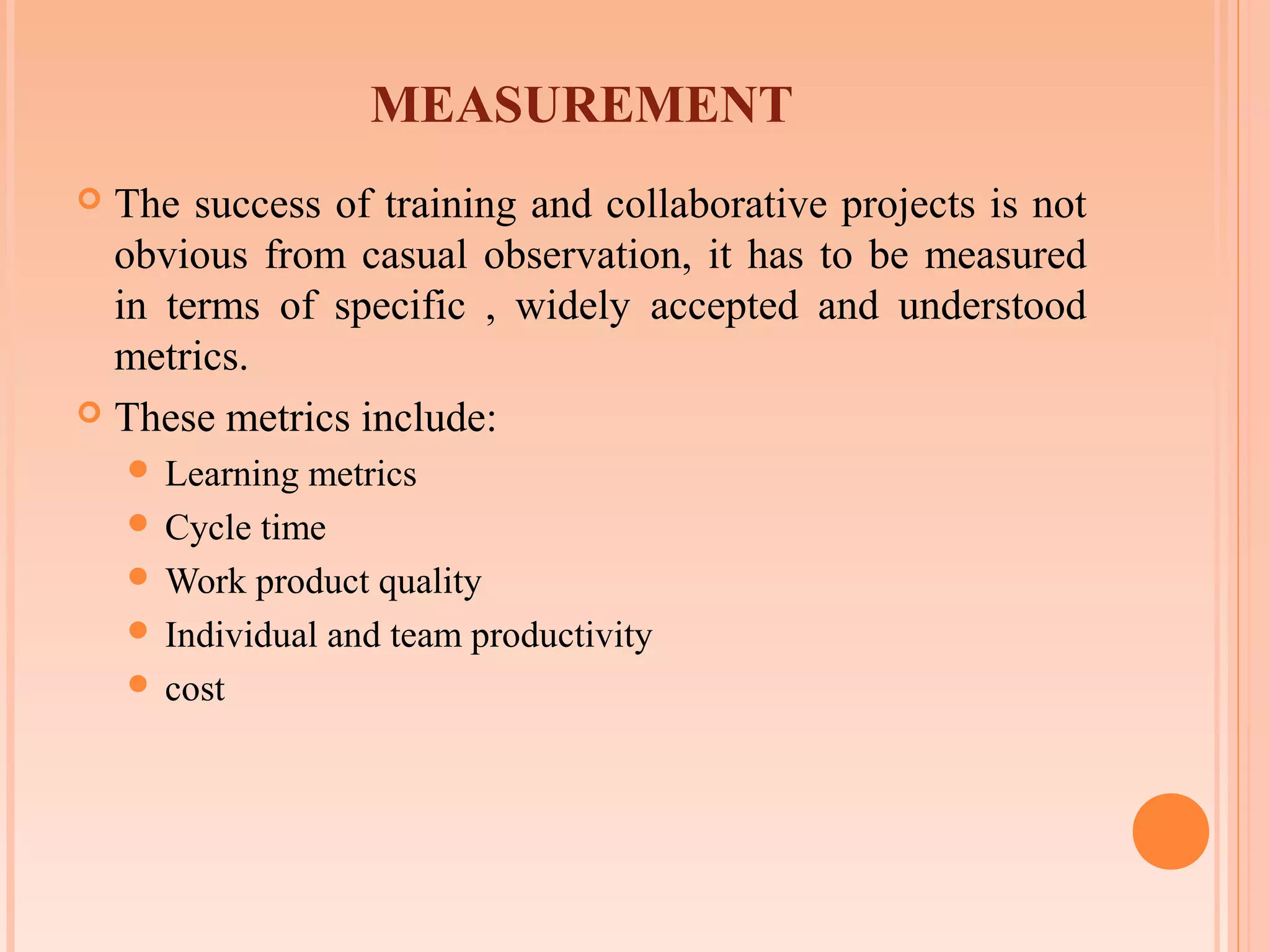
MEASUREMENT
 The success of training and collaborative projects is not
  obvious from casual observation, it has to be measured
  in terms of specific , widely accepted and understood
  metrics.
 These metrics include:
     Learning metrics
     Cycle time
     Work product quality
     Individual and team productivity
     cost
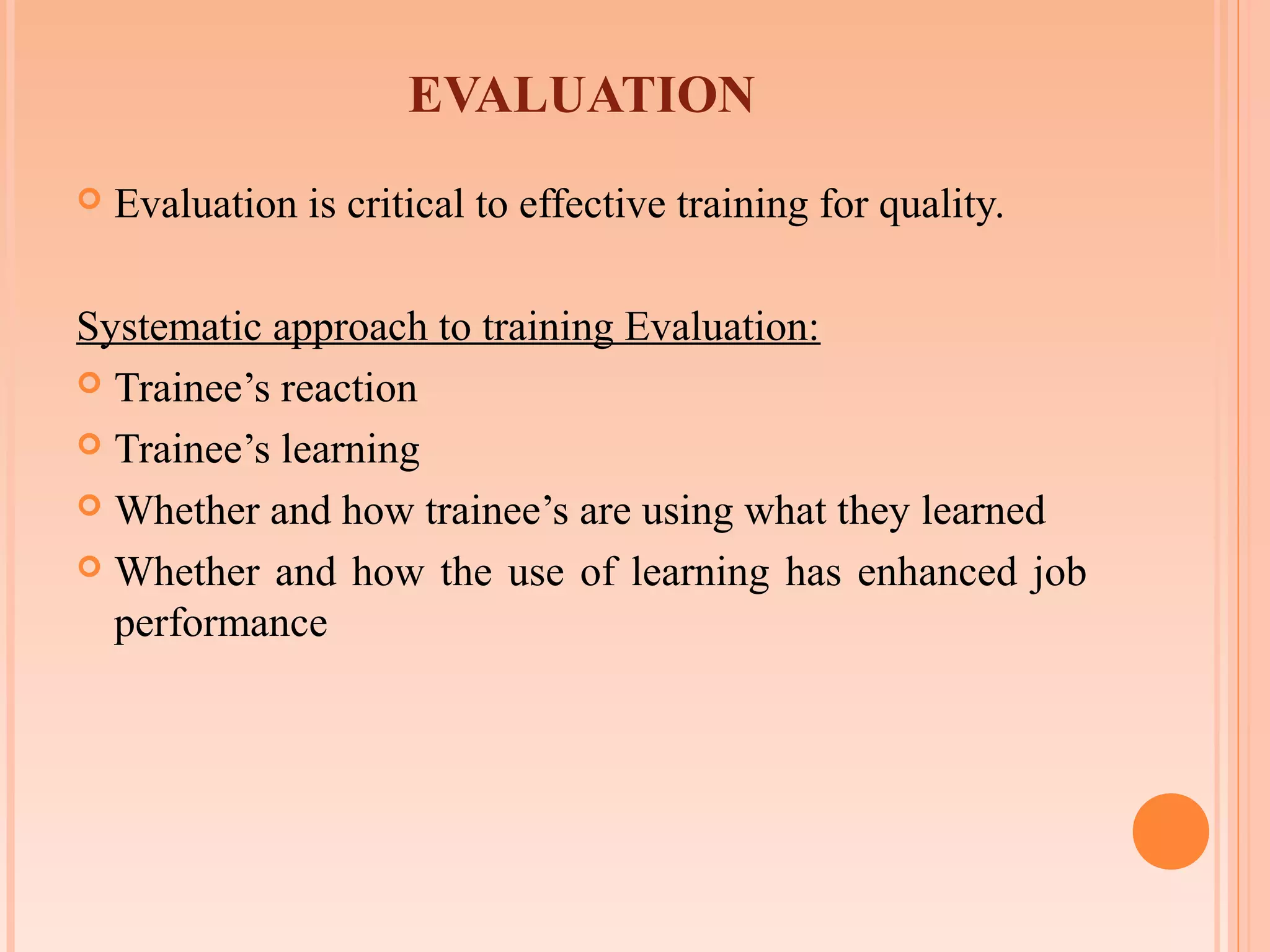
EVALUATION
   Evaluation is critical to effective training for quality.

Systematic approach to training Evaluation:
 Trainee’s reaction

 Trainee’s learning

 Whether and how trainee’s are using what they learned

 Whether and how the use of learning has enhanced job
  performance
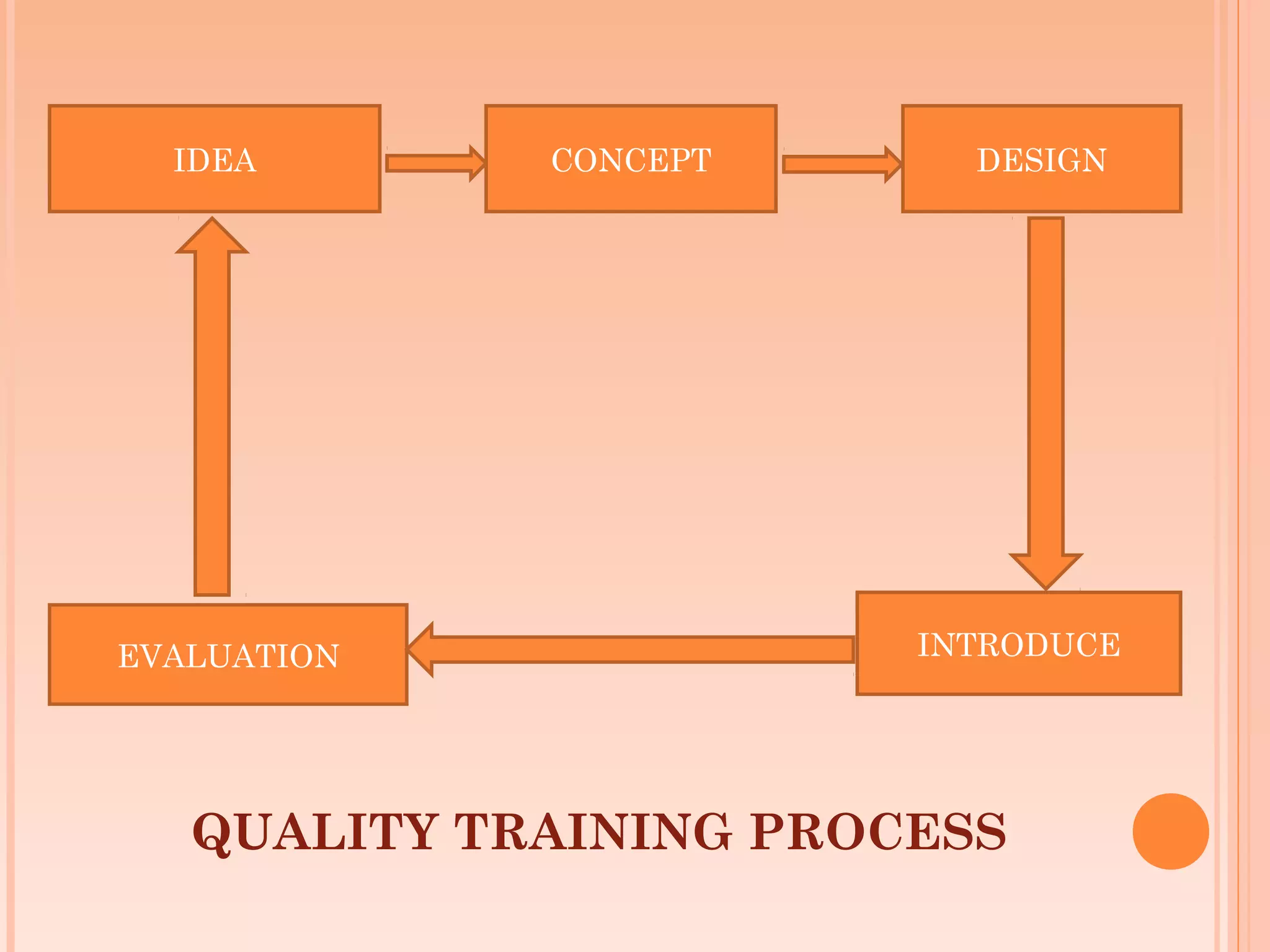
IDEA       CONCEPT      DESIGN


EVALUATION              INTRODUCE


   QUALITY TRAINING PROCESS
WHY TRAINING FAILS ?

   Lack of prior participation by line managers

   Too narrow a base

   Failure to change behaviour
ADVANTAGES OF QUALITY TRAINING
   Mistake proofing

   Value addition

   Balancing capacities

   Precise cost definition

   Positively controlled management

   Diagnosis & troubleshooting

   Time effective production

   Increased productivity
CONCLUSION
   Globalization has created a high level of awareness
    regarding quality and its importance     among the
    organizations.

   In organization the prime role of training is to develop
    work related skills.

   Training for quality supplies quality management
    expertise that have major impact on customer
    relationship and global market.
THANK
YOU

Training for quality

  • 1.
    TRAINING FOR QUALITY Presented By Ms. Nidhi Kukreja Mr. Mohnish Madkaikar
  • 2.
    INTRODUCTION  What is Quality ?  What is Training ?  Why Training for quality ?  Conventional training and modern training methods  Physical training and Virtual training  Paid training and On-job training
  • 3.
    Garment Production Flowchart Fabric Washing Fabric Bitting Cutting Quality Control Sewing Finishing Packing Dispatch
  • 4.
    MANAGEMENT OF QUALITY TRAINING  A delineation of responsibilities for who contributes and in what ways  A strong and unswerving focus on the customer – Internal and External  A plan established with clear strategies and tactics for quality training  A budget to fund the plan
  • 5.
    RESPONSIBILITIES Training for Qualityand TQM system the training supports can succeed only if there is accountability and responsibility for its implementation and effectiveness  Executive leadership – The executive team bears the responsibility for creating a quality culture in the organization  Human resource – The Human Resource (HR Dept.) bears the responsibility for implementing the Quality training strategy  The quality professionals – The quality professionals (Quality Dept.) bear the responsibility to collaborate with the HR professionals to share their technical expertise on quality
  • 6.
    FOCUSING ON THECUSTOMER While drafting a Training program following factors should be taken into account for effective and positive deployment of the plan • Customer Need • Customer Expectation • Customer Satisfaction • Customer Perception
  • 7.
    DEVELOPING A TRAININGPLAN FOR QUALITY  Quality Awareness –  Why quality is important  What quality means in our environment  How quality affects our daily work  Where we can begin to apply quality concepts and techniques  Executive education –  Modular training  Just – in – time training  Mentoring  Lecture by peers  Self Study  Conferences
  • 8.
    RESOURCES  There must be a purposeful effort to identify the staffing and materials funding necessary to achieve quality training goals  There has to resource commitment made that is visible and actionable for carrying out the training program  Resources include the following factors :  Budgeting -  Any training program requires a dedicated financial commitment  They need to be committed specifically to a strategy and tactics that support training for quality  Staffing – Various staffing structures are as follows  Centralized  Hun and Spoke  Decentralized  Shared  External quality consultants
  • 9.
    CURRICULUM DESIGN  Curriculum design is the mainstay of a successful quality training system  The process by which the subject matter is selected and shaped into a curriculum is of critical concern  Key elements of this process are :  Analysis of customer needs – Trainee needs  Instructional design – It consists of developing specific learning events or educational techniques that can assist an individual in translating written words into knowledge  Content development – It is influenced by performance needs , Job requirements and Audience  Pilot testing – Once the content is developed the Quality training should be pilot tested with a group of objective participants
  • 10.
    IMPLEMENTATION AND DELIVERY  Training for quality is usually delivered in two steps :  Implementation of planning and preparation  Delivery  Instructional Techniques – Before selecting delivery media the implementation designer must decide the instructional techniques will be most appropriate for delivering the training  Delivery systems, media , Devices –  Live lectures  Audience response system  Workbooks and course study  Audio tape  Live video  Recorded video tape  Multimedia control
  • 11.
    External Vs Internal sourcing  For maximum training effectiveness the quality of the delivery system and especially that of the trainer is very important  For this reason the sourcing of delivery system and trainers is an important decision while implementing the plan  The decision usually depends on two factors:  The size of the training budget  Training policy
  • 12.
    TRAINING METHODS  Conventional Training  On job training  Independent study  Self directed learning  Group learning  Technology – Based Training  Computer supported learning  Computer managed instruction  Computer assisted instruction  Distance learning
  • 13.
    COLLABORATIVE TRAINING SYSTEMS  These systems are the most advanced versions of computer teleconferencing  The three major developments that have contributed to the growth of participative, on-line training and collaborative work sharing are :  The significant increase in the internal training needs of the organization in both public and private sector  The advent of work-process-oriented relationships based on team work  The development of groupware
  • 14.
    MEASUREMENT  The successof training and collaborative projects is not obvious from casual observation, it has to be measured in terms of specific , widely accepted and understood metrics.  These metrics include:  Learning metrics  Cycle time  Work product quality  Individual and team productivity  cost
  • 15.
    EVALUATION  Evaluation is critical to effective training for quality. Systematic approach to training Evaluation:  Trainee’s reaction  Trainee’s learning  Whether and how trainee’s are using what they learned  Whether and how the use of learning has enhanced job performance
  • 16.
    IDEA CONCEPT DESIGN EVALUATION INTRODUCE QUALITY TRAINING PROCESS
  • 17.
    WHY TRAINING FAILS?  Lack of prior participation by line managers  Too narrow a base  Failure to change behaviour
  • 18.
    ADVANTAGES OF QUALITYTRAINING  Mistake proofing  Value addition  Balancing capacities  Precise cost definition  Positively controlled management  Diagnosis & troubleshooting  Time effective production  Increased productivity
  • 19.
    CONCLUSION  Globalization has created a high level of awareness regarding quality and its importance among the organizations.  In organization the prime role of training is to develop work related skills.  Training for quality supplies quality management expertise that have major impact on customer relationship and global market.
  • 20.