Formative Vs. Summative
Assessment
Second Semester: Paper CPS 3
Assessment for Learning
Formative Vs. Summative
Assessment
Formative Vs. Summative
Assessment
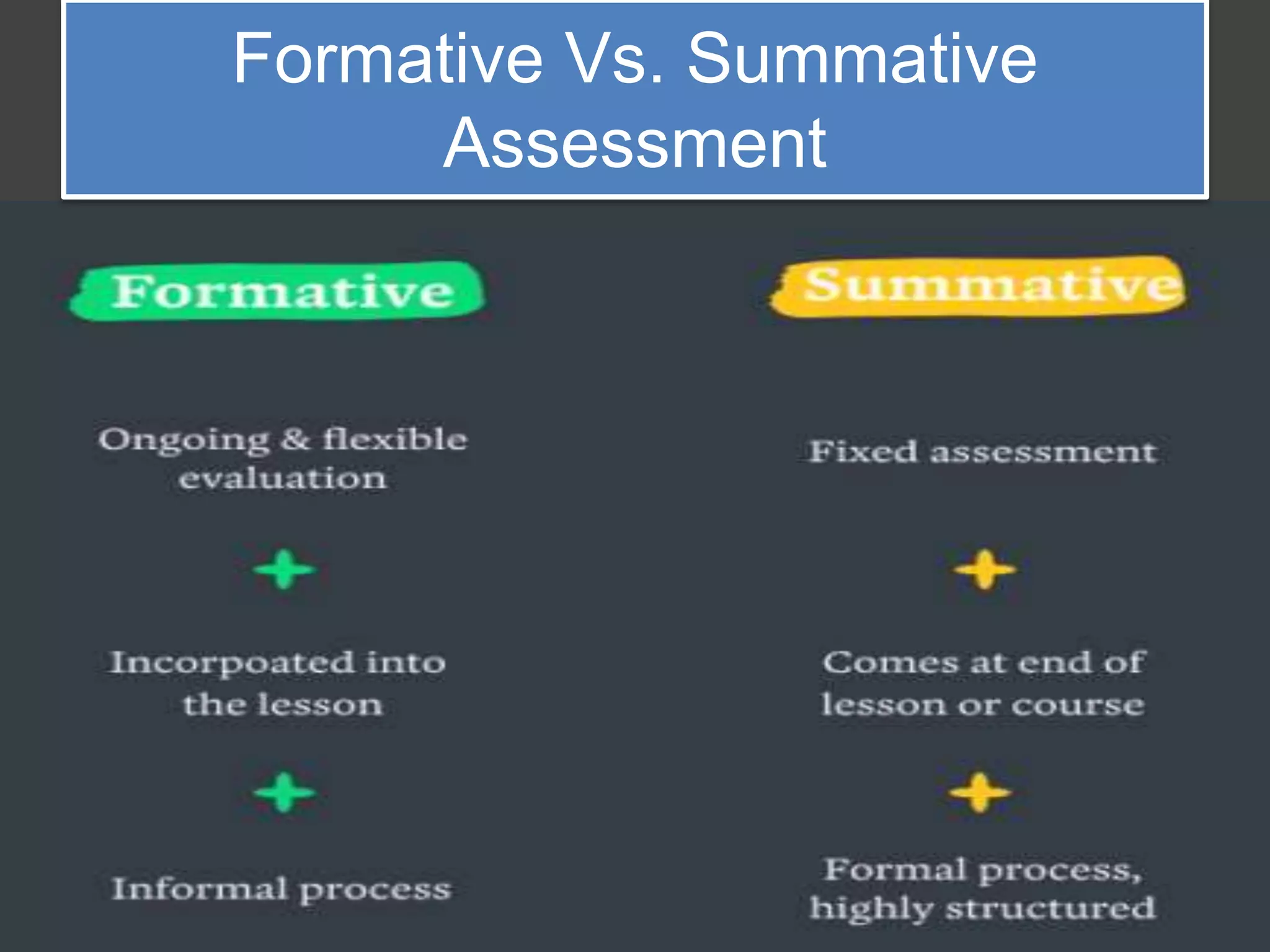
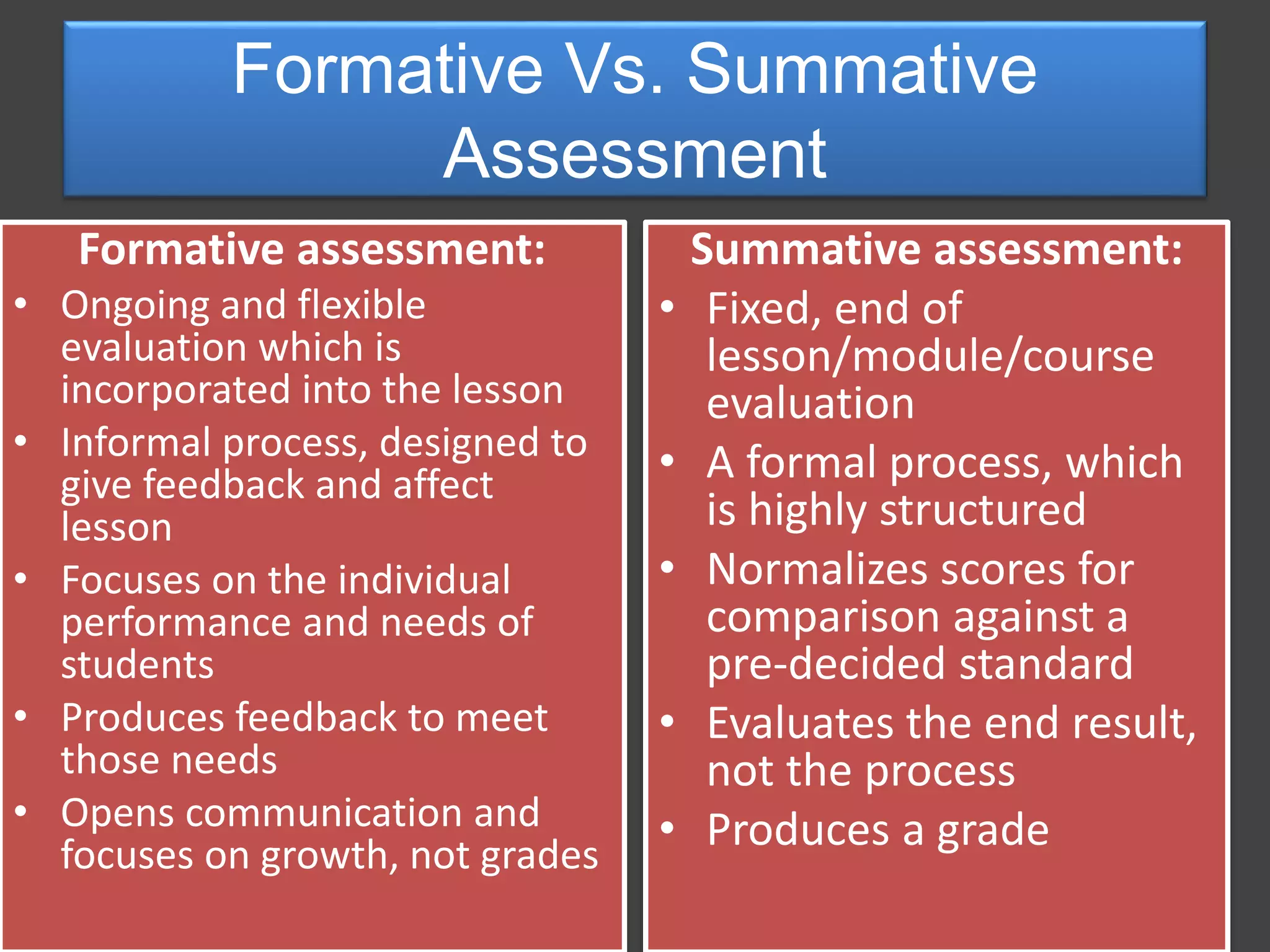
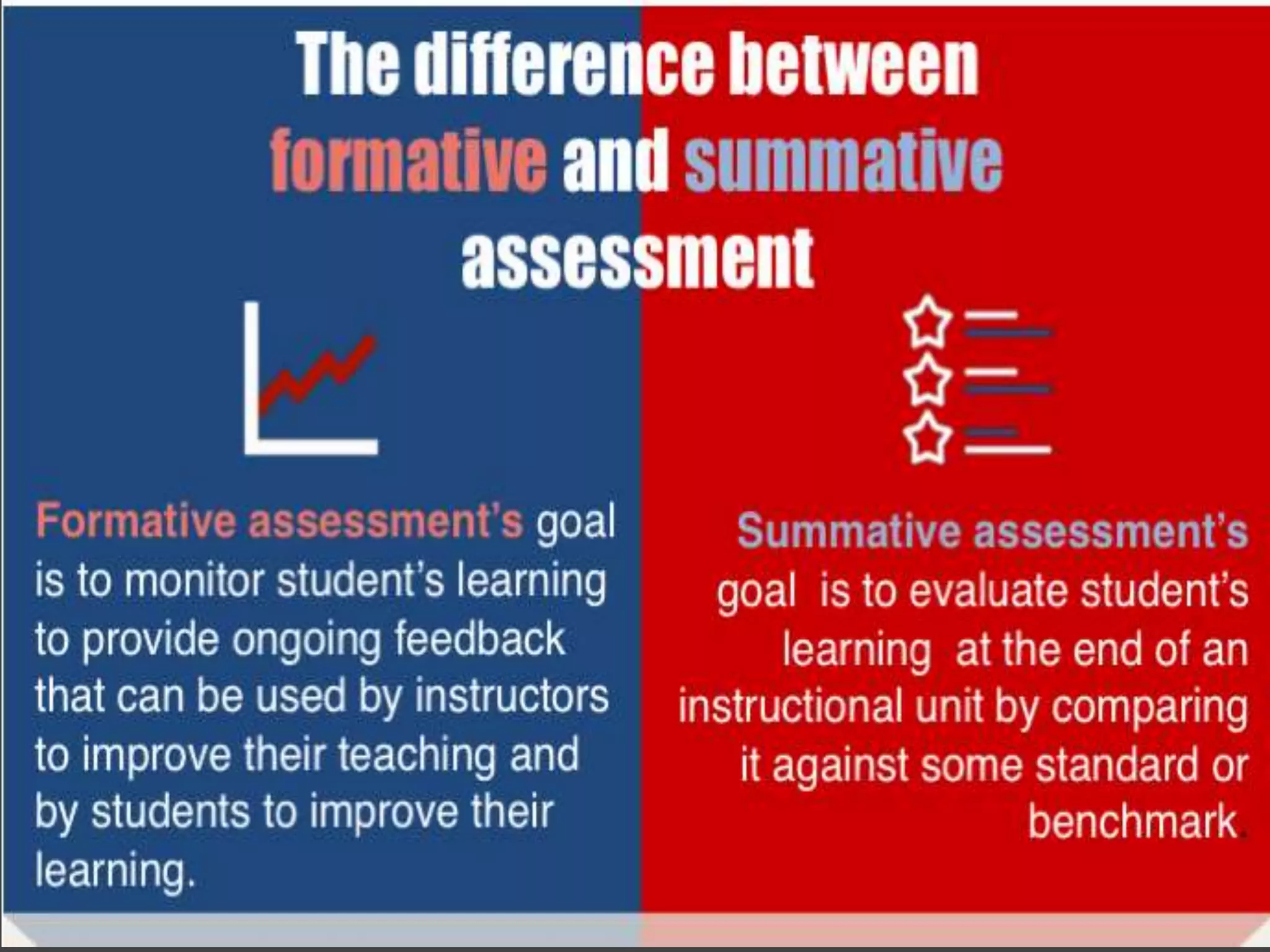
Formative assessment:
• Ongoing and flexible
evaluation which is
incorporated into the lesson
• Informal process, designed to
give feedback and affect
lesson
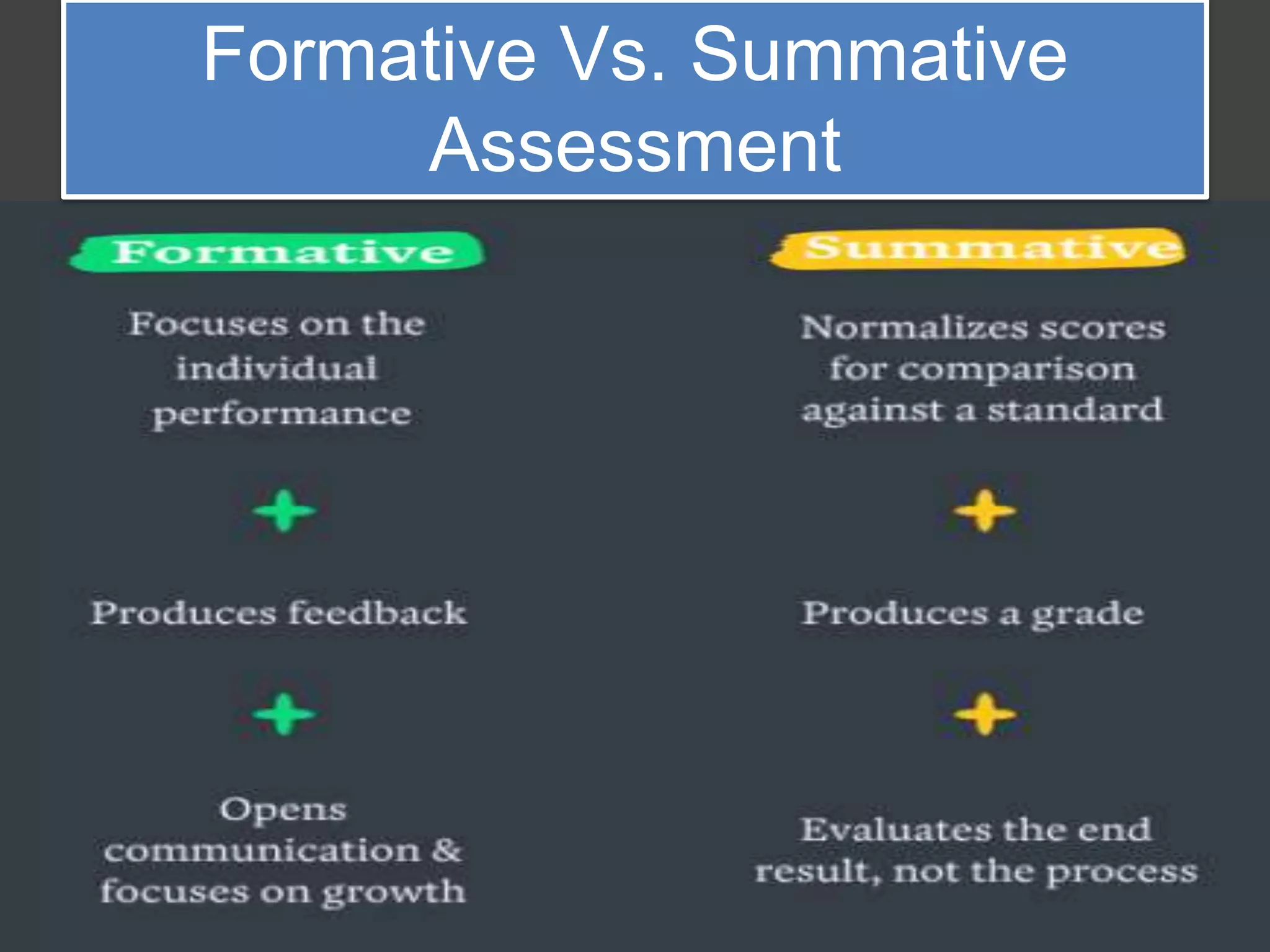
• Focuses on the individual
performance and needs of
students
• Produces feedback to meet
those needs
• Opens communication and
focuses on growth, not grades
Summative assessment:
• Fixed, end of
lesson/module/course
evaluation
• A formal process, which
is highly structured
• Normalizes scores for
comparison against a
pre-decided standard
• Evaluates the end result,
not the process
• Produces a grade
Formative Vs. Summative
Assessment
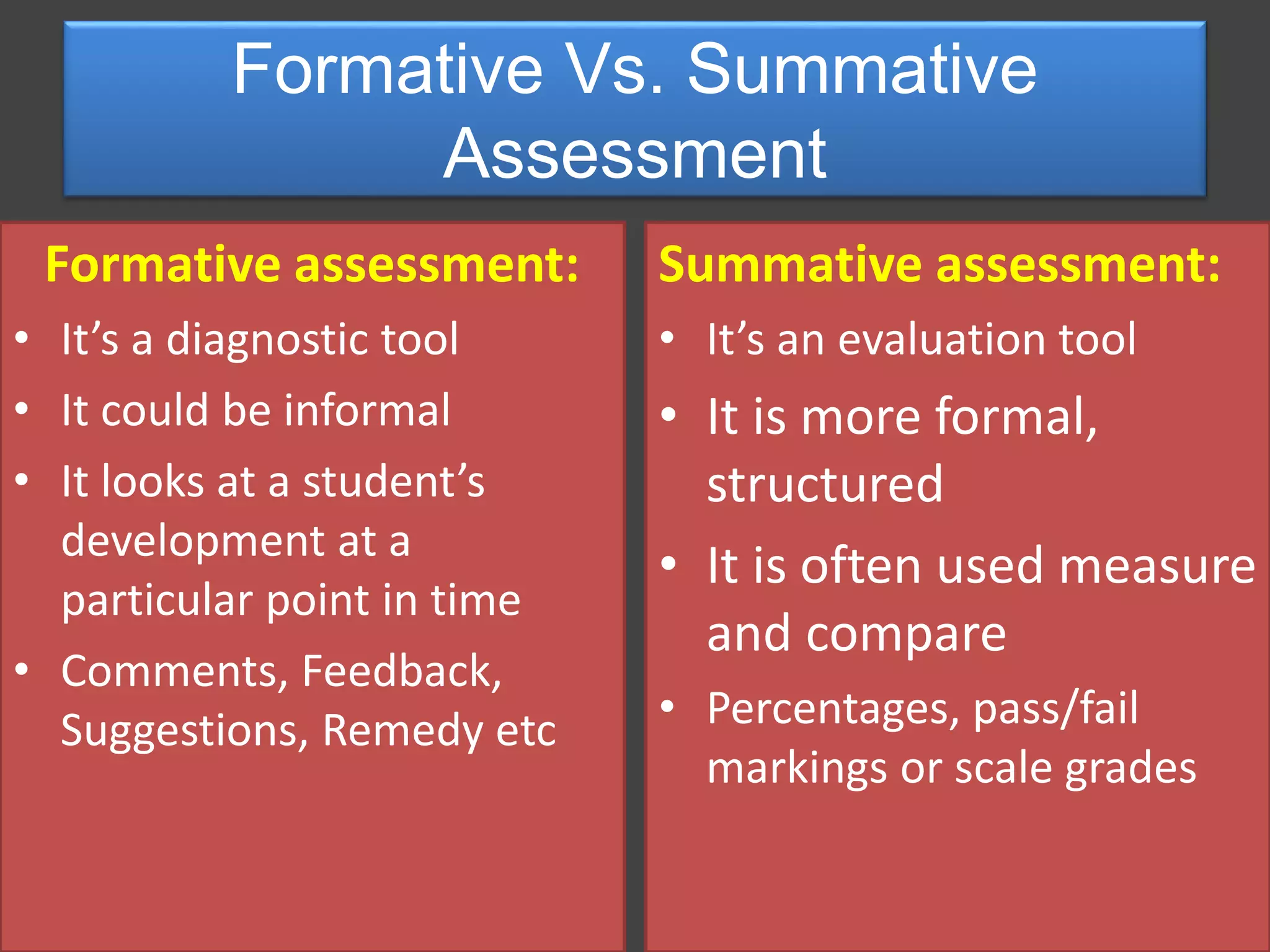
Formative assessment:
• It’s a diagnostic tool
• It could be informal
• It looks at a student’s
development at a
particular point in time
• Comments, Feedback,
Suggestions, Remedy etc
Summative assessment:
• It’s an evaluation tool
• It is more formal,
structured
• It is often used measure
and compare
• Percentages, pass/fail
markings or scale grades
Formative Vs. Summative
Assessment
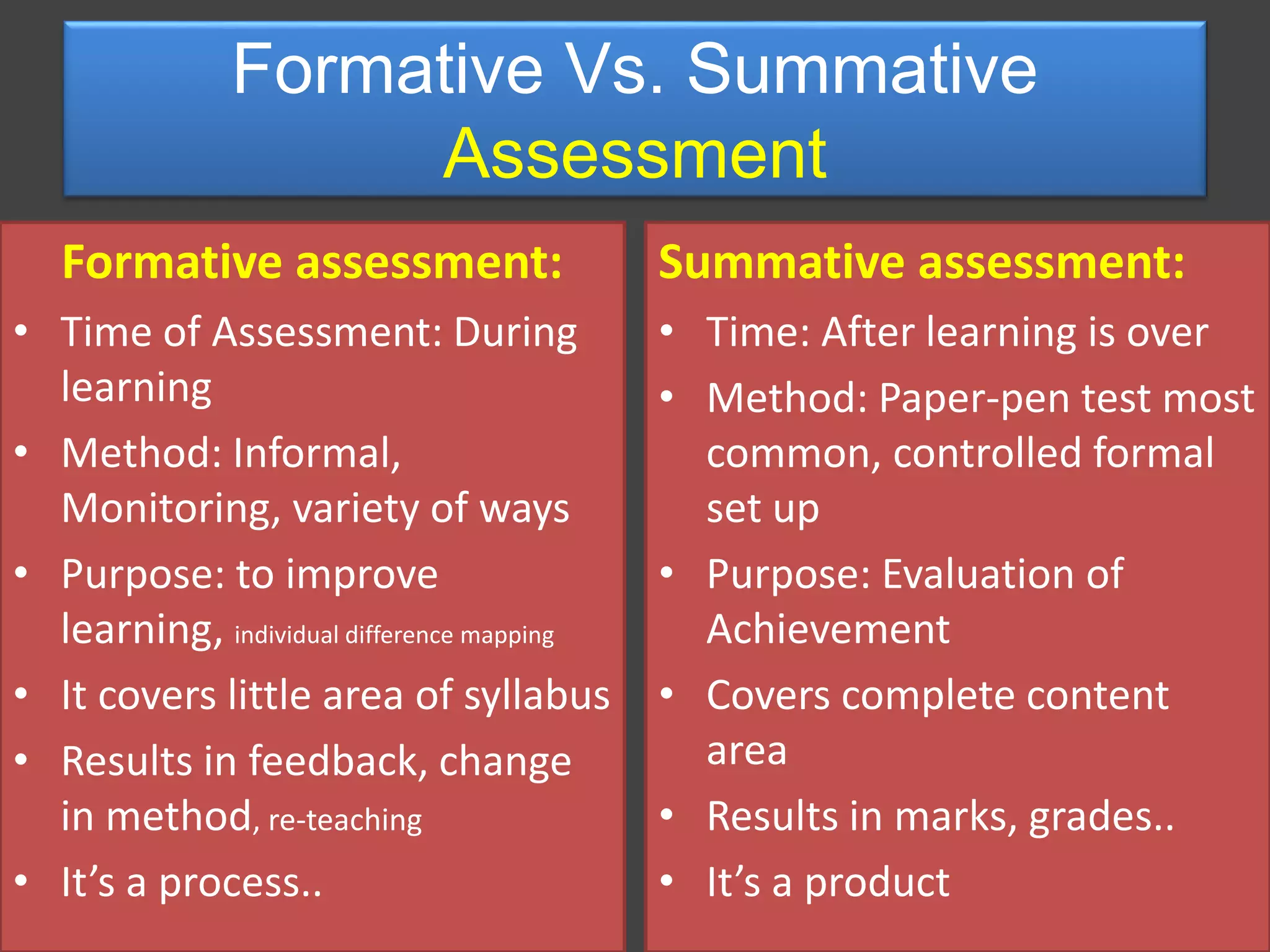
Formative assessment:
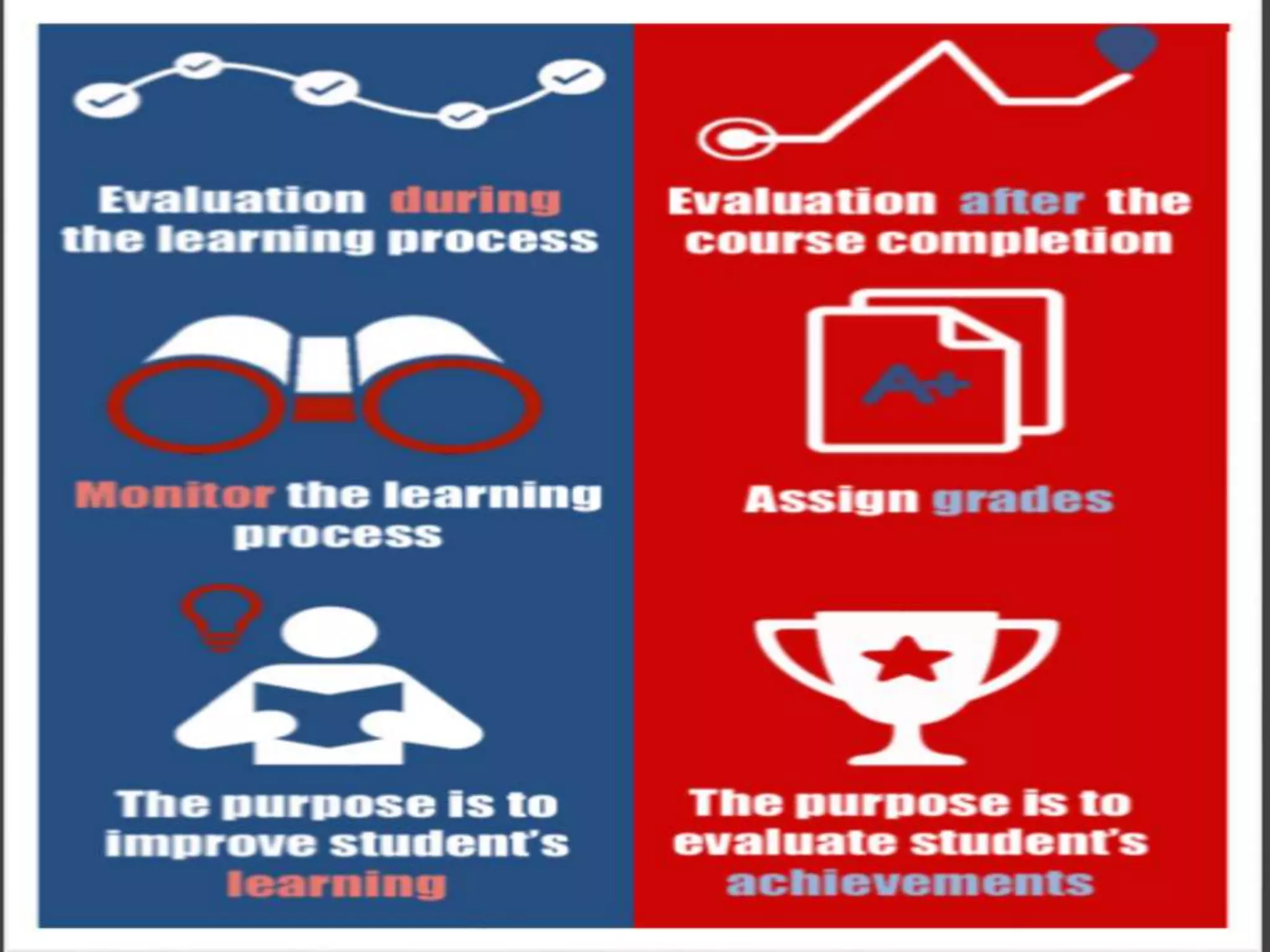
• Time of Assessment: During
learning
• Method: Informal,
Monitoring, variety of ways
• Purpose: to improve
learning, individual difference mapping
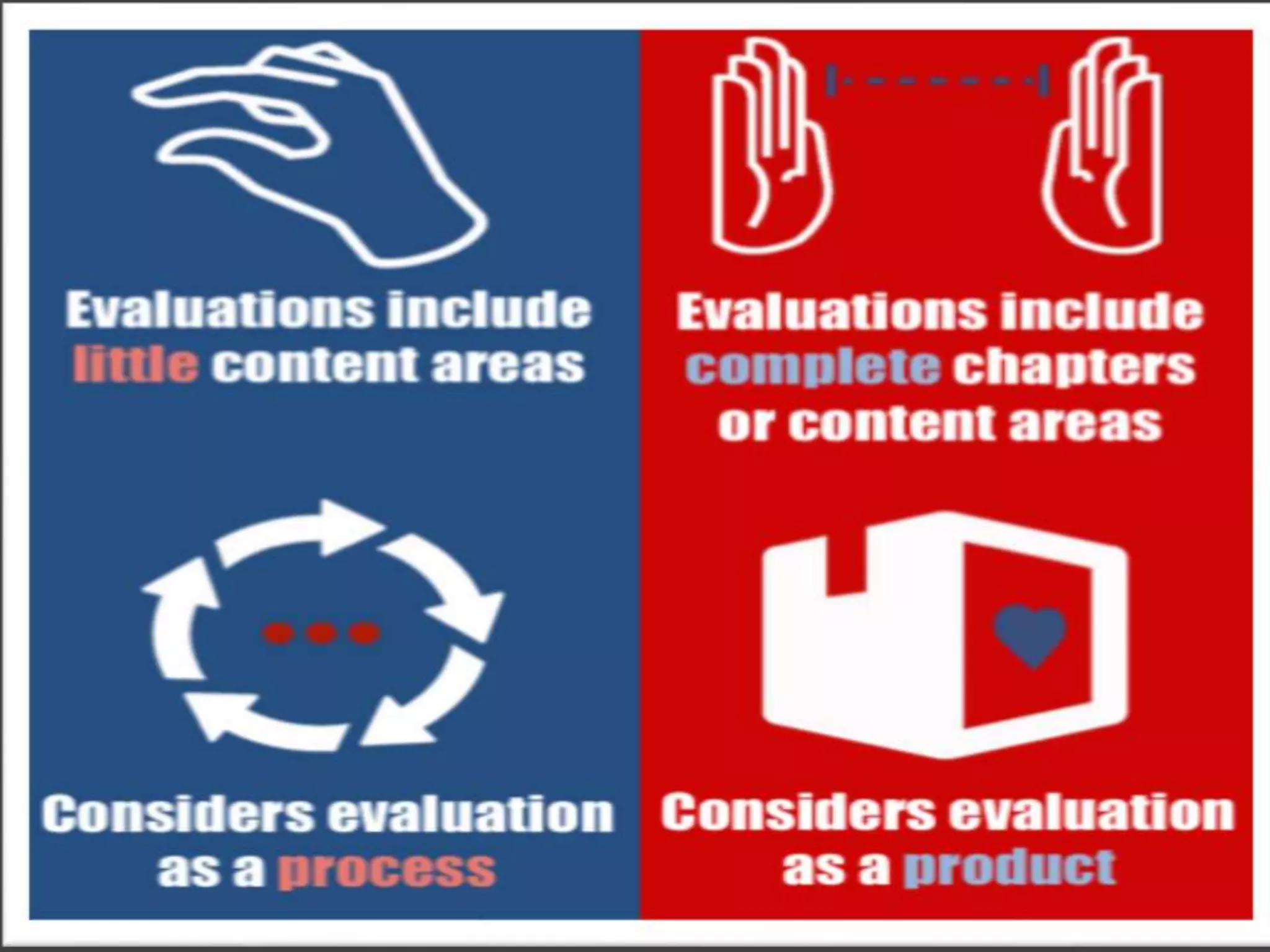
• It covers little area of syllabus
• Results in feedback, change
in method, re-teaching
• It’s a process..
Summative assessment:
• Time: After learning is over
• Method: Paper-pen test most
common, controlled formal
set up
• Purpose: Evaluation of
Achievement
• Covers complete content
area
• Results in marks, grades..
• It’s a product
Formative Vs. Summative
Assessment
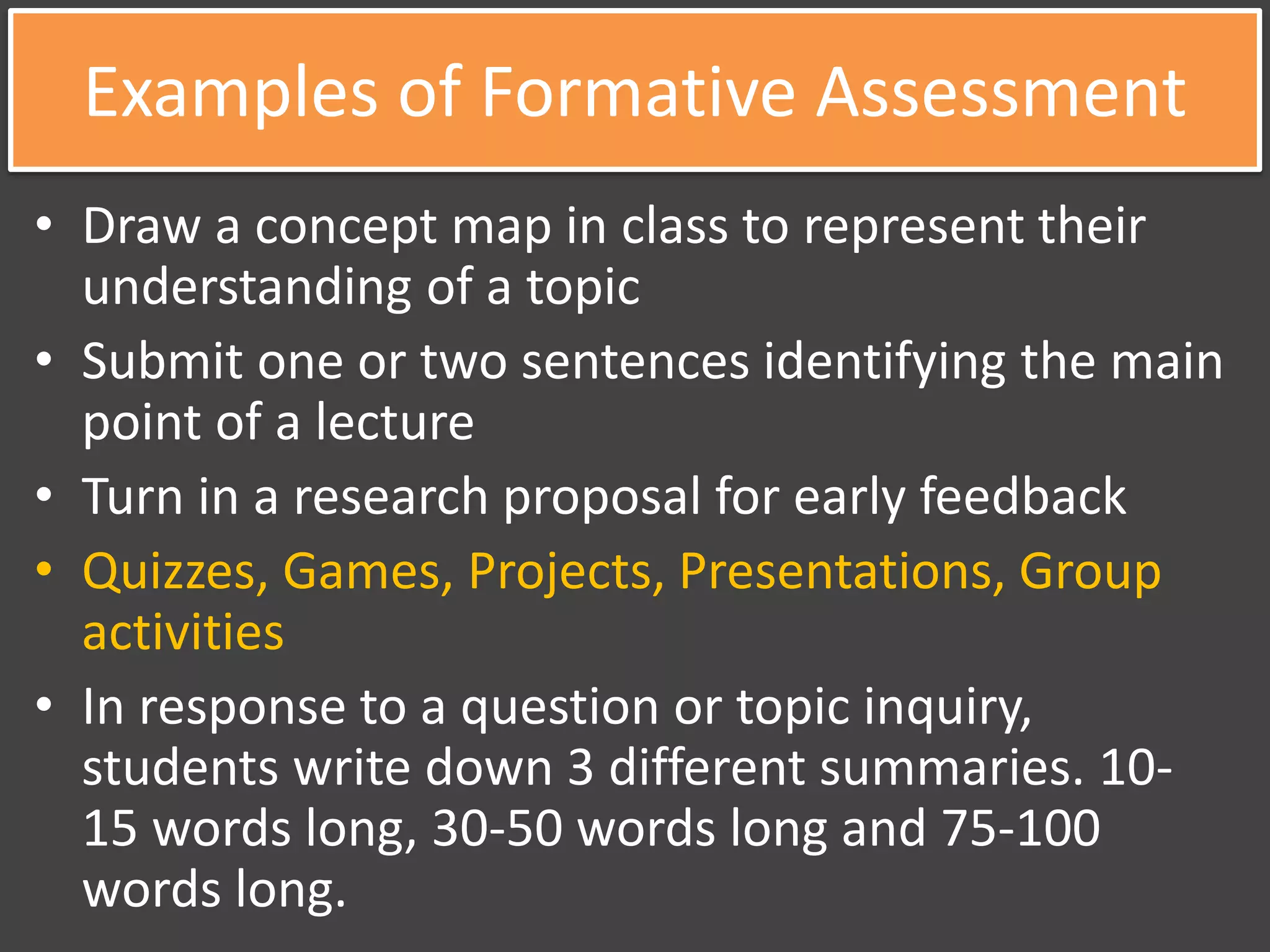
Examples of Formative Assessment
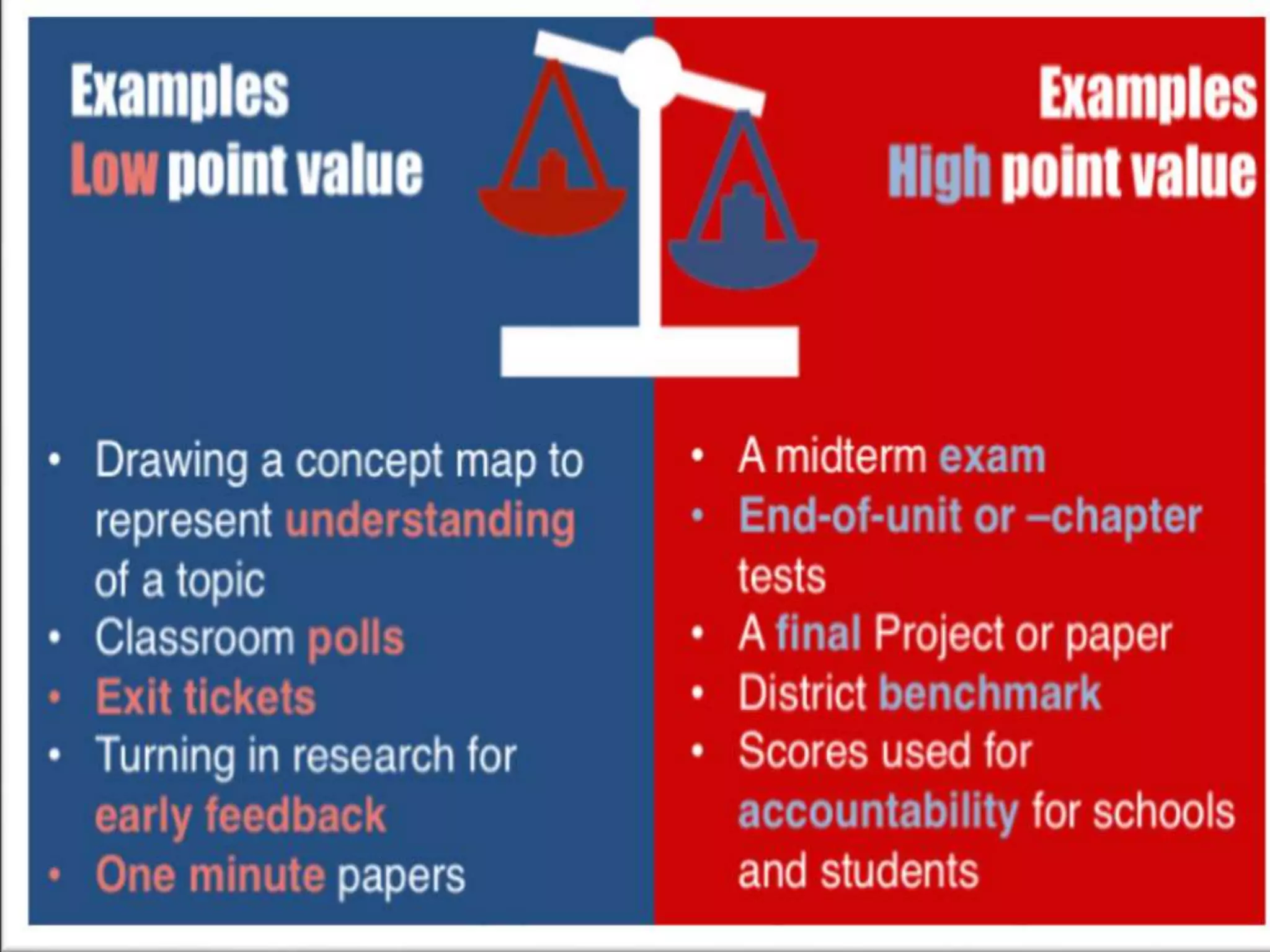
• Draw a concept map in class to represent their
understanding of a topic
• Submit one or two sentences identifying the main
point of a lecture
• Turn in a research proposal for early feedback
• Quizzes, Games, Projects, Presentations, Group
activities
• In response to a question or topic inquiry,
students write down 3 different summaries. 10-
15 words long, 30-50 words long and 75-100
words long.
…Examples of Formative Assessment
• The 3-2-1 countdown exercise: Give your students
cards to write on, or they can respond orally. Students
have to respond to three separate statements: 3
things you didn’t know before, 2 things that surprised
you about this topic and 1 thing you want to start
doing with what you’ve learned.
• One minute papers are usually done at the end of the
lesson. Students answer a brief question in writing.
The question typically centres around the main point
of the course, most surprising concept, most
confusing area of the topic and what question from
the topic might appear on the next test.
Examples of Summative Assessment
• a midterm exam- Prilimanery and Final exams
• a final project
• district benchmark and scores used for
accountability for schools and students.
• SSC/ HSC Board and University Exams
• Comprehensive Assignments
• JEE, NEET, GPSC, UPSC, CAT, NATA, …
• Post tests
Questions
• Clarify the concept of formative and
summative assessment.
• Give the examples of formative assessment.
• How would you conduct summative
assessment of your students? Illustrate
• Give examples of summative assessment.
• What are the differences between formative
and summative assessment.
Acknowledgment
• https://www.peergrade.io/blog/difference-
formative-and-summative-assessment/
• https://www.cmu.edu/teaching/assessment/basi
cs/formative-summative.html
• https://www.bookwidgets.com/blog/2017/04/th
e-differences-between-formative-and-
summative-assessment-infographic
• https://www.aeseducation.com/blog/formative-
vs.-summative-assessments-what-do-they-mean
• https://thirdspacelearning.com/blog/formative-
vs-summative-assessments/

Formative Vs Summativ Assessment

  • 1.
    Formative Vs. Summative Assessment SecondSemester: Paper CPS 3 Assessment for Learning
  • 2.
  • 3.
  • 5.
    Formative assessment: • Ongoingand flexible evaluation which is incorporated into the lesson • Informal process, designed to give feedback and affect lesson • Focuses on the individual performance and needs of students • Produces feedback to meet those needs • Opens communication and focuses on growth, not grades Summative assessment: • Fixed, end of lesson/module/course evaluation • A formal process, which is highly structured • Normalizes scores for comparison against a pre-decided standard • Evaluates the end result, not the process • Produces a grade Formative Vs. Summative Assessment
  • 6.
    Formative assessment: • It’sa diagnostic tool • It could be informal • It looks at a student’s development at a particular point in time • Comments, Feedback, Suggestions, Remedy etc Summative assessment: • It’s an evaluation tool • It is more formal, structured • It is often used measure and compare • Percentages, pass/fail markings or scale grades Formative Vs. Summative Assessment
  • 7.
    Formative assessment: • Timeof Assessment: During learning • Method: Informal, Monitoring, variety of ways • Purpose: to improve learning, individual difference mapping • It covers little area of syllabus • Results in feedback, change in method, re-teaching • It’s a process.. Summative assessment: • Time: After learning is over • Method: Paper-pen test most common, controlled formal set up • Purpose: Evaluation of Achievement • Covers complete content area • Results in marks, grades.. • It’s a product Formative Vs. Summative Assessment
  • 8.
    Examples of FormativeAssessment • Draw a concept map in class to represent their understanding of a topic • Submit one or two sentences identifying the main point of a lecture • Turn in a research proposal for early feedback • Quizzes, Games, Projects, Presentations, Group activities • In response to a question or topic inquiry, students write down 3 different summaries. 10- 15 words long, 30-50 words long and 75-100 words long.
  • 9.
    …Examples of FormativeAssessment • The 3-2-1 countdown exercise: Give your students cards to write on, or they can respond orally. Students have to respond to three separate statements: 3 things you didn’t know before, 2 things that surprised you about this topic and 1 thing you want to start doing with what you’ve learned. • One minute papers are usually done at the end of the lesson. Students answer a brief question in writing. The question typically centres around the main point of the course, most surprising concept, most confusing area of the topic and what question from the topic might appear on the next test.
  • 10.
    Examples of SummativeAssessment • a midterm exam- Prilimanery and Final exams • a final project • district benchmark and scores used for accountability for schools and students. • SSC/ HSC Board and University Exams • Comprehensive Assignments • JEE, NEET, GPSC, UPSC, CAT, NATA, … • Post tests
  • 15.
    Questions • Clarify theconcept of formative and summative assessment. • Give the examples of formative assessment. • How would you conduct summative assessment of your students? Illustrate • Give examples of summative assessment. • What are the differences between formative and summative assessment.
  • 16.
    Acknowledgment • https://www.peergrade.io/blog/difference- formative-and-summative-assessment/ • https://www.cmu.edu/teaching/assessment/basi cs/formative-summative.html •https://www.bookwidgets.com/blog/2017/04/th e-differences-between-formative-and- summative-assessment-infographic • https://www.aeseducation.com/blog/formative- vs.-summative-assessments-what-do-they-mean • https://thirdspacelearning.com/blog/formative- vs-summative-assessments/