Summative and Formative
Assessments
Group C
Laura Nemer, Yancy Munoz, DaVisha
Pratt, Gina Petrozelli
Introduction
“Formative and summative
evaluations are the two
primary methods of
evaluation currently in
vogue.”
(Dr. K., Week 7, Lecture 7)
Summative Evaluations
• Summative evaluations take place at the
end of a specific time frame.
• As for teacher evaluations and
observations, summative assessments take
place midway through the year and at the
end of the year.
• Summative evaluations are formal in
nature and do not allow for much feedback.
Formative Evaluations
• Formative evaluations are ongoing.
• They are usually informal and come in the
form of a checklist or anecdotal records.
• Formative evaluations provide immediate
feedback.
• They ensure teacher effectiveness and
success as they monitor progress
throughout the school year.
Teacher Observations and
Evaluations
• Supervisors and administrators have a
great responsibility when it comes to
observing and evaluating staff members.
Teacher Observations and
Evaluations
• It is important that administrators do not
solely rely on SUMMATIVE assessments.
• Many do because of the demands of their
positions.
• Supervisors and administrators must utilize
both forms of assessment to ensure
accurate data collection and
recommendations
FORMATIVE
vs.
SUMMATIVE ASSESSMENTS
THE DIFFERENCES
FORMATIVE
• Little more complex
• Completed during development of
program
• Conducted more than once
• Research oriented--intent is to
improve
• “Coaching for success”
– Ensure goals are being met
– Provide feedback
• “Learning spiraling upwards”
• Not necessarily in need of, or to evaluate, a
“product”
• Assessments usually remain “in-house”
TYPES
• ANECDOTAL RECORDS
• QUIZZES
• ESSAYS
• DIAGNOSTIC TESTS
• LAB REPORTS
SUMMATIVE
• Quantitative
• Information gathered/completed at the end
of a program
• Cumulative learning
• Measure effectiveness
• Assess end result
• Used to make decisions about further study
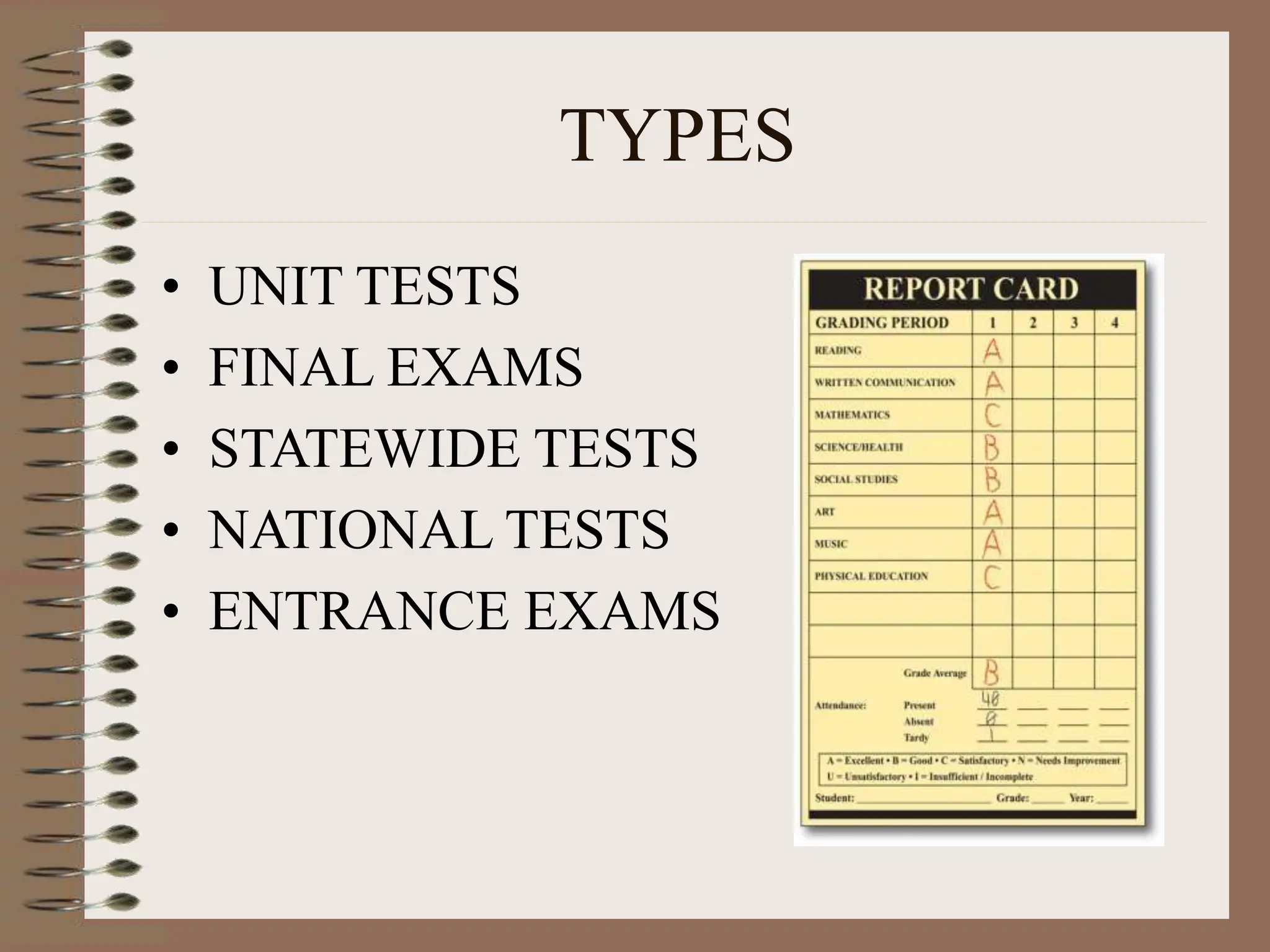
TYPES
• UNIT TESTS
• FINAL EXAMS
• STATEWIDE TESTS
• NATIONAL TESTS
• ENTRANCE EXAMS
The Link Between
Formative & Summative
Evaluation
Simply pointing out the
differences between two forms
of evaluation is not always very
useful.
True understanding isn’t always
achieved
Formative and Summative
Evaluation forms are a lot like
apples and oranges…
(Formative Vs. Summative)
It is because of the similarity between the two
forms of evaluation
that pointing out the differences becomes
fruitful
Just as apples are different than oranges;
None-the-less both are fruits, edible, and
round
Both Formative and Summative
Evaluation forms must be
effective!
Key features of effective
evaluation
• alignment
• validity
• reliability
• Transparency
Alignment
There should be alignment between:
• clear and realistic learning outcomes
• learning opportunities to achieve these
outcomes
• evaluation methods and tasks related to the
learning outcomes and methods of learning
Validity
Evaluation should measure what it sets out to
measure:
• This is tipically pointed out during the
preconference between the teacher and the
administrator
Reliability
Evaluation should be consistent and fair:
• good assessor reliability – administrator
with classroom experience preferably.
Transparency
No 'hidden agendas' or surprises for teachers:
• Teachers should not have to guess what is
in the assessor's mind.
• evaluation should be clearly aligned to
published learning outcomes or a teacher
personal improvement plan (PIP).
3 Purposes of Evaluation
1. To consistently promote growth.
2. To improve delivery of content to the
students.
3. To ultimately improve the learning of the
students (the accountability piece).
Words of Wisdom
• “teachers can fix bad teaching; they find it very
difficult to escape bad evaluations.”
• “Nothing that we do to, or for, our teachers is
more important than our evaluation of their work
and the feedback administrators and peers give
them on it. The results of our evaluations
influence our teachers for the rest of their
careers.”
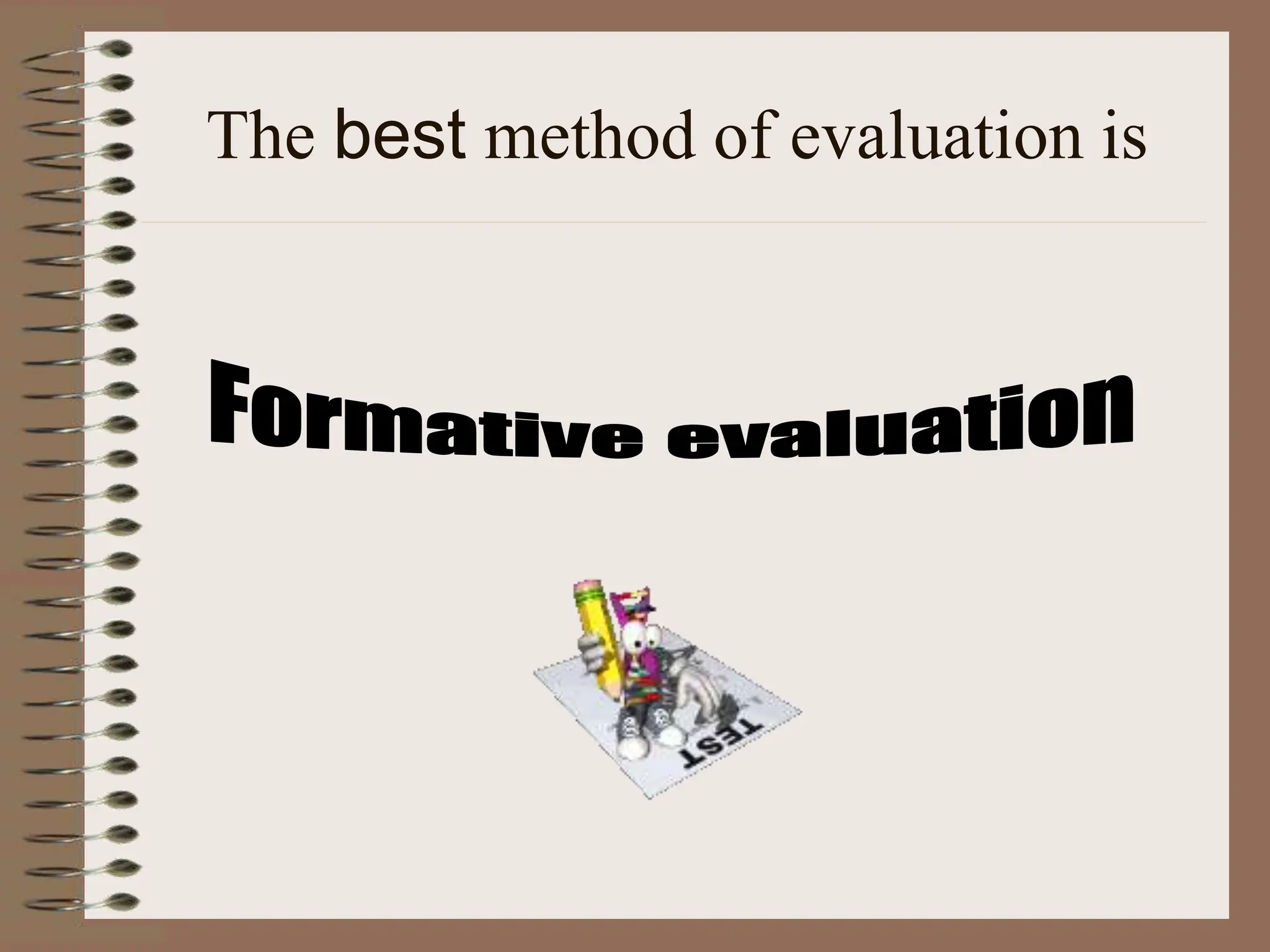
The best method of evaluation is
Formative evaluations
• Provides on-going assessments, reviews, and observations in
a classroom
• Teachers use formative assessment to improve instructional
methods with student feedback throughout the teaching and
learning process.
• Teacher observes students that do not grasp a concept, she
or he can design a review activity or use a different
instructional strategy.
• students can monitor their own progress with periodic quizzes
and performance tasks.
• results of formative evaluations are used to modify and validate
instruction.
The difference between
formative and summative
• The value of formative evaluation must express with the
distinction to students in language they can grasp
• Formative evaluation is the process of judging an ongoing,
changing process or diagnosis, revision, description,
information, or comparison.
• Summative evaluation is a final-end decision serving purposes
of persuasion, verification, prediction or validity
• Where there is no formative evaluation, by definition, the
student learns nothing after submitting the work
• While formative evaluation highlights areas that
need improvement or remediation
• Formative test results may lead to conclusions that
other methods would be more effective.
• preferably educators should incorporate both types
of evaluation in program development.
Plan of the formative evaluation
• Assess progress towards meeting the curriculum’s aims and
objectives
• Assess how effectively projects are contributing to meeting the
curriculum
• Gather and publish best practice
• Identify gaps and issues
• Raise awareness of the plan and stimulate discussion
• Ensure that course outputs are meeting students needs
•
• Ensure the curriculum can respond flexibly to changes
REFERENCES
• Classroom Assessment: Basic Concepts. Formative vs.Summative
Assessments. Retrieved October 20, 2008 from
http://fcit.usf.edu/assessment/basic/basica.html
• Formative vs. Summative Evaluation. Retrieved October 20, 2008
from
http.jan.ucc.nau.edu/edtech/etc/667/proposal/evaluation/summa
tive_vs_formative.htm
• Formative and Summative Assessment. Retrieved October 20, 2008
from
http://www.krauseinnovationcenter.org/ewyl/modules/module6-
3.html.
References
• Classroom Assessment: Basic Concepts. Formative vs.Summative
Assessments. Retrieved October 24, 2008 from
http://fcit.usf.edu/assessment/basic/basica.html
• Pawlas, G., Oliva, P. (2008) Supervision for Today’s Schools, Sixth Edition.
New York: John Wiley and Sons

Summative and Formative Assessments1.ppt

  • 1.
    Summative and Formative Assessments GroupC Laura Nemer, Yancy Munoz, DaVisha Pratt, Gina Petrozelli
  • 2.
    Introduction “Formative and summative evaluationsare the two primary methods of evaluation currently in vogue.” (Dr. K., Week 7, Lecture 7)
  • 3.
    Summative Evaluations • Summativeevaluations take place at the end of a specific time frame. • As for teacher evaluations and observations, summative assessments take place midway through the year and at the end of the year. • Summative evaluations are formal in nature and do not allow for much feedback.
  • 4.
    Formative Evaluations • Formativeevaluations are ongoing. • They are usually informal and come in the form of a checklist or anecdotal records. • Formative evaluations provide immediate feedback. • They ensure teacher effectiveness and success as they monitor progress throughout the school year.
  • 5.
    Teacher Observations and Evaluations •Supervisors and administrators have a great responsibility when it comes to observing and evaluating staff members.
  • 6.
    Teacher Observations and Evaluations •It is important that administrators do not solely rely on SUMMATIVE assessments. • Many do because of the demands of their positions. • Supervisors and administrators must utilize both forms of assessment to ensure accurate data collection and recommendations
  • 7.
  • 8.
    FORMATIVE • Little morecomplex • Completed during development of program • Conducted more than once • Research oriented--intent is to improve
  • 9.
    • “Coaching forsuccess” – Ensure goals are being met – Provide feedback • “Learning spiraling upwards” • Not necessarily in need of, or to evaluate, a “product” • Assessments usually remain “in-house”
  • 10.
    TYPES • ANECDOTAL RECORDS •QUIZZES • ESSAYS • DIAGNOSTIC TESTS • LAB REPORTS
  • 11.
    SUMMATIVE • Quantitative • Informationgathered/completed at the end of a program • Cumulative learning • Measure effectiveness • Assess end result • Used to make decisions about further study
  • 12.
    TYPES • UNIT TESTS •FINAL EXAMS • STATEWIDE TESTS • NATIONAL TESTS • ENTRANCE EXAMS
  • 13.
    The Link Between Formative& Summative Evaluation
  • 14.
    Simply pointing outthe differences between two forms of evaluation is not always very useful. True understanding isn’t always achieved Formative and Summative Evaluation forms are a lot like apples and oranges…
  • 15.
    (Formative Vs. Summative) Itis because of the similarity between the two forms of evaluation that pointing out the differences becomes fruitful Just as apples are different than oranges; None-the-less both are fruits, edible, and round
  • 16.
    Both Formative andSummative Evaluation forms must be effective!
  • 17.
    Key features ofeffective evaluation • alignment • validity • reliability • Transparency
  • 18.
    Alignment There should bealignment between: • clear and realistic learning outcomes • learning opportunities to achieve these outcomes • evaluation methods and tasks related to the learning outcomes and methods of learning
  • 19.
    Validity Evaluation should measurewhat it sets out to measure: • This is tipically pointed out during the preconference between the teacher and the administrator
  • 20.
    Reliability Evaluation should beconsistent and fair: • good assessor reliability – administrator with classroom experience preferably.
  • 21.
    Transparency No 'hidden agendas'or surprises for teachers: • Teachers should not have to guess what is in the assessor's mind. • evaluation should be clearly aligned to published learning outcomes or a teacher personal improvement plan (PIP).
  • 22.
    3 Purposes ofEvaluation 1. To consistently promote growth. 2. To improve delivery of content to the students. 3. To ultimately improve the learning of the students (the accountability piece).
  • 23.
    Words of Wisdom •“teachers can fix bad teaching; they find it very difficult to escape bad evaluations.” • “Nothing that we do to, or for, our teachers is more important than our evaluation of their work and the feedback administrators and peers give them on it. The results of our evaluations influence our teachers for the rest of their careers.”
  • 24.
    The best methodof evaluation is
  • 25.
    Formative evaluations • Provideson-going assessments, reviews, and observations in a classroom • Teachers use formative assessment to improve instructional methods with student feedback throughout the teaching and learning process. • Teacher observes students that do not grasp a concept, she or he can design a review activity or use a different instructional strategy. • students can monitor their own progress with periodic quizzes and performance tasks. • results of formative evaluations are used to modify and validate instruction.
  • 26.
    The difference between formativeand summative • The value of formative evaluation must express with the distinction to students in language they can grasp • Formative evaluation is the process of judging an ongoing, changing process or diagnosis, revision, description, information, or comparison. • Summative evaluation is a final-end decision serving purposes of persuasion, verification, prediction or validity • Where there is no formative evaluation, by definition, the student learns nothing after submitting the work
  • 27.
    • While formativeevaluation highlights areas that need improvement or remediation • Formative test results may lead to conclusions that other methods would be more effective. • preferably educators should incorporate both types of evaluation in program development.
  • 28.
    Plan of theformative evaluation • Assess progress towards meeting the curriculum’s aims and objectives • Assess how effectively projects are contributing to meeting the curriculum • Gather and publish best practice • Identify gaps and issues • Raise awareness of the plan and stimulate discussion • Ensure that course outputs are meeting students needs • • Ensure the curriculum can respond flexibly to changes
  • 29.
    REFERENCES • Classroom Assessment:Basic Concepts. Formative vs.Summative Assessments. Retrieved October 20, 2008 from http://fcit.usf.edu/assessment/basic/basica.html • Formative vs. Summative Evaluation. Retrieved October 20, 2008 from http.jan.ucc.nau.edu/edtech/etc/667/proposal/evaluation/summa tive_vs_formative.htm • Formative and Summative Assessment. Retrieved October 20, 2008 from http://www.krauseinnovationcenter.org/ewyl/modules/module6- 3.html.
  • 30.
    References • Classroom Assessment:Basic Concepts. Formative vs.Summative Assessments. Retrieved October 24, 2008 from http://fcit.usf.edu/assessment/basic/basica.html • Pawlas, G., Oliva, P. (2008) Supervision for Today’s Schools, Sixth Edition. New York: John Wiley and Sons