F O R M A L & Informal
L A N G U A G E
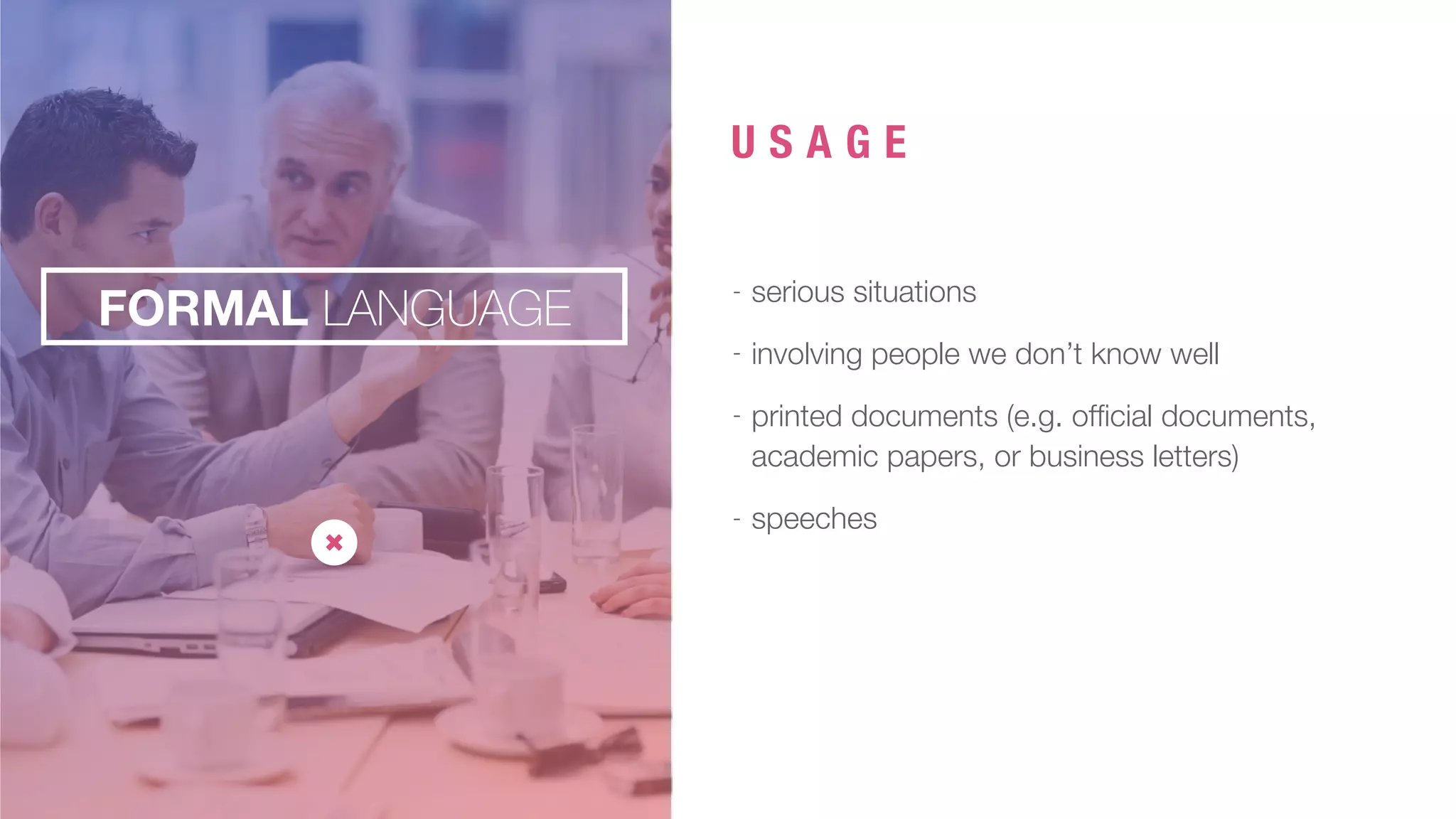
FORMAL LANGUAGE
- serious situations
- involving people we don’t know well
- printed documents (e.g. official documents,
academic papers, or business letters)
- speeches
U S A G E
FORMAL LANGUAGE
- using particular choices of grammar i.e. complex
sentences, no contractions, no ellipsis, etc.
- using particular choices of vocabulary
- using reported speech
- long and complex noun phrases
- frequent use of passive
C H A R A C T E R I S T I C S
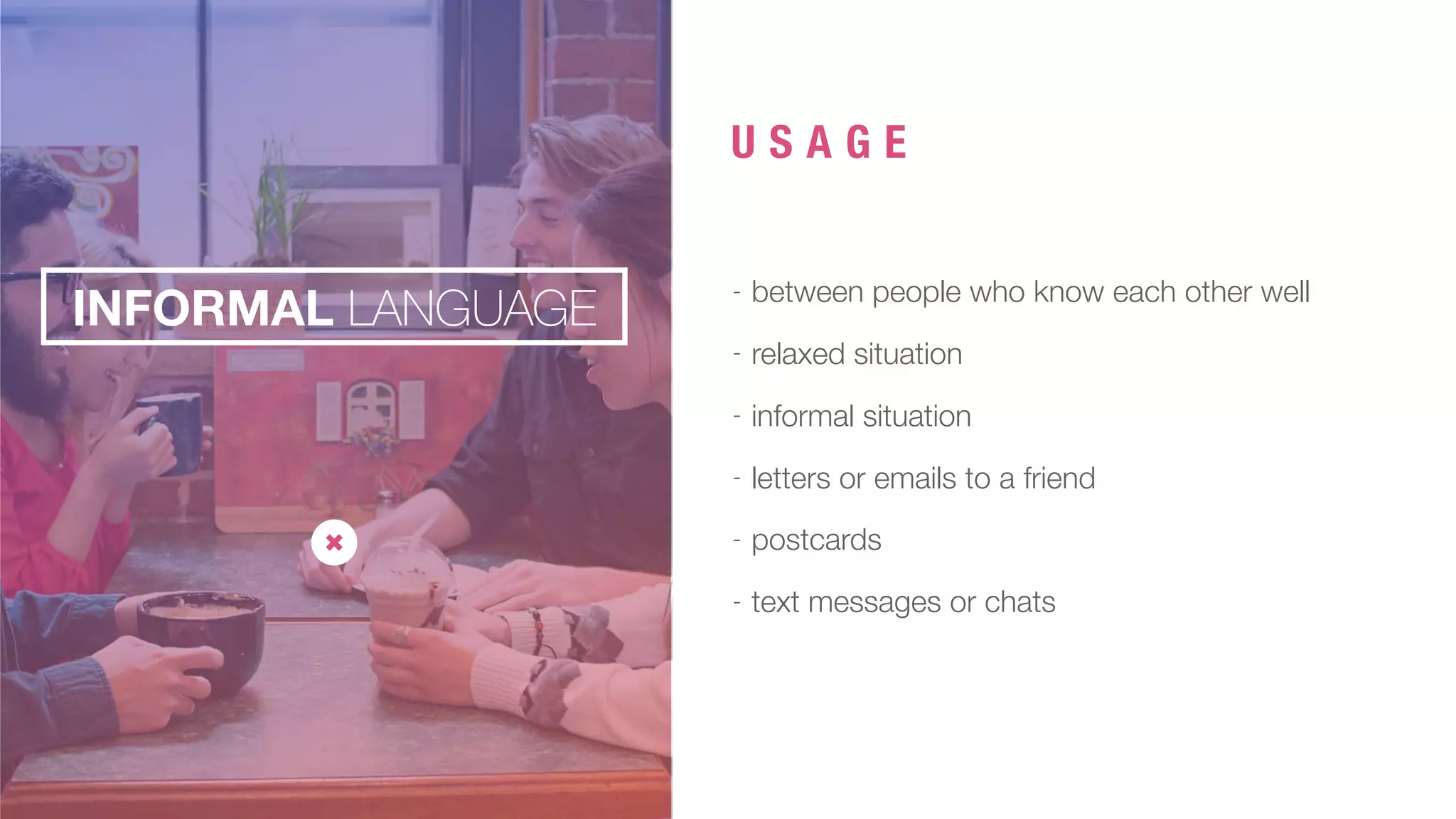
INFORMAL LANGUAGE
- between people who know each other well
- relaxed situation
- informal situation
- letters or emails to a friend
- postcards
- text messages or chats
U S A G E
INFORMAL LANGUAGE
- using particular choices of grammar i.e. simpler
sentences, contractions, ellipsis, etc.
- using particular choices of vocabulary (may
include taboo or slang)
C H A R A C T E R I S T I C S
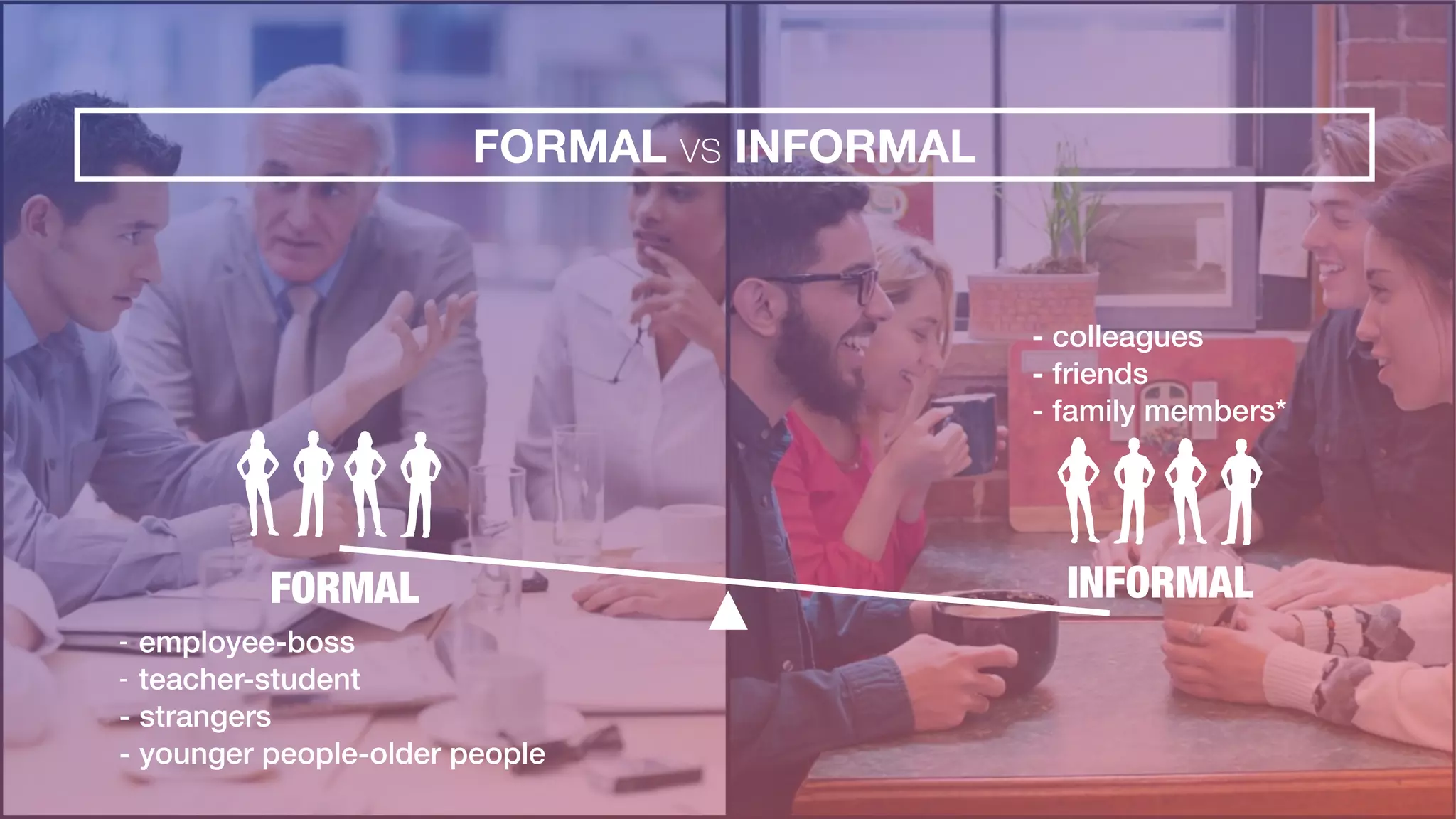
FORMAL vs INFORMAL
- employee-boss
- teacher-student
- strangers
- younger people-older people
FORMAL INFORMAL
- colleagues
- friends
- family members*
Let’s compare the following sentences
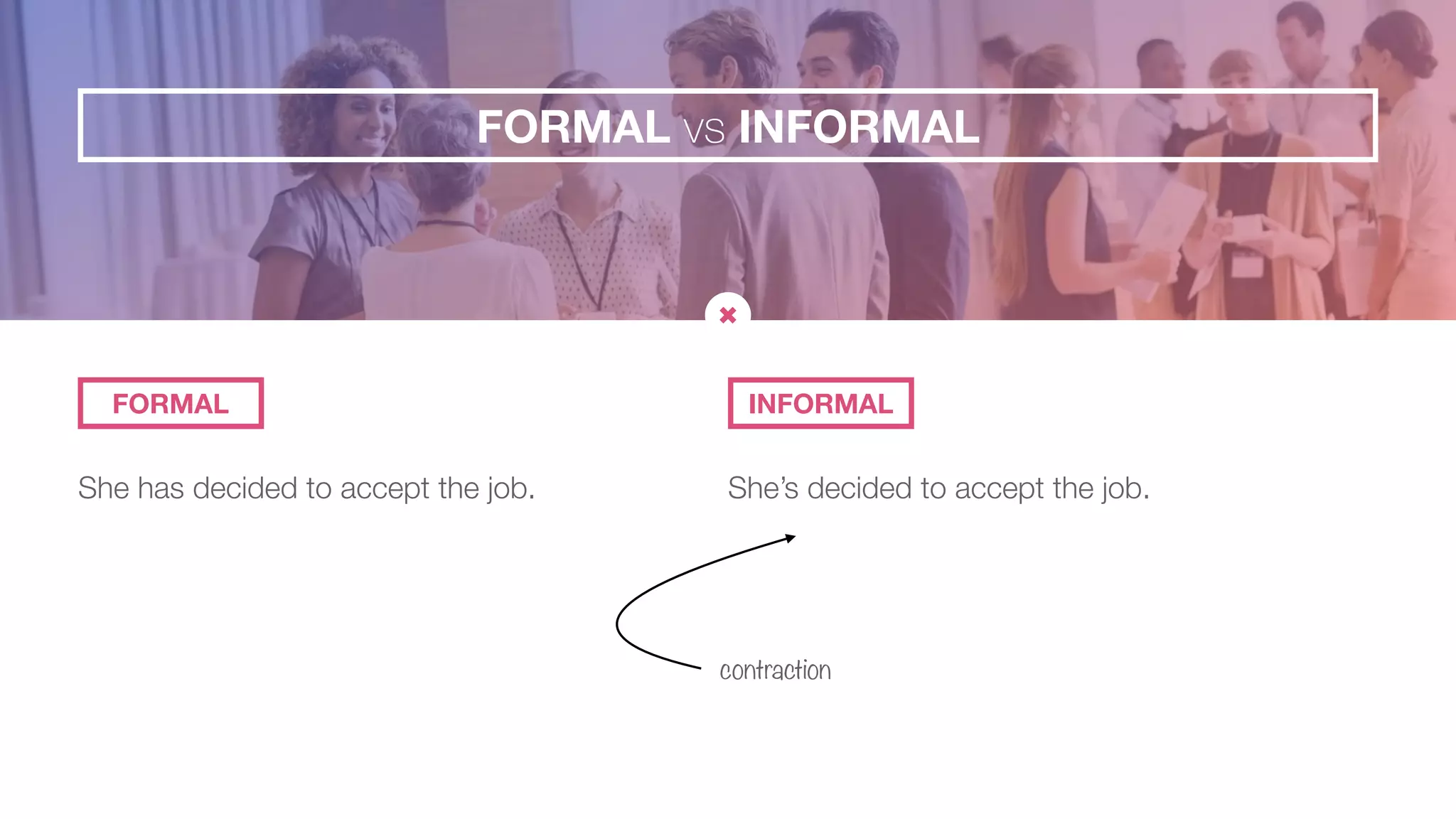
FORMAL INFORMAL
She has decided to accept the job.
FORMAL vs INFORMAL
She’s decided to accept the job.
contraction
INFORMAL FORMAL
The girl I met in Malang was interested in
studying abroad.
FORMAL vs INFORMAL
The girl whom I met in Malang was interested in
studying abroad.
relative clause without the relative pronoun
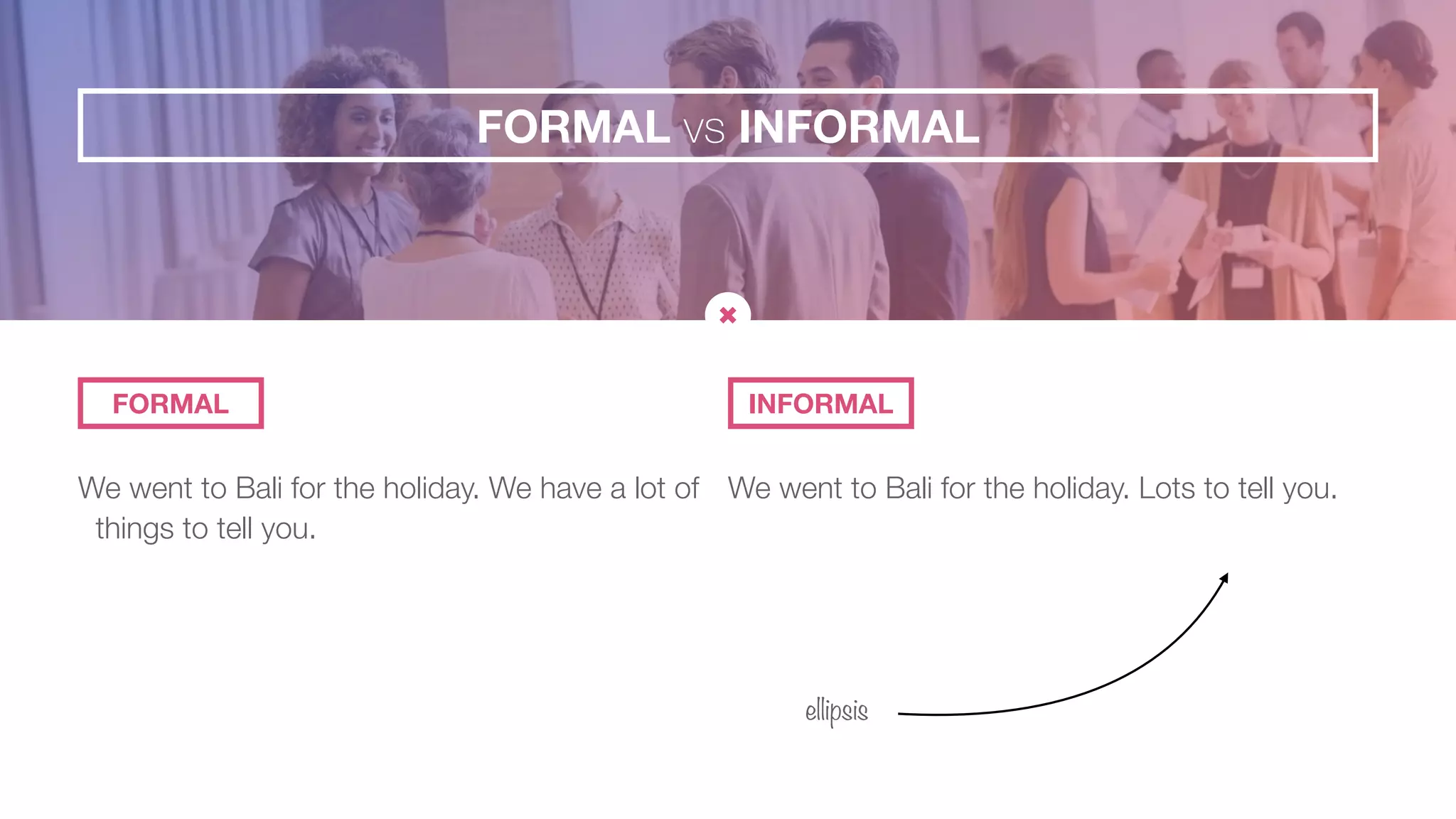
FORMAL INFORMAL
We went to Bali for the holiday. We have a lot of
things to tell you.
FORMAL vs INFORMAL
We went to Bali for the holiday. Lots to tell you.
ellipsis
INFORMAL FORMAL
start
FORMAL vs INFORMAL
end
try
commence
terminate
endeavour
hi
thanks
ASAP
hello
thank you
as soon as possible
FORMAL
Some dictionaries provide
certain label for formal
vocabularies
Formal
Some dictionaries provide certain
label for formal vocabularies
SCAN THE CODE TO
DOWNLOAD THIS
MATERIAL
Thornbury, S. 2006. The A-Z of ELT: A Dictionary of Terms and Concepts Used in
English Language Teaching. New York, NY: Macmillan
Informal Language. (n.d.) Retrieved from https://en.oxforddictionaries.com/usage/
informal-language
Formal and Informal Language. (n.d.) Retrieved from https://
dictionary.cambridge.org/grammar/british-grammar/types-of-english-formal-
informal-etc/formal-and-informal-language
R E F E R E N C E S
T H A N K Y O U

Formal vs. Informal Language

  • 1.
    F O RM A L & Informal L A N G U A G E
  • 2.
    FORMAL LANGUAGE - serioussituations - involving people we don’t know well - printed documents (e.g. official documents, academic papers, or business letters) - speeches U S A G E
  • 3.
    FORMAL LANGUAGE - usingparticular choices of grammar i.e. complex sentences, no contractions, no ellipsis, etc. - using particular choices of vocabulary - using reported speech - long and complex noun phrases - frequent use of passive C H A R A C T E R I S T I C S
  • 4.
    INFORMAL LANGUAGE - betweenpeople who know each other well - relaxed situation - informal situation - letters or emails to a friend - postcards - text messages or chats U S A G E
  • 5.
    INFORMAL LANGUAGE - usingparticular choices of grammar i.e. simpler sentences, contractions, ellipsis, etc. - using particular choices of vocabulary (may include taboo or slang) C H A R A C T E R I S T I C S
  • 6.
    FORMAL vs INFORMAL -employee-boss - teacher-student - strangers - younger people-older people FORMAL INFORMAL - colleagues - friends - family members*
  • 7.
    Let’s compare thefollowing sentences
  • 8.
    FORMAL INFORMAL She hasdecided to accept the job. FORMAL vs INFORMAL She’s decided to accept the job. contraction
  • 9.
    INFORMAL FORMAL The girlI met in Malang was interested in studying abroad. FORMAL vs INFORMAL The girl whom I met in Malang was interested in studying abroad. relative clause without the relative pronoun
  • 10.
    FORMAL INFORMAL We wentto Bali for the holiday. We have a lot of things to tell you. FORMAL vs INFORMAL We went to Bali for the holiday. Lots to tell you. ellipsis
  • 11.
    INFORMAL FORMAL start FORMAL vsINFORMAL end try commence terminate endeavour hi thanks ASAP hello thank you as soon as possible
  • 12.
    FORMAL Some dictionaries provide certainlabel for formal vocabularies
  • 13.
    Formal Some dictionaries providecertain label for formal vocabularies
  • 14.
    SCAN THE CODETO DOWNLOAD THIS MATERIAL Thornbury, S. 2006. The A-Z of ELT: A Dictionary of Terms and Concepts Used in English Language Teaching. New York, NY: Macmillan Informal Language. (n.d.) Retrieved from https://en.oxforddictionaries.com/usage/ informal-language Formal and Informal Language. (n.d.) Retrieved from https:// dictionary.cambridge.org/grammar/british-grammar/types-of-english-formal- informal-etc/formal-and-informal-language R E F E R E N C E S
  • 15.
    T H AN K Y O U