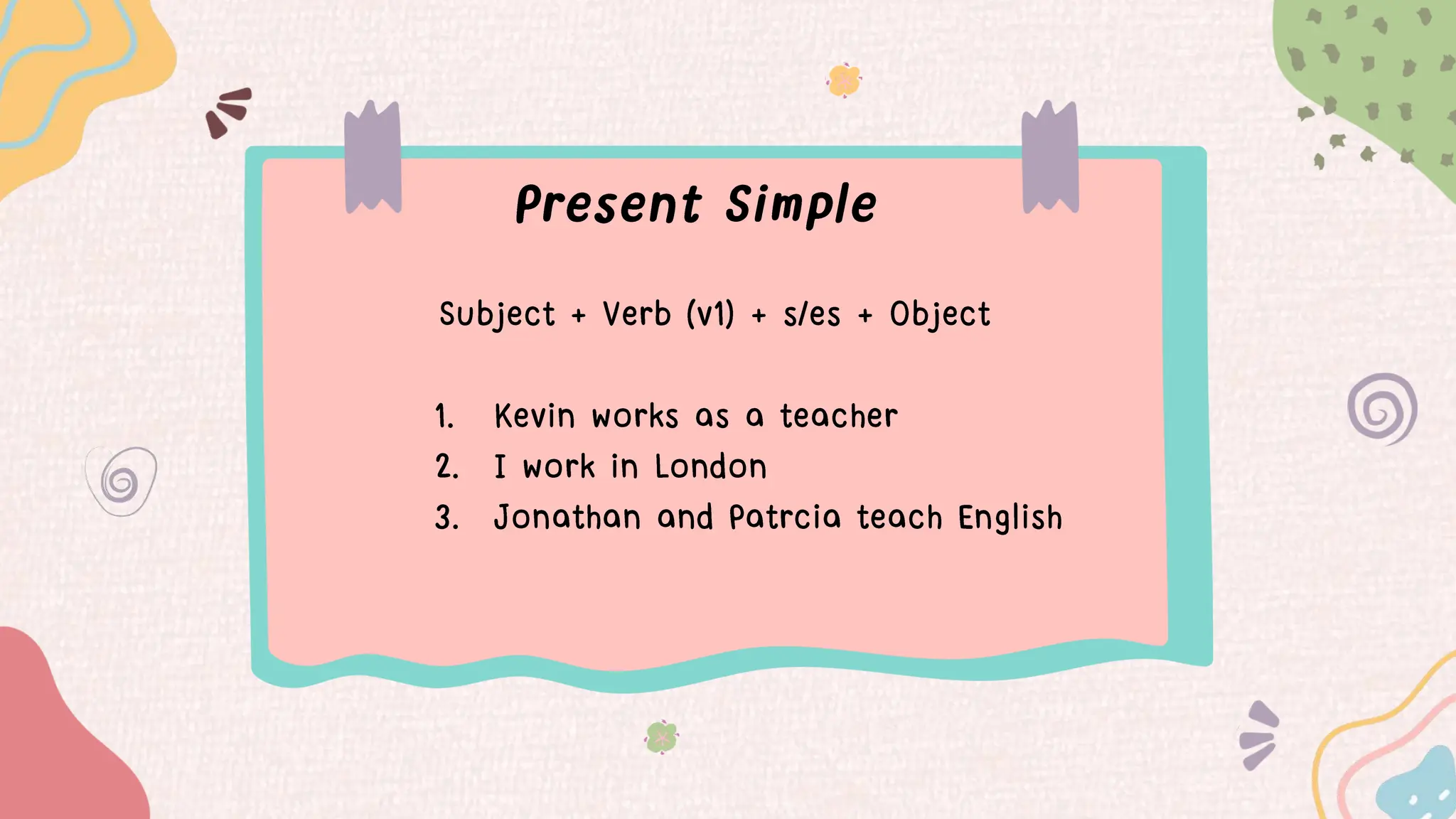
We use the simple present tense when an action is
happening right now, or when it happens
regularly (or unceasingly, which is why it's
sometimes called present indefinite). Depending on
the person, the simple present tense is formed by
using the root form or by adding s or es to the end.
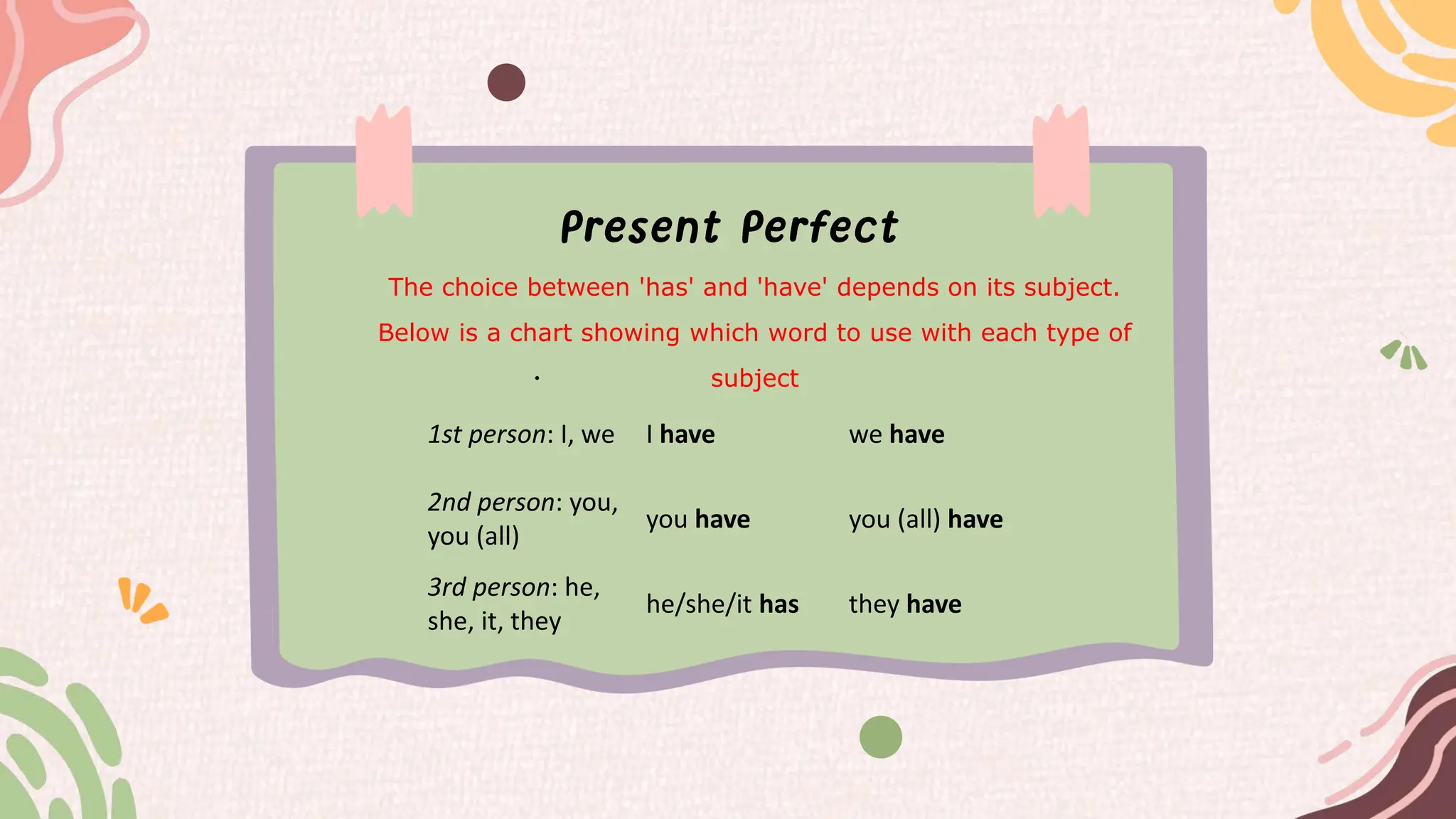
The choice between 'has' and 'have' depends on its subject.
Below is a chart showing which word to use with each type of
subject
1st person: I, we I have we have
2nd person: you,
you (all)
you have you (all) have
3rd person: he,
she, it, they
he/she/it has they have
ENGLISH-TENSES-OF-VERBS IN GRADE 9 .pptx

ENGLISH-TENSES-OF-VERBS IN GRADE 9 .pptx

  • 2.
    We use thesimple present tense when an action is happening right now, or when it happens regularly (or unceasingly, which is why it's sometimes called present indefinite). Depending on the person, the simple present tense is formed by using the root form or by adding s or es to the end.
  • 8.
    The choice between'has' and 'have' depends on its subject. Below is a chart showing which word to use with each type of subject 1st person: I, we I have we have 2nd person: you, you (all) you have you (all) have 3rd person: he, she, it, they he/she/it has they have