

 Formal language is impersonal and
precise in the way it uses language.
 Informal language tends to be casual,
familiar, and conversational in tone.
 It’s not a matter of one being better than
the other, but rather which is appropriate
for the situation in which you find
yourself.
 Formal: Job interview, speech,
academic papers
 Informal: Speaking with family or friends,
diaries and journals.
 If you want to sound professional and
educated, be careful of how you use
language.
 You can make you language, either
written or oral, sound more formal by
watching out for a few informal
constructions.
 Informal: conjunctions used to start
sentences
› The store was looting after Hurricane Katrina.
And, some of the nearby houses were looted
as well.
 Formal: conjunctions used to join
sentences
› The store was looted after Hurricane Katrina,
and some of the nearby houses were looted
as well.
 Informal: contractions used to form
negatives
› The National Guard didn’t arrive early
enough to help hurricane victims stranded in
the flooded hospital.
 Formal: contractions avoided
› The National Guard did not arrive early
enough to help hurricane victims stranded in
the flooded hospital.
 Informal: Clichés are used
› They had the time of their lives.
› The rat was as dead as a doornail.
› His sister is as gentle as a lamb.
› His brother is as straight as an arrow.
Note that most of these are “similes” –
something is compared to something
else using the word “as.”
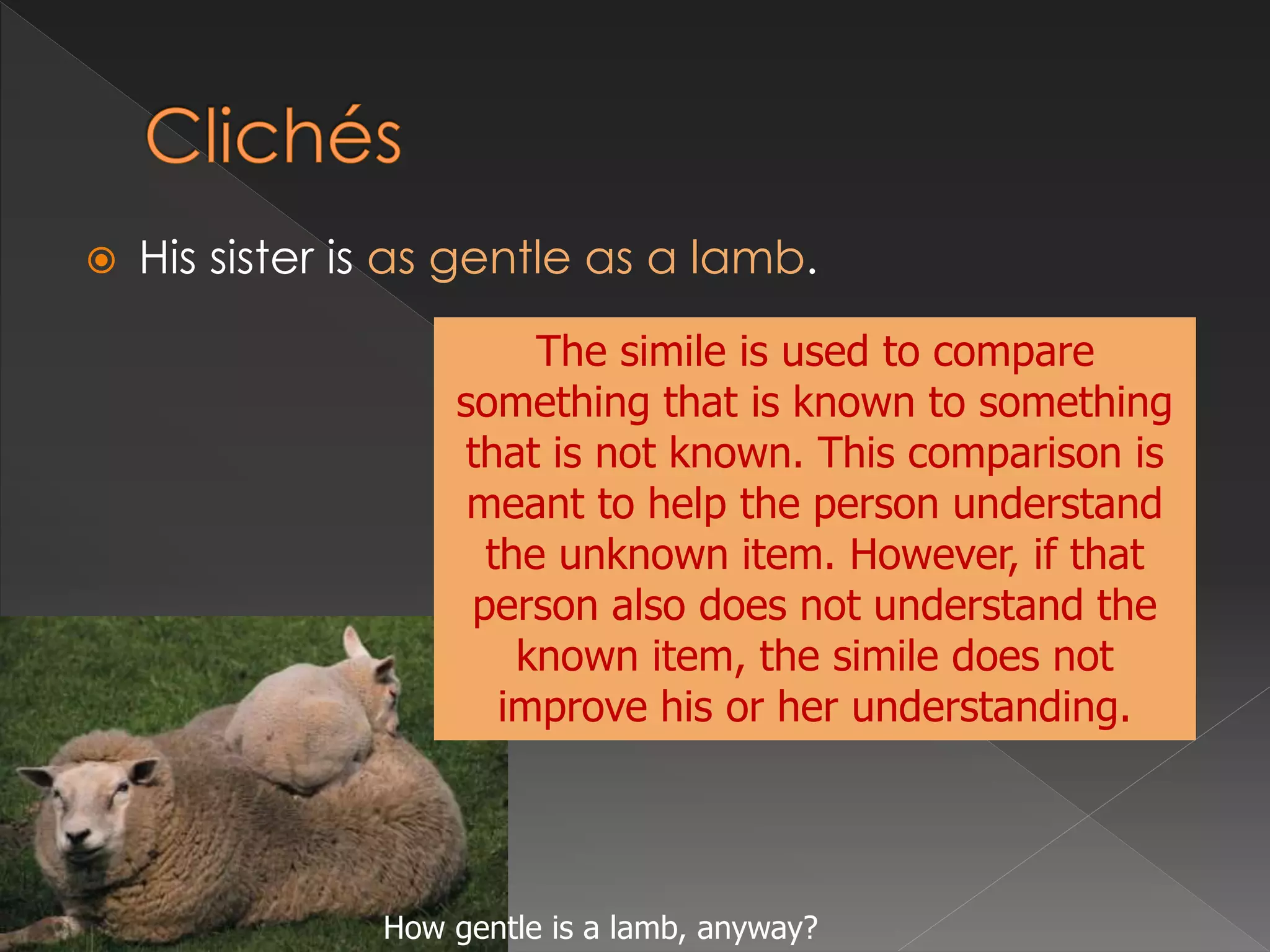
 His sister is as gentle as a lamb.
The simile is used to compare
something that is known to something
that is not known. This comparison is
meant to help the person understand
the unknown item. However, if that
person also does not understand the
known item, the simile does not
improve his or her understanding.
How gentle is a lamb, anyway?
 Formal: clichés are avoided
› They had a wonderful time.
› The rat was dead.
› His sister is extremely gentle.
› His brother always follows the rules.
Better yet, you can create your own
similes, new expressions that are fresh
and original!
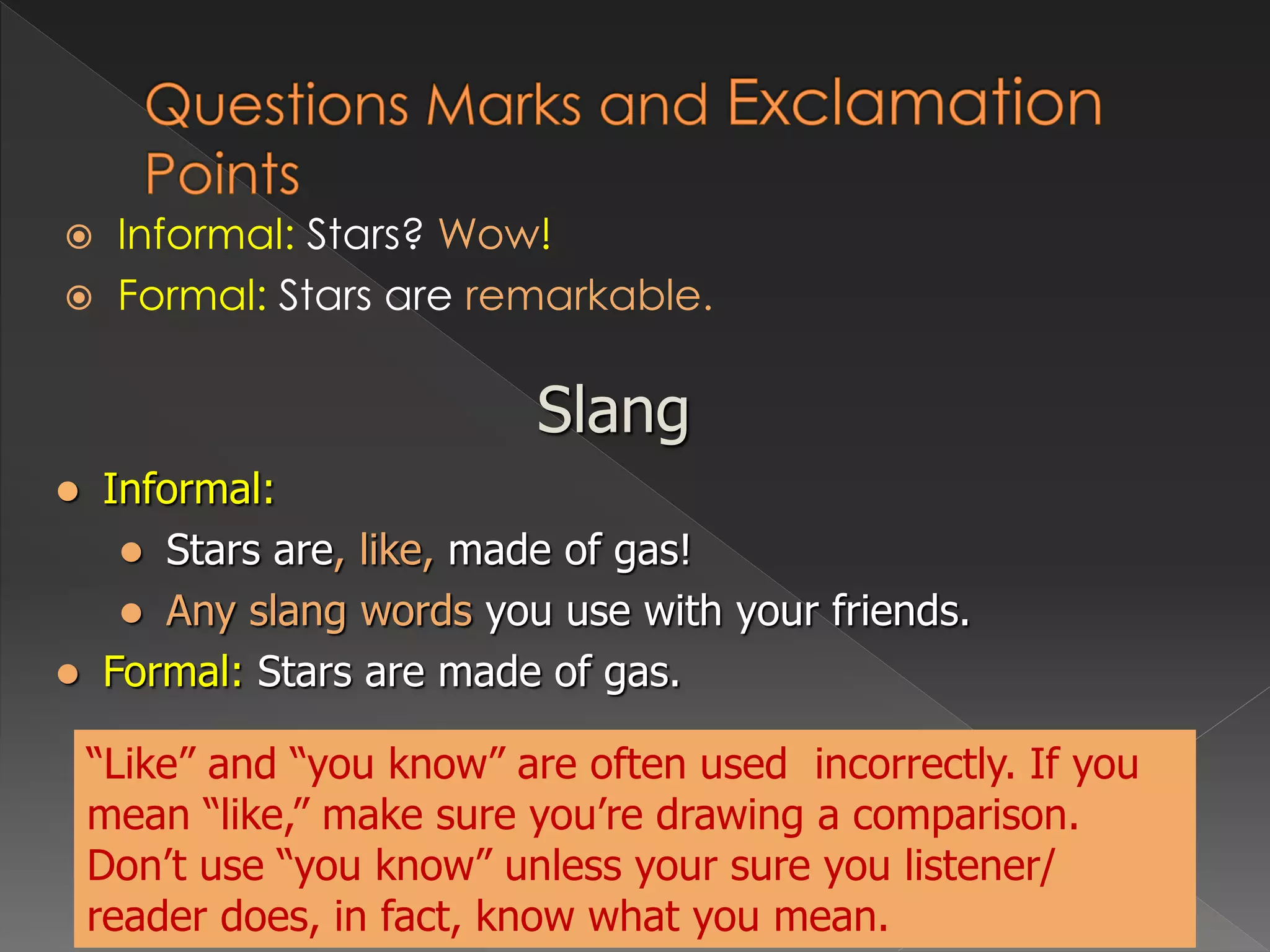
 Informal: Stars? Wow!
 Formal: Stars are remarkable.
Slang
 Informal:
 Stars are, like, made of gas!
 Any slang words you use with your friends.
 Formal: Stars are made of gas.
“Like” and “you know” are often used incorrectly. If you
mean “like,” make sure you’re drawing a comparison.
Don’t use “you know” unless your sure you listener/
reader does, in fact, know what you mean.
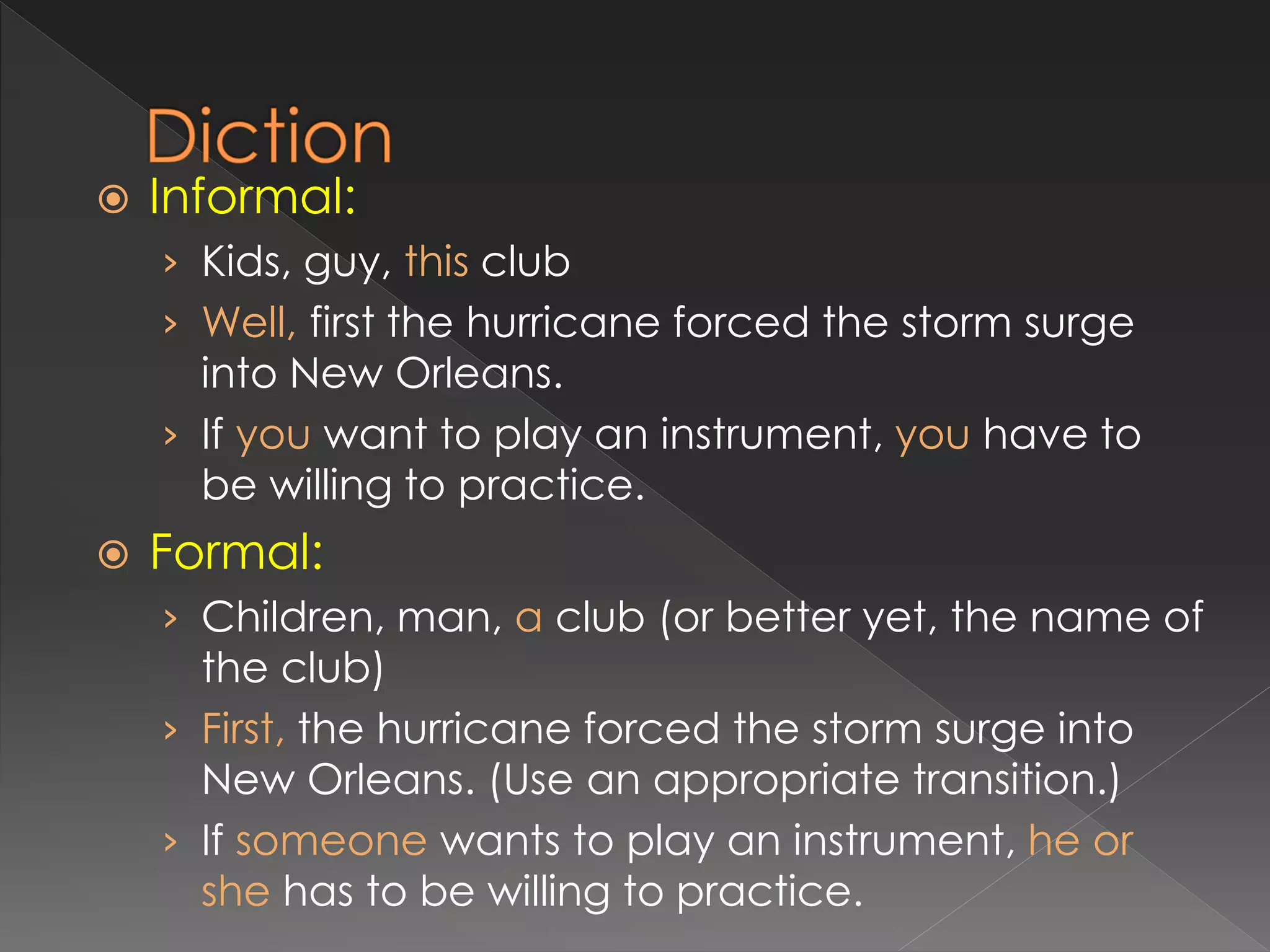
 Informal:
› Kids, guy, this club
› Well, first the hurricane forced the storm surge
into New Orleans.
› If you want to play an instrument, you have to
be willing to practice.
 Formal:
› Children, man, a club (or better yet, the name of
the club)
› First, the hurricane forced the storm surge into
New Orleans. (Use an appropriate transition.)
› If someone wants to play an instrument, he or
she has to be willing to practice.
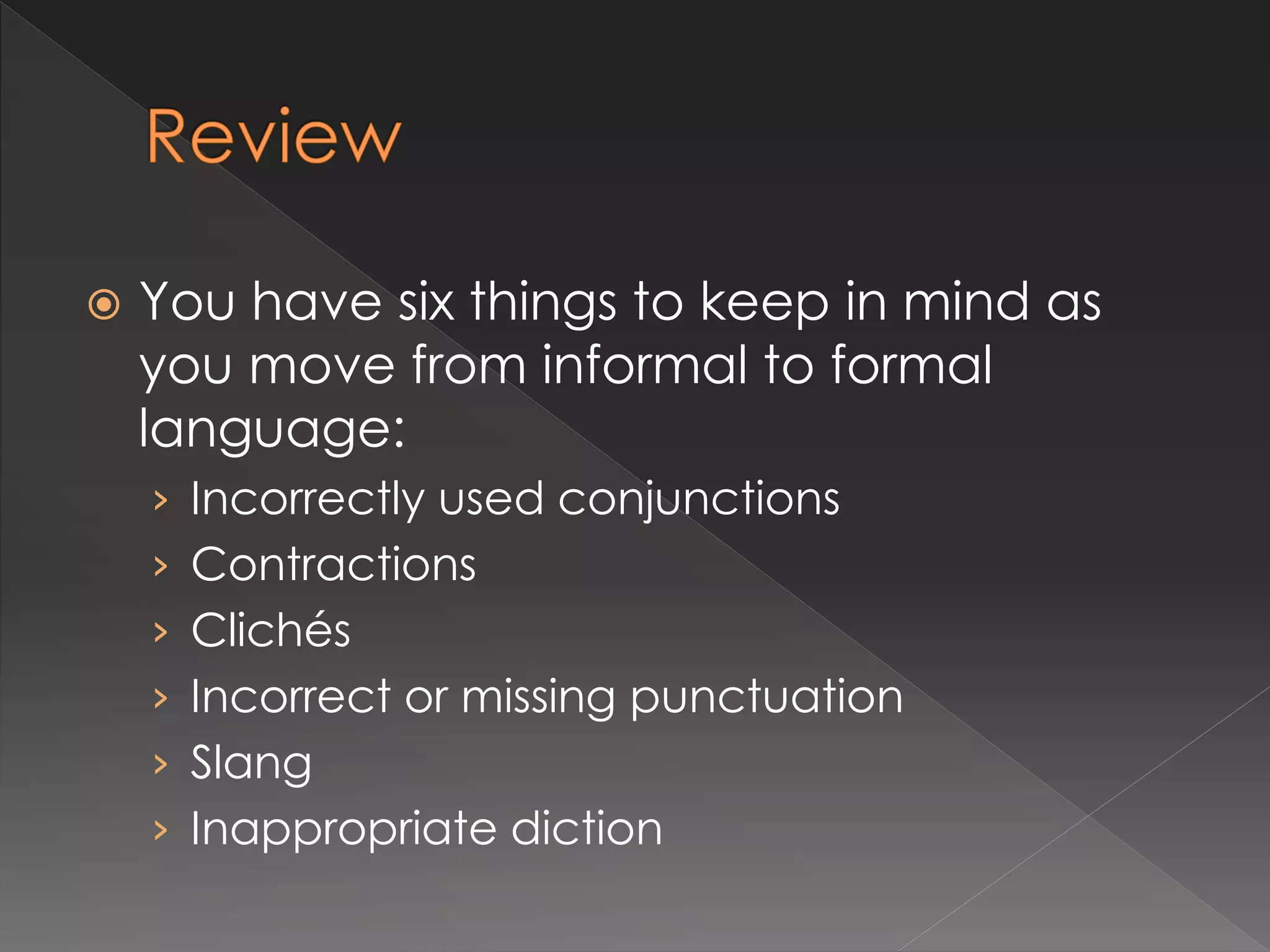
 You have six things to keep in mind as
you move from informal to formal
language:
› Incorrectly used conjunctions
› Contractions
› Clichés
› Incorrect or missing punctuation
› Slang
› Inappropriate diction

Formal Language

  • 2.
     Formal languageis impersonal and precise in the way it uses language.
  • 3.
     Informal languagetends to be casual, familiar, and conversational in tone.
  • 4.
     It’s nota matter of one being better than the other, but rather which is appropriate for the situation in which you find yourself.  Formal: Job interview, speech, academic papers  Informal: Speaking with family or friends, diaries and journals.
  • 5.
     If youwant to sound professional and educated, be careful of how you use language.  You can make you language, either written or oral, sound more formal by watching out for a few informal constructions.
  • 6.
     Informal: conjunctionsused to start sentences › The store was looting after Hurricane Katrina. And, some of the nearby houses were looted as well.  Formal: conjunctions used to join sentences › The store was looted after Hurricane Katrina, and some of the nearby houses were looted as well.
  • 7.
     Informal: contractionsused to form negatives › The National Guard didn’t arrive early enough to help hurricane victims stranded in the flooded hospital.  Formal: contractions avoided › The National Guard did not arrive early enough to help hurricane victims stranded in the flooded hospital.
  • 8.
     Informal: Clichésare used › They had the time of their lives. › The rat was as dead as a doornail. › His sister is as gentle as a lamb. › His brother is as straight as an arrow. Note that most of these are “similes” – something is compared to something else using the word “as.”
  • 9.
     His sisteris as gentle as a lamb. The simile is used to compare something that is known to something that is not known. This comparison is meant to help the person understand the unknown item. However, if that person also does not understand the known item, the simile does not improve his or her understanding. How gentle is a lamb, anyway?
  • 10.
     Formal: clichésare avoided › They had a wonderful time. › The rat was dead. › His sister is extremely gentle. › His brother always follows the rules. Better yet, you can create your own similes, new expressions that are fresh and original!
  • 11.
     Informal: Stars?Wow!  Formal: Stars are remarkable. Slang  Informal:  Stars are, like, made of gas!  Any slang words you use with your friends.  Formal: Stars are made of gas. “Like” and “you know” are often used incorrectly. If you mean “like,” make sure you’re drawing a comparison. Don’t use “you know” unless your sure you listener/ reader does, in fact, know what you mean.
  • 12.
     Informal: › Kids,guy, this club › Well, first the hurricane forced the storm surge into New Orleans. › If you want to play an instrument, you have to be willing to practice.  Formal: › Children, man, a club (or better yet, the name of the club) › First, the hurricane forced the storm surge into New Orleans. (Use an appropriate transition.) › If someone wants to play an instrument, he or she has to be willing to practice.
  • 13.
     You havesix things to keep in mind as you move from informal to formal language: › Incorrectly used conjunctions › Contractions › Clichés › Incorrect or missing punctuation › Slang › Inappropriate diction