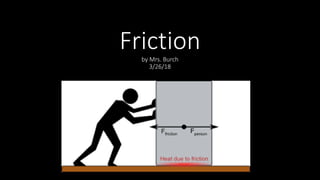
Frictionby Mrs. Burch
3/26/18
Goal: I will have a better understanding of
the force called “friction” and how it affects
me and objects around me.
Review: What is force?
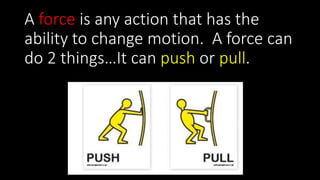
A force is any action that has the
ability to change motion. A force can
do 2 things…It can push or pull.
Review: What is resistance?
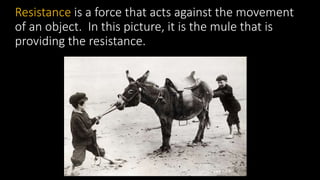
Resistance is a force that acts against the movement
of an object. In this picture, it is the mule that is
providing the resistance.
Review: What is mass?
Mass is the amount of atoms in an object.
The more mass an object has, the more it will
weigh.
Mass doesn’t change, even if there is no
gravity.
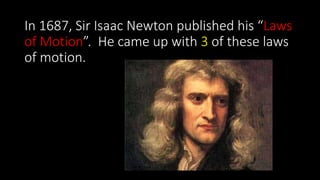
In 1687, Sir Isaac Newton published his “Laws
of Motion”. He came up with 3 of these laws
of motion.
His 1st law is called the “Law of Inertia”.
According to this scientific law:
* An object at rest will stay at rest unless acted on by
an “unbalanced” force.
* An object in motion will continue with constant
speed and direction, unless acted on by an
“unbalanced” force.
So, what, exactly, does the Law of Inertia mean?
Inertia is the tendency of an object to "keep doing
what it’s doing.”
If it’s still, it wants to remain still, and if it’s
moving, it wants to keep moving.
The more mass an object has, the more inertia it
has.
Inertia
If an object is still, inertia causes the
object to _________.
Inertia
If an object is still, inertia causes the
object to remain still.
Inertia
If an object is moving, inertia will cause
the object to __________.
Inertia
If an object is moving, inertia will cause
the object to keep moving.
Inertia
The more mass an object has, the ____
inertia the object has.
Inertia
The more mass an object has, the more
inertia the object has.
Inertia
The less mass an object has, the ___
inertia the object has.
Inertia
The less mass an object has, the less
inertia the object has.
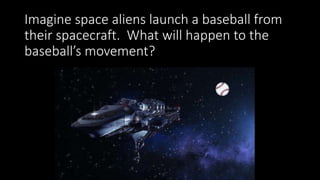
Imagine space aliens launch a baseball from
their spacecraft. What will happen to the
baseball’s movement?
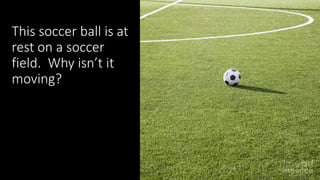
This soccer ball is at
rest on a soccer
field. Why isn’t it
moving?
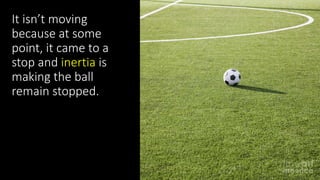
It isn’t moving
because at some
point, it came to a
stop and inertia is
making the ball
remain stopped.
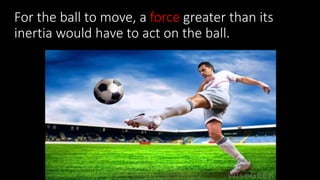
For the ball to move, a force greater than its
inertia would have to act on the ball.
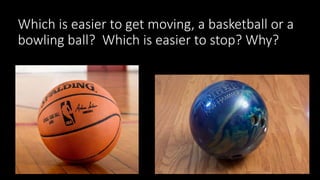
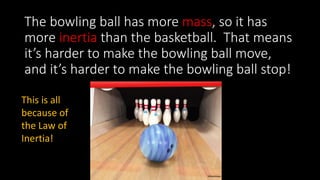
Which is easier to get moving, a basketball or a
bowling ball? Which is easier to stop? Why?
The bowling ball has more mass, so it has
more inertia than the basketball. That means
it’s harder to make the bowling ball move,
and it’s harder to make the bowling ball stop!
This is all
because of
the Law of
Inertia!
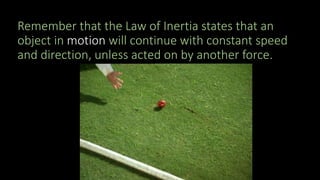
Remember that the Law of Inertia states that an
object in motion will continue with constant speed
and direction, unless acted on by another force.
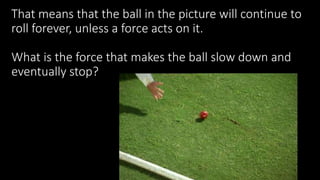
That means that the ball in the picture will continue to
roll forever, unless a force acts on it.
What is the force that makes the ball slow down and
eventually stop?
Friction!
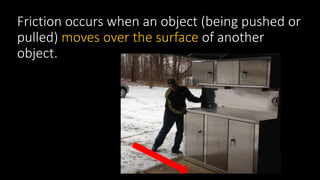
Friction occurs when an object (being pushed or
pulled) moves over the surface of another
object.
Let’s take a closer look at friction.
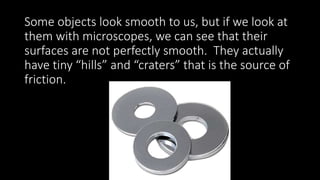
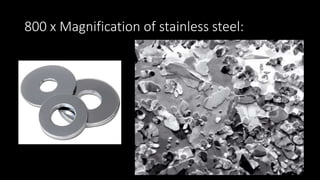
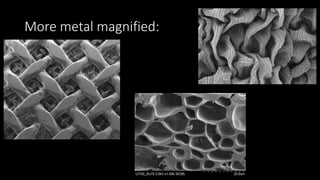
Some objects look smooth to us, but if we look at
them with microscopes, we can see that their
surfaces are not perfectly smooth. They actually
have tiny “hills” and “craters” that is the source of
friction.
800 x Magnification of stainless steel:
More metal magnified:
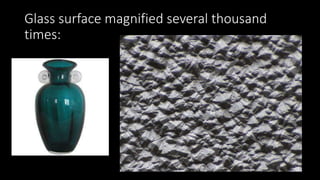
Glass surface magnified several thousand
times:
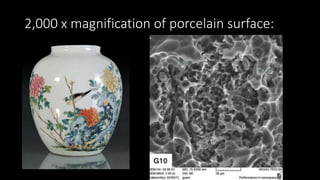
2,000 x magnification of porcelain surface:
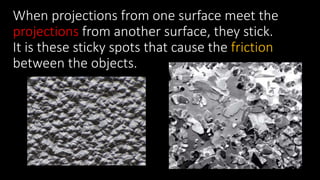
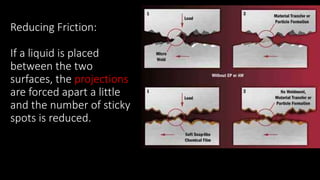
When projections from one surface meet the
projections from another surface, they stick.
It is these sticky spots that cause the friction
between the objects.
Reducing Friction:
If a liquid is placed
between the two
surfaces, the projections
are forced apart a little
and the number of sticky
spots is reduced.
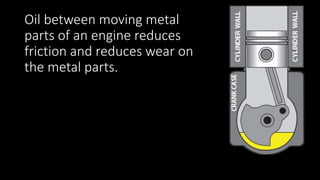
Oil between moving metal
parts of an engine reduces
friction and reduces wear on
the metal parts.
Reducing friction can be helpful…or cause problems!
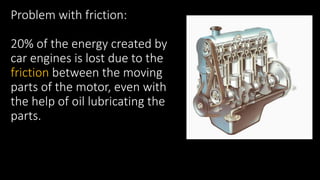
Problem with friction:
20% of the energy created by
car engines is lost due to the
friction between the moving
parts of the motor, even with
the help of oil lubricating the
parts.
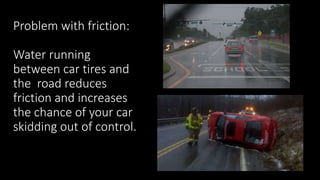
Problem with friction:
Water running
between car tires and
the road reduces
friction and increases
the chance of your car
skidding out of control.
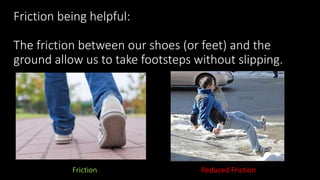
Friction being helpful:
The friction between our shoes (or feet) and the
ground allow us to take footsteps without slipping.
Friction Reduced Friction
How can friction be increased?
- To increase friction between 2 surfaces press the
surfaces together more strongly.
- This makes the projections press against each other
more and increases the connections between the
surfaces.
There are four main types of friction:
* Sliding Friction
* Rolling Friction
* Fluid Friction (a.k.a. “viscous”)
* Static Friction
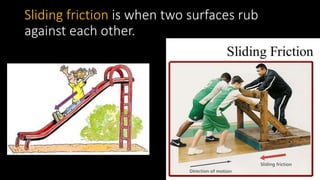
Sliding friction is when two surfaces rub
against each other.
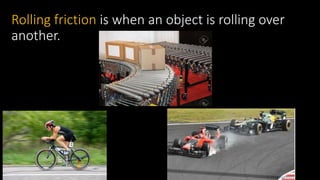
Rolling friction is when an object is rolling over
another.
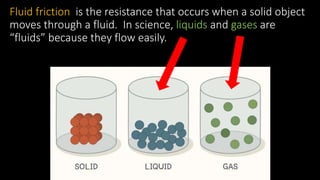
Fluid friction is the resistance that occurs when a solid object
moves through a fluid. In science, liquids and gases are
“fluids” because they flow easily.
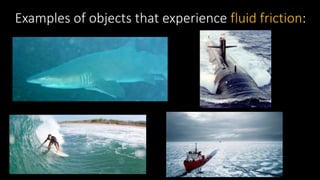
Examples of objects that experience fluid friction:
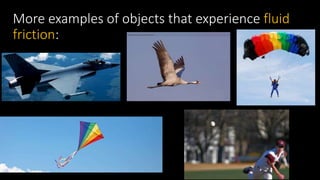
More examples of objects that experience fluid
friction:
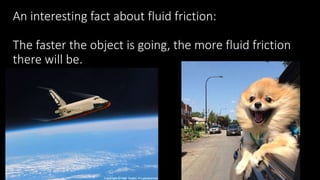
An interesting fact about fluid friction:
The faster the object is going, the more fluid friction
there will be.
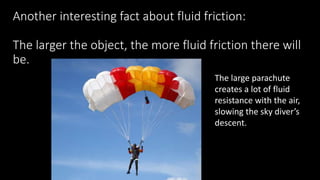
Another interesting fact about fluid friction:
The larger the object, the more fluid friction there will
be.
The large parachute
creates a lot of fluid
resistance with the air,
slowing the sky diver’s
descent.
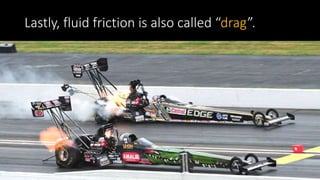
Lastly, fluid friction is also called “drag”.
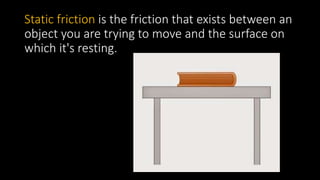
Static friction is the friction that exists between an
object you are trying to move and the surface on
which it's resting.
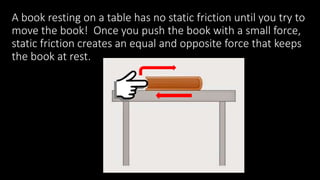
A book resting on a table has no static friction until you try to
move the book! Once you push the book with a small force,
static friction creates an equal and opposite force that keeps
the book at rest.
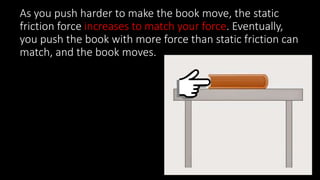
As you push harder to make the book move, the static
friction force increases to match your force. Eventually,
you push the book with more force than static friction can
match, and the book moves.
One more thing you should know about
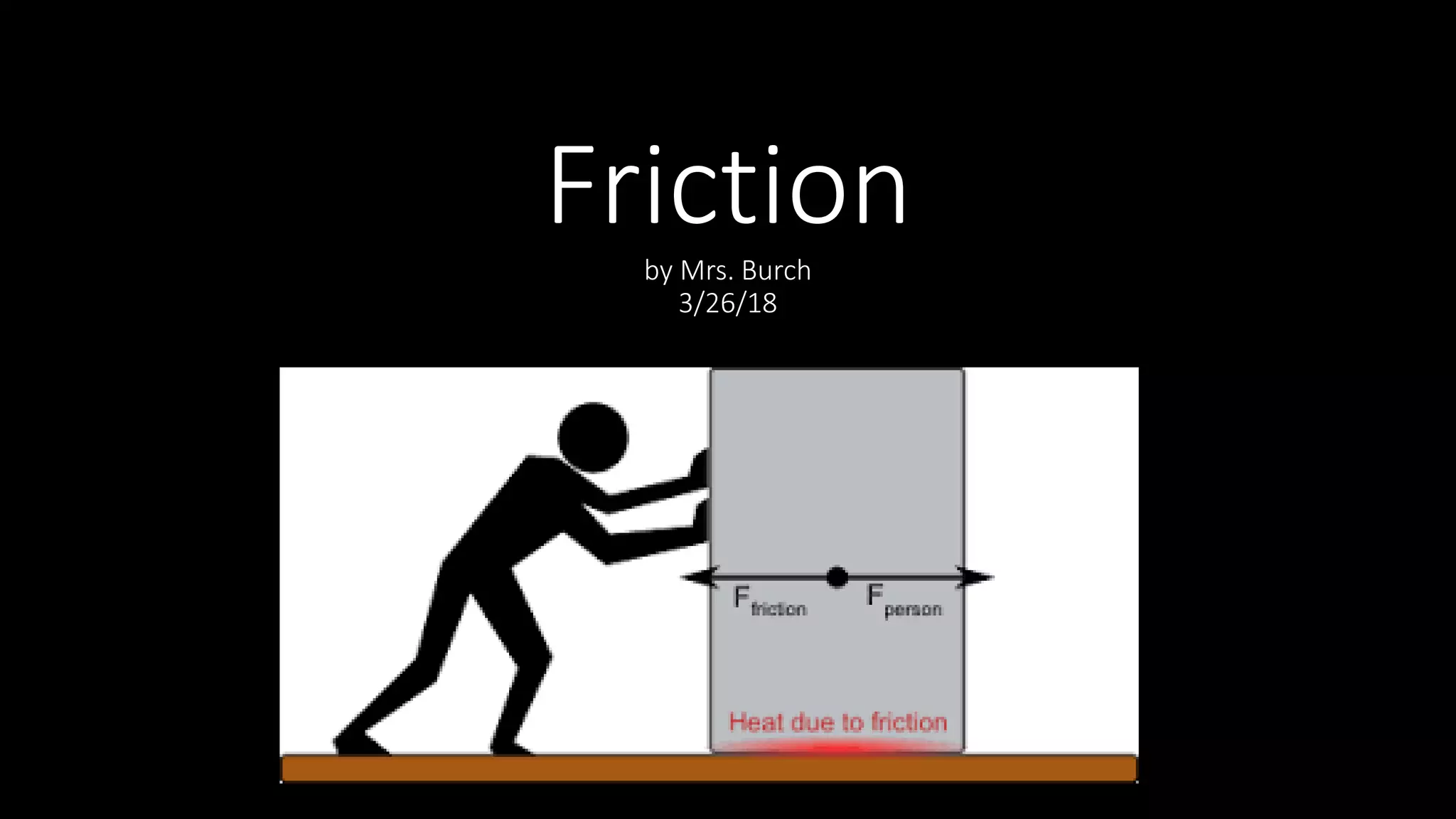
friction: Friction causes heat and sound.
Try this: Rub your hands together. Not only
will you be able to hear your hands rubbing
together, you will also feel your hands heating
up because of the friction.
The End

Forces and Motion: Friction

  • 1.
  • 2.
    Goal: I willhave a better understanding of the force called “friction” and how it affects me and objects around me.
  • 3.
  • 4.
    A force isany action that has the ability to change motion. A force can do 2 things…It can push or pull.
  • 5.
    Review: What isresistance?
  • 6.
    Resistance is aforce that acts against the movement of an object. In this picture, it is the mule that is providing the resistance.
  • 7.
  • 8.
    Mass is theamount of atoms in an object. The more mass an object has, the more it will weigh. Mass doesn’t change, even if there is no gravity.
  • 9.
    In 1687, SirIsaac Newton published his “Laws of Motion”. He came up with 3 of these laws of motion.
  • 10.
    His 1st lawis called the “Law of Inertia”. According to this scientific law: * An object at rest will stay at rest unless acted on by an “unbalanced” force. * An object in motion will continue with constant speed and direction, unless acted on by an “unbalanced” force.
  • 11.
    So, what, exactly,does the Law of Inertia mean?
  • 12.
    Inertia is thetendency of an object to "keep doing what it’s doing.” If it’s still, it wants to remain still, and if it’s moving, it wants to keep moving. The more mass an object has, the more inertia it has.
  • 13.
    Inertia If an objectis still, inertia causes the object to _________.
  • 14.
    Inertia If an objectis still, inertia causes the object to remain still.
  • 15.
    Inertia If an objectis moving, inertia will cause the object to __________.
  • 16.
    Inertia If an objectis moving, inertia will cause the object to keep moving.
  • 17.
    Inertia The more massan object has, the ____ inertia the object has.
  • 18.
    Inertia The more massan object has, the more inertia the object has.
  • 19.
    Inertia The less massan object has, the ___ inertia the object has.
  • 20.
    Inertia The less massan object has, the less inertia the object has.
  • 21.
    Imagine space alienslaunch a baseball from their spacecraft. What will happen to the baseball’s movement?
  • 22.
    This soccer ballis at rest on a soccer field. Why isn’t it moving?
  • 23.
    It isn’t moving becauseat some point, it came to a stop and inertia is making the ball remain stopped.
  • 24.
    For the ballto move, a force greater than its inertia would have to act on the ball.
  • 25.
    Which is easierto get moving, a basketball or a bowling ball? Which is easier to stop? Why?
  • 26.
    The bowling ballhas more mass, so it has more inertia than the basketball. That means it’s harder to make the bowling ball move, and it’s harder to make the bowling ball stop! This is all because of the Law of Inertia!
  • 27.
    Remember that theLaw of Inertia states that an object in motion will continue with constant speed and direction, unless acted on by another force.
  • 28.
    That means thatthe ball in the picture will continue to roll forever, unless a force acts on it. What is the force that makes the ball slow down and eventually stop?
  • 29.
  • 30.
    Friction occurs whenan object (being pushed or pulled) moves over the surface of another object.
  • 31.
    Let’s take acloser look at friction.
  • 32.
    Some objects looksmooth to us, but if we look at them with microscopes, we can see that their surfaces are not perfectly smooth. They actually have tiny “hills” and “craters” that is the source of friction.
  • 33.
    800 x Magnificationof stainless steel:
  • 34.
  • 35.
    Glass surface magnifiedseveral thousand times:
  • 36.
    2,000 x magnificationof porcelain surface:
  • 37.
    When projections fromone surface meet the projections from another surface, they stick. It is these sticky spots that cause the friction between the objects.
  • 38.
    Reducing Friction: If aliquid is placed between the two surfaces, the projections are forced apart a little and the number of sticky spots is reduced.
  • 39.
    Oil between movingmetal parts of an engine reduces friction and reduces wear on the metal parts.
  • 40.
    Reducing friction canbe helpful…or cause problems!
  • 41.
    Problem with friction: 20%of the energy created by car engines is lost due to the friction between the moving parts of the motor, even with the help of oil lubricating the parts.
  • 42.
    Problem with friction: Waterrunning between car tires and the road reduces friction and increases the chance of your car skidding out of control.
  • 43.
    Friction being helpful: Thefriction between our shoes (or feet) and the ground allow us to take footsteps without slipping. Friction Reduced Friction
  • 44.
    How can frictionbe increased? - To increase friction between 2 surfaces press the surfaces together more strongly. - This makes the projections press against each other more and increases the connections between the surfaces.
  • 45.
    There are fourmain types of friction: * Sliding Friction * Rolling Friction * Fluid Friction (a.k.a. “viscous”) * Static Friction
  • 46.
    Sliding friction iswhen two surfaces rub against each other.
  • 47.
    Rolling friction iswhen an object is rolling over another.
  • 48.
    Fluid friction isthe resistance that occurs when a solid object moves through a fluid. In science, liquids and gases are “fluids” because they flow easily.
  • 49.
    Examples of objectsthat experience fluid friction:
  • 50.
    More examples ofobjects that experience fluid friction:
  • 51.
    An interesting factabout fluid friction: The faster the object is going, the more fluid friction there will be.
  • 52.
    Another interesting factabout fluid friction: The larger the object, the more fluid friction there will be. The large parachute creates a lot of fluid resistance with the air, slowing the sky diver’s descent.
  • 53.
    Lastly, fluid frictionis also called “drag”.
  • 54.
    Static friction isthe friction that exists between an object you are trying to move and the surface on which it's resting.
  • 55.
    A book restingon a table has no static friction until you try to move the book! Once you push the book with a small force, static friction creates an equal and opposite force that keeps the book at rest.
  • 56.
    As you pushharder to make the book move, the static friction force increases to match your force. Eventually, you push the book with more force than static friction can match, and the book moves.
  • 57.
    One more thingyou should know about friction: Friction causes heat and sound.
  • 58.
    Try this: Rubyour hands together. Not only will you be able to hear your hands rubbing together, you will also feel your hands heating up because of the friction.
  • 59.

Editor's Notes

  • #2 Image: https://www.khanacademy.org/science/physics/work-and-energy/work-and-energy-tutorial/v/thermal-energy-from-friction
  • #5 Image: http://easyscienceforkids.com/all-about-force-push-and-pull/
  • #12 Image: https://www.emojirequest.com/r/ConfusedEmoji
  • #25 Image: https://www.youtube.com/watch?v=VB3gCJDEKj0
  • #26 Image: https://www.spalding.com/shop-by-sport/basketball-systems/ Image: https://healthfully.com/drilling-protection-buying-bowling-balls-5685085.html
  • #27 Image: http://easybowlingtips.blogspot.com/2012/08/bowling-tips-how-to-bowl-perfect-strike.html
  • #28 Image: https://www.gettyimages.co.uk/videos/sport-of-cricket?sort=mostpopular&offlinecontent=include&phrase=sport%20of%20cricket
  • #29 Image: https://www.gettyimages.co.uk/videos/sport-of-cricket?sort=mostpopular&offlinecontent=include&phrase=sport%20of%20cricket
  • #31 Image: https://davidgarageoverhaul.wordpress.com/2013/12/
  • #32 Image: http://www.clipartpanda.com/clipart_images/detective-with-a-magnifying-33315233
  • #33 Image: https://www.indiamart.com/proddetail/metal-washers-15116281262.html
  • #34 Image: https://www.azom.com/article.aspx?ArticleID=12735
  • #36 image: https://www.1stdibs.com/furniture/decorative-objects/vases-vessels/vases/vintage-opaque-glass-vase/id-f_4682273/ Image: http://www.shineprowindowcleaning.com/cleaning-services/diamond-gelsight/
  • #37 Image: https://www.topchinatravel.com/china-guide/porcelain.htm
  • #42 Image: https://www.howacarworks.com/basics/the-engine
  • #44 Image: http://spiralenergies.com/blog/do-you-walk-your-talk/
  • #49 Image: https://www.livescience.com/53304-gases.html