Download to read offline




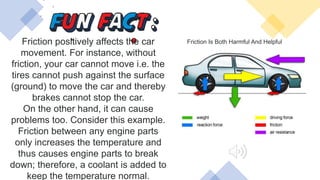
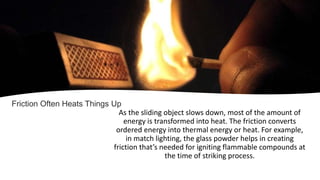







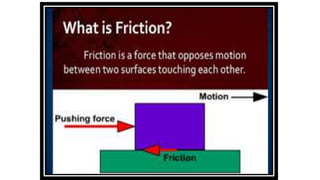
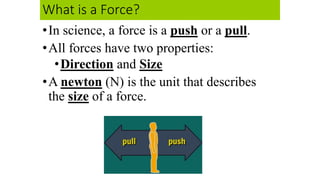
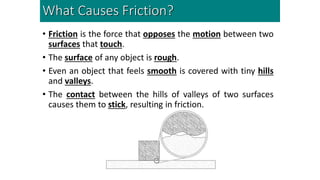

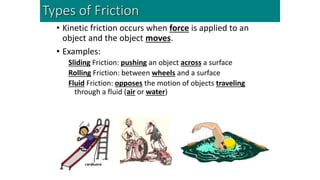
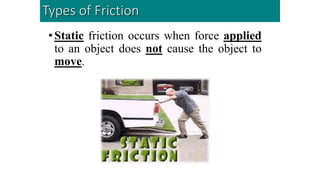

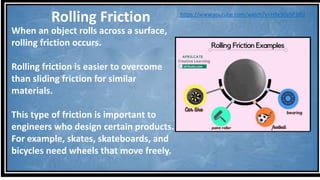
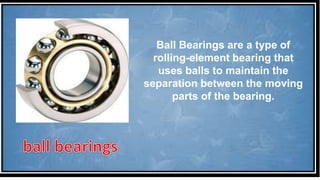
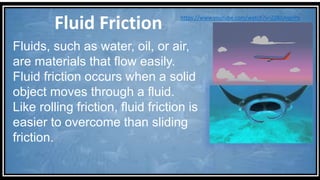
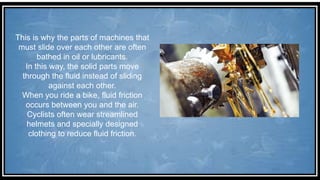

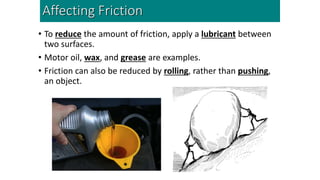
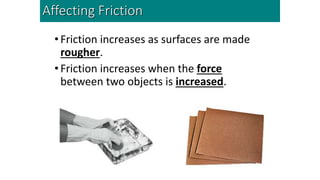

The document discusses the dual role of friction in physics, highlighting how it aids in movement, such as enabling cars to start and stop, while also causing wear and heat in mechanical parts. It explains the factors that influence friction, including surface roughness and the force applied, and differentiates between types of friction: static, sliding, rolling, and fluid. The document also illustrates practical applications of friction in everyday scenarios, such as the use of lubricants and materials designed to reduce friction in machinery and sports.


![谷歌留痕技术 [ 𝙩𝙤𝙥 𝟮𝟯𝟯. 𝙘 𝙤𝙢 ]](https://cdn.slidesharecdn.com/ss_thumbnails/top233-260130174328-3833018c-thumbnail.jpg?width=640&height=640&fit=bounds)


