Friction
 What happens when you jump on a
sled on the side of a snow-covered
hill?
 You can predict that the sled will slide
down the hill.
 Now think about what happens at the
bottom of the hill.
 Does the sled keep sliding?
 You can predict that the sled will slow
down and stop.
 Why does the sled’s motion change
on the side of the hill and then again
at the bottom?
 In each case, unbalanced forces act
on the sled.
 The force of gravity causes the sled to
accelerate down the hill.
 The force of friction eventually causes
the sled to stop
 These two forces affect many motions
on earth
 When a sled moves across snow, the
bottom of the sled rubs against the
surface of the snow.
 In the same way, the skin of a
firefighter’s hands rubs against the
polished metal pole during the slide
down the pole.
 The force that two surfaces exert on
each other when they rub against each
other is called friction.
Friction
The Causes of Friction
 In general, smooth surfaces produce
less friction than rough surfaces.
 The strength of the force of friction
depends on two factors:
How hard the surfaces push
together
The types of surfaces involved
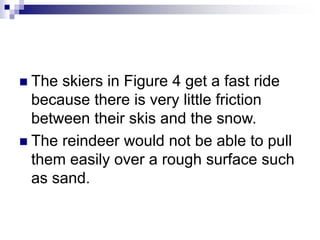
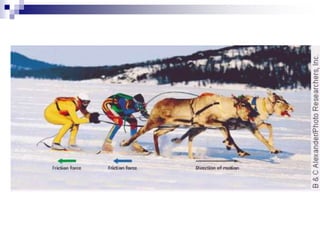
 The skiers in Figure 4 get a fast ride
because there is very little friction
between their skis and the snow.
 The reindeer would not be able to pull
them easily over a rough surface such
as sand.
 Friction also increases if surfaces push
hard against each other.
 If you rub your hands together
forcefully, there is more friction than if
you rub your hands together lightly.
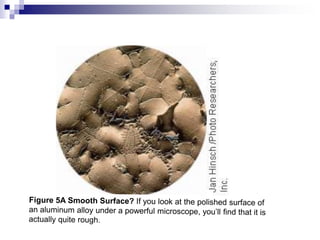
 A snow-packed surface or a metal
firehouse pole may seem quite smooth.
 But, as you can see in Figure 5, even the
smoothest objects have irregular, bumpy
surfaces.
 When the irregularities of one surface
come into contact with those of another
surface, friction occurs.
 Friction acts in a direction opposite to
the direction of the object’s motion.
 Without friction, a moving object might
not stop until it strikes another object.
Static Friction
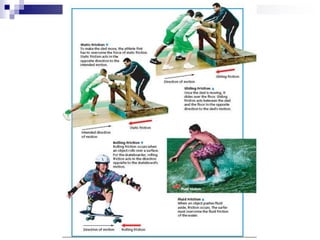
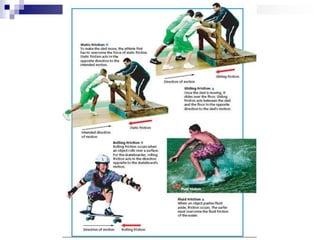
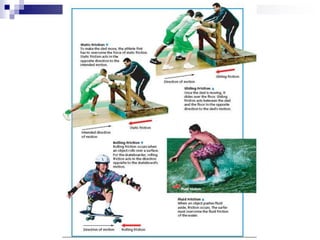
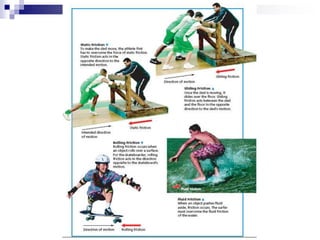
 Four types of friction are shown in Figure 6. The friction
that acts on objects that are not moving is called static
friction.
 Because of static friction, you must use extra force to
start the motion of stationary objects.
 For example, think about what happens when you try to
push a heavy desk across a floor.
 If you push on the desk with a force less than the force
of static friction between the desk and the floor, the desk
will not move.
 To make the desk move, you must exert a force greater
than the force of static friction.
 Once the desk is moving, there is no longer any static
friction.
 However, there is another type of friction—sliding
friction.
Sliding Friction
 Sliding friction occurs when two solid surfaces
slide over each other.
 Sliding friction can be useful.
 For example, you can spread sand on an icy
path to improve your footing.
 Ballet dancers apply a sticky powder to the soles
of their ballet slippers so they won’t slip on the
dance floor.
 And when you stop a bicycle with hand brakes,
rubber pads slide against the tire surfaces,
causing the wheels to slow and eventually stop.
 On the other hand, sliding friction is a problem if
you fall off your bike and skin your knee!
Rolling Friction
 When an object rolls across a surface,
rolling friction occurs.
 Rolling friction is easier to overcome than
sliding friction for similar materials.
 This type of friction is important to
engineers who design certain products.
 For example, skates, skateboards, and
bicycles need wheels that move freely.
 So engineers use ball bearings to reduce
the friction between the wheels and the
rest of the product.
 These ball bearings are small, smooth
steel balls that reduce friction by rolling
between moving parts.
Fluid Friction
 Fluids, such as water, oil, or air, are
materials that flow easily.
 Fluid friction occurs when a solid
object moves through a fluid.
 Like rolling friction, fluid friction is
easier to overcome than sliding
friction.
 This is why the parts of machines that
must slide over each other are often
bathed in oil.
 In this way, the solid parts move
through the fluid instead of sliding
against each other.
 When you ride a bike, fluid friction
occurs between you and the air.
 Cyclists often wear streamlined
helmets and specially designed
clothing to reduce fluid friction.
Friction1.ppt

Friction1.ppt

  • 1.
  • 2.
     What happenswhen you jump on a sled on the side of a snow-covered hill?  You can predict that the sled will slide down the hill.  Now think about what happens at the bottom of the hill.  Does the sled keep sliding?  You can predict that the sled will slow down and stop.
  • 3.
     Why doesthe sled’s motion change on the side of the hill and then again at the bottom?  In each case, unbalanced forces act on the sled.  The force of gravity causes the sled to accelerate down the hill.  The force of friction eventually causes the sled to stop  These two forces affect many motions on earth
  • 4.
     When asled moves across snow, the bottom of the sled rubs against the surface of the snow.  In the same way, the skin of a firefighter’s hands rubs against the polished metal pole during the slide down the pole.  The force that two surfaces exert on each other when they rub against each other is called friction. Friction
  • 5.
    The Causes ofFriction  In general, smooth surfaces produce less friction than rough surfaces.  The strength of the force of friction depends on two factors: How hard the surfaces push together The types of surfaces involved
  • 6.
     The skiersin Figure 4 get a fast ride because there is very little friction between their skis and the snow.  The reindeer would not be able to pull them easily over a rough surface such as sand.
  • 8.
     Friction alsoincreases if surfaces push hard against each other.  If you rub your hands together forcefully, there is more friction than if you rub your hands together lightly.
  • 9.
     A snow-packedsurface or a metal firehouse pole may seem quite smooth.  But, as you can see in Figure 5, even the smoothest objects have irregular, bumpy surfaces.  When the irregularities of one surface come into contact with those of another surface, friction occurs.
  • 11.
     Friction actsin a direction opposite to the direction of the object’s motion.  Without friction, a moving object might not stop until it strikes another object.
  • 12.
    Static Friction  Fourtypes of friction are shown in Figure 6. The friction that acts on objects that are not moving is called static friction.  Because of static friction, you must use extra force to start the motion of stationary objects.  For example, think about what happens when you try to push a heavy desk across a floor.  If you push on the desk with a force less than the force of static friction between the desk and the floor, the desk will not move.  To make the desk move, you must exert a force greater than the force of static friction.  Once the desk is moving, there is no longer any static friction.  However, there is another type of friction—sliding friction.
  • 14.
    Sliding Friction  Slidingfriction occurs when two solid surfaces slide over each other.  Sliding friction can be useful.  For example, you can spread sand on an icy path to improve your footing.  Ballet dancers apply a sticky powder to the soles of their ballet slippers so they won’t slip on the dance floor.  And when you stop a bicycle with hand brakes, rubber pads slide against the tire surfaces, causing the wheels to slow and eventually stop.  On the other hand, sliding friction is a problem if you fall off your bike and skin your knee!
  • 16.
    Rolling Friction  Whenan object rolls across a surface, rolling friction occurs.  Rolling friction is easier to overcome than sliding friction for similar materials.  This type of friction is important to engineers who design certain products.  For example, skates, skateboards, and bicycles need wheels that move freely.
  • 17.
     So engineersuse ball bearings to reduce the friction between the wheels and the rest of the product.  These ball bearings are small, smooth steel balls that reduce friction by rolling between moving parts.
  • 19.
    Fluid Friction  Fluids,such as water, oil, or air, are materials that flow easily.  Fluid friction occurs when a solid object moves through a fluid.  Like rolling friction, fluid friction is easier to overcome than sliding friction.
  • 20.
     This iswhy the parts of machines that must slide over each other are often bathed in oil.  In this way, the solid parts move through the fluid instead of sliding against each other.  When you ride a bike, fluid friction occurs between you and the air.  Cyclists often wear streamlined helmets and specially designed clothing to reduce fluid friction.