P R E S E N T E D B Y : B A D A L K . B A R O C H I Y A
M A R S H A L K . B A R O C H I Y A
FOOD STORAGE ROOT
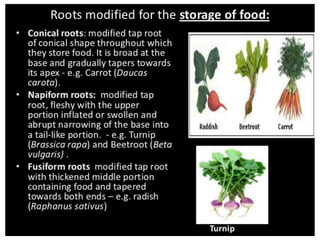
Food Storage roots
Most mature roots have the
capacity to store food reserves.
In some species, the root is further
modified as a fleshy storage organ.
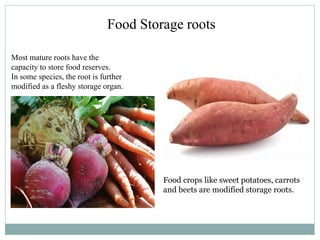
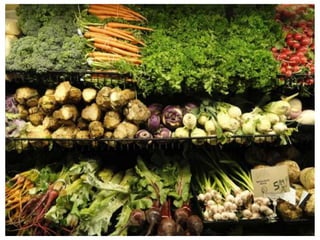
Food crops like sweet potatoes, carrots
and beets are modified storage roots.
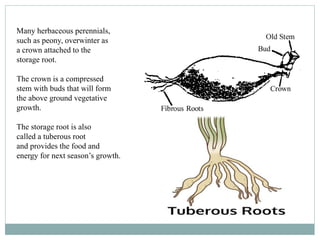
Many herbaceous perennials,
such as peony, overwinter as
a crown attached to the
storage root.
The crown is a compressed
stem with buds that will form
the above ground vegetative
growth.
The storage root is also
called a tuberous root
and provides the food and
energy for next season’s growth.
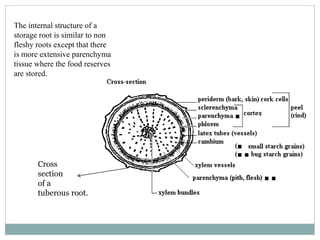
The internal structure of a
storage root is similar to non
fleshy roots except that there
is more extensive parenchyma
tissue where the food reserves
are stored.
Cross
section
of a
tuberous root.
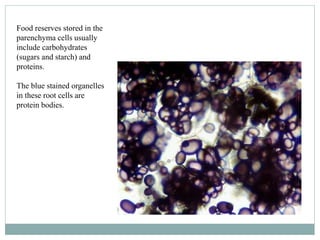
Food reserves stored in the
parenchyma cells usually
include carbohydrates
(sugars and starch) and
proteins.
The blue stained organelles
in these root cells are
protein bodies.
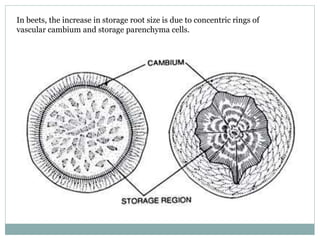
In beets, the increase in storage root size is due to concentric rings of
vascular cambium and storage parenchyma cells.
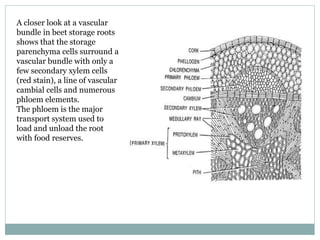
A closer look at a vascular
bundle in beet storage roots
shows that the storage
parenchyma cells surround a
vascular bundle with only a
few secondary xylem cells
(red stain), a line of vascular
cambial cells and numerous
phloem elements.
The phloem is the major
transport system used to
load and unload the root
with food reserves.
Food storage root
Food storage root
Food storage root

Food storage root

  • 1.
    P R ES E N T E D B Y : B A D A L K . B A R O C H I Y A M A R S H A L K . B A R O C H I Y A FOOD STORAGE ROOT
  • 2.
    Food Storage roots Mostmature roots have the capacity to store food reserves. In some species, the root is further modified as a fleshy storage organ. Food crops like sweet potatoes, carrots and beets are modified storage roots.
  • 3.
    Many herbaceous perennials, suchas peony, overwinter as a crown attached to the storage root. The crown is a compressed stem with buds that will form the above ground vegetative growth. The storage root is also called a tuberous root and provides the food and energy for next season’s growth.
  • 4.
    The internal structureof a storage root is similar to non fleshy roots except that there is more extensive parenchyma tissue where the food reserves are stored. Cross section of a tuberous root.
  • 5.
    Food reserves storedin the parenchyma cells usually include carbohydrates (sugars and starch) and proteins. The blue stained organelles in these root cells are protein bodies.
  • 6.
    In beets, theincrease in storage root size is due to concentric rings of vascular cambium and storage parenchyma cells.
  • 7.
    A closer lookat a vascular bundle in beet storage roots shows that the storage parenchyma cells surround a vascular bundle with only a few secondary xylem cells (red stain), a line of vascular cambial cells and numerous phloem elements. The phloem is the major transport system used to load and unload the root with food reserves.