BY:
DR: MUHAMMED NAJEEB MEMON
MPH, DFHC
Asst: Prof:
F.C.M & P.H.S
LUMHS, Jamshoro, Sind
PAKISTAN
e mail mnajeeb80@gmail.com
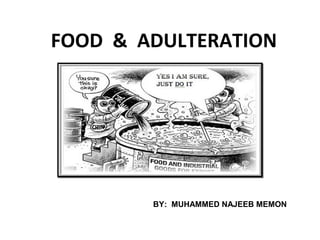
FOOD & ADULTERATION
BY: MUHAMMED NAJEEB MEMON
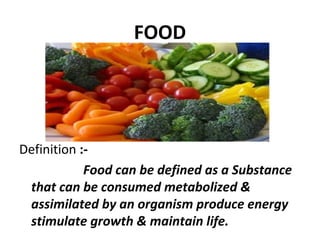
FOOD
Definition :-
Food can be defined as a Substance
that can be consumed metabolized &
assimilated by an organism produce energy
stimulate growth & maintain life.
ELEMENTS OF FOOD
 Nitrogen
 Oxygen
 Hydrogen
 Sulphur etc.
Food is essential as it provides energy for
various life processes
• Food is material that comes
from animals or plants. It is eaten by living
things to provide energy and nutrition.
• Food sources:
• 1. Plants
• 2. Animals
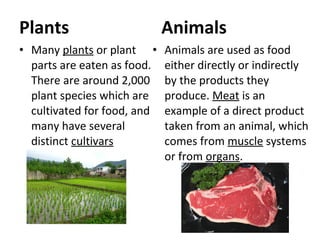
Plants
• Many plants or plant
parts are eaten as food.
There are around 2,000
plant species which are
cultivated for food, and
many have several
distinct cultivars
Animals
• Animals are used as food
either directly or indirectly
by the products they
produce. Meat is an
example of a direct product
taken from an animal, which
comes from muscle systems
or from organs.
ADULTERATION
Simple definition:
Reducing the purity of an article by the addition of a
foreign or inferior substance.
OR
• The process of lowering the nutritive value of food either
by removing a vital component or by adding substances of
inferior quality, is called food adulteration.
• The substance that is used to lower the quality is known as
adulterant.
The food may get adulterated by
pesticides and chemicals.
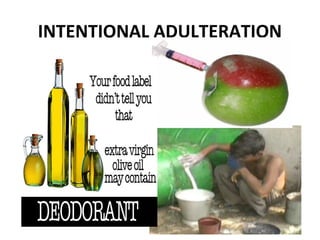
 Intentionally :
Substances added in food to improve
appearance, flavour, texture or storage
properties (food additives)
 Unintentionally :
Pesticides, growth promoters, components
of packaging materials, solvents and enzymes
used in food processing etc.
INTENTIONAL ADULTERATION
CHEMICAL CONTAMINANTS
• Chemical non-nutritive substances are added
intentionally to food, generally in small
quantities to improve its appearance, flavor,
texture or storage properties. They are called
food additives.
• Pesticides are used to protect the crops from
insect-pests and by increasing the yield.
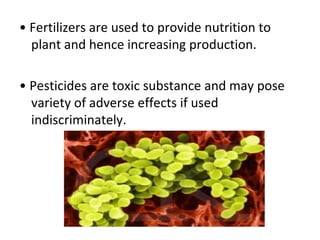
• Fertilizers are used to provide nutrition to
plant and hence increasing production.
• Pesticides are toxic substance and may pose
variety of adverse effects if used
indiscriminately.
Food is declare adulterated if:
 A substance is added which depreciates or injuriously affects it.
 Cheaper or inferior substances are substituted wholly or in part.
 Any valuable or necessary constituent has been wholly or in
part abstracted.
 It is an imitation. For whatever reasons its quality is below the
standard.
Reasons of Food AdulterationReasons of Food Adulteration
• Sellers want profit
• Increase of food production
• To preserve food for economic activities
• To earn money in less time
• To make food look more fresh and natural
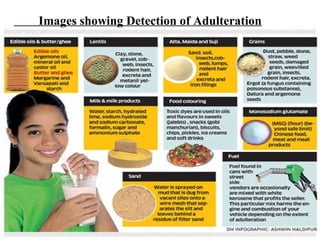
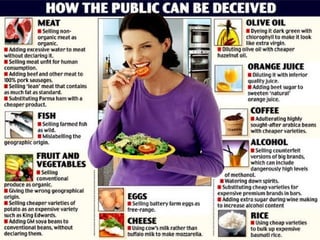
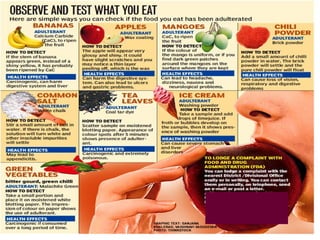
Images showing Detection of Adulteration
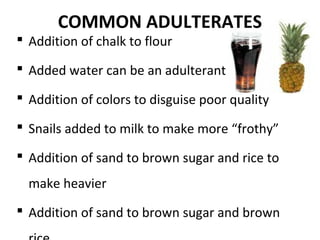
COMMON ADULTERATES
 Addition of chalk to flour
 Added water can be an adulterant
 Addition of colors to disguise poor quality
 Snails added to milk to make more “frothy”
 Addition of sand to brown sugar and rice to
make heavier
 Addition of sand to brown sugar and brown
Common Adulterants
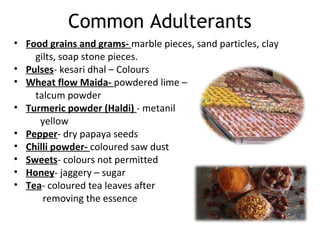
• Food grains and grams- marble pieces, sand particles, clay
gilts, soap stone pieces.
• Pulses- kesari dhal – Colours
• Wheat flow Maida- powdered lime –
talcum powder
• Turmeric powder (Haldi) - metanil
yellow
• Pepper- dry papaya seeds
• Chilli powder- coloured saw dust
• Sweets- colours not permitted
• Honey- jaggery – sugar
• Tea- coloured tea leaves after
removing the essence
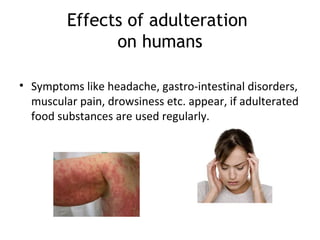
Effects of adulteration
on humans
• Symptoms like headache, gastro-intestinal disorders,
muscular pain, drowsiness etc. appear, if adulterated
food substances are used regularly.
How dangerous are these
adulterants??
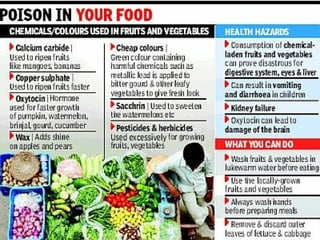
• The argemone oil used to adulterate ghee and butter is
highly toxic. It causes a disease known as dropsy.
Watery fluid collecting in some parts of the body is the
main symptom. It affects the normal functioning of the
body. It may also paralyse the limbs.
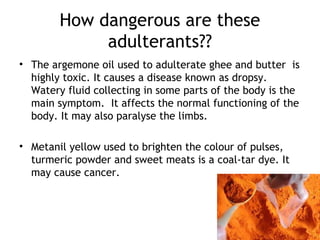
• Metanil yellow used to brighten the colour of pulses,
turmeric powder and sweet meats is a coal-tar dye. It
may cause cancer.
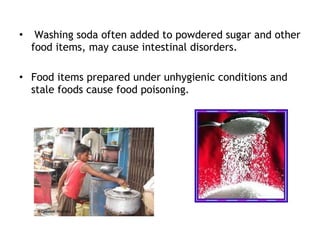
• Washing soda often added to powdered sugar and other
food items, may cause intestinal disorders.
• Food items prepared under unhygienic conditions and
stale foods cause food poisoning.
Detection of food adulteration
• Tea powder and Soji (rava) : Adulterants : Iron filings:
Spread the tea leaves or soji on a paper. Draw a
magnet over it. The iron filings if present, are attracted
by the magnet.
• Rice and wheat : Adulterants : Sand grit, marble pieces,
soap stone pieces. These are visually detected and
removed by sorting, handpicking and washing.
• Coffee powder : Adulterant- Tamarind seed powder:
Two teaspoons of coffee powder is added to water in a
tumbler. Coffee powder floats and the adulterants
sink.
• Cooking oil : Adulterant- Argemone oil: About 5 ml of
cooking oil is taken in a test tube and 5 ml of
concentrated nitric acid is added to it. A reddish brown
colour appears if argemone oil is present in it.
Food adulteration by dr najeeb memon

Food adulteration by dr najeeb memon

  • 1.
    BY: DR: MUHAMMED NAJEEBMEMON MPH, DFHC Asst: Prof: F.C.M & P.H.S LUMHS, Jamshoro, Sind PAKISTAN e mail mnajeeb80@gmail.com
  • 2.
    FOOD & ADULTERATION BY:MUHAMMED NAJEEB MEMON
  • 3.
    FOOD Definition :- Food canbe defined as a Substance that can be consumed metabolized & assimilated by an organism produce energy stimulate growth & maintain life.
  • 4.
    ELEMENTS OF FOOD Nitrogen  Oxygen  Hydrogen  Sulphur etc. Food is essential as it provides energy for various life processes
  • 5.
    • Food ismaterial that comes from animals or plants. It is eaten by living things to provide energy and nutrition. • Food sources: • 1. Plants • 2. Animals
  • 6.
    Plants • Many plantsor plant parts are eaten as food. There are around 2,000 plant species which are cultivated for food, and many have several distinct cultivars Animals • Animals are used as food either directly or indirectly by the products they produce. Meat is an example of a direct product taken from an animal, which comes from muscle systems or from organs.
  • 8.
    ADULTERATION Simple definition: Reducing thepurity of an article by the addition of a foreign or inferior substance. OR • The process of lowering the nutritive value of food either by removing a vital component or by adding substances of inferior quality, is called food adulteration. • The substance that is used to lower the quality is known as adulterant.
  • 9.
    The food mayget adulterated by pesticides and chemicals.  Intentionally : Substances added in food to improve appearance, flavour, texture or storage properties (food additives)  Unintentionally : Pesticides, growth promoters, components of packaging materials, solvents and enzymes used in food processing etc.
  • 10.
  • 11.
  • 12.
    CHEMICAL CONTAMINANTS • Chemicalnon-nutritive substances are added intentionally to food, generally in small quantities to improve its appearance, flavor, texture or storage properties. They are called food additives. • Pesticides are used to protect the crops from insect-pests and by increasing the yield.
  • 13.
    • Fertilizers areused to provide nutrition to plant and hence increasing production. • Pesticides are toxic substance and may pose variety of adverse effects if used indiscriminately.
  • 14.
    Food is declareadulterated if:  A substance is added which depreciates or injuriously affects it.  Cheaper or inferior substances are substituted wholly or in part.  Any valuable or necessary constituent has been wholly or in part abstracted.  It is an imitation. For whatever reasons its quality is below the standard.
  • 15.
    Reasons of FoodAdulterationReasons of Food Adulteration • Sellers want profit • Increase of food production • To preserve food for economic activities • To earn money in less time • To make food look more fresh and natural
  • 16.
    Images showing Detectionof Adulteration
  • 19.
    COMMON ADULTERATES  Additionof chalk to flour  Added water can be an adulterant  Addition of colors to disguise poor quality  Snails added to milk to make more “frothy”  Addition of sand to brown sugar and rice to make heavier  Addition of sand to brown sugar and brown
  • 20.
    Common Adulterants • Foodgrains and grams- marble pieces, sand particles, clay gilts, soap stone pieces. • Pulses- kesari dhal – Colours • Wheat flow Maida- powdered lime – talcum powder • Turmeric powder (Haldi) - metanil yellow • Pepper- dry papaya seeds • Chilli powder- coloured saw dust • Sweets- colours not permitted • Honey- jaggery – sugar • Tea- coloured tea leaves after removing the essence
  • 22.
    Effects of adulteration onhumans • Symptoms like headache, gastro-intestinal disorders, muscular pain, drowsiness etc. appear, if adulterated food substances are used regularly.
  • 23.
    How dangerous arethese adulterants?? • The argemone oil used to adulterate ghee and butter is highly toxic. It causes a disease known as dropsy. Watery fluid collecting in some parts of the body is the main symptom. It affects the normal functioning of the body. It may also paralyse the limbs. • Metanil yellow used to brighten the colour of pulses, turmeric powder and sweet meats is a coal-tar dye. It may cause cancer.
  • 24.
    • Washing sodaoften added to powdered sugar and other food items, may cause intestinal disorders. • Food items prepared under unhygienic conditions and stale foods cause food poisoning.
  • 25.
    Detection of foodadulteration • Tea powder and Soji (rava) : Adulterants : Iron filings: Spread the tea leaves or soji on a paper. Draw a magnet over it. The iron filings if present, are attracted by the magnet. • Rice and wheat : Adulterants : Sand grit, marble pieces, soap stone pieces. These are visually detected and removed by sorting, handpicking and washing.
  • 26.
    • Coffee powder: Adulterant- Tamarind seed powder: Two teaspoons of coffee powder is added to water in a tumbler. Coffee powder floats and the adulterants sink. • Cooking oil : Adulterant- Argemone oil: About 5 ml of cooking oil is taken in a test tube and 5 ml of concentrated nitric acid is added to it. A reddish brown colour appears if argemone oil is present in it.