Food Adulteration 
Barkath T N
Module Objectives 
Adulteration 
Food Adulteration 
Adulterants 
Effects of food adulteration 
Detection of food adulteration 
Adulteration and Law 
Questions
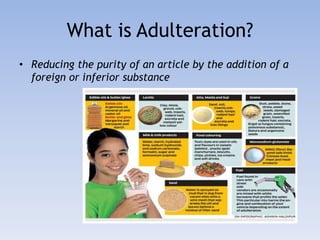
What is Adulteration? 
• Reducing the purity of an article by the addition of a 
foreign or inferior substance
Food Adulteration 
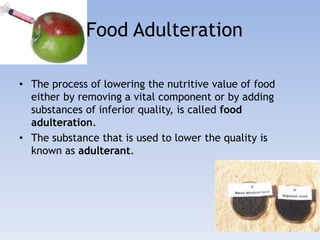
• The process of lowering the nutritive value of food 
either by removing a vital component or by adding 
substances of inferior quality, is called food 
adulteration. 
• The substance that is used to lower the quality is 
known as adulterant.
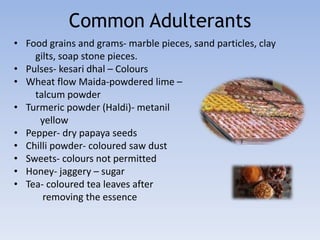
Common Adulterants 
• Food grains and grams- marble pieces, sand particles, clay 
gilts, soap stone pieces. 
• Pulses- kesari dhal – Colours 
• Wheat flow Maida-powdered lime – 
talcum powder 
• Turmeric powder (Haldi)- metanil 
yellow 
• Pepper- dry papaya seeds 
• Chilli powder- coloured saw dust 
• Sweets- colours not permitted 
• Honey- jaggery – sugar 
• Tea- coloured tea leaves after 
removing the essence
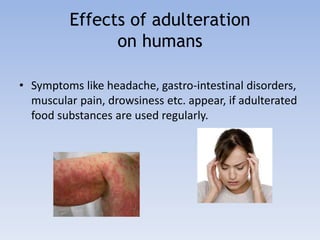
Effects of adulteration 
on humans 
• Symptoms like headache, gastro-intestinal disorders, 
muscular pain, drowsiness etc. appear, if adulterated 
food substances are used regularly.
How dangerous are these 
adulterants?? 
• The argemone oil used to adulterate ghee and butter is 
highly toxic. It causes a disease known as dropsy. 
Watery fluid collecting in some parts of the body is the 
main symptom. It affects the normal functioning of the 
body. It may also paralyse the limbs. 
• Metanil yellow used to brighten the colour of pulses, 
turmeric powder and sweet meats is a coal-tar dye. It 
may cause cancer.
• Washing soda often added to powdered sugar and 
other food items, may cause intestinal disorders. 
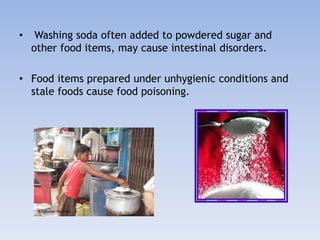
• Food items prepared under unhygienic conditions and 
stale foods cause food poisoning.
Detection of food adulteration 
• Tea powder and Soji (rava) : Adulterants : Iron filings: 
Spread the tea leaves or soji on a paper. Draw a magnet 
over it. The iron filings if present, are attracted by the 
magnet. 
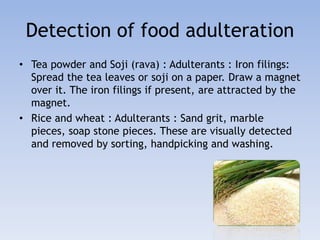
• Rice and wheat : Adulterants : Sand grit, marble 
pieces, soap stone pieces. These are visually detected 
and removed by sorting, handpicking and washing.
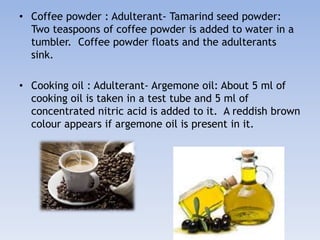
• Coffee powder : Adulterant- Tamarind seed powder: 
Two teaspoons of coffee powder is added to water in a 
tumbler. Coffee powder floats and the adulterants 
sink. 
• Cooking oil : Adulterant- Argemone oil: About 5 ml of 
cooking oil is taken in a test tube and 5 ml of 
concentrated nitric acid is added to it. A reddish brown 
colour appears if argemone oil is present in it.
Adulteration and Law 
• The Government of India has promulgated an Act called 
the “Prevention of Food Adulteration Act’ in the year 
1954. 
• The Act has been periodically amended to check 
dishonest practices of traders. If the traders violate 
the standards mentioned in the Act, they are 
punishable under law. 
• The quality controlling agencies like Indian Standards 
Institution (ISI) and Directorate of Marketing and 
Inspection (AGMARK) test the food products for their 
quality periodically.
Food adulteration
Food adulteration

Food adulteration

  • 2.
  • 3.
    Module Objectives Adulteration Food Adulteration Adulterants Effects of food adulteration Detection of food adulteration Adulteration and Law Questions
  • 4.
    What is Adulteration? • Reducing the purity of an article by the addition of a foreign or inferior substance
  • 5.
    Food Adulteration •The process of lowering the nutritive value of food either by removing a vital component or by adding substances of inferior quality, is called food adulteration. • The substance that is used to lower the quality is known as adulterant.
  • 6.
    Common Adulterants •Food grains and grams- marble pieces, sand particles, clay gilts, soap stone pieces. • Pulses- kesari dhal – Colours • Wheat flow Maida-powdered lime – talcum powder • Turmeric powder (Haldi)- metanil yellow • Pepper- dry papaya seeds • Chilli powder- coloured saw dust • Sweets- colours not permitted • Honey- jaggery – sugar • Tea- coloured tea leaves after removing the essence
  • 7.
    Effects of adulteration on humans • Symptoms like headache, gastro-intestinal disorders, muscular pain, drowsiness etc. appear, if adulterated food substances are used regularly.
  • 8.
    How dangerous arethese adulterants?? • The argemone oil used to adulterate ghee and butter is highly toxic. It causes a disease known as dropsy. Watery fluid collecting in some parts of the body is the main symptom. It affects the normal functioning of the body. It may also paralyse the limbs. • Metanil yellow used to brighten the colour of pulses, turmeric powder and sweet meats is a coal-tar dye. It may cause cancer.
  • 9.
    • Washing sodaoften added to powdered sugar and other food items, may cause intestinal disorders. • Food items prepared under unhygienic conditions and stale foods cause food poisoning.
  • 10.
    Detection of foodadulteration • Tea powder and Soji (rava) : Adulterants : Iron filings: Spread the tea leaves or soji on a paper. Draw a magnet over it. The iron filings if present, are attracted by the magnet. • Rice and wheat : Adulterants : Sand grit, marble pieces, soap stone pieces. These are visually detected and removed by sorting, handpicking and washing.
  • 11.
    • Coffee powder: Adulterant- Tamarind seed powder: Two teaspoons of coffee powder is added to water in a tumbler. Coffee powder floats and the adulterants sink. • Cooking oil : Adulterant- Argemone oil: About 5 ml of cooking oil is taken in a test tube and 5 ml of concentrated nitric acid is added to it. A reddish brown colour appears if argemone oil is present in it.
  • 12.
    Adulteration and Law • The Government of India has promulgated an Act called the “Prevention of Food Adulteration Act’ in the year 1954. • The Act has been periodically amended to check dishonest practices of traders. If the traders violate the standards mentioned in the Act, they are punishable under law. • The quality controlling agencies like Indian Standards Institution (ISI) and Directorate of Marketing and Inspection (AGMARK) test the food products for their quality periodically.