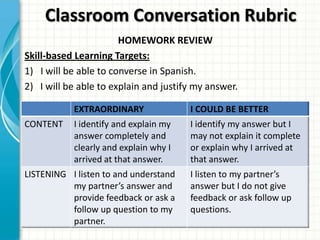
This document discusses strategies for using rubrics to facilitate formative assessment strategies. It provides examples of how rubrics can be used to:
1) Model strong and weak examples of student work to clarify learning targets (Strategy 2).
2) Provide descriptive feedback to students on their progress toward meeting learning targets (Strategy 3).
3) Guide students in focused revision of their work by identifying specific areas of weakness and directing practice activities (Strategy 6).
Attendees are invited to discuss how they have implemented these strategies using rubrics and how rubrics could be adapted for different content areas.