


Starting the Conversation
About Feedback
Jennifer Smithers Marten
GT Coordinator/Online School Coordinator
Plymouth Joint School District
Plymouth, Wisconsin
All of the resources referenced in this
presentation can be found on my weebly
Feedback as a Teaching Strategy
http://feedbackasateachingstrategy.weebly.com/
Think-Pair-Share
What is your biggest frustration with giving
students feedback?
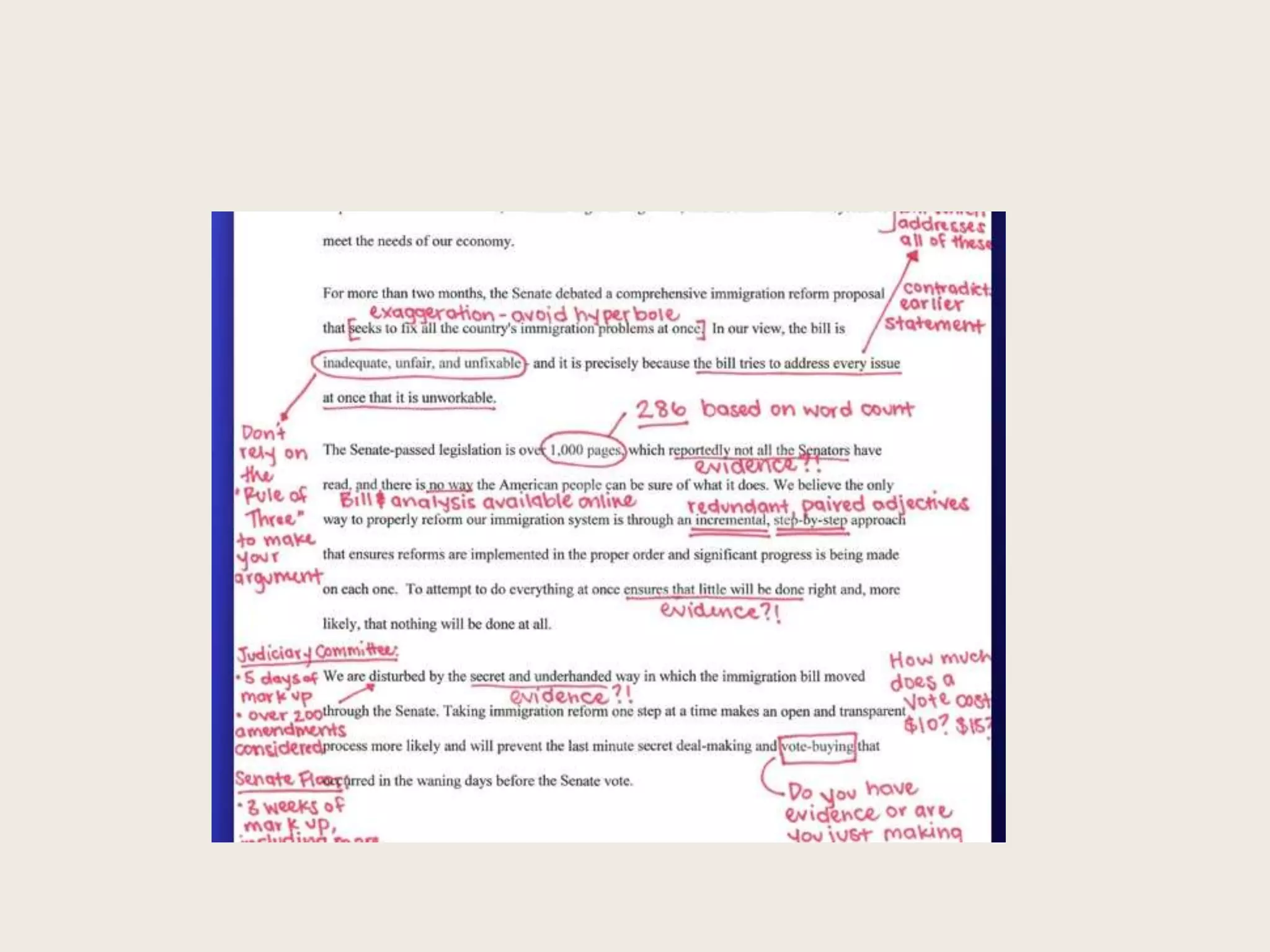
Why do I take the time to write comments on their papers?
The students who need it, don’t read it.
Even the good kids just flip through to find the grade.
A Little Bit of Research
(Butler, 1988)
• Students who received specific feedback
tailored to their performance showed
significant increase in scores (almost 30%)
• Students who received only letter grades
showed a significant decline in scores.
• Students that received both grades and
comments also showed a significant decline in
scores.
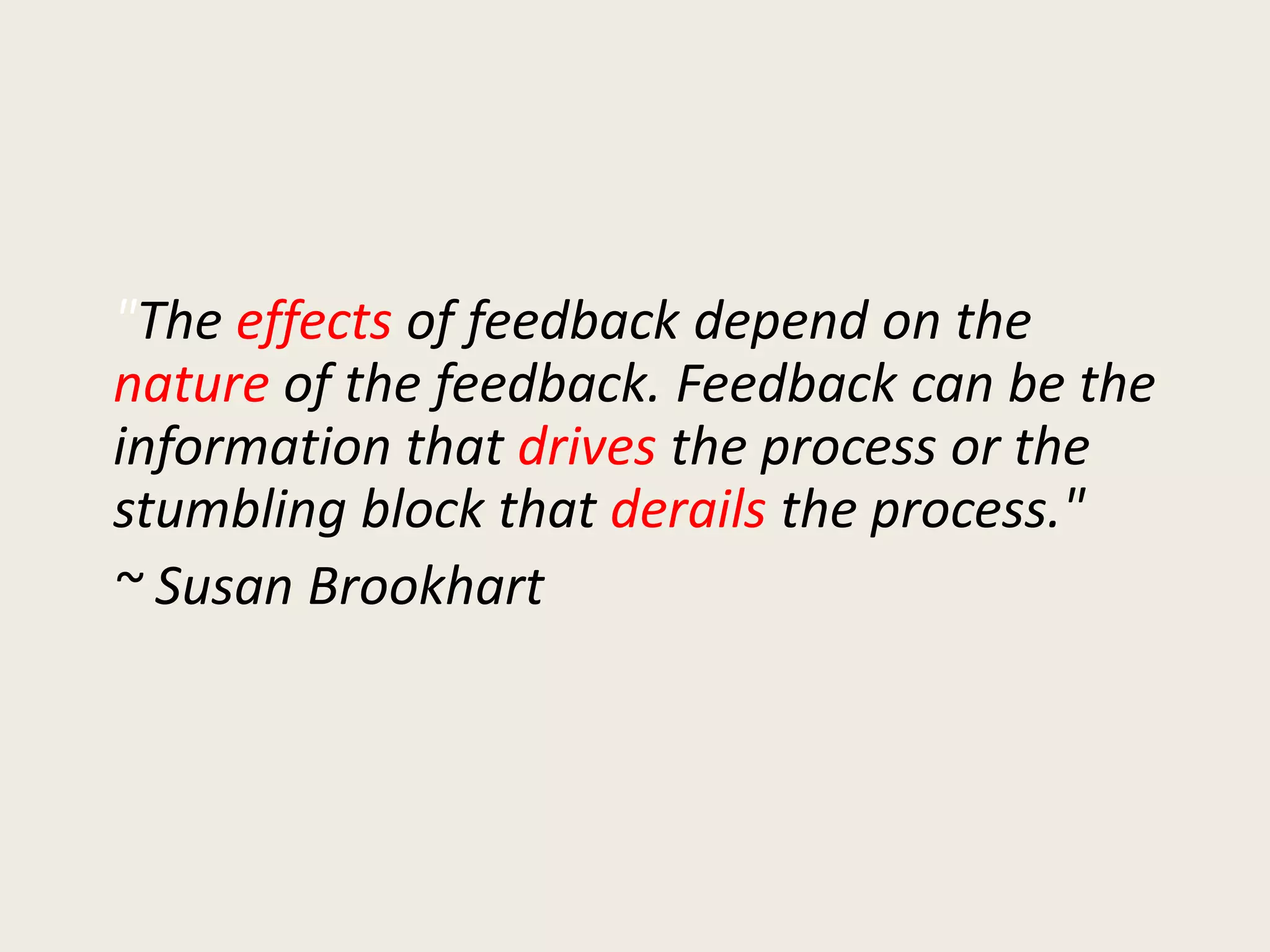
"The effects of feedback depend on the
nature of the feedback. Feedback can be the
information that drives the process or the
stumbling block that derails the process."
~ Susan Brookhart
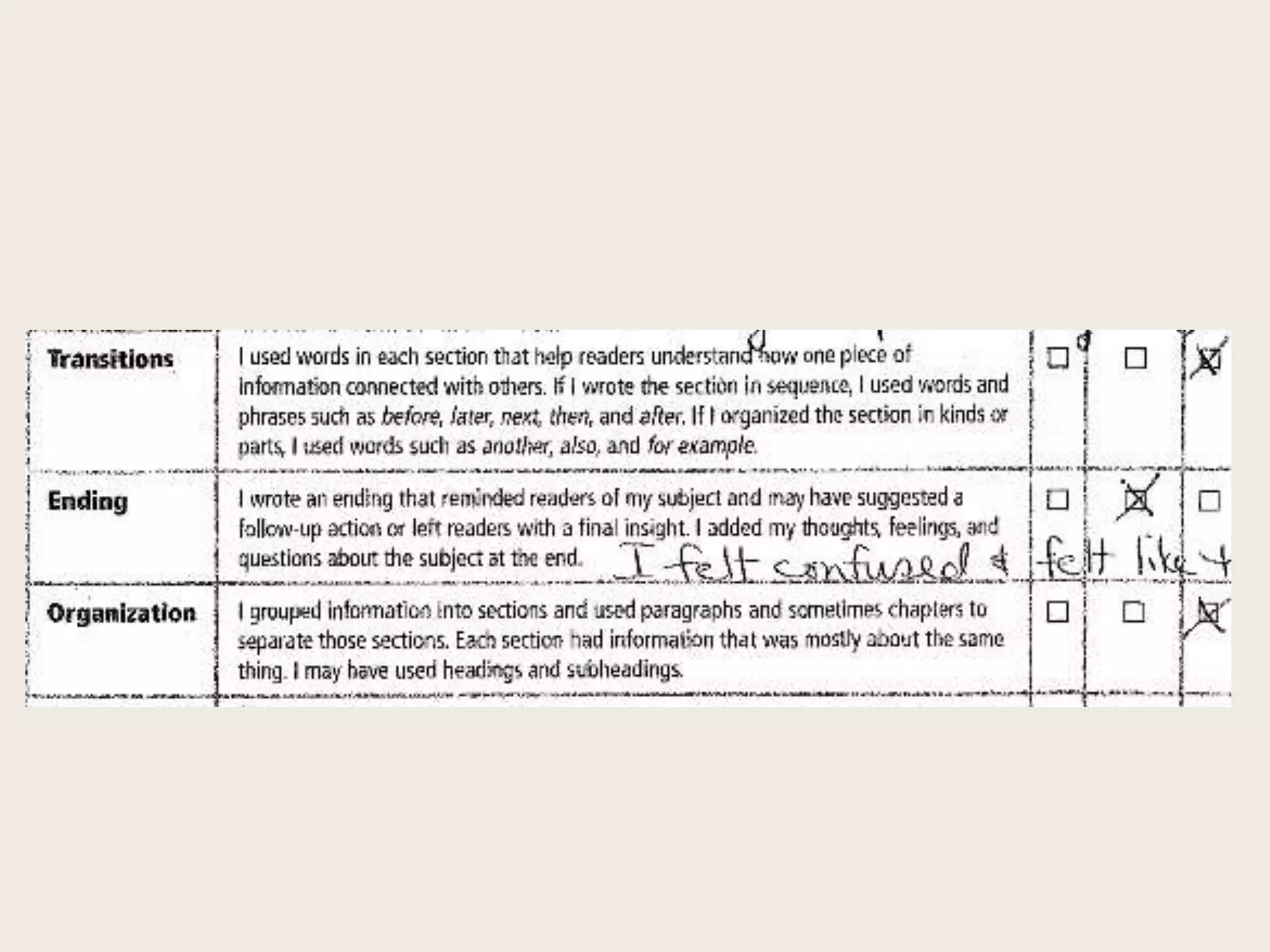
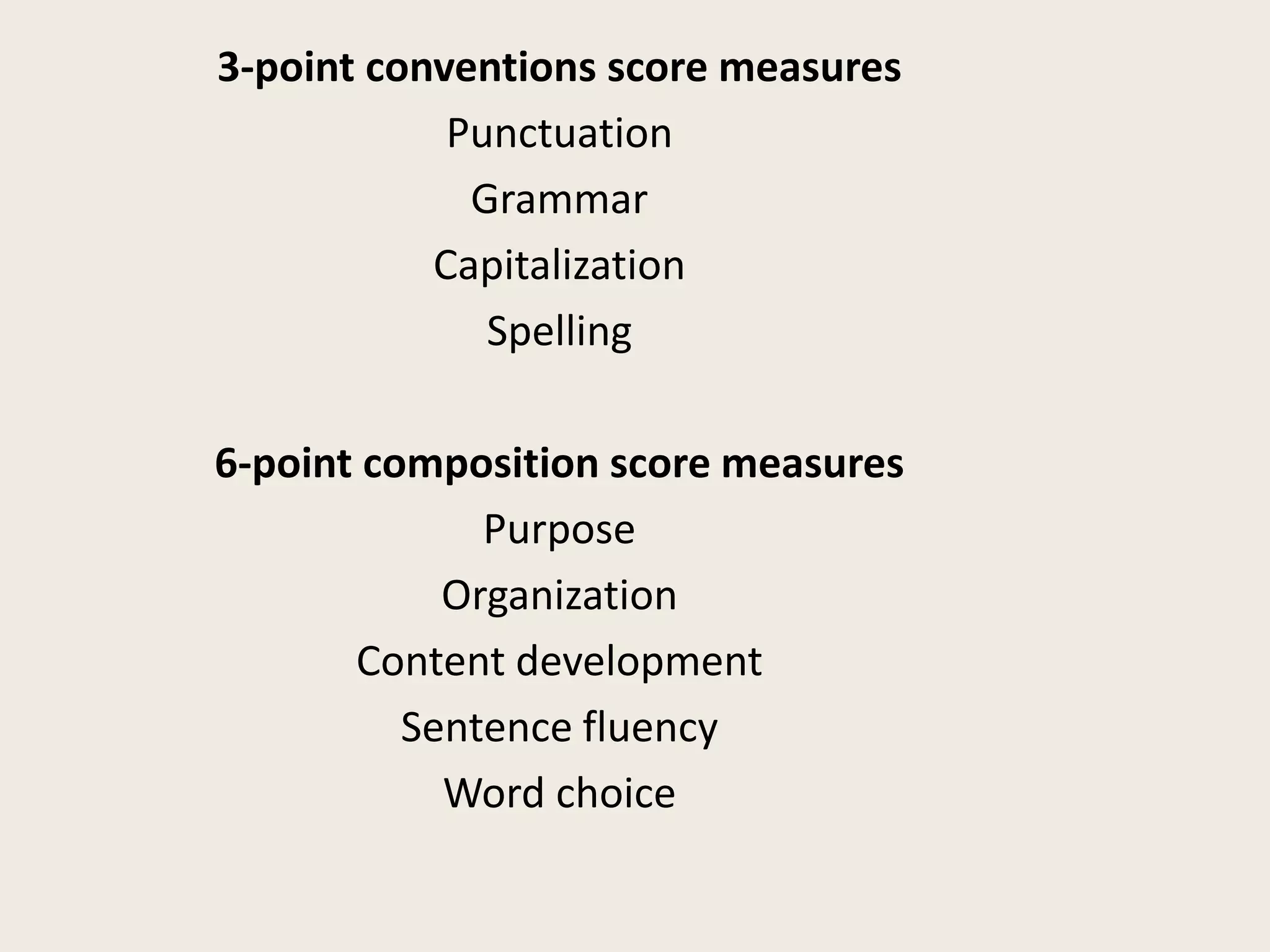
3-point conventions score measures
Punctuation
Grammar
Capitalization
Spelling
6-point composition score measures
Purpose
Organization
Content development
Sentence fluency
Word choice
ABOUT EFFECTIVE FEEDBACK
WHAT WE KNOW
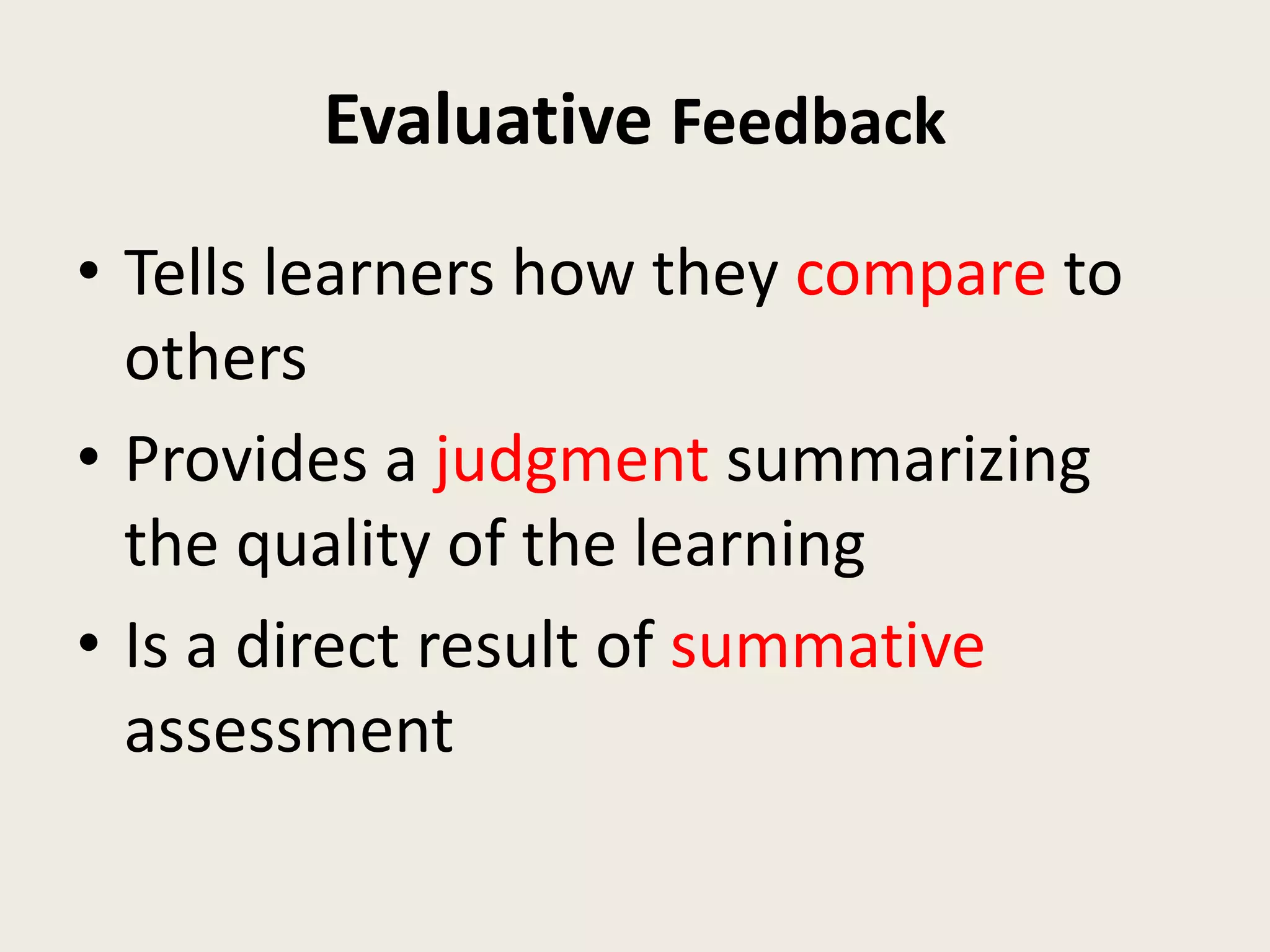
Evaluative Feedback
• Tells learners how they compare to
others
• Provides a judgment summarizing
the quality of the learning
• Is a direct result of summative
assessment
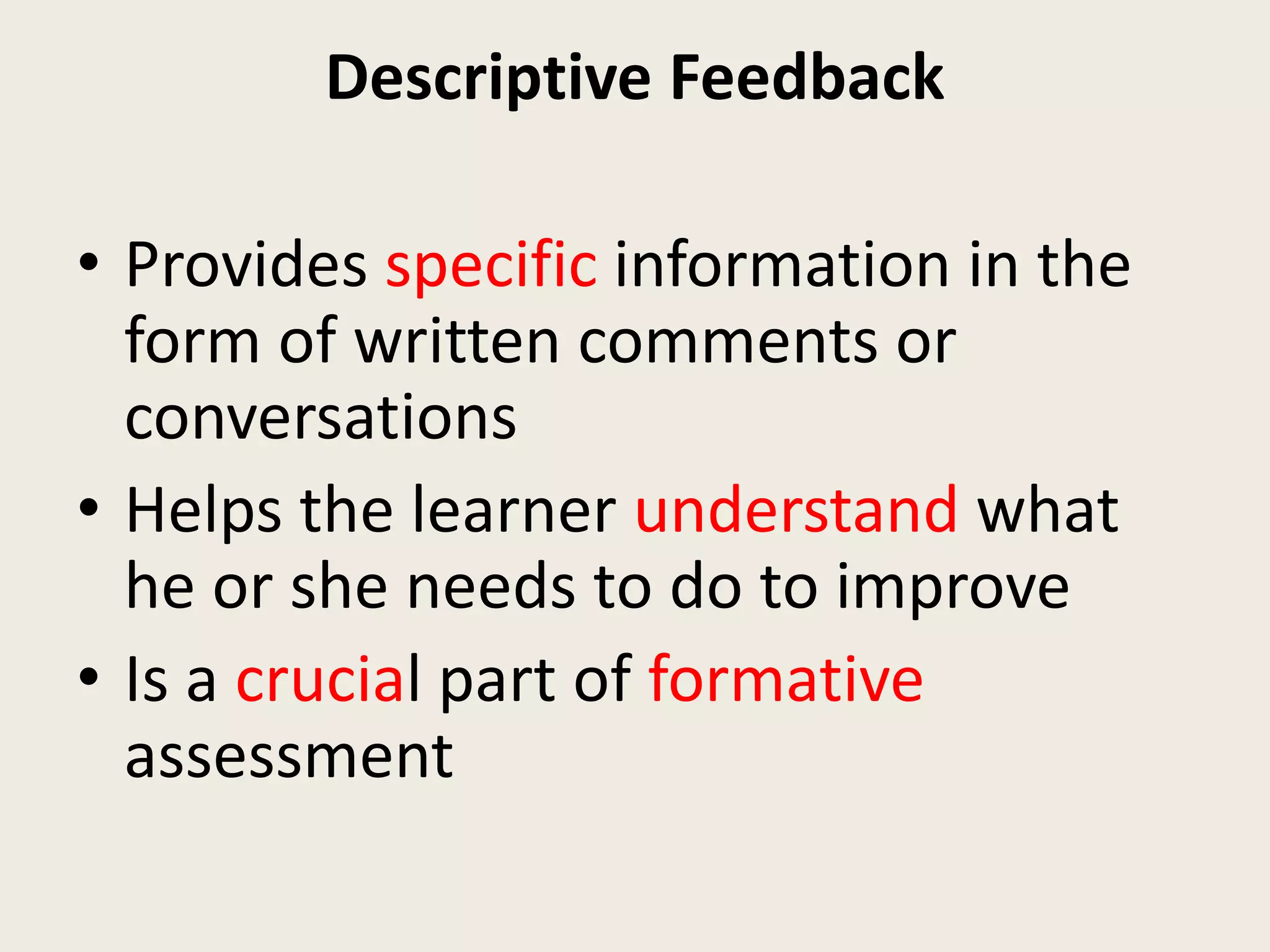
Descriptive Feedback
• Provides specific information in the
form of written comments or
conversations
• Helps the learner understand what
he or she needs to do to improve
• Is a crucial part of formative
assessment
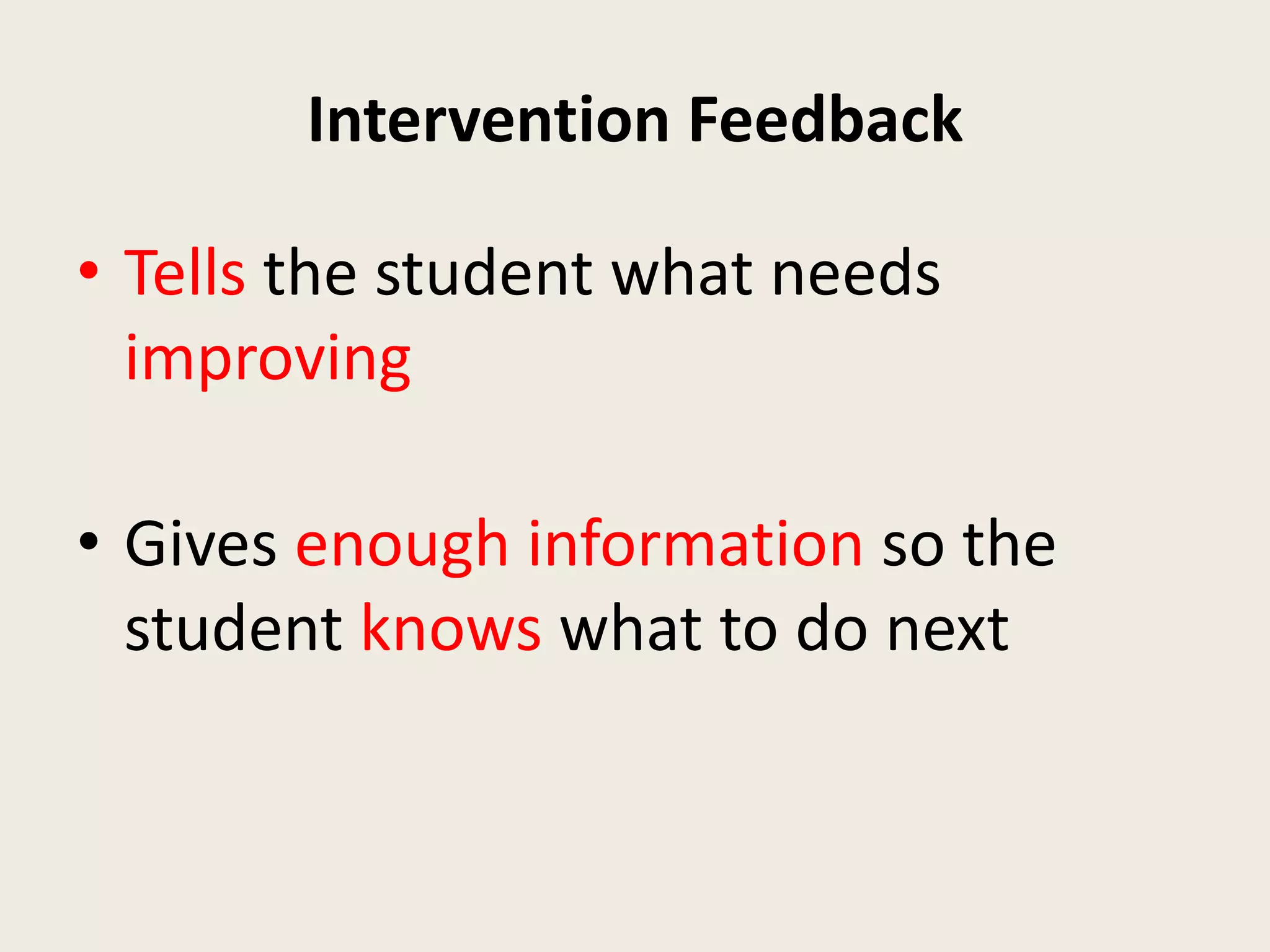
Intervention Feedback
• Tells the student what needs
improving
• Gives enough information so the
student knows what to do next
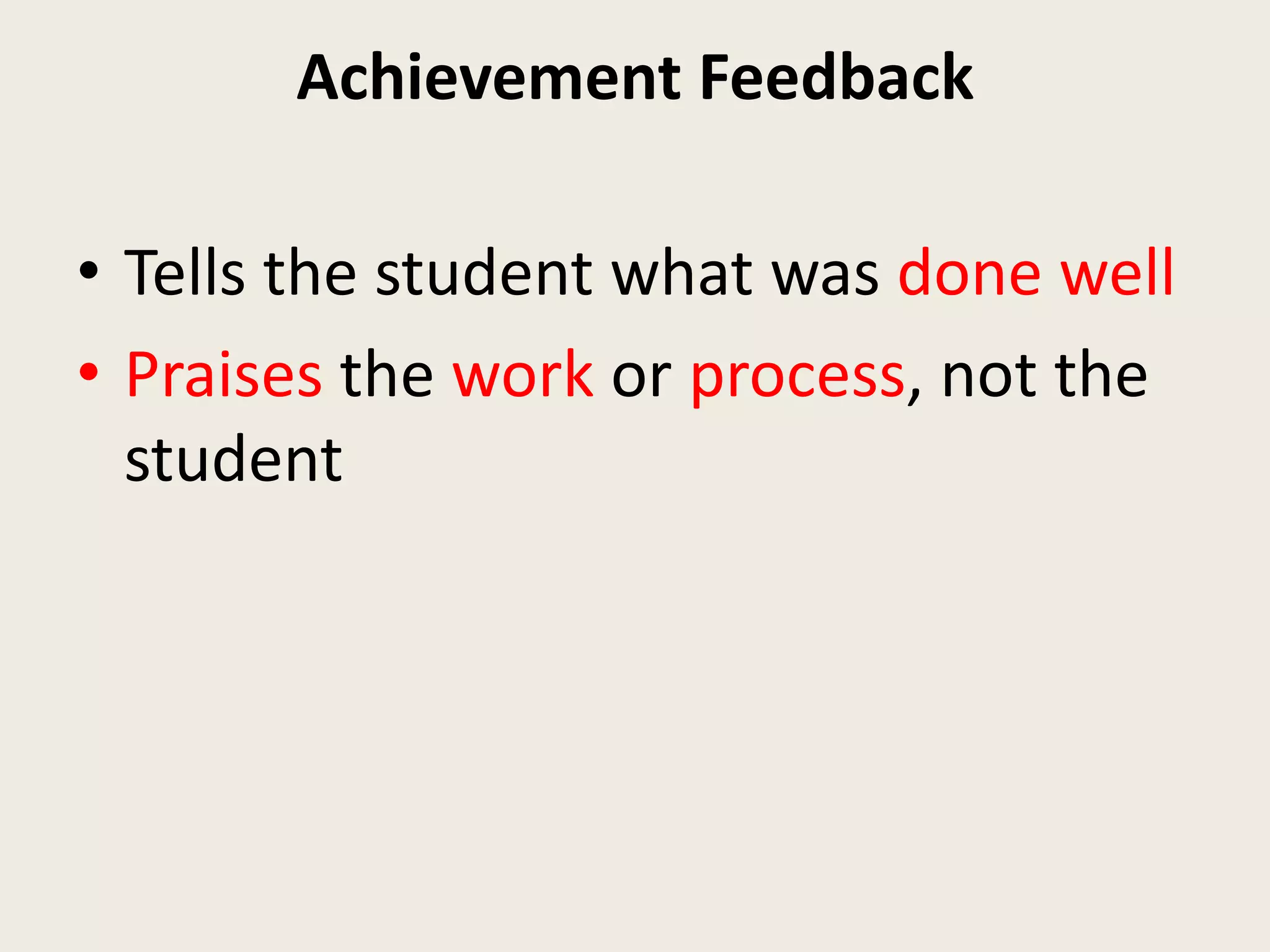
Achievement Feedback
• Tells the student what was done well
• Praises the work or process, not the
student
Three Questions
Where am I going?
How am I going?
Where to next?
Hattie & Timperley (2007)
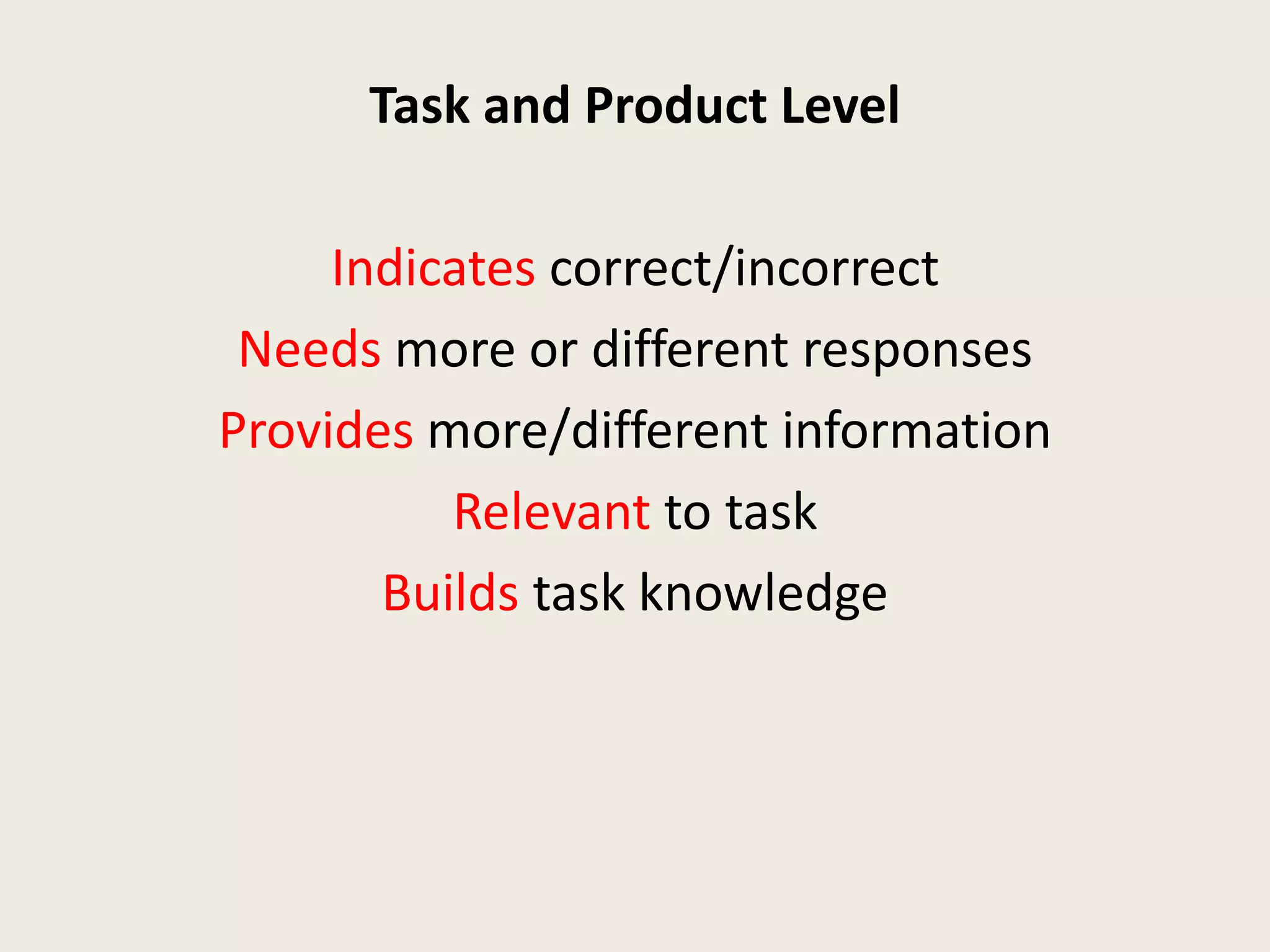
Task and Product Level
Indicates correct/incorrect
Needs more or different responses
Provides more/different information
Relevant to task
Builds task knowledge
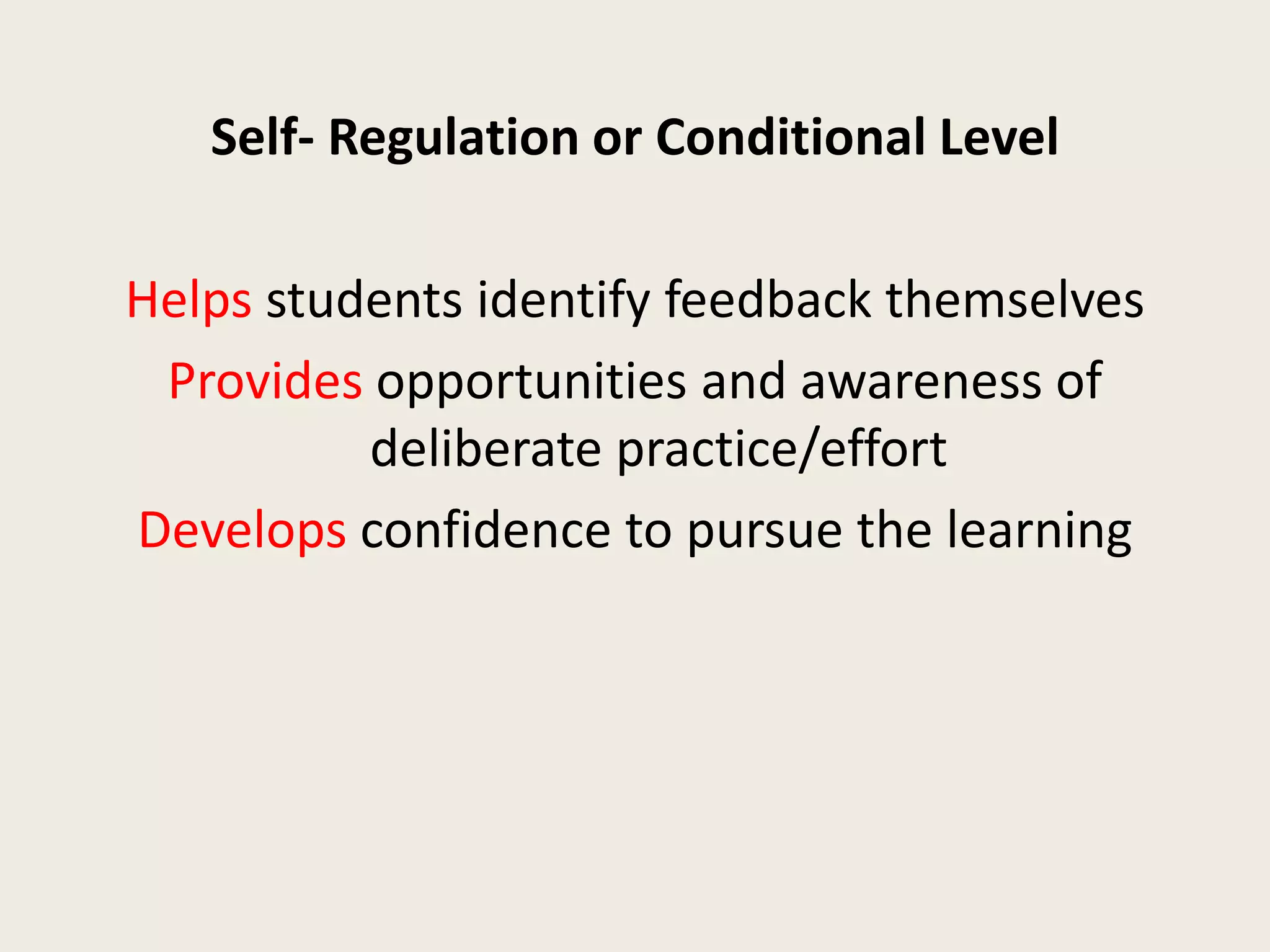
Self- Regulation or Conditional Level
Helps students identify feedback themselves
Provides opportunities and awareness of
deliberate practice/effort
Develops confidence to pursue the learning
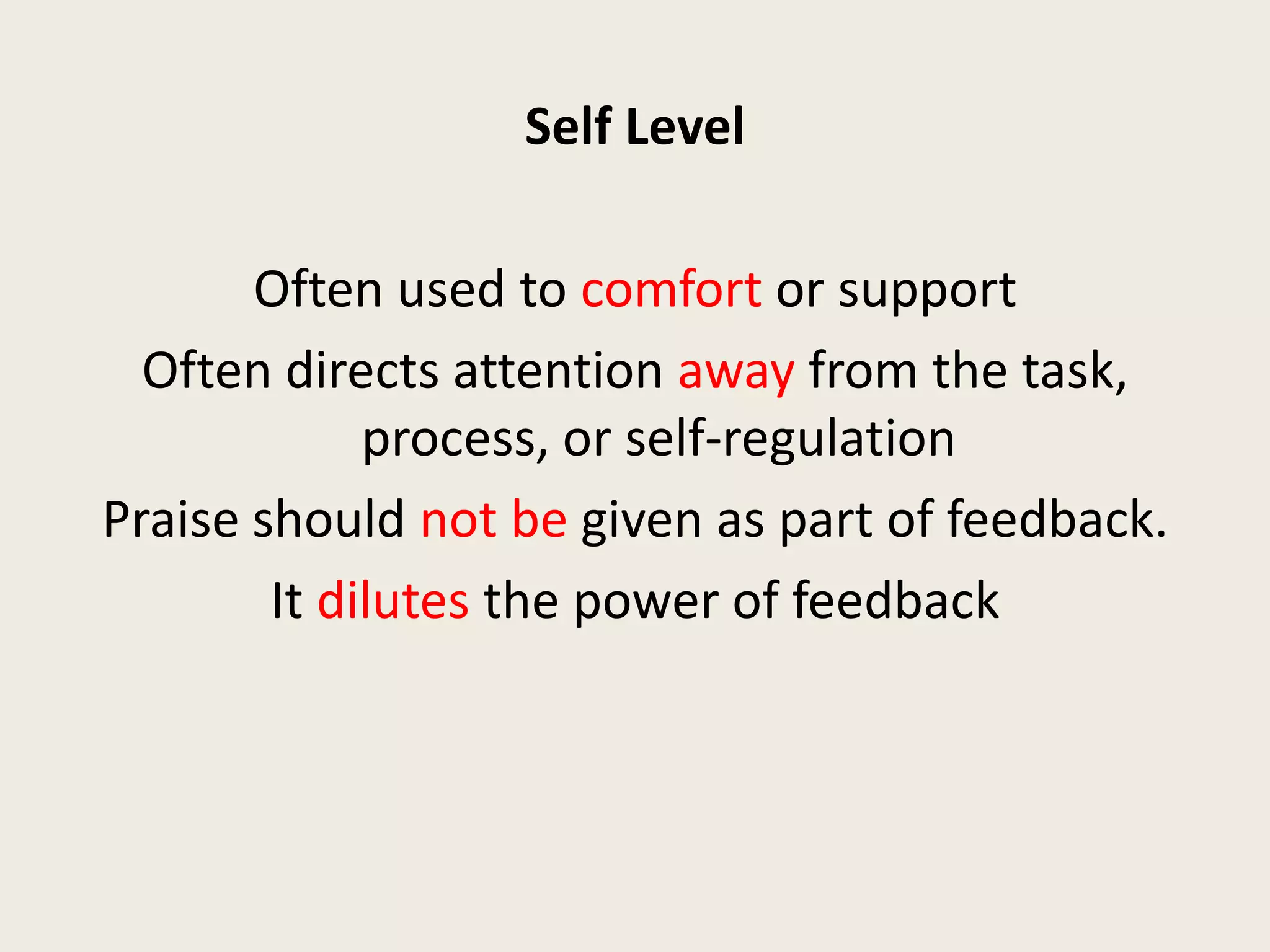
Self Level
Often used to comfort or support
Often directs attention away from the task,
process, or self-regulation
Praise should not be given as part of feedback.
It dilutes the power of feedback
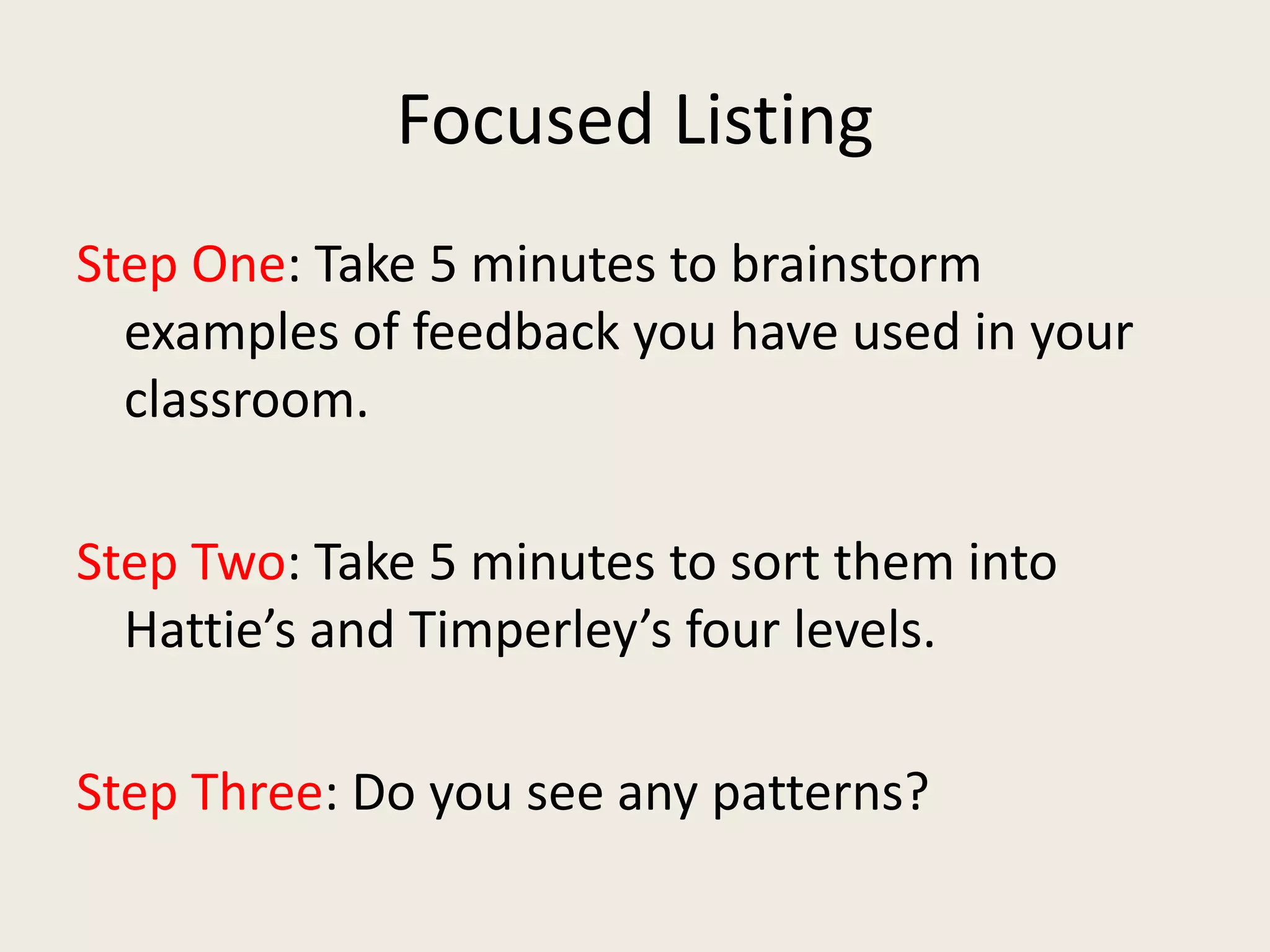
Focused Listing
Step One: Take 5 minutes to brainstorm
examples of feedback you have used in your
classroom.
Step Two: Take 5 minutes to sort them into
Hattie’s and Timperley’s four levels.
Step Three: Do you see any patterns?
Just as a thermostat adjusts a room
temperature, effective feedback helps
maintain a supportive environment for
learning.
~ Dylan Wiliam
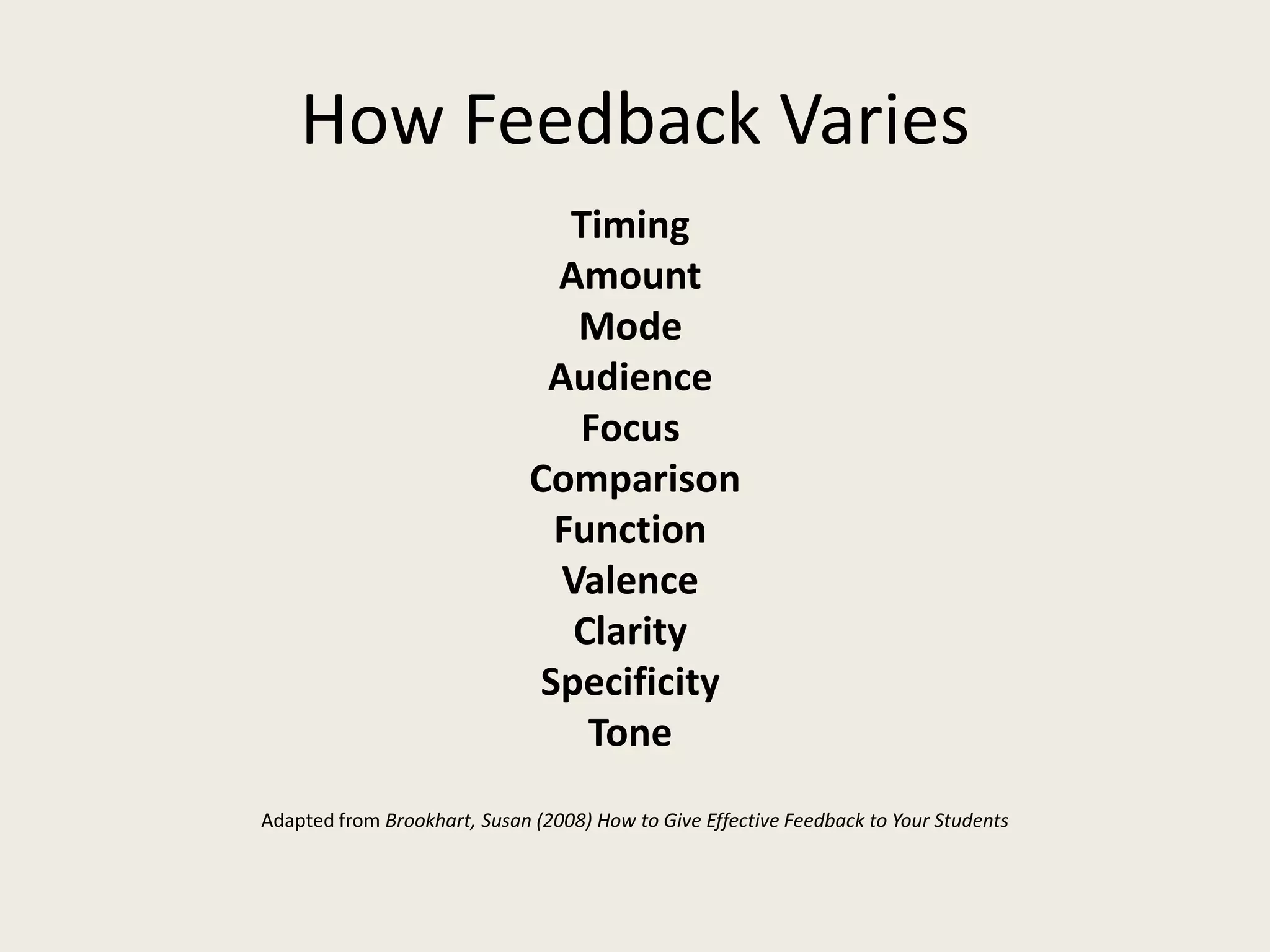
How Feedback Varies
Timing
Amount
Mode
Audience
Focus
Comparison
Function
Valence
Clarity
Specificity
Tone
Adapted from Brookhart, Susan (2008) How to Give Effective Feedback to Your Students
Brainstorm: Feedback Variations
Random Name Selector
Think about what you teach.
What are some ways you already use this
feedback variation?
What are some new ways you could use this
variation?
Real World Examples
13 Concrete Examples of Better Feedback for Learning
Think-Pair-Share
Pick one example and discuss with a partner
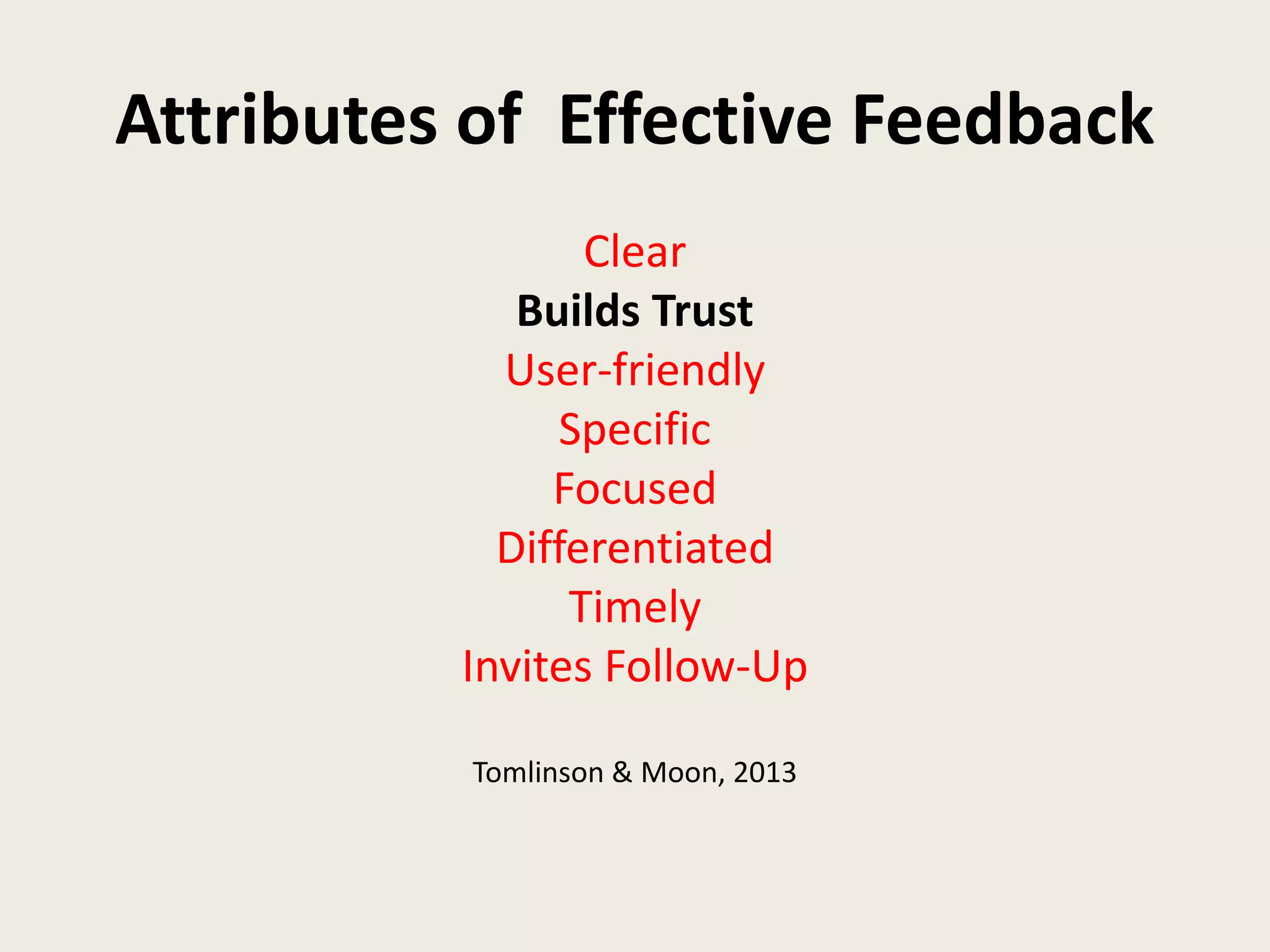
Attributes of Effective Feedback
Clear
Builds Trust
User-friendly
Specific
Focused
Differentiated
Timely
Invites Follow-Up
Tomlinson & Moon, 2013
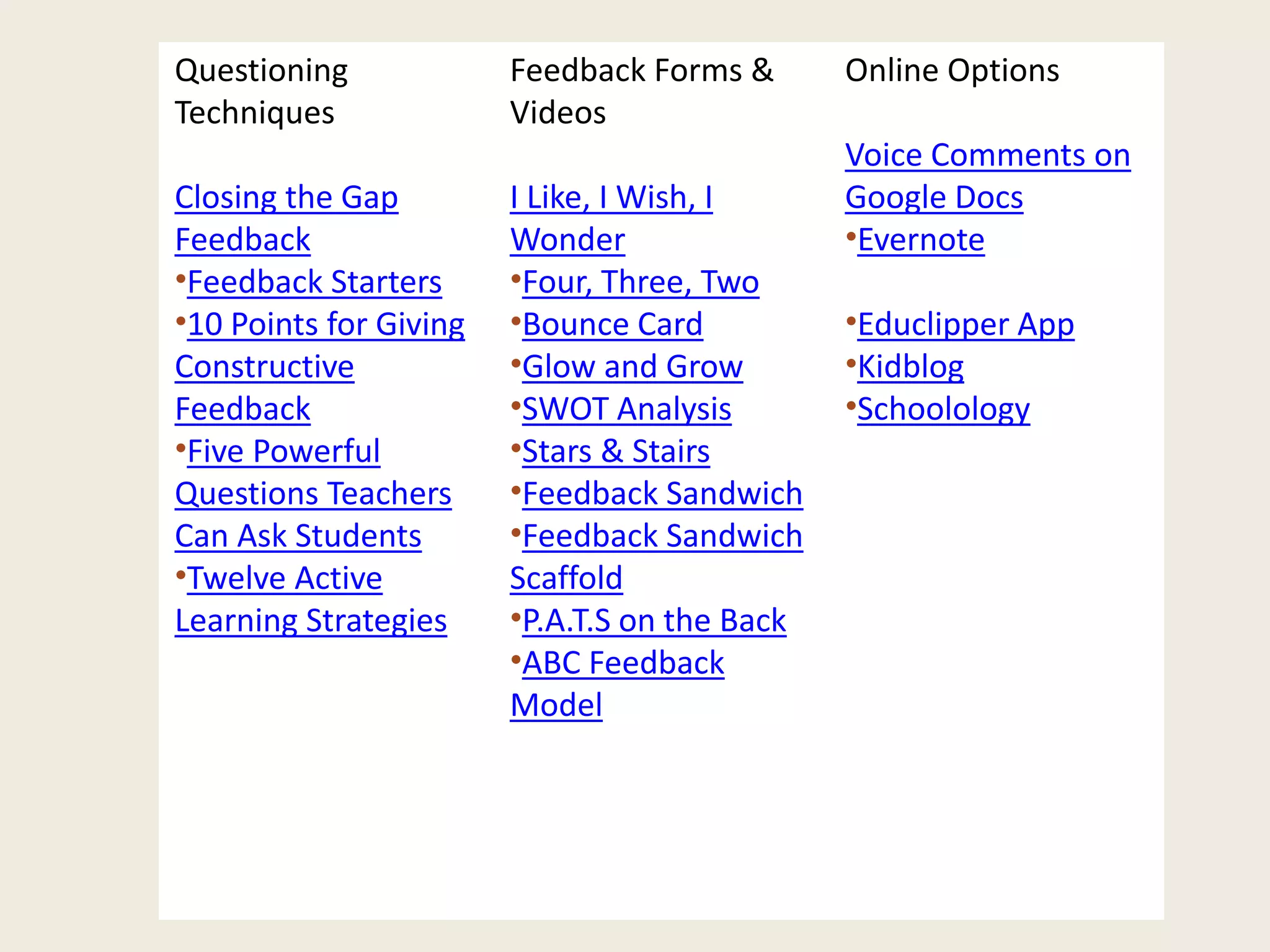
Questioning
Techniques
Closing the Gap
Feedback
•Feedback Starters
•10 Points for Giving
Constructive
Feedback
•Five Powerful
Questions Teachers
Can Ask Students
•Twelve Active
Learning Strategies
Feedback Forms &
Videos
I Like, I Wish, I
Wonder
•Four, Three, Two
•Bounce Card
•Glow and Grow
•SWOT Analysis
•Stars & Stairs
•Feedback Sandwich
•Feedback Sandwich
Scaffold
•P.A.T.S on the Back
•ABC Feedback
Model
Online Options
Voice Comments on
Google Docs
•Evernote
•Educlipper App
•Kidblog
•Schoolology
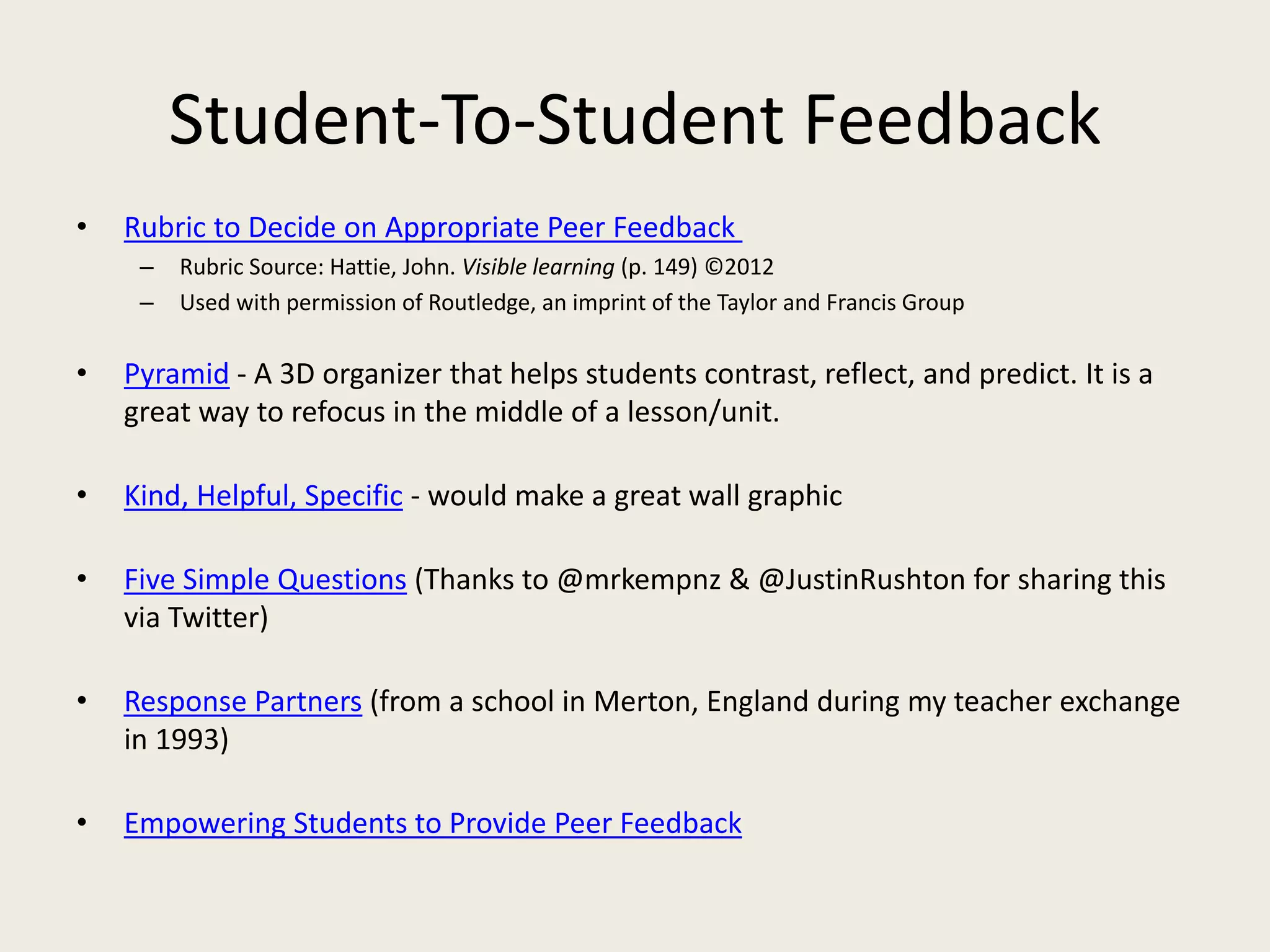
Student-To-Student Feedback
• Rubric to Decide on Appropriate Peer Feedback
– Rubric Source: Hattie, John. Visible learning (p. 149) ©2012
– Used with permission of Routledge, an imprint of the Taylor and Francis Group
• Pyramid - A 3D organizer that helps students contrast, reflect, and predict. It is a
great way to refocus in the middle of a lesson/unit.
• Kind, Helpful, Specific - would make a great wall graphic
• Five Simple Questions (Thanks to @mrkempnz & @JustinRushton for sharing this
via Twitter)
• Response Partners (from a school in Merton, England during my teacher exchange
in 1993)
• Empowering Students to Provide Peer Feedback
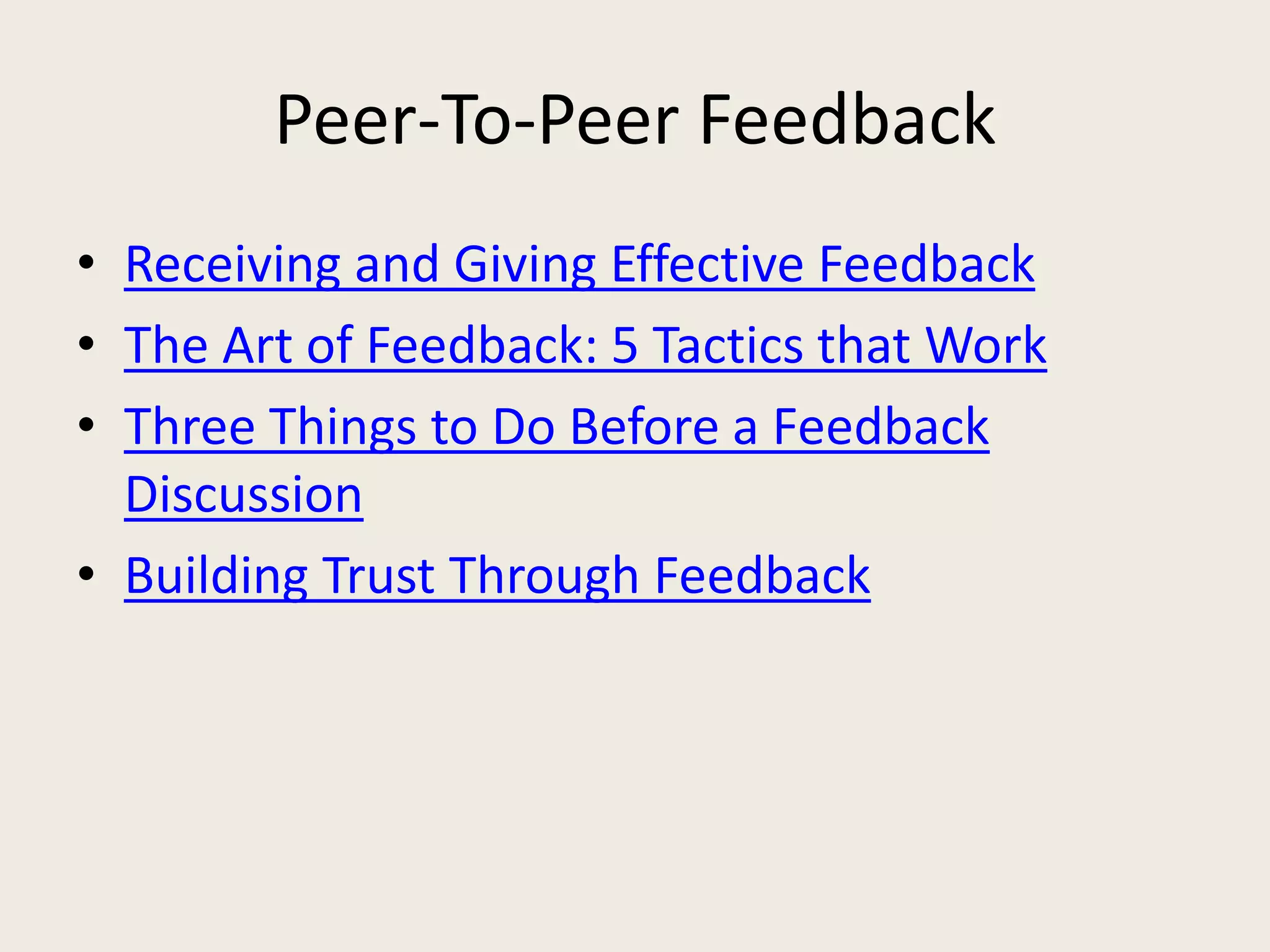
Peer-To-Peer Feedback
• Receiving and Giving Effective Feedback
• The Art of Feedback: 5 Tactics that Work
• Three Things to Do Before a Feedback
Discussion
• Building Trust Through Feedback
Getting Feedback from Students
Surveys
Reflections
Notes
If You Could Ask One More Question…
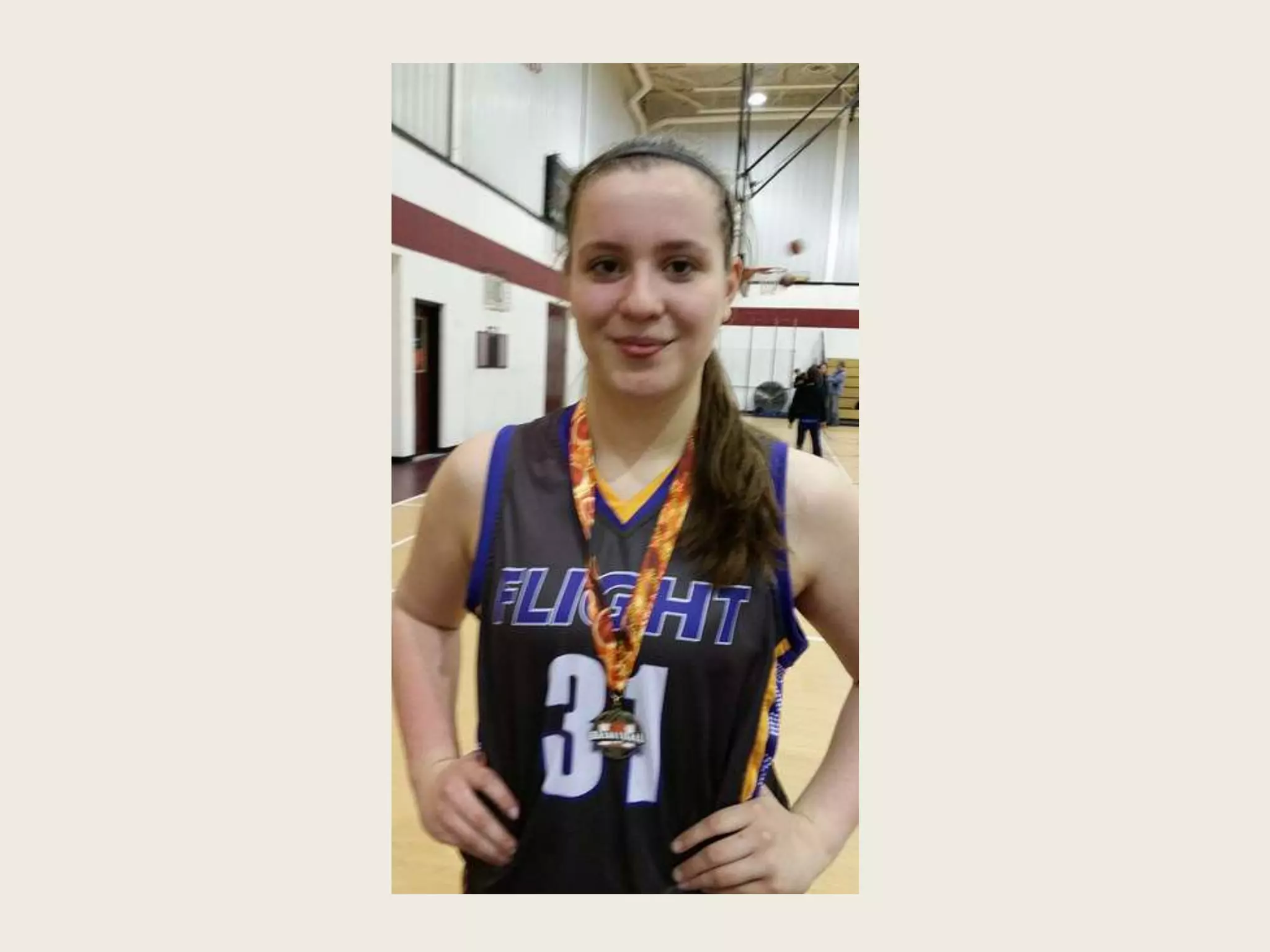
Austin’s Butterfly
"The most powerful single moderator
that enhances achievement is
feedback." ~ John Hattie
Let’s continue the conversation
Contact Info
• Twitter: @jenmarten
• Blog: teach from the heart
• Skype: jenmarten
• Websites: Feedback
Tech in the Classroom
• Linkedin: jenmarten
• Email: jmarten@tds.net

Starting the Conversation about Feedback

  • 1.
    Starting the Conversation AboutFeedback Jennifer Smithers Marten GT Coordinator/Online School Coordinator Plymouth Joint School District Plymouth, Wisconsin
  • 2.
    All of theresources referenced in this presentation can be found on my weebly Feedback as a Teaching Strategy http://feedbackasateachingstrategy.weebly.com/
  • 4.
    Think-Pair-Share What is yourbiggest frustration with giving students feedback?
  • 5.
    Why do Itake the time to write comments on their papers?
  • 6.
    The students whoneed it, don’t read it.
  • 7.
    Even the goodkids just flip through to find the grade.
  • 8.
    A Little Bitof Research (Butler, 1988) • Students who received specific feedback tailored to their performance showed significant increase in scores (almost 30%) • Students who received only letter grades showed a significant decline in scores. • Students that received both grades and comments also showed a significant decline in scores.
  • 12.
    "The effects offeedback depend on the nature of the feedback. Feedback can be the information that drives the process or the stumbling block that derails the process." ~ Susan Brookhart
  • 17.
    3-point conventions scoremeasures Punctuation Grammar Capitalization Spelling 6-point composition score measures Purpose Organization Content development Sentence fluency Word choice
  • 18.
  • 19.
    Evaluative Feedback • Tellslearners how they compare to others • Provides a judgment summarizing the quality of the learning • Is a direct result of summative assessment
  • 20.
    Descriptive Feedback • Providesspecific information in the form of written comments or conversations • Helps the learner understand what he or she needs to do to improve • Is a crucial part of formative assessment
  • 21.
    Intervention Feedback • Tellsthe student what needs improving • Gives enough information so the student knows what to do next
  • 22.
    Achievement Feedback • Tellsthe student what was done well • Praises the work or process, not the student
  • 23.
    Three Questions Where amI going? How am I going? Where to next? Hattie & Timperley (2007)
  • 24.
    Task and ProductLevel Indicates correct/incorrect Needs more or different responses Provides more/different information Relevant to task Builds task knowledge
  • 25.
    Self- Regulation orConditional Level Helps students identify feedback themselves Provides opportunities and awareness of deliberate practice/effort Develops confidence to pursue the learning
  • 26.
    Self Level Often usedto comfort or support Often directs attention away from the task, process, or self-regulation Praise should not be given as part of feedback. It dilutes the power of feedback
  • 27.
    Focused Listing Step One:Take 5 minutes to brainstorm examples of feedback you have used in your classroom. Step Two: Take 5 minutes to sort them into Hattie’s and Timperley’s four levels. Step Three: Do you see any patterns?
  • 28.
    Just as athermostat adjusts a room temperature, effective feedback helps maintain a supportive environment for learning. ~ Dylan Wiliam
  • 29.
    How Feedback Varies Timing Amount Mode Audience Focus Comparison Function Valence Clarity Specificity Tone Adaptedfrom Brookhart, Susan (2008) How to Give Effective Feedback to Your Students
  • 30.
    Brainstorm: Feedback Variations RandomName Selector Think about what you teach. What are some ways you already use this feedback variation? What are some new ways you could use this variation?
  • 31.
    Real World Examples 13Concrete Examples of Better Feedback for Learning Think-Pair-Share Pick one example and discuss with a partner
  • 32.
    Attributes of EffectiveFeedback Clear Builds Trust User-friendly Specific Focused Differentiated Timely Invites Follow-Up Tomlinson & Moon, 2013
  • 33.
    Questioning Techniques Closing the Gap Feedback •FeedbackStarters •10 Points for Giving Constructive Feedback •Five Powerful Questions Teachers Can Ask Students •Twelve Active Learning Strategies Feedback Forms & Videos I Like, I Wish, I Wonder •Four, Three, Two •Bounce Card •Glow and Grow •SWOT Analysis •Stars & Stairs •Feedback Sandwich •Feedback Sandwich Scaffold •P.A.T.S on the Back •ABC Feedback Model Online Options Voice Comments on Google Docs •Evernote •Educlipper App •Kidblog •Schoolology
  • 34.
    Student-To-Student Feedback • Rubricto Decide on Appropriate Peer Feedback – Rubric Source: Hattie, John. Visible learning (p. 149) ©2012 – Used with permission of Routledge, an imprint of the Taylor and Francis Group • Pyramid - A 3D organizer that helps students contrast, reflect, and predict. It is a great way to refocus in the middle of a lesson/unit. • Kind, Helpful, Specific - would make a great wall graphic • Five Simple Questions (Thanks to @mrkempnz & @JustinRushton for sharing this via Twitter) • Response Partners (from a school in Merton, England during my teacher exchange in 1993) • Empowering Students to Provide Peer Feedback
  • 35.
    Peer-To-Peer Feedback • Receivingand Giving Effective Feedback • The Art of Feedback: 5 Tactics that Work • Three Things to Do Before a Feedback Discussion • Building Trust Through Feedback
  • 36.
    Getting Feedback fromStudents Surveys Reflections Notes
  • 37.
    If You CouldAsk One More Question…
  • 38.
  • 40.
    "The most powerfulsingle moderator that enhances achievement is feedback." ~ John Hattie
  • 41.
  • 42.
    Contact Info • Twitter:@jenmarten • Blog: teach from the heart • Skype: jenmarten • Websites: Feedback Tech in the Classroom • Linkedin: jenmarten • Email: jmarten@tds.net

Editor's Notes

  • #4 AAU story
  • #10 Mrs. Wilson story
  • #11 Phil of Ed story & psych story
  • #30 Timing - students need feedback while they are still mindful of the learning target AND while there is still time for them to make changes Amount - enough so students understand what needs to be done but not so much it's overwhelming/unattainable Mode - pick the mode that is most appropriate for the assignment/student Audience - to reach individual student with specific feedback so that he/she knows he/she is valued as a learner Focus - describe specific qualities of work, make observations about learning process and strategies, foster self-efficacy, and avoid personal comments Comparison - use to compare student work to a criteria, student work to past performance, but not to compare one student to another Function - describe don't judge Valence - positive comments on what is done well; suggestions as to what can be done to improve Clarity - make sure students can understand the feedback Specificity - offer guidance, be specific, but don't do the work for the student Tone - communicate respect, inspire thought, help student become active in his/her learning Adapted from Brookhart, Susan (2008) How to Give Effective Feedback to Your Students