


Literacy Practice
in the Classroom
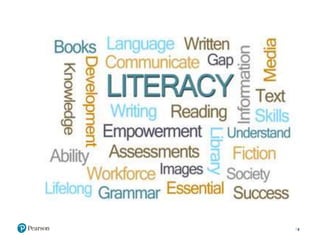
Literacy is the ability to read, view,
write, design, speak and listen in a
way that allows us to communicate
effectively and to make sense of the
world.
June 11th 2016 TKT PROGRAM
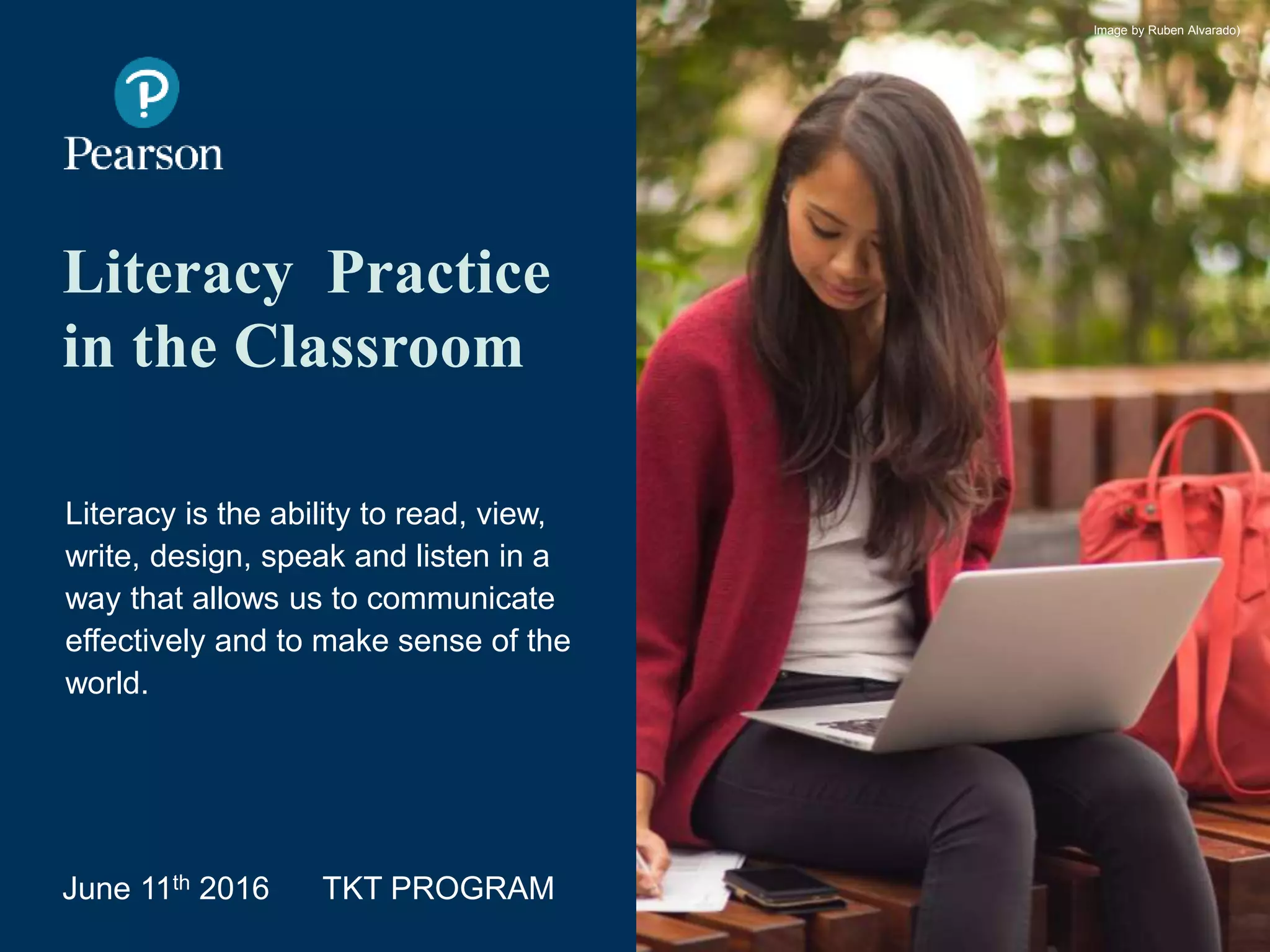
Image by Ruben Alvarado)
OBJECTIVE
To allow participants explore
ways to promote literacy in the
classroom.
2
OUTCOMES
Participants will make a
presentation about how to teach a
specific skill to promote literacy in
the classroom.
3
AGENDA
First Part ( 02:00 to 04:30 p.m.)
• Sharing Fun Communicative Activities (10’ each)
• Introducing some aspects about Literacy
• Preparing the presentation to promote literacy in the classroom
• Making the presentation.
Break ( 04:30 to 04:45 p.m.)
Second Part ( 04:45 to 7:00)
• Sharing a story to promote literacy.
• Work on updating their e-blogs
4
5
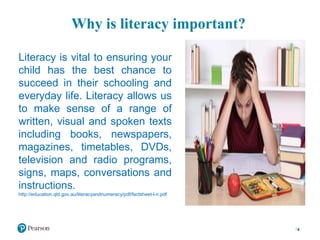
Why is literacy important?
Literacy is vital to ensuring your
child has the best chance to
succeed in their schooling and
everyday life. Literacy allows us
to make sense of a range of
written, visual and spoken texts
including books, newspapers,
magazines, timetables, DVDs,
television and radio programs,
signs, maps, conversations and
instructions.
http://education.qld.gov.au/literacyandnumeracy/pdf/factsheet-l-n.pdf
6
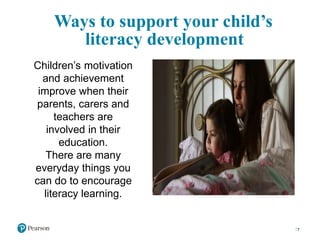
Ways to support your child’s
literacy development
Children’s motivation
and achievement
improve when their
parents, carers and
teachers are
involved in their
education.
There are many
everyday things you
can do to encourage
literacy learning.
7
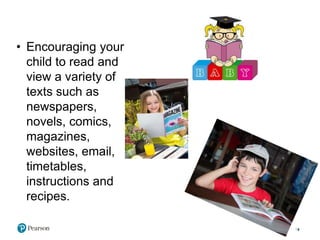
• Encouraging your
child to read and
view a variety of
texts such as
newspapers,
novels, comics,
magazines,
websites, email,
timetables,
instructions and
recipes.
8
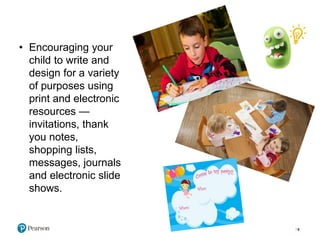
• Encouraging your
child to write and
design for a variety
of purposes using
print and electronic
resources —
invitations, thank
you notes,
shopping lists,
messages, journals
and electronic slide
shows.
9
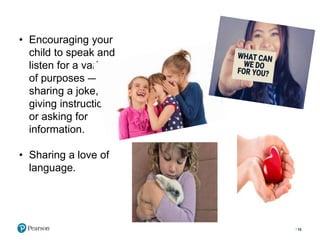
• Encouraging your
child to speak and
listen for a variety
of purposes —
sharing a joke,
giving instructions
or asking for
information.
• Sharing a love of
language.
10
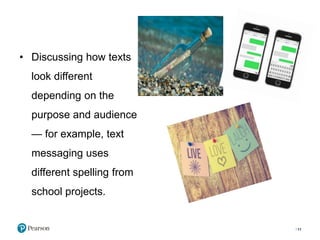
• Discussing how texts
look different
depending on the
purpose and audience
— for example, text
messaging uses
different spelling from
school projects.
11
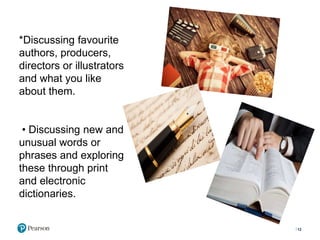
*Discussing favourite
authors, producers,
directors or illustrators
and what you like
about them.
• Discussing new and
unusual words or
phrases and exploring
these through print
and electronic
dictionaries.
12
Task 1: Prepare your presentation
INSTRUCTIONS
• Get in pairs.
• Discuss What do you understand by literacy nowadays?
• Choose a topic from the textbook. (Teaching listening,
reading, writing and speaking) Pages 102-142. / 204-…
• Prepare a presentation taking into account how we can
teach the different skills.
• The presentation will be of maximum 12 minutes.
• You have 60 mins to prepare and be ready to present to
the class.
14Communicative Grammar
Task 2: Presenting to the class.
SUMMARIZING
16
How do you promote literacy in
your classroom?
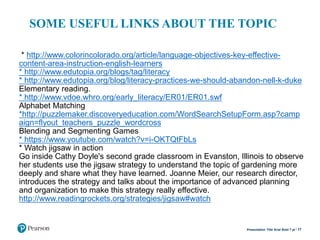
* http://www.colorincolorado.org/article/language-objectives-key-effective-
content-area-instruction-english-learners
* http://www.edutopia.org/blogs/tag/literacy
* http://www.edutopia.org/blog/literacy-practices-we-should-abandon-nell-k-duke
Elementary reading.
* http://www.vdoe.whro.org/early_literacy/ER01/ER01.swf
Alphabet Matching
*http://puzzlemaker.discoveryeducation.com/WordSearchSetupForm.asp?camp
aign=flyout_teachers_puzzle_wordcross
Blending and Segmenting Games
* https://www.youtube.com/watch?v=i-OKTQtFbLs
* Watch jigsaw in action
Go inside Cathy Doyle's second grade classroom in Evanston, Illinois to observe
her students use the jigsaw strategy to understand the topic of gardening more
deeply and share what they have learned. Joanne Meier, our research director,
introduces the strategy and talks about the importance of advanced planning
and organization to make this strategy really effective.
http://www.readingrockets.org/strategies/jigsaw#watch
17Presentation Title Arial Bold 7 pt
SOME USEFUL LINKS ABOUT THE TOPIC
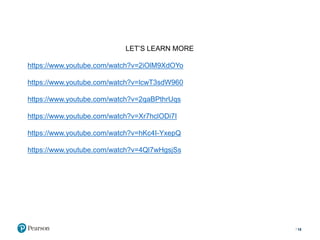
LET’S LEARN MORE
https://www.youtube.com/watch?v=2iOlM9XdOYo
https://www.youtube.com/watch?v=lcwT3sdW960
https://www.youtube.com/watch?v=2qaBPthrUqs
https://www.youtube.com/watch?v=Xr7hclODi7I
https://www.youtube.com/watch?v=hKc4I-YxepQ
https://www.youtube.com/watch?v=4Ql7wHgsjSs
18
A TPR STORY TELLING SAMPLE
“A LITTLE BOY”
19
Updating your e-blog
Literacy practices in  the classroom

Literacy practices in the classroom

  • 1.
    Literacy Practice in theClassroom Literacy is the ability to read, view, write, design, speak and listen in a way that allows us to communicate effectively and to make sense of the world. June 11th 2016 TKT PROGRAM Image by Ruben Alvarado)
  • 2.
    OBJECTIVE To allow participantsexplore ways to promote literacy in the classroom. 2
  • 3.
    OUTCOMES Participants will makea presentation about how to teach a specific skill to promote literacy in the classroom. 3
  • 4.
    AGENDA First Part (02:00 to 04:30 p.m.) • Sharing Fun Communicative Activities (10’ each) • Introducing some aspects about Literacy • Preparing the presentation to promote literacy in the classroom • Making the presentation. Break ( 04:30 to 04:45 p.m.) Second Part ( 04:45 to 7:00) • Sharing a story to promote literacy. • Work on updating their e-blogs 4
  • 5.
  • 6.
    Why is literacyimportant? Literacy is vital to ensuring your child has the best chance to succeed in their schooling and everyday life. Literacy allows us to make sense of a range of written, visual and spoken texts including books, newspapers, magazines, timetables, DVDs, television and radio programs, signs, maps, conversations and instructions. http://education.qld.gov.au/literacyandnumeracy/pdf/factsheet-l-n.pdf 6
  • 7.
    Ways to supportyour child’s literacy development Children’s motivation and achievement improve when their parents, carers and teachers are involved in their education. There are many everyday things you can do to encourage literacy learning. 7
  • 8.
    • Encouraging your childto read and view a variety of texts such as newspapers, novels, comics, magazines, websites, email, timetables, instructions and recipes. 8
  • 9.
    • Encouraging your childto write and design for a variety of purposes using print and electronic resources — invitations, thank you notes, shopping lists, messages, journals and electronic slide shows. 9
  • 10.
    • Encouraging your childto speak and listen for a variety of purposes — sharing a joke, giving instructions or asking for information. • Sharing a love of language. 10
  • 11.
    • Discussing howtexts look different depending on the purpose and audience — for example, text messaging uses different spelling from school projects. 11
  • 12.
    *Discussing favourite authors, producers, directorsor illustrators and what you like about them. • Discussing new and unusual words or phrases and exploring these through print and electronic dictionaries. 12
  • 13.
    Task 1: Prepareyour presentation
  • 14.
    INSTRUCTIONS • Get inpairs. • Discuss What do you understand by literacy nowadays? • Choose a topic from the textbook. (Teaching listening, reading, writing and speaking) Pages 102-142. / 204-… • Prepare a presentation taking into account how we can teach the different skills. • The presentation will be of maximum 12 minutes. • You have 60 mins to prepare and be ready to present to the class. 14Communicative Grammar
  • 15.
    Task 2: Presentingto the class.
  • 16.
    SUMMARIZING 16 How do youpromote literacy in your classroom?
  • 17.
    * http://www.colorincolorado.org/article/language-objectives-key-effective- content-area-instruction-english-learners * http://www.edutopia.org/blogs/tag/literacy *http://www.edutopia.org/blog/literacy-practices-we-should-abandon-nell-k-duke Elementary reading. * http://www.vdoe.whro.org/early_literacy/ER01/ER01.swf Alphabet Matching *http://puzzlemaker.discoveryeducation.com/WordSearchSetupForm.asp?camp aign=flyout_teachers_puzzle_wordcross Blending and Segmenting Games * https://www.youtube.com/watch?v=i-OKTQtFbLs * Watch jigsaw in action Go inside Cathy Doyle's second grade classroom in Evanston, Illinois to observe her students use the jigsaw strategy to understand the topic of gardening more deeply and share what they have learned. Joanne Meier, our research director, introduces the strategy and talks about the importance of advanced planning and organization to make this strategy really effective. http://www.readingrockets.org/strategies/jigsaw#watch 17Presentation Title Arial Bold 7 pt SOME USEFUL LINKS ABOUT THE TOPIC
  • 18.
  • 19.
    A TPR STORYTELLING SAMPLE “A LITTLE BOY” 19
  • 20.

Editor's Notes

  • #14 In groups of four, S-T play a game whih include the following categories according to the colours: Yellow: Communicative grammar; pink :motivation, blue:
  • #15 The questions upon which S-Ts will prepare their presentations are: What is the activity you suggest to promote literacy? What do you need to do this activity? How do you do it? What age groups do you recommend it for? What final recommendations would you give your colleagues to make sure this activity works out?
  • #16 In groups of four, S-T play a game whih include the following categories according to the colours: Yellow: Communicative grammar; pink :motivation, blue: