RELEVANT
PRACTITIONERS/GRAPHIC
DESIGN
Tom Batty
STEFAN SAGMEISTER
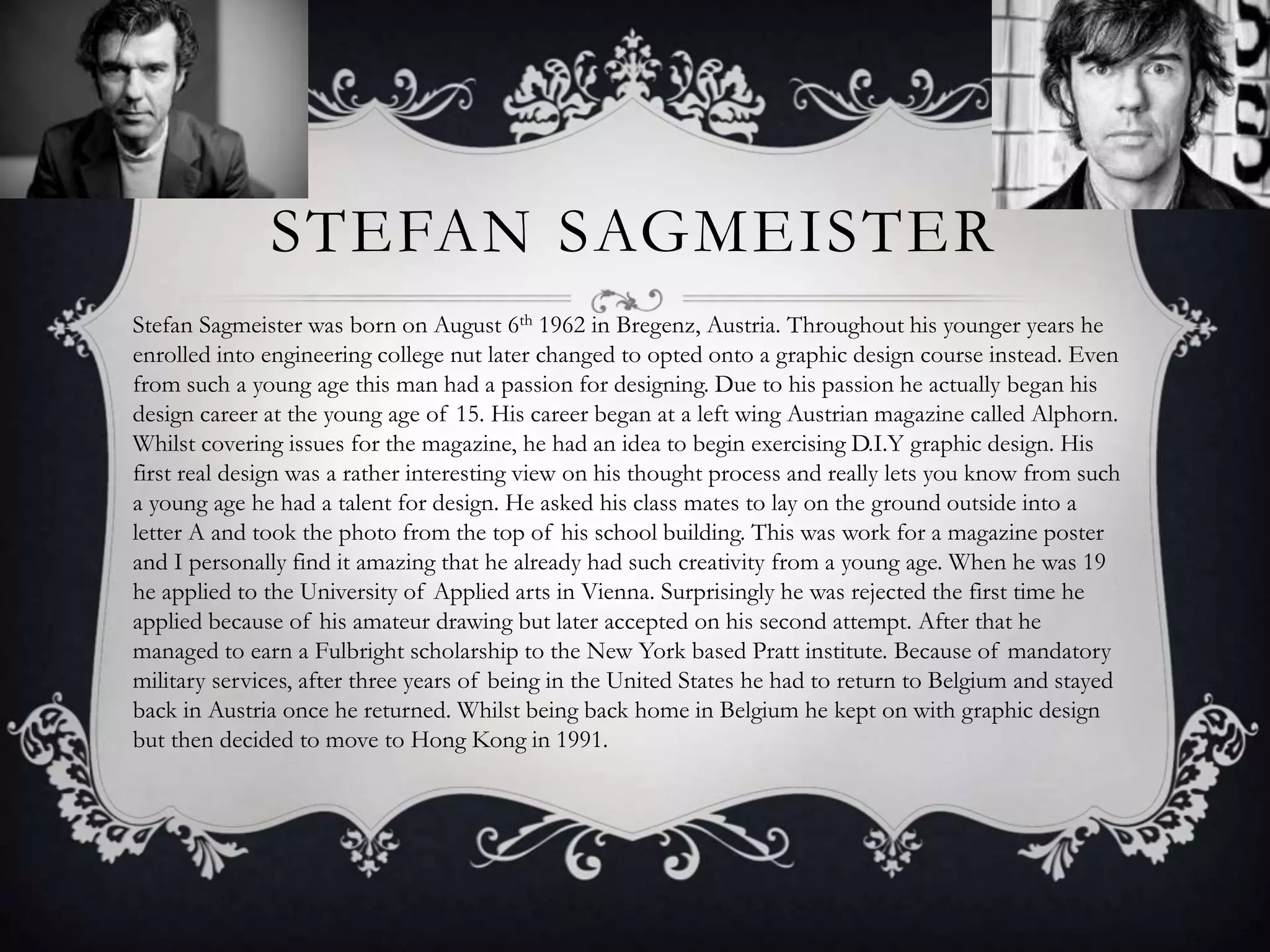
Stefan Sagmeister was born on August 6th 1962 in Bregenz, Austria. Throughout his younger years he
enrolled into engineering college nut later changed to opted onto a graphic design course instead. Even
from such a young age this man had a passion for designing. Due to his passion he actually began his
design career at the young age of 15. His career began at a left wing Austrian magazine called Alphorn.
Whilst covering issues for the magazine, he had an idea to begin exercising D.I.Y graphic design. His
first real design was a rather interesting view on his thought process and really lets you know from such
a young age he had a talent for design. He asked his class mates to lay on the ground outside into a
letter A and took the photo from the top of his school building. This was work for a magazine poster
and I personally find it amazing that he already had such creativity from a young age. When he was 19
he applied to the University of Applied arts in Vienna. Surprisingly he was rejected the first time he
applied because of his amateur drawing but later accepted on his second attempt. After that he
managed to earn a Fulbright scholarship to the New York based Pratt institute. Because of mandatory
military services, after three years of being in the United States he had to return to Belgium and stayed
back in Austria once he returned. Whilst being back home in Belgium he kept on with graphic design
but then decided to move to Hong Kong in 1991.
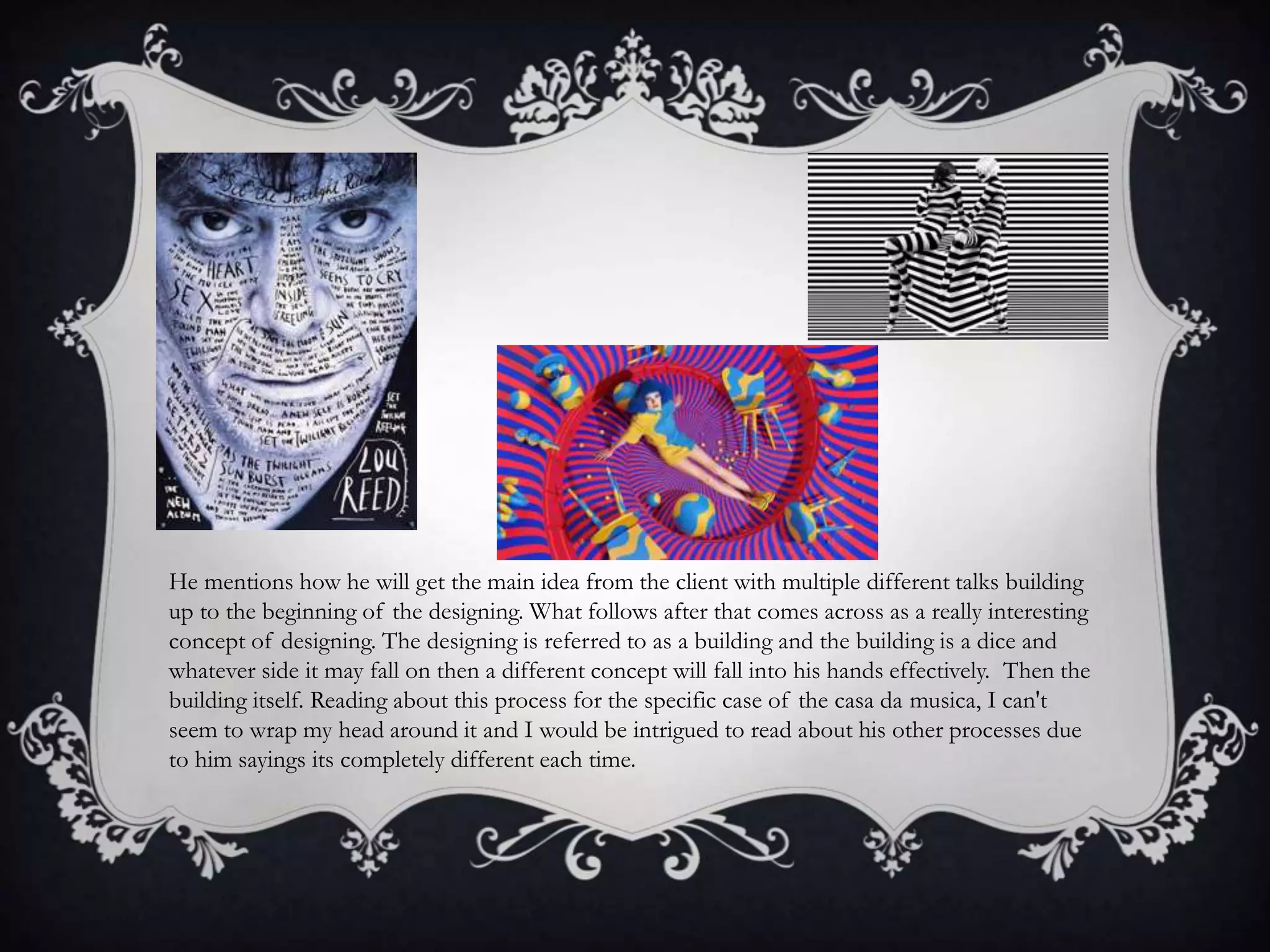
Here is work that he’s
done for the Rolling
Stones, Levis and
story logo for a store
in NYC
During his time in Hong Kong, was the time he got a job as a typographer with an advertising
agency. His main job was creating posters advertising award ceremonies. It didn’t take long for
people to notice he had a strange sense of humor and he never took issue of propriety into
consideration.
He is currently based un the US and is known as contemporary graphic designer and
typographer. This man is also the co-founder of the well known design firm, Sagmeister and
Walsh. His partner of the design firm is Jessica Walsh. He himself completely redefined the
status of graphic designers with his impressive, intriguing and provocative work. His more
credited work is to do with album cover and big names such as Rolling Stones. From three of his
TED talks he has been described as the rock star designer. Both Stefan and Jessica occupy the
upper echelon beauties of the world when it comes to their designs and work. More towards both
their present day work, they're now focusing beauty. Sagmeister and Walsh are some real
showmen with their business and you can really tell by looking at the strength of their
convictions and considerable design talent. Stefan's approach when it comes down to creating a
logo and his work was fascinating to read. I read this in a website during an interview he was in.
The interviewer asked "Can you describe or give us an overview of your logo design process?"
And he responded with along the lines of like I mentioned before how each time the process can
be different. After meetings with stockbrokers, he will try limit all the brand attributes to a
minimum.
He mentions how he will get the main idea from the client with multiple different talks building
up to the beginning of the designing. What follows after that comes across as a really interesting
concept of designing. The designing is referred to as a building and the building is a dice and
whatever side it may fall on then a different concept will fall into his hands effectively. Then the
building itself. Reading about this process for the specific case of the casa da musica, I can't
seem to wrap my head around it and I would be intrigued to read about his other processes due
to him sayings its completely different each time.
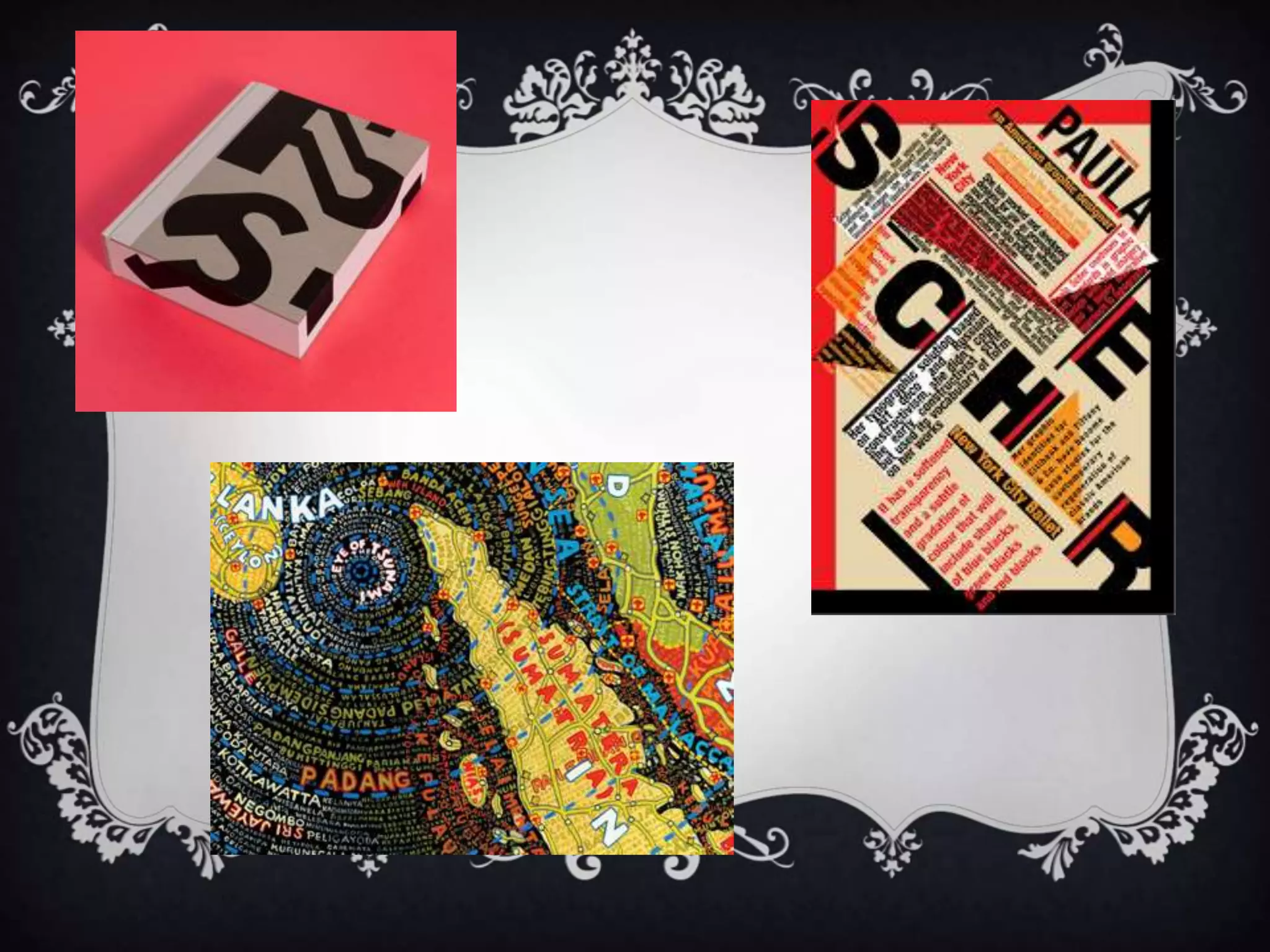
PAULA SCHER
Paula Scher was born 6th October 1948 in Washington D.C. Paula is very well known for being a
graphic designer but is also a painter, author and educator. But like I said she is a very well known
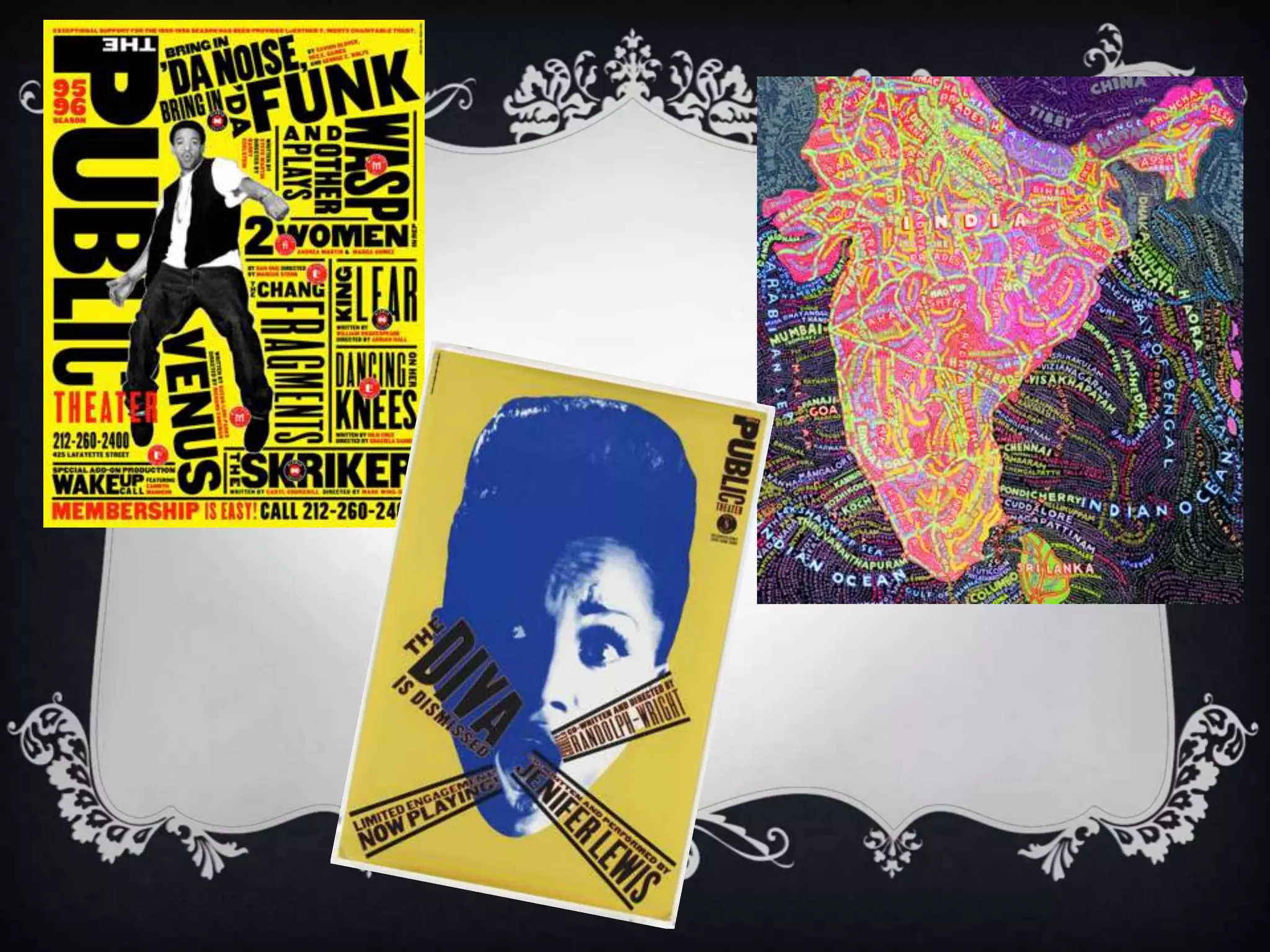
graphic designer and is one of the most influential graphic designer in the world. Paula's work
bounces between fine art and pop culture and her work has been described as iconic. This
inspirational lady has created some amazing work for the likes of Microsoft, Coca-Cola and
Bloomberg. Her work with these companies involved stuff such as branding systems, packaging and
promotional materials.
I moved on to read a bit more about her in an interview and the interviewer asks why she has an
attraction to identities and she gives a very nice response. She believes that identities are the beginning
of everything, she believes that is how something is recognized. As I kept on reading, I saw that she
mentioned how its important for a graphic designer to be able to see over the ability to draw well.
Which if I think about it, she doesn’t really speak a lie and its an interesting way of thinking of things
in a process of creating something. Paula has the belief that multinational corporations are worthy as
dignified as vanguard local arts organizations. This means to Paula, that of paramount value the
expressivity.
When it comes to typography, she learnt how to see it with emotion and see it with spirit, this is
when she began being able manipulate her work. Paula has a really interesting way of being
creative and its something the everyday person wouldn’t think of. Because of iPhones, we have
cut out the feeling of boredom. But she mentions that the most creative time is stuff you can see
when you're bored. Looking around the world as you go about your business, that is when she
comes up with the majority of creative ideas and it just comes down to her not being distracted
by a phone or a conversation. Adding onto what I have mentioned, Paula's methods of her work
are very messy. Even though her main idea source is down time and boredom, she isn't very
organized and never really finishes her ideas or sketches.
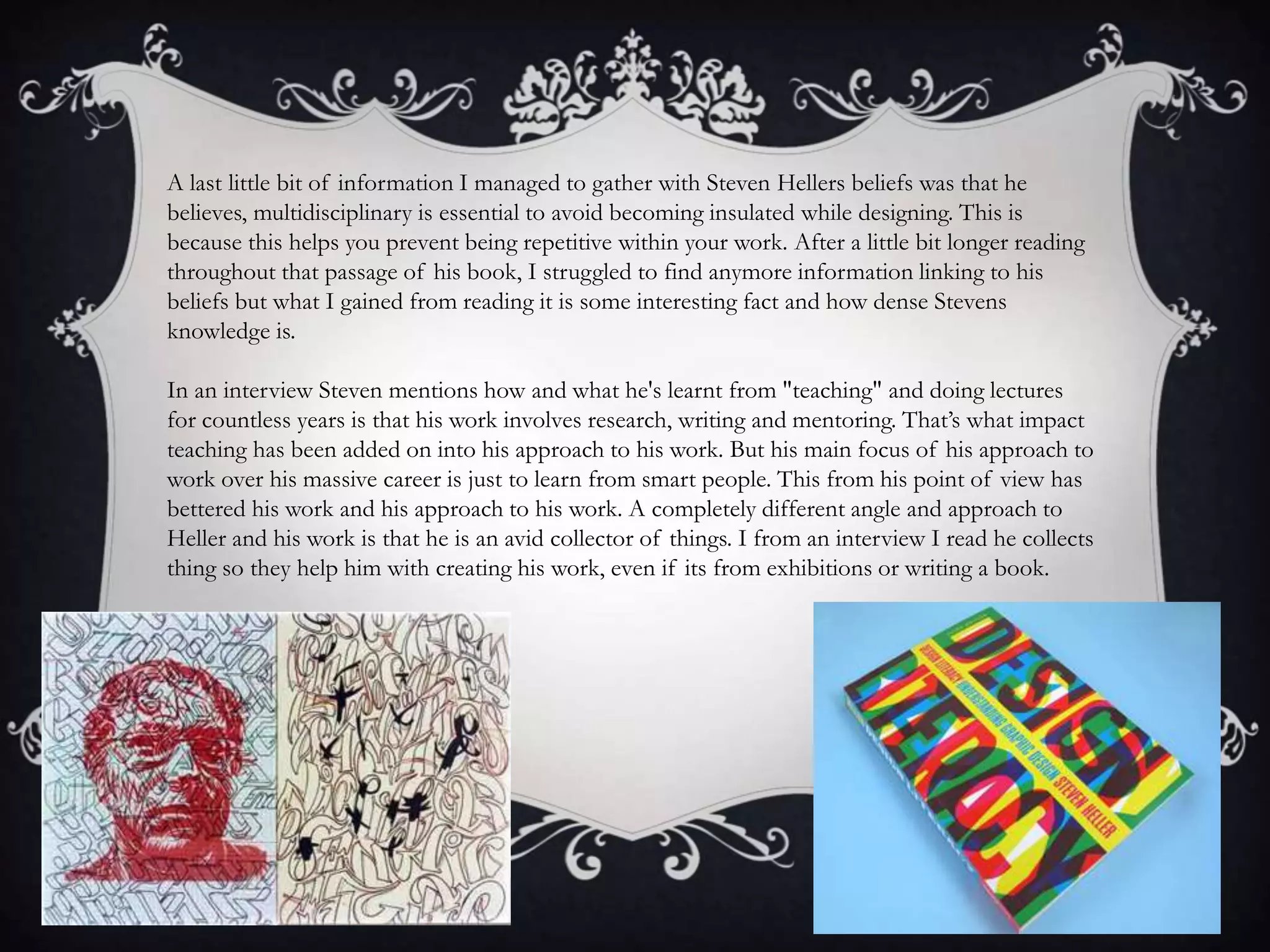
I felt like I needed to involve one of Paula Scher books seems she has written so many. The book
I've decided to talk about and read sections of is, 'Make It Bigger'. The book is about her
thoughts on design practice and her own experiences. I looked and searched around but couldn’t
get a copy of the book due to the book not being printed anymore and has been out for a while.
But because of this, I searched up about the book and reviews for it seem very positive. I feel
anyone in the graphic design industry will have either read this book or needs to read it because
she speaks upon her own thoughts and experiences throughout her twenty year career.
Overall Paula is a massive part of graphic design and will have been a massive inspiration to a lot
of graphic designers in todays industry.
STEVEN HELLER
Steven Heller was born on July 7th 1950 in New York City. This man is currently co-chair of the
MFA designer program at a visual school of arts. He also teaches and gives lectures on the history of
graphic design. The impact Steven has made is mostly through print media and he has been part of
editing multiple magazines. Two examples of magazines would be Eye and baseline and on the
subject of magazines he has written columns within magazines.
Searching for Stevens beliefs, I stumbled across one of his books 'Cult of the Ugly'. This book he
sees the word 'Ugly' applied to graphic design a lot and he speaks on art history along with recent
design trends etc. Heller mentions how design experiments shouldn't just be valued on or measured
on what succeeds. Because he believes failures are pretty much always steps forward towards new
design discoveries. Again its another interesting point of view and that’s what makes each graphic
designer different due to their own views. When it comes to experimentation, his idea involves loads
of elements fueling the engine that is experiments. The fuel the engine of experiments in his eyes are
instinct, intelligence and discipline. I don’t really agree fully with him saying intelligence because you
don’t necessarily need to be smart to be creative but I understand where he is coming from with his
view point.
A last little bit of information I managed to gather with Steven Hellers beliefs was that he
believes, multidisciplinary is essential to avoid becoming insulated while designing. This is
because this helps you prevent being repetitive within your work. After a little bit longer reading
throughout that passage of his book, I struggled to find anymore information linking to his
beliefs but what I gained from reading it is some interesting fact and how dense Stevens
knowledge is.
In an interview Steven mentions how and what he's learnt from "teaching" and doing lectures
for countless years is that his work involves research, writing and mentoring. That’s what impact
teaching has been added on into his approach to his work. But his main focus of his approach to
work over his massive career is just to learn from smart people. This from his point of view has
bettered his work and his approach to his work. A completely different angle and approach to
Heller and his work is that he is an avid collector of things. I from an interview I read he collects
thing so they help him with creating his work, even if its from exhibitions or writing a book.
ELEMENTS OF DESIGN
When it comes down to elements of design, there are multiple factors or things you need to consider.
These elements are stuff such as shape, size, texture and colour. These elements really bring a design
together in my eyes, they're all just as important as each other. With shapes, you have to be careful
what kind you use because of how they give out messages so if you're wanting to convey one meaning
or feeling then make sure you use the correct shape linking to that one feeling or meaning. With size,
you have to consider the whole image as a whole, either you're placing something onto something else
or trying to edit something with object surrounding it. Size will decide if the image comes together or
if all fits in well with the rest of an image/design. From my point of view with texture this is where a
lot of the detailed bits of designing something comes into play. Say on photoshop you're either
replicating an image or creating one from scratch you need to make the surfaces perfect and make
them look exactly like the texture you're trying to replicate. That’s just for the best results of the final
bits for a graphic designers work. Probably one of the most important features/elements of any
design would colours. It comes down to if the colours you have chosen, do they relate to your specific
image or topic, do the colours contrast well, are they opposite on a colour wheel and if you consider
the majority of all these consideration then a design can become very aesthetically pleasing.
PRINCIPLES OF DESIGN
After the elements of a design you have to then stick to the principles of a designs. To me these would
be balance, repetition, contrast and space. This how we apply both elements and elements together. I
guess balance its pretty obvious and links in with size. If you picture a front cover of a magazine and
there is a massive image of a celebrity covering the whole front cover. You will often see smaller bits
of information dotted by the sides or just over lapping the big image and that’s because they all
balance out the space, you cant have loads of big images or loads of small images because then there
isn't any stability with the design. I guess the one word that really sums up balance within your work is
symmetry, make sure its all symmetrical especially with magazines. Moving onto repetition and with
repetition, I feel that this can strengthen and image from nothing to something decent or even
brilliant. From my own experience of editing an image. I simply repeated the same word multiple
times of what the image was actually showing. I dotted them all over the background, different
angles, colours and sizes. From just a simple image of a plate of food I changed it up within a few
hours and completely elevated the image. Repetition isn't always a negative thing when it comes to
designing images and that’s how some of the nicer patterns are found. With contrast I pretty much
mentioned and explained with colours but contrast is light and dark, opposing elements coming
together and working well such as the colour wheel.
With text in magazines if you contrast the
page well then you can highlight important
words or certain texts, this emphasizes the
importance. Finally for space, space is
something everyone needs to consider in any
design. The space is something such as the
area in an image. Are all the spaces between
images all equal and looking smart.
BIBLIOGRAPHY
1. Anon. (Anon). Stefan Ssgmeister . Available: https://www.famousgraphicdesigners.org/stefan-
sagmeister. Last accessed 21st Jan 2019 .
2. Owen Pritchard . (June 4th 2018). Beauty through the eyes of Stefan Sagmeister and Jessica
Walsh. Available: https://www.itsnicethat.com/features/stefan-sagmeister-jessica-walsh-graphic-
design-040618. Last accessed 21st Jan 2019
3. The Logo Creative . (10th Jan 2018). Designer Interview With Stefan Sagmeister. Available:
https://www.thelogocreative.co.uk/designer-interview-with-stefan-sagmeister/. Last accessed
22nd Jan 2019.
4. Paula Scher. (Anon). Make it Bigger. Available:
https://www.papress.com/html/product.details.dna?isbn=9781568983325. Last accessed 22nd
Jan 2019
5. Anon. (Anon). Paula Scher. Available: https://www.pentagram.com/about/paula-scher. Last
accessed 23rd Jan 2019.
6. Andy Butler. (Jul 10 2013). Paula Scher interview . Available:
https://www.designboom.com/design/paula-scher-interview/. Last accessed 23rd Jan 2019.
7. Alex Bigman . (2016). Get to know Paula Scher, titan of postmodern design. Available:
https://99designs.co.uk/blog/famous-design/paula-scher-titan-of-postmodern-design/. Last
accessed 23rd Jan 2019.
8. Carey Dunne. (Anon). Graphic Designer Paula Scher: “I Figured Out Every Identity I’ve Ever
Done In A Taxicab”. Available: https://www.fastcompany.com/3043997/graphic-designer-
paula-scher-i-figured-out-every-identity-ive-ever-done-in-a-taxicab. Last accessed 23rd Jan
2019.
9. Anon. (2019). Steven Heller. Available: https://www.famousgraphicdesigners.org/steven-
heller. Last accessed 25th Jan 2019.
10. Steven Heller. (2004). Cult of the Ugly. Available:
https://www.typotheque.com/articles/cult_of_the_ugly. Last accessed 25th Jan 2019.
11. The Editors . (2017 ). Steven Heller on Teaching to Keep Himself Real + Learning From
Smart People. Available: https://eyeondesign.aiga.org/steven-heller-on-teaching-to-keep-
himself-real-learning-from-smart-people/. Last accessed 25th Jan 2019.
12. Anon. (2013). Steven Heller: Graphic design to the average person is that thing that they pass
every day. Available: http://www.designindaba.com/videos/interviews/steven-heller-
graphic-design-average-person-thing-they-pass-every-day. Last accessed 25th Jan 2019.
13. Abanoub Hanna. (2014). Principles of Design - Graphic Design Theory.Available:
https://www.slideshare.net/EngineeroBono/principles-of-design-graphic-design-theory. Last
accessed 25th Jan 2019.

Fmp graphic designers

  • 1.
  • 2.
    STEFAN SAGMEISTER Stefan Sagmeisterwas born on August 6th 1962 in Bregenz, Austria. Throughout his younger years he enrolled into engineering college nut later changed to opted onto a graphic design course instead. Even from such a young age this man had a passion for designing. Due to his passion he actually began his design career at the young age of 15. His career began at a left wing Austrian magazine called Alphorn. Whilst covering issues for the magazine, he had an idea to begin exercising D.I.Y graphic design. His first real design was a rather interesting view on his thought process and really lets you know from such a young age he had a talent for design. He asked his class mates to lay on the ground outside into a letter A and took the photo from the top of his school building. This was work for a magazine poster and I personally find it amazing that he already had such creativity from a young age. When he was 19 he applied to the University of Applied arts in Vienna. Surprisingly he was rejected the first time he applied because of his amateur drawing but later accepted on his second attempt. After that he managed to earn a Fulbright scholarship to the New York based Pratt institute. Because of mandatory military services, after three years of being in the United States he had to return to Belgium and stayed back in Austria once he returned. Whilst being back home in Belgium he kept on with graphic design but then decided to move to Hong Kong in 1991.
  • 3.
    Here is workthat he’s done for the Rolling Stones, Levis and story logo for a store in NYC
  • 4.
    During his timein Hong Kong, was the time he got a job as a typographer with an advertising agency. His main job was creating posters advertising award ceremonies. It didn’t take long for people to notice he had a strange sense of humor and he never took issue of propriety into consideration. He is currently based un the US and is known as contemporary graphic designer and typographer. This man is also the co-founder of the well known design firm, Sagmeister and Walsh. His partner of the design firm is Jessica Walsh. He himself completely redefined the status of graphic designers with his impressive, intriguing and provocative work. His more credited work is to do with album cover and big names such as Rolling Stones. From three of his TED talks he has been described as the rock star designer. Both Stefan and Jessica occupy the upper echelon beauties of the world when it comes to their designs and work. More towards both their present day work, they're now focusing beauty. Sagmeister and Walsh are some real showmen with their business and you can really tell by looking at the strength of their convictions and considerable design talent. Stefan's approach when it comes down to creating a logo and his work was fascinating to read. I read this in a website during an interview he was in. The interviewer asked "Can you describe or give us an overview of your logo design process?" And he responded with along the lines of like I mentioned before how each time the process can be different. After meetings with stockbrokers, he will try limit all the brand attributes to a minimum.
  • 5.
    He mentions howhe will get the main idea from the client with multiple different talks building up to the beginning of the designing. What follows after that comes across as a really interesting concept of designing. The designing is referred to as a building and the building is a dice and whatever side it may fall on then a different concept will fall into his hands effectively. Then the building itself. Reading about this process for the specific case of the casa da musica, I can't seem to wrap my head around it and I would be intrigued to read about his other processes due to him sayings its completely different each time.
  • 6.
    PAULA SCHER Paula Scherwas born 6th October 1948 in Washington D.C. Paula is very well known for being a graphic designer but is also a painter, author and educator. But like I said she is a very well known graphic designer and is one of the most influential graphic designer in the world. Paula's work bounces between fine art and pop culture and her work has been described as iconic. This inspirational lady has created some amazing work for the likes of Microsoft, Coca-Cola and Bloomberg. Her work with these companies involved stuff such as branding systems, packaging and promotional materials. I moved on to read a bit more about her in an interview and the interviewer asks why she has an attraction to identities and she gives a very nice response. She believes that identities are the beginning of everything, she believes that is how something is recognized. As I kept on reading, I saw that she mentioned how its important for a graphic designer to be able to see over the ability to draw well. Which if I think about it, she doesn’t really speak a lie and its an interesting way of thinking of things in a process of creating something. Paula has the belief that multinational corporations are worthy as dignified as vanguard local arts organizations. This means to Paula, that of paramount value the expressivity.
  • 8.
    When it comesto typography, she learnt how to see it with emotion and see it with spirit, this is when she began being able manipulate her work. Paula has a really interesting way of being creative and its something the everyday person wouldn’t think of. Because of iPhones, we have cut out the feeling of boredom. But she mentions that the most creative time is stuff you can see when you're bored. Looking around the world as you go about your business, that is when she comes up with the majority of creative ideas and it just comes down to her not being distracted by a phone or a conversation. Adding onto what I have mentioned, Paula's methods of her work are very messy. Even though her main idea source is down time and boredom, she isn't very organized and never really finishes her ideas or sketches. I felt like I needed to involve one of Paula Scher books seems she has written so many. The book I've decided to talk about and read sections of is, 'Make It Bigger'. The book is about her thoughts on design practice and her own experiences. I looked and searched around but couldn’t get a copy of the book due to the book not being printed anymore and has been out for a while. But because of this, I searched up about the book and reviews for it seem very positive. I feel anyone in the graphic design industry will have either read this book or needs to read it because she speaks upon her own thoughts and experiences throughout her twenty year career. Overall Paula is a massive part of graphic design and will have been a massive inspiration to a lot of graphic designers in todays industry.
  • 10.
    STEVEN HELLER Steven Hellerwas born on July 7th 1950 in New York City. This man is currently co-chair of the MFA designer program at a visual school of arts. He also teaches and gives lectures on the history of graphic design. The impact Steven has made is mostly through print media and he has been part of editing multiple magazines. Two examples of magazines would be Eye and baseline and on the subject of magazines he has written columns within magazines. Searching for Stevens beliefs, I stumbled across one of his books 'Cult of the Ugly'. This book he sees the word 'Ugly' applied to graphic design a lot and he speaks on art history along with recent design trends etc. Heller mentions how design experiments shouldn't just be valued on or measured on what succeeds. Because he believes failures are pretty much always steps forward towards new design discoveries. Again its another interesting point of view and that’s what makes each graphic designer different due to their own views. When it comes to experimentation, his idea involves loads of elements fueling the engine that is experiments. The fuel the engine of experiments in his eyes are instinct, intelligence and discipline. I don’t really agree fully with him saying intelligence because you don’t necessarily need to be smart to be creative but I understand where he is coming from with his view point.
  • 12.
    A last littlebit of information I managed to gather with Steven Hellers beliefs was that he believes, multidisciplinary is essential to avoid becoming insulated while designing. This is because this helps you prevent being repetitive within your work. After a little bit longer reading throughout that passage of his book, I struggled to find anymore information linking to his beliefs but what I gained from reading it is some interesting fact and how dense Stevens knowledge is. In an interview Steven mentions how and what he's learnt from "teaching" and doing lectures for countless years is that his work involves research, writing and mentoring. That’s what impact teaching has been added on into his approach to his work. But his main focus of his approach to work over his massive career is just to learn from smart people. This from his point of view has bettered his work and his approach to his work. A completely different angle and approach to Heller and his work is that he is an avid collector of things. I from an interview I read he collects thing so they help him with creating his work, even if its from exhibitions or writing a book.
  • 13.
    ELEMENTS OF DESIGN Whenit comes down to elements of design, there are multiple factors or things you need to consider. These elements are stuff such as shape, size, texture and colour. These elements really bring a design together in my eyes, they're all just as important as each other. With shapes, you have to be careful what kind you use because of how they give out messages so if you're wanting to convey one meaning or feeling then make sure you use the correct shape linking to that one feeling or meaning. With size, you have to consider the whole image as a whole, either you're placing something onto something else or trying to edit something with object surrounding it. Size will decide if the image comes together or if all fits in well with the rest of an image/design. From my point of view with texture this is where a lot of the detailed bits of designing something comes into play. Say on photoshop you're either replicating an image or creating one from scratch you need to make the surfaces perfect and make them look exactly like the texture you're trying to replicate. That’s just for the best results of the final bits for a graphic designers work. Probably one of the most important features/elements of any design would colours. It comes down to if the colours you have chosen, do they relate to your specific image or topic, do the colours contrast well, are they opposite on a colour wheel and if you consider the majority of all these consideration then a design can become very aesthetically pleasing.
  • 15.
    PRINCIPLES OF DESIGN Afterthe elements of a design you have to then stick to the principles of a designs. To me these would be balance, repetition, contrast and space. This how we apply both elements and elements together. I guess balance its pretty obvious and links in with size. If you picture a front cover of a magazine and there is a massive image of a celebrity covering the whole front cover. You will often see smaller bits of information dotted by the sides or just over lapping the big image and that’s because they all balance out the space, you cant have loads of big images or loads of small images because then there isn't any stability with the design. I guess the one word that really sums up balance within your work is symmetry, make sure its all symmetrical especially with magazines. Moving onto repetition and with repetition, I feel that this can strengthen and image from nothing to something decent or even brilliant. From my own experience of editing an image. I simply repeated the same word multiple times of what the image was actually showing. I dotted them all over the background, different angles, colours and sizes. From just a simple image of a plate of food I changed it up within a few hours and completely elevated the image. Repetition isn't always a negative thing when it comes to designing images and that’s how some of the nicer patterns are found. With contrast I pretty much mentioned and explained with colours but contrast is light and dark, opposing elements coming together and working well such as the colour wheel.
  • 16.
    With text inmagazines if you contrast the page well then you can highlight important words or certain texts, this emphasizes the importance. Finally for space, space is something everyone needs to consider in any design. The space is something such as the area in an image. Are all the spaces between images all equal and looking smart.
  • 17.
    BIBLIOGRAPHY 1. Anon. (Anon).Stefan Ssgmeister . Available: https://www.famousgraphicdesigners.org/stefan- sagmeister. Last accessed 21st Jan 2019 . 2. Owen Pritchard . (June 4th 2018). Beauty through the eyes of Stefan Sagmeister and Jessica Walsh. Available: https://www.itsnicethat.com/features/stefan-sagmeister-jessica-walsh-graphic- design-040618. Last accessed 21st Jan 2019 3. The Logo Creative . (10th Jan 2018). Designer Interview With Stefan Sagmeister. Available: https://www.thelogocreative.co.uk/designer-interview-with-stefan-sagmeister/. Last accessed 22nd Jan 2019. 4. Paula Scher. (Anon). Make it Bigger. Available: https://www.papress.com/html/product.details.dna?isbn=9781568983325. Last accessed 22nd Jan 2019
  • 18.
    5. Anon. (Anon).Paula Scher. Available: https://www.pentagram.com/about/paula-scher. Last accessed 23rd Jan 2019. 6. Andy Butler. (Jul 10 2013). Paula Scher interview . Available: https://www.designboom.com/design/paula-scher-interview/. Last accessed 23rd Jan 2019. 7. Alex Bigman . (2016). Get to know Paula Scher, titan of postmodern design. Available: https://99designs.co.uk/blog/famous-design/paula-scher-titan-of-postmodern-design/. Last accessed 23rd Jan 2019. 8. Carey Dunne. (Anon). Graphic Designer Paula Scher: “I Figured Out Every Identity I’ve Ever Done In A Taxicab”. Available: https://www.fastcompany.com/3043997/graphic-designer- paula-scher-i-figured-out-every-identity-ive-ever-done-in-a-taxicab. Last accessed 23rd Jan 2019. 9. Anon. (2019). Steven Heller. Available: https://www.famousgraphicdesigners.org/steven- heller. Last accessed 25th Jan 2019. 10. Steven Heller. (2004). Cult of the Ugly. Available: https://www.typotheque.com/articles/cult_of_the_ugly. Last accessed 25th Jan 2019.
  • 19.
    11. The Editors. (2017 ). Steven Heller on Teaching to Keep Himself Real + Learning From Smart People. Available: https://eyeondesign.aiga.org/steven-heller-on-teaching-to-keep- himself-real-learning-from-smart-people/. Last accessed 25th Jan 2019. 12. Anon. (2013). Steven Heller: Graphic design to the average person is that thing that they pass every day. Available: http://www.designindaba.com/videos/interviews/steven-heller- graphic-design-average-person-thing-they-pass-every-day. Last accessed 25th Jan 2019. 13. Abanoub Hanna. (2014). Principles of Design - Graphic Design Theory.Available: https://www.slideshare.net/EngineeroBono/principles-of-design-graphic-design-theory. Last accessed 25th Jan 2019.