GOOD MORNING
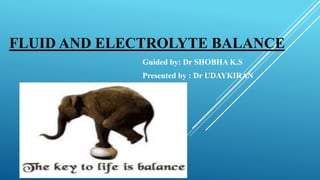
FLUID AND ELECTROLYTE BALANCE
Guided by: Dr SHOBHA K.S
Presented by : Dr UDAYKIRAN
 contents
o Introduction
o fluid balance
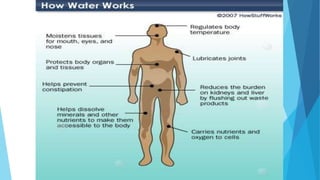
o Functions of water
o Distribution of body water
o Water turnover and balance
o Water intake
o Water output
o Hormonal regulation of urine production
o Dehydration
o Overhydration
o Electrolyte balance
o Electrolyte composition of body fluids
o Osmolarity and osmolality of body fluids
o Regulation of electrolyte balance
o Metabolism of electrolytes
o Acid-base balance
o Maintenance of blood pH
o Disorders of acid-base balance
 The organism possesses tremendous capacity to survive against odds maintaining
homeostasis
 This is particularly true with regards to water , electrolytes and acid base status of
the body
 Water is the most abundant substance in living systems , making up 70% or more
of the weight of most organisms
Fluid balance
What is a fluid ?
A substance that has no fixed shape and yields easily to external
pressure ;
fluid can be either a gas or a liquid
(or)
A fluid is a substance that has the capacity to flow and assume the
form of the container into which it has been poured
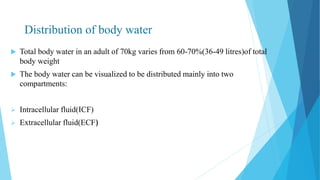
Distribution of body water
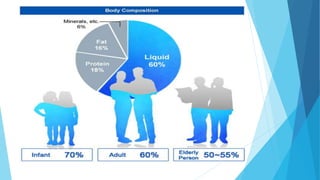
 Total body water in an adult of 70kg varies from 60-70%(36-49 litres)of total
body weight
 The body water can be visualized to be distributed mainly into two
compartments:
 Intracellular fluid(ICF)
 Extracellular fluid(ECF)
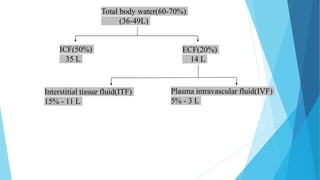
Total body water(60-70%)
(36-49L)
ICF(50%)
35 L
ECF(20%)
14 L
Interstitial tissue fluid(ITF)
15% - 11 L
Plasma intravascular fluid(IVF)
5% - 3 L
 The extracellular compartment must be recognized as more heterogenous
and should be subdivided into four more subdivisions:
I. Plasma
II. Interstitial and lymph fluid
III. Fluid of dense connective tissue , cartilage and bone
IV. Transcellular fluid
Water turnover and balance
 The body possesses tremendous capacity to regulate its water content in a healthy
individual.
 This is achieved by balancing the daily water intake and water output
 Water intake :
water is supplied to the body by:
A. Exogenous sources
B. Endogenous sources
EXOGENOUS WATER
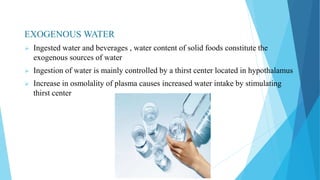
 Ingested water and beverages , water content of solid foods constitute the
exogenous sources of water
 Ingestion of water is mainly controlled by a thirst center located in hypothalamus
 Increase in osmolality of plasma causes increased water intake by stimulating
thirst center
ENDOGENOUS WATER
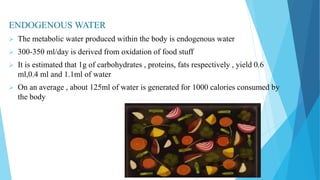
 The metabolic water produced within the body is endogenous water
 300-350 ml/day is derived from oxidation of food stuff
 It is estimated that 1g of carbohydrates , proteins, fats respectively , yield 0.6
ml,0.4 ml and 1.1ml of water
 On an average , about 125ml of water is generated for 1000 calories consumed by
the body
Water output
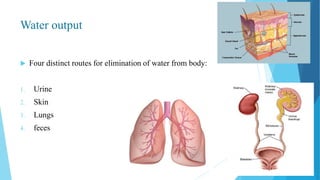
 Four distinct routes for elimination of water from body:
1. Urine
2. Skin
3. Lungs
4. feces
Urine
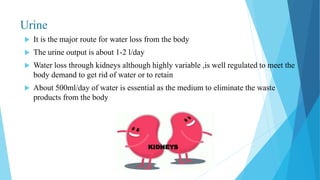
 It is the major route for water loss from the body
 The urine output is about 1-2 l/day
 Water loss through kidneys although highly variable ,is well regulated to meet the
body demand to get rid of water or to retain
 About 500ml/day of water is essential as the medium to eliminate the waste
products from the body
KIDNEYS
Hormonal regulation of urine production
 About 180L of water is filtered by glomeruli into the renal tubules everyday
 Most of them is reabsorbed and only 1-2 L is excreted as urine
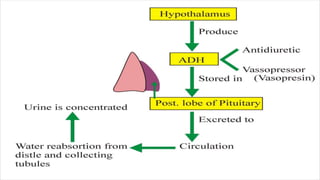
 Water excreted by kidney is tightly controlled by vasopressin also known as anti
diuretic hormone (ADH) of posterior pituitary gland
 The secretion of ADH is regulated by osmotic pressure of plasma
Skin
 Loss of water (450 ml/day)occurs through the body surface by
perspiration
 This mostly depends on atmospheric temperature and humidity
Lungs
During respiration , some amount of water (about 400ml/day)is lost
through the expired air
The lost water by perspiration (via skin) and respiration (via lungs) is collectively
referred to as “INSENSIBLE WATER LOSS”
FECES
 About 150ml/day is lost through feces in a healthy individual
 Fecal loss of water is tremendously increased in diarrhea
What is fluid balance?
 Fluid balance is a term used to describe the balance of the input
and output of fluids in the body to allow metabolic processes to
function correctly (Welch, 2010).
 Around 52% of total body weight in women and 60% in men
is fluid.
Goals of maintenance of fluids
 Prevent dehydration
 Prevent electrolyte disturbance
 Prevent ketoacidosis
 Prevent protein degradation
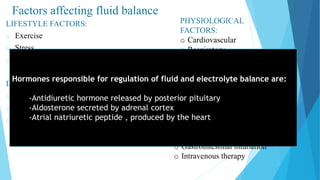
Factors affecting fluid balance
LIFESTYLE FACTORS:
o Exercise
o Stress
o nutrition
DEVELOPMENTAL FACTORS:
o Infants and children
o Adolescents and middle aged adults
o Older adults
PHYSIOLOGICAL
FACTORS:
o Cardiovascular
o Respiratory
o Gastrointestinal
o Renal
o Integumentary
CLINICAL FACTORS:
o Surgery
o Chemotherapy
o Medications
o Gastrointestinal intubation
o Intravenous therapy
Hormones responsible for regulation of fluid and electrolyte balance are:
-Antidiuretic hormone released by posterior pituitary
-Aldosterone secreted by adrenal cortex
-Atrial natriuretic peptide , produced by the heart
Abnormalities associated with water balance
-Dehydration
-Overhydration
Dehydration
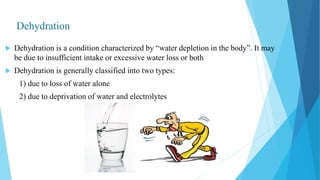
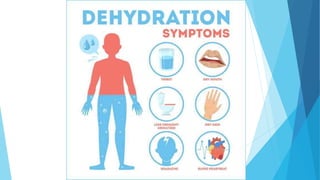
 Dehydration is a condition characterized by “water depletion in the body”. It may
be due to insufficient intake or excessive water loss or both
 Dehydration is generally classified into two types:
1) due to loss of water alone
2) due to deprivation of water and electrolytes
 Hypovolemia , also known as water depletion or volume contraction , is
a state of abnormally low extracellular fluid in body
 Hypovolemia is due to either loss of both salt and water or decrease in
blood volume
 Common causes are:
-blood loss
-vomiting
-diarrhea
-burns
Causes of Dehydration
 Diarrhea
 Vomiting
 Excessive sweating
 Fluid loss in burns
 Adrenocortical dysfunction
 Kidney diseases
 Deficiency of ADH(diabetes insipidus)
Characteristics of Dehydration
There are three degrees of dehydration:
 Mild
-occurs when fluid loss or diminished fluid intake leads to decrease
in total body water content
-it is said that individuals can become dehydrated if they loss just
2% of their total body weight due to water depletion
 Moderate
-occurs with fluid deficit of 5-10% in infants and 3-6% in children
-the fluid deficit should be replaced within 4 hours
 Severe
-it is a medical emergency and an advanced state of dehydration
 causes of severe dehydration:
-heat
-illness
-not drinking enough water
-medications such as diuretics used for high BP
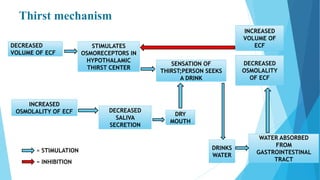
Thirst mechanism
DECREASED
VOLUME OF ECF
STIMULATES
OSMORECEPTORS IN
HYPOTHALAMIC
THIRST CENTER
INCREASED
OSMOLALITY OF ECF DECREASED
SALIVA
SECRETION
DRY
MOUTH
SENSATION OF
THIRST;PERSON SEEKS
A DRINK
INCREASED
VOLUME OF
ECF
DECREASED
OSMOLALITY
OF ECF
WATER ABSORBED
FROM
GASTROINTESTINAL
TRACT
DRINKS
WATER
= STIMULATION
= INHIBITION
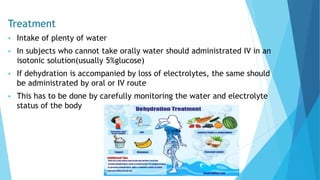
Treatment
 Intake of plenty of water
 In subjects who cannot take orally water should administrated IV in an
isotonic solution(usually 5%glucose)
 If dehydration is accompanied by loss of electrolytes, the same should
be administrated by oral or IV route
 This has to be done by carefully monitoring the water and electrolyte
status of the body
Overhydration
 Overhydration or water intoxication is caused by excessive retention of
water in the body
 This may occur due to excessive intake of large volumes of salt free
fluids, renal failure, overproduction of ADH
 Overhydration is observed after major trauma or operation , lung
infection
 Water intoxication is associated with dilution of ECF and ICF with
decrease in osmolality
Clinical symptoms
 Headache
 Lethargy
 Convulsions
Treatment
 Stoppage of excess water intake
 Administration of hypertonic saline
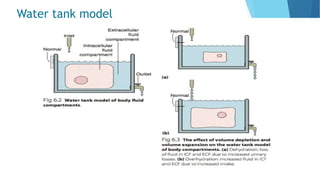
Water tank model
Electrolyte balance
Electrolyte balance
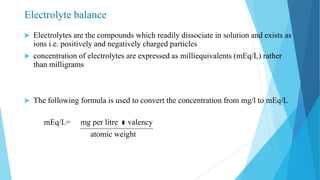
 Electrolytes are the compounds which readily dissociate in solution and exists as
ions i.e. positively and negatively charged particles
 concentration of electrolytes are expressed as milliequivalents (mEq/L) rather
than milligrams
 The following formula is used to convert the concentration from mg/l to mEq/L
mEq/L= mg per litre valency
atomic weight
Electrolyte composition of body fluids
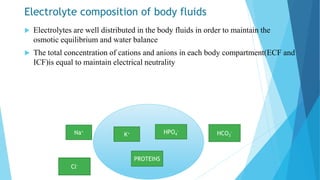
 Electrolytes are well distributed in the body fluids in order to maintain the
osmotic equilibrium and water balance
 The total concentration of cations and anions in each body compartment(ECF and
ICF)is equal to maintain electrical neutrality
K+ HPO4
-
Cl-
HCO3
-
Na+
PROTEINS
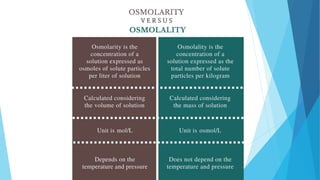
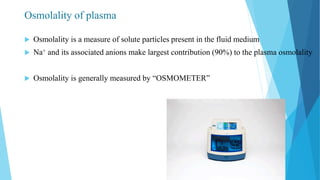
Osmolality of plasma
 Osmolality is a measure of solute particles present in the fluid medium
 Na+ and its associated anions make largest contribution (90%) to the plasma osmolality
 Osmolality is generally measured by “OSMOMETER”
Osmolality of ECF and ICF
 Movement of water across the biological membranes is dependent on the osmotic
pressure difference between the ICF and ECF
 In healthy state the osmotic pressure of ECF which is mainly due to Na+ ions is
equal to the osmotic pressure of ICF , which is predominantly due to K+ ions
 There is no passage of water molecules in or out of the cells, due to this osmotic
equilibrium
Normal ranges ,their roles and
disturbances in common electrolytes
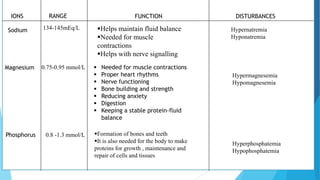
IONS RANGE FUNCTION DISTURBANCES
134-145mEq/L Helps maintain fluid balance
Needed for muscle
contractions
Helps with nerve signalling
Magnesium 0.75-0.95 mmol/L  Needed for muscle contractions
 Proper heart rhythms
 Nerve functioning
 Bone building and strength
 Reducing anxiety
 Digestion
 Keeping a stable protein-fluid
balance
Phosphorus 0.8 -1.3 mmol/L Formation of bones and teeth
It is also needed for the body to make
proteins for growth , maintenance and
repair of cells and tissues
Hypernatremia
Hyponatremia
Hypermagnesemia
Hypomagnesemia
Hyperphosphatemia
Hypophosphatemia
Sodium
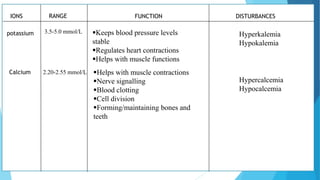
IONS RANGE FUNCTION DISTURBANCES
3.5-5.0 mmol/L Keeps blood pressure levels
stable
Regulates heart contractions
Helps with muscle functions
2.20-2.55 mmol/L Helps with muscle contractions
Nerve signalling
Blood clotting
Cell division
Forming/maintaining bones and
teeth
Hyperkalemia
Hypokalemia
Hypercalcemia
Hypocalcemia
Calcium
potassium
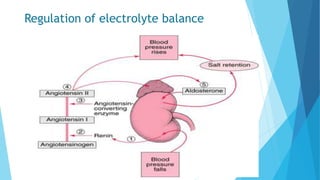
Regulation of electrolyte balance
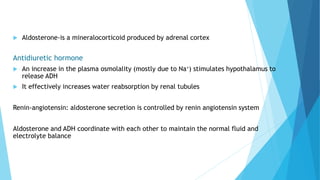
 Aldosterone-is a mineralocorticoid produced by adrenal cortex
Antidiuretic hormone
 An increase in the plasma osmolality (mostly due to Na+) stimulates hypothalamus to
release ADH
 It effectively increases water reabsorption by renal tubules
Renin-angiotensin: aldosterone secretion is controlled by renin angiotensin system
Aldosterone and ADH coordinate with each other to maintain the normal fluid and
electrolyte balance
Electrolyte imbalance
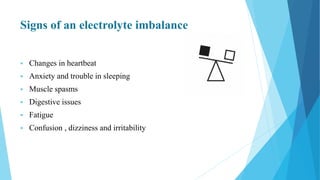
Signs of an electrolyte imbalance
 Changes in heartbeat
 Anxiety and trouble in sleeping
 Muscle spasms
 Digestive issues
 Fatigue
 Confusion , dizziness and irritability
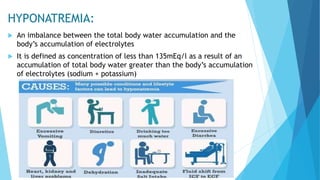
HYPONATREMIA:
 An imbalance between the total body water accumulation and the
body’s accumulation of electrolytes
 It is defined as concentration of less than 135mEq/l as a result of an
accumulation of total body water greater than the body’s accumulation
of electrolytes (sodium + potassium)
Symptoms of hyponatremia
• Nausea and vomiting
• Headache
• Convulsion
• Restlessness and irritability
• Muscle weakness , spasms and cramps
• Seizures
• Loss of energy , drowsiness and fatigue
• coma
Treatment of hyponatremia
 Hyponatremia treatment is aimed at addressing the underlying cause, if possible.
 If you have moderate, chronic hyponatremia due to your diet, diuretics or drinking too
much water, recommend temporarily cutting back on fluids. Also suggest adjusting your
diuretic use to increase the level of sodium in your blood.
 If you have severe, acute hyponatremia, you'll need more-aggressive treatment. Options
include:
• Intravenous fluids. Your doctor may recommend IV sodium solution to slowly raise the
sodium levels in your blood. This requires a stay in the hospital for frequent monitoring
of sodium levels as too rapid of a correction is dangerous.
• Medications. You may take medications to manage the signs and symptoms of
hyponatremia, such as headaches, nausea and seizures.
HYPERNATREMIA:
 Plasma Na+ >145 mEq/l
 Due to increased sodium and decreased water
Caused due to:
 Excessive intake of sodium
 Excessive sodium retention
 Insufficient intake of water
 Loss of pure water
-long term sweating with chronic fever
-polyuria
Symptoms of hypernatremia
• Hypernatremia typically causes thirst
• Serious symptoms include: brain dysfunction
• Severe hypernatremia leads to:
-Convulsion
-Muscle twitching
-Seizures
-Coma
-May cause death
Treatment of hypernatremia
 Hypernatremia can occur rapidly (within 24 hours) or develop more slowly over time
(more than 24 to 48 hours).
 All treatment is based on correcting the fluid and sodium balance in your body.
 For mild cases, you may be able to treat the condition by increasing your fluid intake.
 For more severe cases, you’ll likely be connected to an IV drip. That’s used to
intravenously supply fluid to your blood.
 Also monitor you to see if your sodium levels are improving, and adjust your fluid
concentration accordingly.
Hypokalemia
 Hypokalemia is when blood's potassium levels are too low.
 Potassium is an important electrolyte for nerve and muscle cell functioning, especially
for muscle cells in the heart.
 kidneys control your body's potassium levels, allowing for excess potassium to leave the
body through urine or sweat.
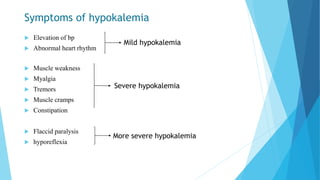
Symptoms of hypokalemia
 Elevation of bp
 Abnormal heart rhythm
 Muscle weakness
 Myalgia
 Tremors
 Muscle cramps
 Constipation
 Flaccid paralysis
 hyporeflexia
Mild hypokalemia
Severe hypokalemia
More severe hypokalemia
TREATMENT OF HYPOKALEMIA
 In treating hypokalemia , the first step is to identify and stop ongoing losses of potassium
 Discontinue diuretics/laxatives
 Use potassium sparing diuretics if diuretic therapy is required (eg , severe heart failure)
 Treat diarrhea or vomiting
Hyperkalemia
 It is defined as a serum potassium concentration greater than 5.5mEq/L
 The normal serum concentration range of potassium is 3.5-5mEq/L
It is classified into:
 Mild-5.5-6mEq/L
 Moderate-6.1-6.9mEq/L
 Severe->7mEq/L
Symptoms of hyperkalemia
 Nausea
 Fatigue
 Muscle weakness or
 Tingling sensation
Serious symptoms include:
 Slow heartbeat
 Weak pulse
Treatment of hyperkalemia
 Diet low in potassium(for mild cases)
 Discontinue medication that increase blood potassium levels
 IV glucose and insulin
 IV calcium
 Sodium bicarbonate administration
 Diuretics administration
 Medication such as albuterol , epinephrine that stimulates beta 2 adrenergic receptors
 Dialysis if other measures have failed or if renal failure is present
HYPERCALCEMIA
 Hypercalcemia is a condition in which the calcium level in your blood is
above normal
 Hypercalcemia is usually a result of overactive parathyroid glands
 Besides building strong bones and teeth, calcium helps muscles contract
and nerves transmit signals.
 Normally, if there isn't enough calcium in your blood, your parathyroid
glands secrete a hormone that triggers:
• Bones to release calcium into your blood
• Digestive tract to absorb more calcium
• Kidneys to excrete less calcium and activate more vitamin D, which plays a
vital role in calcium absorption
SYMPTOMS
 You might not have signs or symptoms if your hypercalcemia is mild.
 More-severe cases produce signs and symptoms related to the parts
of your body affected by the high calcium levels in your blood.
 Examples include:
• Kidneys
• Digestive system
• Bones and muscles
• Brain
• Heart
Hypercalcemia is caused by
• Overactive parathyroid glands (hyperparathyroidism)
• Cancer
• Hereditary factors
• Immobility
• Severe dehydration
• Medications
• Supplements
TREATMENT OF HYPERCALCEMIA
 If hypercalcemia is mild, we might choose to watch and wait,
monitoring bones and kidneys over time to be sure they remain healthy.
 For more severe hypercalcemia, we might recommend medications or
treatment of the underlying diseases
 In some cases, medication recommend are:
• Calcitonin (Miacalcin)
• Calcimimetics
• Bisphosphonates
• Prednisone
• IV fluids and diuretics
HYPOCALCEMIA
 This deficiency may be due to a variety of factors, including:
• poor calcium intake over a long period of time, especially in
childhood
• medications that may decrease calcium absorption
• dietary intolerance to foods rich in calcium
• hormonal changes, especially in women
• certain genetic factors
• Other causes of hypocalcemia
include malnutrition and malabsorption.
SYMPTOMS
 Severe symptoms of hypocalcemia include:
• confusion or memory loss
• muscle spasm
• numbness and tingling in the hands, feet, and face
• depression
• hallucinations
• muscle cramps
• weak and brittle nails
• easy fracturing of the bones
TREATMENT OF HYPOCALCEMIA
 Commonly recommended calcium supplements include:
• calcium carbonate- which is the least expensive and has the most
elemental calcium
• calcium citrate- which is the most easily absorbed
• calcium phosphate-which is also easily absorbed and doesn’t cause
constipation
 Calcium supplements are available in liquid, tablet, and chewable
forms.
HYPERPHOSPHATEMIA:
 High level of phosphate or phosphorous in blood is known as
hyperphosphatemia
 A high phosphate level is often a sign of kidney damage
Symptoms:
• People with high phosphate levels don’t have symptoms
• In some people with chronic kidney disease , high phosphate levels
cause calcium levels in the blood to drop
• Symptoms of low calcium include:
-muscle cramps
-bone and joint pain
-weak bones
-rash
-itchy skin
Causes:
 High vitamin D levels
 Damage to cells
 Serious body wide infections
 Diabetic ketoacidosis
Treatment:
-Reduce the amount of phosphate in diet
-Remove extra phosphate with dialysis
-Limit foods that are high in phosphorous such as:
• Milk
• Red meat
• Breads
• Additives and preservatives
HYPOPHOSPHATEMIA:
 Low levels of phosphate in the blood
 There are two types of hypophosphatemia:
-Acute hypophosphatemia
-Chronic hypophosphatemia
-familial hypophosphatemia , is rare
Symptoms:
• Muscle weakness
• Bone pain
• Bone fractures
• Irritability
• Appetite loss
• Confusion
• Tooth decay or late baby teeth
Causes:
Certain medical conditions can cause hypophosphatemia by:
-Decreasing the amount of phosphate absorption in intestine
-Increasing the amount of phosphate removal through kidneys
-Moving phosphate from inside the cells to the area outside the
cells
Other causes includes:
-Severe malnutrition , such as anorexia or starvation
-Alcoholism
-Severe burns
-Chronic diarrhea
-Vitamin D deficiency
Long term or excess use of certain drugs , such as:
-Diuretics
-Antacids
-Theophylline , Bronchodilators
-Corticosteroids
-Mannitol
-Bisphosphonates
Treatment:
• If a medication caused this condition , stop taking the drug
• Taking more phosphate in diet
• Intake of vitamin D supplements
Acid base balance
Acid base balance
 Acid base balance means regulation of [H+] in the body fluid
 Even slight changes in H+ value from normal can cause marked
alteration in the rate of chemical reaction in the cells
 For this reason the regulation of H+ is the most important aspect of
homeostasis
 Normal pH of blood is maintained in narrow range of 7.35-7.45 i.e.
slightly alkaline
 The pH of ICF is rather variable
 The pH of erythrocytes is 7.2
 While in skeletal muscles it may be as low as 6.0
Production of acids by body
 The metabolism in the body is accompanied by an overall production of acids
 Like the volatile acids such as carbonic acids ( predominantly about 20,000mEq/day)
 Or non volatile acids (about 80mEq/day) such as lactic acid, sulfuric acid , phosphoric
acid etc.
 All these acids add up H+ ions to the blood
Production of bases by body
 The formation of basic compounds in the body in the normal
circumstances is negligible
 Some amount of bicarbonates are generated from the organic acids such
as lactate and citrate
 Ammonia produced in the amino acid metabolism is converted to urea ,
hence its contribution as a base in the body is insignificant
Maintenance of blood pH
 The body has developed three lines of defense mechanism to regulate
the bodies acid-base balance and maintain the blood pH
I. Blood buffer system
II. Respiratory mechanism
III. Renal mechanism
Blood buffer
 Buffer may be defined as a solution of a weak acid (HA) and its salts
(BA) with a strong base.
 The buffer resists the change in pH by addition of acid or alkali and
 the buffering capacity is dependent on the absolute concentration of
salts and acids
 Blood contains three buffer systems:
1. Bicarbonate buffer
2. Phosphate buffer
3. Protein buffer
Bicarbonate buffer system
 Sodium bicarbonate and carbonic acid (NaHCO3-H2CO3) is the most predominant buffer
system of ECF , particularly the plasma
 Carbonic acid dissociates into hydrogen and bicarbonate ions
Henderson- hasselbalch equation:
pH = pKa + log
It is evident from this equation that the pH is dependent on ratio of the concentration
of base to acid
[Base]
[Acid]
Blood pH and the ratio of HCO3
- and H2CO3
 The plasma bicarbonate (HCO3
-) Concentration is around 24
mmol/L(range 22-26 mmol/L)
 Carbonic acid is a solution of Co2 in water
 In normal circumstances the concentration of bicarbonates and carbonic
acid determines the pH of blood
 Further , the bicarbonate buffer system serves as an index to understand
the disturbances in acid-base balance in the body
Phosphate buffer system
 Sodium dihydrogen phosphate and disodium hydrogen phosphate
(NaH2Po4-Na2HPo4) constitute the phosphate buffer
 Its mostly an intracellular buffer and is of less importance in plasma
due to its low concentration
 Its is established that the ratio of base to acid for phosphate buffer is 4
compared to 20 for bicarbonate buffer
Protein buffer system
 The plasma proteins and hemoglobin together constitute the protein buffer system of
blood
 Imindazole group of histidine (pH=6.7) is the most effective contributor of protein buffer
 The plasma protein account for about 2% of the total buffering capacity of plasma
 Hemoglobin of RBC is also an important buffer it mainly buffers the fixed acids ,
besides being involved in the transport of gases (CO2 and O2)
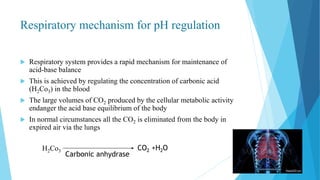
Respiratory mechanism for pH regulation
 Respiratory system provides a rapid mechanism for maintenance of
acid-base balance
 This is achieved by regulating the concentration of carbonic acid
(H2Co3) in the blood
 The large volumes of CO2 produced by the cellular metabolic activity
endanger the acid base equilibrium of the body
 In normal circumstances all the CO2 is eliminated from the body in
expired air via the lungs
H2Co3 CO2 +H2O
Carbonic anhydrase
 The rate of respiration is controlled by a respiratory center ,located in the medulla of the
brain
 The center is highly sensitive to change in pH of blood
 Any decrease in the blood pH causes hyperventilation to blow off CO2 thereby reduces
the H2Co3 concentration simultaneously ,the H+ ions are eliminated as H2O
 Respiratory control of blood pH is rapid but only a short term regulatory process , since
hyperventilation cannot proceed for long
Hemoglobin as a buffer
 Hemoglobin of erythrocytes is also important in the respiratory regulation of pH
 At tissue level, hemoglobin binds to H+ ions and helps transport CO2 and HCo3
- with a
minimum change in pH (referred to as isohydric transport)
 In lungs , as hemoglobin combines with O2 ,H+ ions are removed which combine with
HCo3
- to form H2Co3 the latter dissociates to release CO2 to be exhaled
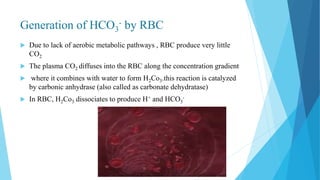
Generation of HCO3
- by RBC
 Due to lack of aerobic metabolic pathways , RBC produce very little
CO2
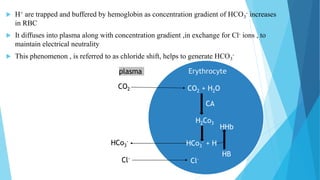
 The plasma CO2 diffuses into the RBC along the concentration gradient
 where it combines with water to form H2Co3.this reaction is catalyzed
by carbonic anhydrase (also called as carbonate dehydratase)
 In RBC, H2Co3 dissociates to produce H+ and HCO3
-
 H+ are trapped and buffered by hemoglobin as concentration gradient of HCO3
- increases
in RBC
 It diffuses into plasma along with concentration gradient ,in exchange for Cl- ions , to
maintain electrical neutrality
 This phenomenon , is referred to as chloride shift, helps to generate HCO3
-
Erythrocyte
CO2 + H2O
CA
H2Co3
HCo3
- + H
HCo3
-
Cl-
Cl-
CO2
HHb
HB
plasma
Renal mechanism for pH regulation
 The kidneys regulate the blood pH by maintaining the alkali reserve , besides
excreting or reabsorbing the acidic or basic substances
 Urine pH is normally lower than blood pH – approximately 6.0
CARBONIC ANHYDRASE AND RENAL REGULATION
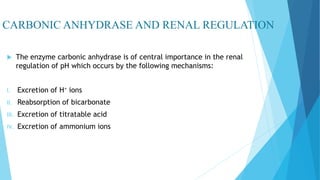
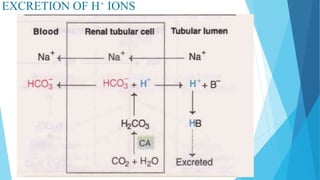
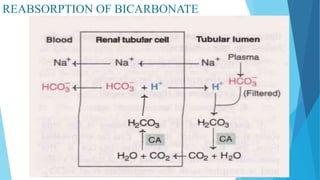
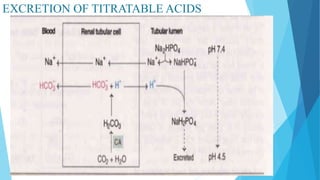
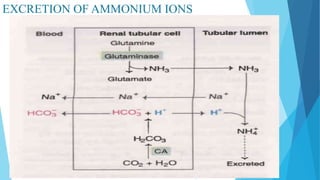
 The enzyme carbonic anhydrase is of central importance in the renal
regulation of pH which occurs by the following mechanisms:
I. Excretion of H+ ions
II. Reabsorption of bicarbonate
III. Excretion of titratable acid
IV. Excretion of ammonium ions
EXCRETION OF H+ IONS
REABSORPTION OF BICARBONATE
EXCRETION OF TITRATABLE ACIDS
EXCRETION OF AMMONIUM IONS
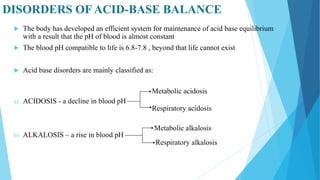
DISORDERS OF ACID-BASE BALANCE
 The body has developed an efficient system for maintenance of acid base equilibrium
with a result that the pH of blood is almost constant
 The blood pH compatible to life is 6.8-7.8 , beyond that life cannot exist
 Acid base disorders are mainly classified as:
a) ACIDOSIS - a decline in blood pH
b) ALKALOSIS – a rise in blood pH
Metabolic acidosis
Respiratory acidosis
Metabolic alkalosis
Respiratory alkalosis
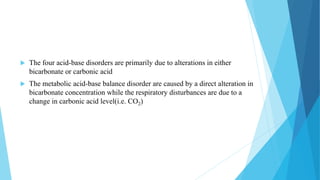
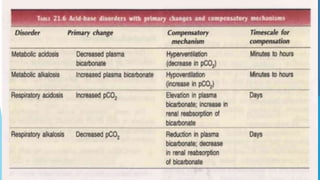
 The four acid-base disorders are primarily due to alterations in either
bicarbonate or carbonic acid
 The metabolic acid-base balance disorder are caused by a direct alteration in
bicarbonate concentration while the respiratory disturbances are due to a
change in carbonic acid level(i.e. CO2)
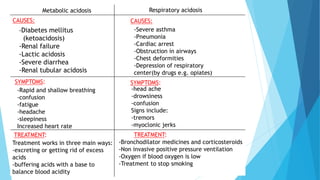
Metabolic acidosis Respiratory acidosis
CAUSES: CAUSES:
-Diabetes mellitus
(ketoacidosis)
-Renal failure
-Lactic acidosis
-Severe diarrhea
-Renal tubular acidosis
-Severe asthma
-Pneumonia
-Cardiac arrest
-Obstruction in airways
-Chest deformities
-Depression of respiratory
center(by drugs e.g. opiates)
SYMPTOMS: SYMPTOMS:
TREATMENT: TREATMENT:
-Rapid and shallow breathing
-confusion
-fatigue
-headache
-sleepiness
Increased heart rate
-head ache
-drowsiness
-confusion
Signs include:
-tremors
-myoclonic jerks
-Bronchodilator medicines and corticosteroids
-Non invasive positive pressure ventilation
-Oxygen if blood oxygen is low
-Treatment to stop smoking
Treatment works in three main ways:
-excreting or getting rid of excess
acids
-buffering acids with a base to
balance blood acidity
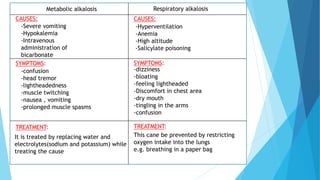
Metabolic alkalosis Respiratory alkalosis
CAUSES: CAUSES:
-Severe vomiting
-Hypokalemia
-Intravenous
administration of
bicarbonate
-Hyperventilation
-Anemia
-High altitude
-Salicylate poisoning
SYMPTOMS: SYMPTOMS:
TREATMENT: TREATMENT:
-confusion
-head tremor
-lightheadedness
-muscle twitching
-nausea , vomiting
-prolonged muscle spasms
-dizziness
-bloating
-feeling lightheaded
-Discomfort in chest area
-dry mouth
-tingling in the arms
-confusion
This cane be prevented by restricting
oxygen intake into the lungs
e.g. breathing in a paper bag

It is treated by replacing water and
electrolytes(sodium and potassium) while
treating the cause
Conclusion:
 Water is the solvent of life.
 Undoubtedly water is more important than any other single compound
in our life
 Fluid movements in the body and fluid electrolyte balance are the
inevitable process for normal body function
 Assessment of body fluids is important to determine causes of
imbalance
 Standard assessment methods include physical examination , serum
electrolytes , and accurate body weight and fluid intake and output
measurements
References:
 A MATHER , L BURNETT , DR SULLIVAN , P STEWART . CLINICAL BIOCHEMISTRY
AND METABOLIC MEDICINE.IN:DAVIDSONS PRINCIPLES AND PRACTICE OF
MEDICINE 23RD EDITION PG NO.345-369
 LONGO , FAUCI , KASPER , HAUSER , JAMESON , LOSCALZO .
ELECTROLYTE/ACID BASE BALANCE.IN:HARRISONS MANUAL OF MEDICINE 18TH
EDITION PG NO.3-25
 GUYTON AND HALL . THE BODY FLUIDS COMPARTMENTS:EXTRACELLULAR
FLUIDS;INTERTITIAL FLUIDS AND EDEMA.IN:TEXTBOOK OF MEDICAL
PHYSIOLOGY.INTERNATIONAL EDITION 13TH PG NO.303-321
 LONGO , FAUCI , KASPER , HAUSER , JAMESON , LOSCALZO . HYPERCALCEMIA
AND HYPOCALCEMIA.ENDOCRINOLOGY AND METABOLISM.IN:HARRISONS
MANUAL OF MEDICINE 18TH EDITION PG NO.1159-1167
 MICHEAL M.COX , DAVID L.NESON . WATER .IN:LEHNINGER PRINCIPLES OF
BIOCHEMISTRY 5TH EDITION PG NO.43-63
Fluid and electrolyte balance

Fluid and electrolyte balance

  • 1.
  • 2.
    FLUID AND ELECTROLYTEBALANCE Guided by: Dr SHOBHA K.S Presented by : Dr UDAYKIRAN
  • 3.
     contents o Introduction ofluid balance o Functions of water o Distribution of body water o Water turnover and balance o Water intake o Water output o Hormonal regulation of urine production o Dehydration o Overhydration
  • 4.
    o Electrolyte balance oElectrolyte composition of body fluids o Osmolarity and osmolality of body fluids o Regulation of electrolyte balance o Metabolism of electrolytes o Acid-base balance o Maintenance of blood pH o Disorders of acid-base balance
  • 5.
     The organismpossesses tremendous capacity to survive against odds maintaining homeostasis  This is particularly true with regards to water , electrolytes and acid base status of the body  Water is the most abundant substance in living systems , making up 70% or more of the weight of most organisms
  • 6.
  • 7.
    What is afluid ? A substance that has no fixed shape and yields easily to external pressure ; fluid can be either a gas or a liquid (or) A fluid is a substance that has the capacity to flow and assume the form of the container into which it has been poured
  • 9.
    Distribution of bodywater  Total body water in an adult of 70kg varies from 60-70%(36-49 litres)of total body weight  The body water can be visualized to be distributed mainly into two compartments:  Intracellular fluid(ICF)  Extracellular fluid(ECF)
  • 10.
    Total body water(60-70%) (36-49L) ICF(50%) 35L ECF(20%) 14 L Interstitial tissue fluid(ITF) 15% - 11 L Plasma intravascular fluid(IVF) 5% - 3 L
  • 11.
     The extracellularcompartment must be recognized as more heterogenous and should be subdivided into four more subdivisions: I. Plasma II. Interstitial and lymph fluid III. Fluid of dense connective tissue , cartilage and bone IV. Transcellular fluid
  • 14.
    Water turnover andbalance  The body possesses tremendous capacity to regulate its water content in a healthy individual.  This is achieved by balancing the daily water intake and water output  Water intake : water is supplied to the body by: A. Exogenous sources B. Endogenous sources
  • 15.
    EXOGENOUS WATER  Ingestedwater and beverages , water content of solid foods constitute the exogenous sources of water  Ingestion of water is mainly controlled by a thirst center located in hypothalamus  Increase in osmolality of plasma causes increased water intake by stimulating thirst center
  • 16.
    ENDOGENOUS WATER  Themetabolic water produced within the body is endogenous water  300-350 ml/day is derived from oxidation of food stuff  It is estimated that 1g of carbohydrates , proteins, fats respectively , yield 0.6 ml,0.4 ml and 1.1ml of water  On an average , about 125ml of water is generated for 1000 calories consumed by the body
  • 17.
    Water output  Fourdistinct routes for elimination of water from body: 1. Urine 2. Skin 3. Lungs 4. feces
  • 18.
    Urine  It isthe major route for water loss from the body  The urine output is about 1-2 l/day  Water loss through kidneys although highly variable ,is well regulated to meet the body demand to get rid of water or to retain  About 500ml/day of water is essential as the medium to eliminate the waste products from the body KIDNEYS
  • 19.
    Hormonal regulation ofurine production  About 180L of water is filtered by glomeruli into the renal tubules everyday  Most of them is reabsorbed and only 1-2 L is excreted as urine  Water excreted by kidney is tightly controlled by vasopressin also known as anti diuretic hormone (ADH) of posterior pituitary gland  The secretion of ADH is regulated by osmotic pressure of plasma
  • 21.
    Skin  Loss ofwater (450 ml/day)occurs through the body surface by perspiration  This mostly depends on atmospheric temperature and humidity Lungs During respiration , some amount of water (about 400ml/day)is lost through the expired air
  • 22.
    The lost waterby perspiration (via skin) and respiration (via lungs) is collectively referred to as “INSENSIBLE WATER LOSS” FECES  About 150ml/day is lost through feces in a healthy individual  Fecal loss of water is tremendously increased in diarrhea
  • 23.
    What is fluidbalance?  Fluid balance is a term used to describe the balance of the input and output of fluids in the body to allow metabolic processes to function correctly (Welch, 2010).  Around 52% of total body weight in women and 60% in men is fluid.
  • 24.
    Goals of maintenanceof fluids  Prevent dehydration  Prevent electrolyte disturbance  Prevent ketoacidosis  Prevent protein degradation
  • 25.
    Factors affecting fluidbalance LIFESTYLE FACTORS: o Exercise o Stress o nutrition DEVELOPMENTAL FACTORS: o Infants and children o Adolescents and middle aged adults o Older adults PHYSIOLOGICAL FACTORS: o Cardiovascular o Respiratory o Gastrointestinal o Renal o Integumentary CLINICAL FACTORS: o Surgery o Chemotherapy o Medications o Gastrointestinal intubation o Intravenous therapy Hormones responsible for regulation of fluid and electrolyte balance are: -Antidiuretic hormone released by posterior pituitary -Aldosterone secreted by adrenal cortex -Atrial natriuretic peptide , produced by the heart
  • 26.
    Abnormalities associated withwater balance -Dehydration -Overhydration
  • 27.
    Dehydration  Dehydration isa condition characterized by “water depletion in the body”. It may be due to insufficient intake or excessive water loss or both  Dehydration is generally classified into two types: 1) due to loss of water alone 2) due to deprivation of water and electrolytes
  • 28.
     Hypovolemia ,also known as water depletion or volume contraction , is a state of abnormally low extracellular fluid in body  Hypovolemia is due to either loss of both salt and water or decrease in blood volume  Common causes are: -blood loss -vomiting -diarrhea -burns
  • 29.
    Causes of Dehydration Diarrhea  Vomiting  Excessive sweating  Fluid loss in burns  Adrenocortical dysfunction  Kidney diseases  Deficiency of ADH(diabetes insipidus)
  • 31.
    Characteristics of Dehydration Thereare three degrees of dehydration:  Mild -occurs when fluid loss or diminished fluid intake leads to decrease in total body water content -it is said that individuals can become dehydrated if they loss just 2% of their total body weight due to water depletion
  • 32.
     Moderate -occurs withfluid deficit of 5-10% in infants and 3-6% in children -the fluid deficit should be replaced within 4 hours  Severe -it is a medical emergency and an advanced state of dehydration  causes of severe dehydration: -heat -illness -not drinking enough water -medications such as diuretics used for high BP
  • 33.
    Thirst mechanism DECREASED VOLUME OFECF STIMULATES OSMORECEPTORS IN HYPOTHALAMIC THIRST CENTER INCREASED OSMOLALITY OF ECF DECREASED SALIVA SECRETION DRY MOUTH SENSATION OF THIRST;PERSON SEEKS A DRINK INCREASED VOLUME OF ECF DECREASED OSMOLALITY OF ECF WATER ABSORBED FROM GASTROINTESTINAL TRACT DRINKS WATER = STIMULATION = INHIBITION
  • 34.
    Treatment  Intake ofplenty of water  In subjects who cannot take orally water should administrated IV in an isotonic solution(usually 5%glucose)  If dehydration is accompanied by loss of electrolytes, the same should be administrated by oral or IV route  This has to be done by carefully monitoring the water and electrolyte status of the body
  • 35.
    Overhydration  Overhydration orwater intoxication is caused by excessive retention of water in the body  This may occur due to excessive intake of large volumes of salt free fluids, renal failure, overproduction of ADH  Overhydration is observed after major trauma or operation , lung infection  Water intoxication is associated with dilution of ECF and ICF with decrease in osmolality
  • 36.
    Clinical symptoms  Headache Lethargy  Convulsions Treatment  Stoppage of excess water intake  Administration of hypertonic saline
  • 37.
  • 38.
  • 39.
    Electrolyte balance  Electrolytesare the compounds which readily dissociate in solution and exists as ions i.e. positively and negatively charged particles  concentration of electrolytes are expressed as milliequivalents (mEq/L) rather than milligrams  The following formula is used to convert the concentration from mg/l to mEq/L mEq/L= mg per litre valency atomic weight
  • 40.
    Electrolyte composition ofbody fluids  Electrolytes are well distributed in the body fluids in order to maintain the osmotic equilibrium and water balance  The total concentration of cations and anions in each body compartment(ECF and ICF)is equal to maintain electrical neutrality K+ HPO4 - Cl- HCO3 - Na+ PROTEINS
  • 42.
    Osmolality of plasma Osmolality is a measure of solute particles present in the fluid medium  Na+ and its associated anions make largest contribution (90%) to the plasma osmolality  Osmolality is generally measured by “OSMOMETER”
  • 43.
    Osmolality of ECFand ICF  Movement of water across the biological membranes is dependent on the osmotic pressure difference between the ICF and ECF  In healthy state the osmotic pressure of ECF which is mainly due to Na+ ions is equal to the osmotic pressure of ICF , which is predominantly due to K+ ions  There is no passage of water molecules in or out of the cells, due to this osmotic equilibrium
  • 44.
    Normal ranges ,theirroles and disturbances in common electrolytes
  • 45.
    IONS RANGE FUNCTIONDISTURBANCES 134-145mEq/L Helps maintain fluid balance Needed for muscle contractions Helps with nerve signalling Magnesium 0.75-0.95 mmol/L  Needed for muscle contractions  Proper heart rhythms  Nerve functioning  Bone building and strength  Reducing anxiety  Digestion  Keeping a stable protein-fluid balance Phosphorus 0.8 -1.3 mmol/L Formation of bones and teeth It is also needed for the body to make proteins for growth , maintenance and repair of cells and tissues Hypernatremia Hyponatremia Hypermagnesemia Hypomagnesemia Hyperphosphatemia Hypophosphatemia Sodium
  • 46.
    IONS RANGE FUNCTIONDISTURBANCES 3.5-5.0 mmol/L Keeps blood pressure levels stable Regulates heart contractions Helps with muscle functions 2.20-2.55 mmol/L Helps with muscle contractions Nerve signalling Blood clotting Cell division Forming/maintaining bones and teeth Hyperkalemia Hypokalemia Hypercalcemia Hypocalcemia Calcium potassium
  • 47.
  • 48.
     Aldosterone-is amineralocorticoid produced by adrenal cortex Antidiuretic hormone  An increase in the plasma osmolality (mostly due to Na+) stimulates hypothalamus to release ADH  It effectively increases water reabsorption by renal tubules Renin-angiotensin: aldosterone secretion is controlled by renin angiotensin system Aldosterone and ADH coordinate with each other to maintain the normal fluid and electrolyte balance
  • 49.
  • 50.
    Signs of anelectrolyte imbalance  Changes in heartbeat  Anxiety and trouble in sleeping  Muscle spasms  Digestive issues  Fatigue  Confusion , dizziness and irritability
  • 51.
    HYPONATREMIA:  An imbalancebetween the total body water accumulation and the body’s accumulation of electrolytes  It is defined as concentration of less than 135mEq/l as a result of an accumulation of total body water greater than the body’s accumulation of electrolytes (sodium + potassium)
  • 52.
    Symptoms of hyponatremia •Nausea and vomiting • Headache • Convulsion • Restlessness and irritability • Muscle weakness , spasms and cramps • Seizures • Loss of energy , drowsiness and fatigue • coma
  • 53.
    Treatment of hyponatremia Hyponatremia treatment is aimed at addressing the underlying cause, if possible.  If you have moderate, chronic hyponatremia due to your diet, diuretics or drinking too much water, recommend temporarily cutting back on fluids. Also suggest adjusting your diuretic use to increase the level of sodium in your blood.  If you have severe, acute hyponatremia, you'll need more-aggressive treatment. Options include: • Intravenous fluids. Your doctor may recommend IV sodium solution to slowly raise the sodium levels in your blood. This requires a stay in the hospital for frequent monitoring of sodium levels as too rapid of a correction is dangerous. • Medications. You may take medications to manage the signs and symptoms of hyponatremia, such as headaches, nausea and seizures.
  • 54.
    HYPERNATREMIA:  Plasma Na+>145 mEq/l  Due to increased sodium and decreased water Caused due to:  Excessive intake of sodium  Excessive sodium retention  Insufficient intake of water  Loss of pure water -long term sweating with chronic fever -polyuria
  • 55.
    Symptoms of hypernatremia •Hypernatremia typically causes thirst • Serious symptoms include: brain dysfunction • Severe hypernatremia leads to: -Convulsion -Muscle twitching -Seizures -Coma -May cause death
  • 56.
    Treatment of hypernatremia Hypernatremia can occur rapidly (within 24 hours) or develop more slowly over time (more than 24 to 48 hours).  All treatment is based on correcting the fluid and sodium balance in your body.  For mild cases, you may be able to treat the condition by increasing your fluid intake.  For more severe cases, you’ll likely be connected to an IV drip. That’s used to intravenously supply fluid to your blood.  Also monitor you to see if your sodium levels are improving, and adjust your fluid concentration accordingly.
  • 57.
    Hypokalemia  Hypokalemia iswhen blood's potassium levels are too low.  Potassium is an important electrolyte for nerve and muscle cell functioning, especially for muscle cells in the heart.  kidneys control your body's potassium levels, allowing for excess potassium to leave the body through urine or sweat.
  • 58.
    Symptoms of hypokalemia Elevation of bp  Abnormal heart rhythm  Muscle weakness  Myalgia  Tremors  Muscle cramps  Constipation  Flaccid paralysis  hyporeflexia Mild hypokalemia Severe hypokalemia More severe hypokalemia
  • 59.
    TREATMENT OF HYPOKALEMIA In treating hypokalemia , the first step is to identify and stop ongoing losses of potassium  Discontinue diuretics/laxatives  Use potassium sparing diuretics if diuretic therapy is required (eg , severe heart failure)  Treat diarrhea or vomiting
  • 60.
    Hyperkalemia  It isdefined as a serum potassium concentration greater than 5.5mEq/L  The normal serum concentration range of potassium is 3.5-5mEq/L It is classified into:  Mild-5.5-6mEq/L  Moderate-6.1-6.9mEq/L  Severe->7mEq/L
  • 61.
    Symptoms of hyperkalemia Nausea  Fatigue  Muscle weakness or  Tingling sensation Serious symptoms include:  Slow heartbeat  Weak pulse
  • 62.
    Treatment of hyperkalemia Diet low in potassium(for mild cases)  Discontinue medication that increase blood potassium levels  IV glucose and insulin  IV calcium  Sodium bicarbonate administration  Diuretics administration  Medication such as albuterol , epinephrine that stimulates beta 2 adrenergic receptors  Dialysis if other measures have failed or if renal failure is present
  • 63.
    HYPERCALCEMIA  Hypercalcemia isa condition in which the calcium level in your blood is above normal  Hypercalcemia is usually a result of overactive parathyroid glands  Besides building strong bones and teeth, calcium helps muscles contract and nerves transmit signals.  Normally, if there isn't enough calcium in your blood, your parathyroid glands secrete a hormone that triggers: • Bones to release calcium into your blood • Digestive tract to absorb more calcium • Kidneys to excrete less calcium and activate more vitamin D, which plays a vital role in calcium absorption
  • 64.
    SYMPTOMS  You mightnot have signs or symptoms if your hypercalcemia is mild.  More-severe cases produce signs and symptoms related to the parts of your body affected by the high calcium levels in your blood.  Examples include: • Kidneys • Digestive system • Bones and muscles • Brain • Heart
  • 65.
    Hypercalcemia is causedby • Overactive parathyroid glands (hyperparathyroidism) • Cancer • Hereditary factors • Immobility • Severe dehydration • Medications • Supplements
  • 66.
    TREATMENT OF HYPERCALCEMIA If hypercalcemia is mild, we might choose to watch and wait, monitoring bones and kidneys over time to be sure they remain healthy.  For more severe hypercalcemia, we might recommend medications or treatment of the underlying diseases  In some cases, medication recommend are: • Calcitonin (Miacalcin) • Calcimimetics • Bisphosphonates • Prednisone • IV fluids and diuretics
  • 67.
    HYPOCALCEMIA  This deficiencymay be due to a variety of factors, including: • poor calcium intake over a long period of time, especially in childhood • medications that may decrease calcium absorption • dietary intolerance to foods rich in calcium • hormonal changes, especially in women • certain genetic factors • Other causes of hypocalcemia include malnutrition and malabsorption.
  • 68.
    SYMPTOMS  Severe symptomsof hypocalcemia include: • confusion or memory loss • muscle spasm • numbness and tingling in the hands, feet, and face • depression • hallucinations • muscle cramps • weak and brittle nails • easy fracturing of the bones
  • 69.
    TREATMENT OF HYPOCALCEMIA Commonly recommended calcium supplements include: • calcium carbonate- which is the least expensive and has the most elemental calcium • calcium citrate- which is the most easily absorbed • calcium phosphate-which is also easily absorbed and doesn’t cause constipation  Calcium supplements are available in liquid, tablet, and chewable forms.
  • 70.
    HYPERPHOSPHATEMIA:  High levelof phosphate or phosphorous in blood is known as hyperphosphatemia  A high phosphate level is often a sign of kidney damage Symptoms: • People with high phosphate levels don’t have symptoms • In some people with chronic kidney disease , high phosphate levels cause calcium levels in the blood to drop • Symptoms of low calcium include: -muscle cramps -bone and joint pain -weak bones -rash -itchy skin
  • 71.
    Causes:  High vitaminD levels  Damage to cells  Serious body wide infections  Diabetic ketoacidosis Treatment: -Reduce the amount of phosphate in diet -Remove extra phosphate with dialysis -Limit foods that are high in phosphorous such as: • Milk • Red meat • Breads • Additives and preservatives
  • 72.
    HYPOPHOSPHATEMIA:  Low levelsof phosphate in the blood  There are two types of hypophosphatemia: -Acute hypophosphatemia -Chronic hypophosphatemia -familial hypophosphatemia , is rare Symptoms: • Muscle weakness • Bone pain • Bone fractures • Irritability • Appetite loss • Confusion • Tooth decay or late baby teeth
  • 73.
    Causes: Certain medical conditionscan cause hypophosphatemia by: -Decreasing the amount of phosphate absorption in intestine -Increasing the amount of phosphate removal through kidneys -Moving phosphate from inside the cells to the area outside the cells Other causes includes: -Severe malnutrition , such as anorexia or starvation -Alcoholism -Severe burns -Chronic diarrhea -Vitamin D deficiency
  • 74.
    Long term orexcess use of certain drugs , such as: -Diuretics -Antacids -Theophylline , Bronchodilators -Corticosteroids -Mannitol -Bisphosphonates Treatment: • If a medication caused this condition , stop taking the drug • Taking more phosphate in diet • Intake of vitamin D supplements
  • 75.
  • 76.
    Acid base balance Acid base balance means regulation of [H+] in the body fluid  Even slight changes in H+ value from normal can cause marked alteration in the rate of chemical reaction in the cells  For this reason the regulation of H+ is the most important aspect of homeostasis
  • 77.
     Normal pHof blood is maintained in narrow range of 7.35-7.45 i.e. slightly alkaline  The pH of ICF is rather variable  The pH of erythrocytes is 7.2  While in skeletal muscles it may be as low as 6.0
  • 78.
    Production of acidsby body  The metabolism in the body is accompanied by an overall production of acids  Like the volatile acids such as carbonic acids ( predominantly about 20,000mEq/day)  Or non volatile acids (about 80mEq/day) such as lactic acid, sulfuric acid , phosphoric acid etc.  All these acids add up H+ ions to the blood
  • 79.
    Production of basesby body  The formation of basic compounds in the body in the normal circumstances is negligible  Some amount of bicarbonates are generated from the organic acids such as lactate and citrate  Ammonia produced in the amino acid metabolism is converted to urea , hence its contribution as a base in the body is insignificant
  • 80.
    Maintenance of bloodpH  The body has developed three lines of defense mechanism to regulate the bodies acid-base balance and maintain the blood pH I. Blood buffer system II. Respiratory mechanism III. Renal mechanism
  • 81.
    Blood buffer  Buffermay be defined as a solution of a weak acid (HA) and its salts (BA) with a strong base.  The buffer resists the change in pH by addition of acid or alkali and  the buffering capacity is dependent on the absolute concentration of salts and acids  Blood contains three buffer systems: 1. Bicarbonate buffer 2. Phosphate buffer 3. Protein buffer
  • 82.
    Bicarbonate buffer system Sodium bicarbonate and carbonic acid (NaHCO3-H2CO3) is the most predominant buffer system of ECF , particularly the plasma  Carbonic acid dissociates into hydrogen and bicarbonate ions Henderson- hasselbalch equation: pH = pKa + log It is evident from this equation that the pH is dependent on ratio of the concentration of base to acid [Base] [Acid]
  • 83.
    Blood pH andthe ratio of HCO3 - and H2CO3  The plasma bicarbonate (HCO3 -) Concentration is around 24 mmol/L(range 22-26 mmol/L)  Carbonic acid is a solution of Co2 in water  In normal circumstances the concentration of bicarbonates and carbonic acid determines the pH of blood  Further , the bicarbonate buffer system serves as an index to understand the disturbances in acid-base balance in the body
  • 84.
    Phosphate buffer system Sodium dihydrogen phosphate and disodium hydrogen phosphate (NaH2Po4-Na2HPo4) constitute the phosphate buffer  Its mostly an intracellular buffer and is of less importance in plasma due to its low concentration  Its is established that the ratio of base to acid for phosphate buffer is 4 compared to 20 for bicarbonate buffer
  • 85.
    Protein buffer system The plasma proteins and hemoglobin together constitute the protein buffer system of blood  Imindazole group of histidine (pH=6.7) is the most effective contributor of protein buffer  The plasma protein account for about 2% of the total buffering capacity of plasma  Hemoglobin of RBC is also an important buffer it mainly buffers the fixed acids , besides being involved in the transport of gases (CO2 and O2)
  • 86.
    Respiratory mechanism forpH regulation  Respiratory system provides a rapid mechanism for maintenance of acid-base balance  This is achieved by regulating the concentration of carbonic acid (H2Co3) in the blood  The large volumes of CO2 produced by the cellular metabolic activity endanger the acid base equilibrium of the body  In normal circumstances all the CO2 is eliminated from the body in expired air via the lungs H2Co3 CO2 +H2O Carbonic anhydrase
  • 87.
     The rateof respiration is controlled by a respiratory center ,located in the medulla of the brain  The center is highly sensitive to change in pH of blood  Any decrease in the blood pH causes hyperventilation to blow off CO2 thereby reduces the H2Co3 concentration simultaneously ,the H+ ions are eliminated as H2O  Respiratory control of blood pH is rapid but only a short term regulatory process , since hyperventilation cannot proceed for long
  • 88.
    Hemoglobin as abuffer  Hemoglobin of erythrocytes is also important in the respiratory regulation of pH  At tissue level, hemoglobin binds to H+ ions and helps transport CO2 and HCo3 - with a minimum change in pH (referred to as isohydric transport)  In lungs , as hemoglobin combines with O2 ,H+ ions are removed which combine with HCo3 - to form H2Co3 the latter dissociates to release CO2 to be exhaled
  • 89.
    Generation of HCO3 -by RBC  Due to lack of aerobic metabolic pathways , RBC produce very little CO2  The plasma CO2 diffuses into the RBC along the concentration gradient  where it combines with water to form H2Co3.this reaction is catalyzed by carbonic anhydrase (also called as carbonate dehydratase)  In RBC, H2Co3 dissociates to produce H+ and HCO3 -
  • 90.
     H+ aretrapped and buffered by hemoglobin as concentration gradient of HCO3 - increases in RBC  It diffuses into plasma along with concentration gradient ,in exchange for Cl- ions , to maintain electrical neutrality  This phenomenon , is referred to as chloride shift, helps to generate HCO3 - Erythrocyte CO2 + H2O CA H2Co3 HCo3 - + H HCo3 - Cl- Cl- CO2 HHb HB plasma
  • 91.
    Renal mechanism forpH regulation  The kidneys regulate the blood pH by maintaining the alkali reserve , besides excreting or reabsorbing the acidic or basic substances  Urine pH is normally lower than blood pH – approximately 6.0
  • 92.
    CARBONIC ANHYDRASE ANDRENAL REGULATION  The enzyme carbonic anhydrase is of central importance in the renal regulation of pH which occurs by the following mechanisms: I. Excretion of H+ ions II. Reabsorption of bicarbonate III. Excretion of titratable acid IV. Excretion of ammonium ions
  • 93.
  • 94.
  • 95.
  • 96.
  • 97.
    DISORDERS OF ACID-BASEBALANCE  The body has developed an efficient system for maintenance of acid base equilibrium with a result that the pH of blood is almost constant  The blood pH compatible to life is 6.8-7.8 , beyond that life cannot exist  Acid base disorders are mainly classified as: a) ACIDOSIS - a decline in blood pH b) ALKALOSIS – a rise in blood pH Metabolic acidosis Respiratory acidosis Metabolic alkalosis Respiratory alkalosis
  • 98.
     The fouracid-base disorders are primarily due to alterations in either bicarbonate or carbonic acid  The metabolic acid-base balance disorder are caused by a direct alteration in bicarbonate concentration while the respiratory disturbances are due to a change in carbonic acid level(i.e. CO2)
  • 100.
    Metabolic acidosis Respiratoryacidosis CAUSES: CAUSES: -Diabetes mellitus (ketoacidosis) -Renal failure -Lactic acidosis -Severe diarrhea -Renal tubular acidosis -Severe asthma -Pneumonia -Cardiac arrest -Obstruction in airways -Chest deformities -Depression of respiratory center(by drugs e.g. opiates) SYMPTOMS: SYMPTOMS: TREATMENT: TREATMENT: -Rapid and shallow breathing -confusion -fatigue -headache -sleepiness Increased heart rate -head ache -drowsiness -confusion Signs include: -tremors -myoclonic jerks -Bronchodilator medicines and corticosteroids -Non invasive positive pressure ventilation -Oxygen if blood oxygen is low -Treatment to stop smoking Treatment works in three main ways: -excreting or getting rid of excess acids -buffering acids with a base to balance blood acidity
  • 101.
    Metabolic alkalosis Respiratoryalkalosis CAUSES: CAUSES: -Severe vomiting -Hypokalemia -Intravenous administration of bicarbonate -Hyperventilation -Anemia -High altitude -Salicylate poisoning SYMPTOMS: SYMPTOMS: TREATMENT: TREATMENT: -confusion -head tremor -lightheadedness -muscle twitching -nausea , vomiting -prolonged muscle spasms -dizziness -bloating -feeling lightheaded -Discomfort in chest area -dry mouth -tingling in the arms -confusion This cane be prevented by restricting oxygen intake into the lungs e.g. breathing in a paper bag It is treated by replacing water and electrolytes(sodium and potassium) while treating the cause
  • 102.
    Conclusion:  Water isthe solvent of life.  Undoubtedly water is more important than any other single compound in our life  Fluid movements in the body and fluid electrolyte balance are the inevitable process for normal body function  Assessment of body fluids is important to determine causes of imbalance  Standard assessment methods include physical examination , serum electrolytes , and accurate body weight and fluid intake and output measurements
  • 103.
    References:  A MATHER, L BURNETT , DR SULLIVAN , P STEWART . CLINICAL BIOCHEMISTRY AND METABOLIC MEDICINE.IN:DAVIDSONS PRINCIPLES AND PRACTICE OF MEDICINE 23RD EDITION PG NO.345-369  LONGO , FAUCI , KASPER , HAUSER , JAMESON , LOSCALZO . ELECTROLYTE/ACID BASE BALANCE.IN:HARRISONS MANUAL OF MEDICINE 18TH EDITION PG NO.3-25  GUYTON AND HALL . THE BODY FLUIDS COMPARTMENTS:EXTRACELLULAR FLUIDS;INTERTITIAL FLUIDS AND EDEMA.IN:TEXTBOOK OF MEDICAL PHYSIOLOGY.INTERNATIONAL EDITION 13TH PG NO.303-321  LONGO , FAUCI , KASPER , HAUSER , JAMESON , LOSCALZO . HYPERCALCEMIA AND HYPOCALCEMIA.ENDOCRINOLOGY AND METABOLISM.IN:HARRISONS MANUAL OF MEDICINE 18TH EDITION PG NO.1159-1167  MICHEAL M.COX , DAVID L.NESON . WATER .IN:LEHNINGER PRINCIPLES OF BIOCHEMISTRY 5TH EDITION PG NO.43-63