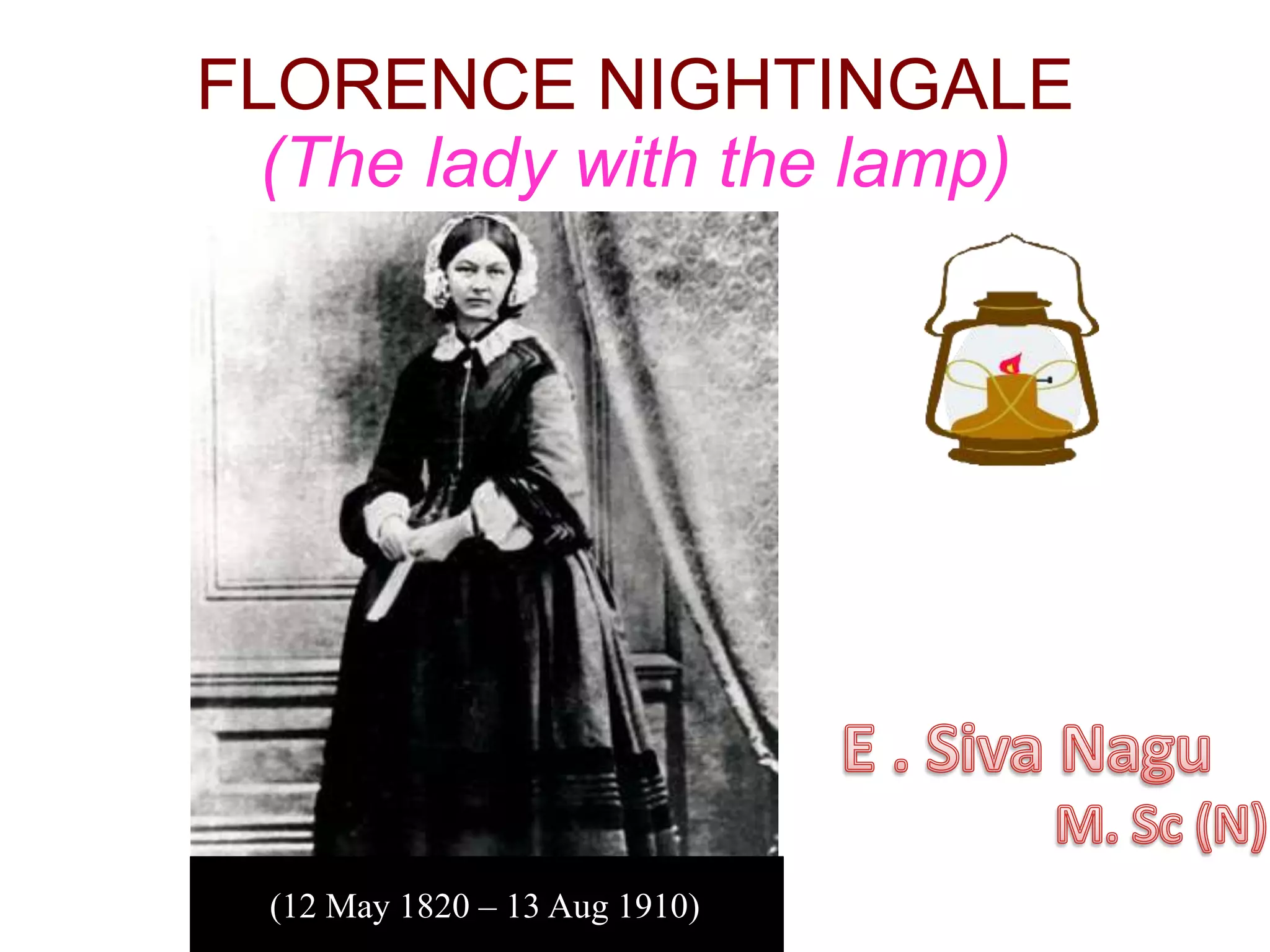

FLORENCE NIGHTINGALE
(The lady with the lamp)
(12 May 1820 – 13 Aug 1910)
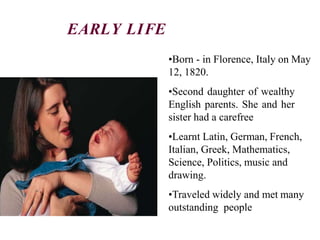
•Born - in Florence, Italy on May
12, 1820.
•Second daughter of wealthy
English parents. She and her
sister had a carefree
•Learnt Latin, German, French,
Italian, Greek, Mathematics,
Science, Politics, music and
drawing.
•Traveled widely and met many
outstanding people
EARLY LIFE
Florence
Nightingale and
her sister
Parthenope
received a
thorough
classical
education from
their father.
•
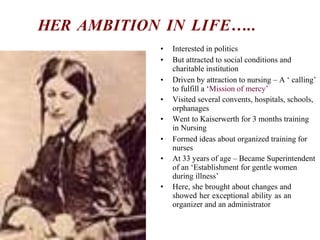
• Interested in politics
• But attracted to social conditions and
charitable institution
• Driven by attraction to nursing – A ‘ calling’
to fulfill a ‘Mission of mercy’
• Visited several convents, hospitals, schools,
orphanages
• Went to Kaiserwerth for 3 months training
in Nursing
• Formed ideas about organized training for
nurses
• At 33 years of age – Became Superintendent
of an ‘Establishment for gentle women
during illness’
Here, she brought about changes and
showed her exceptional ability as an
organizer and an administrator
HER AMBITION IN LIFE…..
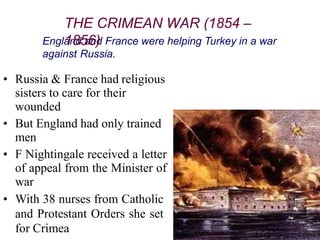
England and France were helping Turkey in a war
against Russia.
• Russia & France had religious
sisters to care for their
wounded
• But England had only trained
men
• F Nightingale received a letter
of appeal from the Minister of
war
• With 38 nurses from Catholic
and Protestant Orders she set
for Crimea
THE CRIMEAN WAR (1854 –
1856)
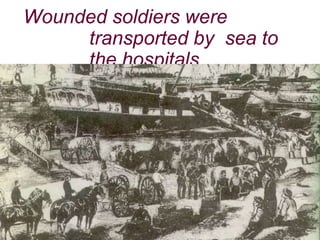
Wounded soldiers were
transported by sea to
the hospitals
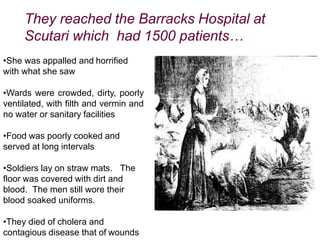
•She was appalled and horrified
with what she saw
•Wards were crowded, dirty, poorly
ventilated, with filth and vermin and
no water or sanitary facilities
•Food was poorly cooked and
served at long intervals
•Soldiers lay on straw mats. The
floor was covered with dirt and
blood. The men still wore their
blood soaked uniforms.
•They died of cholera and
contagious disease that of wounds
They reached the Barracks Hospital at
Scutari which had 1500 patients…
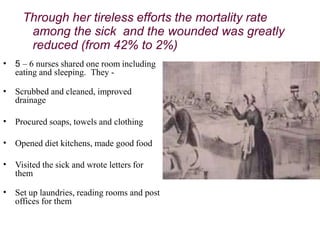
Through her tireless efforts the mortality rate
among the sick and the wounded was greatly
reduced (from 42% to 2%)
• 5 – 6 nurses shared one room including
eating and sleeping. They -
• Scrubbed and cleaned, improved
drainage
• Procured soaps, towels and clothing
• Opened diet kitchens, made good food
• Visited the sick and wrote letters for
them
• Set up laundries, reading rooms and post
offices for them
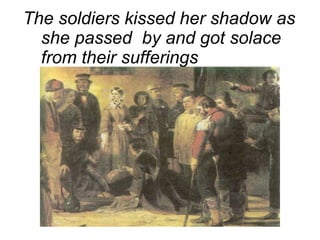
The soldiers kissed her shadow as
she passed by and got solace
from their sufferings
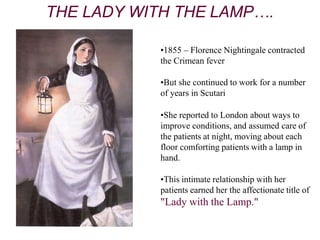
•1855 – Florence Nightingale contracted
the Crimean fever
•But she continued to work for a number
of years in Scutari
•She reported to London about ways to
improve conditions, and assumed care of
the patients at night, moving about each
floor comforting patients with a lamp in
hand.
•This intimate relationship with her
patients earned her the affectionate title of
"Lady with the Lamp."
THE LADY WITH THE LAMP….
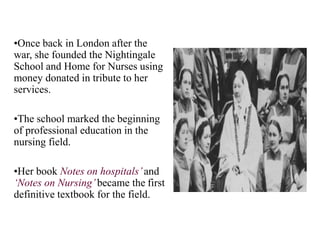
•Once back in London after the
war, she founded the Nightingale
School and Home for Nurses using
money donated in tribute to her
services.
•The school marked the beginning
of professional education in the
nursing field.
•Her book Notes on hospitals’and
‘Notes on Nursing’became the first
definitive textbook for the field.
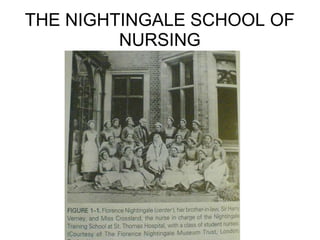
THE NIGHTINGALE SCHOOL OF
NURSING
A FACELIFT TO
NURSING• Through selfless devotion and
sheer determination, Florence
Nightingale transformed the
profession of nursing forever.
• She gave dignity and honor to
Nursing, and revolutionized
hospital conditions, making
them more organized and above
all, sanitary.
• 1907 – King Edward conferred
on her the ‘Order of Merit’
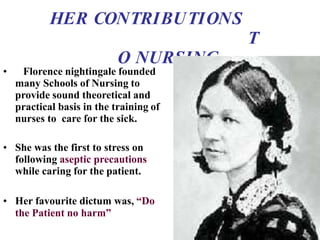
HER CONTRIBUTIONS
T
O NURSING
• Florence nightingale founded
many Schools of Nursing to
provide sound theoretical and
practical basis in the training of
nurses to care for the sick.
• She was the first to stress on
following aseptic precautions
while caring for the patient.
• Her favourite dictum was, “Do
the Patient no harm”
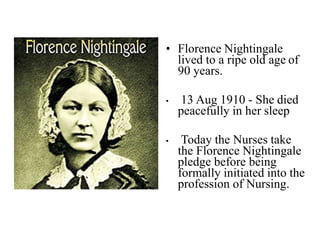
• Florence Nightingale
lived to a ripe old age of
90 years.
• 13 Aug 1910 - She died
peacefully in her sleep
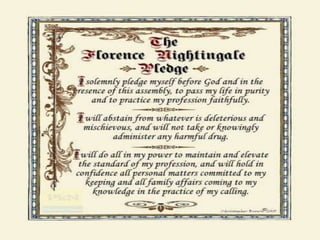
• Today the Nurses take
the Florence Nightingale
pledge before being
formally initiated into the
profession of Nursing.
Florence nightingale

Florence nightingale

  • 1.
    FLORENCE NIGHTINGALE (The ladywith the lamp) (12 May 1820 – 13 Aug 1910)
  • 2.
    •Born - inFlorence, Italy on May 12, 1820. •Second daughter of wealthy English parents. She and her sister had a carefree •Learnt Latin, German, French, Italian, Greek, Mathematics, Science, Politics, music and drawing. •Traveled widely and met many outstanding people EARLY LIFE
  • 3.
    Florence Nightingale and her sister Parthenope receiveda thorough classical education from their father.
  • 4.
    • • Interested inpolitics • But attracted to social conditions and charitable institution • Driven by attraction to nursing – A ‘ calling’ to fulfill a ‘Mission of mercy’ • Visited several convents, hospitals, schools, orphanages • Went to Kaiserwerth for 3 months training in Nursing • Formed ideas about organized training for nurses • At 33 years of age – Became Superintendent of an ‘Establishment for gentle women during illness’ Here, she brought about changes and showed her exceptional ability as an organizer and an administrator HER AMBITION IN LIFE…..
  • 5.
    England and Francewere helping Turkey in a war against Russia. • Russia & France had religious sisters to care for their wounded • But England had only trained men • F Nightingale received a letter of appeal from the Minister of war • With 38 nurses from Catholic and Protestant Orders she set for Crimea THE CRIMEAN WAR (1854 – 1856)
  • 6.
    Wounded soldiers were transportedby sea to the hospitals
  • 7.
    •She was appalledand horrified with what she saw •Wards were crowded, dirty, poorly ventilated, with filth and vermin and no water or sanitary facilities •Food was poorly cooked and served at long intervals •Soldiers lay on straw mats. The floor was covered with dirt and blood. The men still wore their blood soaked uniforms. •They died of cholera and contagious disease that of wounds They reached the Barracks Hospital at Scutari which had 1500 patients…
  • 8.
    Through her tirelessefforts the mortality rate among the sick and the wounded was greatly reduced (from 42% to 2%) • 5 – 6 nurses shared one room including eating and sleeping. They - • Scrubbed and cleaned, improved drainage • Procured soaps, towels and clothing • Opened diet kitchens, made good food • Visited the sick and wrote letters for them • Set up laundries, reading rooms and post offices for them
  • 9.
    The soldiers kissedher shadow as she passed by and got solace from their sufferings
  • 10.
    •1855 – FlorenceNightingale contracted the Crimean fever •But she continued to work for a number of years in Scutari •She reported to London about ways to improve conditions, and assumed care of the patients at night, moving about each floor comforting patients with a lamp in hand. •This intimate relationship with her patients earned her the affectionate title of "Lady with the Lamp." THE LADY WITH THE LAMP….
  • 11.
    •Once back inLondon after the war, she founded the Nightingale School and Home for Nurses using money donated in tribute to her services. •The school marked the beginning of professional education in the nursing field. •Her book Notes on hospitals’and ‘Notes on Nursing’became the first definitive textbook for the field.
  • 12.
  • 13.
    A FACELIFT TO NURSING•Through selfless devotion and sheer determination, Florence Nightingale transformed the profession of nursing forever. • She gave dignity and honor to Nursing, and revolutionized hospital conditions, making them more organized and above all, sanitary. • 1907 – King Edward conferred on her the ‘Order of Merit’
  • 14.
    HER CONTRIBUTIONS T O NURSING •Florence nightingale founded many Schools of Nursing to provide sound theoretical and practical basis in the training of nurses to care for the sick. • She was the first to stress on following aseptic precautions while caring for the patient. • Her favourite dictum was, “Do the Patient no harm”
  • 15.
    • Florence Nightingale livedto a ripe old age of 90 years. • 13 Aug 1910 - She died peacefully in her sleep • Today the Nurses take the Florence Nightingale pledge before being formally initiated into the profession of Nursing.