( B I O G R A P H Y )
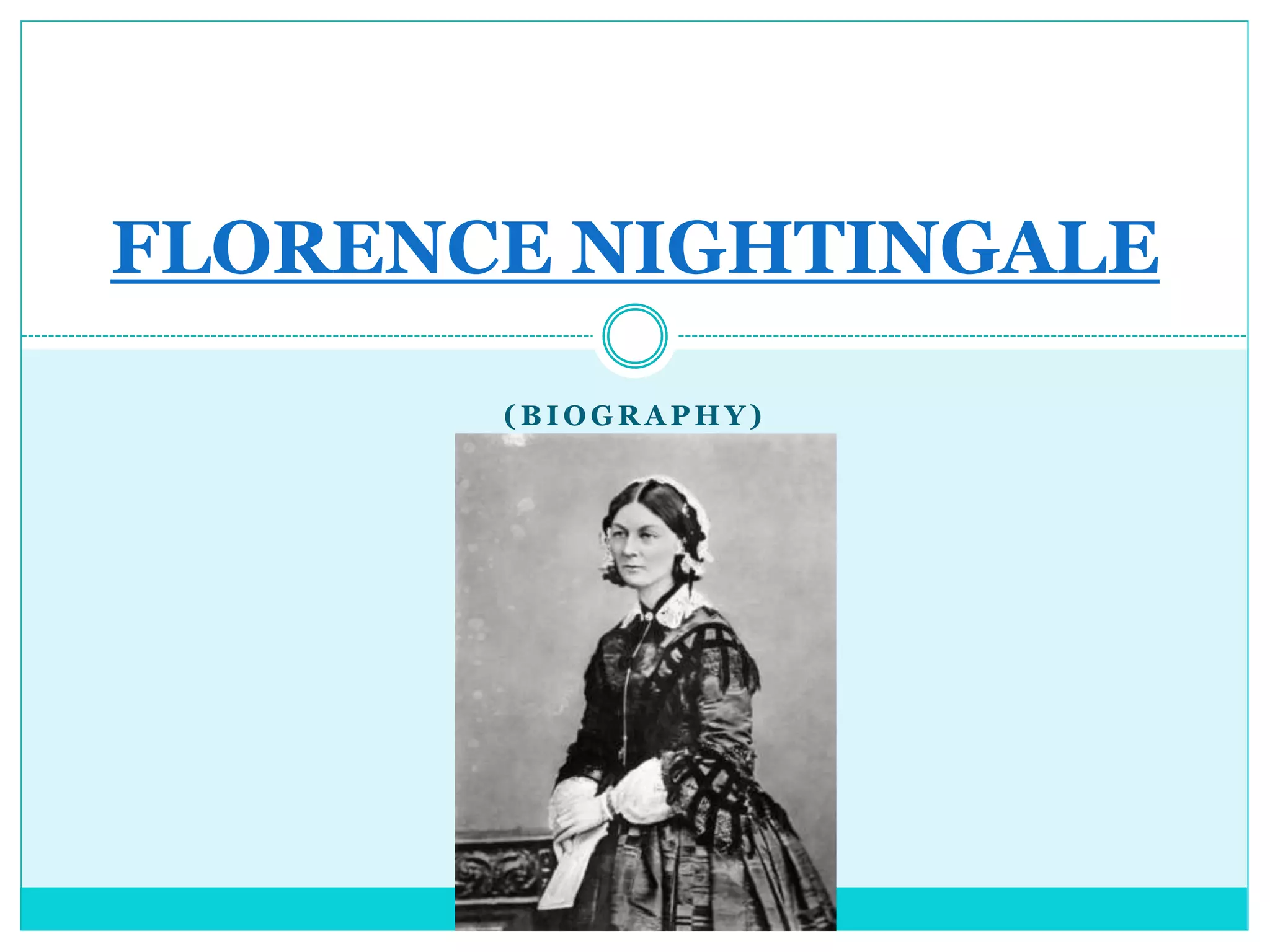
FLORENCE NIGHTINGALE
 Florence Nightingale (1820-1910), known as “The
Lady With the Lamp,” was a British nurse, social
reformer and statistician best known as the founder
of modern nursing.
 Her experiences as a nurse during the Crimean War
were foundational in her views about sanitation.
 She established St. Thomas’ Hospital and the
Nightingale Training School for Nurses in 1860.
 Her efforts to reform healthcare greatly influenced
the quality of care in the 19th and 20th centuries.
EARLY LIFE:
 Florence Nightingale was born on 12 May 1820.
 From a very young age, Florence Nightingale was
active in philanthropy, ministering to the ill and poor
people in the village neighboring her family’s estate.
 By the time she was 16 years old, it was clear to her
that nursing was her calling. She believed it to be her
divine purpose.
 Determined to pursue her true calling despite her
parents’ objections, in 1844, Nightingale enrolled as
a nursing student at the Lutheran Hospital of Pastor
Fliedner in Kaiserwerth, Germany.
WAR EFFORTS:
 In October of 1854 Nightingale organized a party of
thirty-eight nurses, mostly from different religious
orders, for service in the Crimean War (1853–56).
 The Barrack Hospital, where Nightingale and her nurses
worked and lived, was built on a massive cesspool (an
underground area into which liquid waste flows), which
poisoned the water and even the building itself.
 By the end of 1854, some order had been created and the
hospital was cleaner—not only through Nightingale's
efforts but also through improvements made by a
governmental sanitary commission.
 The death rate among patients fell by two-thirds.
LATER LIFE:
 While at Scutari, Nightingale had contracted the
bacterial infection brucellosis, also known as Crimean
fever, and would never fully recover.
 By the time she was 38 years old, she was homebound
and routinely bedridden, and would be so for the
remainder of her life.
 Nightingale continued her work from her bed.
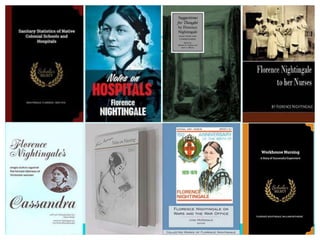
 In 1859, she published Notes on Hospitals, which
focused on how to properly run civilian hospitals.
 In 1907, she was conferred the Order of Merit by King
Edward, and received the Freedom of the City of London.
 In May 1910, she received a celebratory message
from King George on her 90th birthday.
DEATH:
 In August 1910, Nightingale fell ill but seemed to
recover and was reportedly in good spirits.
 A week later, on the evening of Friday, August 12,
1910, she developed an array of troubling symptoms.
 She died unexpectedly at around 2 p.m. the
following day, Saturday, August 13, at her home in
London.
Florence Nightingale.pptx

Florence Nightingale.pptx

  • 1.
    ( B IO G R A P H Y ) FLORENCE NIGHTINGALE
  • 2.
    FLORENCE NIGHTINGALE  FlorenceNightingale (1820-1910), known as “The Lady With the Lamp,” was a British nurse, social reformer and statistician best known as the founder of modern nursing.  Her experiences as a nurse during the Crimean War were foundational in her views about sanitation.  She established St. Thomas’ Hospital and the Nightingale Training School for Nurses in 1860.  Her efforts to reform healthcare greatly influenced the quality of care in the 19th and 20th centuries.
  • 3.
    EARLY LIFE:  FlorenceNightingale was born on 12 May 1820.  From a very young age, Florence Nightingale was active in philanthropy, ministering to the ill and poor people in the village neighboring her family’s estate.  By the time she was 16 years old, it was clear to her that nursing was her calling. She believed it to be her divine purpose.  Determined to pursue her true calling despite her parents’ objections, in 1844, Nightingale enrolled as a nursing student at the Lutheran Hospital of Pastor Fliedner in Kaiserwerth, Germany.
  • 4.
    WAR EFFORTS:  InOctober of 1854 Nightingale organized a party of thirty-eight nurses, mostly from different religious orders, for service in the Crimean War (1853–56).  The Barrack Hospital, where Nightingale and her nurses worked and lived, was built on a massive cesspool (an underground area into which liquid waste flows), which poisoned the water and even the building itself.  By the end of 1854, some order had been created and the hospital was cleaner—not only through Nightingale's efforts but also through improvements made by a governmental sanitary commission.  The death rate among patients fell by two-thirds.
  • 5.
    LATER LIFE:  Whileat Scutari, Nightingale had contracted the bacterial infection brucellosis, also known as Crimean fever, and would never fully recover.  By the time she was 38 years old, she was homebound and routinely bedridden, and would be so for the remainder of her life.  Nightingale continued her work from her bed.  In 1859, she published Notes on Hospitals, which focused on how to properly run civilian hospitals.  In 1907, she was conferred the Order of Merit by King Edward, and received the Freedom of the City of London.  In May 1910, she received a celebratory message from King George on her 90th birthday.
  • 6.
    DEATH:  In August1910, Nightingale fell ill but seemed to recover and was reportedly in good spirits.  A week later, on the evening of Friday, August 12, 1910, she developed an array of troubling symptoms.  She died unexpectedly at around 2 p.m. the following day, Saturday, August 13, at her home in London.