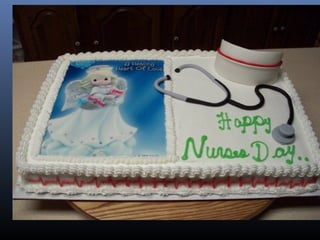

HAPPY NURSES DAY
12th
MAY
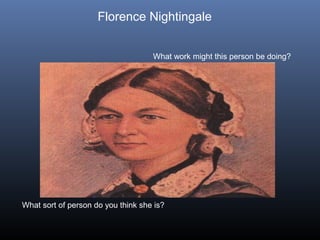
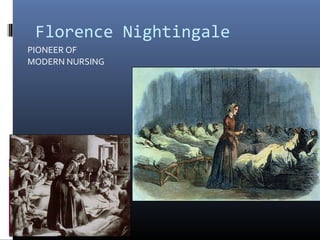
Florence Nightingale
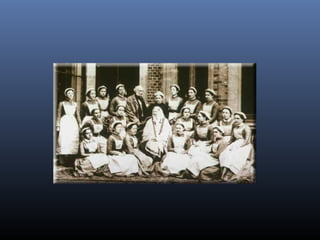
What work might this person be doing?
What sort of person do you think she is?
Florence Nightingale
PIONEER OF
MODERN NURSING
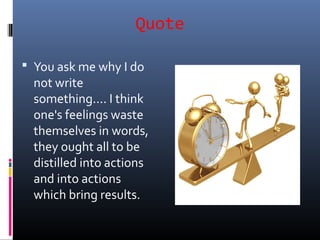
Quote
 You ask me why I do
not write
something.... I think
one's feelings waste
themselves in words,
they ought all to be
distilled into actions
and into actions
which bring results.
Florence Nightingale
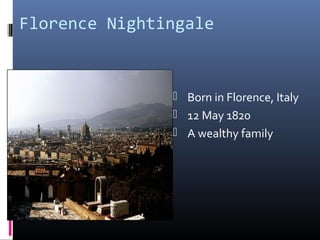
 Born in Florence, Italy
 12 May 1820
 A wealthy family
Born to very wealthy, educated parents
• Traveled extensively, owned multiple
estates
• Father was Cambridge educated, mother
was a strong supporter of the abolition of
slavery
• Father believed women should have a strong
education
• Florence and her sister learned Italian,
Latin, Greek, history and mathematics.
Florence especially excelled in mathematics.
Florence Nightingale
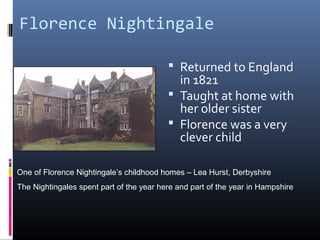
 Returned to England
in 1821
 Taught at home with
her older sister
 Florence was a very
clever child
One of Florence Nightingale’s childhood homes – Lea Hurst, Derbyshire
The Nightingales spent part of the year here and part of the year in Hampshire
Quote
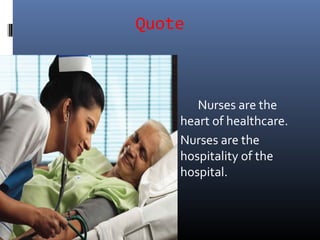
Nurses are the
heart of healthcare.
Nurses are the
hospitality of the
hospital.
Florence Nightingale
had a broad
education and came
to dislike the lack of
opportunity for
females in her social
circle.
Florence Nightingale
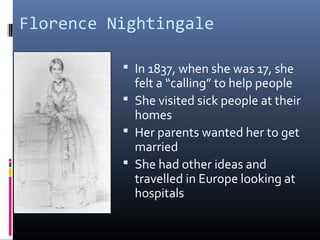
 In 1837, when she was 17, she
felt a “calling” to help people
 She visited sick people at their
homes
 Her parents wanted her to get
married
 She had other ideas and
travelled in Europe looking at
hospitals
Her parents wanted her to marry a rich man,
but she wanted to become a nurse. Her
parents were opposed to this, as nursing
was considered to be a job for poor
women.
Doctors are the Brain
Of the hospital and
Nurses are the Heart of
the Hospital,
If Brain fails ,heart will
be manage,
But if Heart fails
nothing will manage
Florence Nightingale
 Parents did not want her
to become a nurse
 She studied medicine
books herself for years
 She was 30 when her
parents let her go to
Germany and Paris to
study nursing
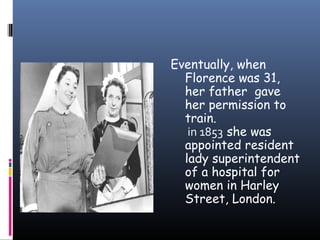
Eventually, when
Florence was 31,
her father gave
her permission to
train.
in 1853 she was
appointed resident
lady superintendent
of a hospital for
women in Harley
Street, London.
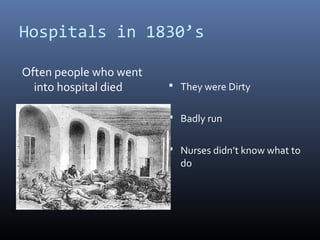
Hospitals in 1830’s
Often people who went
into hospital died  They were Dirty
 Badly run
 Nurses didn’t know what to
do
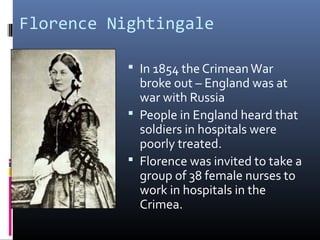
Florence Nightingale
 In 1854 the CrimeanWar
broke out – England was at
war with Russia
 People in England heard that
soldiers in hospitals were
poorly treated.
 Florence was invited to take a
group of 38 female nurses to
work in hospitals in the
Crimea.
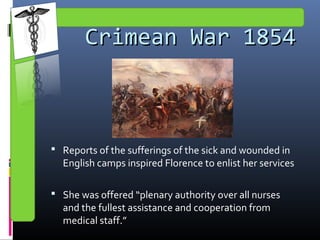
Crimean War 1854Crimean War 1854
 Reports of the sufferings of the sick and wounded in
English camps inspired Florence to enlist her services
 She was offered “plenary authority over all nurses
and the fullest assistance and cooperation from
medical staff.”
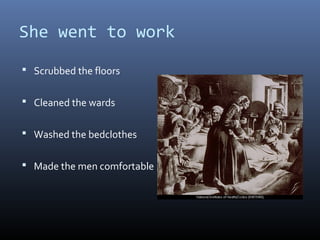
She went to work
 Scrubbed the floors
 Cleaned the wards
 Washed the bedclothes
 Made the men comfortable
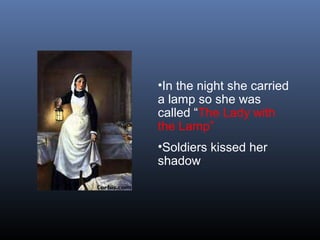
•In the night she carried
a lamp so she was
called “The Lady with
the Lamp”
•Soldiers kissed her
shadow
Quote
Constant attention by a
good nurse may be
just as important as a
major operation by a
surgeon.
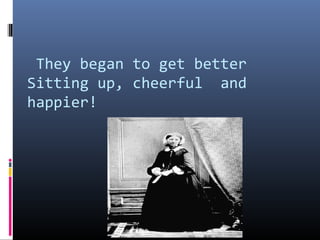
They began to get better
Sitting up, cheerful and
happier!
Florence Nightingale
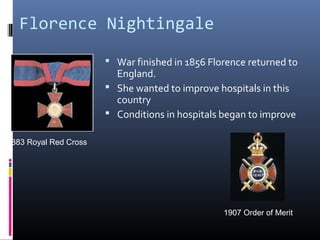
 War finished in 1856 Florence returned to
England.
 She wanted to improve hospitals in this
country
 Conditions in hospitals began to improve
1883 Royal Red Cross
1907 Order of Merit
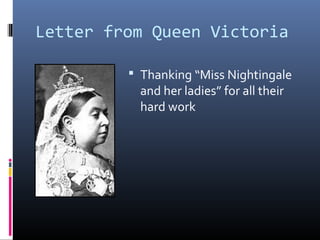
Letter from Queen Victoria
 Thanking “Miss Nightingale
and her ladies” for all their
hard work
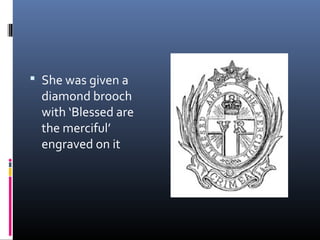
 She was given a
diamond brooch
with ‘Blessed are
the merciful’
engraved on it
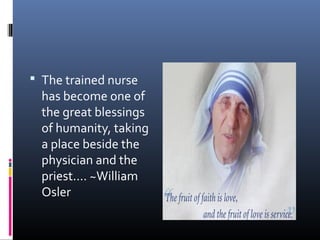
 The trained nurse
has become one of
the great blessings
of humanity, taking
a place beside the
physician and the
priest.... ~William
Osler
Florence Nightingale
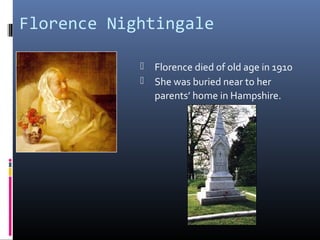
 Florence died of old age in 1910
 She was buried near to her
parents’ home in Hampshire.
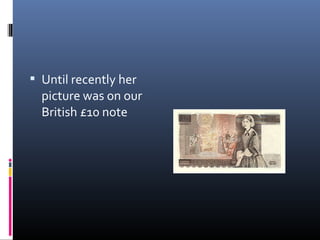
 Until recently her
picture was on our
British £10 note
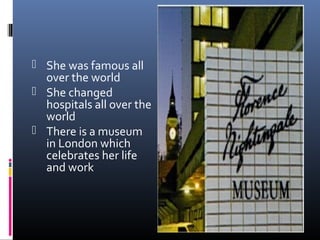
 She was famous all
over the world
 She changed
hospitals all over the
world
 There is a museum
in London which
celebrates her life
and work
Quote
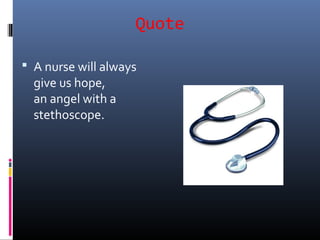
 A nurse will always
give us hope,
an angel with a
stethoscope.
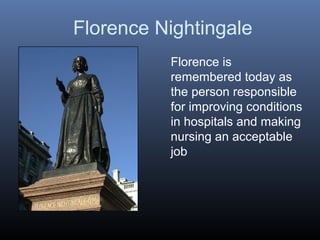
Florence is
remembered today as
the person responsible
for improving conditions
in hospitals and making
nursing an acceptable
job
Florence Nightingale
TidbitsTidbits
→ Florence inspired Jean Henri Dunant , one of five founders of the
International Committee of the Red Cross (Geneva Switzerland) which in
turn inspired Clara Barton to form the American National Red Cross.
→ There is a psychological effect named after her called “The
Nightingale Effect,” whereby nurses and doctors fall in love with their
patients.
→ Florence was known during the Crimean war as The Lady with the
Lamp, as she would tirelessly make rounds of the patients after everyone
had already retired for the night.
→ Florence wrote many books throughout her life on nursing, the most
notable and widely used was:
Notes on Nursing: What Nursing Is, What Nursing Is Not (1860)
In a NutshellIn a Nutshell
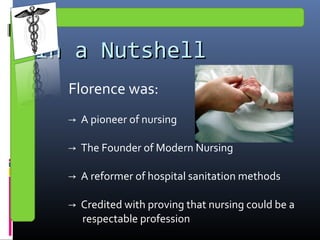
Florence was:
→ A pioneer of nursing
→ The Founder of Modern Nursing
→ A reformer of hospital sanitation methods
→ Credited with proving that nursing could be a
respectable profession
Florence nightingale   copy

Florence nightingale copy

  • 1.
  • 3.
    Florence Nightingale What workmight this person be doing? What sort of person do you think she is?
  • 4.
  • 5.
    Quote  You askme why I do not write something.... I think one's feelings waste themselves in words, they ought all to be distilled into actions and into actions which bring results.
  • 6.
    Florence Nightingale  Bornin Florence, Italy  12 May 1820  A wealthy family
  • 7.
    Born to verywealthy, educated parents • Traveled extensively, owned multiple estates • Father was Cambridge educated, mother was a strong supporter of the abolition of slavery • Father believed women should have a strong education • Florence and her sister learned Italian, Latin, Greek, history and mathematics. Florence especially excelled in mathematics.
  • 8.
    Florence Nightingale  Returnedto England in 1821  Taught at home with her older sister  Florence was a very clever child One of Florence Nightingale’s childhood homes – Lea Hurst, Derbyshire The Nightingales spent part of the year here and part of the year in Hampshire
  • 9.
    Quote Nurses are the heartof healthcare. Nurses are the hospitality of the hospital.
  • 10.
    Florence Nightingale had abroad education and came to dislike the lack of opportunity for females in her social circle.
  • 11.
    Florence Nightingale  In1837, when she was 17, she felt a “calling” to help people  She visited sick people at their homes  Her parents wanted her to get married  She had other ideas and travelled in Europe looking at hospitals
  • 12.
    Her parents wantedher to marry a rich man, but she wanted to become a nurse. Her parents were opposed to this, as nursing was considered to be a job for poor women.
  • 13.
    Doctors are theBrain Of the hospital and Nurses are the Heart of the Hospital, If Brain fails ,heart will be manage, But if Heart fails nothing will manage
  • 14.
    Florence Nightingale  Parentsdid not want her to become a nurse  She studied medicine books herself for years  She was 30 when her parents let her go to Germany and Paris to study nursing
  • 15.
    Eventually, when Florence was31, her father gave her permission to train. in 1853 she was appointed resident lady superintendent of a hospital for women in Harley Street, London.
  • 16.
    Hospitals in 1830’s Oftenpeople who went into hospital died  They were Dirty  Badly run  Nurses didn’t know what to do
  • 18.
    Florence Nightingale  In1854 the CrimeanWar broke out – England was at war with Russia  People in England heard that soldiers in hospitals were poorly treated.  Florence was invited to take a group of 38 female nurses to work in hospitals in the Crimea.
  • 19.
    Crimean War 1854CrimeanWar 1854  Reports of the sufferings of the sick and wounded in English camps inspired Florence to enlist her services  She was offered “plenary authority over all nurses and the fullest assistance and cooperation from medical staff.”
  • 20.
    She went towork  Scrubbed the floors  Cleaned the wards  Washed the bedclothes  Made the men comfortable
  • 21.
    •In the nightshe carried a lamp so she was called “The Lady with the Lamp” •Soldiers kissed her shadow
  • 22.
    Quote Constant attention bya good nurse may be just as important as a major operation by a surgeon.
  • 23.
    They began toget better Sitting up, cheerful and happier!
  • 24.
    Florence Nightingale  Warfinished in 1856 Florence returned to England.  She wanted to improve hospitals in this country  Conditions in hospitals began to improve 1883 Royal Red Cross 1907 Order of Merit
  • 25.
    Letter from QueenVictoria  Thanking “Miss Nightingale and her ladies” for all their hard work
  • 26.
     She wasgiven a diamond brooch with ‘Blessed are the merciful’ engraved on it
  • 27.
     The trainednurse has become one of the great blessings of humanity, taking a place beside the physician and the priest.... ~William Osler
  • 29.
    Florence Nightingale  Florencedied of old age in 1910  She was buried near to her parents’ home in Hampshire.
  • 30.
     Until recentlyher picture was on our British £10 note
  • 31.
     She wasfamous all over the world  She changed hospitals all over the world  There is a museum in London which celebrates her life and work
  • 32.
    Quote  A nursewill always give us hope, an angel with a stethoscope.
  • 33.
    Florence is remembered todayas the person responsible for improving conditions in hospitals and making nursing an acceptable job Florence Nightingale
  • 34.
    TidbitsTidbits → Florence inspiredJean Henri Dunant , one of five founders of the International Committee of the Red Cross (Geneva Switzerland) which in turn inspired Clara Barton to form the American National Red Cross. → There is a psychological effect named after her called “The Nightingale Effect,” whereby nurses and doctors fall in love with their patients. → Florence was known during the Crimean war as The Lady with the Lamp, as she would tirelessly make rounds of the patients after everyone had already retired for the night. → Florence wrote many books throughout her life on nursing, the most notable and widely used was: Notes on Nursing: What Nursing Is, What Nursing Is Not (1860)
  • 35.
    In a NutshellIna Nutshell Florence was: → A pioneer of nursing → The Founder of Modern Nursing → A reformer of hospital sanitation methods → Credited with proving that nursing could be a respectable profession

Editor's Notes

  • #8 Although she was born in Italy, she and her sister traveled frequently throughout the world with their parents and split their winters and summers between two lavish estates. Florence’s father had received his wealth from an inheritance. He valued education, especially for women, and opened Florence and her sister, Parthenope, up to a lot of opportunities.