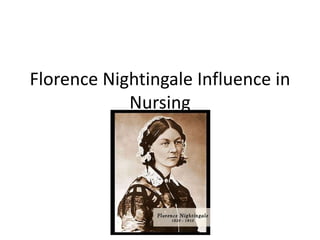
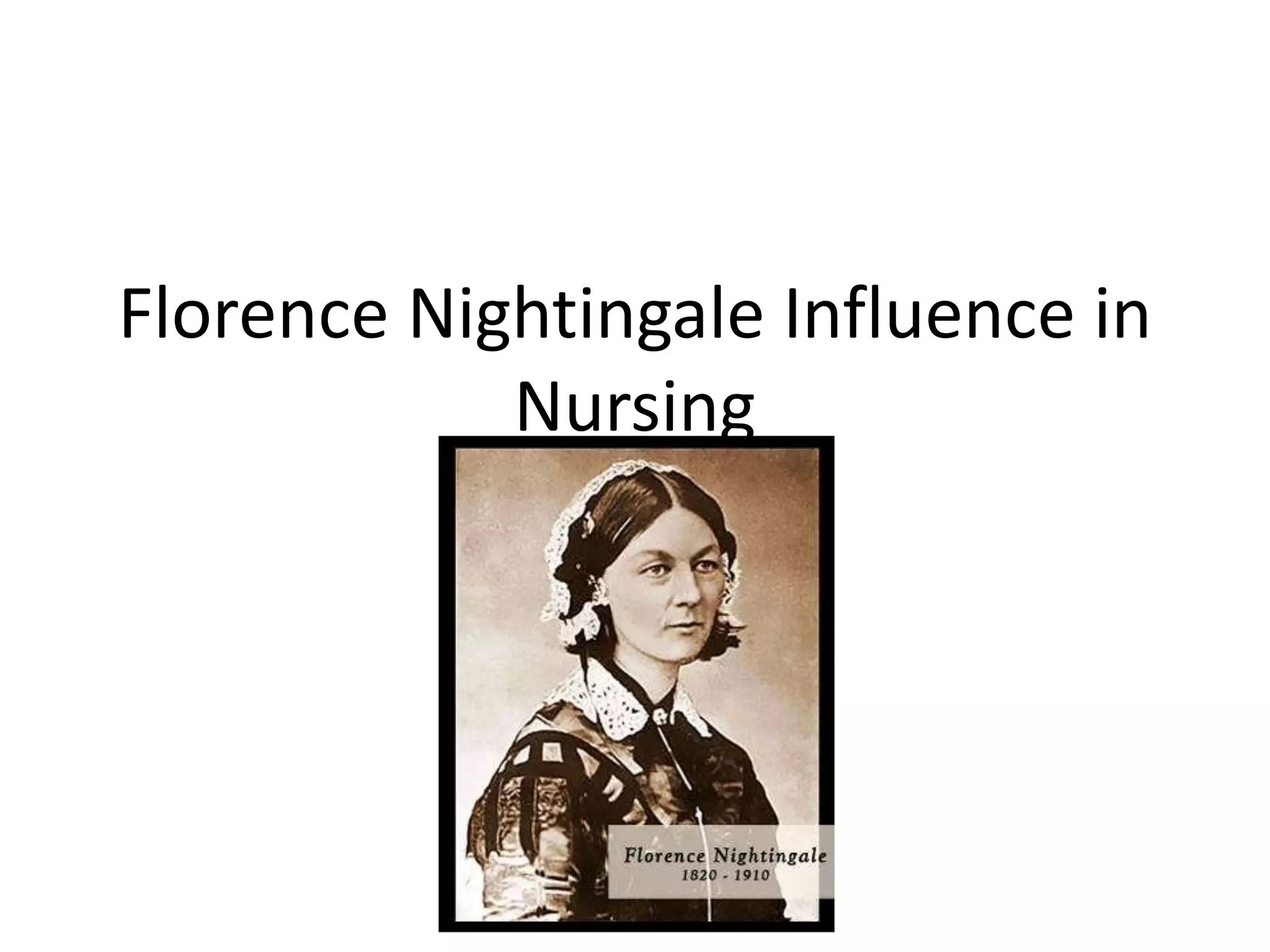
Florence Nightingale Influence in
Nursing
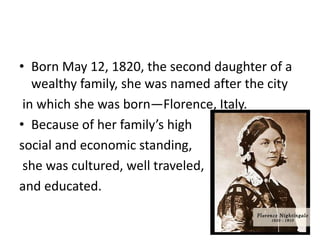
• Born May 12, 1820, the second daughter of a
wealthy family, she was named after the city
in which she was born—Florence, Italy.
• Because of her family’s high
social and economic standing,
she was cultured, well traveled,
and educated.
• By the age of 17, as the result of training from her father, she had
mastered seven languages and mathematics.
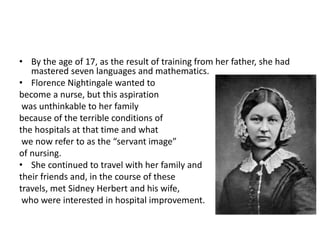
• Florence Nightingale wanted to
become a nurse, but this aspiration
was unthinkable to her family
because of the terrible conditions of
the hospitals at that time and what
we now refer to as the “servant image”
of nursing.
• She continued to travel with her family and
their friends and, in the course of these
travels, met Sidney Herbert and his wife,
who were interested in hospital improvement.
• At the time, the public
health movement and
concerns about
hospital reform were
growing across
England. She began
collecting information
on public health and
hospitals and soon
became recognized as
an important authority
on the subject.
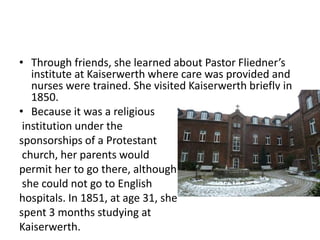
• Through friends, she learned about Pastor Fliedner’s
institute at Kaiserwerth where care was provided and
nurses were trained. She visited Kaiserwerth briefly in
1850.
• Because it was a religious
institution under the
sponsorships of a Protestant
church, her parents would
permit her to go there, although
she could not go to English
hospitals. In 1851, at age 31, she
spent 3 months studying at
Kaiserwerth.
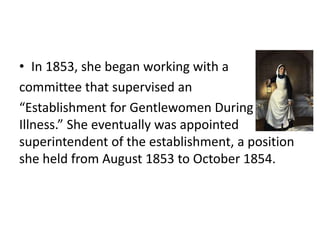
• In 1853, she began working with a
committee that supervised an
“Establishment for Gentlewomen During
Illness.” She eventually was appointed
superintendent of the establishment, a position
she held from August 1853 to October 1854.
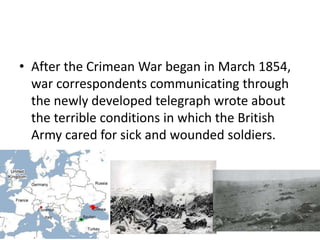
• After the Crimean War began in March 1854,
war correspondents communicating through
the newly developed telegraph wrote about
the terrible conditions in which the British
Army cared for sick and wounded soldiers.
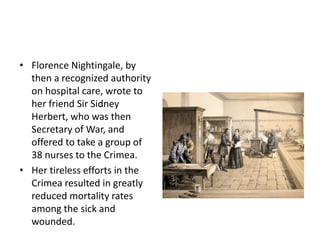
• Florence Nightingale, by
then a recognized authority
on hospital care, wrote to
her friend Sir Sidney
Herbert, who was then
Secretary of War, and
offered to take a group of
38 nurses to the Crimea.
• Her tireless efforts in the
Crimea resulted in greatly
reduced mortality rates
among the sick and
wounded.
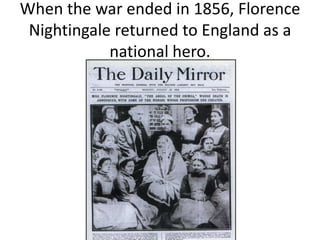
When the war ended in 1856, Florence
Nightingale returned to England as a
national hero.
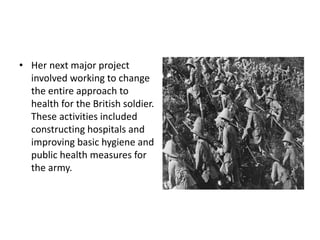
• Her next major project
involved working to change
the entire approach to
health for the British soldier.
These activities included
constructing hospitals and
improving basic hygiene and
public health measures for
the army.
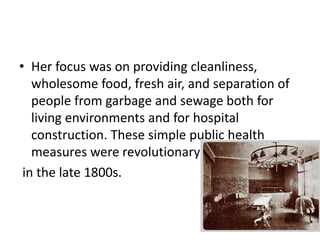
• Her focus was on providing cleanliness,
wholesome food, fresh air, and separation of
people from garbage and sewage both for
living environments and for hospital
construction. These simple public health
measures were revolutionary
in the late 1800s.
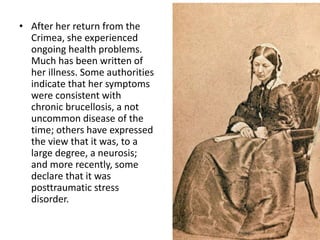
• After her return from the
Crimea, she experienced
ongoing health problems.
Much has been written of
her illness. Some authorities
indicate that her symptoms
were consistent with
chronic brucellosis, a not
uncommon disease of the
time; others have expressed
the view that it was, to a
large degree, a neurosis;
and more recently, some
declare that it was
posttraumatic stress
disorder.
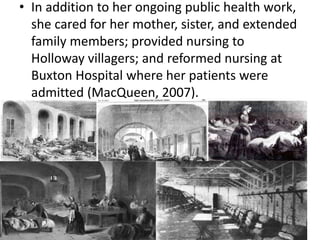
• In addition to her ongoing public health work,
she cared for her mother, sister, and extended
family members; provided nursing to
Holloway villagers; and reformed nursing at
Buxton Hospital where her patients were
admitted (MacQueen, 2007).
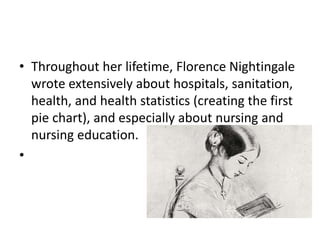
• Throughout her lifetime, Florence Nightingale
wrote extensively about hospitals, sanitation,
health, and health statistics (creating the first
pie chart), and especially about nursing and
nursing education.
•
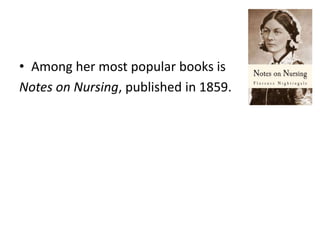
• Among her most popular books is
Notes on Nursing, published in 1859.
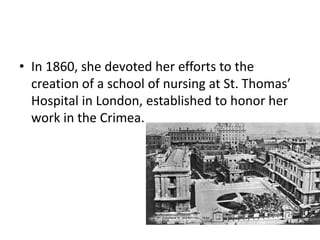
• In 1860, she devoted her efforts to the
creation of a school of nursing at St. Thomas’
Hospital in London, established to honor her
work in the Crimea.
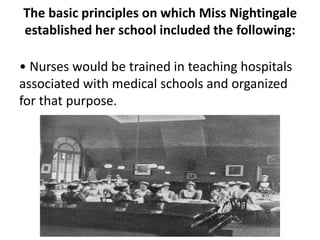
The basic principles on which Miss Nightingale
established her school included the following:
• Nurses would be trained in teaching hospitals
associated with medical schools and organized
for that purpose.
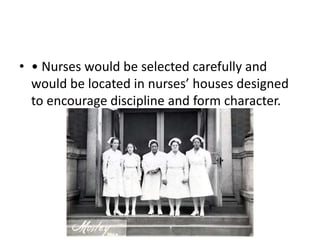
• • Nurses would be selected carefully and
would be located in nurses’ houses designed
to encourage discipline and form character.
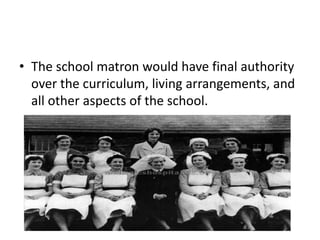
• The school matron would have final authority
over the curriculum, living arrangements, and
all other aspects of the school.
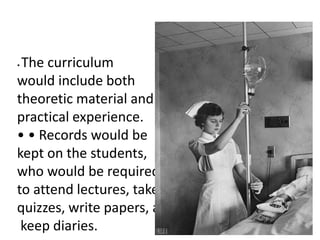
• The curriculum
would include both
theoretic material and
practical experience.
• • Records would be
kept on the students,
who would be required
to attend lectures, take
quizzes, write papers, and
keep diaries.
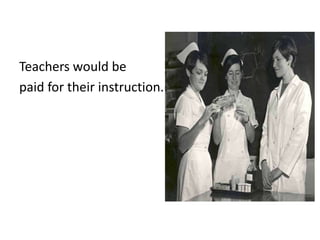
Teachers would be
paid for their instruction.
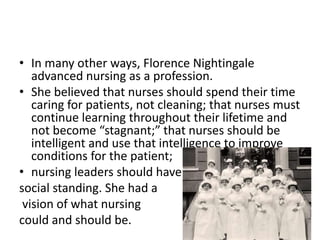
• In many other ways, Florence Nightingale
advanced nursing as a profession.
• She believed that nurses should spend their time
caring for patients, not cleaning; that nurses must
continue learning throughout their lifetime and
not become “stagnant;” that nurses should be
intelligent and use that intelligence to improve
conditions for the patient;
• nursing leaders should have
social standing. She had a
vision of what nursing
could and should be.
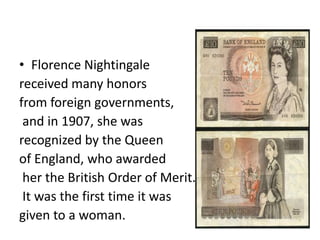
• Florence Nightingale
received many honors
from foreign governments,
and in 1907, she was
recognized by the Queen
of England, who awarded
her the British Order of Merit.
It was the first time it was
given to a woman.
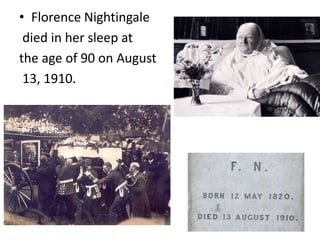
• Florence Nightingale
died in her sleep at
the age of 90 on August
13, 1910.
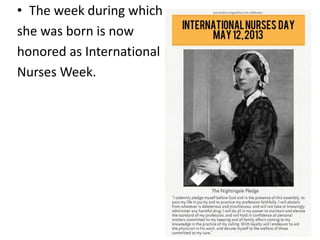
• The week during which
she was born is now
honored as International
Nurses Week.

Nightingale influence

  • 1.
  • 2.
    • Born May12, 1820, the second daughter of a wealthy family, she was named after the city in which she was born—Florence, Italy. • Because of her family’s high social and economic standing, she was cultured, well traveled, and educated.
  • 3.
    • By theage of 17, as the result of training from her father, she had mastered seven languages and mathematics. • Florence Nightingale wanted to become a nurse, but this aspiration was unthinkable to her family because of the terrible conditions of the hospitals at that time and what we now refer to as the “servant image” of nursing. • She continued to travel with her family and their friends and, in the course of these travels, met Sidney Herbert and his wife, who were interested in hospital improvement.
  • 4.
    • At thetime, the public health movement and concerns about hospital reform were growing across England. She began collecting information on public health and hospitals and soon became recognized as an important authority on the subject.
  • 5.
    • Through friends,she learned about Pastor Fliedner’s institute at Kaiserwerth where care was provided and nurses were trained. She visited Kaiserwerth briefly in 1850. • Because it was a religious institution under the sponsorships of a Protestant church, her parents would permit her to go there, although she could not go to English hospitals. In 1851, at age 31, she spent 3 months studying at Kaiserwerth.
  • 6.
    • In 1853,she began working with a committee that supervised an “Establishment for Gentlewomen During Illness.” She eventually was appointed superintendent of the establishment, a position she held from August 1853 to October 1854.
  • 7.
    • After theCrimean War began in March 1854, war correspondents communicating through the newly developed telegraph wrote about the terrible conditions in which the British Army cared for sick and wounded soldiers.
  • 8.
    • Florence Nightingale,by then a recognized authority on hospital care, wrote to her friend Sir Sidney Herbert, who was then Secretary of War, and offered to take a group of 38 nurses to the Crimea. • Her tireless efforts in the Crimea resulted in greatly reduced mortality rates among the sick and wounded.
  • 9.
    When the warended in 1856, Florence Nightingale returned to England as a national hero.
  • 10.
    • Her nextmajor project involved working to change the entire approach to health for the British soldier. These activities included constructing hospitals and improving basic hygiene and public health measures for the army.
  • 11.
    • Her focuswas on providing cleanliness, wholesome food, fresh air, and separation of people from garbage and sewage both for living environments and for hospital construction. These simple public health measures were revolutionary in the late 1800s.
  • 12.
    • After herreturn from the Crimea, she experienced ongoing health problems. Much has been written of her illness. Some authorities indicate that her symptoms were consistent with chronic brucellosis, a not uncommon disease of the time; others have expressed the view that it was, to a large degree, a neurosis; and more recently, some declare that it was posttraumatic stress disorder.
  • 13.
    • In additionto her ongoing public health work, she cared for her mother, sister, and extended family members; provided nursing to Holloway villagers; and reformed nursing at Buxton Hospital where her patients were admitted (MacQueen, 2007).
  • 14.
    • Throughout herlifetime, Florence Nightingale wrote extensively about hospitals, sanitation, health, and health statistics (creating the first pie chart), and especially about nursing and nursing education. •
  • 15.
    • Among hermost popular books is Notes on Nursing, published in 1859.
  • 16.
    • In 1860,she devoted her efforts to the creation of a school of nursing at St. Thomas’ Hospital in London, established to honor her work in the Crimea.
  • 17.
    The basic principleson which Miss Nightingale established her school included the following: • Nurses would be trained in teaching hospitals associated with medical schools and organized for that purpose.
  • 18.
    • • Nurseswould be selected carefully and would be located in nurses’ houses designed to encourage discipline and form character.
  • 19.
    • The schoolmatron would have final authority over the curriculum, living arrangements, and all other aspects of the school.
  • 20.
    • The curriculum wouldinclude both theoretic material and practical experience. • • Records would be kept on the students, who would be required to attend lectures, take quizzes, write papers, and keep diaries.
  • 21.
    Teachers would be paidfor their instruction.
  • 22.
    • In manyother ways, Florence Nightingale advanced nursing as a profession. • She believed that nurses should spend their time caring for patients, not cleaning; that nurses must continue learning throughout their lifetime and not become “stagnant;” that nurses should be intelligent and use that intelligence to improve conditions for the patient; • nursing leaders should have social standing. She had a vision of what nursing could and should be.
  • 23.
    • Florence Nightingale receivedmany honors from foreign governments, and in 1907, she was recognized by the Queen of England, who awarded her the British Order of Merit. It was the first time it was given to a woman.
  • 24.
    • Florence Nightingale diedin her sleep at the age of 90 on August 13, 1910.
  • 25.
    • The weekduring which she was born is now honored as International Nurses Week.