FLOOR FINISHES
•   Screeds
•   Terrazzo (in-situ type)
•   Ceramic Tiling
•   Granite or Marble
Cement Screed

• A cement and sand screed finish to a
  concrete floor may be an acceptable, low
  cost finish to small area floors of garages,
  stores and outhouses where the small area
  does not justify the use of a power float and
  considerations of ease of cleaning are not of
  prime importance.
Fibre Reinforced Cement Screed
• Premixed, dry bagged cement and sand
  screed material reinforced with polymer
  fibre is available. The fibre reinforces
  against drying shrinkage and cracking.

• Cement + Sand
• Thickness: 20 - 75 mm
• It is the base for upper covering materials.
Laying Screed
• The traditional method of screeding a large area
  is to divide the floor up into bays not exceeding
  3.5 m in width.
• The bays are laid alternately working to
  screeding battens which have been carefully
  levelled and aligned, and firmly bedded
  throughout their length.
• The first bays are left for 24 hours, then the
  battens removed and the remaining bays
  completed.
Terrazzo (in-situ type)
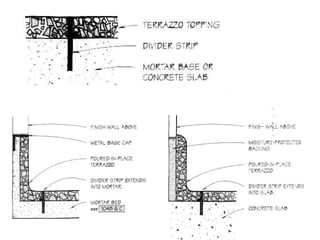
• Composed of a thin, stone-chip topping adhered
  to a mortar base or concrete slab, a terrazzo
  floor is divided into sections by thin divider
  strips that help to control cracking.
• Traditional terrazzo is composed of graded
  marble or aggregate (70% or more) in a cement
  matrix. Colour is often added to the cement
  matrix in order to highlight the stone aggregate,
  which itself is a mix of colours and sizes.
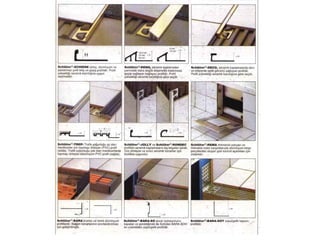
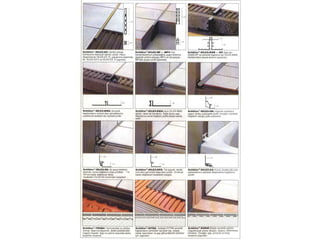
• A terrazzo floor is divided into sections by
  strips, usually brass, zinc or plastic.
• The divider strips create weakened vertical
  planes inducing unavoidable cracking to
  occur at these locations.
• Maximum spacing of divider strips ranges
  from 120 cm to450 cm depending on the
  type of terrazzo system employed.
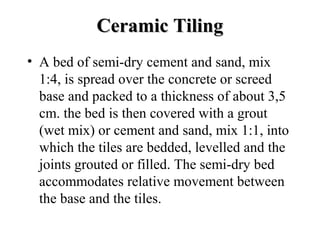
Ceramic Tiling
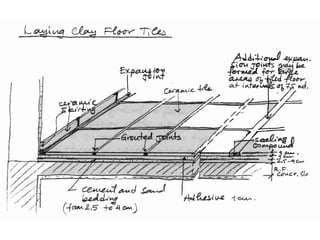
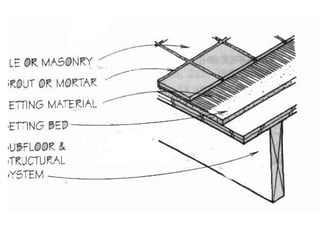
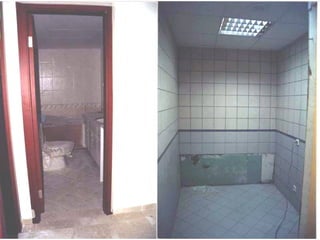
• A bed of semi-dry cement and sand, mix
  1:4, is spread over the concrete or screed
  base and packed to a thickness of about 3,5
  cm. the bed is then covered with a grout
  (wet mix) or cement and sand, mix 1:1, into
  which the tiles are bedded, levelled and the
  joints grouted or filled. The semi-dry bed
  accommodates relative movement between
  the base and the tiles.
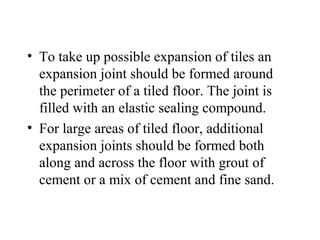
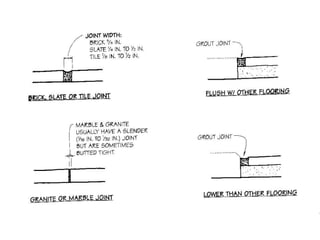
• To take up possible expansion of tiles an
  expansion joint should be formed around
  the perimeter of a tiled floor. The joint is
  filled with an elastic sealing compound.
• For large areas of tiled floor, additional
  expansion joints should be formed both
  along and across the floor with grout of
  cement or a mix of cement and fine sand.
Floor finishes
Floor finishes
Floor finishes
Floor finishes
Floor finishes
Floor finishes
Floor finishes
Floor finishes
Floor finishes
Floor finishes

Floor finishes

  • 1.
    FLOOR FINISHES • Screeds • Terrazzo (in-situ type) • Ceramic Tiling • Granite or Marble
  • 2.
    Cement Screed • Acement and sand screed finish to a concrete floor may be an acceptable, low cost finish to small area floors of garages, stores and outhouses where the small area does not justify the use of a power float and considerations of ease of cleaning are not of prime importance.
  • 3.
    Fibre Reinforced CementScreed • Premixed, dry bagged cement and sand screed material reinforced with polymer fibre is available. The fibre reinforces against drying shrinkage and cracking. • Cement + Sand • Thickness: 20 - 75 mm • It is the base for upper covering materials.
  • 4.
    Laying Screed • Thetraditional method of screeding a large area is to divide the floor up into bays not exceeding 3.5 m in width. • The bays are laid alternately working to screeding battens which have been carefully levelled and aligned, and firmly bedded throughout their length. • The first bays are left for 24 hours, then the battens removed and the remaining bays completed.
  • 5.
    Terrazzo (in-situ type) •Composed of a thin, stone-chip topping adhered to a mortar base or concrete slab, a terrazzo floor is divided into sections by thin divider strips that help to control cracking. • Traditional terrazzo is composed of graded marble or aggregate (70% or more) in a cement matrix. Colour is often added to the cement matrix in order to highlight the stone aggregate, which itself is a mix of colours and sizes.
  • 6.
    • A terrazzofloor is divided into sections by strips, usually brass, zinc or plastic. • The divider strips create weakened vertical planes inducing unavoidable cracking to occur at these locations. • Maximum spacing of divider strips ranges from 120 cm to450 cm depending on the type of terrazzo system employed.
  • 8.
    Ceramic Tiling • Abed of semi-dry cement and sand, mix 1:4, is spread over the concrete or screed base and packed to a thickness of about 3,5 cm. the bed is then covered with a grout (wet mix) or cement and sand, mix 1:1, into which the tiles are bedded, levelled and the joints grouted or filled. The semi-dry bed accommodates relative movement between the base and the tiles.
  • 10.
    • To takeup possible expansion of tiles an expansion joint should be formed around the perimeter of a tiled floor. The joint is filled with an elastic sealing compound. • For large areas of tiled floor, additional expansion joints should be formed both along and across the floor with grout of cement or a mix of cement and fine sand.