Flipped Learning:
Change the Process to Transform
the Learning
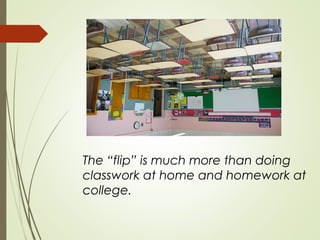
The “flip” is much more than doing
classwork at home and homework at
college.
Students prepare for class by watching
video, listening to podcasts, reading
articles, or contemplating questions
that access their prior knowledge.
Students are asked to reflect upon
what they have learned and
organize questions and areas of
confusion .
Teach by Questions
 Students post questions
 Teachers create lesson plans
based on student questions
The tutor sorts through the questions
prior to class, organizes them, and
develops class material and scenarios
that address the various areas of
confusion. The instructor does not
prepare to teach material that the
class already understands.
In class, questions and problems are
posed.
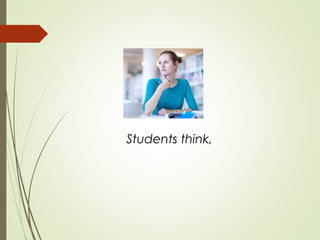
Students think,
respond,
provide feedback,
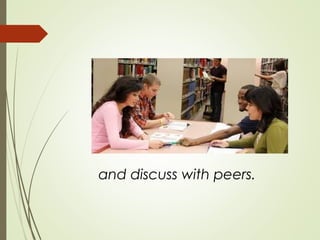
and discuss with peers.
The instructor listens, prompts, and
helps students address
misconceptions.
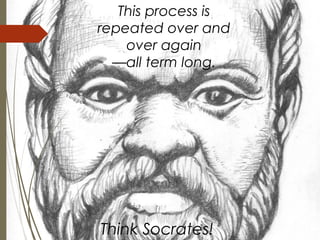
This process is
repeated over and
over again
—all term long.
Think Socrates!
Misconceptions
Flip Misconception #1
Implementing the Flipped Learning
method makes me, as the teacher,
much less important.
Flip Misconception # 2
Kids do not want to sit at home
watching boring video lectures on the
web. This is just a lot of excitement over
bad pedagogy.
Flip Misconception # 3
Most of my kids do not even have
internet access at home. There is no way
they can watch all of this video.
Flip Misconception #4
Where is the accountability? How do I
even know if kids are watching the
videos?
Flip Misconception #5
As a teacher, I don’t have the time or
the expertise to produce all of the
videos required to teach like this.

Flipped learning