Avionics Training Systems Installation And Troubleshooting 2nd Len Buckwalter
Avionics Training Systems Installation And Troubleshooting 2nd Len Buckwalter
Avionics Training Systems Installation And Troubleshooting 2nd Len Buckwalter
Avionics Training Systems Installation And Troubleshooting 2nd Len Buckwalter
Avionics Training Systems Installation And Troubleshooting 2nd Len Buckwalter
1.
Avionics Training SystemsInstallation And
Troubleshooting 2nd Len Buckwalter download
https://ebookbell.com/product/avionics-training-systems-
installation-and-troubleshooting-2nd-len-buckwalter-10547504
Explore and download more ebooks at ebookbell.com
2.
Here are somerecommended products that we believe you will be
interested in. You can click the link to download.
Avionics Magazine Volume 35 No 3 March 2011 Access Intelligence
https://ebookbell.com/product/avionics-magazine-
volume-35-no-3-march-2011-access-intelligence-2023844
Avionics Systems And Troubleshooting 2nd Edition Thomas K Eismin
https://ebookbell.com/product/avionics-systems-and-
troubleshooting-2nd-edition-thomas-k-eismin-34785550
Avionics Development And Implementation 2nd Ed Cary R Spitzer
https://ebookbell.com/product/avionics-development-and-
implementation-2nd-ed-cary-r-spitzer-4566244
Avionics Technician Josh Gregory
https://ebookbell.com/product/avionics-technician-josh-gregory-5075416
3.
Avionics Elements SoftwareAnd Functions Second Edition Spitzer Cr
https://ebookbell.com/product/avionics-elements-software-and-
functions-second-edition-spitzer-cr-1563186
Military Avionics Systems Aerospace Series Pep 1st Edition Ian Moir
Allan Seabridge
https://ebookbell.com/product/military-avionics-systems-aerospace-
series-pep-1st-edition-ian-moir-allan-seabridge-2162226
Advanced Avionics Handbook Faah80836 Faa Handbooks 2009 Federal
Aviation Administration
https://ebookbell.com/product/advanced-avionics-handbook-
faah80836-faa-handbooks-2009-federal-aviation-administration-2198648
The Avionics Handbook Cary R Spitzer
https://ebookbell.com/product/the-avionics-handbook-cary-r-
spitzer-4111662
Civil Avionics Systems 2nd Edition Ian Moir Allan Seabridge Malcolm
Jukes
https://ebookbell.com/product/civil-avionics-systems-2nd-edition-ian-
moir-allan-seabridge-malcolm-jukes-4673918
Preface
Avionics is changingrapidly, thanks to the com-
puter revolution, satellites, digital electronics and flat
panel displays, to name a few. These changes are also
affecting the direction ofavionics training.
Technicians a half-century ago were "radio me-
chanics," removing broken black boxes from ai1vlanes,
taking them to the shop and testing the circuit. They did
"all-purpose" maintenance, equally at home on the flight
line or work bench. But as avionics grew more compli-
cated, the job was split in two. One person became
the "installer" ---troubleshooting on the ramp, or mount-
ing and wiring equipment in airplanes. The other per-
son, trained in repairing circuits inside the box, became
the " bench technician," skilled in troubleshooting down
to the smallest component. For decades radio shops
separated technical skills this way to service private
aircraft in General Aviation.
In the airlines, the division of labor went further.
Flightline maintenance was handled by radio mechan-
ics scattered at major airports along their routes, sup-
ported by A&P mechanics. After a defective radio was
pulled, it was sent back to the airline maintenance de-
pot for repair by bench technicians. Among large air-
lines, it was usual to have different benches for special-
ists in each type ofinstrument or radio; autopilot, auto-
matic direction finder, communications, etc.
By the l 990's, avionics took off in a new direc-
tion. Manufacturers began building radios with disap-
pearing parts! Instead ofresistors, capacitors and tubes,
they populated them with integrated circuits encased
in tough epoxy coatings that were difficult to remove.
Other components no longer had wires, but were "sur-
face mounted" directly to the board.
Other areas grew smaller. Radios had different
sections to tune, amplify or produce some other func-
tion but much ofthat construction is now replaced by
invisible software, which instructs the chips to become
just about anything. It's the same idea as a personal
computer and its appl ications software; it's a word
processor, spread sheet or video gamc---at the press of
a few buttons.
For the avionics shop, these developments reduce
the need for bench technicians to repair down to the
component level. Maintaining the new avionics requires
expensive automatic test stations beyond the reach of
most shops. Today's digital avionics are sent back to
the factory or a major depot for repair. Some fau lts in
this equipment, in fact, will not appear unless tests are
repeated over many hours, often in a test chamber that
runs hot and cold. These tasks must be done automati-
cally, and not by a technician with a pair oftest probes.
On the other hand, demand for installation techni-
cians working on the ramp or Oightline not only re-
mains strong but will grow. Upgrades for old aircraft
continue at a remarkable rate because new-generation
equipment makes flying more economical, efficient and
safe. Some avionics return their investment in as little
as one or two years, then function another ten to twenty.
Airline and c01vorate aircraft must upgrade to fly
in the coming air traffic systern---to get more direct
routes, altitudes with less headwind, fewer delays and
better communication services, all ofwhich repay the
cost of avionics and keep passengers happy.
Beyond the flight deck. A whole new category
called "cabin avionics" is spreading among airlines.
Once called " in-flight entertainment," it adds l nternet
connectivity to every seat, e-mail, global telephone,
video games and new forms of entertainment. An air-
liner typically has two or three radios per function in
its instrument panel---but hundreds ofpassenger seats
with equipment in the cabin that now fits under the
heading "avionics".
Yet another growth area is the world-wide air traf-
iii
8.
fie management systemunder construction. No longer
will airplanes move point-to-point over land or on
crowded tracks to cross the ocean. They will fly di-
rectly to their destinations in a concept called "Free
Flight," a new mode which depends on satellite navi-
gation and data communications.
The new technician.These developments call for
the ski lls ofa technician who understands avionics at
the systems level---all the major functions and how
they relate to each other. Finding trouble fast is criti-
cal in airline operations, where every minute ofdelay at
the gate causes missed connections, lost revenue and
angry passengers. In General Aviation, corporate air-
craft provide vital transportation for industry. Even the
private pilot needs competent servicing for the fleet of
Iight aircraft fitted with the latest "glass" cockpits (elec-
tronic instruments). Ln the pages that follow, some 30
different systems describe a wide range ofcommunica-
tions and navigation systems aboard aircraft ofall sizes
and types.
N FF. A systems understanding reduces one ofthe
costliest errors in avionics maintenance. it's NFF, for
"No Fault Found." The technician pulls a suspicious
box and sends it back to the shop for repair. There, the
diagnosis finds nothing wrong, and the radio is returned
to service. Or it may be sent back to the factory or
depot. After further testing, the radio is returned la-
belled "NFF." When the radio is re-installed on the
airplane, the problem returns. Not only does it waste
hours but often costs the airline over $8000 in diag-
nostics, labor and shipping. In the general aviation
shop, the no-fault found not only incurs extra expense
and wasted time, but an unhappy customer who loses
confidence in the shop.
Simplified Diagrams. In describing these systems
in this book, there are no schematics showing, resis-
tors, capacitors or other small, internal components.
iv
Instead, simplified block diagrams illustrate the func-
tion and fl ow of signals with arrows. Where the shape
of a signal is important, it is illustrated with graphic
images.
Most of what is written on avionics is fi lled with
abbreviations and acronyms---TAWS, EGPWS, MFD,
TACAN, TCAS---and more. They make an unfair
demand on the reader because even the most experi-
enced avionics person must stop at each one and trans-
late it to plain English. For this reason, abbreviations
and acronym s are almost always spelled out in dia-
grams and in the text where they appear.
Gender. Throughout this book, a technician or
pilot is referred to as "he." The avionics industry is
populated by both genders and this should not be con-
sidered insensitivity. [t avoids the awkward use of "his/
her."
Maintenance Information. This book is not meant
to be a "cook book"---with step-by-step instructions
for maintenance. It is intended, rather, as a guide to
understanding manufacturer's manuals. Also, it does
not replace the FAA document on maintenance; Ad-
visory Circular 43.1 3 IA-2B. This book is intended
as a background to understanding manufacturer's
manuals that cover specific equipment.
Appreciation. I want to thank the manufacturers
who provided me with graphic material and documents.
They are credited below their photo, drawing or text.
lf the reader wants further information, they are eas-
ily reached by inserting their name in a search engine
along with the word "avionics."
Len Buckwalter
Leesburg, Virginia
9.
Contents
Preface
Section 1 Systems
Chapter1. The Meaning of "Avionics" ......................................... .1
First Instrument Panel ........................................................................... 1
"Blind Flying" ........................................................................................ 2
All-Glass Cockpit .................................................................................. 4
Chapter 2. A Brief History ............................................................... 6
Sperry Gyroscope ................................................................................. 7
Turn and Bank ...................................................................................... 8
Morse, Bell and Hertz ........................................................................... 9
First Aircraft Radio ................................................................................ 10
Lighted Airvvays ..................................................................................... 11
Jimmy Doolittle; Beginning of Instrument Flight .................................... 12
Chapter 3. VHF Com (Very High Frequency Communications) ... 16
Acceptable VHF Com Radios ............................................................... 17
VDR (data radio) ................................................................................... 17
Navcom Connections ............................................................................ 18
VHF System ......................................................................... ................ 19
Com Control Panel ............................................................................... 20
Com LRU ..................................................................................... ........ 20
Splitting VHF Channels ......................................................................... 21
Chapter 4. HF Com (High Frequency Communications) ............. 23
HF Control-Display ............................................................................... 23
HF System ........................................................................................... 24
SSB (Single Sideband) ......................................................................... 24
Line Replaceable Units ......................................................................... 25
HF Datalink ........................................................................................... 25
Control Panel (Airline) ........................................................................... 26
HF Transceiver ..................................................................................... 26
Antenna Coupler ................................................................................... 27
HF Antenna Mounting ........................................................................... 27 -
Chapter 5. Satcom (Satellite Communications) ........................... 29
lnmarsat ............................................................................................... 29
Aero System ......................................................................................... 31
Space Segment .................................................................................... 32
Cell Phones .......................................................................................... 33
Ground Earth Station (GES) .................................................................. 34
Aircraft Earth Station (AES) .................................................................. 35
Satcom Antennas for Aircraft ................................................................ 36
Steered Antennas .................................................................................. 37
High Speed Data ................................................................................... 38
Aero Services ....................................................................................... 39
Chapter 6. ACARS (Aircraft Communication Addressing and ....... 41
Reporting System)
In the Cockpit ........................................................................................ 41
ACARS System .................................................................................... 42
V
10.
Messages and Format.......................................................................... 43
ACARS Bands and Frequencies ........................................................... 45
Chapter 7. Selcal (Selective Calling) ............................................... 46
Controller, Decoder ............................................................................... 46
How Selcal Code is Generated ............................................................. 47
Ground Network .................................................................................... 47
SelcaI Airborne System .........................................................................48
Chapter 8. ELT (Emergency Locator Transmitter) ......................... 50
Search and Rescue .............................................................................. 51
ELT Components .................................................................................. 52
406 MHz ............................................................................................... 52
406 ELT System ................................................................................... 53
Fleet Operation ..................................................................................... 54
Cospas-Sarsat ...................................................................................... 55
Chapter 9. VOR (VHF Omnidirectional Range) .............................. 57
Coverage .............................................................................................. 58
VOR Phase .......................................................................................... 59
VOR Signal Structure ............................................................................ 60
Subcarrier ............................................................................................. 61
VOR Receiver ...................................................................................... 62
Navigation ............................................................................................ 63
Horizontal Situation Indicator (HSI) ...................................................... 64
Radio Magnetic Indicator (RMI} ............................................................ 64
Nav Control-Display .............................................................................. 65
Chapter 10. ILS (Instrument Landing System) ............................... 67
ILS System ........................................................................................... 68
ILS Components and Categories .......................................................... 68
Approach Lighting ................................................................................. 69
Flight Inspection and Monitoring ........................................................... 70
ILS Signals ........................................................................................... 71
Glideslope ............................................................................................ 72
Glideslope Receiver .............................................................................. 73
Marker Beacon Receiver ...................................................................... 74
Marker Beacon Ground Station ............................................................. 74
Chapter 11. MLS (Microwave Landing System) ............................. 76
Azimuth Beam ...................................................................................... 77
Elevation Beam .................................................................................... 78
Time Reference ........................ ............................................................ 79
Multimode Receiver .............................................................................. 79
Chapter 12. AOF (Automatic Direction Finder) ............................. 81
Radio Magnetic Indicator ...................................................................... 82
Sense ................................................................................................... 82
ADF System ......................................................................................... 83
NOB (Non-Directional Radio Beacon) ................................................... 83
Control-Display (Airline) ........................................................................ 84
Line-Replaceable Unit (Airline) .............................................................. 84
Limitations ............................................................................................ 85
Digital ADF ........................................................................................... 85
EFIS Display ......................................................................................... 86
Chapter 13. DME (Distance Measuring Equipment) ...................... 88
Obtaining Distance ................................................................................ 89
DME "Jitter" for Identification ................................................................ 89
EFIS Display of DME ............................................................................ 90
Airborne and Ground Stations ............................................................... 91
vi
11.
Channels X andY ................................................................................. 92
Chapter 14. Transponder ............................................................... 94
Control-Display ..................................................................................... 94
Transponder Interrogator....................................................................... 95
Panel-Mount ......................................................................................... 96
ATCRBS and Mode S ........................................................................... 96
Transponder System ............................................................................. 97
Airline Control-Display .......................................................................... 98
Line-Replaceable Unit ........................................................................... 98
Mode S Interrogations and Replies ....................................................... 98
Chapter 15. Radar Altimeter ........................................................... 104
Antennas .............................................................................................. 105
Operation .............................................................................................. 106
Chapter 16. GPS/Satnav (Satellite Navigation) .............................. 108
GPS Constellation ................................................................................ 109
Frequencies .......................................................................................... 110
Satnav Services ................................................................................... 111
Panel-Mount Receiver .......................................................................... 111
Time Difference Measurement .............................................................. 111
Finding Position .................................................................................... 112
The Satellite Signal ............................................................................... 113
GPS Segments ..................................................................................... 114
WMS: Wide Area Augmentation System ............................................. 114
Second Frequency for Civil Aviation ..................................................... 112
LMS: Local Area Augmentation System .............................................. 116
RAIM: Receiver Autonomous Integrity Monitoring ................................. 117
Galileo Constellation ............................................................................. 118
Chapter 17. EFIS (Electronic Flight Instrument System) ............... 120
Electromechanical to EFIS ................................................................... 122
Three-Screen EFIS ............................................................................... 123
EFIS Architecture .................................................................................. 124
Multifunction Display (MFD) .................................................................. 125
EFIS on the B-747 ................................................................................ 126
Airbus A-320 Flight Deck ...................................................................... 127
Chapter 18. Cockpit Voice and Flight Data Recorders ................... 129
CVR Basics .......................................................................................... 129
Underwater Locating Device (ULD) ....................................................... 131
CVR Interconnect ................................................................................. 132
Flight Data Recorder: Solid State .......................................................... 134
Flight Data Recorder: Stored Information ........................................ ...... 135
Chapter 19. Weather Detection ...................................................... 136
Radar Color-Coding .............................................................................. 137
Multifunction Display ............................................................................. 137
Types of Detection ................................................................................ 138
Radar Transmitter-Receiver .................................................................. 139
Weather Radar Control Panel ............................................................... 140
Lightning Detection ............................................................................... 140
Radar Antenna ...................................................................................... 141
Datalink ................................................................................................ 141
Radomes .............................................................................................. 142
Radome Boot ....................................................................................... 142
Windshear ............................................................................................ 143
Lightning Detection ............................................................................... 145
Windshear Computer ............................................................................ 144
vii
12.
Satellite Datalink ...................................................................................145
Chapter 20. TCAS
(Traffic Alert and Collision Avoidance System) .............. 147
Basic Operation .................................................................................... 148
Traffic and Resolution Advisories (TA, RA) ............................................ 150
TCAS System ....................................................................................... 150
TCAS I and II ........................................................................................ 150
Coordinating Climb and Descend .......................................................... 150
TCAS Components ............................................................................... 150
Whisper-Shout ...................................................................................... 151
Directional Interrogation ........................................................................ 151
Non-TCAS Airplanes ............................................................................. 152
TCAS Ill ................................................................................................ 152
Voice Warnings ..................................................................................... 152
Section 2 Installation
Chapter 21. Planning the Installation ............................................. 154
Replacing "Steam Gauges" ................................................................... 155
Required Instruments and Radios ......................................................... 156
Flight Instrument Layout ....................................................................... 157
Basic T ................................................................................................. 157
Large Aircraft EFIS ............................................................................... 158
Flat Panel Integrated ............................................................................ 159
Avionics Planning Worksheet ................................................................ 160
Manuals and Diagrams ......................................................................... 161
Installation Drawing ............................................................................... 162
Connectors and Pin Numbers ............................................................... 162
Pin Assignments ................................................................................... 163
Schematic Symbols .............................................................................. 164
Viewing Angle ....................................................................................... 165
Survey Airplane .................................................................................... 165
Navcom Connections, Typical ............................................................... 166
Chapter 22. Electrical Systems ...................................................... 168
AC and DC Power ................................................................................ 168
DC System ........................................................................................... 169
Airline Electrical System ....................................................................... 171
Switches ............................................................................................... 172
Lighted Pushbutton ............................................................................... 174
Circuit Breakers/Fuses .......................................................................... 173
Chapter 23. Mounting Avionics ....................................................... 178
New or Old Installation? ........................................................................ 179
Hostile Areas ........................................................................................ 179
Selecting Metal ..................................................................................... 179
Cutting Holes ........................................................................................ 180
Structures ............................................................................................. 181
Avionics Bay ......................................................................................... 182
Airlines (ARING) MCU Case Sizes ........................................................ 183
ATR Case Sizes .................................................................................... 184
Electrostatic Discharge ......................................................................... 185
Cooling ................................................................................................. 186
Cooling for Airline Avionics .................................................................... 187
Locking Radios in Racks ....................................................................... 188
viii
13.
Panel-Mounted Radios .......................................................................... 188
Remote-Mounted Radios (Corporate) ................................................... 190
Airline Mounting .................................................................................... 191
Locking Systems (Airline) ..................................................................... 192
Indexing Pins ........................................................................................ 193
Integrated Modular Avionics .................................................................. 194
Instrument Mounting ............................................................................. 195
Round Instruments: 2- and 3-inch ......................................................... 196
Airline Instrument Mounting ................................................................. 197
Chapter 24. Connectors ................................................................. 199
Typical Connectors ............................................................................... 200
RF Connectors ...................................................................................... 200
How to Identify Connector Contacts ...................................................... 201
Contact Selection .................................................................................. 201
Identify Mil-Spec Part Numbers ............................................................ 202
Coaxial Connectors, Typical .................................................................. 203
ARING Connectors ............................................................................... 203
Crimping Contacts ................................................................................ 205
Releasing Connector Pins ..................................................................... 207
Heat Gun for Shrink Tubing .................................................................. 207
Safety Wiring Connectors ..................................................................... 208
Attaching Coaxial Connectors ............................................................... 204
Chapter 25. Wiring the Airplane ..................................................... 210
Swamp ................................................................................................. 210
High Risk Areas ............................................................ ........................ 211
Selecting Wire ...................................................................................... 213
High-Grade Aircraft Wire ....................................................................... 213
Wire Sizes ............................................................................................ 214
Wire and Cable Types .......................................................................... 215
Wire Stripping ........................................................................ ............... 216
Nicked or Broken Wires ........................................................................ 217
Precut Cables· ...................................................................................... 217
Splicing Wires ................................................................... .................... 217
Location of Splices ................................................................................ 218
Ring Terminals ...................................................................................... 219
Terminal Strip (Block) ............................................................................ 219
Marking Wires ...................................................................................... 220
Harnessing the Wire Bundle ................................................................. 222
Tie Wraps ............................................................................................. 223
Problems: Chafing and Abrasion ........................................................... 224
Clamping .............................................................................................. 224
Grounding to Airframe ........................................................................... 227
Bending Coaxial Cable ......................................................................... 228
Service Loops ....................................................................................... 229
Chapter 26. Aviation Bands and Frequencies ............................... 230
Radio Frequency Bands ........................................................................ 231
Higher Bands (Microwave, Millimeter)................................................... 232
Low Frequencies ................................................................................... 232
Skipping through Ionosphere ................................................................. 233
High Frequencies .................................................................................. 233
Very High Frequencies .......................................................................... 234
L-Band ..................................................................................................234
From Hertz (Hz) to Gigahertz (GHz) ..................................................... 234
Line of Sight Communications .............................................................. 235
Control and Display of Bands and Frequencies ..................................... 236
Chapter 27. Antenna Installation .................................................... 239
Antennas for Airline, Corporate and Military Aircraft .............................. 240
ix
14.
How to Readan Antenna Spec Sheet ................................................... 241
Antennas for Light Aircraft .................................................................... 242
Airline Antenna Locations ...................................................................... 243
Antenna Types ...................................................................................... 244
Location ................................................................................................ 245
Bonding the Antenna to the Airframe ..................................................... 248
Antenna Mounting ................................................................................. 249
Antenna Couplers ................................................................................. 251
Base Station and Mobile Antennas ........................................................ 252
GPSAntennas ...................................................................................... 251
Chapter 28. Panel Labels and Abbreviations ................................ 254
Silk Screen, Engraving, Tape ................................................................ 254
Panel Abbreviations .............................................................................. 255
Section 3
Chapter 29. Test and Troubleshooting .......................................... 261
ADF ...................................................................................................... 262
Antennas .............................................................................................. 263
Antenna VSWR .................................................................................... 263
Autopilots .............................................................................................. 264
Com Transceivers ................................................................................. 264
DME ..................................................................................................... 265
ELT-Emergency Locator Transmitter ..................................................... 266
Glideslope Receiver.............................................................................. 266
Lightning Strikes ................................................................................... 266
Software Loading .................................................................................. 267
Transponder ......................................................................................... 267
VOR ..................................................................................................... 268
Wiring and Connectors ......................................................................... 270
Fault Detection Device (Wiring) ............................................................ 271
Precipitation (P) Static .......................................................................... 273
Avionics Checklist ................................................................................. 274
About the Author ............................................................................. 275
Index
X
15.
Chapter 1
The Meaningof "Avionics"
The word "avionics" first appeared in the l 940's
during World War II. Derived from "aviation electron-
ics," it referred to fire control systems aboard U.S.
Navy aircraft. During that time, the civilian world called
it "aircraft radio" or "aviation electronics." Tcclrni-
cians who repaired them were known as "radio me-
chanics."
Avionics remained a military term for 30 more
years. Civil aviation could not afford the systems aboard
military aircraft. Not only was equipment built to mili-
tary specifications, but each fighter and bomber had
its own avionics suite that fit no other model.
But the world was rapidly changing as new com-
ponents emerged from research labs; the transistor,
integrated circuit, flat-panel display, solid-state memory
First Instrument Panel
The three instruments shown
here are ancestors of what will
become "avionics" in 50 years.
They were installed in the
Wright Flyer that made the first
successful powered flight in
1903. Although mechanically
operated, these gauges will
evolve into electronic instru-
ments that comprise avionics
on every type of 21st-Century
aircraft.
Thus the Wright brothers not
only deserve credit for invent-
ing the first practical airplane,
but the concept of an instru-
ment panel in view of the pilot
to provide valuable flight infor-
mation.
and the "computer on a chip." Small in size and light
weight, they consume little power, have few moving
parts a nd, some believe, will operate a hundred years
without wearing out. Millions ofsemiconductors within
the size o f a postage stamp created the microprocessor,
which quickly became known as the "computer on a
chip." It triggered the greatest technical achievement
of the 20th Century; digital electronics. For the first
time, an aircraft radio could not only receive, amplify,
oscillate, filter and perfom1 other simple functions; now
it could perform logic, store large amounts ofdata, send
thousands of pieces of information down one pair of
wires, warn of problems, co1Tect its own errors---and
that's just the beginning.
WIND SPEED
(ANEMOMETER)
PROP COUNTER
(RPM)
1
16.
Early Gauges
ALTIMETER MAGNETIC
COMPASS
TEMPERATURETACH (RPM)
The Curtiss JN (" Jenny") was the first airplane
to fly the US mail in 1918. But a look at the
instrument panel shows why pilots were killed
while trying to live up to the Post Office motto;
" Neither snow nor rain nor gloom of night...stays
these couriers from their appointed rounds." No
pilot can fly an airplane in very low visibility with-
out "attitude" instruments to replace the sight
of the horizon. Even flying at night was consid-
ered by an emergency by U.S. Army regulations.
First "Blind Flying" Instruments
After the Wright brothers, Charles Lindbergh
made the most famous flight in aviation history.
In 1927 he flew solo from New York to Paris in
a little over 33 hours. Although celebrated as a
hero throughout the world, Lindbergh had more
than skill and courage. His panel had a turn-
and -bank, a gyroscopic instrument that indi-
cated how rapidly the airplane turned left or
right. Without such guidance, he could not have
penetrated bad weather and low visibility (still
the major cause of fatalities among low-time pi-
lots). Lindbergh's airplane, the Spirit of St.
Louis, had another important instrument; an
earth inductor compass, shown in the panel. It
was powered by an anemometer atop the fuse-
lage (photo at right). This was an improvement
over the simple magnetic compass, which is dif-
ficult to read in turbulence. Today, the earth-
inductor compass is known as a "flux gate" and
is standard on all but the s mallest aircraft.
2
1927 cockpit. Spirit of St. Louis
Wind-driven anemometer powered Lindbergh 's
earth-inductor compass
17.
Higher Tech, LowerCost
. . The new devices were snapped up. not only by the
military but the telecommunications and consumerelec-
tronics industries. Semiconductors created hundreds
ofnew products, from the personalcomputer and DVD,
to data networks, cell phones and high-definition TV
"Chips" became building blocks of the Internet. Mass
production reduced prices so far that a hobbyist
could bui ld digitalprojects with parts from the shelfof
a local radio store.
These devices were embraced by aviation, which
continuously seeks to reduce size, weight and power
consumption. Old vacuum tubes were replaced by tiny
integrated circuits that deliver many more functions.
By the l980's the term "aviation electronics," over a
half-century old, no longer described a cutting-edge in-
dustry. Manufacturers, repair shops, parts distribu-
tors, airlines and general aviation sensed the need fora
better term to replace "aviation electronics." And what
better word than---"avionics?" During that period, "avi-
onics'' also appeared for the first time in volumes of
FAA regulations on aircraft electronics.
The first generation of the new avionics was so
successful, it began to outclass the military. Airlines,
business jets and private aircraft were outfitted with
flat-panel displays, anti-collision systems, flight man-
agement and GPS---long before they reached miIitary
cockpits. Recognizing the trend, the U.S. Department
ofDefense launched a cost-saving program known as
"COTS," for Commercial Off the Shelf equipment.
Today, many military aircraft are outfitted with civil-
ian avionics of high capability.
Getting out the Mechanicals
An early example of how the new technology was
applied is the King KX-170, a combined navigation and
communications radio (or "navcom"). Despite rugged
construction it contained large mechanical switches with
dozens ofcontacts that inevitably failed.
When semiconductors became avai lable, the
manufacturer not only eliminated mechanical switch-
ing, but added functions to reduce pilot workload. A
new model, the KX-155, could store frequencies and
give the equivalent of two radios-in-one. An elec-
tronic display eliminated rotating mechanicaldrums and
painted numbers, shrinking the size of the radio and
freeing up valuable panel space.
Digital electronics also introduced systems that
were impossible to build with old technology. The Stonn-
scope appeared as the first practical thunderstorm de-
tector for small aircraft. Other companies looked at
the poor accuracy of fuel gauges. creating a digital
fuel flow instrument that measures fuel consumption
precisely, and also tells time and fuel to a destination.
Airline View of Avionics
•Line Maintenance
•Test Systems
•Communications
•Indicating Systems
•Navigation
•Autoflight
•Flight Controls
•Electrical Power
•Lighting
•Air Conditioning
•In-Flight Entertainment
•Engine Systems
•Fire Detection
•Landing Gear
These major topics are discussed each year at
the Avionics Maintenance Conference, run by
ARINC, the airline avionics organization. The
left column shows traditional avionics. But as
electronics creep into other systems, shown in
the right column, they often become the respon-
sibility of avionics maintenance.
ln the airlines, the digital revolution just about
eliminated the problem of "mid-airs." After two air-
liners collided overthe Grand Canyon in 1956 the FAA
investigated several anti-collision systems. Every de-
sign failed because of high cost, weight, size or an
inability to detect small aircraft. One system required
an on-board atomic clock, which cost more than most
airplanes.
But as the price of computing power dropped,
"TCAS" (Traffic Alert and Collision Avoidance Sys-
tem) became practical. It warns when two aircraft
head toward each other with a closing speed over 1,000
miles per hour---and detects most small aircraft not
equipped with TCAS.
Gauges: From Round to Rectangular
By the l970's cockpits of aircraft began to lose
their "steam gauge" appearance, where instrument pan-
els resemble an 1830 railway locomotive. ]nstcad of
round dials and pointers, the new look became the "glass
cockpit," where separate gauges are replaced by im-
ages on a CRT or flat panel LCD. The system is called
"EFIS," for Electronic Flight lnstrument System and it
rapidly spread through every size aircraft.
Today, a blank screen may become any instrument-
--altimeter, airspeed, tachomctcr----or all simulta-
neously. It's done by modifying software, or simply
changing the plug on the back during installation.This
3
18.
Toward the All-GlassCockpit
PRIMARY FLIGHT DISPLAY
The trend toward the "all-glass" cockpit is seen in this
instrument panel for a Cirrus aircraft. Round gauges
are replaced by large LCD screens which produce im-
ages of any instrument. What remains of the old-style
panel is at the lower left, where standby instruments
act as backup. In the center stack, GPS navigation
and communications are integrated into one radio, with
a backup below it. There are no large control yokes.
They are replaced by sidestick controllers which give
tells the screen what it will be. This also reduces the
number ofspares needed on the shelf, a great cost ben-
efit to airlines flying far-flung routes.
More than CNS
As the term "avionics" established itself in the
civil world, it divided into three categories often called
"CNS"---Communications, Navigation and Surveillance
(the last referring to radar surveillance). CNS includes
most avionics systems installed on the airplane. An au-
topilot, for example, falls under "Navigation," a tran-
sponder is a component of"Surveillance."
The list of avionics, however, grows longer. A
look at the agenda of the Avionics Maintenance Con-
ference (an airline organization) reveals more than
CNS. One-third of the new items were never consid-
ered avionics or even aircraft electronics (see table
"Airline View ofAvionics). What happened is that en-
gineers began using semiconductors to replace sections
of mechanical and hydraulic systems. The nose wheel
steering ofa LcarJet, for example, is by microproces-
sor. Engine control is no longer through levers and
steel cable. lt is done by FADEC, for Full Authority
Digital Engine Control, which provides better fuel
economy, precise engine settings and protection against
4
the pilot an uncluttered view of the instrument panel.
The large Primary Flight Display shows all flight in-
struments, weather, moving map and traffic. The Mul-
tifunction Display can also show these functions. Hav-
ing two such displays enables the pilot to put flight
instruments on one screen and navigation and terrain
on the other. This advanced cockpit is neither a mili-
tary nor airline system, but in a kit-built airplane. The
large panel displays are Avidyne's Flight Max.
excess temperature and pressure. Each year the avia-
tion industry moves closer to what it calls the "all-elec-
tric airplane," a concept that will slash heavy oil-fi lled
hydraulic lines, steel control cables and hundreds of
miles of copper wire. ln their place will be thin wires
carrying multiple messages (the "databus") to electric
actuators. These airplanes will fly farther on less fuel
and in greatersafety. Airliners arc already equipped with
the first ofthe "fly-by-wire" systems.
The growthofavionics is also reflected in the price
tags of aircraft. In the transport aircraft of 1945-
1950, about fi ve percent of the cost was electrical,
radio and lighting systems. Some 20 years later, that
portion quadrupled to about 20 percent. More recently,
airlines added the most costly and extensive electronics
aboard aircraft. lt is IFE, or In-Flight Entertainment,
also called "cabin electronics." If an airplane has 300
seats, that means 300 IFE installations, each wired for
audio, video, satellite phone, Internet and otherservices.
In the military sector, the cost ofa fighter aircraft rose
to more than 40 percent for avionics.
These percentages can only increase. Airplanes
divide into three main sections; airframe, propulsion
and avionics. Airframes have grown larger but they
still fly with the three-axis control system patented by
After all, whata superficial appendage civilisation is! Make a
nobleman drunk and he can become like a savage; let a child loose
in a wood without any one to look after it (provided that it can feed
itself) and it will not learn to speak of itself. Out of a peasant's son
who is generally considered so low in the social scale, one can make
in a single generation a man of science, a minister, an arch-bishop,
or an artist. Here there can be no talk of heredity, for the peasant-
father who stood apparently at such a low level, could not have
inherited anything from cultivated brains. On the other hand, the
children of a genius inherit usually nothing but used-up brains,
except occasionally a skill in their father's line of work, which they
have acquired by daily intercourse with their father.
The town is the fire-place whither the living fuel from the country is
brought and devoured; it is to keep the present social machinery at
work, it is true, but in the long run the fuel will prove too dear, and
the machine come to a standstill. The society of the future will not
need this machine in order to work or they will be more sparing of
the fuel. But it is a mistake to conjecture the needs of a future state
of society from the present one.
Our present society is perhaps a natural product, but inorganic; the
future society will be an organic product and a higher one, for it will
not deprive men of the first conditions for an organic existence.
There will be the same difference between these two forms of
society as between paved streets and grass meadows.
The youth's dream often left artificial society to wander at large in
nature. Society had been formed by men doing violence to natural
laws, just as one may bleach a plant under a flower-pot and produce
an edible salad, but the plant's capacity to live healthily and
propagate itself as a plant is destroyed. Such a plant is the civilised
man made by artificial bleaching useful for an anæmic society, but,
as an individual, wretched and unhealthy. Must the process of
bleaching continue in order to insure the existence of this decayed
society? Must the individual remain wretched in order to maintain an
unhealthy society? For how can society be healthy when its
21.
individual members areailing? A single individual cannot demand
that society should be sacrificed for his sake, but a majority of
individuals have a right to bring about such changes in the society,
which they themselves compose, as may be beneficial to
themselves.
Under the simpler conditions of country life John believed he could
be happy in an obscure post, without feeling that he had sunk in the
social scale. But he could not be so in the town where he would be
continually reminded of the height from which he had fallen. To
come down voluntarily is not painful if the onlookers can be
persuaded that it is voluntarily, but to fall is bitter, especially as a fall
always arouses satisfaction in those standing below. To mount, strive
upwards and better one's position has become a social instinct, and
the youth felt the force of it, though in his view the "upper" was not
always higher.
John wished now to realise some result,—an active life which should
bring him an income. He looked through many advertisements for
teachers in elementary schools. Positions were advertised to which
were attached salaries of 300 or 600 kronas, a house, a meadow
and a garden. He tried for one of these places after another but
obtained no answer.
When the term was over and his 80 kronas spent, he returned
home, not knowing whither to turn, what he should become, or how
he should live. He had glanced in the forecourt and seen that there
was no room in it for him.
[1] A krona = 1s. 2d.
CHAPTER II
BELOW AND ABOVE
22.
"Are you acomplete scholar now?" With this and similar questions
John was greeted ironically on his return home. His father took the
matter seriously and strove to frame plans without coming to any
result. John was a student; that was a fact; but what was to follow?
It was winter, and so the white student cap could not bestow on him
a mild halo of glory or bring any honour to the family. Some one has
asserted that war would cease if uniforms were done away with; and
it is certain there would not be so many students if they had no
outward sign to parade. In Paris where they have none, they
disappear in the crowd, and no one makes a fuss about them; in
Berlin on the other hand, they have a privileged place by the side of
officers. Therefore also Germany is a land of professors and France
of the bourgeois.
John's father now saw that he had educated a good-for-nothing for
society who could not dig, but perhaps was not ashamed to beg.
The world stood open for the youth to starve or to perish in. His
father did not like his idea of becoming an elementary school-
teacher. Was that to be the only result of so much work? His
ambitious dreams received a shock from the idea of such a come-
down. An elementary school-teacher was on a level with a sergeant,
oil a plane from which there was no hope of mounting. Climb one
must as long as others did; one must climb till one broke one's neck,
so long as society was divided into ranks and classes. John had not
passed the student's examination for the sake of knowledge, but of
belonging to the upper class, and now he seemed to be meditating a
descent to the lower.
It became painful for him at home for he felt as though he were
eating the bread of charity when Christmas was over, and he could
no longer be regarded as a Christmas guest.
One day he accidentally met in the street a school-teacher whom he
knew, and whom he had not seen for a long time. They talked about
the future and John's friend suggested to him a post in the
Stockholm elementary school as suitable for him while reading for
his degree. He would get a thousand kronas salary and have an hour
23.
to himself daily.John objected "Anywhere except in Stockholm." His
friend replied that several students had been teachers in the
elementary school, "Really! then he would have companions in
misfortune." Yes, and one had come from the New Elementary
School where he was a teacher. John went, made an application,
and was appointed with a salary of 900 kronas. His father approved
his decision when he heard that it would help him to read for his
degree, and John undertook to live as a boarder at home. One
winter morning at half-past eight, John went down the Nordtullsgata
to the Clara School, exactly as he had done when he was eight years
old. There were the same streets and the same Clara bells, and he
was to teach the lowest class! It was like being put back to learn a
lesson of eleven years ago. Just as afraid as then,—yes, more afraid
of coming too late he entered the large class-room, where together
with two female teachers he was to have the oversight of a hundred
children. There they sat,—children like those in the Jakob School,
but younger. Ugly, stunted, pale, swollen, sickly, with cast-down
looks, in coarse clothes and heavy shoes. Suffering, most probably,
suffering from the consciousness that others were more fortunate,
and would always be so, as one then believed, had impressed on
their faces the stamp of pain, which neither religious resignation nor
the hope of heaven could obliterate. The upper classes avoided them
with a bad conscience, built themselves houses outside the town,
and left it to the professional over-seers of the poor to come in
contact with these outcasts.
A hymn was sung, the Lord's Prayer was read; everything was as
before; no progress had been made except that the forms had been
exchanged for seats and desks, and the room was light and airy.
John had to fold his hands and join in the hymn, thus already being
obliged to do violence to his conscience. Prayers over, the head-
master entered. He spoke to John in a fatherly way and as his
superintendent gave him instruction and advice. This class, he said,
was the worst, and the teacher must be strict.
So John took his class into a special room to begin the lesson. The
room was exactly like that in the Clara School, and there stood the
24.
dreadful desk withsteps, which resembled a scaffold and was
painted red as though stained with blood. A stick was put into his
hand with which he might rap or strike as he chose. He mounted the
scaffold. He felt shy before the thirsty faces of girls and boys
opposite who looked curiously at him, to see if he were going to
worry them.
"What is your lesson?" he asked.
"The first commandment," the whole class exclaimed.
"Only one must answer at a time. You, top boy what is your name?"
"Hallberg," cried the whole class.
"No, only one at a time,—the one I ask."
The children giggled. "He is not dangerous," they thought.
"Well, then, what is the first commandment?" John asked the top
boy.
"Thou shalt have no other gods but Me." He knew that then.
"What is that?" John asked again, trying to lay as little emphasis as
possible on the "that." Then he asked fifteen children the same
question and a quarter of an hour had passed. John thought this
idiotic. What should he do now? Say what he knew about God? But
the common point of view then was, that nothing was known about
Him. John was a theist, and still believed in a personal God, but
could say nothing more. He would have liked to have attacked the
divinity of Christ, but would have been dismissed had he done so.
A pause followed. There was an unnatural stillness while he reflected
on his false position and the foolish method of teaching. If he had
now said that nothing was known of God, the whole catechism and
Bible instruction would have been superfluous. They knew that they
must not steal or lie. Why then make such a fuss? He felt a mad
wish to make friends and fellow-sinners of the children.
"What shall we do now?" he said.
25.
The whole classlooked at each other and giggled.
"This is a jolly sort of teacher," they thought.
"What must the teacher do when he has heard the lesson?" he
asked the top boy.
"Hm! he generally explains it," he and one or two others answered.
John could certainly explain the origin and growth of the conception
of God, but that would not do.
"You need not do any more," he said, "but don't make a noise."
The children looked at him, and he at them mutually smiling.
"Don't you think this is absurd," he felt inclined to say, but checked
himself and only smiled. But he collected himself when he saw that
they were laughing at him. "This method would not do," he thought.
So he commanded attention and went through the first
commandment again till each child had had a question. After
extraordinary exertions on his part, the clock at last struck nine, and
the lesson was over.
Then the three divisions of the class were assembled in the great
hall to prepare for going into the play-ground to get fresh air.
"Prepare" is the right word for such a simple affair as going into the
play-ground demanded a long preparation. An exact description
would fill a whole printed page, and perhaps be regarded as a
caricature; we will be content with giving a hint.
In the first place, all the hundred children had to sit motionless,
absolutely motionless, and silent, absolutely silent, in their seats as
though they were to be photographed. From the master's desk the
whole assembly looked like a grey carpet with bright patterns, but
the next moment one of them moved the head; the offender had to
rise from his seat and stand by the wall. The total effect was now
disturbed, and there had to be a good many raps with the cane
before two hundred arms lay parallel on the desks and a hundred
heads were at right angles with their collar-bones. When quiet was
in some degree restored a new rapping began which demanded
26.
absolute quiet. Butat the very moment when the absolute was all
but attained, some muscle grew tired, some nerve slackened, some
sinew relaxed. Again there was confusion, cries, blows, and a new
attempt to reach the absolute. It generally ended by the female
teacher (the males did not drive it so far) closing one eye and
pretending that the absolute had been reached.
Then came the important moment, when, at a given signal the
whole hundred must spring from their seats and stand in order, but
nothing more. It was a ticklish moment when slates fell down and
rulers clattered. Then they had to sit down and begin all over again
by keeping perfectly still.
When they had really got on their legs, they were marched off in
divisions but on tip-toe without exception. Otherwise they had to
turn round and sit down again, get up again and so on. They had to
go on tip-toe in wooden sabots and water-boots. It was a great
mistake; it accustomed the children to stealthiness and gave their
whole appearance something cat-like and deceitful. In the play-
ground a teacher had to arrange those who wanted to drink in a
straight line before the water-tap by the entrance; at the same time
the lavatories at the other end of the play-ground had to be
inspected, and games had to be organised and watched over. Then
the children were again drawn up and marched into school. If it was
not done quietly, they had to go out again.
Then another lesson began. The children read out of a patriotic
reading-book the principal object of which seemed to be to instil
respect for the upper classes and to represent Sweden as the best
country in Europe, although as regards climate and social economy,
it is one of the worst, its culture is borrowed from abroad, and all its
kings were of foreign origin. They did not venture to give such
teaching to the children of the upper classes in the Clara School and
the Lyceum, but in the Jakob School they had sufficient courage to
make poor children sing a patriotic song about the Duke of
Ostgothland. In this occurred a verse addressed to the crew of the
27.
fleet, saying victorywas sure in the battle they wished for "because
Prince Oscar leads us on," or something of the sort.
Meanwhile the reading-lesson began. But just at that moment the
head-master came in. John wished to stop but the head-master
beckoned to him to go on. The children who had lost their respect
for him after the catechism-lesson were inattentive. John scolded
them, but without result. Then the head-master came forward with a
cane; took the book from John and made a little speech, to the
effect that this division was the worst, but now their teacher should
see how to deal with them. The exercise which followed seemed to
have as its object the attainment of perfect attention. The absolute
again seemed to be the standard by which these children were to be
trained in this incomplete world of relativity.
The boy who was reading was interrupted, and another name called
at random out of the class. To follow attentively was assumed to be
the easiest thing in the world by this old man who certainly must
have experienced how thoughts wander their own way while the
eyes pass over the printed page. The inattentive one was dragged
by his hair or clothes and caned till he fell howling on the ground.
Then the head-master departed after recommending John to use the
cane diligently. There remained nothing but to follow this method or
to go; the latter did not suit John's plans, therefore he remained. He
made a speech to the children and referred to the head-master.
"Now," he said, "you know how you must behave if you want to
escape a thrashing. He who gets one, has himself to thank. Don't
blame me. Here is the stick, and there is your lesson. Learn your
lesson or you will get the stick,—and it isn't my fault."
That was cunningly put, but it was unmerciful, for one ought to have
first ascertained how far the children could do their work. They could
not, for they were the most lively and therefore the most inattentive.
So the cane was kept going all day, accompanied by cries of pain,
and fear on the faces of the innocent. It was terrible! To pay
attention is not in the power of the will, and therefore all this
punishment was mere torture. John felt the absurdity of the part he
28.
had to play,but he had to do his duty. Sometimes he was tired and
let things go as they liked, but then his colleagues, male and female,
came and made friendly representations. Sometimes he found the
whole thing so ridiculous that he could not help smiling with the
children while he caned them. Both sides saw that they were
working at something impossible and unnecessary.
Ibsen, who does not believe in the aristocracy of birth or of wealth,
has lately (1886) expressed his belief that the industrial class are the
true nobility. But why should they necessarily be so? If to do no
manual labour tends to degeneration, perhaps degeneration is
brought about even more quickly by excessive labour and want. All
these children born of manual labourers looked more sickly, weak
and stupid than the upper-class children which he had seen. One or
the other muscle might be more strongly developed,—a shoulder-
blade, a hand, or a foot,—but they looked anæmic under their pale
skins. Many had extraordinarily large heads which seemed to be
swollen with water, their ears and noses ran, their hands were frost-
bitten. The various professional diseases of town-labourers seemed
to have been inherited; one saw in miniature the gas-worker's lungs
and blood spoilt by sulphur-fumes, the smith's shoulders and feet
bent out-wards, the painter's brain atrophied by varnishes and
poisonous colours, the scrofulous eruption of the chimney sweeper,
the contracted chest of the book-binder; here one heard the cough
of the workers in metal and asphalt, smelt the poisons of the paper-
stainer, observed the watch-maker's short-sightedness, in second
editions, so to speak. In truth this was no race to which the future
belonged, or on which the future could build; nor was it a race which
could permanently increase, for the ranks of the workers are
continually recruited from the country.
It was not till about two o'clock that the great school-room was
emptied, for it took them about an hour with blows and raps to get
out of it into the street. The most unpractical part of it was that the
children had to march into the hall in troops to get their overcoats
and cloaks, and then march into the school-room again, instead of
going straight home. When John got into the street, he asked
29.
himself "Is thatthe celebrated education which they have given to
the lower classes with so much sacrifice?" He could ask, and he was
answered, "Can it be done in any other way?" "No," he was obliged
to answer. "If it is your intention to educate a slavish lower class,
always ready to obey, train them with the stick,—if you mean to
bring up a proletariat to demand nothing of life, tell them lies about
heaven. Tell them that your method of teaching is ridiculous, let
them begin to criticise or get their way in one point and you have
taken a step towards the dissolution of society. But society is built up
upon an obedient conscientious lower class; therefore keep them
down from the first; deprive them of will and reason, and teach
them to hope for nothing but to be content." There was method in
this madness.
As regards the instruction in the elementary school, there was both
a good and bad side to it; the good was that they had introduced
object-teaching after the example of Pestalozzi, Rousseau's disciple;
the bad, that the students who taught in the elementary schools had
introduced "scientific" teaching. The simple learning by heart of the
multiplication table was not enough; it, together with fractions, had
to be understood. Understood? And yet an engineer who has been
through the technical high school cannot explain "why" a fraction
can be diminished by three if the sum of the figures is divisible by
three. On this principle seamen would not be allowed to use
logarithm tables, because they cannot calculate logarithms. To be
always relaying the foundation instead of building on what is already
laid is an educational luxury and leads to the over-multiplication of
lessons in schools.
Some one may object that John should first have reformed himself
as teacher, before he set about reforming the system of education;
but he could not; he was a passive instrument in the hands of the
superintendent and the school authorities. The best teachers, that is
to say, those who forced the worst (in this case the best) results out
of the pupils were the uneducated ones who came from the
Seminary. They were not sceptical about the methods in use and
had no squeamishness about caning, but the children respected
30.
them the most.A great coarse fellow who had formerly been a
carriage-maker had the bigger boys completely under his thumb.
The lower class seem to have really more fear and respect for those
of their own rank than the upper class. Bailiffs and foremen are
more awe-imposing than superintendents and teachers. Do the
lower classes see that the superior who has come out of their ranks
understands their affairs better, and therefore pay him more
respect? The female teachers also enjoyed more respect than the
male. They were pedantic, demanded absolute perfection, and were
not at all soft-hearted, but rather cruel. They were fond of practising
the refined cruelty of blows on the palm of the hand and showed in
so doing a want of intelligence which the most superficial study of
physiology would have remedied. When a child by involuntary reflex
action, drew his fingers back, he was punished all the more for not
keeping his fingers still. As if one could prevent blinking, when
something blew into one's eye! The female teachers had the
advantage of knowing very little about teaching and were plagued
with no doubts. It was not true that they had less pay than the men
teachers. They had relatively more; and if after passing a paltry
teacher's examination they had received more than the students,
that would have been unjust. They were treated with partiality,
regarded as miracles, when they were competent, and received
allowances for travelling abroad.
As comrades, they were friendly and helpful if one was polite and
submissive and let them hold the reins. There was not the slightest
trace of flirtation; the men saw them in anything but becoming
situations, and under an aspect which women do not usually show
to the other sex, viz. that of jailers. They made notes of everything,
prepared themselves for their lessons, were narrow-minded and
content, and saw through nothing. It was a very suitable occupation
for them under existing circumstances.
When John was thoroughly sick of caning, or could not manage a
boy, or was in despair generally, he sent the black sheep to a female
teacher, who willingly undertook the unpleasant rôle of executioner.
31.
What it isthat makes the competent teacher is not clear. Some
produced an effect by their quiet manner, others by their
nervousness; some seemed to magnetise the children, others beat
them; some imposed on them by their age or their manly
appearance, etc. The women worked as women, i.e. through a half-
forgotten tradition of a past matriarchate.
John was not competent. He looked too young and was only just
nineteen; he was sceptical about the methods employed and
everything else; with all his seriousness he was playful and boyish.
The whole matter to him was only an employment by the way, for he
was ambitious and wished to advance, but did not know in which
direction.
Moreover he was an aristocrat like his contemporaries. Through
education his habits and senses had been refined, or spoilt, as one
may choose to call it; he found it hard to tolerate unpleasant smells,
ugly objects, distorted bodies, coarse expressions, torn clothes. Life
had given him much, and these daily reminders of poverty plagued
him like an evil conscience. He himself might have been one of the
lower class if his mother had married one of her own position.
"He was proud" a shop-boy would have said, who had mounted to
the position of editor of a paper and boasted that he was content
with his lot, forgetting that he might well be content since he had
risen from a low position. "He was proud" a master shoemaker
would have said, who would have rather thrown himself into the sea
than become an apprentice again. John was proud, of that there was
no doubt, as proud as the master shoemaker, but not in such a high
degree, as he had descended from the level of the student to the
elementary school-teacher. That, however, was no virtue, but a
necessity, and he did not therefore boast of his step downward, nor
give himself the air of being a friend of the people. One cannot
command sympathies and antipathies, and for the lower class to
demand love and self-sacrifice from the upper class is mere idealism.
The lower class is sacrificed for the upper class, but they have
offered themselves willingly. They have the right to take back their
32.
rights, but theyshould do it themselves. No one gives up his position
willingly, therefore the lower class should not wait for kings and the
upper class to go. "Pull us down! but all together."
If an intelligent man of the upper class help in such an operation,
those below should be thankful to him especially since such an act is
liable to the imputation of being inspired by impure motives.
Therefore the lower class should not too narrowly inspect the
motives of those who help them; the result is in all eases the same.
The aristocrats seem to have seen this and therefore regard one of
themselves who sides with the proletariat as a traitor. He is a traitor
to his class, that is true; and the lower class should put it to his
credit.
John was not an aristocrat in the sense that he used the word "mob"
or despised the poor. Through his mother he was closely allied to
them, but circumstances had estranged him from them. That was
the fault of class-education. This fault might be done away with for
the future, if elementary schools were reformed by the inclusion of
the knowledge of civil duties in their programme, and by their being
made obligatory for all, without exception, as the militia-schools are.
Then it would be no longer a disgrace to become an elementary
school-teacher as it now is, and made a matter of reproach to a man
that he has been one.
John, in order to keep himself above, applied himself to his future
work. To this end he studied Italian grammar in his spare time at the
school. He could now buy books and did so. He was honest enough
not to construe these efforts at climbing up as an ideal thirst for
knowledge or a striving for the good of humanity. He simply read for
his degree.
But the meagre diet he had lived on in Upsala, his midday meals at 6
kronas, the milk and the bread had undermined his strength, and he
was now in the pleasure-seeking period of youth. It was tedious at
home, and in the afternoons he went to the café or the restaurant,
where he met friends. Strong drinks invigorated him and he slept
well after them. The desire for alcohol seems to appear regularly in
33.
each adolescent. Allnortherners are born of generations of drinkers
from the early heathen times, when beer and mead was drunk, and
it is quite natural that this desire should be felt as a necessity. With
John it was an imperious need the suppression of which resulted in a
diminution of strength. It may be questioned whether abstinence for
us may not involve the same risk, as the giving up of poison for an
arsenic-eater. Probably the otherwise praiseworthy temperance
movement will merely end in demanding moderation; that is a virtue
and not a mere exhibition of will power which results in boasting and
self-righteousness.
John who had hitherto only worn east-off suits, began to wear fine
clothes. His salary seemed to him extraordinarily great and in the
magnifying-glass of his fancy assumed huge proportions, with the
result that he soon ran into debt. Debt which grew and grew and
could never be paid, became the vulture gnawing at his life, the
object of his dreams, the wormwood which poisoned his content.
What foolish hopefulness, what colossal self-deceit it was to incur
debts! What did he expect? To gain an academic dignity. And then?
To become a teacher with a salary of 750 kronas! Less than he had
now! Not the least trying part of his work was to accommodate his
brain to the capacity of the children. That meant to come down to
the level of the younger and less intelligent, and to screw down the
hammer so that it might hit the anvil,—an operation which injured
the machine.
On the other hand he derived real profit from his observations in the
families of the children, whom his duty required him to visit on
Sundays. There was one boy in his class who was the most difficult
of all. He was dirty and ill-dressed, grinned continually, smelt badly,
never knew his lessons and was always being caned. He had a very
large head and staring eyes which rolled and turned about
continually. John had to visit his parents in order to find out the
reason of his irregular attendance at school and bad behaviour. He
therefore went to the Apelbergsgata where they kept a public-house.
He found that the father had gone to work, but the mother was at
the counter. The public-house was dark and evil-smelling, filled with
34.
men who lookedthreateningly at John as he entered probably taking
him for a plain clothes policeman. He gave his message to the
mother and was asked into a room behind the counter. One glance
at it sufficed to explain everything. The mother blamed her son and
excused him alternately and she had some reason for the latter. The
boy was accustomed to "lick the glasses,"—that was the explanation
and that was enough. What could be done in such a case? A change
of dwelling, better food, a nurse to look after him and so on. All
these were questions of money!
Afterwards he came to the Clara poor-house, which was empty of its
usual occupants and provisionally opened to families because of the
want of houses. In a great hall lay and stood quite a dozen families,
who had divided the floor with strokes of chalk. There stood a
carpenter with his planing-bench, here sat a shoemaker with his
board; round about on both sides of the chalk-line women sat and
children crawled. What could John do there? Send in a report on a
matter which was perfectly well known, distribute wood-tickets and
orders for meat and clothing.
In Kungsholmsbergen he came across specimens of proud poverty.
There he was shown the door, "God be thanked, we have no need of
charity. We are all right."
"Indeed! Then you should not let your boy go in torn boots in
winter."
"That is not your business, sir," and the door was slammed.
Sometimes he saw sad scenes,—a child sick, the room full of sulphur
fumes of coke, and all coughing from the grandmother down to the
youngest. What could he do except feel dispirited and make his
escape? At that period there was no other means of help except
charity; writers who described the state of things, contented
themselves with lamenting it; no one saw any hope. Therefore there
was nothing to do except to be sorry, help temporarily, and fly in
order not to despair.
35.
All this laylike a heavy cloud upon him, and he lost pleasure in
study. He felt there was something wrong here, but nothing could be
done said all the newspapers and books and people. It must be so
but every one is free to climb. You climb too!
Time went on and spring approached. John's closest acquaintance
was a teacher from the Slöjd School. He was a poet, well-versed in
literature, and also musical. They generally walked to the
Stallmastergarden restaurant, discussed literature, and ate their
supper there. While John was paying his attentions to the waitress,
his friend played the piano. Sometimes the latter amused himself by
writing comic verses to girls. John was seized with a craze for writing
verse but could not. The gift must be born with one, he thought,
and inspiration descend all of a sudden, as in the case of conversion.
He was evidently not one of the elect, and felt himself neglected by
nature and maimed.
One evening when John was sitting and chatting with the girl, she
said quite suddenly to him, "Friday is my birthday; you must write
some verses for me."
"Yes," answered John, "I will."
Later on when he met his friend, he told him of his hasty promise.
"I will write them for you," he said. The next day he brought a
poem, copied out in a fine hand-writing and composed in John's
name. It was piquant and amusing. John dispatched it on the
morning of the birthday.
In the evening of the same day both the friends came to eat their
supper and to congratulate the girl. She did not appear for an hour
for she had to serve guests. The teachers' meal was brought and
they began to eat.
Then the girl appeared in the doorway and beckoned John. She
looked almost severe. John went to her and they ascended a flight
of stairs. "Have you written the verses?" she asked.
"No," said John.
36.
"Ah, I thoughtso. The lady behind the buffet said she had read
them two years ago when the teacher sent them to Majke who was
an ugly girl. For shame, John!"
He took his cap and wanted to rush out, but the girl caught hold of
him and tried to keep him back for she saw that he looked deathly
pale and beside himself. But he wrenched himself free and hastened
into the Bellevue Park. He ran into the wood leaving the beaten
tracks. The branches of the bushes flew into his face, stones rolled
over his feet, and frightened birds rose up. He was quite wild with
shame, and instinctively sought the wood in order to hide himself. It
is a curious phenomenon that at the utmost pitch of despair a man
runs into the wood before he plunges into the water. The wood is
the penultimate and the water the ultimate resource. It is related of
a famous author, who had enjoyed a twenty years' popularity quietly
and proudly, that he was suddenly cast down from his position. He
was as though struck by a thunderbolt, went half-mad and sought
the shelter of the woods where he recovered himself. The wood is
the original home of the savage and the enemy of the plough and
therefore of culture. When a civilised man suddenly strips off the
garb of civilisation, the artistically woven fabric of his repute, he
becomes in a moment a savage or a wild beast. When a man
becomes mad, he begins to throw off his clothes. What is madness?
A relapse? Yes, many think animals mad.
It was evening when John entered the wood. In the midst of some
bushes he laid down on a great block of stone. He was ashamed of
himself,—that was the chief impression on his mind. An emotional
man is more severe with himself than others think. He scourged
himself unmercifully. He had wished to shine in borrowed plumage,
and so lied; and in the second place he had insulted an innocent girl.
The first part of the accusation affected him in a very sensitive point,
—his want of poetic capacity. He wished to do more than he could.
He was discontent with the position which nature and society had
assigned him. Yes, but (and now his self-defence began after the
evening air had cooled his blood), in the school one had been always
exhorted to strive upwards; those who did so were praised, and
37.
discontent with theposition one might happen to be in, was
justified. Yes but (here the scourge descended!) he had tried to
deceive. To deceive! That was unpardonable. He was ashamed,
stripped and unmasked without any means of retreat. Deception,
falsity, cheating! So it was!
As a quondam Christian, John was most afraid of having a fault, and
as a member of society he feared lest it should be visible. Everybody
knew that one had faults, but to acknowledge them was regarded as
a piece of cynicism, for society always wishes to appear better than
it is. Sometimes, however, society demanded that one should
confess one's fault if one wished for forgiveness, but that was a
trick. Society wished for confession in order to enjoy the
punishment, and was very deceitful. John had confessed his fault,
been punished, and still his conscience was uneasy.
The second point regarding the girl was also difficult. She had loved
him purely and he had insulted her. How coarse and vulgar! Why
should he think that a waitress could not love innocently? His own
mother had been in the same position as that girl. He had insulted
her. Shame upon him!
Now he heard shouts in the park, and his name being called. The
girl's voice and his friend's echoed among the trees, but he did not
answer them. For a moment the scourge fell out of his hands; he
became sobered and thought, "I will go back, we will have supper,
call Riken and drink a glass with her, and it will be all over." But no!
He was too high up and one cannot descend all at once.
The voices became silent. He lay back in a state of semi-stupefaction
and ground his double crime between the mill-stones of rumination.
He had lied and hurt her feelings.
It began to grow dark. There was a rustling in the bushes; he
started and a sweat broke out upon him. Then he went out and sat
upon a seat till the dew fell. He shivered and felt poorly. Then he got
up and went home.
38.
Now his headwas clear and he could think. What a stupid business
it all was! He did not really mean that she should take him for a
poet, and had been quite ready to explain the whole trick. It was all
a joke. His friend had made a fool of him, but it did not matter.
When he got home he found his friend sleeping in his bed. He
wanted to rise but John would not let him. He wished to scourge
himself once more. He lay on the floor, put a cigar-box under his
head and drew a volunteer's cloak over him. In the morning when
he awoke, John asked in trembling tones, "How did she take it?"
"Ah, she laughed; then we drank a glass, and it was over. She liked
the verses."
"She laughed! Was she not angry?"
"Not at all."
"Then she only humbugged me."
John wished to hear no more. This trifle had kept him on the rack
for a whole dreadful night. He felt ashamed of having asked whether
she was disquieted about him. But since she had laughed and drunk
punch she could not have been. Not even anxious about his life!
He dressed himself and went down to the school.
The habit of self-criticism derived from his religious training had
accustomed him to occupy himself with his ego, to fondle and
cherish it, as though it were a separate and beloved personality. So
cherished the ego expanded and kept continually looking within
instead of without upon the world. It was an interesting personal
acquaintance, a friend who must be flattered, but who must also
hear the truth and be corrected.
It was the mental malady of the time reduced to a system by Fichte,
who taught that everything took place in the ego and through the
ego, without which there was no reality. It was the formula for
romanticism and for subjective idealism.
39.
"I stood onthe shore under the king's castle," "I dwell in the cave of
the mountain," "I, small boy, watch the door," "I think of the
beautiful times,"—all these phrases struck the same note. Was this
"I" really so proud. Was not the poet's "I" more modest than the
editor's royal "we"?
This absorption in self, or the new malady of culture, of which much
is written nowadays, has been common with all men who have not
worked with their bodies. The brain is only an organ for imparting
movement to the muscles. Now when in a civilised man the brain
cannot act upon the muscles, nor bring its power into play, there
results a disturbance of equilibrium. The brain begins to dream; too
full of juices which cannot be absorbed by muscular activity, it
converts them involuntarily into systems, into thought-combinations,
into the hallucinations which haunt painters, sculptors and poets. If
no outlet can be found, there follows stagnation, violent outbreaks,
depression, and at last madness. Schools which are often vestibules
for asylums, have recourse to gymnastics, but with what result?
There is no connection between the pupil's cerebral activity and the
muscular activity called into play by gymnastics; the latter is only
directed by another's will through the word of command.
All studious youths are aware of this tendency to congestion of the
brain. It is a good thing that they often go out to improve or to
beautify society, but it would be better if the equilibrium were
restored, and a sound mind dwelt in a sound body. It has been
sought to introduce physical work into schools as a remedy. It would
be better to let elementary knowledge be acquired at home, to make
the school a day-school, and to let every one look after himself. For
the rest the emancipation of the lower classes will compel the higher
classes to undertake some of the physical labour now carried on by
domestics and so the equilibrium will be restored. That such labour
does not blunt the intelligence can be easily seen by observing that
some of the strongest minds of the time have had such daily contact
with reality, e.g. Mill the civil service official, Spencer, the civil
engineer, Edison the telegraphist. The student period of life, the
most unwholesome because not under discipline, is also the most
40.
dangerous. The braincontinually takes in, without producing
anything, not even anything intellectual, while the whole muscular
system is unoccupied.
John at this time was suffering from an over-production of thought
and imagination. The mechanical school-work continually revolving
in the same circle with the same questions and answers afforded no
relief. It increased on the other hand his stock of observations of
children and teachers. There lay and fermented in his mind a
quantity of experiences, perceptions, criticisms and thoughts without
any order. He therefore sought for society in order to speak his mind
out. But it was not sufficient, and as he did not find any one who
was willing to act as a sounding-board, he took to declaiming poetry.
In the early sixties declamation was much the fashion. In families
they used to read aloud "The Kings of Salamis." In the numerous
volunteer concerts the same pieces were declaimed over and over
again. These declamations were what the quartette singing had
been, an outlet for all the hope and enthusiasm called forth by the
awakening of 1865. Since Swedes are neither born nor trained
orators, they became singers and reciters, perhaps because their
want of originality sought a ready-made means of expression. They
could execute but not create. The same want of originality showed
itself in the bachelor's gatherings where reciters of anecdotes were
much in request. This feeble and tedious form of amusement was
superseded when the new questions of the day provided food for
conversation and discussion.
One day John came to his friend the elementary school-teacher
whom he found together with another young colleague. When the
conversation began to slacken, his friend produced a volume of
Schiller, whose poems had just then appeared in a cheap edition and
were bought mostly for that reason. They opened "The Robbers"
and read round in turn, John taking the part of Karl Moor. The first
scene of the first act took place between old Moor and Franz. Then
came the second scene: John read, "I am sick of this quill-driving
age when I read of great men in Plutarch." He did not know the play
41.
and had neverseen bandits. At first he read absent-mindedly, but
his interest was soon aroused. The play struck a new note. He found
his obscure dreams expressed in words; his rebellious criticisms
printed. Here then was another, a great and famous author who felt
the same disgust at the whole course of education in school and
university as he did, who would rather be Robinson Crusoe or a
bandit than be enrolled in this army which is called society. He read
on; his voice shook, his cheeks glowed, his breast heaved: "They bar
out healthy nature with tasteless conventionalities."... There it stood
all in black and white. "And that is Schiller!" he exclaimed, "the same
Schiller who wrote the tedious history of the Thirty Years' War, and
the tame drama "Wallenstein" which is read in schools!" Yes, it was
the same man. Here (in "The Robbers") he preached revolt, revolt
against law, society, morals and religion. That was in the revolt of
1781 eight years before the great revolution. That was the
anarchists' programme a hundred years before its time, and Karl
Moor was a nihilist. The drama came out with a lion on the title-page
and with the inscription "In Tyrannos." The author then (1781) aged
two-and-twenty had to fly. There was no doubt therefore about the
intention of the piece. There was also another motto from
Hippocrates which showed this intention as plainly; "What is not
cured by medicine must be cured by iron; what is not cured by iron
must be cured by fire."
That was clear enough! But in the preface the author apologised and
recanted. He disclaimed all sympathy with Franz Moor's sophisms
and said that he wished to exhibit the punishment of wickedness in
Karl Moor. Regarding religion he said, "Just now it is the fashion to
make religion a subject for one's wit to play upon as Voltaire and
Frederick the Great did, and a man is scarcely reckoned a genius
unless he can make the holiest truths the object of his godless
satire...." I hope I have exacted no ordinary revenge for religion and
sound morality in handing over these obstinate despisers of
Scripture in the person of this scoundrelly bandit, to public
contumely. Was then Schiller true when he wrote the drama, and
false when he wrote the preface? True in both cases, for man is a
42.
complex creature, andsometimes appears in his natural sometimes
in his artificial character. At his writing-table in loneliness, when the
silent letters were being written down on paper, Schiller seems like
other young authors to have worked under the influence of a blind
natural impulse without regard to mens' opinion, without thinking of
the public, or laws, or constitutions. The veil was lifted for a moment
and the falsity of society seen through in its whole extent. The
silence of the night when literary work—especially in youth,—is
carried on, causes one to forget the noisy artificial life outside, and
darkness hides the heaps of stones over which animals which are ill-
adapted to their environment stumble. Then comes the morning, the
light of day, the street noises, men, friends, police, clocks striking,
and the seer is afraid of his own thoughts. Public opinion raises its
cry, newspapers sound the alarm, friends drop off, it becomes lonely
round one, and an irresistible terror seizes the attacker of society. "If
you will not be with us," society says, "then go into the woods. If
you are an animal ill-adapted to its environment, or a savage, we will
deport you to a lower state of society which you will suit." And from
its own point of view society is right and always will be right. But the
society of the future will celebrate the revolter, the individual, who
has brought about social improvement, and the revolter is justified
long after his death.
In every intelligent youth's life there comes a moment when he is in
the transition stage between family life and that of society, when he
feels disgusted at artificial civilisation and breaks out. If he remains
in society, he is soon suppressed by the united wet-blankets of
sentiment and anxiety about living; he becomes tired, dazzled, drops
off and leaves other young men to continue the fight. This
unsophisticated glance into things, this outbreak of a healthy nature
which must of necessity take place in an unspoilt youth, has been
stigmatised by a name which is intended to depreciate the idealistic
impulses of youth. It is called "spring fever" by which is meant that it
is only a temporary illness of childhood, a rising of the vernal sap,
which produces stoppage of the circulation and giddiness. But who
43.
knows whether theyouth did not see right before society put out his
eyes? And why do they despise him afterwards?
Schiller had to creep into a public post for the sake of a living and
even eat the bread of charity from a duke's hand. Therefore his
writing degenerated, though perhaps not from an æsthetic or
subordinate point of view. But his hatred of tyrants is everywhere
manifest. It declares itself against Philip II of Spain, Dorea of Genoa,
Gessler of Austria, but therefore ceases to be effective. Schiller's
rebellion which was in the first instance directed against society, was
afterwards directed against the monarchy alone. He closes his career
with the following advice to a world reformer (not, however, till he
had seen the reaction which followed the French Revolution). "For
rain and dew and for the welfare of mankind, let heaven care to-day,
my friend, as it has always done." Heaven, the unfortunate old
heaven will care for it, just as well as it has done before.
Just as a man once does his militia duty at the age of twenty-one, so
Schiller did his. How many have shirked it!
John did not take the preface to "The Robbers" very seriously or
rather ignored it; but he took Karl Moor literally for he was
congenial. He did not imitate him, for he was so like him that he had
no need to do so. He was just as mutinous, just as wavering, and
just as ready at an alarm to go and deliver himself into the hands of
justice.
His disgust at everything continually increased and he began to
make plans for flight from organised society. Once it occurred to him
to journey to Algiers and enlist in the Foreign Legion. That would be
fine he thought to live in the desert in a tent, to shoot at half-wild
men or perhaps be shot by them. But circumstances occurred at the
right moment, to reconcile him again with his environment. Through
the recommendation of a friend he was offered the post of tutor to
two girls in a rich and cultured family. The children were to be
educated in a new and liberal-minded method and neither to go to a
girls' school nor have a governess. That was an important task to
which he was called and John did not feel himself adequate to it;
44.
besides which heobjected that he was only an elementary school-
teacher. He was answered that his future employers knew that, but
were liberal-minded. How liberal-minded people were at that time!
Now there commenced a new double life for him. From the penal
institution of the elementary school with its compulsory catechism
and Bible, its poverty, wretchedness, and cruelty, he went to dinner
at one o'clock, which he swallowed in a quarter of an hour, and then
by two o'clock was at his post as private tutor. The house was one of
the finest at that time in Stockholm with a porter, Pompeian stair-
cases and painted windows in the hall. In a handsome, large, well-
lighted corner room with flowers, bird-cages and an aquarium he
was to give lessons to two well-dressed, washed and combed little
girls, who looked cheerful and satisfied after their dinner. Here he
could give expression to his own thoughts. The catechism was
banished, and only select Bible stories were to be read together with
broad-minded explanations of the life and teachings of the Ideal
Man, for the children were not to be confirmed, but brought up after
a new model. They read Schiller and were enthusiastic for William
Tell and the fortunate little land of freedom. John taught them all
that he knew and spent more time in talking than in asking
questions; he roused in them the hopes of a better future which he
shared himself.
Here he obtained an insight into a social circle hitherto unknown to
him, that of the rich and cultured. Here he found liberal-mindedness,
courage and the desire for truth. Down below in the elementary
school they were cowardly, conservative and untruthful. Would the
parents of the children be willing to have religious teaching done
away with, even if the school authorities recommended it? Probably
not. Must then illumination come from the upper classes? Certainly,
though not from the highest class of all, but from the republic of
truth-seeking scientists. John saw that one must get an upper place
in order to be heard; therefore he must strive upwards or pull
culture down and cast the sparks of it among all. One needed to be
economically independent in order to be liberally minded; a position
45.
was necessary inorder to give one's words weight; thus aristocracy
ruled in this sphere also.
There was at that time a group of young doctors, men of science
and letters, and members of parliament who formed a liberal league
without constituting themselves a formal society. They gave popular
lectures, engaged not to receive any honorary decorations,
cherished liberal views on the subject of the State Church and wrote
in the papers. Among them were Axel Key, Nordenskiöld, Christian
Loven, Harald Wieselgren, Hedlund, Victor Rydberg, Meijerberg,
Jolin, and many less-known names. These, with one or two
exceptions, worked quietly without creating excitement. After the
reaction of 1872 they fell off and became tired; they could not join
any political party which was rather an advantage than otherwise for
the country party had already begun to be corrupted by yearly
visiting Stockholm and attendance at the court. They now all belong
to the moderate or respectable liberal party, except those of them
who have joined the indifferents, a fact not to be wondered at, after
they had for so many years fought uselessly for nothing.
Through the family of his pupils John came into external touch with
this group, obtained a closer view of them, and heard their speeches
at dinners and suppers. To John they sometimes seemed the very
men whom the time needed, who would first spread enlightenment
and then work for reform. Here he met the superintendent of the
elementary school and was surprised at finding him among the
liberals. But he had the school authorities over him and was as good
as powerless. At a cheerful dinner, when John had plucked up heart,
he wished to have an intimate talk with him and to come to an
understanding. "Here," he thought, "we can play the part of augurs
and laugh with each other over our champagne." But the
superintendent did not want to laugh and asked him to postpone the
conversation till they met in the school. No, John did not want to do
that, for in the school both would have other views, and speak of
something else.
46.
John's debts increasedand so did his work. He was in the school
from eight till one; then he ate his dinner and went to give his
private lessons within half-an-hour, arriving out of breath, with food
half digested, and sleepy; then he taught till four o'clock going out
afterwards to give more lessons in the Nordtullsgata; he returned to
his girl pupils in the evening, and then read far into the night for his
examination after ten hours' teaching. That was over-work. The
pupil thinks his work hard, but he is only the carriage while the
teacher is the horse. Teaching is decidedly harder than standing by a
screw or the crane of a machine, and equally monotonous.
His brain, dulled by work and disturbed digestion, needed to be
roused, and his strength needed replenishing. He chose the shortest
and best method by going into a café, drinking a glass of wine, and
sitting for a while. It was good that there were such places of
recreation, where young men could meet and fathers of families
recruit themselves over a newspaper and talk of something else than
business.
The following summer he went out to a summer settlement outside
the city. There he read daily for a couple of hours with his girl pupils
and a whole number of children besides them. The summer
settlement afforded rich and varied opportunities of social
intercourse. It was divided into three camps,—the learned, the
æsthetic and the civic. John belonged to all three. It has been
asserted that loneliness injures the development of character (into
an automaton), and if has been also asserted that much social
intercourse is bad for the development of character. Everything can
be said and can be true; it all depends upon the point of view. But
no doubt for the development of the soul into a rich and free life
much social intercourse is necessary. The more men one sees and
talks with, the more points of view and experiences one gains. Every
one conceals a grain of originality in himself, every individual has his
own history. John got on equally well with all; he spoke on learned
matters with the learned, discussed art and literature with the
æsthetes, sang quartettes and danced with the young people,
taught the children and botanised, sailed, rode and swam with them.
47.
But after hehad spent some time in the rush, he withdrew into
solitude for a day or two to digest his impressions. Those who were
really happy were the townsmen. They came from their work in the
town, shook off their cares and played in the evening. Old wholesale
merchants played in the ring and sang and danced like children. The
learned and the æsthetic on the other hand sat on chairs, spoke of
their work, were worried by their thoughts as by nightmares and
never seemed to be really happy. They could not free themselves
from the tyranny of thought. The tradesmen, however, had
preserved a little green spot in their hearts which neither the thirst
for gain nor speculation nor competition had been able to parch up.
There was something emotional and hearty about them which John
was inclined to call "nature." They could laugh like lunatics, scream
like savages, and be swayed by the emotions of the moment. They
wept over a friend's misfortune or death, embraced each other when
delighted and could be carried out of themselves by a beautiful
sunset. The professors sat in chairs and could not see the landscape
because of their eye-glasses, their looks were directed inwards, and
they never showed their feelings. They talked in syllogisms and
formulas; their laughter was bitter, and all their learning seemed like
a puppet play. Is that then the highest point of view? It is not a
defect to have let a whole region of the soul's life lie fallow?
It was the third camp with which John was on the most intimate
terms. This was a little clique consisting of a doctor's family and their
friends. There sang the renowned tenor W. while Professor M.
accompanied him; there played and sang the composer J.; there the
old Professor P. talked about his journeys to Rome in the company of
painters of high birth. Here the emotions had full play, but were
under the control of good taste. They enjoyed the sunsets, but
analysed the lights and shades and talked of lines and "values." The
more noisy enjoyments of the tradesmen were regarded as
disturbing and unæsthetic. They were enthusiasts for art. John spent
some hours pleasantly with these amiable people, but when he
heard the sound of quartette singing and dance-music from the villa
close by, he longed to be there. That was certainly more lively.
48.
In hours ofsolitude he read, and now for the first time, became
really acquainted with Byron. "Don Juan," which he already knew, he
had found merely frivolous. It really dealt with nothing and the
descriptions of scenery were intolerably long. The work seemed
merely a string of adventures and anecdotes. In "Manfred" he
renewed acquaintance with Karl Moor in another dress. Manfred was
no hater of men; he hated himself more, and went to the Alps in
order to fly himself, but always found his guilty self beside him, for
John guessed at once that he had been guilty of incest. Nowadays it
is generally believed that Byron hinted at this crime, which was
purely imaginary, in order to make himself appear interesting. To
become interesting as a romanticist at whatever price would at the
present time be called "differentiating oneself, going beyond and
above the others." Crime was regarded as a sign of strength,
therefore it was considered desirable to have a crime to boast about,
but not such a one as could be punished. They did not want to have
anything to do with the police and penal servitude. There was
certainly a spirit of opposition to law and morality in this boasting of
crime.
Manfred's discontent with heaven and the government of Providence
pleased John. Manfred's denunciations of men were really levelled at
society, though society as we now understand it, had not then been
discovered. Rousseau, Byron and the rest were by no means
discontented misogynists. It was only primitive Christianity which
demanded that men should love men. To say that one was
interested in them would be more modest and truthful. One who has
been overreached and thrust aside in the battle of life may well fear
men, but one cannot hate them when one realises one's solidarity
with humanity and that human intercourse is the greatest pleasure
in life. Byron was a spirit who awoke before the others and might
have been expected to hate his contemporaries, but none the less
strove and suffered for the good of all.
When John saw that the poem was written in blank verse he tried to
translate it, but had not got far, before he discovered that he could
not write verse. He was not "called." Sometimes melancholy,
49.
sometimes frisky, Johnfelt at times an uncontrollable desire to
quench the burning fire of thought in intoxication and bring the
working of his brain to a standstill. Though he was shy, he felt
occasionally impelled to step forward, to make himself impressive, to
collect hearers and appear on a stage. When he had drunk a good
deal, he wanted to declaim poetry in the grand style. But in the
middle of the piece, when his ecstasy was at its highest, he heard
his own voice, became nervous and embarrassed, found himself
ridiculous, suddenly dropped into a prosaic and comic tone and
ended with a grimace; he could be pathetic, but only for a while;
then came self-criticism and he laughed at his own overwrought
feelings. The romantic was in his blood, but the realistic side of him
was about to wake up.
He was also liable to attacks of caprice and self-punishment. Thus he
remained away from a dinner to which he had been invited and lay
in his room hungry till the evening. He excused himself by saying
that he had overslept.
The summer approached its end and he looked forward to the
beginning of the autumn term in the elementary school with dread.
He had now been in circles where poverty never showed its
emaciated face; he had tasted the enticing wine of culture and did
not wish to become sober again.
His depression increased; he retired into himself and withdrew from
the circle of his friends. But one evening, there was a knock at his
door; the old doctor who had been his most intimate friend and lived
in the same villa, stepped in.
"How are the moods?" he asked, and sat down with the air of an old
fatherly friend.
John did not wish to confess. How was he to say that he was
discontented with his position, and acknowledge that he was
ambitious and wished to advance in life? But the doctor had seen
and understood all. "You must be a doctor," he said. "That is a
practical vocation which will suit you, and bring you into touch with
50.
real life. Youhave a lively imagination which you must hold in check,
or it will do harm. Now are you inclined to this? Have I guessed
right?"
He had. Through his intercourse from afar with these new prophets
who succeeded the priests and confessors, John had come to see in
their practical knowledge of men's lives, the highest pitch of human
wisdom. To become a wise man who could solve the riddles of life,—
that was for a while his dream. For a while, for he did not really wish
to enter any career in which he could be enrolled as a regular
member of society. It was not from dislike of work, for he worked
strenuously and was unhappy when unoccupied, but he had a strong
objection to be enrolled. He did not wish to be a cypher, a cog-
wheel, or a screw in the social machine. He wished to stand outside
and contemplate, learn and preach. A doctor was in a certain sense
free; he was not an official, had no superiors, set in no public office,
was not tied by the clock. That was a fairly enticing prospect, and
John was enticed. But how was he to take a medical degree, which
required eight years' study? His friend, however, had seen a way out
of this difficulty. "Live with us and teach my boys," he said.
This was certainly a business-like offer which carried with it no sense
of accepting a humiliating favour. But what about his place in the
school? Should he give it up?
"That is not your place!" the doctor cut him short. "Every one should
work where his talents can have free scope, and yours cannot in the
elementary school, where you have to teach, as prescribed by the
school authorities."
John found this reasonable, but he had been so imbued with ascetic
teaching that he felt a pang of conscience. He wanted to leave the
school, but a strange feeling of duty and obligation held him back.
He felt quite ashamed of being suspected of such a natural
weakness as ambition. And his place, as the son of a servant, had
been assigned to him below. But his father had literally pulled him
up, why should he sink and strike his roots down there again?
51.
He fought ashort bloody conflict, then accepted the offer thankfully,
and sent in his resignation as a school-teacher.
CHAPTER III
THE DOCTOR
(1868)
John now found his new home with the homeless, the Israelites. He
was immediately surrounded by a new atmosphere. Here there was
no recollection of Christianity; one neither plagued oneself or others;
there was no grace at meals, no going to church, no catechism.
"It is good to be here," thought John. "These are liberal-minded men
who have brought the best of foreign culture home, without being
obliged to take what is bad." Here for the first time, he encountered
foreign influences. The family had journeyed much, had relatives
abroad, spoke all languages, and received foreign guests. Both the
small and great affairs of the country were spoken about, and light
thrown on them by comparison with their originals abroad. By this
means John's mental horizon was widened and he was enabled to
estimate his native country better.
The patriarchal constitution of the family had not assumed the form
of domestic tyranny. On the contrary the children treated their
parents more as their equals, and the parents were gentle with them
without losing their dignity. Placed in an unfriendly part of the world,
surrounded by half-enemies, the members of the family helped each
other and held together. To be without a native country, which is
regarded as such a hard-ship, has this advantage that it keeps the
intelligence alive and vigorous. Men who are wanderers have to
watch unceasingly, observe continually, and gain new and rich
52.
experiences, while thosewho sit at home become lazy and lean
upon others.
The children of Israel occupy a peculiar and exceptional position
from a social point of view. They have forgotten the Messianic
promise and do not believe in it. In most European countries they
have remained among the middle classes; to join the lower classes
was for the most part denied them, though not so widely as is
generally believed. Nor could they join the upper classes; therefore
they feel related to neither of the latter. They are aristocrats from
habit and inclination, but have the same interests as the lower
classes, i.e. they wish to roll away the stone which lies upon and
presses them. But they fear the proletariat who have no religious
sense and who do not love the rich. Therefore the children of
Abraham rather aspire to those above them, than seek sympathy
from those below.
About this time (1868) the question of Jewish emancipation began
to be raised. All liberals supported it and it was practically a
discarding of Christianity. Baptism, ecclesiastical marriage,
confirmation, church attendance were all declared to be unnecessary
conditions for membership in a Christian community. Such
apparently small reforms make an impression on the state, like the
dropping of water on a rock.
At that time a cheerful tone prevailed in the family, the sons having
a brighter future in prospect than their fathers, whose academic
course had been hindered by State regulations.
A liberal table was kept in the house; everything was of the best
quality, and there was plenty of it. The servants managed the house
and were allowed a free hand in everything; they were not regarded
as servants. The housemaid was a pietist and allowed to be so, as
much as she pleased. She was good-natured and humorous, and,
illogically enough, adopted the jesting tone of the cheerful paganism
which reigned in the house. On the other hand, no one laughed at
her belief. John himself was treated as an intimate friend and a child
alternately and lived with the boys. His work was easy and he was
53.
rather required tokeep the boys company than to give them
lessons. Meanwhile he became somewhat "spoiled" as people, who
have the usual idea of keeping youth in the background, call it.
Though only nineteen, he was received on an equal footing among
well-known and mature artists, doctors, littérateurs and officials. He
became accustomed to regard himself as grown up, and therefore
the set-backs he encountered afterwards, were the harder to bear.
His medical career began with chemical experiments in the
technological institute. There he obtained a closer view of some of
the glories he had dreamed of in his childhood. But how dry and
tedious were the rudiments of science! To stand and pour acids on
salts and to watch the solution change colour, was not pleasant; to
produce salts from two or more solutions was not very interesting.
But later on, when the time came for analysis, the mysterious part
began. To fill a glass about the size of a punch-bowl with a liquid as
clear as water and then to exhibit in the filter the possibly twenty
elements it contained,—this really seemed like penetrating into
nature's secrets. When he was alone in the laboratory he made small
experiments on his own account, and it was not long before with
some danger he had prepared a little phial of prussic acid. To have
death enclosed in a few drops under a glass stopper was a curiously
pleasant feeling.
At the same time he studied zoology, anatomy, botany, physic and
Latin,—still more Latin! To read and master a subject was congenial
to him, but to learn by heart he hated. His head was already filled
with so many subjects, that it was hard for anything more to enter,
but it was obliged to.
A worse drawback was that so many other interests began to vie in
his mind with his medical studies. The theatre was only a stone's
throw from the doctor's house and he went there twice a week. He
had a standing place at the end of the third row. From thence he
saw elegant and cheerful French comedies played on a Brussels
carpet. The light Gallic humour, admired by the melancholy Swedes
as their missing complement, completely captivated him. What a
54.
mental equilibrium, whata power of resistance to the blows of fate
were possessed by this race of a southern sunnier land! His thoughts
became still more gloomy as he grew conscious of his Germanic
"Weltschmerz" lying like a veil over everything, which a hundred
years of French education could not have lifted. But he did not know
that Parisian theatrical life differs widely from that of the industrious
and thrifty Parisian at the desk and the counter. French comedies
were written for the parvenus of the Second Empire; politics and
religion were subject to the censor, but not morals. French comedy
was aristocratic in tone, but had a liberating effect on the mind as it
was in touch with reality, though it did not interfere in social
questions. It accustomed the public to sympathise with and feel at
home in this superfine world; one came to forget the lower everyday
world, and when one left the theatre it felt as though one had been
at supper with a friendly duke.
As chance fell out, the doctor's wife possessed a good library in
which all the best literature of the world was represented. It was
indeed a treasure to have all these at one's elbow! Moreover the
doctor possessed a number of pictures by Swedish masters and a
valuable collection of engravings. There was an efflorescence of
æstheticism on all sides, even in the schools, where lectures on
literature were delivered. The conversation in the family circle mostly
turned on pictures, dramas, actors, books, authors, and the doctor
felt from time to time impelled to flavour it with details of his
practice.
Now and then John began to read the papers. Political and social life
with their various questions opened up before him, but at first with a
repelling effect, as he was an æsthete and domestic egoist. Politics
did not seem to touch him at all; he considered it a special branch of
knowledge like any other.
He continued his lessons to the girls and his intercourse with their
family. Outside the house he met grown up relatives, who were
tradesmen, and their acquaintances. His circle was therefore
widened, and he saw life from more than one point of view. But this
55.
Welcome to ourwebsite – the perfect destination for book lovers and
knowledge seekers. We believe that every book holds a new world,
offering opportunities for learning, discovery, and personal growth.
That’s why we are dedicated to bringing you a diverse collection of
books, ranging from classic literature and specialized publications to
self-development guides and children's books.
More than just a book-buying platform, we strive to be a bridge
connecting you with timeless cultural and intellectual values. With an
elegant, user-friendly interface and a smart search system, you can
quickly find the books that best suit your interests. Additionally,
our special promotions and home delivery services help you save time
and fully enjoy the joy of reading.
Join us on a journey of knowledge exploration, passion nurturing, and
personal growth every day!
ebookbell.com





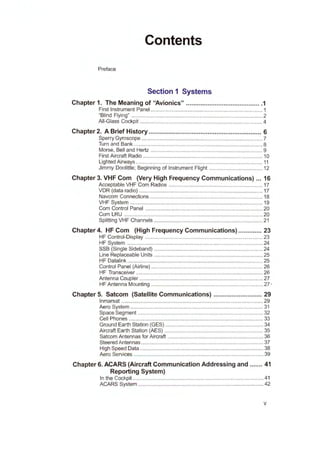
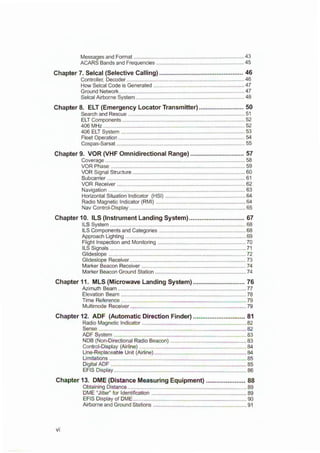
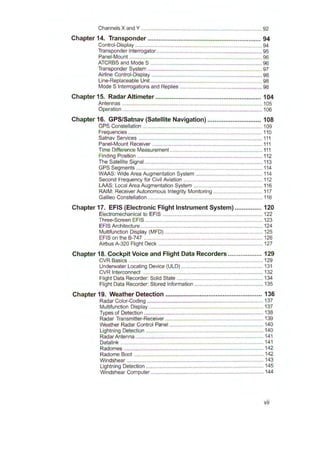
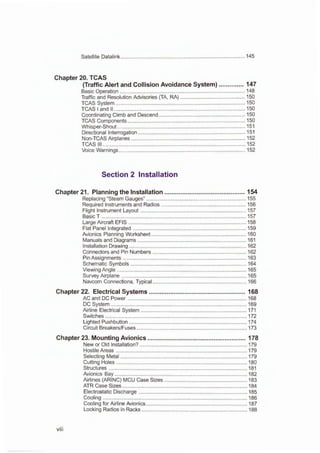
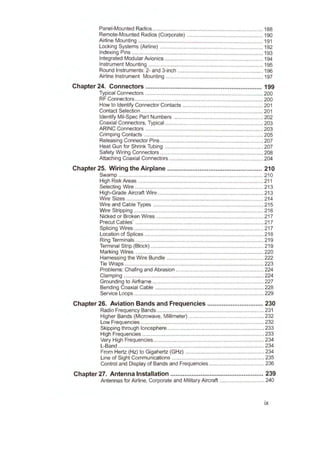
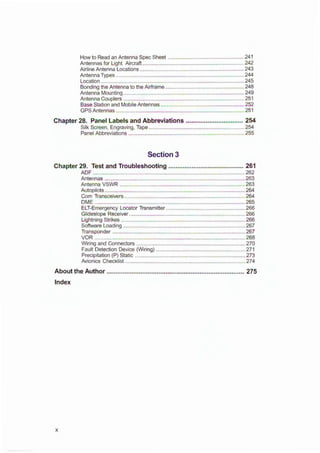
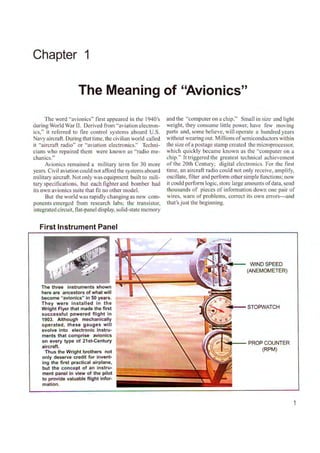
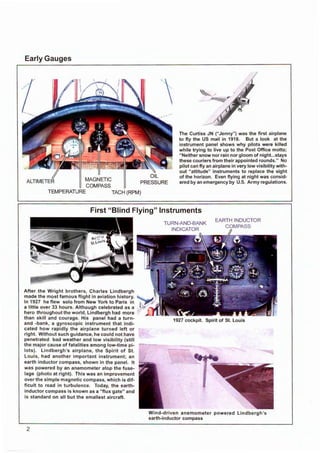
![Higher Tech, Lower Cost
. . The new devices were snapped up. not only by the
military but the telecommunications and consumerelec-
tronics industries. Semiconductors created hundreds
ofnew products, from the personalcomputer and DVD,
to data networks, cell phones and high-definition TV
"Chips" became building blocks of the Internet. Mass
production reduced prices so far that a hobbyist
could bui ld digitalprojects with parts from the shelfof
a local radio store.
These devices were embraced by aviation, which
continuously seeks to reduce size, weight and power
consumption. Old vacuum tubes were replaced by tiny
integrated circuits that deliver many more functions.
By the l980's the term "aviation electronics," over a
half-century old, no longer described a cutting-edge in-
dustry. Manufacturers, repair shops, parts distribu-
tors, airlines and general aviation sensed the need fora
better term to replace "aviation electronics." And what
better word than---"avionics?" During that period, "avi-
onics'' also appeared for the first time in volumes of
FAA regulations on aircraft electronics.
The first generation of the new avionics was so
successful, it began to outclass the military. Airlines,
business jets and private aircraft were outfitted with
flat-panel displays, anti-collision systems, flight man-
agement and GPS---long before they reached miIitary
cockpits. Recognizing the trend, the U.S. Department
ofDefense launched a cost-saving program known as
"COTS," for Commercial Off the Shelf equipment.
Today, many military aircraft are outfitted with civil-
ian avionics of high capability.
Getting out the Mechanicals
An early example of how the new technology was
applied is the King KX-170, a combined navigation and
communications radio (or "navcom"). Despite rugged
construction it contained large mechanical switches with
dozens ofcontacts that inevitably failed.
When semiconductors became avai lable, the
manufacturer not only eliminated mechanical switch-
ing, but added functions to reduce pilot workload. A
new model, the KX-155, could store frequencies and
give the equivalent of two radios-in-one. An elec-
tronic display eliminated rotating mechanicaldrums and
painted numbers, shrinking the size of the radio and
freeing up valuable panel space.
Digital electronics also introduced systems that
were impossible to build with old technology. The Stonn-
scope appeared as the first practical thunderstorm de-
tector for small aircraft. Other companies looked at
the poor accuracy of fuel gauges. creating a digital
fuel flow instrument that measures fuel consumption
precisely, and also tells time and fuel to a destination.
Airline View of Avionics
•Line Maintenance
•Test Systems
•Communications
•Indicating Systems
•Navigation
•Autoflight
•Flight Controls
•Electrical Power
•Lighting
•Air Conditioning
•In-Flight Entertainment
•Engine Systems
•Fire Detection
•Landing Gear
These major topics are discussed each year at
the Avionics Maintenance Conference, run by
ARINC, the airline avionics organization. The
left column shows traditional avionics. But as
electronics creep into other systems, shown in
the right column, they often become the respon-
sibility of avionics maintenance.
ln the airlines, the digital revolution just about
eliminated the problem of "mid-airs." After two air-
liners collided overthe Grand Canyon in 1956 the FAA
investigated several anti-collision systems. Every de-
sign failed because of high cost, weight, size or an
inability to detect small aircraft. One system required
an on-board atomic clock, which cost more than most
airplanes.
But as the price of computing power dropped,
"TCAS" (Traffic Alert and Collision Avoidance Sys-
tem) became practical. It warns when two aircraft
head toward each other with a closing speed over 1,000
miles per hour---and detects most small aircraft not
equipped with TCAS.
Gauges: From Round to Rectangular
By the l970's cockpits of aircraft began to lose
their "steam gauge" appearance, where instrument pan-
els resemble an 1830 railway locomotive. ]nstcad of
round dials and pointers, the new look became the "glass
cockpit," where separate gauges are replaced by im-
ages on a CRT or flat panel LCD. The system is called
"EFIS," for Electronic Flight lnstrument System and it
rapidly spread through every size aircraft.
Today, a blank screen may become any instrument-
--altimeter, airspeed, tachomctcr----or all simulta-
neously. It's done by modifying software, or simply
changing the plug on the back during installation.This
3](https://image.slidesharecdn.com/5273752-250621103214-add5f11f/85/Avionics-Training-Systems-Installation-And-Troubleshooting-2nd-Len-Buckwalter-17-320.jpg)
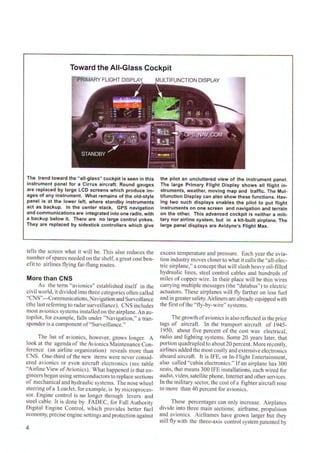

![individual members are ailing? A single individual cannot demand
that society should be sacrificed for his sake, but a majority of
individuals have a right to bring about such changes in the society,
which they themselves compose, as may be beneficial to
themselves.
Under the simpler conditions of country life John believed he could
be happy in an obscure post, without feeling that he had sunk in the
social scale. But he could not be so in the town where he would be
continually reminded of the height from which he had fallen. To
come down voluntarily is not painful if the onlookers can be
persuaded that it is voluntarily, but to fall is bitter, especially as a fall
always arouses satisfaction in those standing below. To mount, strive
upwards and better one's position has become a social instinct, and
the youth felt the force of it, though in his view the "upper" was not
always higher.
John wished now to realise some result,—an active life which should
bring him an income. He looked through many advertisements for
teachers in elementary schools. Positions were advertised to which
were attached salaries of 300 or 600 kronas, a house, a meadow
and a garden. He tried for one of these places after another but
obtained no answer.
When the term was over and his 80 kronas spent, he returned
home, not knowing whither to turn, what he should become, or how
he should live. He had glanced in the forecourt and seen that there
was no room in it for him.
[1] A krona = 1s. 2d.
CHAPTER II
BELOW AND ABOVE](https://image.slidesharecdn.com/5273752-250621103214-add5f11f/85/Avionics-Training-Systems-Installation-And-Troubleshooting-2nd-Len-Buckwalter-21-320.jpg)