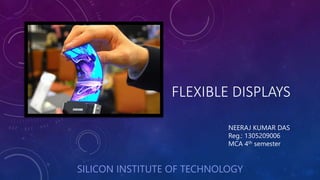
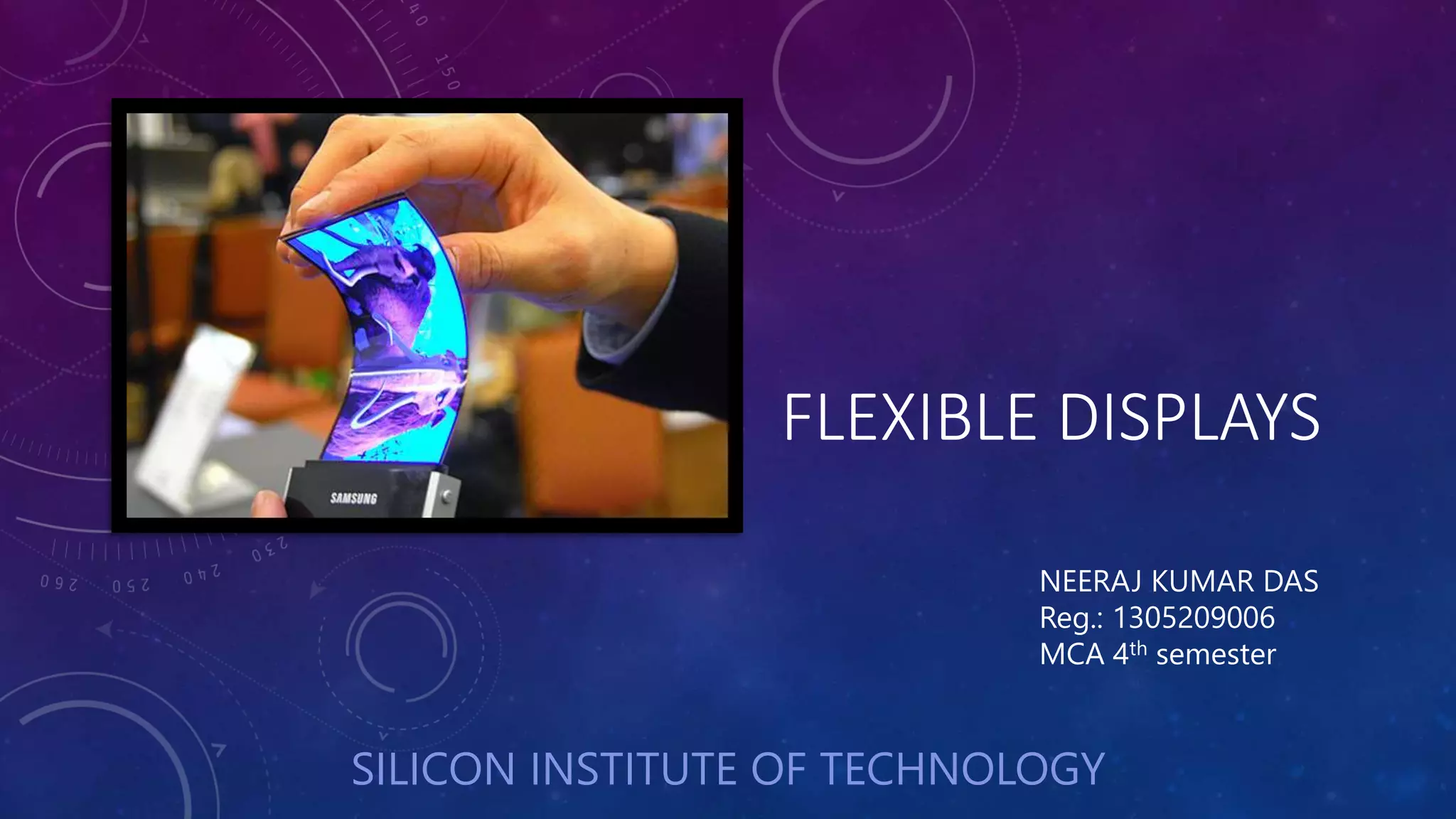
FLEXIBLE DISPLAYS
NEERAJ KUMAR DAS
Reg.: 1305209006
MCA 4th semester
SILICON INSTITUTE OF TECHNOLOGY
CONTENTS
• Introduction
• OLED
• Structure of OLED
• Working principle of OLED
• Flexible OLED
• Advantages of Flexible displays
• Disadvantages of Flexible displays
• Concept devices
• Conclusion
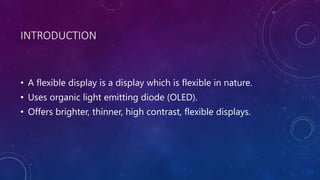
INTRODUCTION
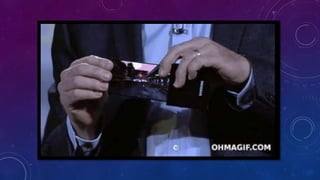
• A flexible display is a display which is flexible in nature.
• Uses organic light emitting diode (OLED).
• Offers brighter, thinner, high contrast, flexible displays.
OLED
• Main principle behind OLED technology is electroluminescence.
• They emit light with the application of electricity.
• They doesn’t require any backlight. i.e., they are self emitting.
• They are made from carbon and hydrogen.
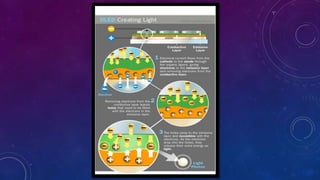
STRUCTURE OF OLED
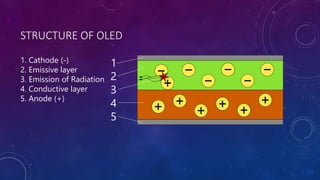
1. Cathode (-)
2. Emissive layer
3. Emission of Radiation
4. Conductive layer
5. Anode (+)
WORKING PRINCIPLE OF OLED
• A voltage is applied across the OLED such that the anode is positive with
respect to the cathode.
• Current flows from cathode to anode through the organic layers.
• Cathode gives electrons to the emissive layer.
• Anode withdraws electrons from the conductive layer, leaving electron holes.
• Holes move into emissive layer .
• Electron and hole combine and emit light.
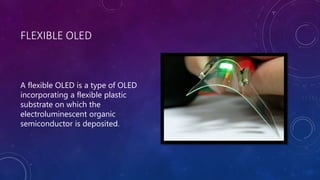
FLEXIBLE OLED
A flexible OLED is a type of OLED
incorporating a flexible plastic
substrate on which the
electroluminescent organic
semiconductor is deposited.
ADVANTAGES OF FLEXIBLE DISPLAYS
• Thinner, lighter ,flexible (uses plastic substrate instead of glass).
• Backlight not required hence consume less power.
• Large field of view about 170 degrees
• Low heat generation
• Low Power requirement
• Less prone to breakage when dropped
DISADVANTAGES OF FLEXIBLE DISPLAYS
• Lifetime - Red and green OLED films have longer lifetimes (46,000 to
230,000 hours), blue organics currently have much shorter lifetimes (up
to around 14,000 hours
• Manufacturing - Manufacturing processes are expensive right now.
• Water - Water can easily damage OLEDs. (As plastics are
semipermeable)
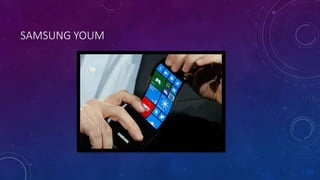
SAMSUNG YOUM
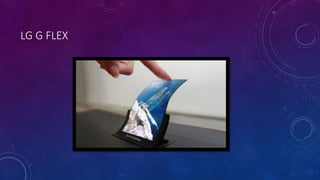
LG G FLEX
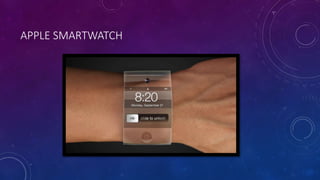
APPLE SMARTWATCH
CONCLUSION
• Flexible displays are evolving as the next generation displays.
• As FOLED display technology matures, it will be able to improve upon
certain existing limitations of LCD and LED.
REFERENCES
• http://en.wikipedia.org/wiki/Flexible_display
• http://en.wikipedia.org/wiki/OLED
• http://en.wikipedia.org/wiki/Flexible_organic_light-emitting_diode#Technical_details_and_applications
• http://www.cnet.com/news/what-you-should-know-about-flexible-displays-faq
• http://electronics.howstuffworks.com/oled.htm

Flexible displays

  • 1.
    FLEXIBLE DISPLAYS NEERAJ KUMARDAS Reg.: 1305209006 MCA 4th semester SILICON INSTITUTE OF TECHNOLOGY
  • 2.
    CONTENTS • Introduction • OLED •Structure of OLED • Working principle of OLED • Flexible OLED • Advantages of Flexible displays • Disadvantages of Flexible displays • Concept devices • Conclusion
  • 3.
    INTRODUCTION • A flexibledisplay is a display which is flexible in nature. • Uses organic light emitting diode (OLED). • Offers brighter, thinner, high contrast, flexible displays.
  • 5.
    OLED • Main principlebehind OLED technology is electroluminescence. • They emit light with the application of electricity. • They doesn’t require any backlight. i.e., they are self emitting. • They are made from carbon and hydrogen.
  • 6.
    STRUCTURE OF OLED 1.Cathode (-) 2. Emissive layer 3. Emission of Radiation 4. Conductive layer 5. Anode (+)
  • 7.
    WORKING PRINCIPLE OFOLED • A voltage is applied across the OLED such that the anode is positive with respect to the cathode. • Current flows from cathode to anode through the organic layers. • Cathode gives electrons to the emissive layer. • Anode withdraws electrons from the conductive layer, leaving electron holes. • Holes move into emissive layer . • Electron and hole combine and emit light.
  • 9.
    FLEXIBLE OLED A flexibleOLED is a type of OLED incorporating a flexible plastic substrate on which the electroluminescent organic semiconductor is deposited.
  • 10.
    ADVANTAGES OF FLEXIBLEDISPLAYS • Thinner, lighter ,flexible (uses plastic substrate instead of glass). • Backlight not required hence consume less power. • Large field of view about 170 degrees • Low heat generation • Low Power requirement • Less prone to breakage when dropped
  • 11.
    DISADVANTAGES OF FLEXIBLEDISPLAYS • Lifetime - Red and green OLED films have longer lifetimes (46,000 to 230,000 hours), blue organics currently have much shorter lifetimes (up to around 14,000 hours • Manufacturing - Manufacturing processes are expensive right now. • Water - Water can easily damage OLEDs. (As plastics are semipermeable)
  • 12.
  • 13.
  • 14.
  • 15.
    CONCLUSION • Flexible displaysare evolving as the next generation displays. • As FOLED display technology matures, it will be able to improve upon certain existing limitations of LCD and LED.
  • 16.
    REFERENCES • http://en.wikipedia.org/wiki/Flexible_display • http://en.wikipedia.org/wiki/OLED •http://en.wikipedia.org/wiki/Flexible_organic_light-emitting_diode#Technical_details_and_applications • http://www.cnet.com/news/what-you-should-know-about-flexible-displays-faq • http://electronics.howstuffworks.com/oled.htm