














First Industrial Revolution
X was a French mathematician, scientist and a philosopher.
Many elements of X’s philosophy have precedents in late Aristotelianism, the
revived Stoicism of the 16th century, or in earlier philosophers like Augustine. In
his natural philosophy, he differed from the schools on two major points: first, he
rejected the splitting of corporeal substance into matter and form; second, he
rejected any appeal to final ends, divine or natural, in explaining natural
phenomena. In his theology, he insists on the absolute freedom of God's act of
creation. Refusing to accept the authority of previous philosophers, he frequently
set his views apart from the philosophers who preceded him.
He is regarded as founder of Modern Philosophy and one of the most notable
figures in Dutch Golden Age.
Give me X.
The Industrial Revolution, now also known as the First Industrial Revolution,
was the transition to new manufacturing processes in Europe and the United
States, in the period from about 1760 to sometime between 1820 and 1840. This
transition included going from hand production methods to machines, new
chemical manufacturing and iron production processes, the increasing use of
steam power and water power, the development of machine tools and the rise of
the mechanized factory system. The Industrial Revolution also led to an
unprecedented rise in the rate of population growth.
Y were the dominant industry of the Industrial Revolution in terms of employment,
value of output and capital invested. The Y industry was also the first to use
modern production methods.
The Industrial Revolution began in the X Kingdom.
Give me X & Y.
X was a difficult raw material for Europe to obtain before it was grown on colonial plantations in the
Americas.
The early Spanish explorers found Native Americans growing unknown species of excellent quality X: sea
island X (Gossypium barbadense) and upland green seeded X Gossypium hirsutum.
Sea island X began being exported from Barbados in the 1650s. Upland green seeded X grew well on
inland areas of the southern U.S., but was not economical because of the difficulty of removing seed, a
problem solved by the Y.
Give me X and Y.
The X was one of the key developments in the industrialization of weaving during the early
Industrial Revolution. It allowed a single weaver to weave much wider fabrics, and it could be
mechanized, allowing for automatic machine looms. The X, which was patented by John Kay
(1704–c. 1779) in 1733, greatly sped up the previous hand process and halved the labour
force. Where a broad-cloth loom previously required a weaver on each side, it could now be
worked by a single operator. Until this point the textile industry had required four spinners to
service one weaver. Kay's innovation, in wide use by the 1750s, greatly increased this
disparity.
Use of coal in iron smelting started somewhat before the Industrial Revolution,
based on innovations by Sir Clement Clerke and others from 1678, using coal
reverberatory furnaces known as X. These were operated by the flames playing
on the ore and charcoal or coke mixture, reducing the oxide to metal. This has the
advantage that impurities (such as sulphur ash) in the coal do not migrate into the
metal. This technology was applied to lead from 1678 and to copper from 1687. It
was also applied to iron foundry work in the 1690s, but in this case the
reverberatory furnace was known as an Y furnace.
Give me X & Y.
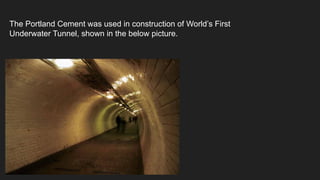
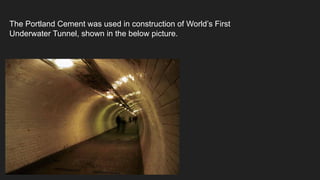
The Portland Cement was used in construction of World’s First
Underwater Tunnel, shown in the below picture.
As a child, X experienced the fickle hands of fate; he was first taught at a private
school before being removed because of his family’s financial hardship.
In fact, his father’s debts were so bad, the whole family (apart from him was sent
to the debtor’s prison at Marshalsea – this would later be the setting for one of his
novels).
However, although He escaped detention in the debtors’ prison, he was made to
work long, 10 hour days, at a local boot-blacking factory. The hard and dangerous
work left a lasting impression on him, who would later incorporate in his writings a
sense of social injustice that was endemic in Victorian Britain.
He was a huge critic of Industrial Revolution and had made it clear through his
writings.
Who is he?
Who is he?
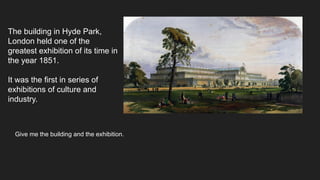
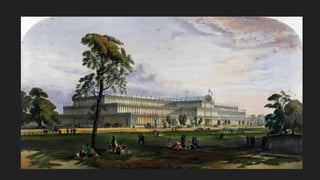
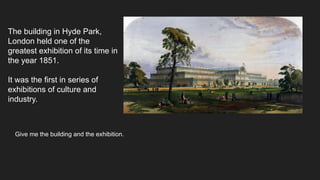
The building in Hyde Park,
London held one of the
greatest exhibition of its time in
the year 1851.
It was the first in series of
exhibitions of culture and
industry.
Give me the building and the exhibition.
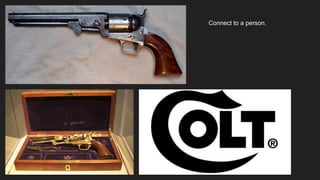
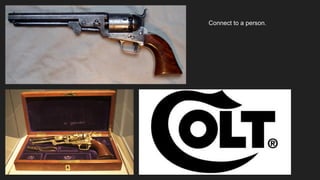
Connect to a person.
The X process, was the first publicly available photographic process, widely used during the 1840s and 1850s.
Invented by Louis-Jacques-Mandé Daguerre and introduced worldwide in 1839, X was almost completely superseded by 1860 with
new, less expensive processes yielding more readily viewable images.
To make the image, a photographer would polish a sheet of silver-plated copper to a mirror finish, treat it with fumes that made its
surface light sensitive, expose it in a camera for as long as was judged to be necessary, which could be as little as a few seconds for
brightly sunlit subjects or much longer with less intense lighting; make the resulting latent image on it visible by fuming it with mercury
vapor; remove its sensitivity to light by liquid chemical treatment, rinse and dry it, then seal the easily marred result behind glass in a
protective enclosure.
The image is on a mirror-like silver surface, normally kept under glass, and will appear either positive or negative, depending on the
angle at which it is viewed, how it is lit and whether a light or dark background is being reflected in the metal. The darkest areas of the
image are simply bare silver; lighter areas have a microscopically fine light-scattering texture. The surface is very delicate, and even
the lightest wiping can permanently scuff it. Some tarnish around the edges is normal.
Several types of antique photographs, most often ambrotypes and tintypes, but sometimes even old prints on paper, are very
commonly misidentified as X, especially if they are in the small, ornamented cases in which X made in the US and UK were usually
housed. The name "X" correctly refers only to one very specific image type and medium, the product of a process that was in wide use
only from the early 1840s to the late 1850s.
Give me X.
Answers
Round 1
Guess Me!
X was a French mathematician, scientist and a philosopher.
Many elements of X’s philosophy have precedents in late Aristotelianism, the
revived Stoicism of the 16th century, or in earlier philosophers like Augustine. In
his natural philosophy, he differed from the schools on two major points: first, he
rejected the splitting of corporeal substance into matter and form; second, he
rejected any appeal to final ends, divine or natural, in explaining natural
phenomena. In his theology, he insists on the absolute freedom of God's act of
creation. Refusing to accept the authority of previous philosophers, he frequently
set his views apart from the philosophers who preceded him.
He is regarded as founder of Modern Philosophy and one of the most notable
figures in Dutch Golden Age.
Give me X.
Rene Descartes
The Industrial Revolution, now also known as the First Industrial Revolution,
was the transition to new manufacturing processes in Europe and the United
States, in the period from about 1760 to sometime between 1820 and 1840. This
transition included going from hand production methods to machines, new
chemical manufacturing and iron production processes, the increasing use of
steam power and water power, the development of machine tools and the rise of
the mechanized factory system. The Industrial Revolution also led to an
unprecedented rise in the rate of population growth.
Y were the dominant industry of the Industrial Revolution in terms of employment,
value of output and capital invested. The Y industry was also the first to use
modern production methods.
The Industrial Revolution began in the X Kingdom.
Give me X & Y.
X - Great Britain
Y - Textile
X was a difficult raw material for Europe to obtain before it was grown on colonial plantations in the
Americas.
The early Spanish explorers found Native Americans growing unknown species of excellent quality X: sea
island X (Gossypium barbadense) and upland green seeded X Gossypium hirsutum.
Sea island X began being exported from Barbados in the 1650s. Upland green seeded X grew well on
inland areas of the southern U.S., but was not economical because of the difficulty of removing seed, a
problem solved by the Y.
Give me X and Y.
X - Cotton
Y - Cotton Gin
The X was one of the key developments in the industrialization of weaving during the early
Industrial Revolution. It allowed a single weaver to weave much wider fabrics, and it could be
mechanized, allowing for automatic machine looms. The X, which was patented by John Kay
(1704–c. 1779) in 1733, greatly sped up the previous hand process and halved the labour
force. Where a broad-cloth loom previously required a weaver on each side, it could now be
worked by a single operator. Until this point the textile industry had required four spinners to
service one weaver. Kay's innovation, in wide use by the 1750s, greatly increased this
disparity.
X - Flying Shuttle
Use of coal in iron smelting started somewhat before the Industrial Revolution,
based on innovations by Sir Clement Clerke and others from 1678, using coal
reverberatory furnaces known as X. These were operated by the flames playing
on the ore and charcoal or coke mixture, reducing the oxide to metal. This has the
advantage that impurities (such as sulphur ash) in the coal do not migrate into the
metal. This technology was applied to lead from 1678 and to copper from 1687. It
was also applied to iron foundry work in the 1690s, but in this case the
reverberatory furnace was known as an Y furnace.
Give me X & Y.
X - Cupolas
Y - Air
Round 2
Guess the buildings!
The Portland Cement was used in construction of World’s First
Underwater Tunnel, shown in the below picture.
The Thames Tunnel
As a child, X experienced the fickle hands of fate; he was first taught at a private
school before being removed because of his family’s financial hardship.
In fact, his father’s debts were so bad, the whole family (apart from him was sent
to the debtor’s prison at Marshalsea – this would later be the setting for one of his
novels).
However, although He escaped detention in the debtors’ prison, he was made to
work long, 10 hour days, at a local boot-blacking factory. The hard and dangerous
work left a lasting impression on him, who would later incorporate in his writings a
sense of social injustice that was endemic in Victorian Britain.
He was a huge critic of Industrial Revolution and had made it clear through his
writings.
Who is he?
Charles Dickens
Who is he?
Karl Marx
The building in Hyde Park,
London held one of the
greatest exhibition of its time in
the year 1851.
It was the first in series of
exhibitions of culture and
industry.
Give me the building and the exhibition.
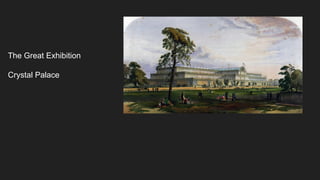
The Great Exhibition
Crystal Palace
Connect to a person.
Samuel Colt
The X process, was the first publicly available photographic process, widely used during the 1840s and 1850s.
Invented by Louis-Jacques-Mandé Daguerre and introduced worldwide in 1839, X was almost completely superseded by 1860 with
new, less expensive processes yielding more readily viewable images.
To make the image, a photographer would polish a sheet of silver-plated copper to a mirror finish, treat it with fumes that made its
surface light sensitive, expose it in a camera for as long as was judged to be necessary, which could be as little as a few seconds for
brightly sunlit subjects or much longer with less intense lighting; make the resulting latent image on it visible by fuming it with mercury
vapor; remove its sensitivity to light by liquid chemical treatment, rinse and dry it, then seal the easily marred result behind glass in a
protective enclosure.
The image is on a mirror-like silver surface, normally kept under glass, and will appear either positive or negative, depending on the
angle at which it is viewed, how it is lit and whether a light or dark background is being reflected in the metal. The darkest areas of the
image are simply bare silver; lighter areas have a microscopically fine light-scattering texture. The surface is very delicate, and even
the lightest wiping can permanently scuff it. Some tarnish around the edges is normal.
Several types of antique photographs, most often ambrotypes and tintypes, but sometimes even old prints on paper, are very
commonly misidentified as X, especially if they are in the small, ornamented cases in which X made in the US and UK were usually
housed. The name "X" correctly refers only to one very specific image type and medium, the product of a process that was in wide use
only from the early 1840s to the late 1850s.
Give me X.
Daguerreotype

First industrial revolution quiz

  • 1.
  • 2.
    X was aFrench mathematician, scientist and a philosopher. Many elements of X’s philosophy have precedents in late Aristotelianism, the revived Stoicism of the 16th century, or in earlier philosophers like Augustine. In his natural philosophy, he differed from the schools on two major points: first, he rejected the splitting of corporeal substance into matter and form; second, he rejected any appeal to final ends, divine or natural, in explaining natural phenomena. In his theology, he insists on the absolute freedom of God's act of creation. Refusing to accept the authority of previous philosophers, he frequently set his views apart from the philosophers who preceded him. He is regarded as founder of Modern Philosophy and one of the most notable figures in Dutch Golden Age. Give me X.
  • 3.
    The Industrial Revolution,now also known as the First Industrial Revolution, was the transition to new manufacturing processes in Europe and the United States, in the period from about 1760 to sometime between 1820 and 1840. This transition included going from hand production methods to machines, new chemical manufacturing and iron production processes, the increasing use of steam power and water power, the development of machine tools and the rise of the mechanized factory system. The Industrial Revolution also led to an unprecedented rise in the rate of population growth. Y were the dominant industry of the Industrial Revolution in terms of employment, value of output and capital invested. The Y industry was also the first to use modern production methods. The Industrial Revolution began in the X Kingdom. Give me X & Y.
  • 4.
    X was adifficult raw material for Europe to obtain before it was grown on colonial plantations in the Americas. The early Spanish explorers found Native Americans growing unknown species of excellent quality X: sea island X (Gossypium barbadense) and upland green seeded X Gossypium hirsutum. Sea island X began being exported from Barbados in the 1650s. Upland green seeded X grew well on inland areas of the southern U.S., but was not economical because of the difficulty of removing seed, a problem solved by the Y. Give me X and Y.
  • 5.
    The X wasone of the key developments in the industrialization of weaving during the early Industrial Revolution. It allowed a single weaver to weave much wider fabrics, and it could be mechanized, allowing for automatic machine looms. The X, which was patented by John Kay (1704–c. 1779) in 1733, greatly sped up the previous hand process and halved the labour force. Where a broad-cloth loom previously required a weaver on each side, it could now be worked by a single operator. Until this point the textile industry had required four spinners to service one weaver. Kay's innovation, in wide use by the 1750s, greatly increased this disparity.
  • 6.
    Use of coalin iron smelting started somewhat before the Industrial Revolution, based on innovations by Sir Clement Clerke and others from 1678, using coal reverberatory furnaces known as X. These were operated by the flames playing on the ore and charcoal or coke mixture, reducing the oxide to metal. This has the advantage that impurities (such as sulphur ash) in the coal do not migrate into the metal. This technology was applied to lead from 1678 and to copper from 1687. It was also applied to iron foundry work in the 1690s, but in this case the reverberatory furnace was known as an Y furnace. Give me X & Y.
  • 7.
    The Portland Cementwas used in construction of World’s First Underwater Tunnel, shown in the below picture.
  • 8.
    As a child,X experienced the fickle hands of fate; he was first taught at a private school before being removed because of his family’s financial hardship. In fact, his father’s debts were so bad, the whole family (apart from him was sent to the debtor’s prison at Marshalsea – this would later be the setting for one of his novels). However, although He escaped detention in the debtors’ prison, he was made to work long, 10 hour days, at a local boot-blacking factory. The hard and dangerous work left a lasting impression on him, who would later incorporate in his writings a sense of social injustice that was endemic in Victorian Britain. He was a huge critic of Industrial Revolution and had made it clear through his writings. Who is he?
  • 9.
  • 10.
    The building inHyde Park, London held one of the greatest exhibition of its time in the year 1851. It was the first in series of exhibitions of culture and industry. Give me the building and the exhibition.
  • 12.
    Connect to aperson.
  • 13.
    The X process,was the first publicly available photographic process, widely used during the 1840s and 1850s. Invented by Louis-Jacques-Mandé Daguerre and introduced worldwide in 1839, X was almost completely superseded by 1860 with new, less expensive processes yielding more readily viewable images. To make the image, a photographer would polish a sheet of silver-plated copper to a mirror finish, treat it with fumes that made its surface light sensitive, expose it in a camera for as long as was judged to be necessary, which could be as little as a few seconds for brightly sunlit subjects or much longer with less intense lighting; make the resulting latent image on it visible by fuming it with mercury vapor; remove its sensitivity to light by liquid chemical treatment, rinse and dry it, then seal the easily marred result behind glass in a protective enclosure. The image is on a mirror-like silver surface, normally kept under glass, and will appear either positive or negative, depending on the angle at which it is viewed, how it is lit and whether a light or dark background is being reflected in the metal. The darkest areas of the image are simply bare silver; lighter areas have a microscopically fine light-scattering texture. The surface is very delicate, and even the lightest wiping can permanently scuff it. Some tarnish around the edges is normal. Several types of antique photographs, most often ambrotypes and tintypes, but sometimes even old prints on paper, are very commonly misidentified as X, especially if they are in the small, ornamented cases in which X made in the US and UK were usually housed. The name "X" correctly refers only to one very specific image type and medium, the product of a process that was in wide use only from the early 1840s to the late 1850s. Give me X.
  • 14.
  • 15.
  • 16.
    X was aFrench mathematician, scientist and a philosopher. Many elements of X’s philosophy have precedents in late Aristotelianism, the revived Stoicism of the 16th century, or in earlier philosophers like Augustine. In his natural philosophy, he differed from the schools on two major points: first, he rejected the splitting of corporeal substance into matter and form; second, he rejected any appeal to final ends, divine or natural, in explaining natural phenomena. In his theology, he insists on the absolute freedom of God's act of creation. Refusing to accept the authority of previous philosophers, he frequently set his views apart from the philosophers who preceded him. He is regarded as founder of Modern Philosophy and one of the most notable figures in Dutch Golden Age. Give me X.
  • 17.
  • 18.
    The Industrial Revolution,now also known as the First Industrial Revolution, was the transition to new manufacturing processes in Europe and the United States, in the period from about 1760 to sometime between 1820 and 1840. This transition included going from hand production methods to machines, new chemical manufacturing and iron production processes, the increasing use of steam power and water power, the development of machine tools and the rise of the mechanized factory system. The Industrial Revolution also led to an unprecedented rise in the rate of population growth. Y were the dominant industry of the Industrial Revolution in terms of employment, value of output and capital invested. The Y industry was also the first to use modern production methods. The Industrial Revolution began in the X Kingdom. Give me X & Y.
  • 19.
    X - GreatBritain Y - Textile
  • 20.
    X was adifficult raw material for Europe to obtain before it was grown on colonial plantations in the Americas. The early Spanish explorers found Native Americans growing unknown species of excellent quality X: sea island X (Gossypium barbadense) and upland green seeded X Gossypium hirsutum. Sea island X began being exported from Barbados in the 1650s. Upland green seeded X grew well on inland areas of the southern U.S., but was not economical because of the difficulty of removing seed, a problem solved by the Y. Give me X and Y.
  • 21.
    X - Cotton Y- Cotton Gin
  • 22.
    The X wasone of the key developments in the industrialization of weaving during the early Industrial Revolution. It allowed a single weaver to weave much wider fabrics, and it could be mechanized, allowing for automatic machine looms. The X, which was patented by John Kay (1704–c. 1779) in 1733, greatly sped up the previous hand process and halved the labour force. Where a broad-cloth loom previously required a weaver on each side, it could now be worked by a single operator. Until this point the textile industry had required four spinners to service one weaver. Kay's innovation, in wide use by the 1750s, greatly increased this disparity.
  • 23.
    X - FlyingShuttle
  • 24.
    Use of coalin iron smelting started somewhat before the Industrial Revolution, based on innovations by Sir Clement Clerke and others from 1678, using coal reverberatory furnaces known as X. These were operated by the flames playing on the ore and charcoal or coke mixture, reducing the oxide to metal. This has the advantage that impurities (such as sulphur ash) in the coal do not migrate into the metal. This technology was applied to lead from 1678 and to copper from 1687. It was also applied to iron foundry work in the 1690s, but in this case the reverberatory furnace was known as an Y furnace. Give me X & Y.
  • 25.
  • 26.
  • 27.
    The Portland Cementwas used in construction of World’s First Underwater Tunnel, shown in the below picture.
  • 28.
  • 29.
    As a child,X experienced the fickle hands of fate; he was first taught at a private school before being removed because of his family’s financial hardship. In fact, his father’s debts were so bad, the whole family (apart from him was sent to the debtor’s prison at Marshalsea – this would later be the setting for one of his novels). However, although He escaped detention in the debtors’ prison, he was made to work long, 10 hour days, at a local boot-blacking factory. The hard and dangerous work left a lasting impression on him, who would later incorporate in his writings a sense of social injustice that was endemic in Victorian Britain. He was a huge critic of Industrial Revolution and had made it clear through his writings. Who is he?
  • 30.
  • 31.
  • 32.
  • 33.
    The building inHyde Park, London held one of the greatest exhibition of its time in the year 1851. It was the first in series of exhibitions of culture and industry. Give me the building and the exhibition.
  • 35.
  • 36.
    Connect to aperson.
  • 37.
  • 38.
    The X process,was the first publicly available photographic process, widely used during the 1840s and 1850s. Invented by Louis-Jacques-Mandé Daguerre and introduced worldwide in 1839, X was almost completely superseded by 1860 with new, less expensive processes yielding more readily viewable images. To make the image, a photographer would polish a sheet of silver-plated copper to a mirror finish, treat it with fumes that made its surface light sensitive, expose it in a camera for as long as was judged to be necessary, which could be as little as a few seconds for brightly sunlit subjects or much longer with less intense lighting; make the resulting latent image on it visible by fuming it with mercury vapor; remove its sensitivity to light by liquid chemical treatment, rinse and dry it, then seal the easily marred result behind glass in a protective enclosure. The image is on a mirror-like silver surface, normally kept under glass, and will appear either positive or negative, depending on the angle at which it is viewed, how it is lit and whether a light or dark background is being reflected in the metal. The darkest areas of the image are simply bare silver; lighter areas have a microscopically fine light-scattering texture. The surface is very delicate, and even the lightest wiping can permanently scuff it. Some tarnish around the edges is normal. Several types of antique photographs, most often ambrotypes and tintypes, but sometimes even old prints on paper, are very commonly misidentified as X, especially if they are in the small, ornamented cases in which X made in the US and UK were usually housed. The name "X" correctly refers only to one very specific image type and medium, the product of a process that was in wide use only from the early 1840s to the late 1850s. Give me X.
  • 39.