TRIAGE
KIRTTI
 Derived from a French word ‘triar’ which means
‘to separate out’
 A method of quickly identifying victims who have
immediately life-threatening injuries and who
have the best chance of surviving
 Use when the quantity severity of injuries
overwhelm the operative capacity of health
facilities .
 The principal of “first come” “first treat” is not
followed in mass emergencies
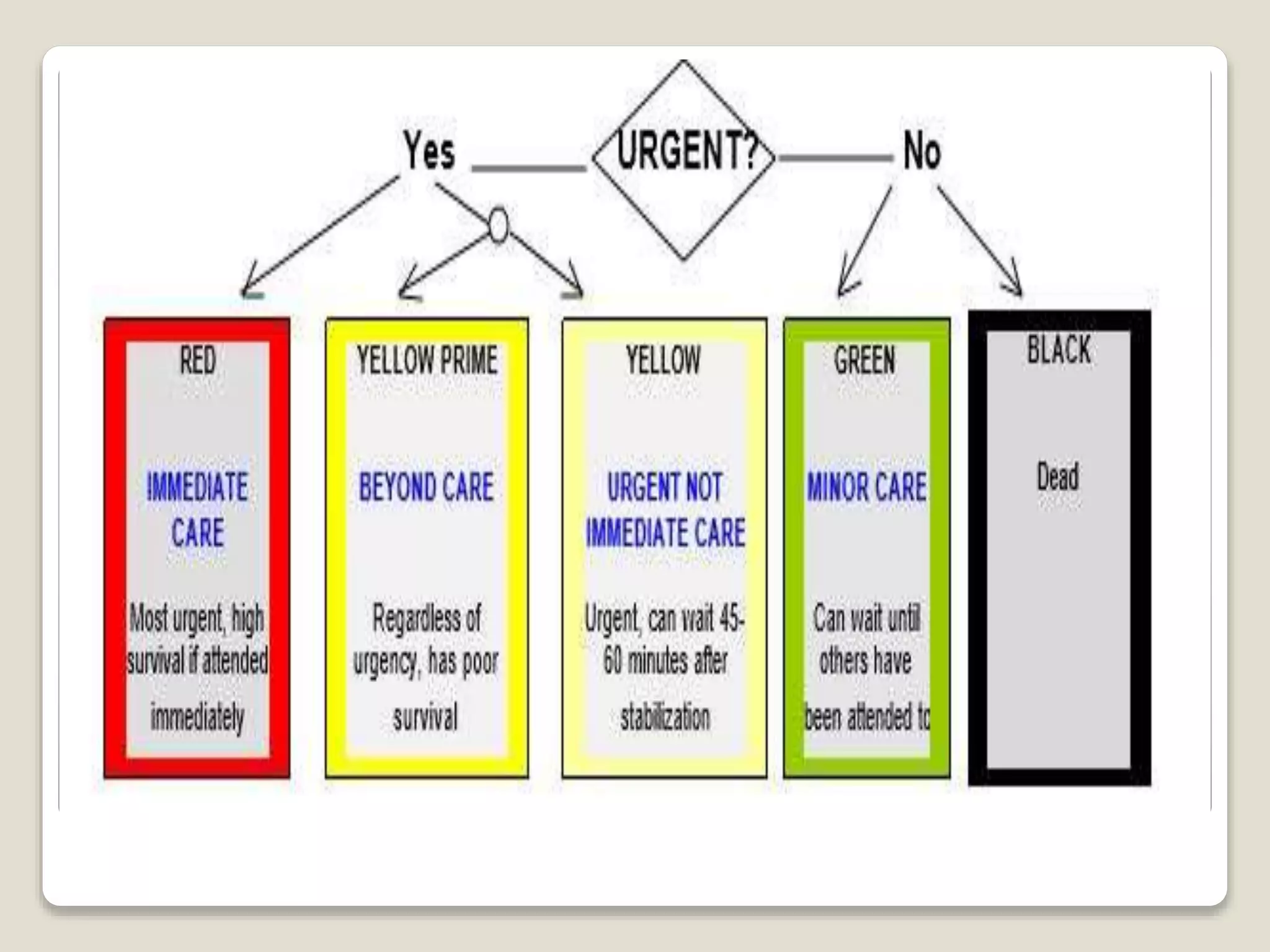
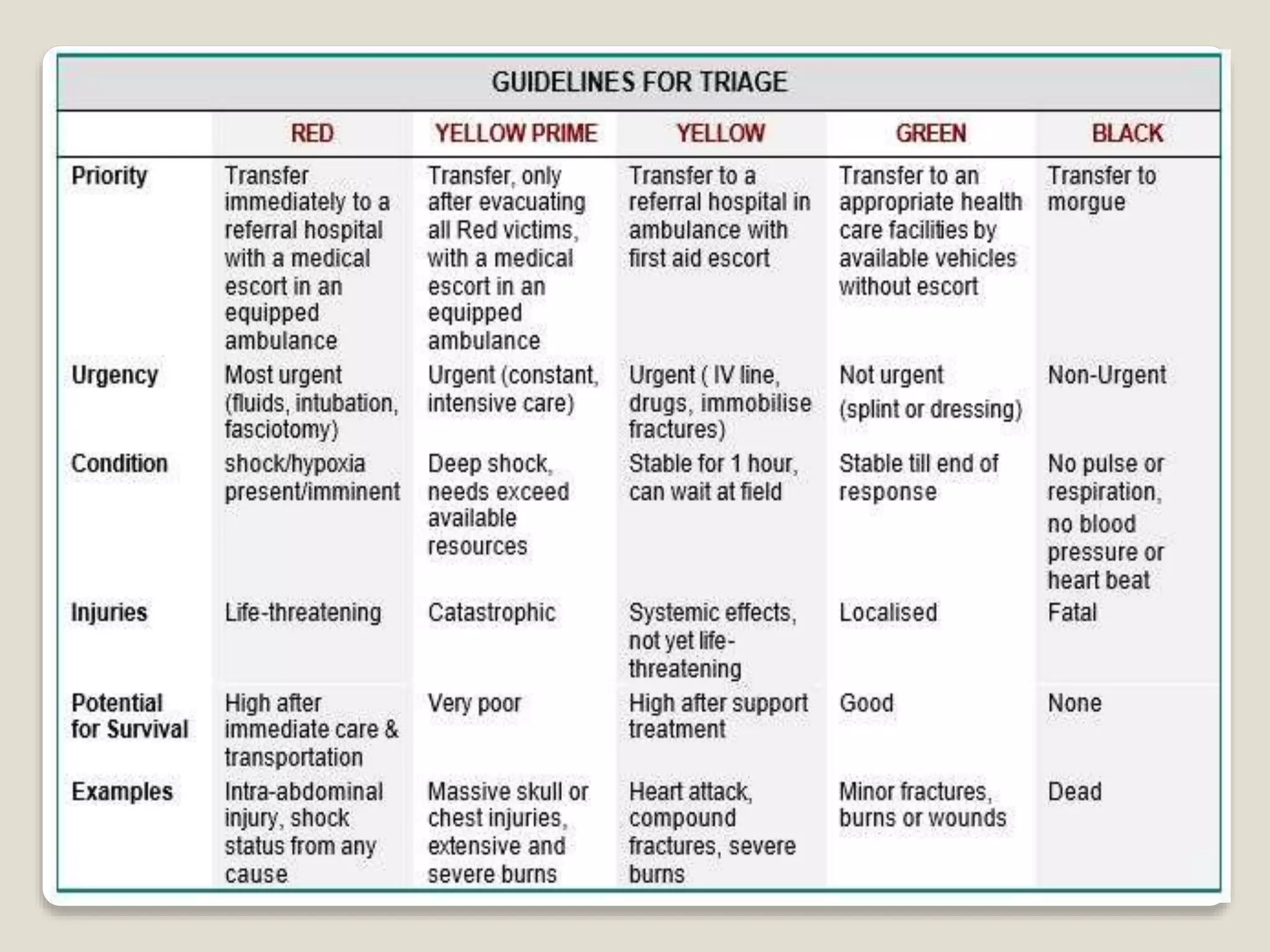
 Processing of determining the priorities patients
treatment based on their severity
 It consist of rapidly classifying the patients as
per the severities as High priorities
Low priorities
French
army
triage
centre
WW-1
The goal of managing a mass
casualty incident
 Priorities for transportation to the hospital
 Priorities for care in the field
START SYSTEM
 Created in the 1980’s by Hoag Hospital and the
Newport Beach CA Fire Dept
 Allows rapid assessment of victims
 It should not take more than 15 sec/ Pt
Once victim is in treatment area more detailed
assessment should be made Clasificación is
based on three items
 Respiratory
 Perfusion
 Mental status evaluation
START First Step
Can the Patient Walk?
Green
(Minor)
Evaluate Ventilation
(Step-2)
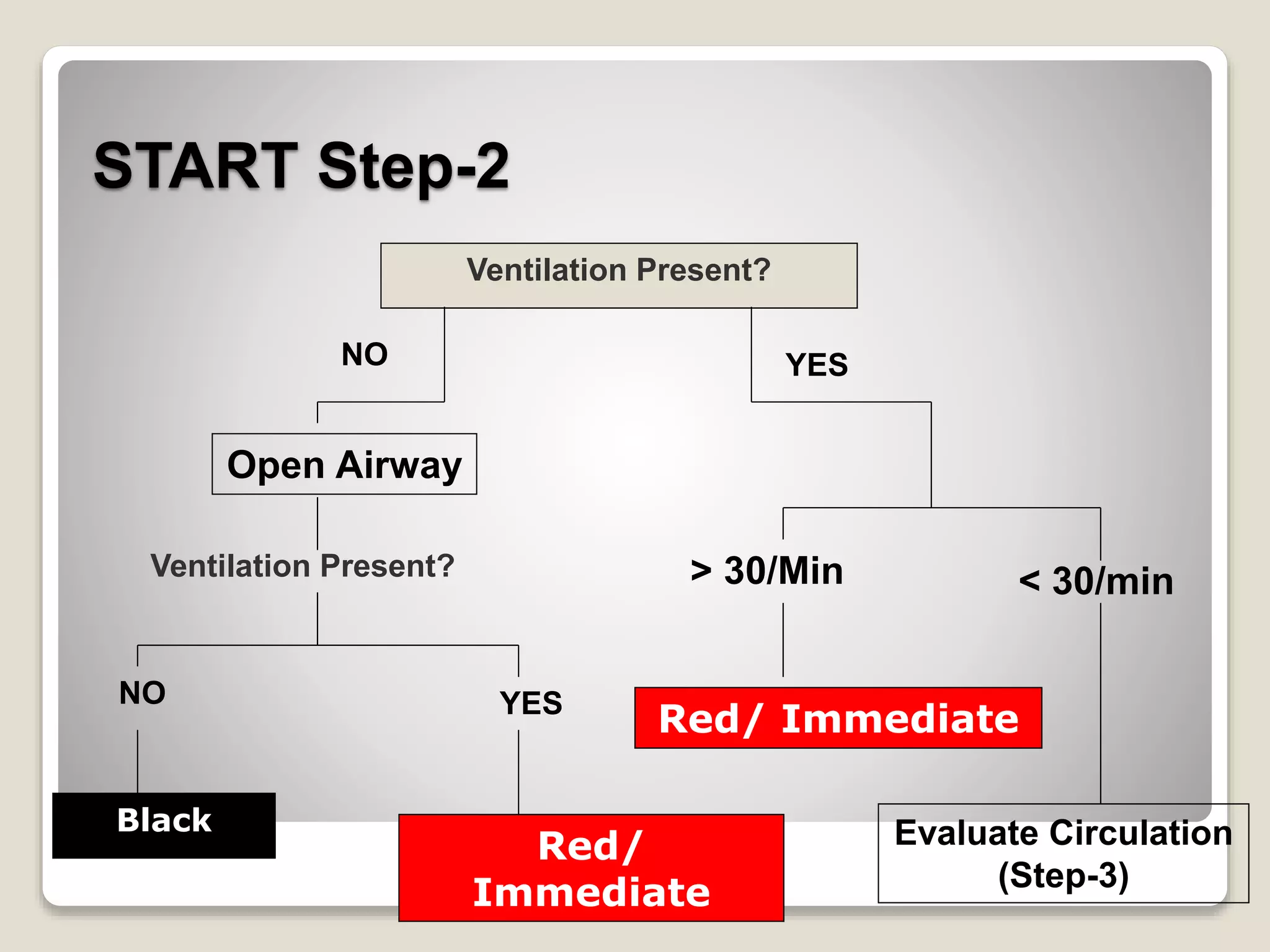
Ventilation Present?
YESNO
> 30/Min < 30/min
Evaluate Circulation
(Step-3)
Open Airway
Ventilation Present?
NO YES
Black
Red/
Immediate
Red/ Immediate
START Step-2
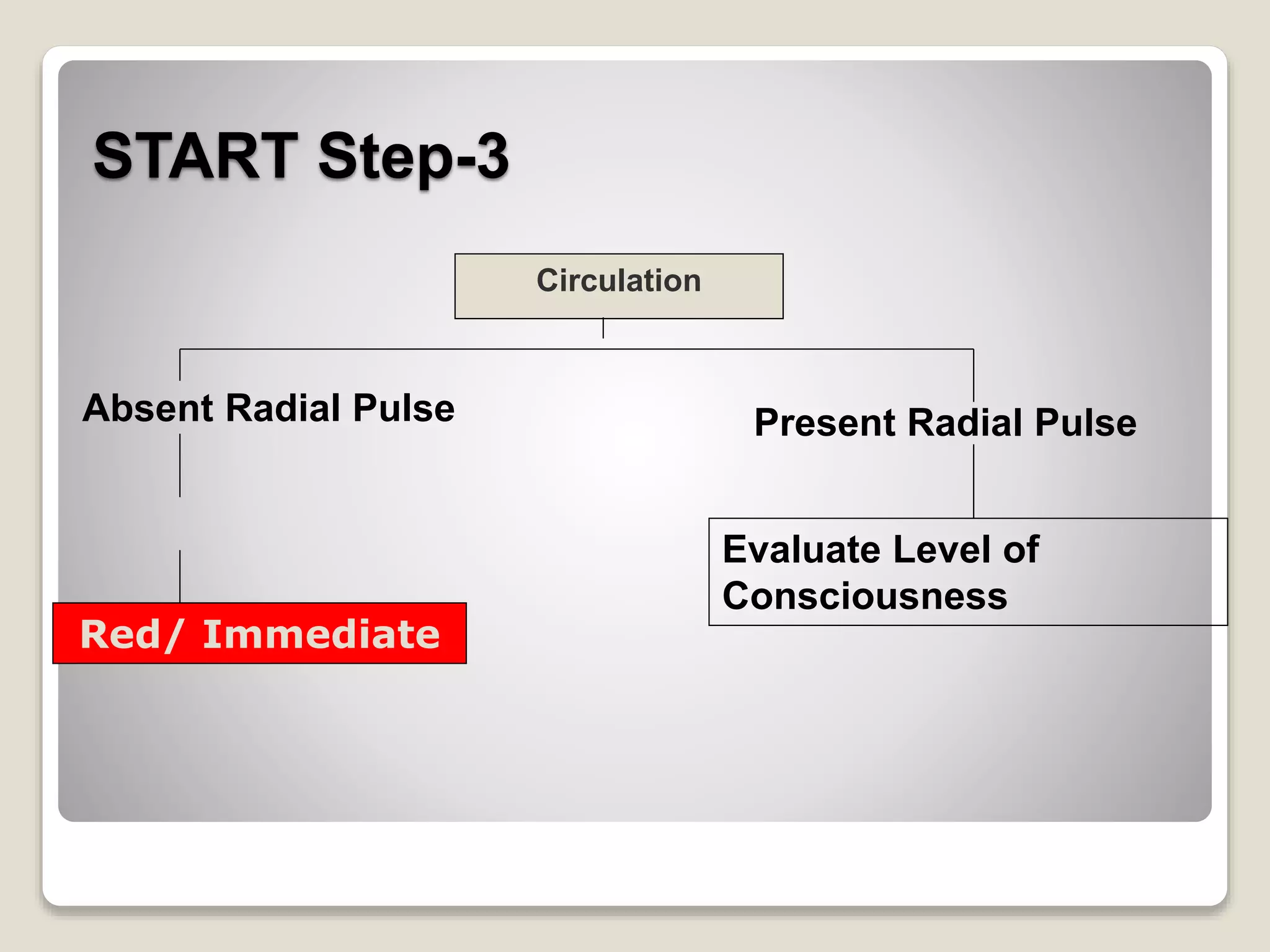
Circulation
Absent Radial Pulse Present Radial Pulse
Evaluate Level of
Consciousness
Red/ Immediate
START Step-3
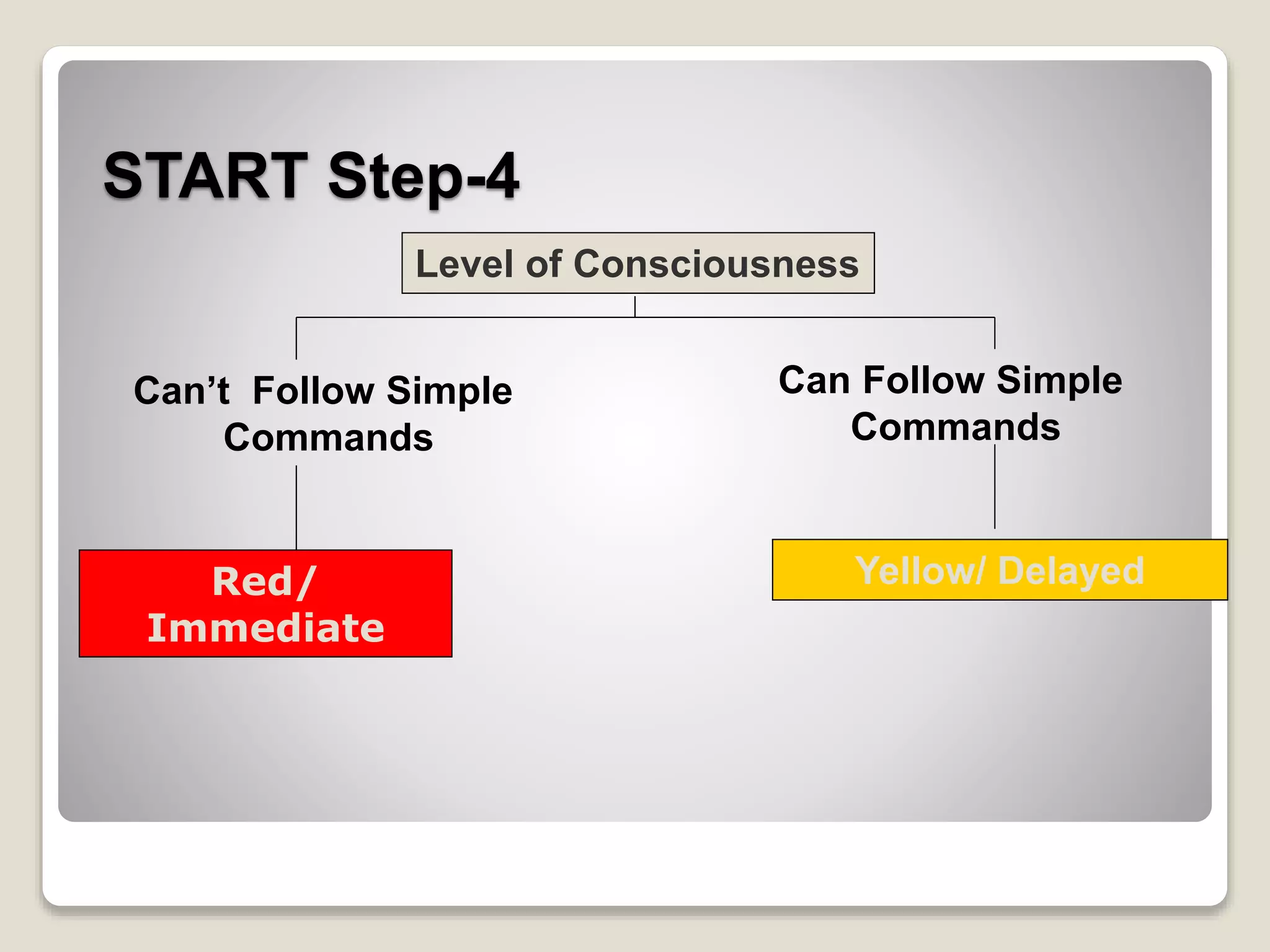
START Step-4
Level of Consciousness
Can Follow Simple
Commands
Yellow/ DelayedRed/
Immediate
Can’t Follow Simple
Commands
 Patients with exposure (potential or real) to
contaminants should be tagged as BLUE
 This category will continue to stay until
patient is adequately decontaminated then
follow START as usual
 Some recommend a “double tagging” with
blue and the standard START color
Contaminated Patients
START-Overview
 Remember RPM
 R- Respirations- 30
 P- Perfusion- Radial Pulse
 M- Mental- Follows Commands
 References :
 https://en.wikipedia.org/wiki/Triage#/media/File:Wounded_Triage
_France_WWI.jpg
 http://www.ifrc.org/PageFiles/95530/The-Sphere-Project-
Handbook-20111.pdf
Triage In Disaster Management

Triage In Disaster Management

  • 1.
  • 2.
     Derived froma French word ‘triar’ which means ‘to separate out’  A method of quickly identifying victims who have immediately life-threatening injuries and who have the best chance of surviving  Use when the quantity severity of injuries overwhelm the operative capacity of health facilities .
  • 3.
     The principalof “first come” “first treat” is not followed in mass emergencies  Processing of determining the priorities patients treatment based on their severity  It consist of rapidly classifying the patients as per the severities as High priorities Low priorities
  • 4.
  • 5.
    The goal ofmanaging a mass casualty incident  Priorities for transportation to the hospital  Priorities for care in the field
  • 9.
    START SYSTEM  Createdin the 1980’s by Hoag Hospital and the Newport Beach CA Fire Dept  Allows rapid assessment of victims  It should not take more than 15 sec/ Pt Once victim is in treatment area more detailed assessment should be made Clasificación is based on three items  Respiratory  Perfusion  Mental status evaluation
  • 11.
    START First Step Canthe Patient Walk? Green (Minor) Evaluate Ventilation (Step-2)
  • 12.
    Ventilation Present? YESNO > 30/Min< 30/min Evaluate Circulation (Step-3) Open Airway Ventilation Present? NO YES Black Red/ Immediate Red/ Immediate START Step-2
  • 13.
    Circulation Absent Radial PulsePresent Radial Pulse Evaluate Level of Consciousness Red/ Immediate START Step-3
  • 14.
    START Step-4 Level ofConsciousness Can Follow Simple Commands Yellow/ DelayedRed/ Immediate Can’t Follow Simple Commands
  • 15.
     Patients withexposure (potential or real) to contaminants should be tagged as BLUE  This category will continue to stay until patient is adequately decontaminated then follow START as usual  Some recommend a “double tagging” with blue and the standard START color Contaminated Patients
  • 16.
    START-Overview  Remember RPM R- Respirations- 30  P- Perfusion- Radial Pulse  M- Mental- Follows Commands
  • 18.
     References : https://en.wikipedia.org/wiki/Triage#/media/File:Wounded_Triage _France_WWI.jpg  http://www.ifrc.org/PageFiles/95530/The-Sphere-Project- Handbook-20111.pdf