INTRODUCTION
TO
FIRST AID
Definition
• First aid is the immediate care given to an
injured or suddenly ill person
• First aid does not take the place of proper
medical treatment
• Also includes self help and home care if
assistance is not available or delayed
Who provides first aid?
• Police, EOD/firefighters, JPA staffs
• St. John’s Ambulance members, Red Crescent
members, Scouts, Girl Guides
• Bystanders, public members
• Relatives, family members, friends
• Workmates, teachers
• Medical students, anyone ……YOU!
WHEN IS FIRST AID
REQUIRED?
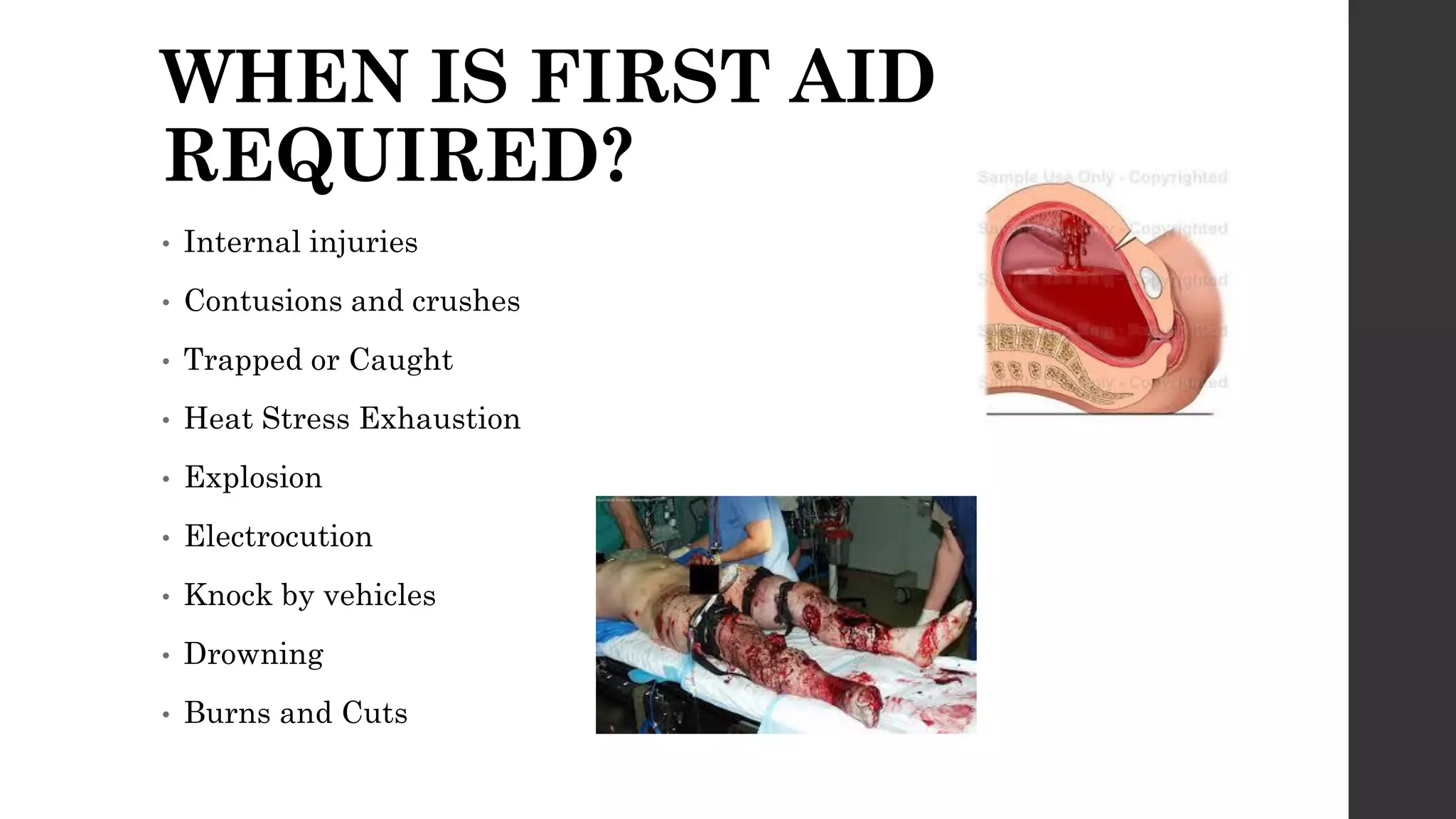
• Internal injuries
• Contusions and crushes
• Trapped or Caught
• Heat Stress Exhaustion
• Explosion
• Electrocution
• Knock by vehicles
• Drowning
• Burns and Cuts
• Heart Attack
• Sprains and strains
• Dehydration
• Heat Stress
• Cold Stress
• Hemorrhage
• Seizure
• Fracture
• Emotional Stress
• Acute Poisonous
• Respiratory irritation
PRINCIPLES OF FIRST AID
• Principle #1:
First, do no harm Know what to do and know what NOT
to do
• Principle #2:
First Aid Is Not An Exact Science And Is Open To Error
• Principle #3:
First Aid is about Putting First Things First
• Principle #4:
Safety Is Of Utmost Importance In First Aid
GOALS OF FIRST AID
1.To restore and maintain vital functions
2.The ABC of basic life support (Airway, Breathing, and
Circulation) are always the first priority
● Airway must be open so that air containing oxygen
enters the body
● Breathing must take place so that oxygen passes
through the lungs into the blood stream
● The heart must circulate the oxygen carrying
blood
3. To prevent further injury or deterioration
4. To reassure the victim and make him or her as
comfortable as possible
FIRST AID KIT
Following are the contents of a
First Aid Kit :
 Cotton wool
 Adhesive tape
 Crepe bandage
 Sterile Dressing
 Bandage
 Thermometer
 Scissors
 Glove
 Soap
 Pain reliever
 Antacid
 ORS Packets
WHO IS A FIRST AIDER?
• A first Aider is someone who has been trained
and examined in the skills of first aid
• When you are trained, you feel apprehensive
when dealing with real situation
• By facing up to these feeling the First Aider is
better able to cope with the unexpected
RESPONSIBILITIES OF A FIRST
AIDER
 Access the situation quickly and safely and summon
appropriate help
 Protect casualties and others at the scene from possible
danger
 To identify, as far as possible the nature of illness or
injury affecting casualty
 To give each casualty early and appropriate treatment,
treating the most serious conditions first
QUALITIES OF A GOOD FIRST
AIDER
• Dexterous
• Explicit
• Discrimination
• Perseverance
• Tactful
• Recourses
• Sympathetic
• Cheerfulness
• Gentle
• Patience
• Calm
• Willing to offer assistance whenever
necessary
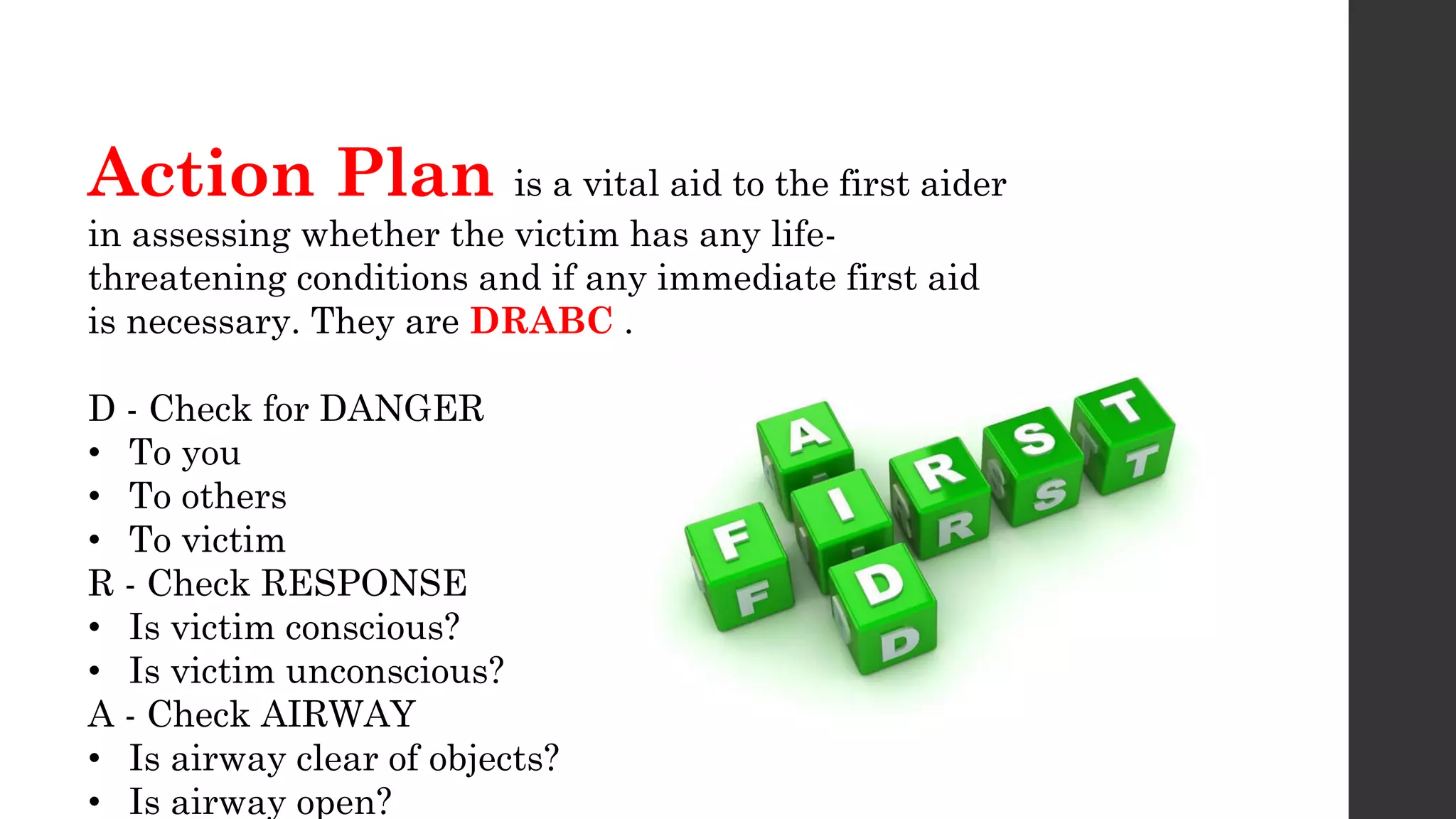
Action Plan is a vital aid to the first aider
in assessing whether the victim has any life-
threatening conditions and if any immediate first aid
is necessary. They are DRABC .
D - Check for DANGER
• To you
• To others
• To victim
R - Check RESPONSE
• Is victim conscious?
• Is victim unconscious?
A - Check AIRWAY
• Is airway clear of objects?
• Is airway open?
B - Check for BREATHING
• Is chest rising and falling?
• Can you hear victim's breathing?
• Can you feel the breath on your cheek?
C - Check for CIRCULATION
• Can you feel a pulse?
• Can you see any obvious signs of life?
CLASSIFICATION TRIAGE/ PATIENT CATOGORIZATION
THANK YOU !

Introduction to first aid

  • 1.
  • 2.
    Definition • First aidis the immediate care given to an injured or suddenly ill person • First aid does not take the place of proper medical treatment • Also includes self help and home care if assistance is not available or delayed
  • 4.
    Who provides firstaid? • Police, EOD/firefighters, JPA staffs • St. John’s Ambulance members, Red Crescent members, Scouts, Girl Guides • Bystanders, public members • Relatives, family members, friends • Workmates, teachers • Medical students, anyone ……YOU!
  • 5.
    WHEN IS FIRSTAID REQUIRED? • Internal injuries • Contusions and crushes • Trapped or Caught • Heat Stress Exhaustion • Explosion • Electrocution • Knock by vehicles • Drowning • Burns and Cuts
  • 6.
    • Heart Attack •Sprains and strains • Dehydration • Heat Stress • Cold Stress • Hemorrhage • Seizure • Fracture • Emotional Stress • Acute Poisonous • Respiratory irritation
  • 12.
    PRINCIPLES OF FIRSTAID • Principle #1: First, do no harm Know what to do and know what NOT to do • Principle #2: First Aid Is Not An Exact Science And Is Open To Error • Principle #3: First Aid is about Putting First Things First • Principle #4: Safety Is Of Utmost Importance In First Aid
  • 13.
    GOALS OF FIRSTAID 1.To restore and maintain vital functions 2.The ABC of basic life support (Airway, Breathing, and Circulation) are always the first priority ● Airway must be open so that air containing oxygen enters the body ● Breathing must take place so that oxygen passes through the lungs into the blood stream ● The heart must circulate the oxygen carrying blood
  • 14.
    3. To preventfurther injury or deterioration 4. To reassure the victim and make him or her as comfortable as possible
  • 15.
    FIRST AID KIT Followingare the contents of a First Aid Kit :  Cotton wool  Adhesive tape  Crepe bandage  Sterile Dressing  Bandage  Thermometer  Scissors  Glove  Soap  Pain reliever  Antacid  ORS Packets
  • 16.
    WHO IS AFIRST AIDER? • A first Aider is someone who has been trained and examined in the skills of first aid • When you are trained, you feel apprehensive when dealing with real situation • By facing up to these feeling the First Aider is better able to cope with the unexpected
  • 18.
    RESPONSIBILITIES OF AFIRST AIDER  Access the situation quickly and safely and summon appropriate help  Protect casualties and others at the scene from possible danger  To identify, as far as possible the nature of illness or injury affecting casualty  To give each casualty early and appropriate treatment, treating the most serious conditions first
  • 19.
    QUALITIES OF AGOOD FIRST AIDER • Dexterous • Explicit • Discrimination • Perseverance • Tactful • Recourses • Sympathetic
  • 20.
    • Cheerfulness • Gentle •Patience • Calm • Willing to offer assistance whenever necessary
  • 22.
    Action Plan isa vital aid to the first aider in assessing whether the victim has any life- threatening conditions and if any immediate first aid is necessary. They are DRABC . D - Check for DANGER • To you • To others • To victim R - Check RESPONSE • Is victim conscious? • Is victim unconscious? A - Check AIRWAY • Is airway clear of objects? • Is airway open?
  • 23.
    B - Checkfor BREATHING • Is chest rising and falling? • Can you hear victim's breathing? • Can you feel the breath on your cheek? C - Check for CIRCULATION • Can you feel a pulse? • Can you see any obvious signs of life?
  • 24.
  • 26.