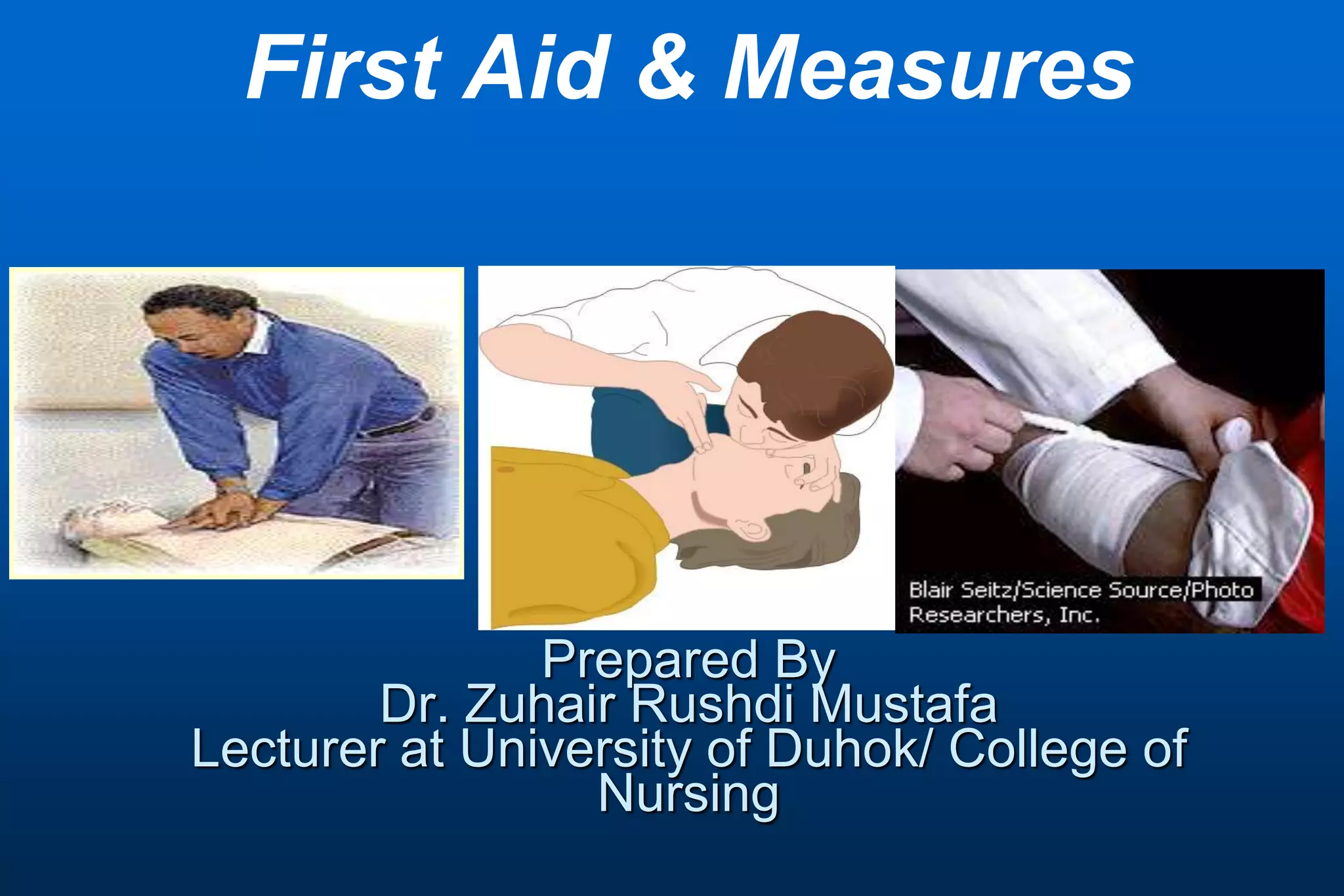
First Aid & Measures
Prepared By
Dr. Zuhair Rushdi Mustafa
Lecturer at University of Duhok/ College of
Nursing
Causes of Respiratory/Cardiac Arrest that
required Cardiopulmonary resuscitation (CPR)
1.Electric shock
2. Drowning
6. Toxic -&
harmful gases
7.Suffocation
4. Heart attack
8. Trauma
5. Drugs overdose
9. Sever allergic
reactions
3. Foreign-body airway obstruction
Reaction Time Chance of brain damage if Oxygenated
blood flow does not reach to the brain
0 to 4 minutes-Brain damage begins
10 minutes-Brain death certain
Oxygenated
blood flow
must get to
brain
Cardio Pulmonary Resuscitation
(CPR)
 Should be trained to perform this procedure
 If done improperly, could harm victim
 New CPR include:
• 30 Compressions + 2 Breaths
• For Everyone!
1. Check for danger.
Emergency life support
for adults and children (CPR)
2. Check for response.
Speak loudly and clearly to the casualty.
Ask questions like ‘are you all right?’.
3. If there is no response, shout for help.
Do not leave the casualty.
4. check for airway, if closed ,open airway (head
tilt/chin-lift)
5. Check for normal breathing. Look,
listen for 10 seconds, and feel.
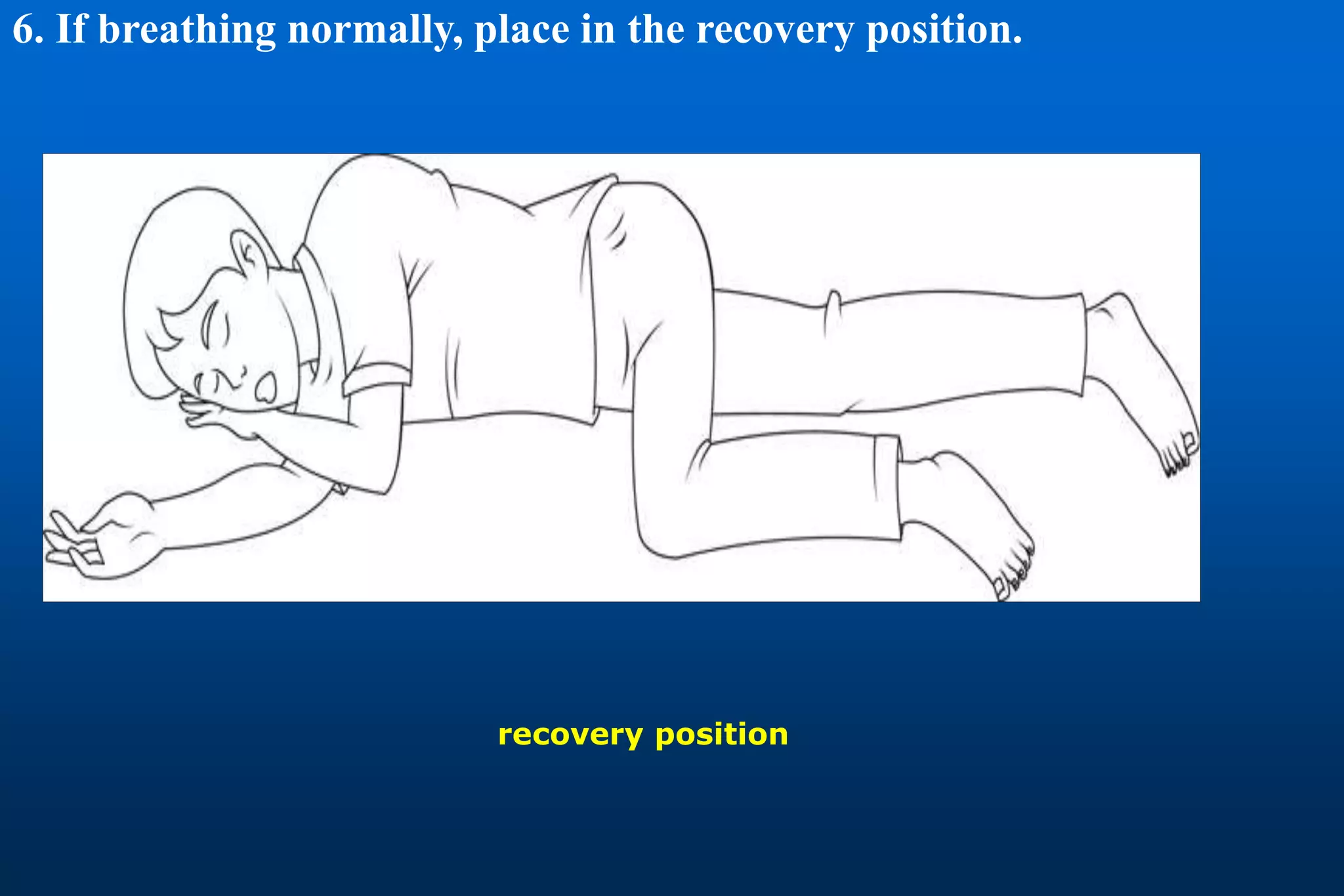
6. If breathing normally, place in the recovery position.
recovery position
RECOVERY POSITION
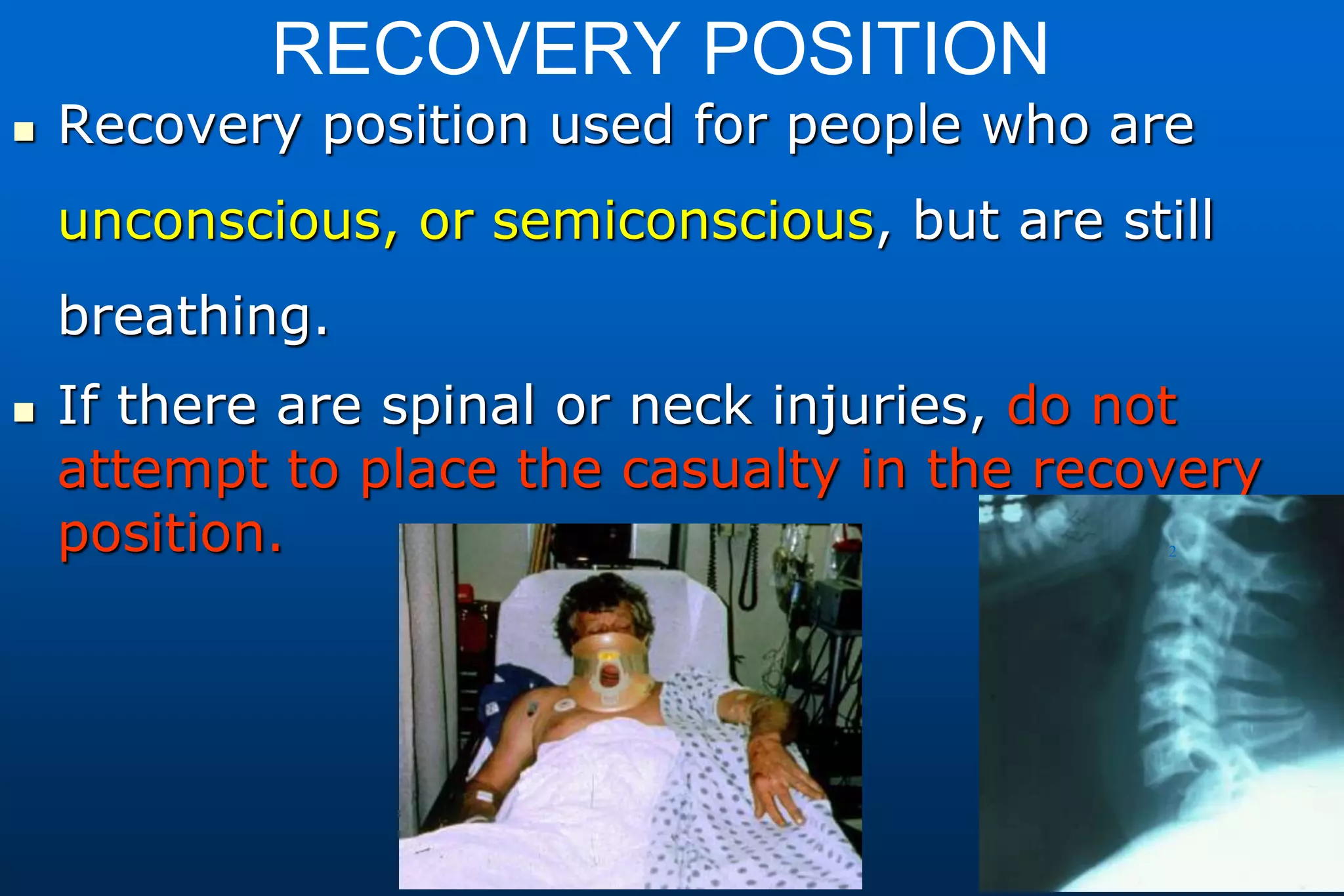
 Recovery position used for people who are
unconscious, or semiconscious, but are still
breathing.
 If there are spinal or neck injuries, do not
attempt to place the casualty in the recovery
position. 2
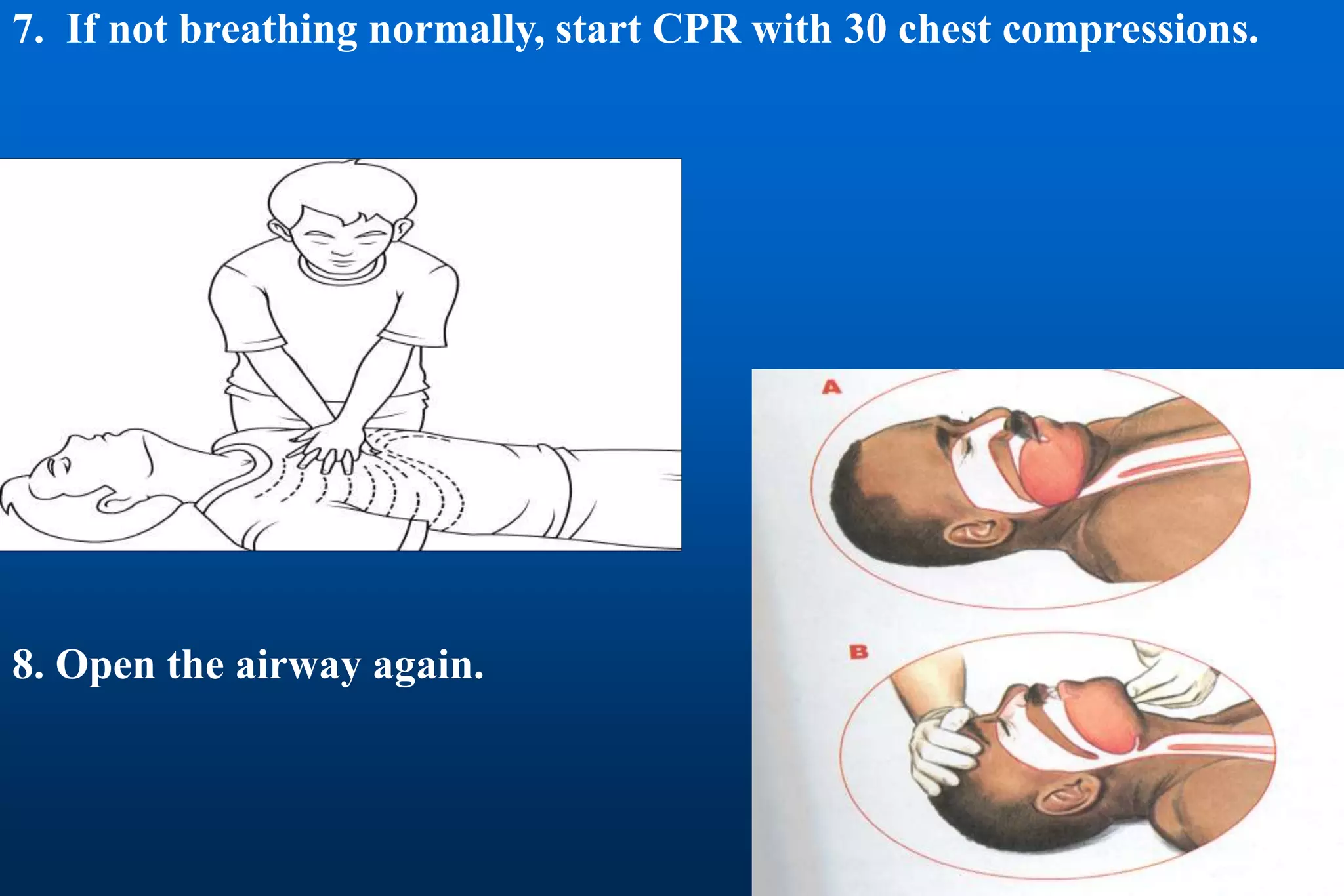
7. If not breathing normally, start CPR with 30 chest compressions.
8. Open the airway again.
OPEN AİRWAY: JAW MANEUVER
JAW THRUST
 İn trauma patients
 İn this maneuver patients neck
is stable (should not move in
neck trauma)
 Open the jaw and lift the jaw
with two hands
9. Give two rescue breaths.
IN
CHİLDREN
ORAL-ORAL
AND NASAL
10. Continue with 30 compressions and two rescue
breaths until: Qualified help arrives to take over.
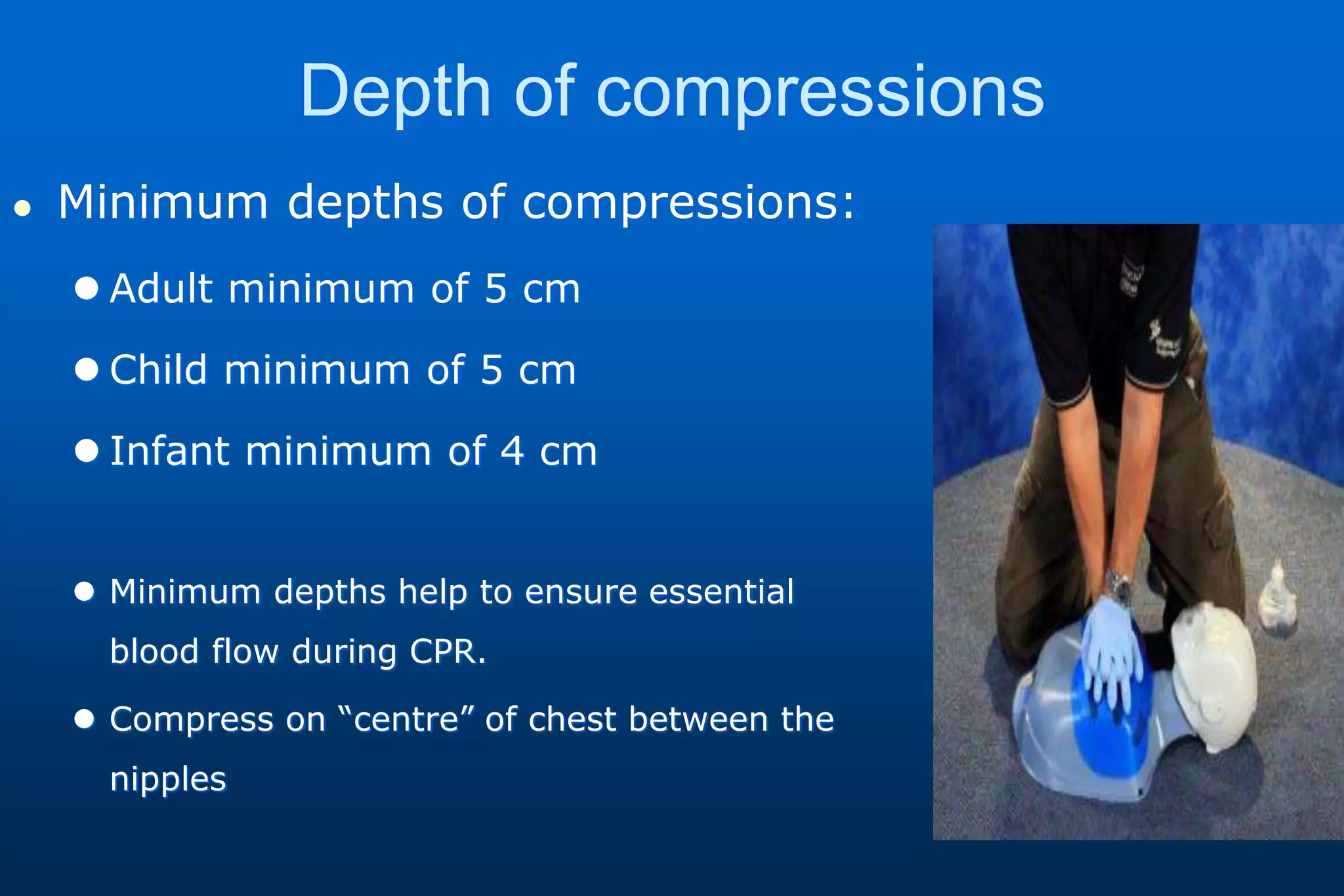
Depth of compressions
 Minimum depths of compressions:
 Adult minimum of 5 cm
 Child minimum of 5 cm
 Infant minimum of 4 cm
 Minimum depths help to ensure essential
blood flow during CPR.
 Compress on “centre” of chest between the
nipples
14
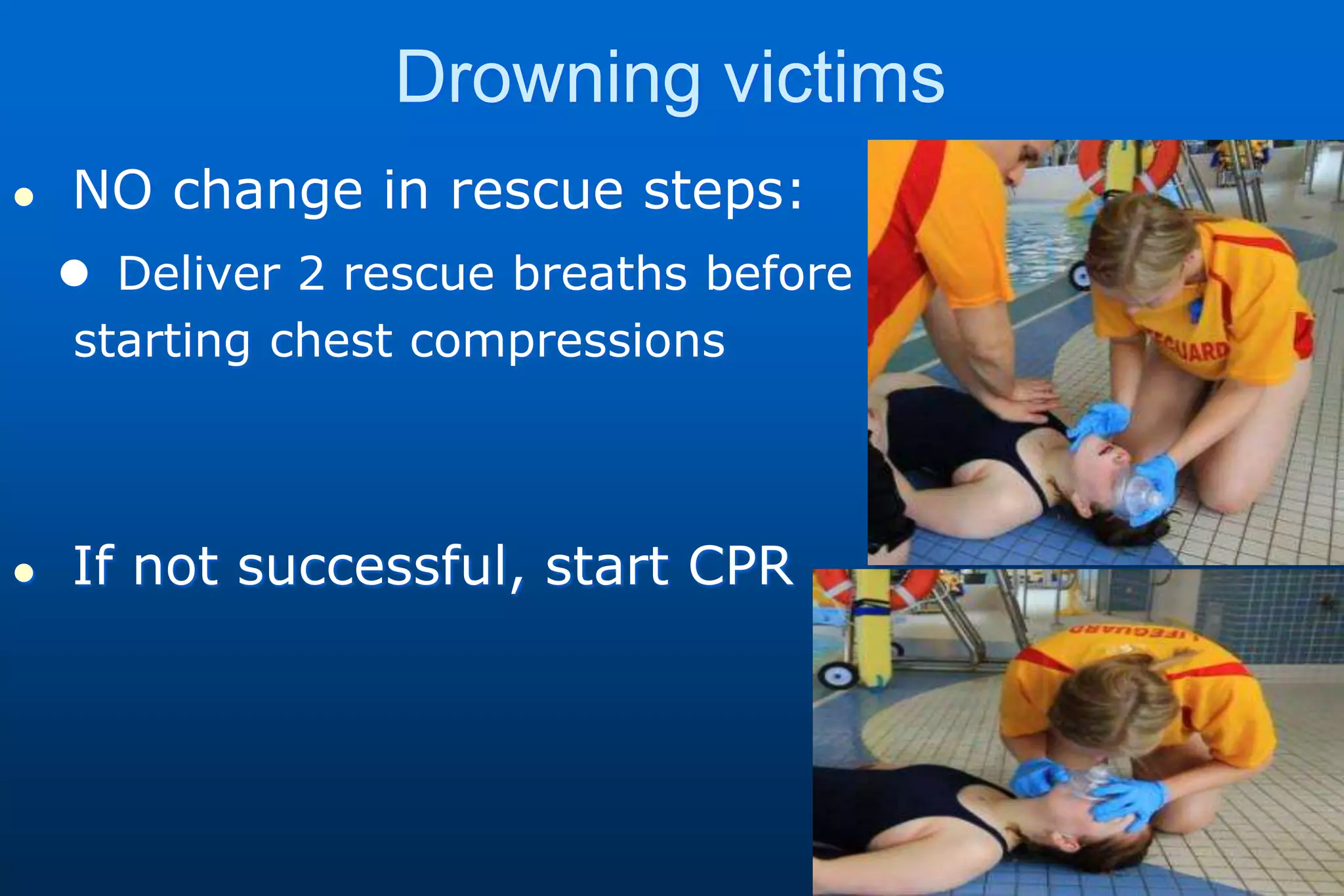
Drowning victims
 NO change in rescue steps:
 Deliver 2 rescue breaths before
starting chest compressions
 If not successful, start CPR
15

First aid CPR

  • 1.
    First Aid &Measures Prepared By Dr. Zuhair Rushdi Mustafa Lecturer at University of Duhok/ College of Nursing
  • 2.
    Causes of Respiratory/CardiacArrest that required Cardiopulmonary resuscitation (CPR) 1.Electric shock 2. Drowning 6. Toxic -& harmful gases 7.Suffocation 4. Heart attack 8. Trauma 5. Drugs overdose 9. Sever allergic reactions 3. Foreign-body airway obstruction
  • 3.
    Reaction Time Chanceof brain damage if Oxygenated blood flow does not reach to the brain 0 to 4 minutes-Brain damage begins 10 minutes-Brain death certain Oxygenated blood flow must get to brain
  • 4.
    Cardio Pulmonary Resuscitation (CPR) Should be trained to perform this procedure  If done improperly, could harm victim  New CPR include: • 30 Compressions + 2 Breaths • For Everyone!
  • 5.
    1. Check fordanger. Emergency life support for adults and children (CPR) 2. Check for response. Speak loudly and clearly to the casualty. Ask questions like ‘are you all right?’. 3. If there is no response, shout for help. Do not leave the casualty.
  • 6.
    4. check forairway, if closed ,open airway (head tilt/chin-lift) 5. Check for normal breathing. Look, listen for 10 seconds, and feel.
  • 7.
    6. If breathingnormally, place in the recovery position. recovery position
  • 8.
    RECOVERY POSITION  Recoveryposition used for people who are unconscious, or semiconscious, but are still breathing.  If there are spinal or neck injuries, do not attempt to place the casualty in the recovery position. 2
  • 9.
    7. If notbreathing normally, start CPR with 30 chest compressions. 8. Open the airway again.
  • 10.
    OPEN AİRWAY: JAWMANEUVER JAW THRUST  İn trauma patients  İn this maneuver patients neck is stable (should not move in neck trauma)  Open the jaw and lift the jaw with two hands
  • 11.
    9. Give tworescue breaths. IN CHİLDREN ORAL-ORAL AND NASAL
  • 12.
    10. Continue with30 compressions and two rescue breaths until: Qualified help arrives to take over.
  • 14.
    Depth of compressions Minimum depths of compressions:  Adult minimum of 5 cm  Child minimum of 5 cm  Infant minimum of 4 cm  Minimum depths help to ensure essential blood flow during CPR.  Compress on “centre” of chest between the nipples 14
  • 15.
    Drowning victims  NOchange in rescue steps:  Deliver 2 rescue breaths before starting chest compressions  If not successful, start CPR 15