Fire Hydrants
In Accordance with IFC 2018,NFPA 24 & NFPA 1142
Contents
Types of Hydrants
Location of Fire Hydrants
Clear Space around the Hydrants
Distance Between the Fire Hydrants
Fire Hydrant Accessibility and Access
Types of Fire Hydrants
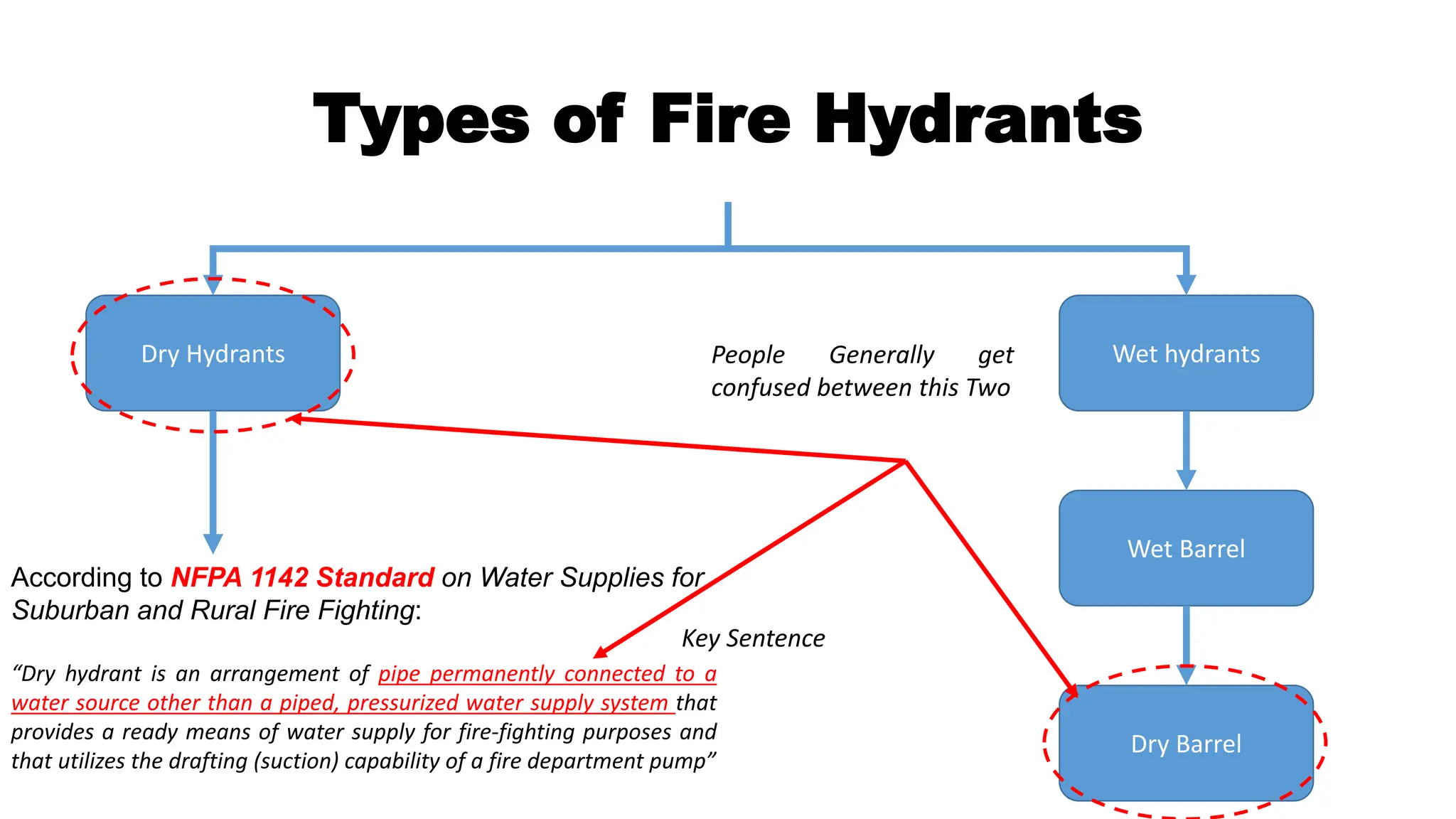
Dry Hydrants Wet hydrants
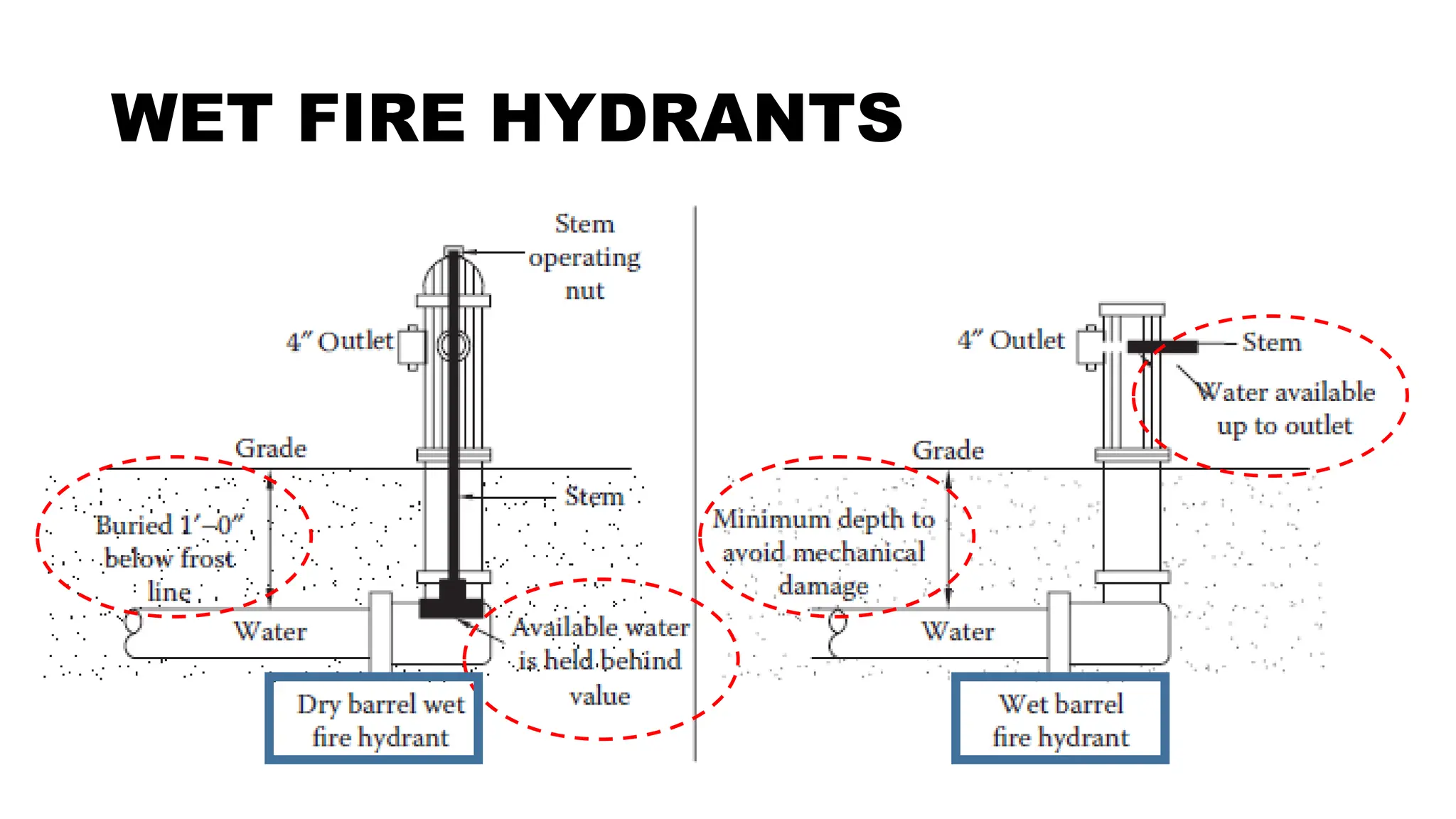
Wet Barrel
Dry Barrel
According to NFPA 1142 Standard on Water Supplies for
Suburban and Rural Fire Fighting:
“Dry hydrant is an arrangement of pipe permanently connected to a
water source other than a piped, pressurized water supply system that
provides a ready means of water supply for fire-fighting purposes and
that utilizes the drafting (suction) capability of a fire department pump”
People Generally get
confused between this Two
Key Sentence
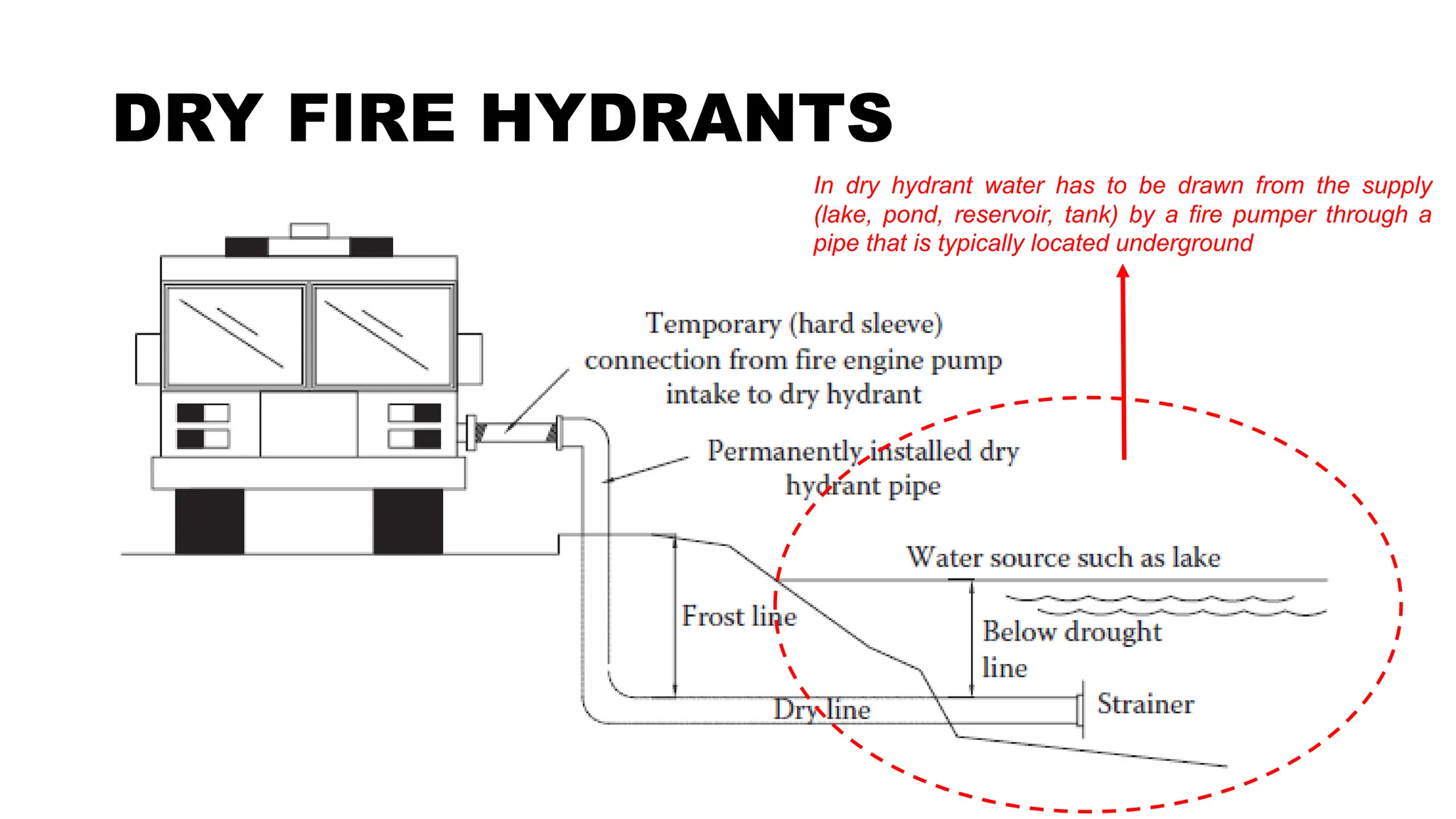
DRY FIRE HYDRANTS
In dry hydrant water has to be drawn from the supply
(lake, pond, reservoir, tank) by a fire pumper through a
pipe that is typically located underground
WET FIRE HYDRANTS
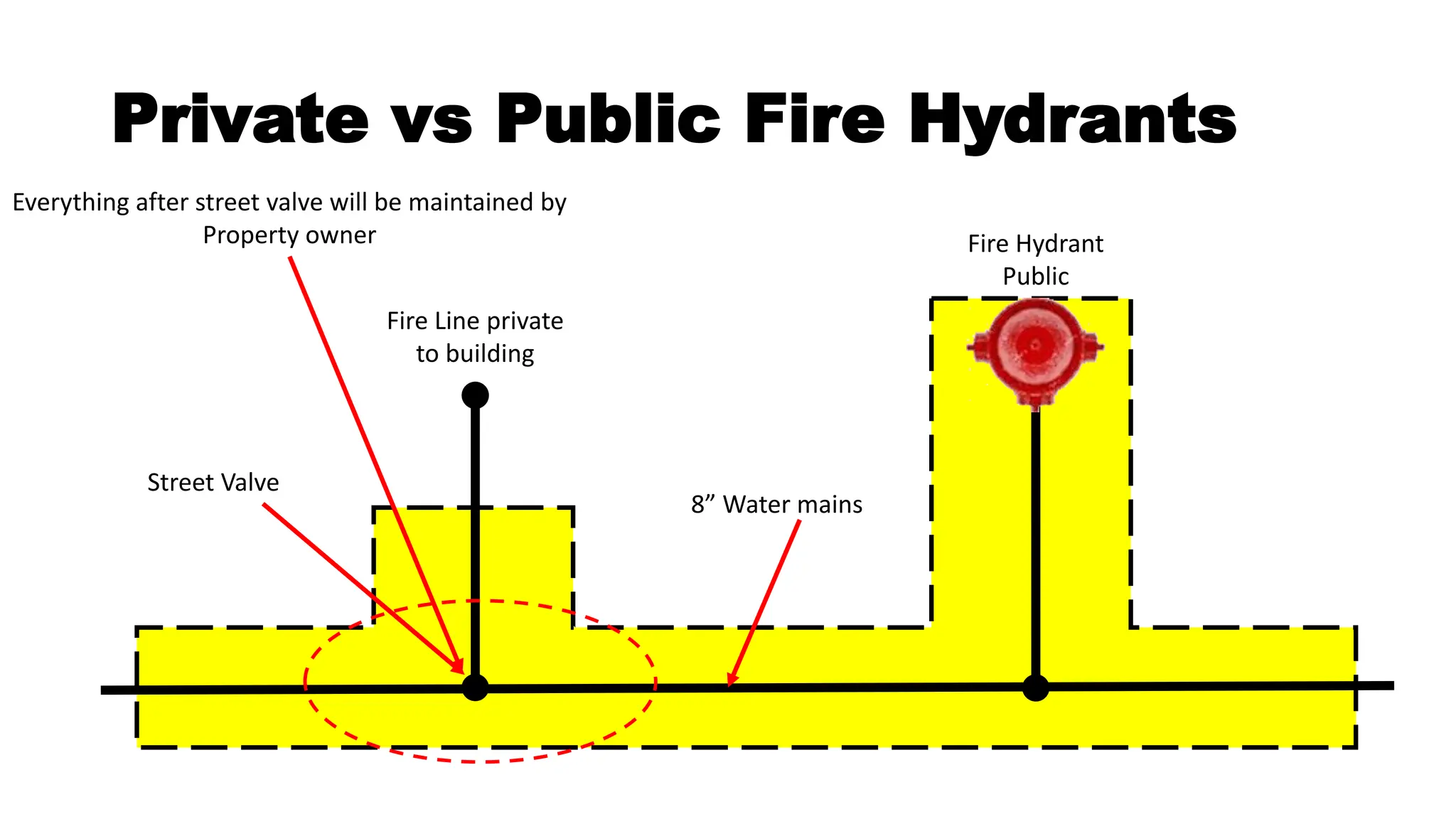
Private vs Public Fire Hydrants
8” Water mains
Street Valve
Fire Hydrant
Public
Fire Line private
to building
Everything after street valve will be maintained by
Property owner
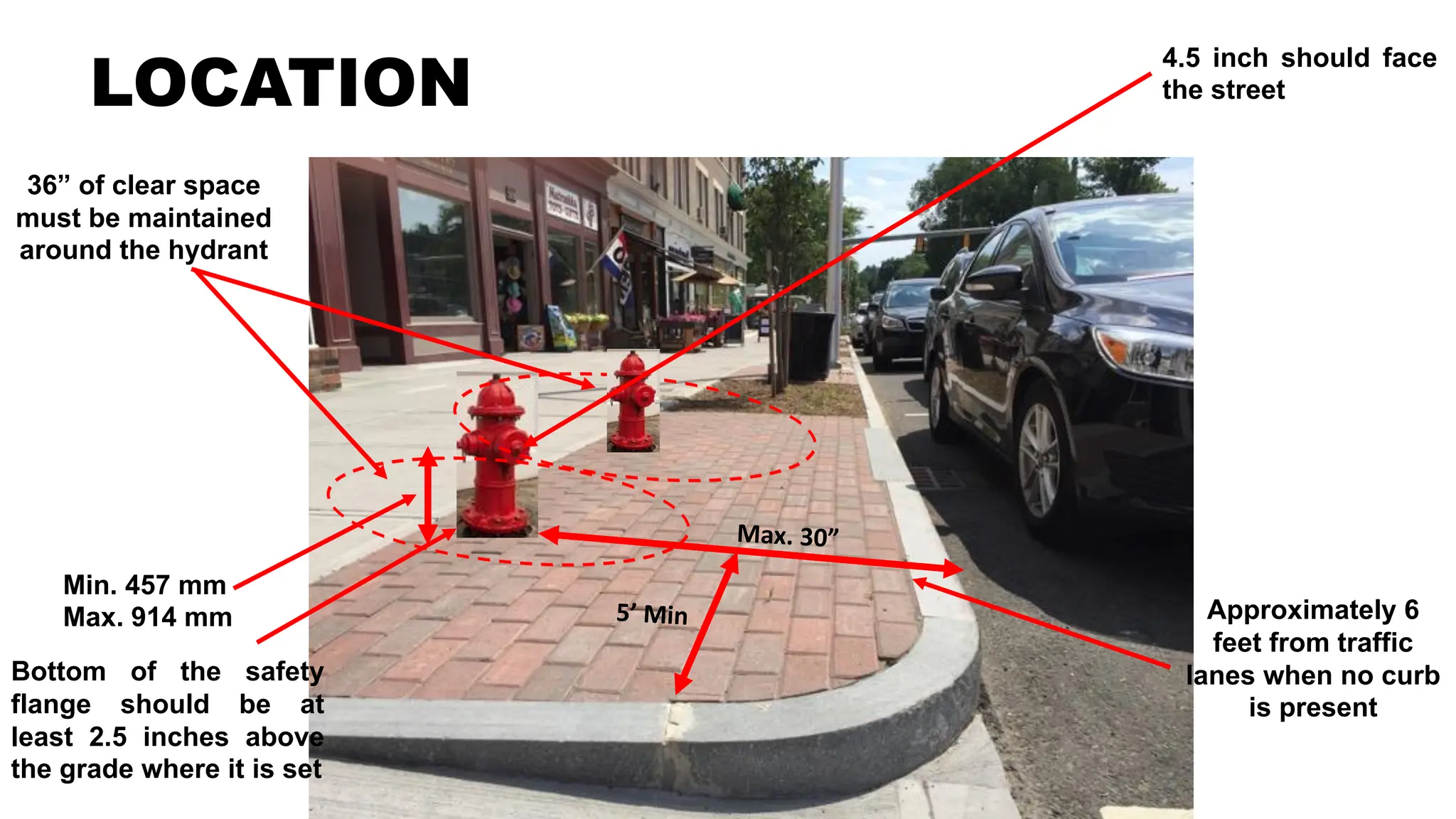
LOCATION
Approximately 6
feet from traffic
lanes when no curb
is present
Bottom of the safety
flange should be at
least 2.5 inches above
the grade where it is set
36” of clear space
must be maintained
around the hydrant
4.5 inch should face
the street
Min. 457 mm
Max. 914 mm
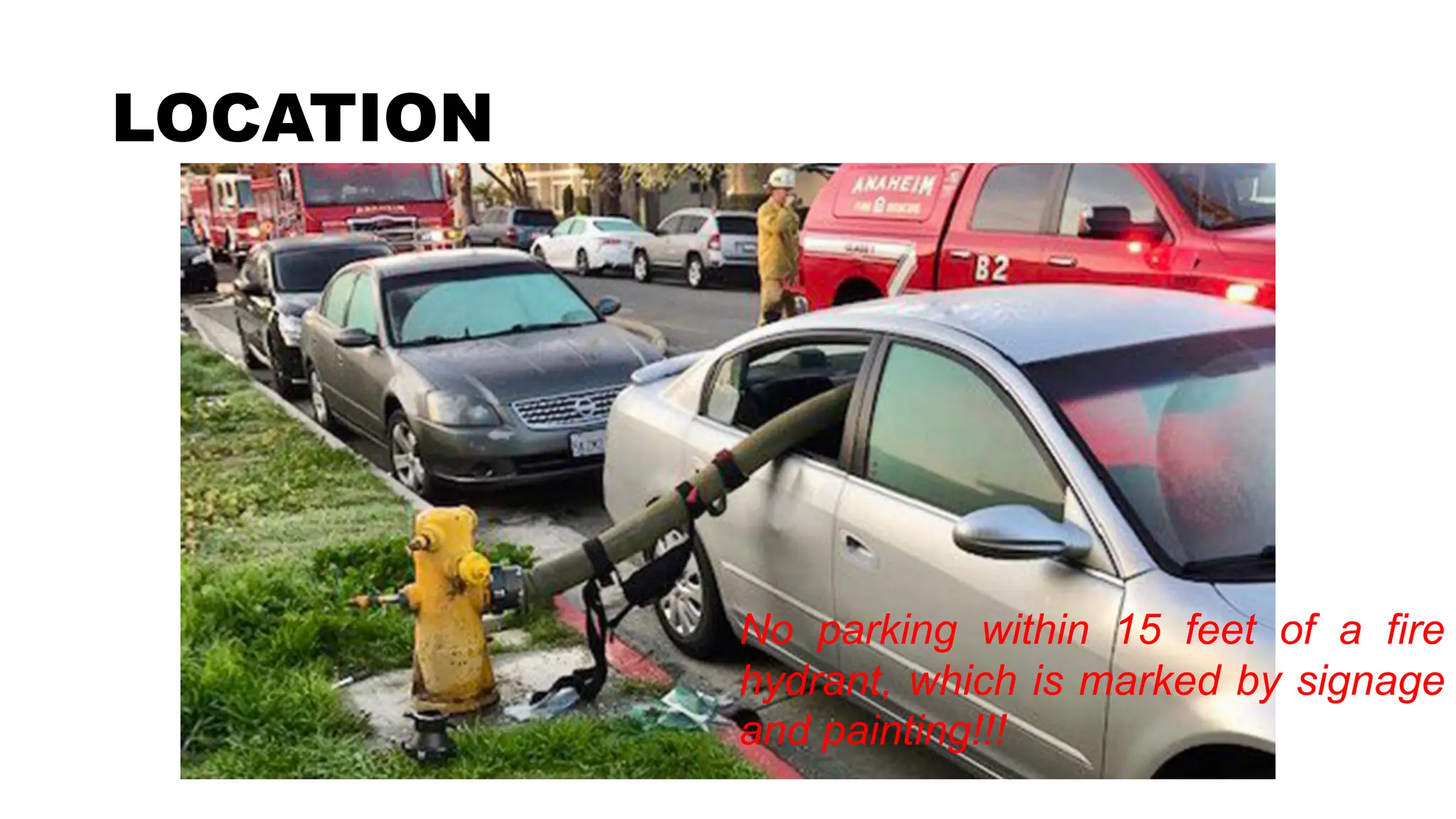
LOCATION
No parking within 15 feet of a fire
hydrant, which is marked by signage
and painting!!!
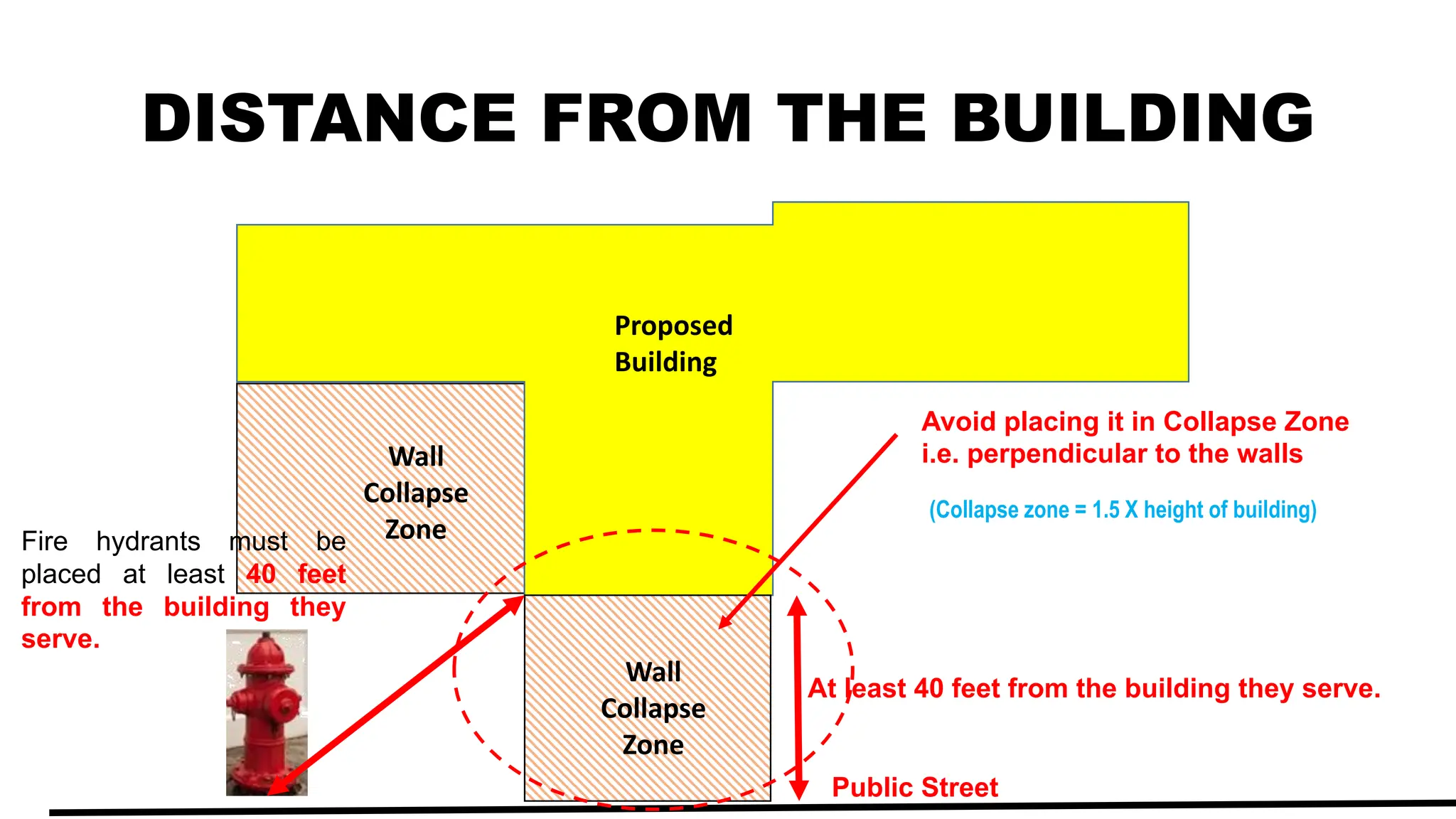
DISTANCE FROM THE BUILDING
Proposed
Building
Wall
Collapse
Zone
Wall
Collapse
Zone
Fire hydrants must be
placed at least 40 feet
from the building they
serve.
At least 40 feet from the building they serve.
Public Street
Avoid placing it in Collapse Zone
i.e. perpendicular to the walls
(Collapse zone = 1.5 X height of building)
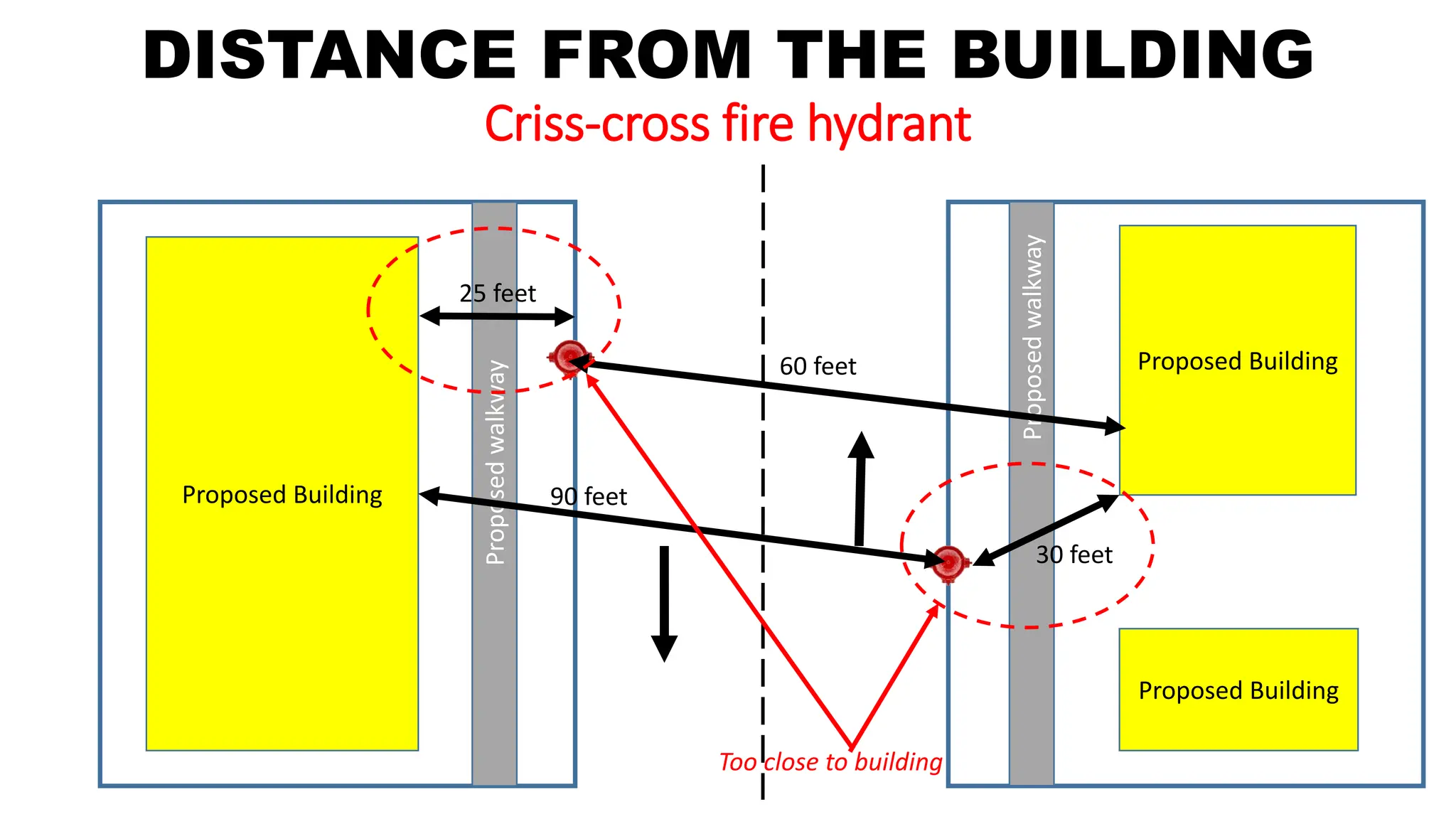
DISTANCE FROM THE BUILDING
Criss-cross fire hydrant
Proposed Building Proposed
walkway
Proposed Building
Proposed
walkway
Proposed Building
25 feet
30 feet
60 feet
90 feet
Too close to building
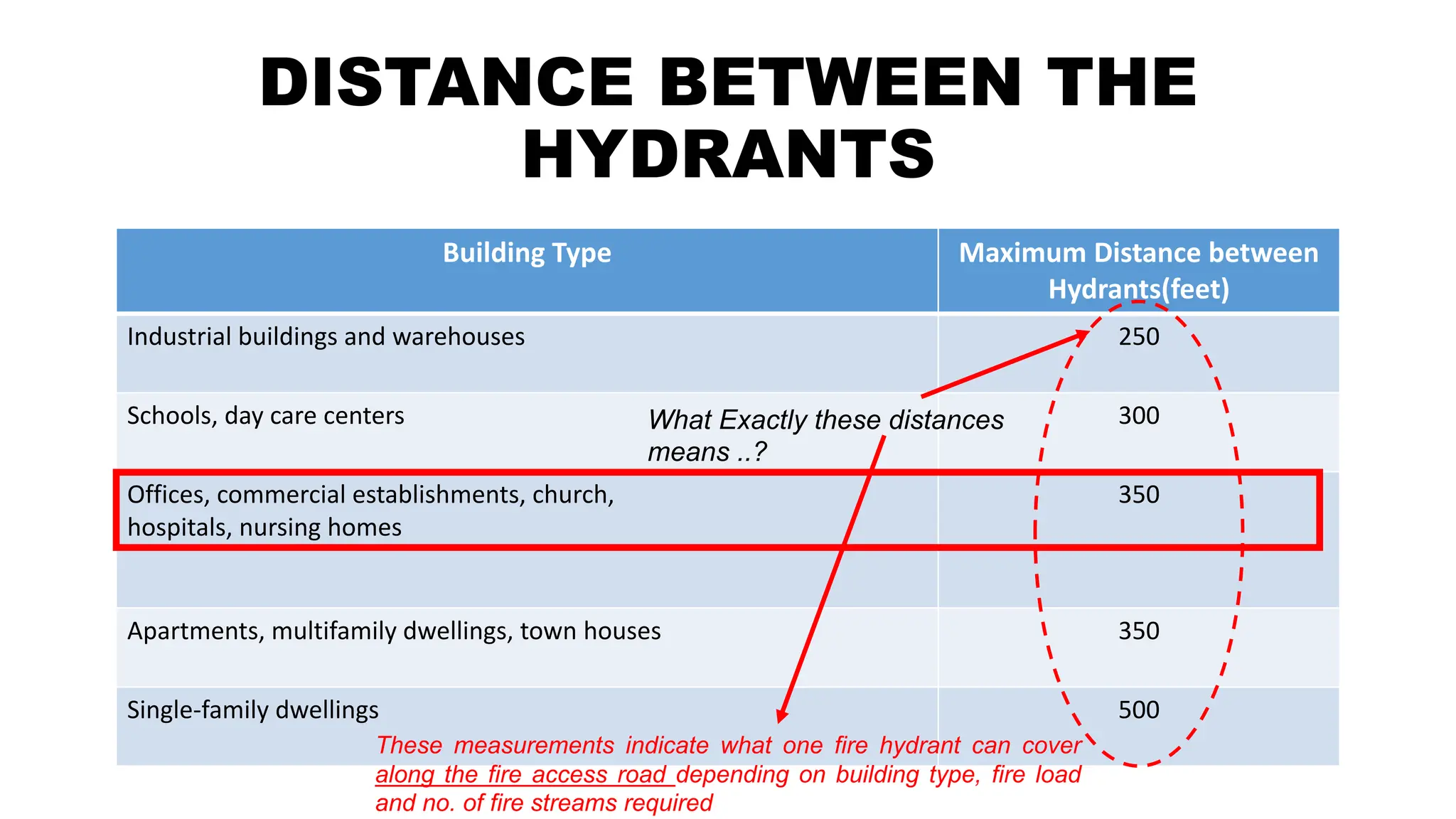
DISTANCE BETWEEN THE
HYDRANTS
Building Type Maximum Distance between
Hydrants(feet)
Industrial buildings and warehouses 250
Schools, day care centers 300
Offices, commercial establishments, church,
hospitals, nursing homes
350
Apartments, multifamily dwellings, town houses 350
Single-family dwellings 500
What Exactly these distances
means ..?
These measurements indicate what one fire hydrant can cover
along the fire access road depending on building type, fire load
and no. of fire streams required
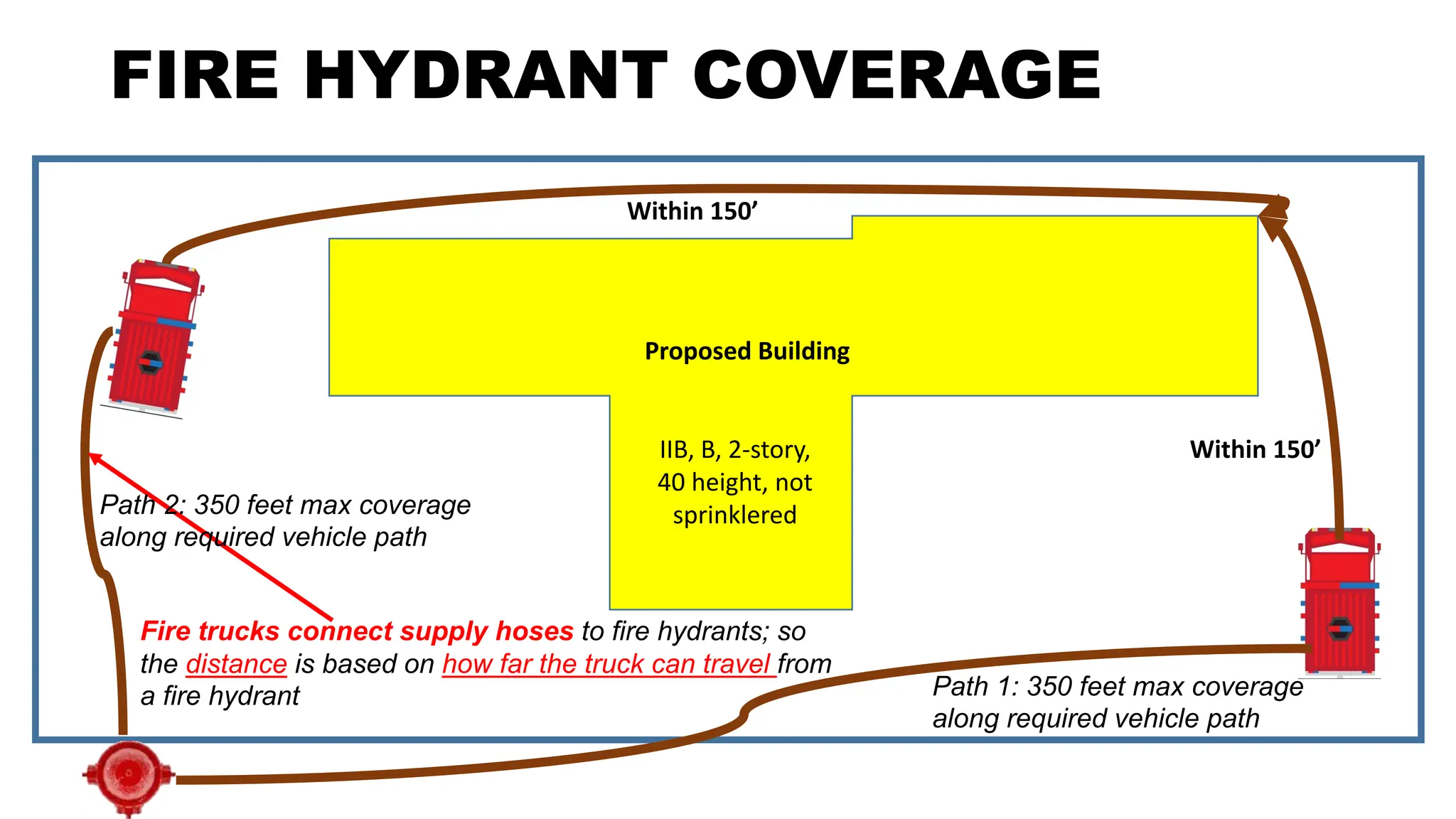
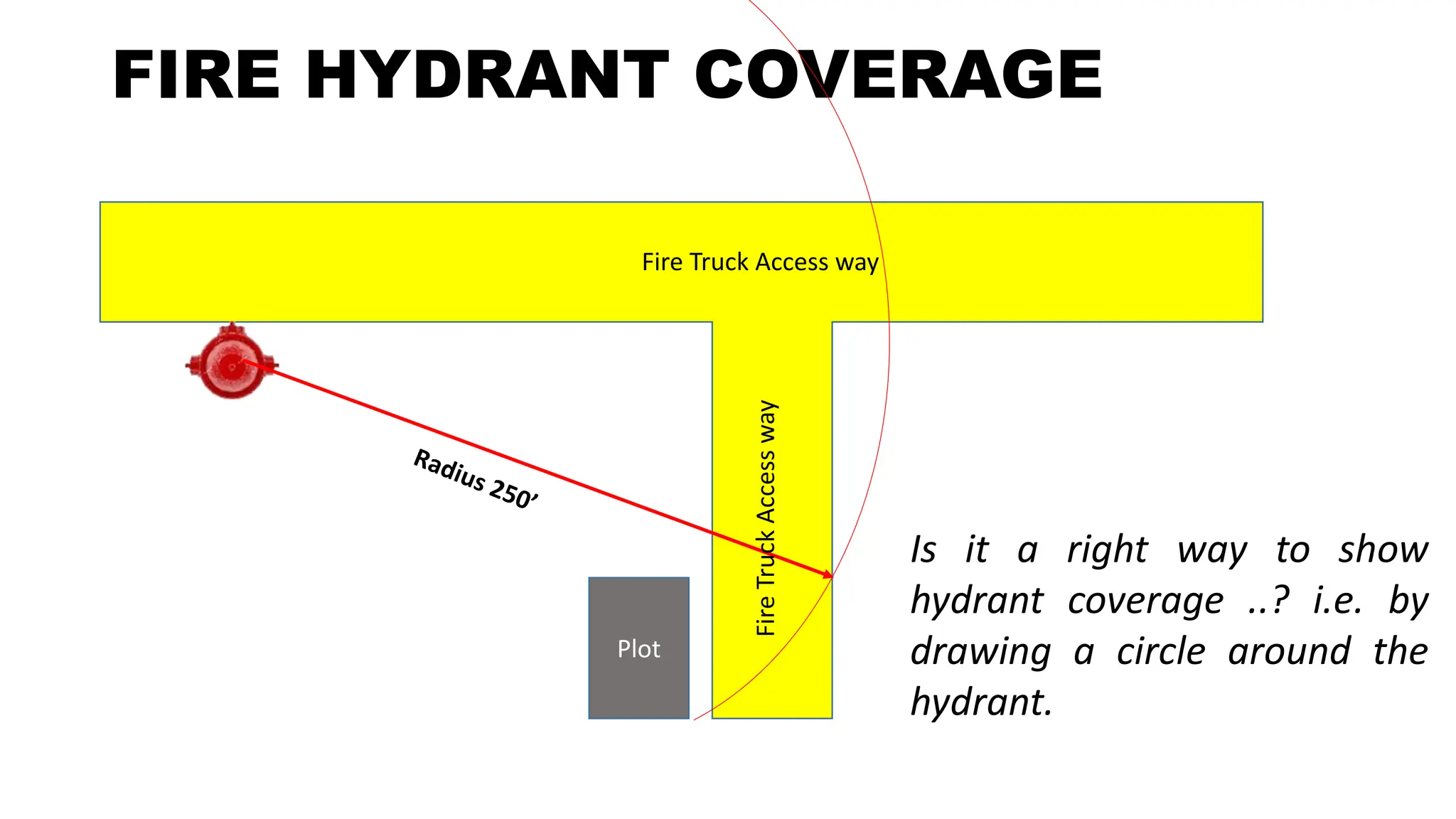
FIRE HYDRANT COVERAGE
Fire trucks connect supply hoses to fire hydrants; so
the distance is based on how far the truck can travel from
a fire hydrant
Proposed Building
Within 150’
Within 150’
IIB, B, 2-story,
40 height, not
sprinklered
Path 1: 350 feet max coverage
along required vehicle path
Path 2: 350 feet max coverage
along required vehicle path
FIRE HYDRANT COVERAGE
Plot
Fire Truck Access way
Fire
Truck
Access
way
Is it a right way to show
hydrant coverage ..? i.e. by
drawing a circle around the
hydrant.
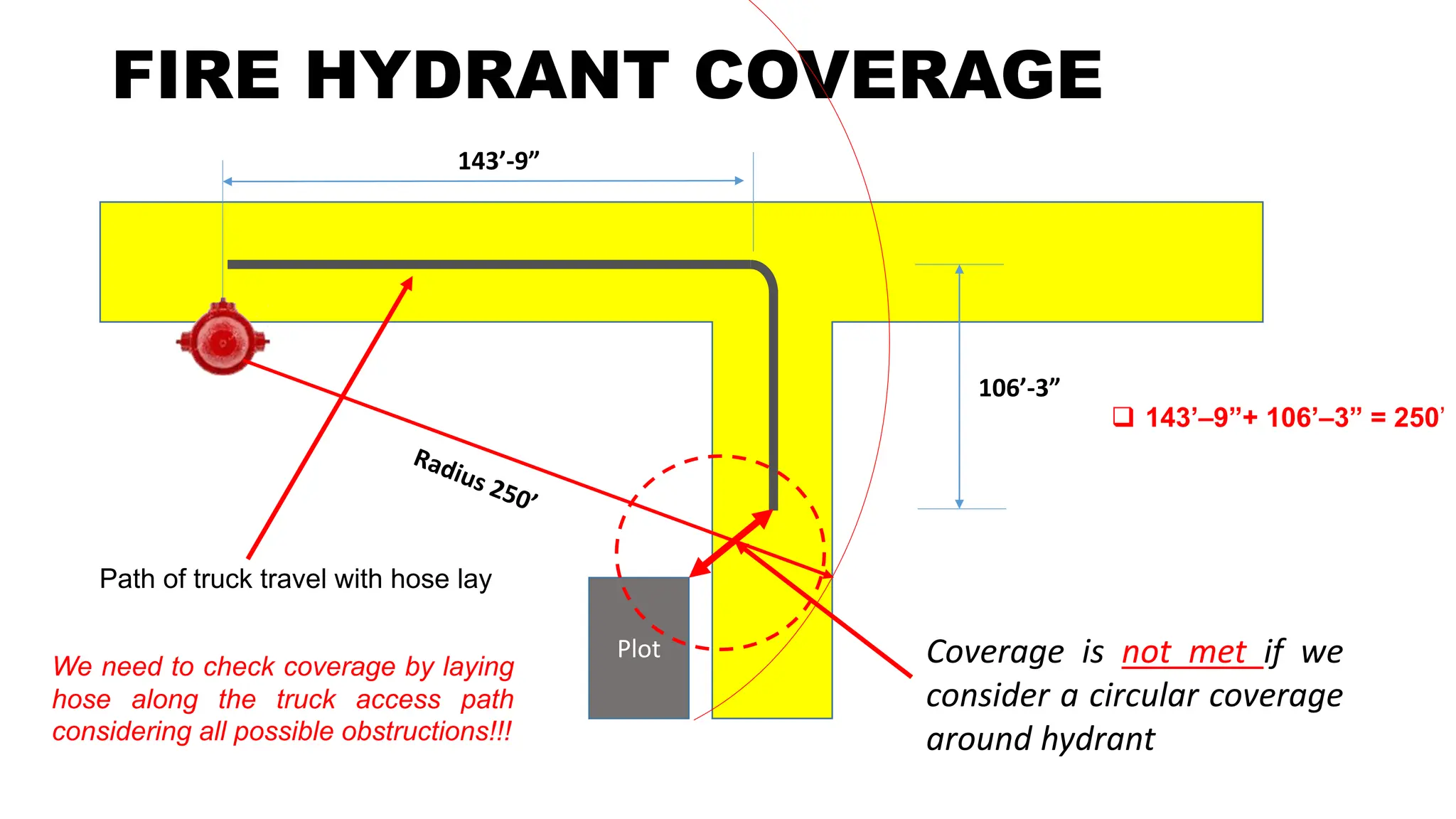
FIRE HYDRANT COVERAGE
Plot
143’-9”
106’-3”
Path of truck travel with hose lay
Coverage is not met if we
consider a circular coverage
around hydrant
We need to check coverage by laying
hose along the truck access path
considering all possible obstructions!!!
 143’–9”+ 106’–3” = 250’
Thank You

Fire Hydrants.pdf. it is very useful for determining the hydrant system

  • 1.
    Fire Hydrants In Accordancewith IFC 2018,NFPA 24 & NFPA 1142
  • 2.
    Contents Types of Hydrants Locationof Fire Hydrants Clear Space around the Hydrants Distance Between the Fire Hydrants Fire Hydrant Accessibility and Access
  • 3.
    Types of FireHydrants Dry Hydrants Wet hydrants Wet Barrel Dry Barrel According to NFPA 1142 Standard on Water Supplies for Suburban and Rural Fire Fighting: “Dry hydrant is an arrangement of pipe permanently connected to a water source other than a piped, pressurized water supply system that provides a ready means of water supply for fire-fighting purposes and that utilizes the drafting (suction) capability of a fire department pump” People Generally get confused between this Two Key Sentence
  • 4.
    DRY FIRE HYDRANTS Indry hydrant water has to be drawn from the supply (lake, pond, reservoir, tank) by a fire pumper through a pipe that is typically located underground
  • 5.
  • 6.
    Private vs PublicFire Hydrants 8” Water mains Street Valve Fire Hydrant Public Fire Line private to building Everything after street valve will be maintained by Property owner
  • 7.
    LOCATION Approximately 6 feet fromtraffic lanes when no curb is present Bottom of the safety flange should be at least 2.5 inches above the grade where it is set 36” of clear space must be maintained around the hydrant 4.5 inch should face the street Min. 457 mm Max. 914 mm
  • 8.
    LOCATION No parking within15 feet of a fire hydrant, which is marked by signage and painting!!!
  • 9.
    DISTANCE FROM THEBUILDING Proposed Building Wall Collapse Zone Wall Collapse Zone Fire hydrants must be placed at least 40 feet from the building they serve. At least 40 feet from the building they serve. Public Street Avoid placing it in Collapse Zone i.e. perpendicular to the walls (Collapse zone = 1.5 X height of building)
  • 10.
    DISTANCE FROM THEBUILDING Criss-cross fire hydrant Proposed Building Proposed walkway Proposed Building Proposed walkway Proposed Building 25 feet 30 feet 60 feet 90 feet Too close to building
  • 11.
    DISTANCE BETWEEN THE HYDRANTS BuildingType Maximum Distance between Hydrants(feet) Industrial buildings and warehouses 250 Schools, day care centers 300 Offices, commercial establishments, church, hospitals, nursing homes 350 Apartments, multifamily dwellings, town houses 350 Single-family dwellings 500 What Exactly these distances means ..? These measurements indicate what one fire hydrant can cover along the fire access road depending on building type, fire load and no. of fire streams required
  • 12.
    FIRE HYDRANT COVERAGE Firetrucks connect supply hoses to fire hydrants; so the distance is based on how far the truck can travel from a fire hydrant Proposed Building Within 150’ Within 150’ IIB, B, 2-story, 40 height, not sprinklered Path 1: 350 feet max coverage along required vehicle path Path 2: 350 feet max coverage along required vehicle path
  • 13.
    FIRE HYDRANT COVERAGE Plot FireTruck Access way Fire Truck Access way Is it a right way to show hydrant coverage ..? i.e. by drawing a circle around the hydrant.
  • 14.
    FIRE HYDRANT COVERAGE Plot 143’-9” 106’-3” Pathof truck travel with hose lay Coverage is not met if we consider a circular coverage around hydrant We need to check coverage by laying hose along the truck access path considering all possible obstructions!!!  143’–9”+ 106’–3” = 250’
  • 15.