Processing of fish
Fish belongs to a diverse class , pieces 
containing hundreds of species. 
Few species of fish are edible, and very 
delicious in taste 
Fish get spoiled very fast due to availability of 
nutrients for the micro organism which 
contaminate it
 The dictionary meaning of the word “preserve” 
is to keep safe ,retain quality and to prevent 
decomposition or fermentation. 
 Fish preservation is a method of extending shelf 
life of fish and fishery products by applying 
principles of chemistry engineering and other 
branches of science in order to improve the 
quality of products
o Avoid exposing the fish to sunlight keep 
them in shaded area 
o Ice the fish immediately after it is caught 
to lower its body temperature. 
o Remove the gills and the internal organs 
o Avoid soaking the fish too long in the 
water after death as this easily spoils the 
fish.
METHODS OF FISH PRESERVATION 
• SALTING 
• WET SALTING 
• DRY SALTING 
• SUN DRYING AND DEHYDRATING 
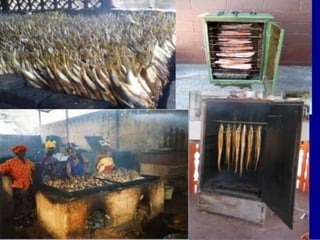
• SMOKING 
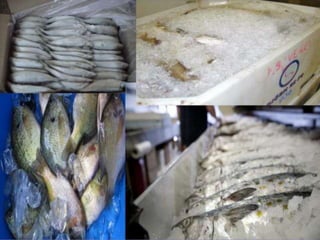
• CHILLING 
• FREEZING 
• CANNING 
• PICKLING
SALTING 
 SALT IS PRESERVATIVE AGENT USED TO 
LENTHEN THE SHELF LIFE OF FISH. 
 SALT IS USED IN ALL PRESERVATION 
TECHNIQUES EXCEPT 
• ICING 
• REFRIGERATION 
• FREEZING
Wet salting is cheaper , consume less salt. 
In wet salting the principle is to keep the fish in fresh 
brine for long time and brine must float the fish. 
One ratio four part of grounded salt and water is 
mixed and salt is dissolved in water by stirring with a 
piece of wood.
 Equipment needed for it , a container which 
can be a tin or drum or barrel etc. 
 Fish cutting is necessary if it is large in size. 
 Large fish cut in thin fillets and places where 
the flesh is thick slashes must be made so that 
so that brine can easily penetrate. 
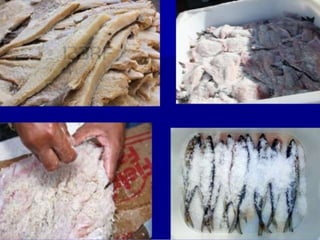
 Fish can also be dry salted by adding two ratio 
one of fish and salt, on mats or leaves and 
juices and slime of fish and brine allowed to 
flow away.
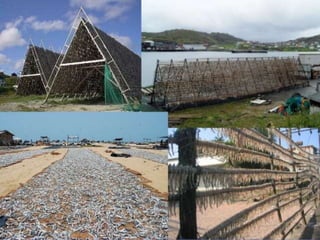
 Sun drying is a process in which moisture is 
removed by exposure to natural air current as 
humidity is regulated by climatic conditions. 
 Dehydration is a process of removing moisture by 
a mechanical device which provides artificial 
heat for drying
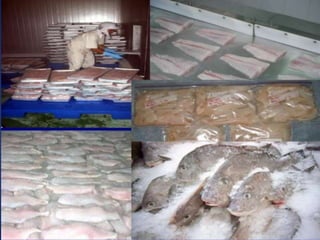
Freezing is more effective than chilling. 
Freezing is achieved by a mixture of ice and salt. 
At 0℃ temp.the frozen fish is wrapped in a cover of 
moisture proof paper or glazing the fish with water to 
prevent rancidity 
This layers protects against: 
 exposure of fish fat to the atmospheric oxygen
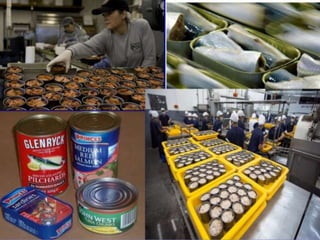
Canning process is 
Effective 
Costly 
Gives good end product , better in taste. 
Fish retains its original flavor
first step • Fish is cleaned 
2nd step • Cut in to pieces of suitable size. 
.3rd step • Pieces are brined or pickled 
4th step 
• Preliminary cooking is carried out. 
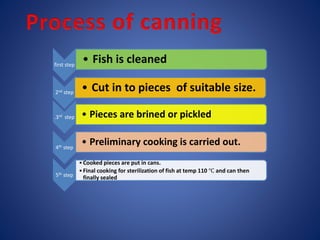
5th step 
• Cooked pieces are put in cans. 
• Final cooking for sterilization of fish at temp 110 ℃ and can then 
finally sealed
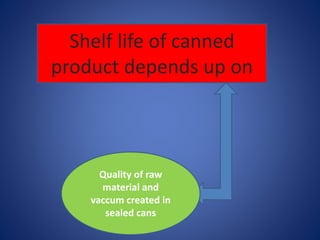
Shelf life of canned 
product depends up on 
Quality of raw 
material and 
vaccum created in 
sealed cans
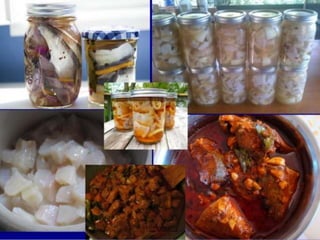
• It is easy method of preservation 
• Pickled fish should be stored at 40 ℉ 
• Refrigerate the fish during all stages of 
pickling. 
• All species of fish can not pickled.
• Fresh fish 
• Water 
• Vinegar 
• salt
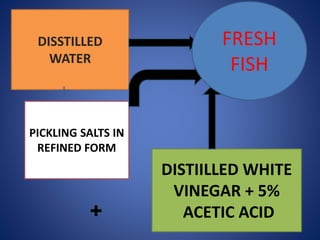
DISSTILLED 
WATER 
DISTIILLED WHITE 
VINEGAR + 5% 
ACETIC ACID 
PICKLING SALTS IN 
REFINED FORM 
FRESH 
FISH
References 
• Bekker-Nielsen T (2005) Ancient fishing and fish processing in the Black Sea 
region Volume 2 of Black Sea studies, Aarhus University Press, ISBN 978-87-7934- 
096-1. 
• Bremner HA (2003) Safety and Quality Issues in Fish Processing Woodhead 
Publishing Limited, ISBN 978-1-85573-678-8. 
• Brewer DJ and Friedman RF (1989) Fish and Fishing in Ancient Egypt Cairo 
press: The American University in Cairo. ISBN 978-977-424-224-3 
• Cutting CL (1955) Fish saving; a history of fish processing from ancient to 
modern times, L. Hill. 
• Hall GM (1997) Fish processing technology Springer, ISBN 978-0-7514-0273- 
5. 
• Luten JB, Jacobsen C and Bekaert K (2006) Seafood research from fish to 
dish: quality, safety and processing of wild and farmed fish Wageningen Academic 
Publishers. ISBN 978-90-8686-005-0. 
• Pearson AM and Dutson TR (1999) HACCP in Meat, Poultry and Fish 
Processing, Volume 10 of Advances in meat research, Springer. ISBN 978-0-8342- 
1327-2. 
• .
Shahidi F, Jones Y and Kitts DD (1997) Seafood safety, processing, and 
biotechnology, Technomic, ISBN 978-1-56676-573-2. 
Stallman JM (ed.) (1998) Chemical, industries and occupations Volume 3 
of Encyclopedia of Occupational Health and Safety, International Labour 
Organization. ISBN 978-92-2-109816-4. 
Stewart H (1982) Indian Fishing: Early Methods on the Northwest Coast 
University of Washington Press. ISBN 978-0-88894-332-3. 
Stewart K M (1989) Fishing Sites of North and East Africa in the Late 
Pleistocene and Holocene. Volume 34 of Cambridge monographs in African 
archaeology. 
Stewart KM (1994) "Early hominid utilization of fish resources and 
implications for seasonality and behavior" Journal of Human Evolution, 27: 229– 
245. 
United Nations Development Fund for Women (1993) Fish processing 
Food Technology Source Book Series (UNIFEM) Series, ISBN 978-1-85339-137-8.
Final prestation

Final prestation

  • 1.
  • 2.
    Fish belongs toa diverse class , pieces containing hundreds of species. Few species of fish are edible, and very delicious in taste Fish get spoiled very fast due to availability of nutrients for the micro organism which contaminate it
  • 5.
     The dictionarymeaning of the word “preserve” is to keep safe ,retain quality and to prevent decomposition or fermentation.  Fish preservation is a method of extending shelf life of fish and fishery products by applying principles of chemistry engineering and other branches of science in order to improve the quality of products
  • 7.
    o Avoid exposingthe fish to sunlight keep them in shaded area o Ice the fish immediately after it is caught to lower its body temperature. o Remove the gills and the internal organs o Avoid soaking the fish too long in the water after death as this easily spoils the fish.
  • 8.
    METHODS OF FISHPRESERVATION • SALTING • WET SALTING • DRY SALTING • SUN DRYING AND DEHYDRATING • SMOKING • CHILLING • FREEZING • CANNING • PICKLING
  • 9.
    SALTING  SALTIS PRESERVATIVE AGENT USED TO LENTHEN THE SHELF LIFE OF FISH.  SALT IS USED IN ALL PRESERVATION TECHNIQUES EXCEPT • ICING • REFRIGERATION • FREEZING
  • 11.
    Wet salting ischeaper , consume less salt. In wet salting the principle is to keep the fish in fresh brine for long time and brine must float the fish. One ratio four part of grounded salt and water is mixed and salt is dissolved in water by stirring with a piece of wood.
  • 12.
     Equipment neededfor it , a container which can be a tin or drum or barrel etc.  Fish cutting is necessary if it is large in size.  Large fish cut in thin fillets and places where the flesh is thick slashes must be made so that so that brine can easily penetrate.  Fish can also be dry salted by adding two ratio one of fish and salt, on mats or leaves and juices and slime of fish and brine allowed to flow away.
  • 13.
     Sun dryingis a process in which moisture is removed by exposure to natural air current as humidity is regulated by climatic conditions.  Dehydration is a process of removing moisture by a mechanical device which provides artificial heat for drying
  • 20.
    Freezing is moreeffective than chilling. Freezing is achieved by a mixture of ice and salt. At 0℃ temp.the frozen fish is wrapped in a cover of moisture proof paper or glazing the fish with water to prevent rancidity This layers protects against:  exposure of fish fat to the atmospheric oxygen
  • 22.
    Canning process is Effective Costly Gives good end product , better in taste. Fish retains its original flavor
  • 23.
    first step •Fish is cleaned 2nd step • Cut in to pieces of suitable size. .3rd step • Pieces are brined or pickled 4th step • Preliminary cooking is carried out. 5th step • Cooked pieces are put in cans. • Final cooking for sterilization of fish at temp 110 ℃ and can then finally sealed
  • 24.
    Shelf life ofcanned product depends up on Quality of raw material and vaccum created in sealed cans
  • 26.
    • It iseasy method of preservation • Pickled fish should be stored at 40 ℉ • Refrigerate the fish during all stages of pickling. • All species of fish can not pickled.
  • 27.
    • Fresh fish • Water • Vinegar • salt
  • 28.
    DISSTILLED WATER DISTIILLEDWHITE VINEGAR + 5% ACETIC ACID PICKLING SALTS IN REFINED FORM FRESH FISH
  • 30.
    References • Bekker-NielsenT (2005) Ancient fishing and fish processing in the Black Sea region Volume 2 of Black Sea studies, Aarhus University Press, ISBN 978-87-7934- 096-1. • Bremner HA (2003) Safety and Quality Issues in Fish Processing Woodhead Publishing Limited, ISBN 978-1-85573-678-8. • Brewer DJ and Friedman RF (1989) Fish and Fishing in Ancient Egypt Cairo press: The American University in Cairo. ISBN 978-977-424-224-3 • Cutting CL (1955) Fish saving; a history of fish processing from ancient to modern times, L. Hill. • Hall GM (1997) Fish processing technology Springer, ISBN 978-0-7514-0273- 5. • Luten JB, Jacobsen C and Bekaert K (2006) Seafood research from fish to dish: quality, safety and processing of wild and farmed fish Wageningen Academic Publishers. ISBN 978-90-8686-005-0. • Pearson AM and Dutson TR (1999) HACCP in Meat, Poultry and Fish Processing, Volume 10 of Advances in meat research, Springer. ISBN 978-0-8342- 1327-2. • .
  • 31.
    Shahidi F, JonesY and Kitts DD (1997) Seafood safety, processing, and biotechnology, Technomic, ISBN 978-1-56676-573-2. Stallman JM (ed.) (1998) Chemical, industries and occupations Volume 3 of Encyclopedia of Occupational Health and Safety, International Labour Organization. ISBN 978-92-2-109816-4. Stewart H (1982) Indian Fishing: Early Methods on the Northwest Coast University of Washington Press. ISBN 978-0-88894-332-3. Stewart K M (1989) Fishing Sites of North and East Africa in the Late Pleistocene and Holocene. Volume 34 of Cambridge monographs in African archaeology. Stewart KM (1994) "Early hominid utilization of fish resources and implications for seasonality and behavior" Journal of Human Evolution, 27: 229– 245. United Nations Development Fund for Women (1993) Fish processing Food Technology Source Book Series (UNIFEM) Series, ISBN 978-1-85339-137-8.