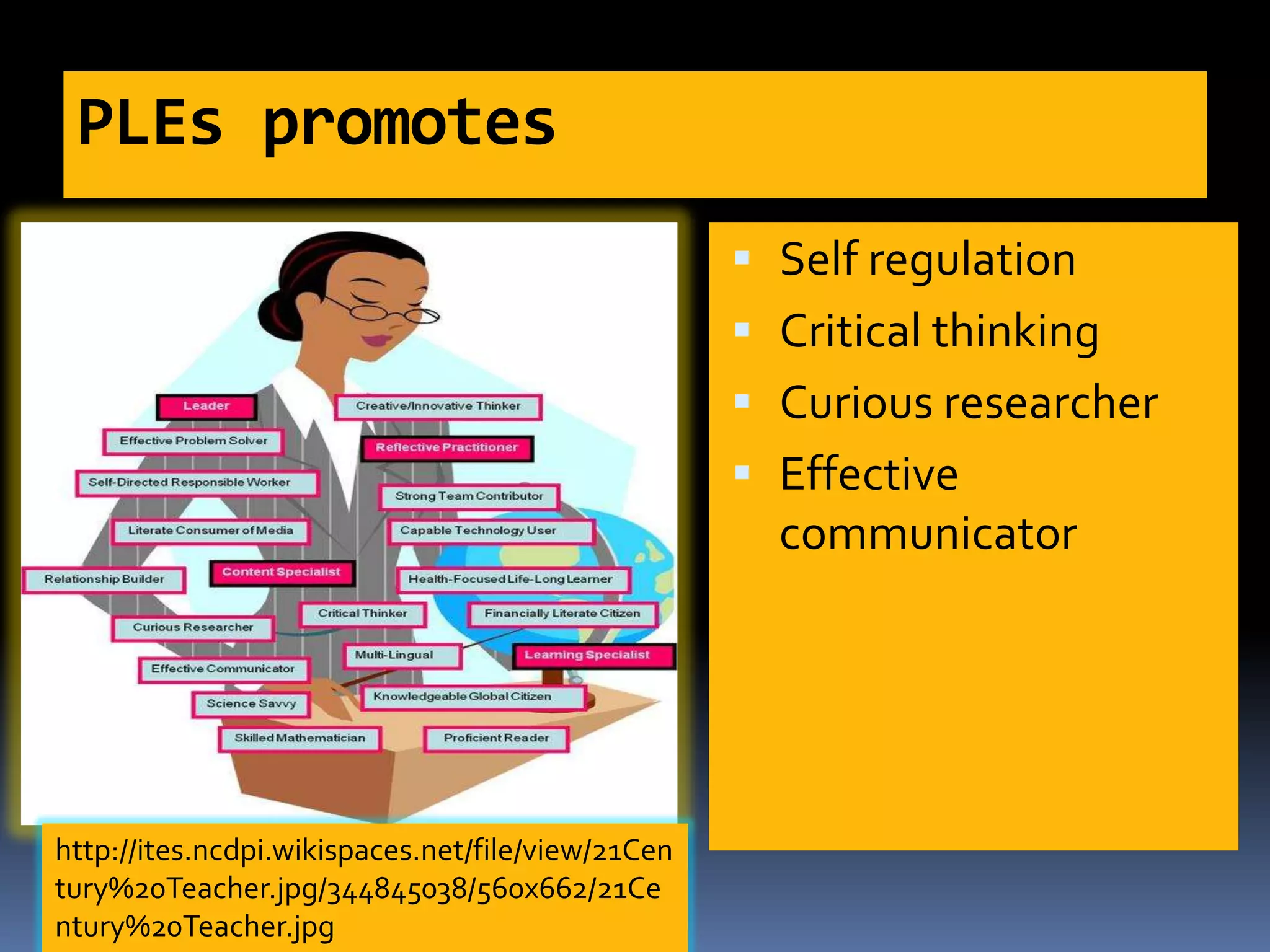

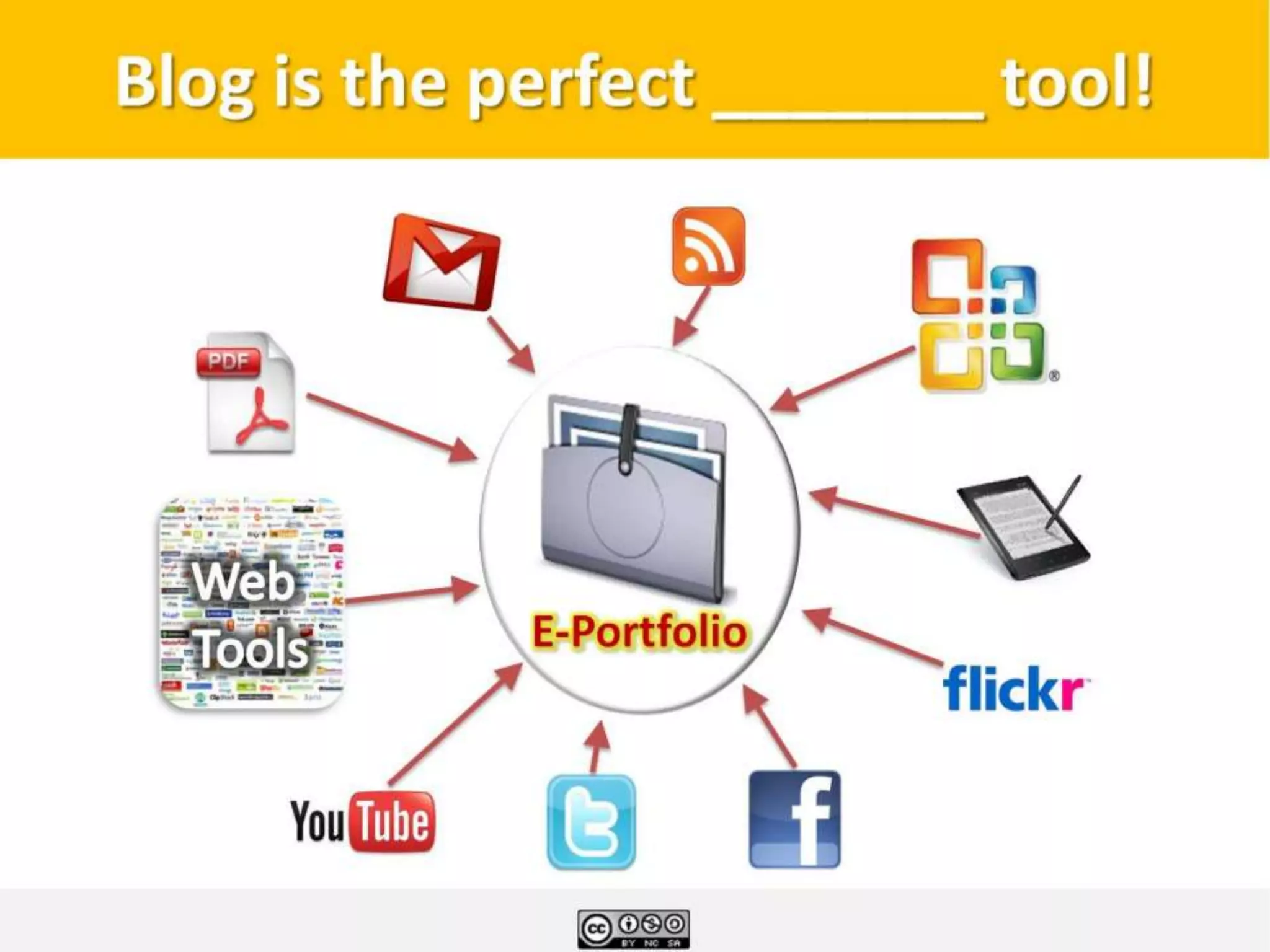

PLEs promotes
 Self regulation
 Critical thinking
 Curious researcher
 Effective
communicator
http://ites.ncdpi.wikispaces.net/file/view/21Cen
tury%20Teacher.jpg/344845038/560x662/21Ce
ntury%20Teacher.jpg
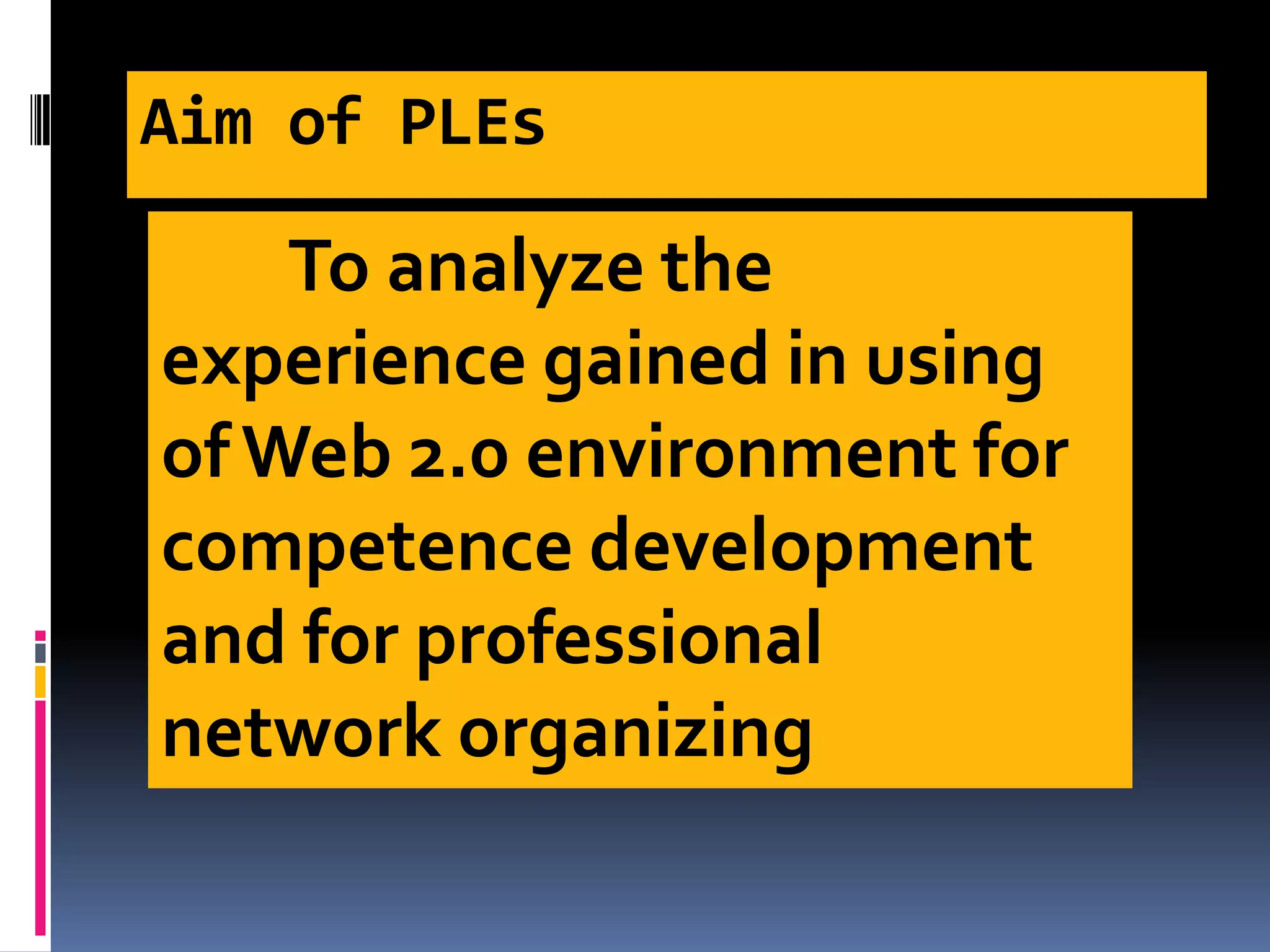
Aim of PLEs
To analyze the
experience gained in using
of Web 2.0 environment for
competence development
and for professional
network organizing
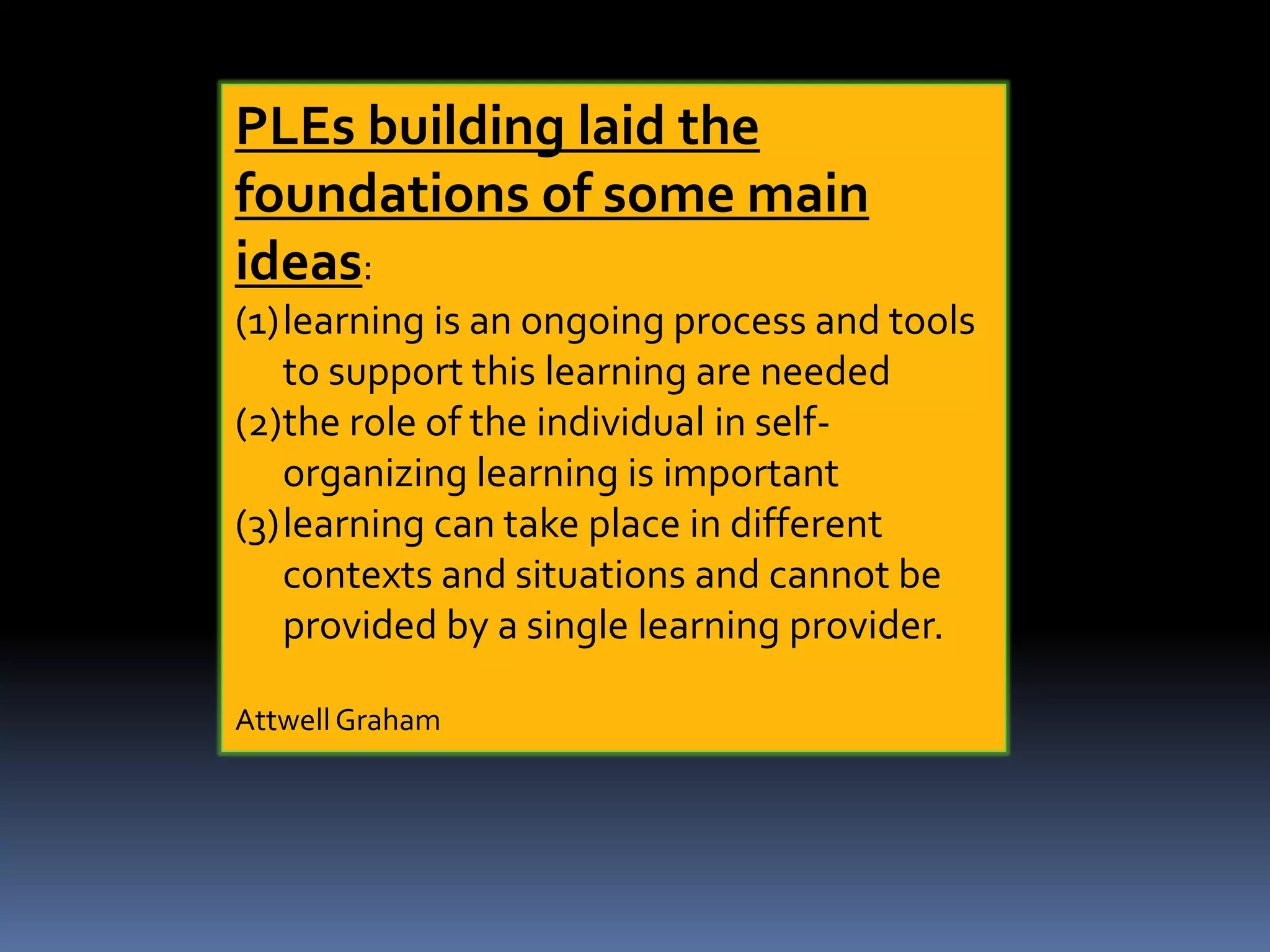
PLEs building laid the
foundations of some main
ideas:
(1)learning is an ongoing process and tools
to support this learning are needed
(2)the role of the individual in self-
organizing learning is important
(3)learning can take place in different
contexts and situations and cannot be
provided by a single learning provider.
Attwell Graham
•Collaboration & Cooperation
•The SocialWeb (Web 2.0)
• SocialWeb tools
• Personalised Learning
• Formal & Informal Learning
CONTENT
COMPETITION
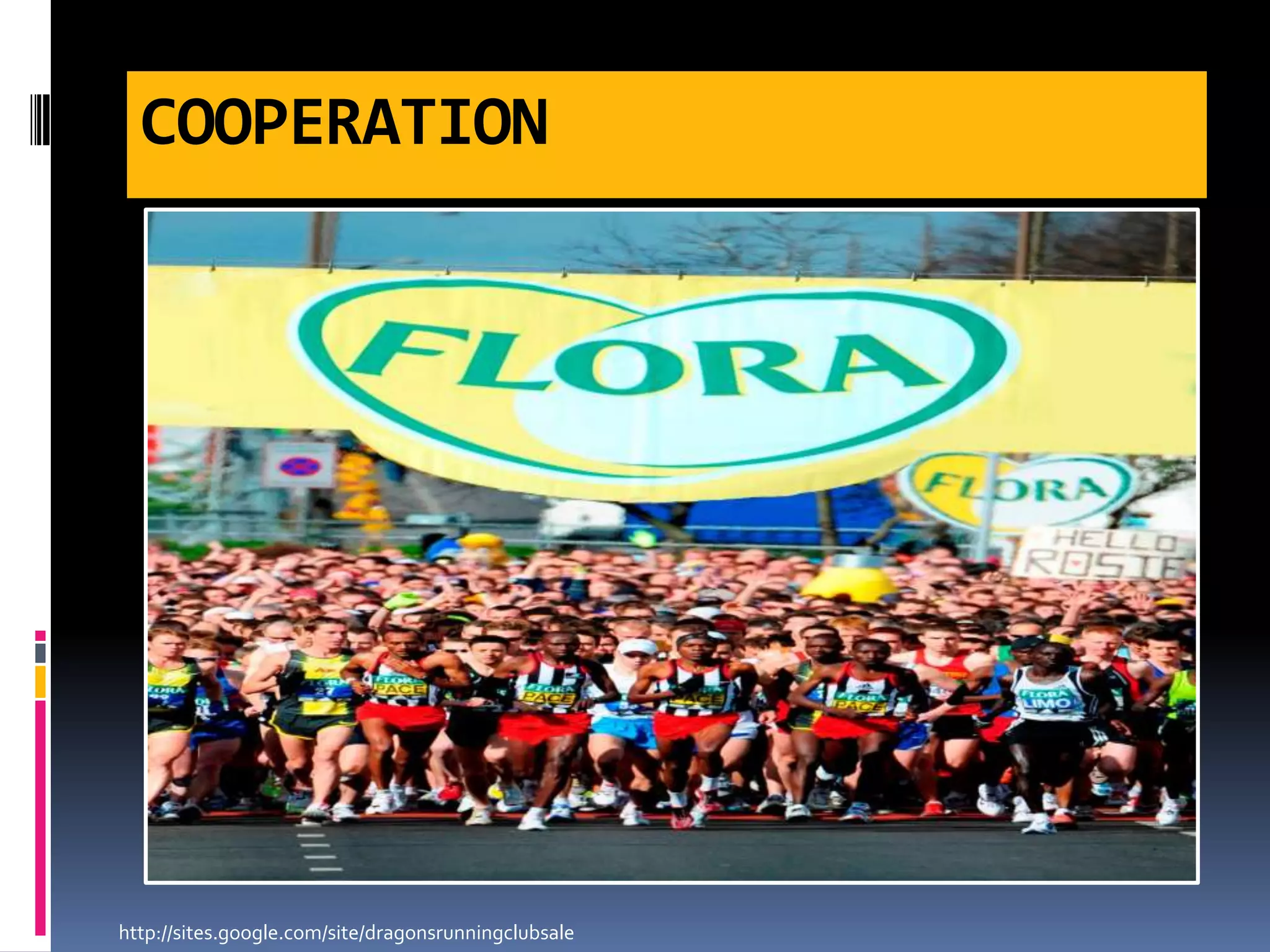
COOPERATION
http://sites.google.com/site/dragonsrunningclubsale
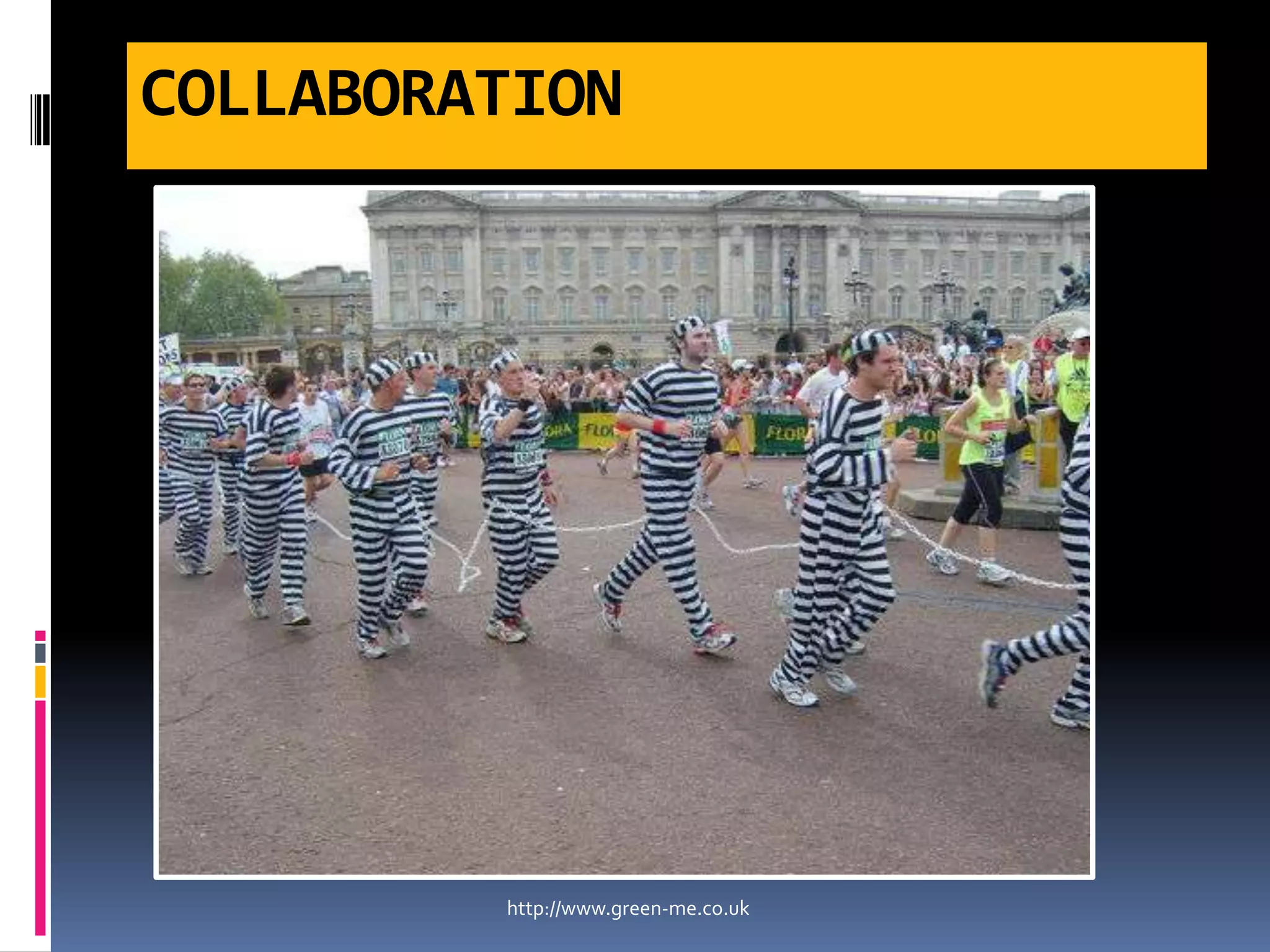
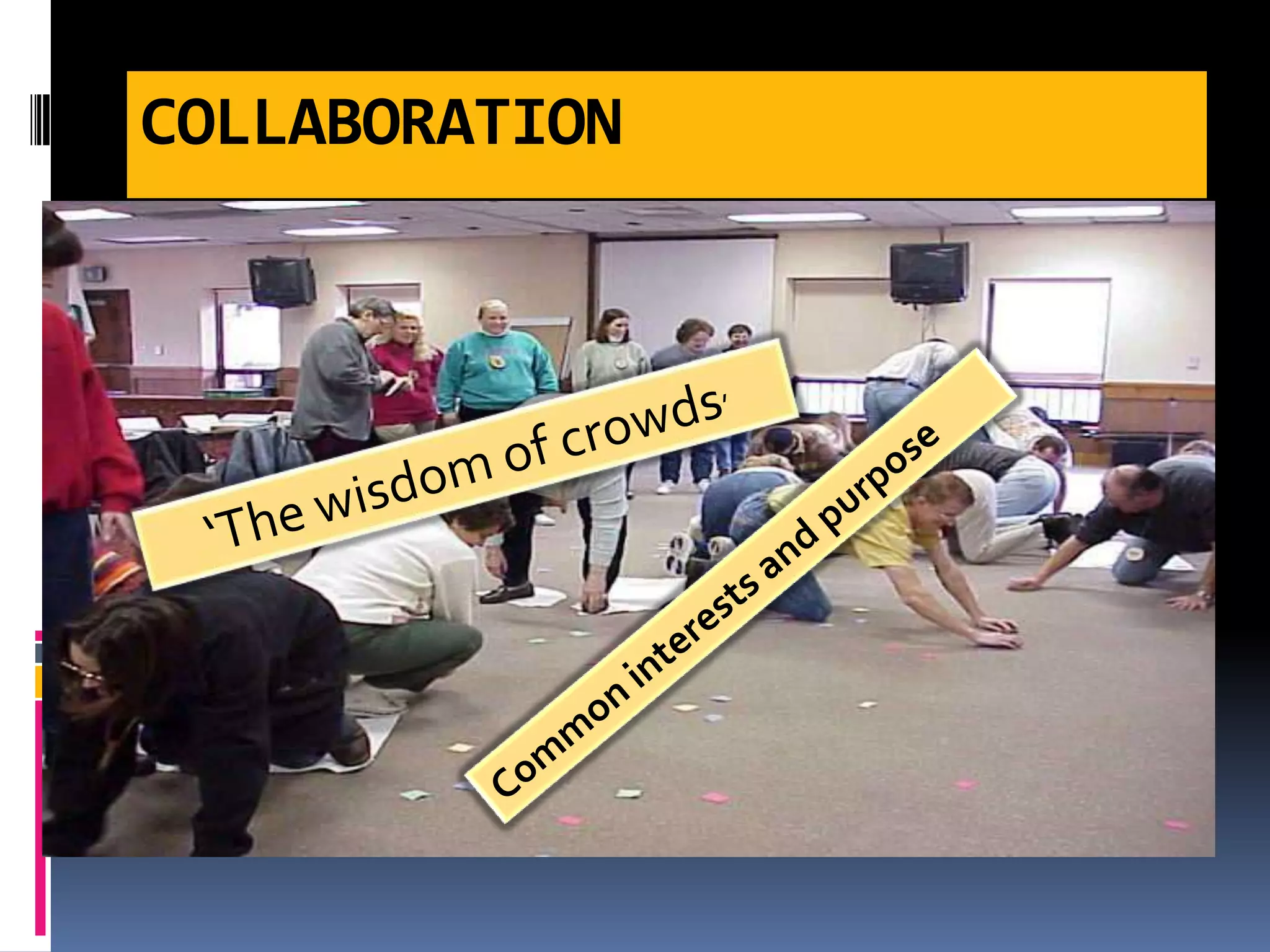
COLLABORATION
http://www.green-me.co.uk
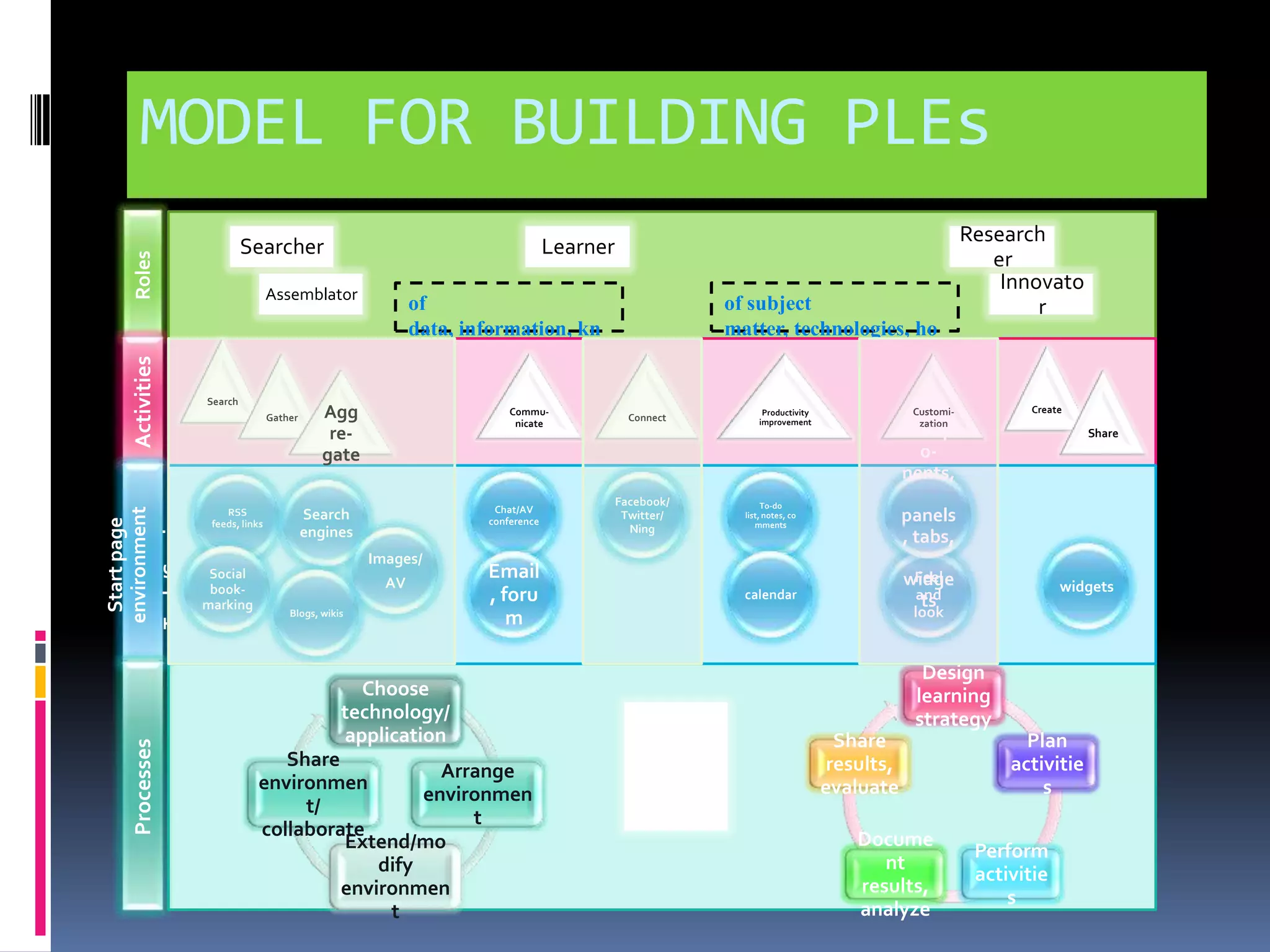
MODEL FOR BUILDING PLEsRolesActivities
Startpage
environment
Tools/Services
Processes
Searcher
Assemblator
Learner
Research
er
Innovato
rof
data, information, kn
owledge
of subject
matter, technologies, ho
w to learn
Create
Share
Commu-
nicate
Connect
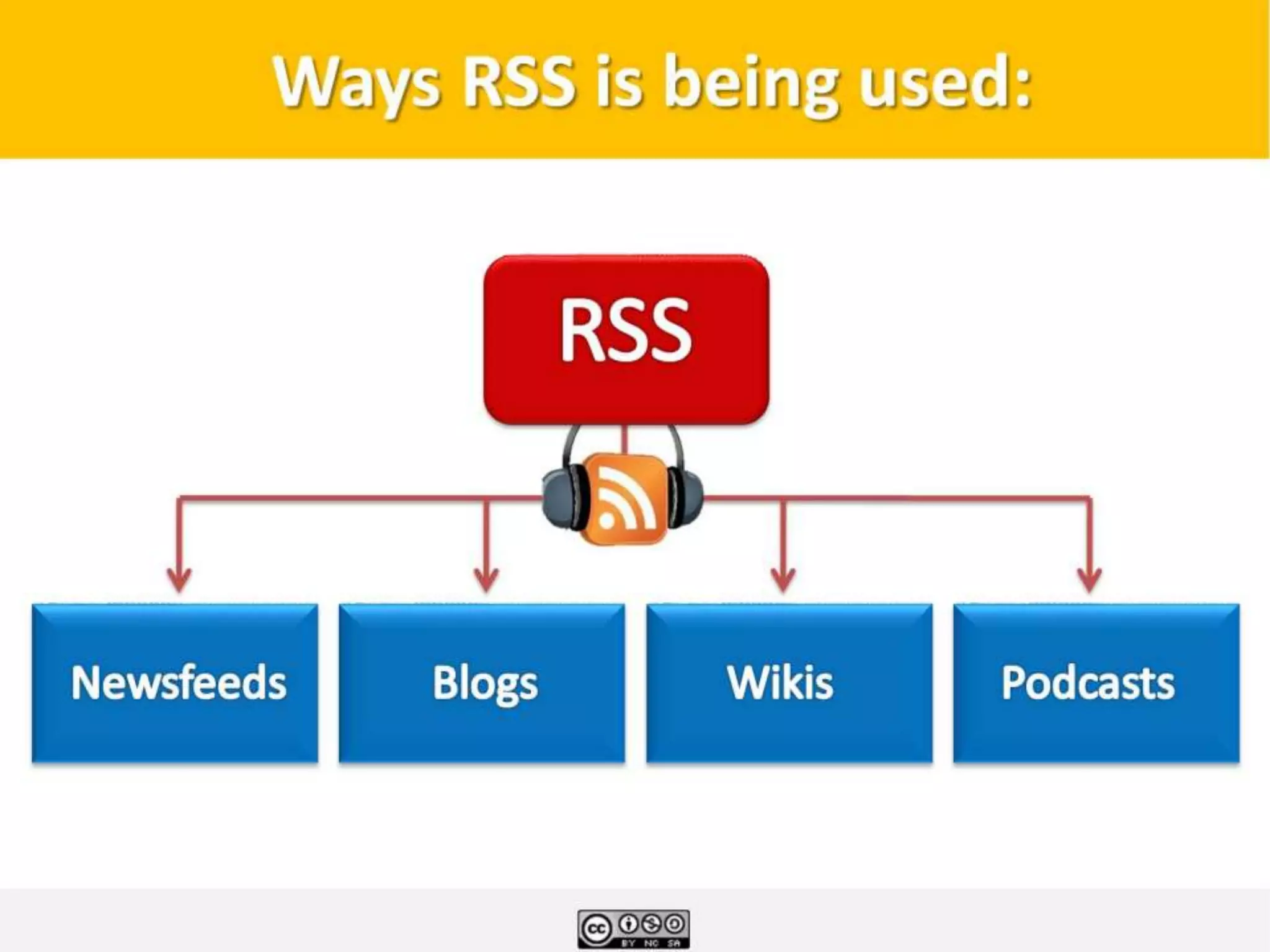
RSS
feeds, links
Search
engines
Blogs, wikis
Feel
and
look
Social
book-
marking
Images/
AV
Chat/AV
conference
Email
, foru
m
Facebook/
Twitter/
Ning
To-do
list, notes, co
mments
calendar
Design
learning
strategy
Plan
activitie
s
Perform
activitie
s
Docume
nt
results,
analyze
Share
results,
evaluate
Choose
technology/
application
Arrange
environmen
t
Extend/mo
dify
environmen
t
Share
environmen
t/
collaborate
Search
Gather Agg
re-
gate
Productivity
improvement
Customi-
zation
Comp
o-
nents,
panels
, tabs,
widge
ts
widgets
Goals,needs, interests,
motivation, problems
COLLABORATION
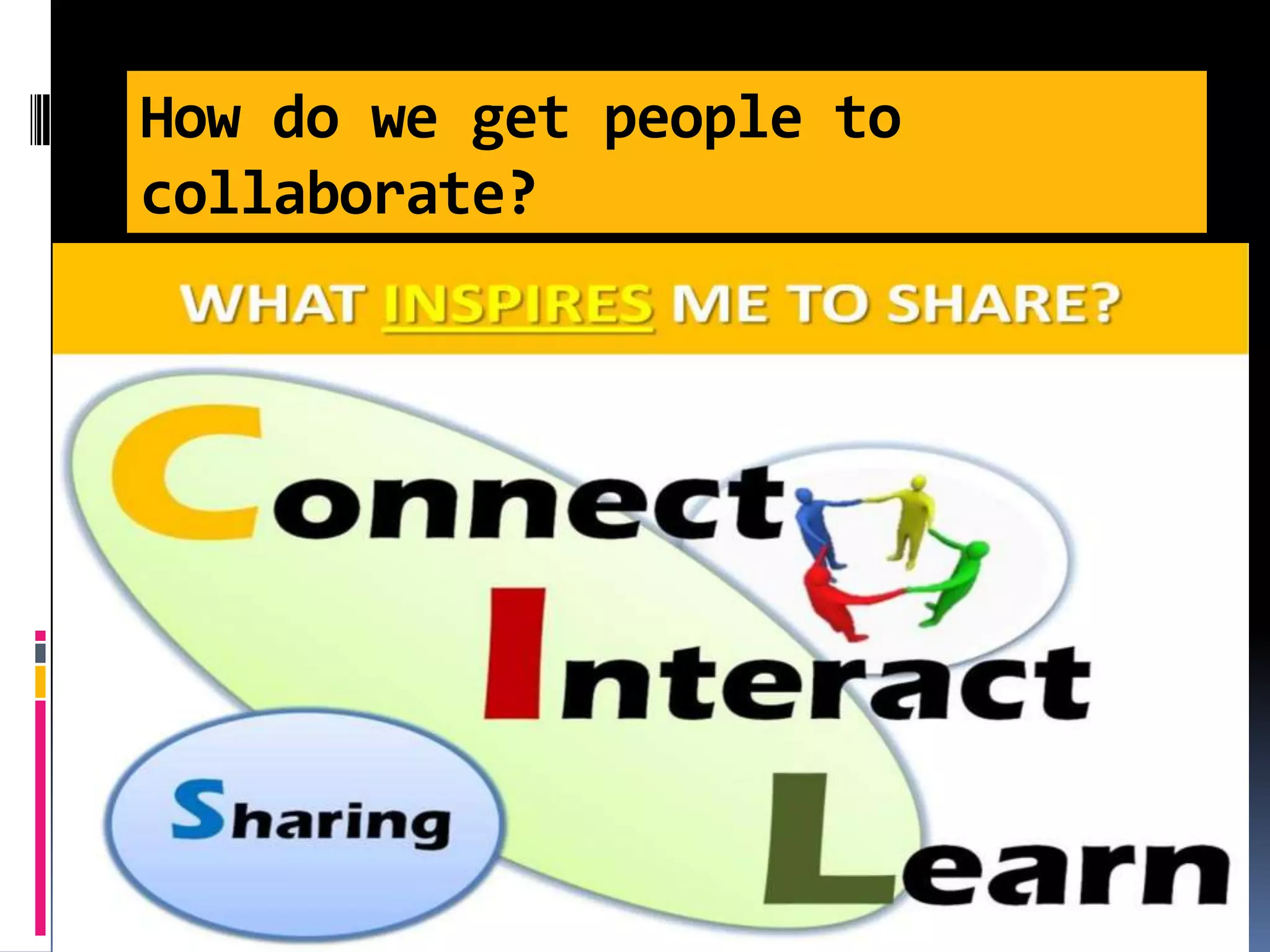
How do we get people to
collaborate?
The Social Web
(Web 2.0)
Web 2.0 applications called “start
pages” are designed to provide a
personalized place on the
internet where users can mashup
data, information and
knowledge available anywhere,
anytime, including mobile login.
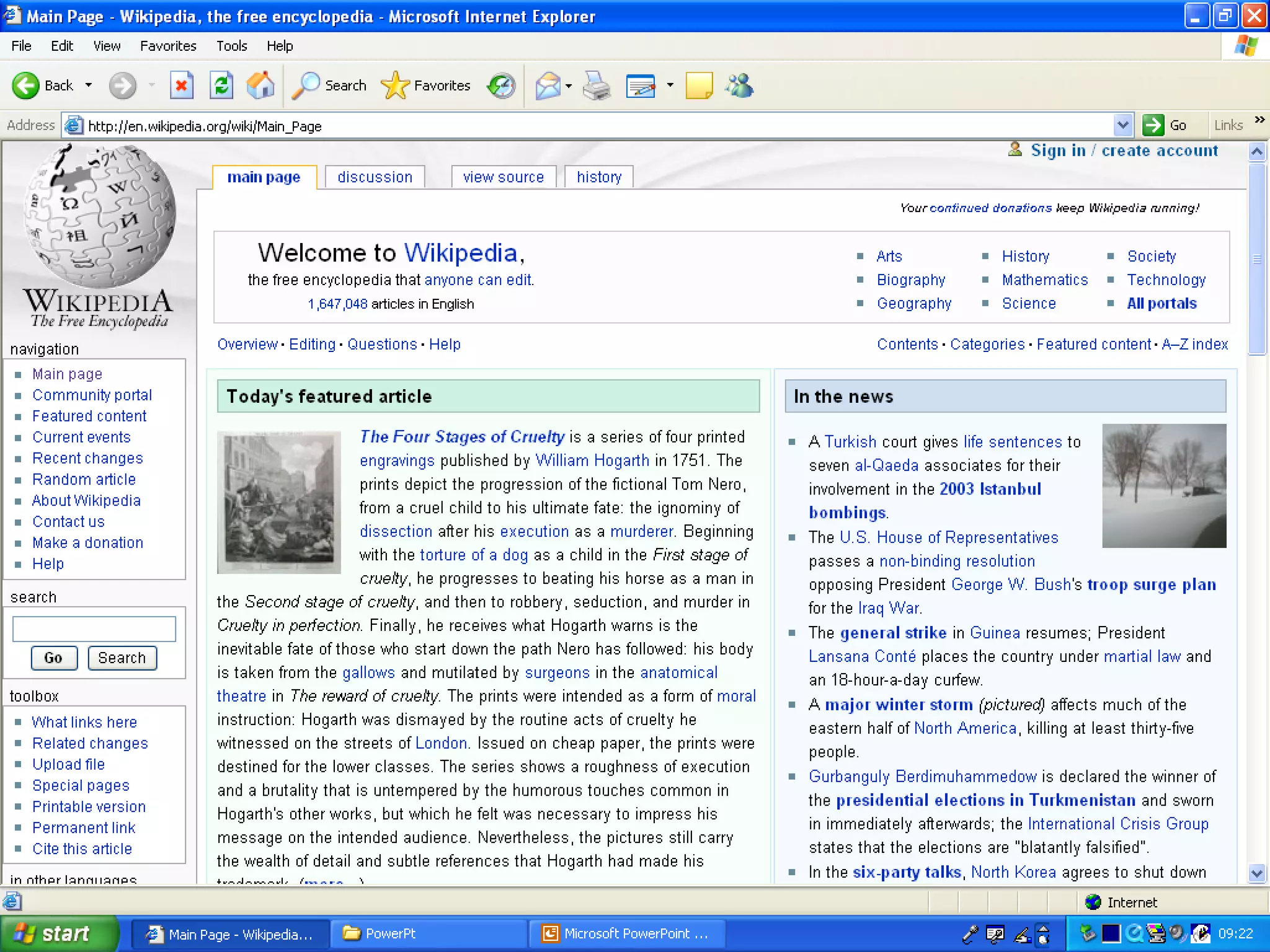
Wikipedia
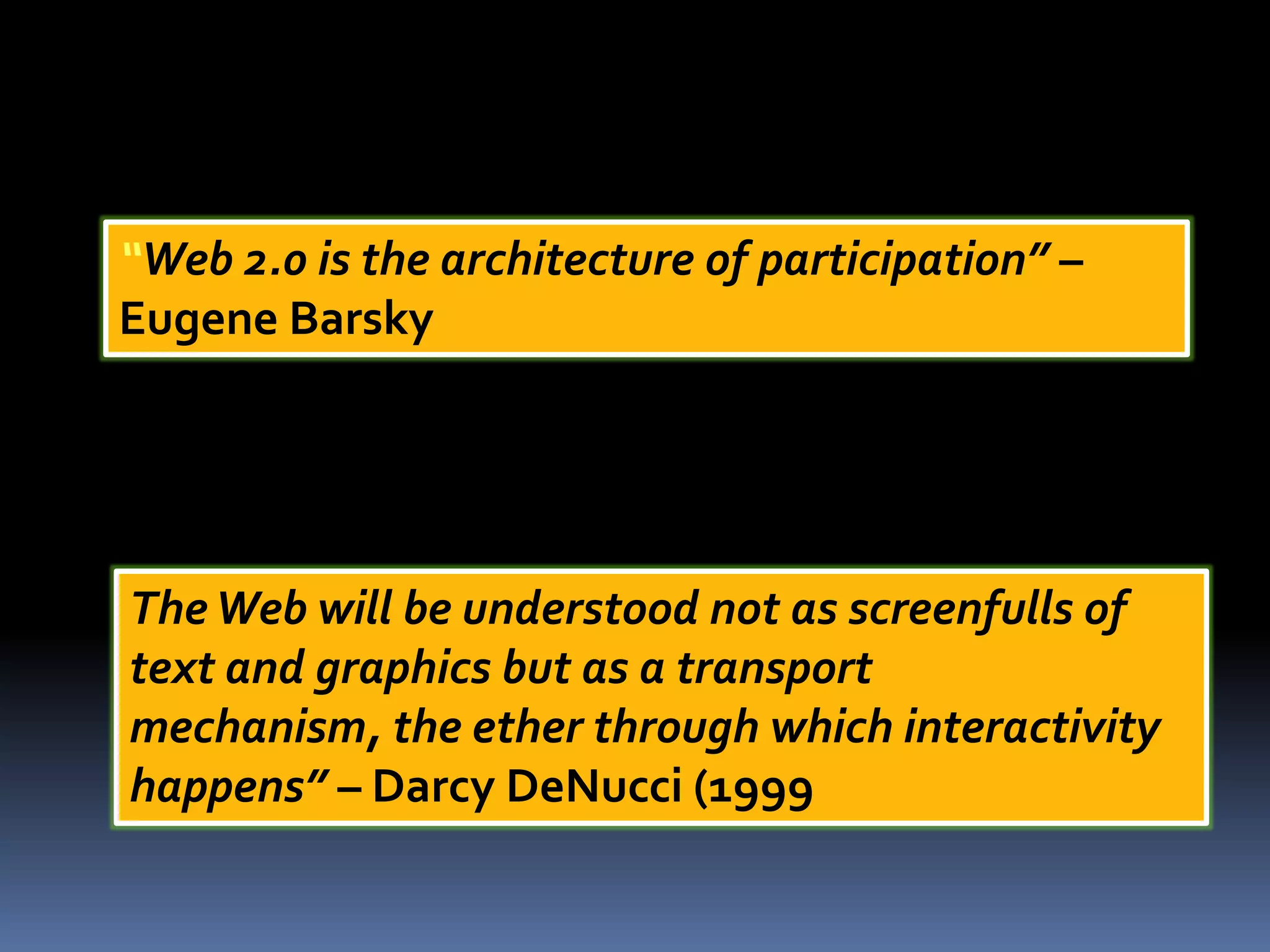
“Web 2.0 is the architecture of participation” –
Eugene Barsky
TheWeb will be understood not as screenfulls of
text and graphics but as a transport
mechanism, the ether through which interactivity
happens” – Darcy DeNucci (1999
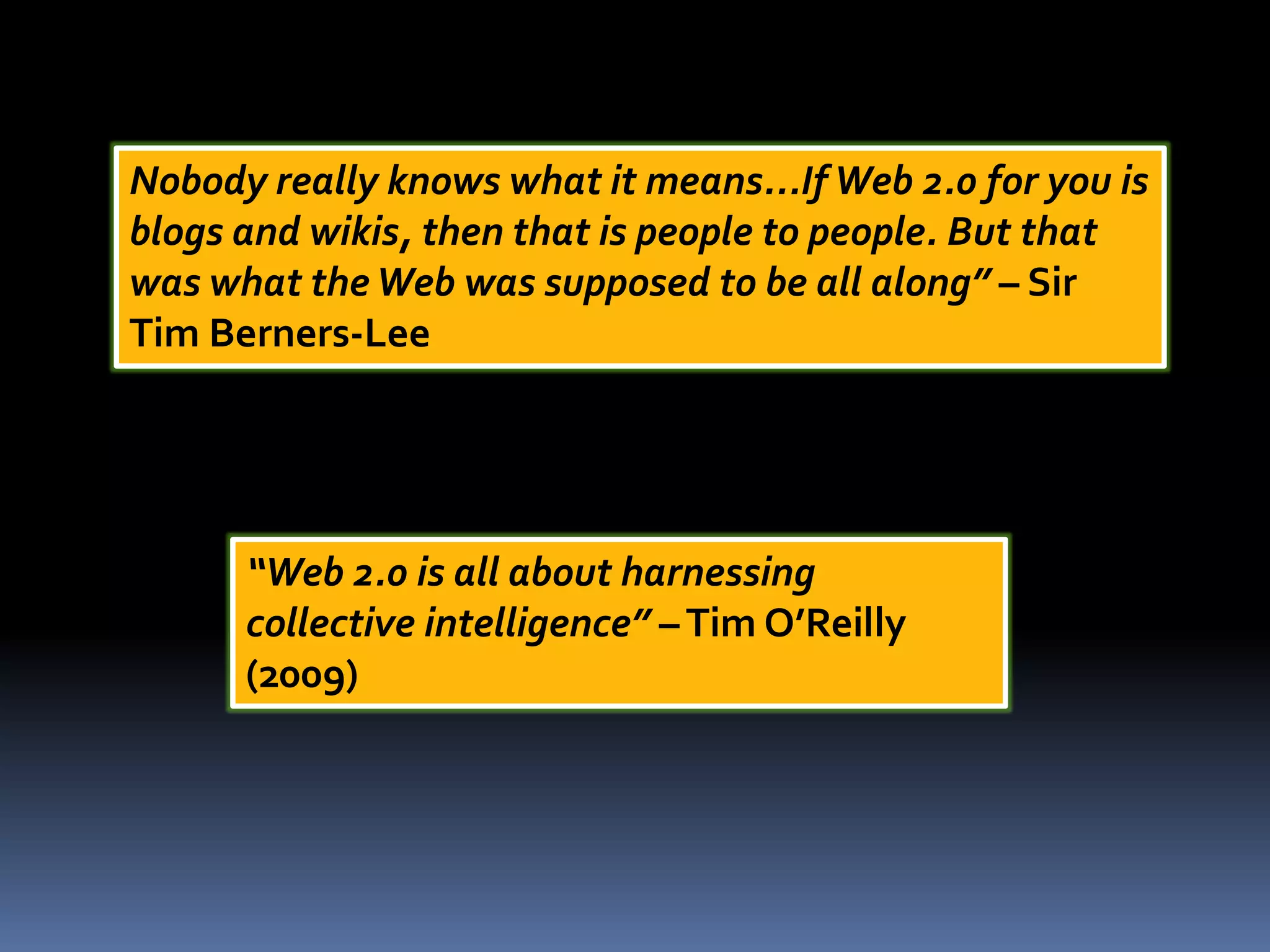
Nobody really knows what it means...IfWeb 2.0 for you is
blogs and wikis, then that is people to people. But that
was what theWeb was supposed to be all along” – Sir
Tim Berners-Lee
“Web 2.0 is all about harnessing
collective intelligence” –Tim O’Reilly
(2009)
What is a
Personal Learning
Environment?
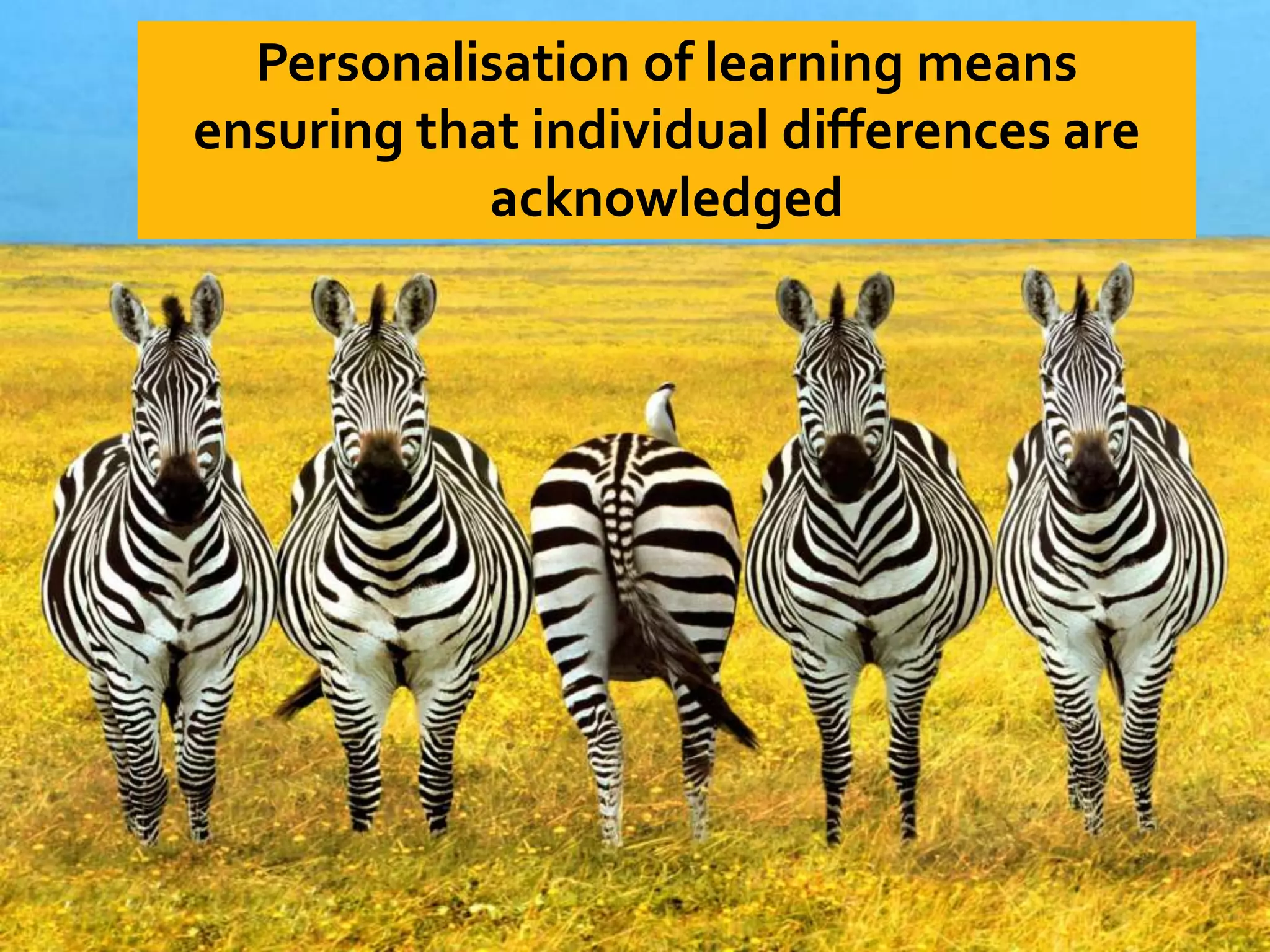
Personalisation of learning means
ensuring that individual differences are
acknowledged
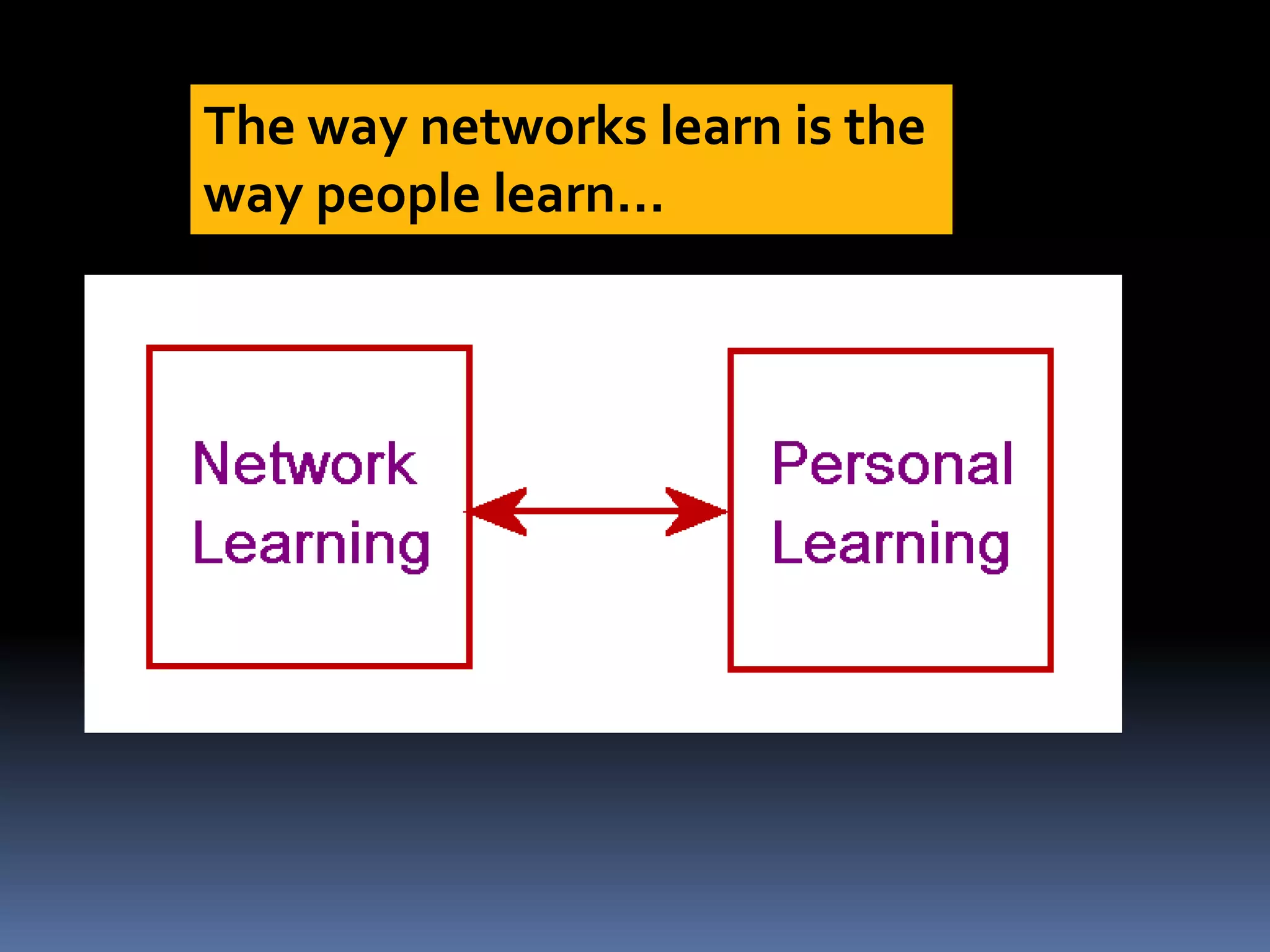
The way networks learn is the
way people learn…
PLEs are not another
substantiation of
educational technology
but a new approach to
learning
A response to pedagogic
approaches which require
that learner’s e-learning
systems need to be under
the control of the learners
themselves
and recognize the needs of life-
long learners for a system that
provides a standard interface to
different institutions’ e-learning
systems, and that allows
portfolio information to be
maintained across institutions
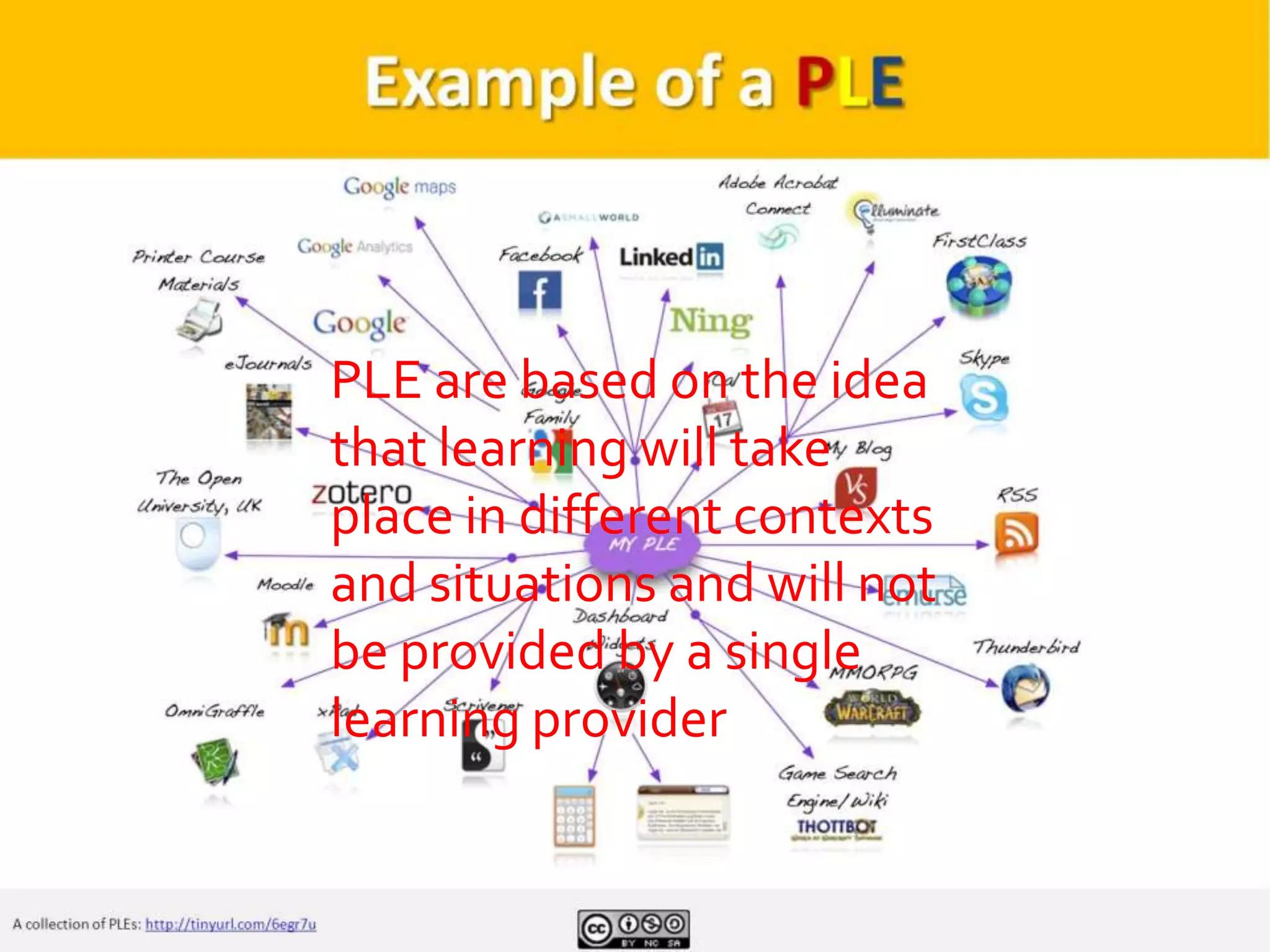
PLE are based on the idea
that learning will take
place in different contexts
and situations and will not
be provided by a single
learning provider
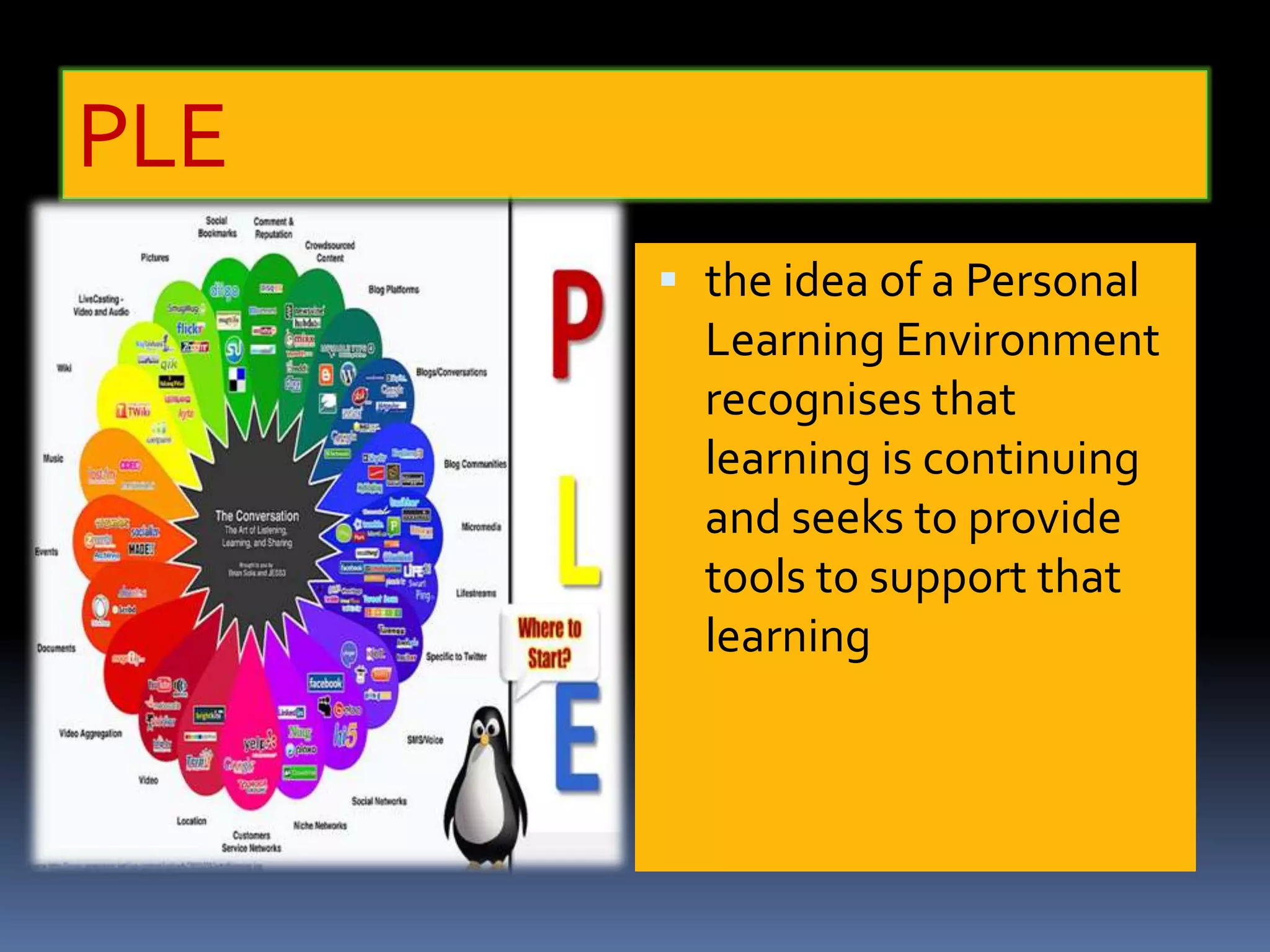
PLE
 the idea of a Personal
Learning Environment
recognises that
learning is continuing
and seeks to provide
tools to support that
learning
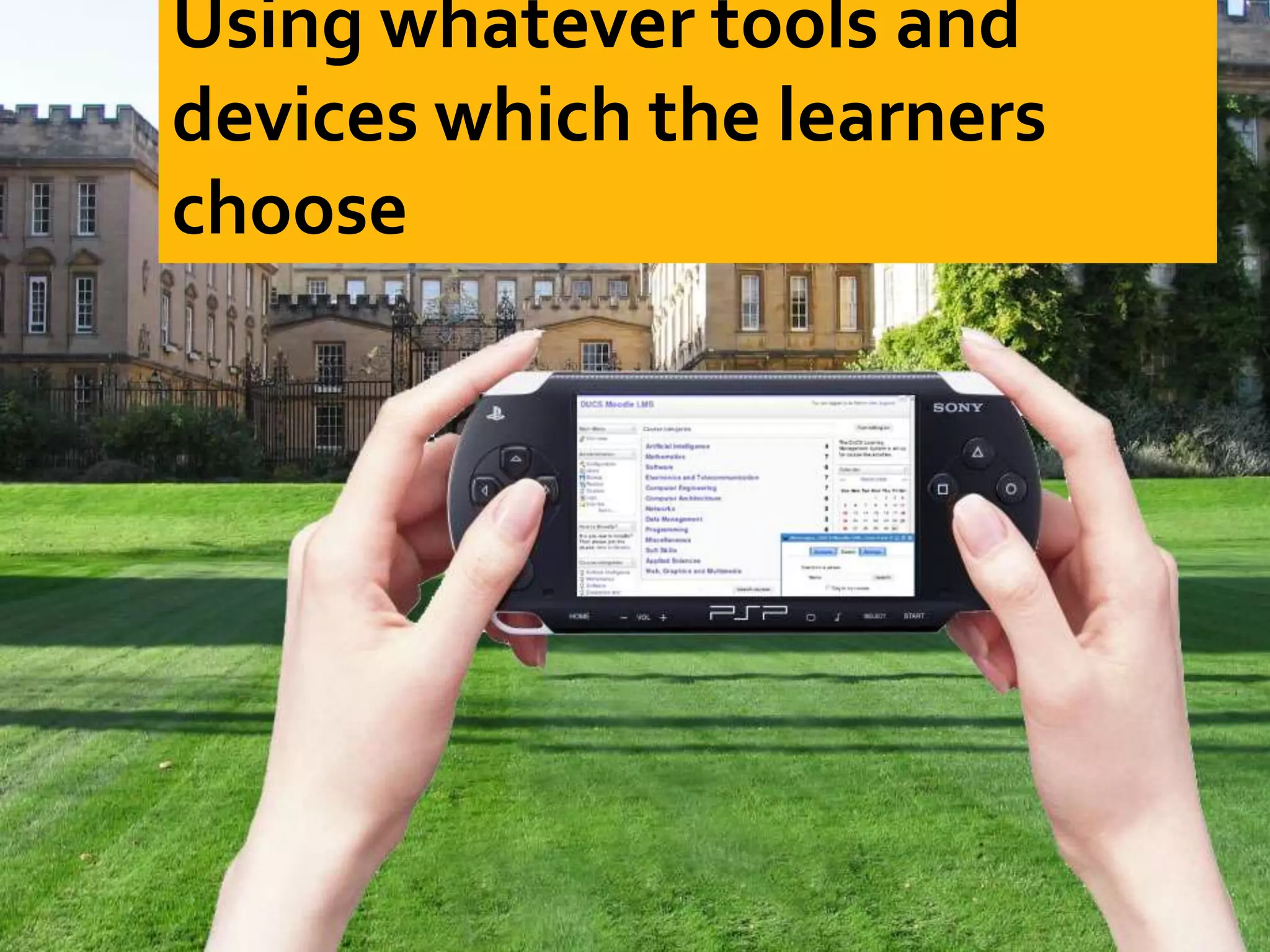
Using whatever tools and
devices which the learners
choose
It also recognizes the
role of the individual
in organizing their
own learning
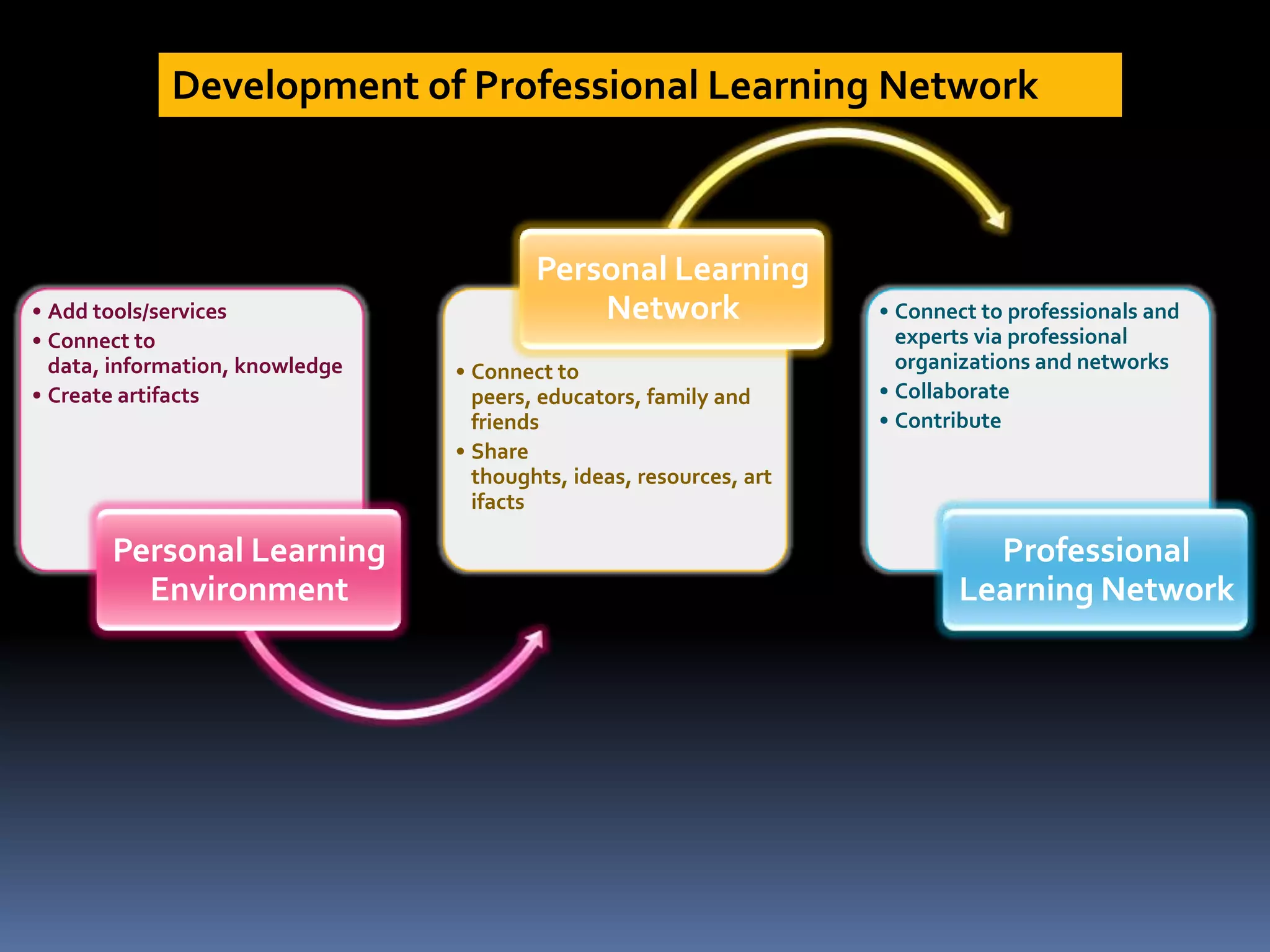
• Add tools/services
• Connect to
data, information, knowledge
• Create artifacts
Personal Learning
Environment
• Connect to
peers, educators, family and
friends
• Share
thoughts, ideas, resources, art
ifacts
Personal Learning
Network • Connect to professionals and
experts via professional
organizations and networks
• Collaborate
• Contribute
Professional
Learning Network
Development of Professional Learning Network
Formal and
Informal
Learning
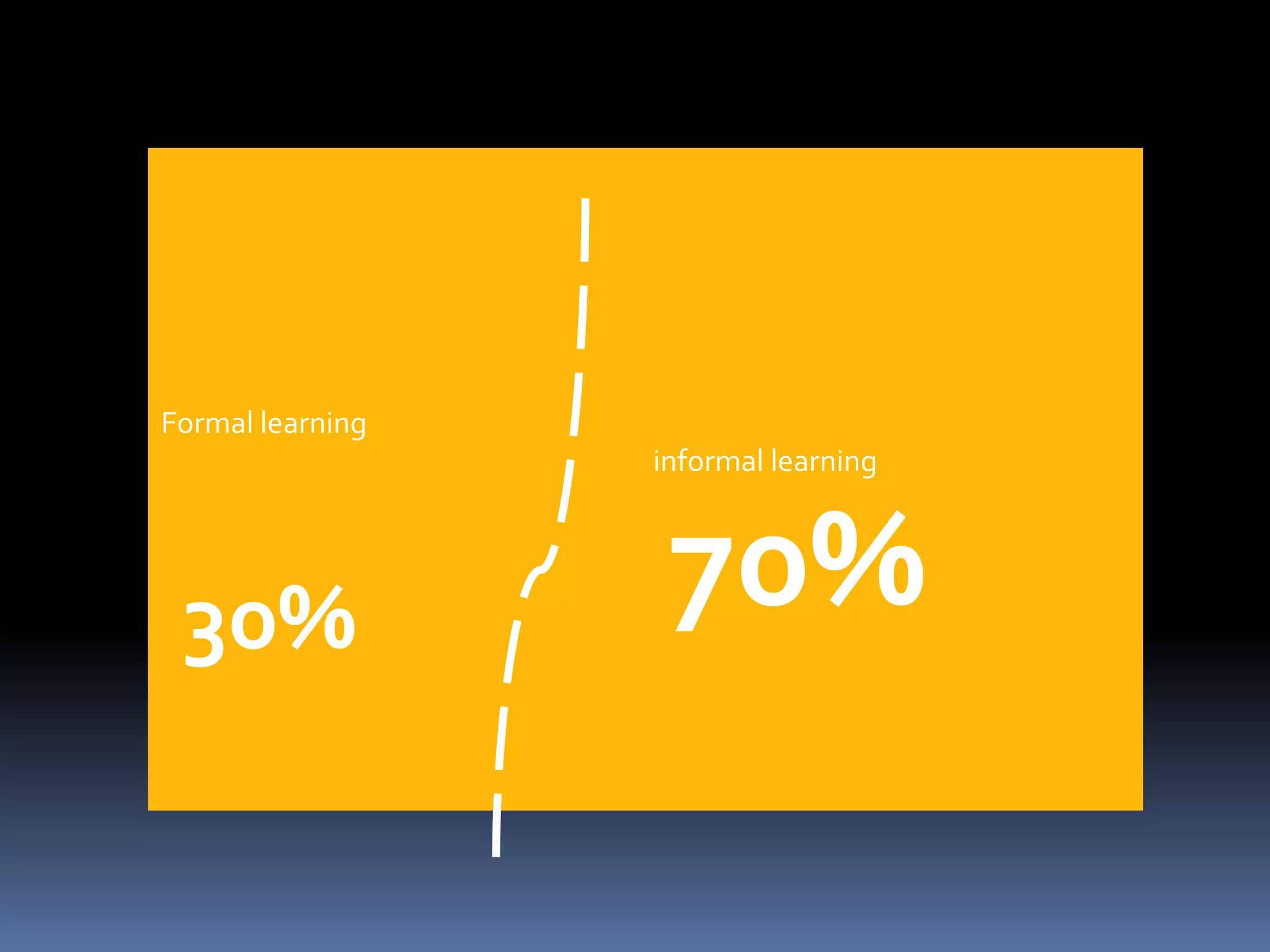
Formal learning
informal learning
30% 70%
PLEs can help in the
recognition of
informal learning
The ‘pedagogy’ behind the PLE – if it
could be still called that – is that it
offers a portal to the world, through
which learners can explore and
create, according to their own
interests and directions, interacting
at all times with their friends and
community
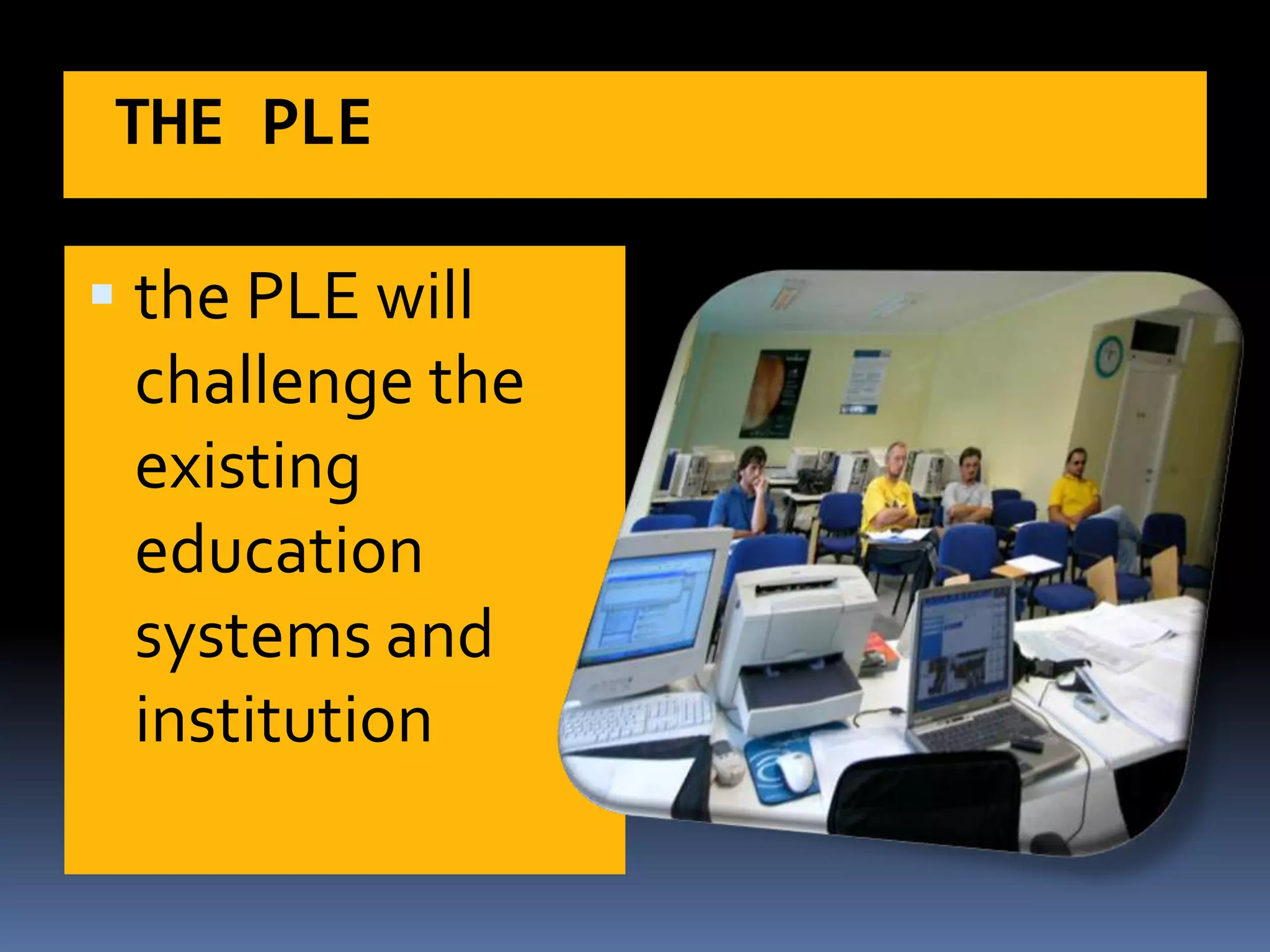
THE PLE
 the PLE will
challenge the
existing
education
systems and
institution
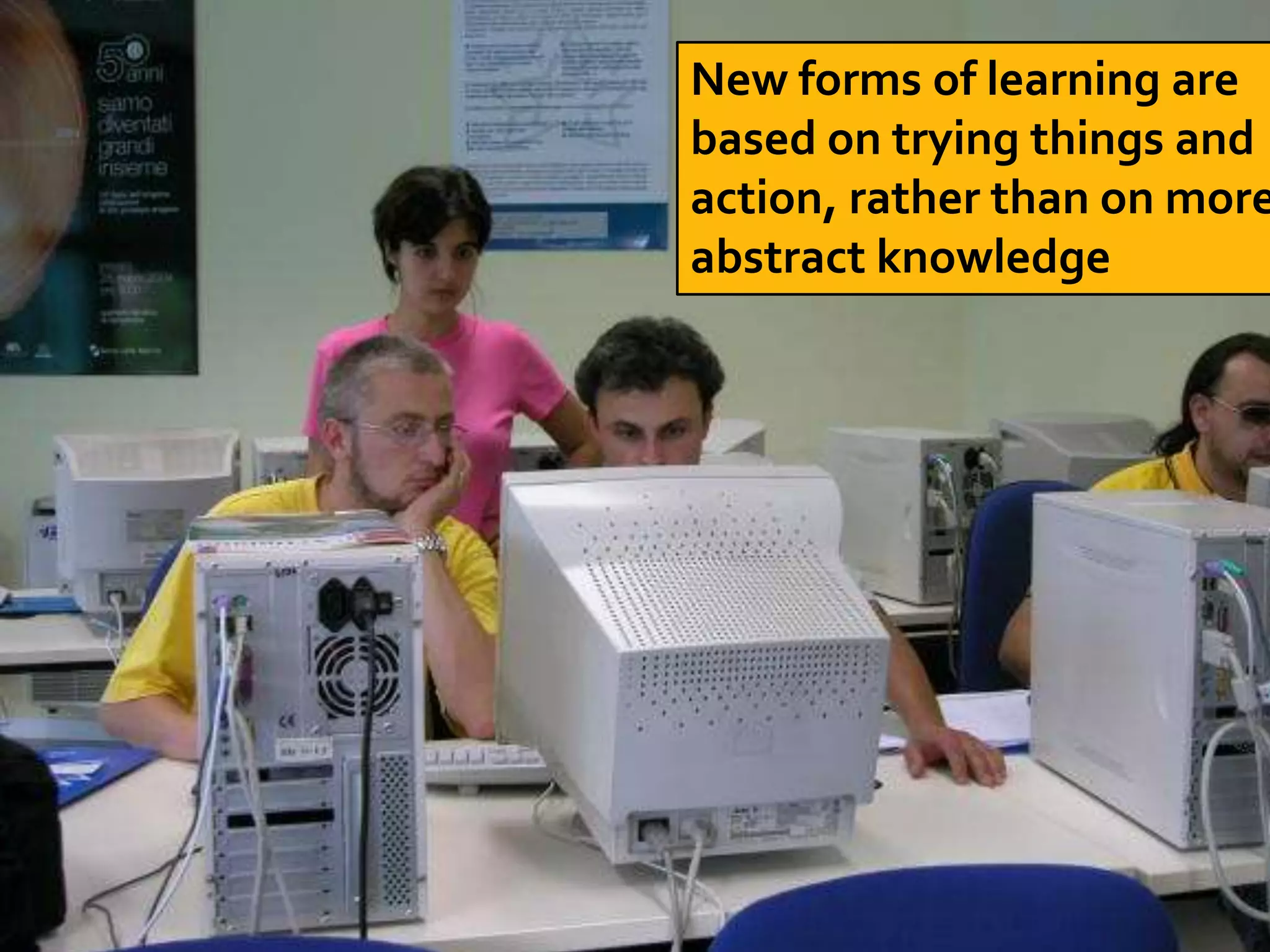
New forms of learning are
based on trying things and
action, rather than on more
abstract knowledge
recognise different
forms and contexts of
learning
the development and
adoption of new
pedagogies
the co-shaping of
technologies bringing
together techies and
teachers, enterprises and
institutions
Bibliography
Alsagoff, z. a. (2008). empowering personal learning environment. international medical university of
malasia (pp. 1-66). malasia: international medical university.
Attwell, g. (2013). personal learning environment., (pp. 1-60).
Bulgaria, s. (2009). from personal learning environment building to professional learning network
forming. 5th international scientific conference (pp. 1-39). bucharest: eLearning and software for
education.
Downs, s. (2007). the futre of online learning and personal learning environments. university press (pp.
1-24). university press.
Wheeler, s. (2010). collaborative & cooperative learning:the how and why. learning and skills group
conference (pp. 1-50). london: university of plymouth.
Wheeler, s. (2011). the future of learning.web 2.0 and smart extended web. (pp. 1-56). germany:
university of plymouth.

personal learning environment

  • 2.
    PLEs promotes  Selfregulation  Critical thinking  Curious researcher  Effective communicator http://ites.ncdpi.wikispaces.net/file/view/21Cen tury%20Teacher.jpg/344845038/560x662/21Ce ntury%20Teacher.jpg
  • 3.
    Aim of PLEs Toanalyze the experience gained in using of Web 2.0 environment for competence development and for professional network organizing
  • 4.
    PLEs building laidthe foundations of some main ideas: (1)learning is an ongoing process and tools to support this learning are needed (2)the role of the individual in self- organizing learning is important (3)learning can take place in different contexts and situations and cannot be provided by a single learning provider. Attwell Graham
  • 5.
    •Collaboration & Cooperation •TheSocialWeb (Web 2.0) • SocialWeb tools • Personalised Learning • Formal & Informal Learning CONTENT
  • 6.
  • 7.
  • 8.
  • 9.
    MODEL FOR BUILDINGPLEsRolesActivities Startpage environment Tools/Services Processes Searcher Assemblator Learner Research er Innovato rof data, information, kn owledge of subject matter, technologies, ho w to learn Create Share Commu- nicate Connect RSS feeds, links Search engines Blogs, wikis Feel and look Social book- marking Images/ AV Chat/AV conference Email , foru m Facebook/ Twitter/ Ning To-do list, notes, co mments calendar Design learning strategy Plan activitie s Perform activitie s Docume nt results, analyze Share results, evaluate Choose technology/ application Arrange environmen t Extend/mo dify environmen t Share environmen t/ collaborate Search Gather Agg re- gate Productivity improvement Customi- zation Comp o- nents, panels , tabs, widge ts widgets Goals,needs, interests, motivation, problems
  • 10.
  • 11.
    How do weget people to collaborate?
  • 12.
  • 13.
    Web 2.0 applicationscalled “start pages” are designed to provide a personalized place on the internet where users can mashup data, information and knowledge available anywhere, anytime, including mobile login. Wikipedia
  • 14.
    “Web 2.0 isthe architecture of participation” – Eugene Barsky TheWeb will be understood not as screenfulls of text and graphics but as a transport mechanism, the ether through which interactivity happens” – Darcy DeNucci (1999
  • 15.
    Nobody really knowswhat it means...IfWeb 2.0 for you is blogs and wikis, then that is people to people. But that was what theWeb was supposed to be all along” – Sir Tim Berners-Lee “Web 2.0 is all about harnessing collective intelligence” –Tim O’Reilly (2009)
  • 34.
    What is a PersonalLearning Environment?
  • 35.
    Personalisation of learningmeans ensuring that individual differences are acknowledged
  • 36.
    The way networkslearn is the way people learn…
  • 37.
    PLEs are notanother substantiation of educational technology but a new approach to learning
  • 38.
    A response topedagogic approaches which require that learner’s e-learning systems need to be under the control of the learners themselves
  • 39.
    and recognize theneeds of life- long learners for a system that provides a standard interface to different institutions’ e-learning systems, and that allows portfolio information to be maintained across institutions
  • 40.
    PLE are basedon the idea that learning will take place in different contexts and situations and will not be provided by a single learning provider
  • 41.
    PLE  the ideaof a Personal Learning Environment recognises that learning is continuing and seeks to provide tools to support that learning
  • 42.
    Using whatever toolsand devices which the learners choose
  • 43.
    It also recognizesthe role of the individual in organizing their own learning
  • 44.
    • Add tools/services •Connect to data, information, knowledge • Create artifacts Personal Learning Environment • Connect to peers, educators, family and friends • Share thoughts, ideas, resources, art ifacts Personal Learning Network • Connect to professionals and experts via professional organizations and networks • Collaborate • Contribute Professional Learning Network Development of Professional Learning Network
  • 45.
  • 46.
  • 47.
    PLEs can helpin the recognition of informal learning
  • 48.
    The ‘pedagogy’ behindthe PLE – if it could be still called that – is that it offers a portal to the world, through which learners can explore and create, according to their own interests and directions, interacting at all times with their friends and community
  • 49.
    THE PLE  thePLE will challenge the existing education systems and institution
  • 50.
    New forms oflearning are based on trying things and action, rather than on more abstract knowledge
  • 51.
    recognise different forms andcontexts of learning
  • 52.
  • 53.
    the co-shaping of technologiesbringing together techies and teachers, enterprises and institutions
  • 55.
    Bibliography Alsagoff, z. a.(2008). empowering personal learning environment. international medical university of malasia (pp. 1-66). malasia: international medical university. Attwell, g. (2013). personal learning environment., (pp. 1-60). Bulgaria, s. (2009). from personal learning environment building to professional learning network forming. 5th international scientific conference (pp. 1-39). bucharest: eLearning and software for education. Downs, s. (2007). the futre of online learning and personal learning environments. university press (pp. 1-24). university press. Wheeler, s. (2010). collaborative & cooperative learning:the how and why. learning and skills group conference (pp. 1-50). london: university of plymouth. Wheeler, s. (2011). the future of learning.web 2.0 and smart extended web. (pp. 1-56). germany: university of plymouth.