Processing of Leaf Fibers
Presentation Outline Introduction Different leaf fibers References conclusion
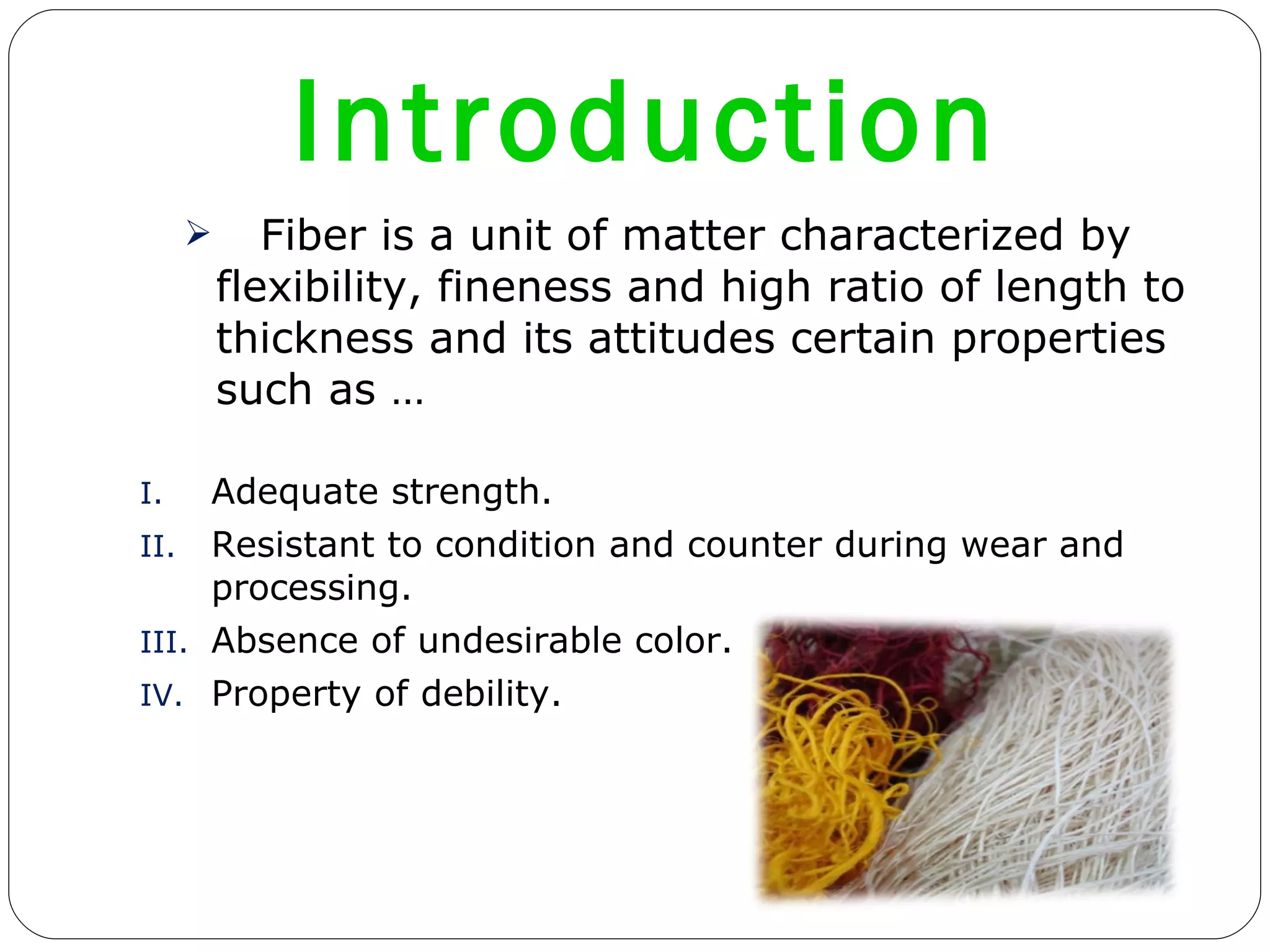
Introduction  Fiber is a unit of matter characterized by flexibility, fineness and high ratio of length to thickness and its attitudes certain properties such as … Adequate strength. Resistant to condition and counter during wear and processing. Absence of undesirable color. Property of debility.
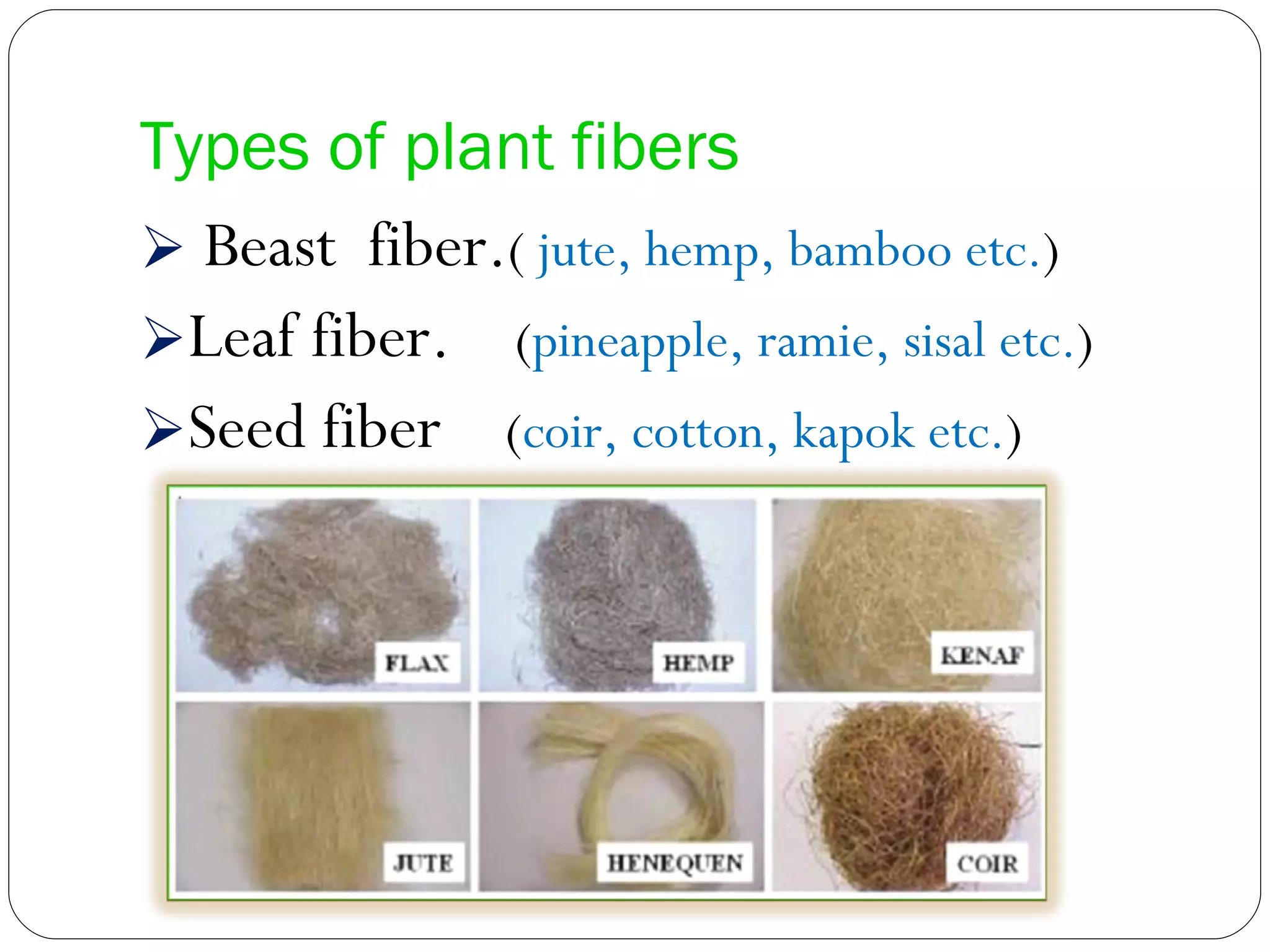
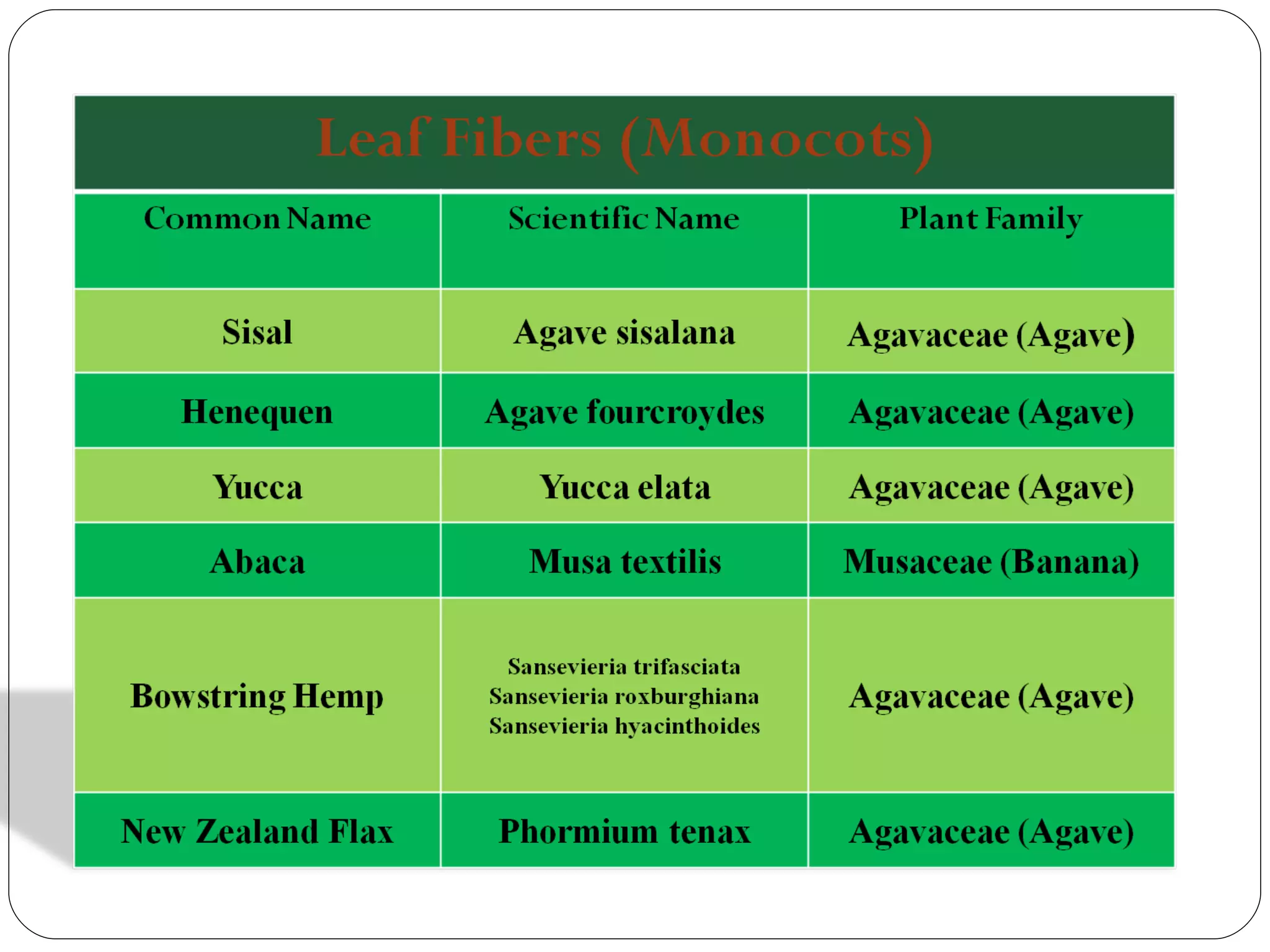
Types of plant fibers Beast  fiber. (  jute, hemp, bamboo etc. ) Leaf fiber.  ( pineapple, ramie, sisal etc. ) Seed fiber  ( coir, cotton, kapok etc. )
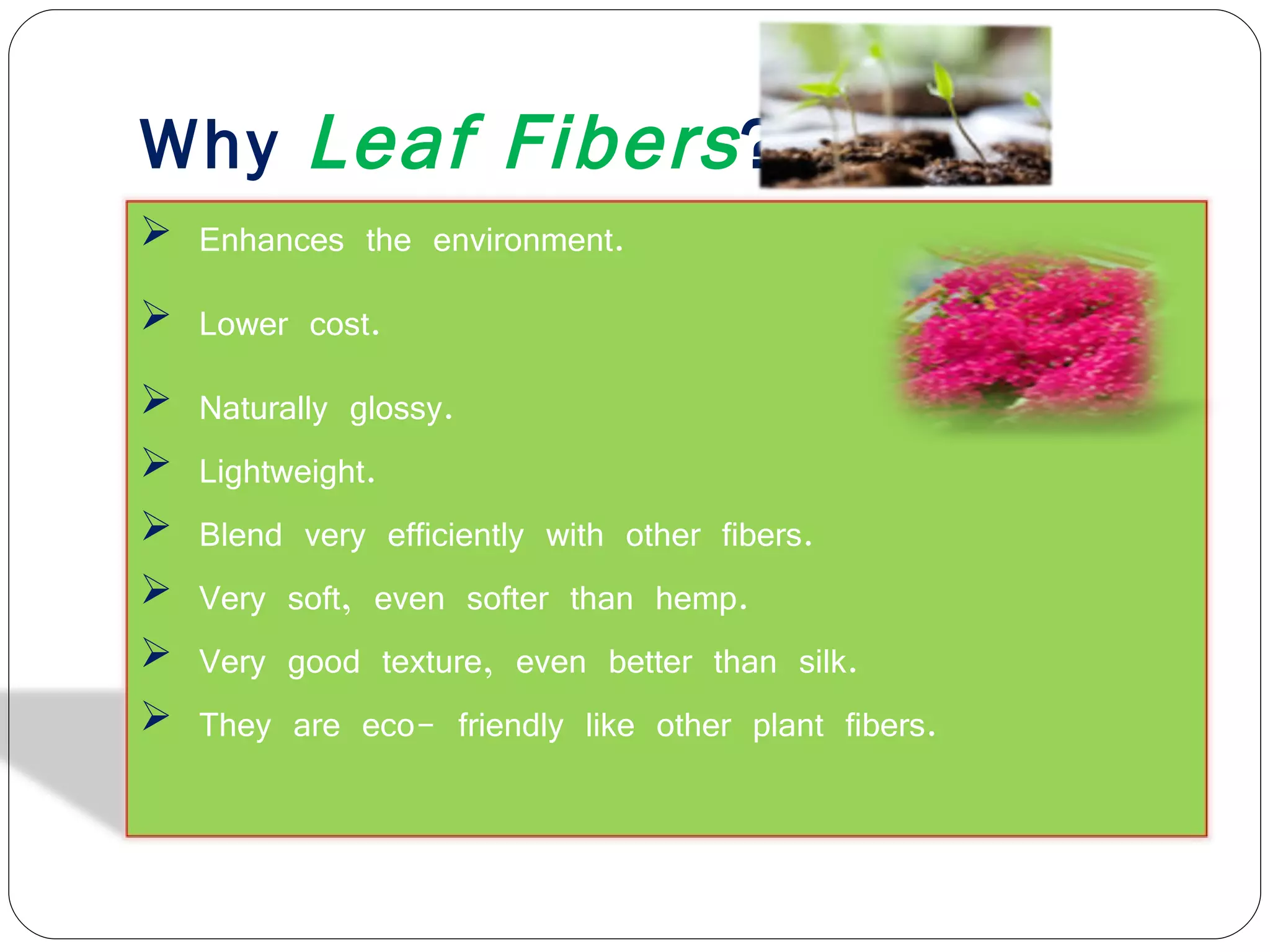
Why  Leaf Fibers ? Enhances the environment. Lower cost. Naturally glossy. Lightweight. Blend very efficiently with other fibers. Very soft, even softer than hemp. Very good texture, even better than silk. They are eco- friendly like other plant fibers.
 
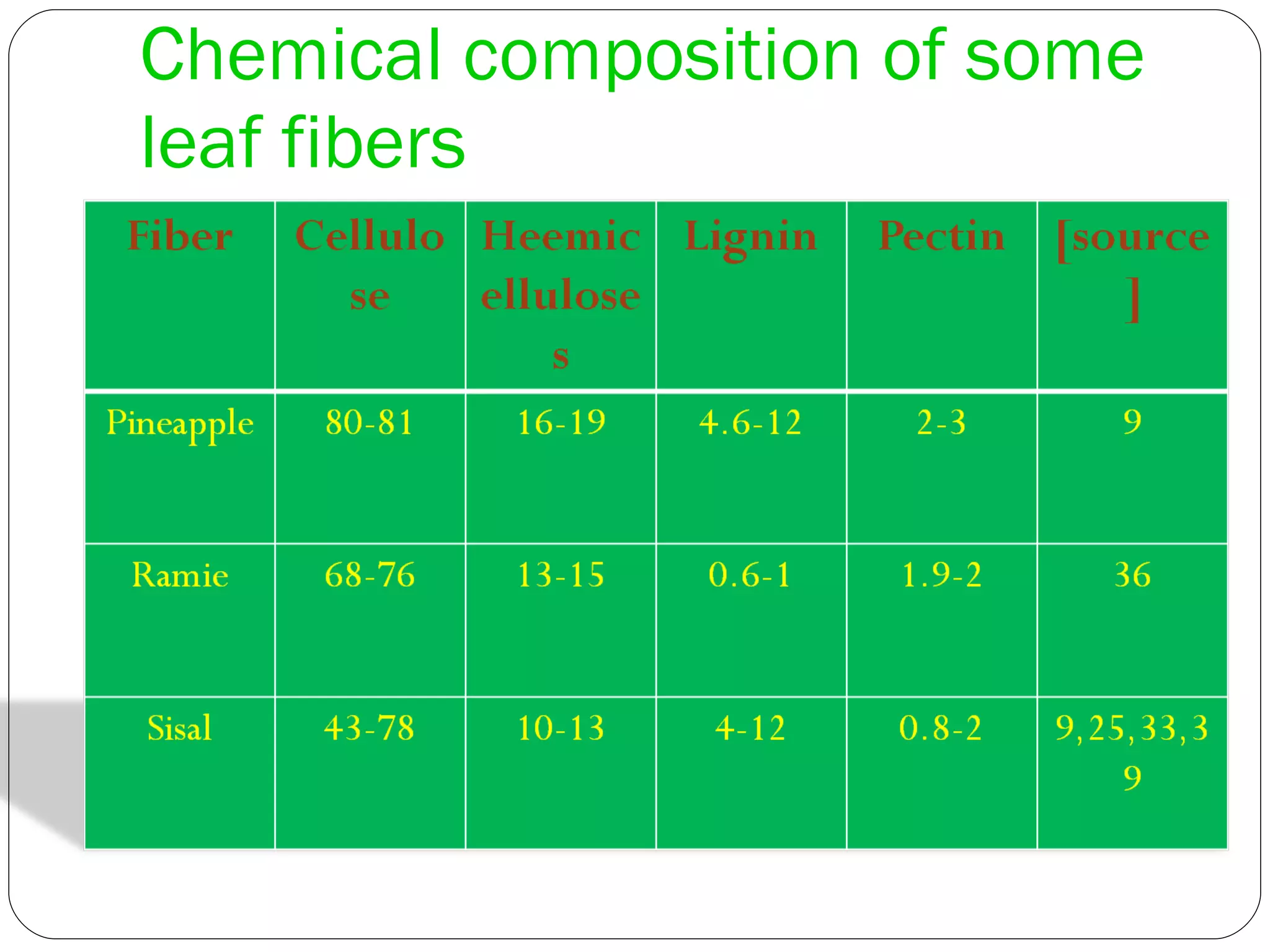
Chemical composition of some leaf fibers
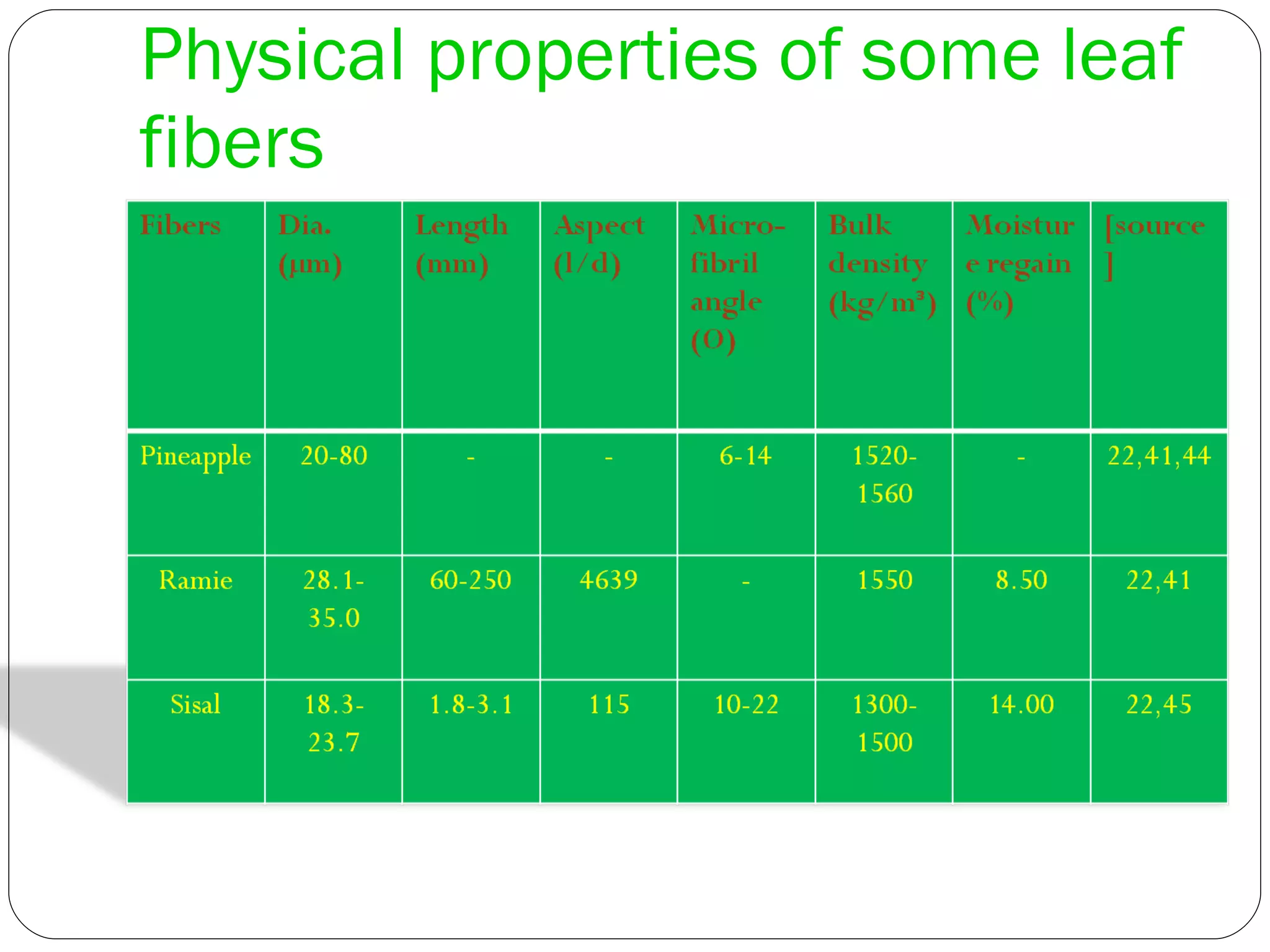
Physical properties of some leaf fibers
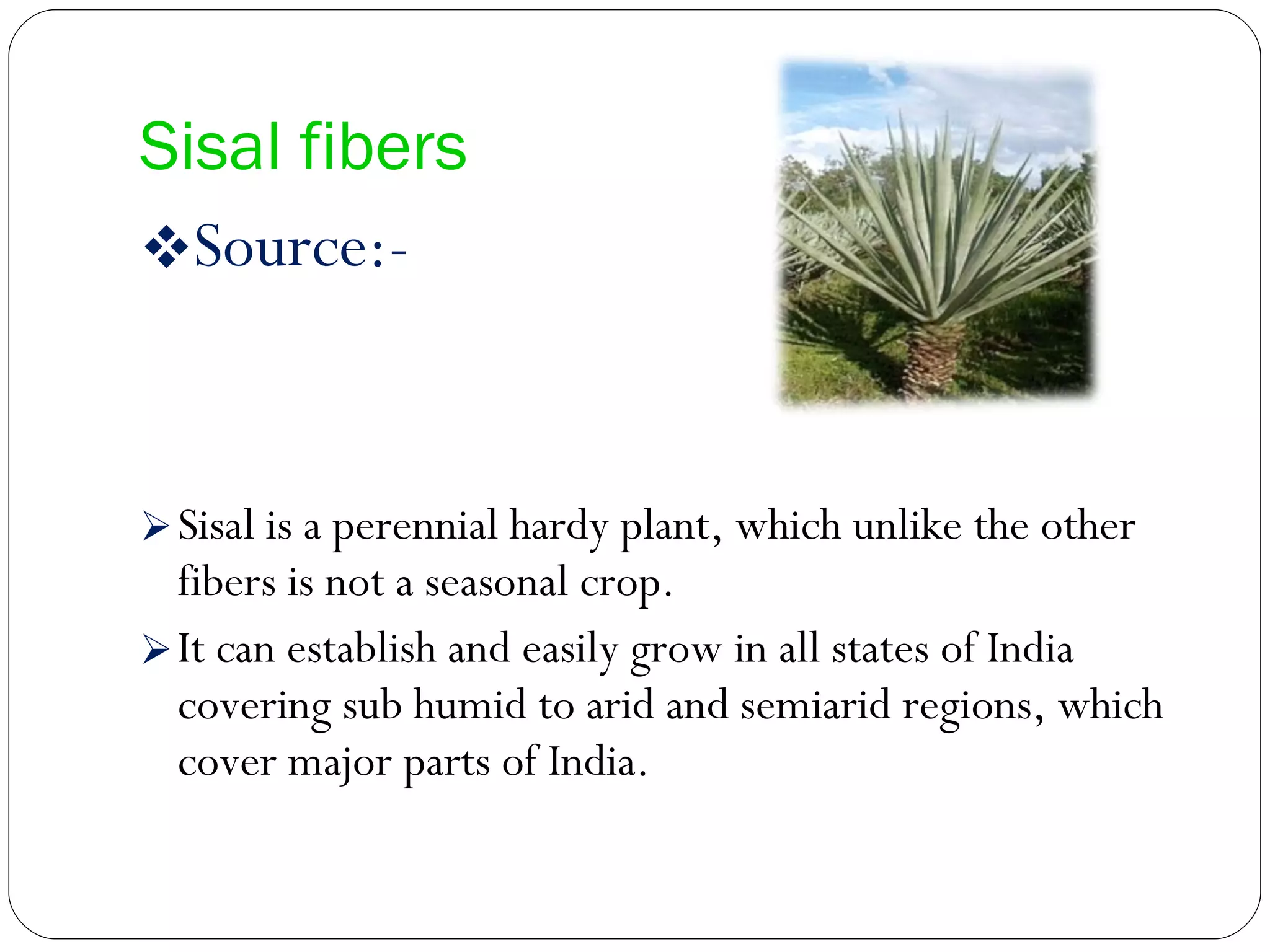
Sisal fibers Source:- Sisal is a perennial hardy plant, which unlike the other fibers is not a seasonal crop.  It can establish and easily grow in all states of India covering sub humid to arid and semiarid regions, which cover major parts of India.
Continue… It can also survive in almost all soil types and its input costs are least for its survival, regeneration and maintenance on sustainable basis.  Sisal tolerates prolonged droughts and high temperatures also.
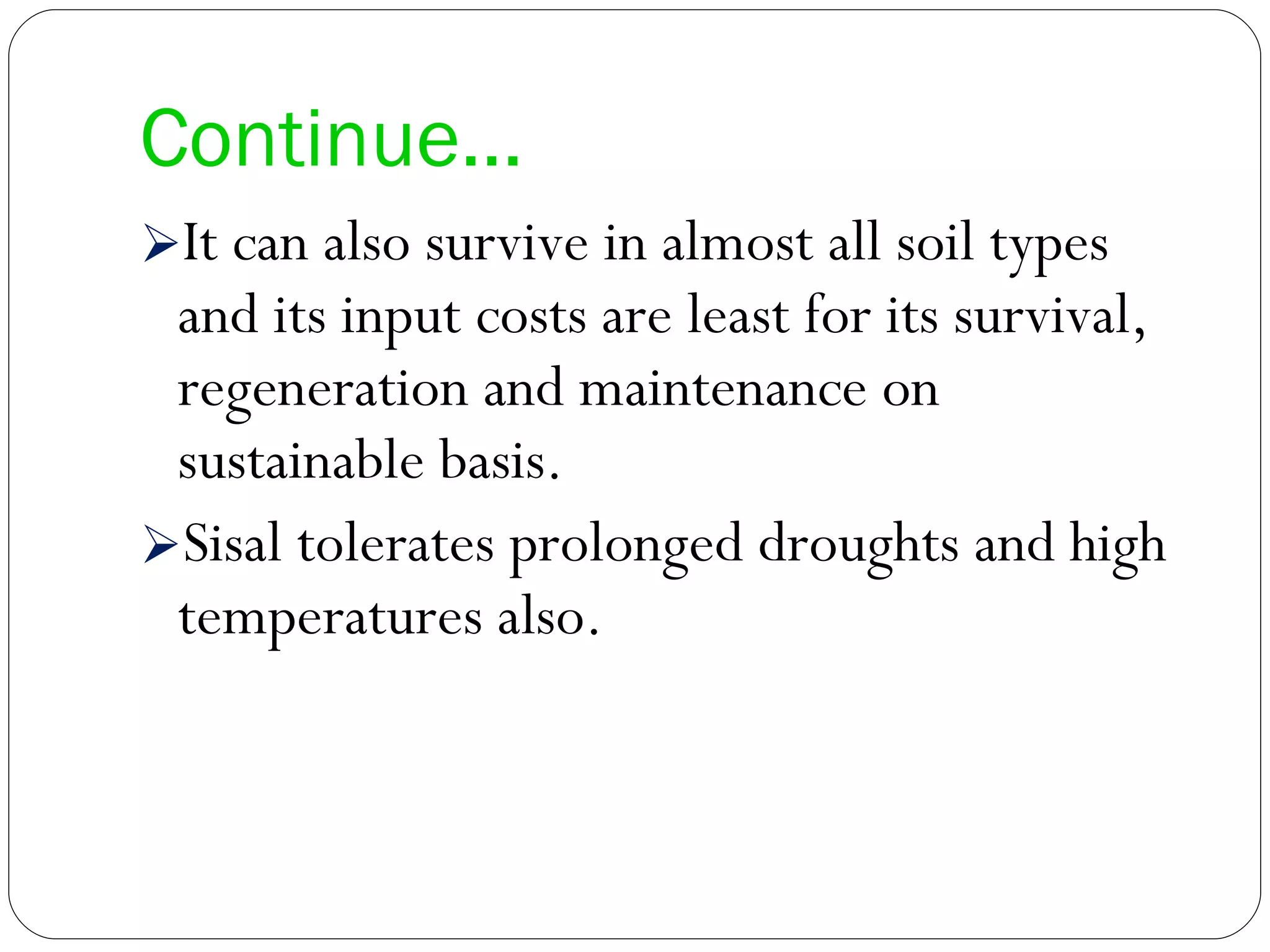
Extraction of Sisal fiber Sisal fiber is traditionally extracted by  retting . A biodegradation process involving micro- bio decomposition of sisal leaves, which separates the fiber from pith.  The fibers are washed and processed further.  This process takes 15-21 days for a single cycle of extraction  and degrades the quality of fiber.
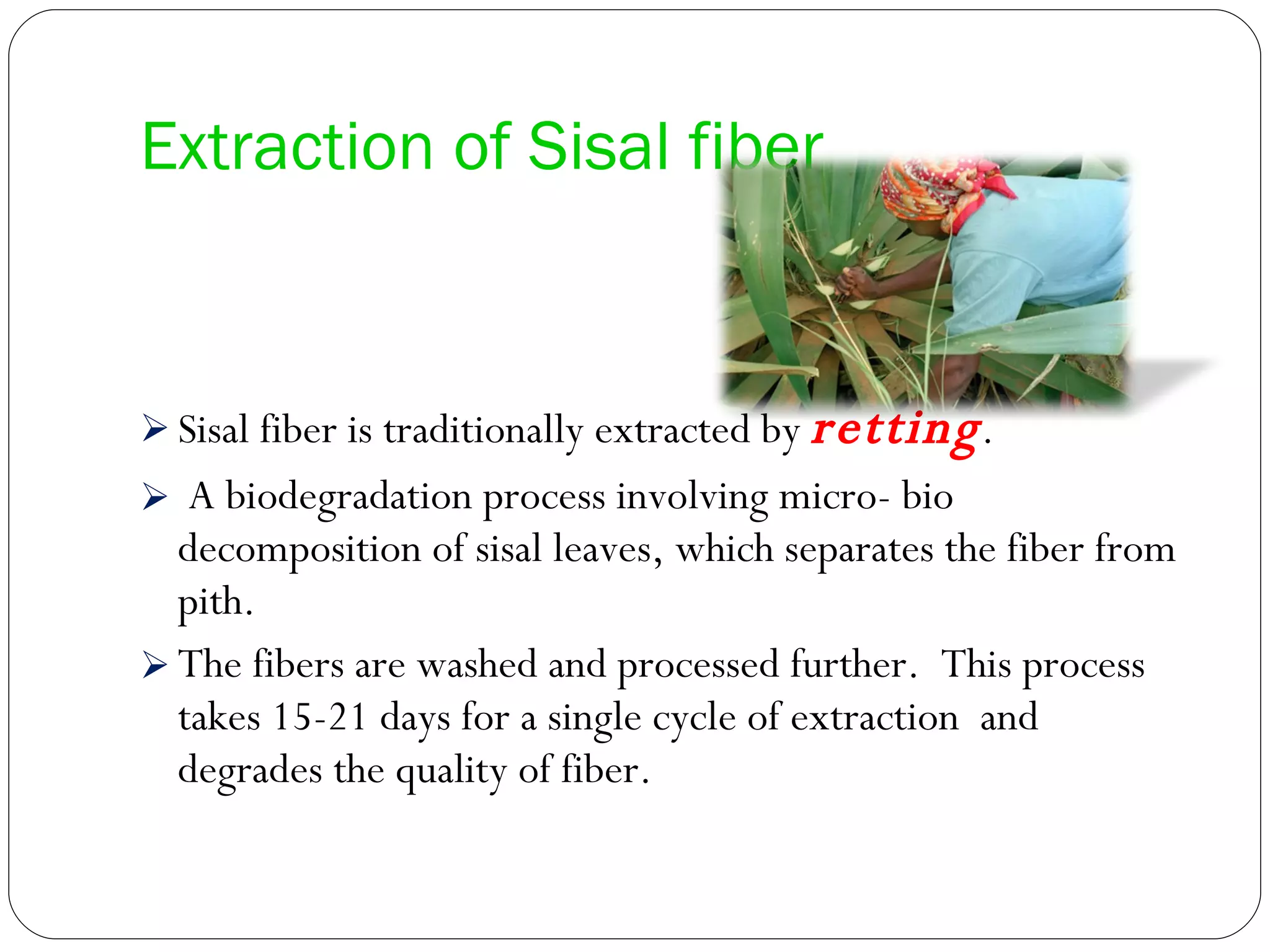
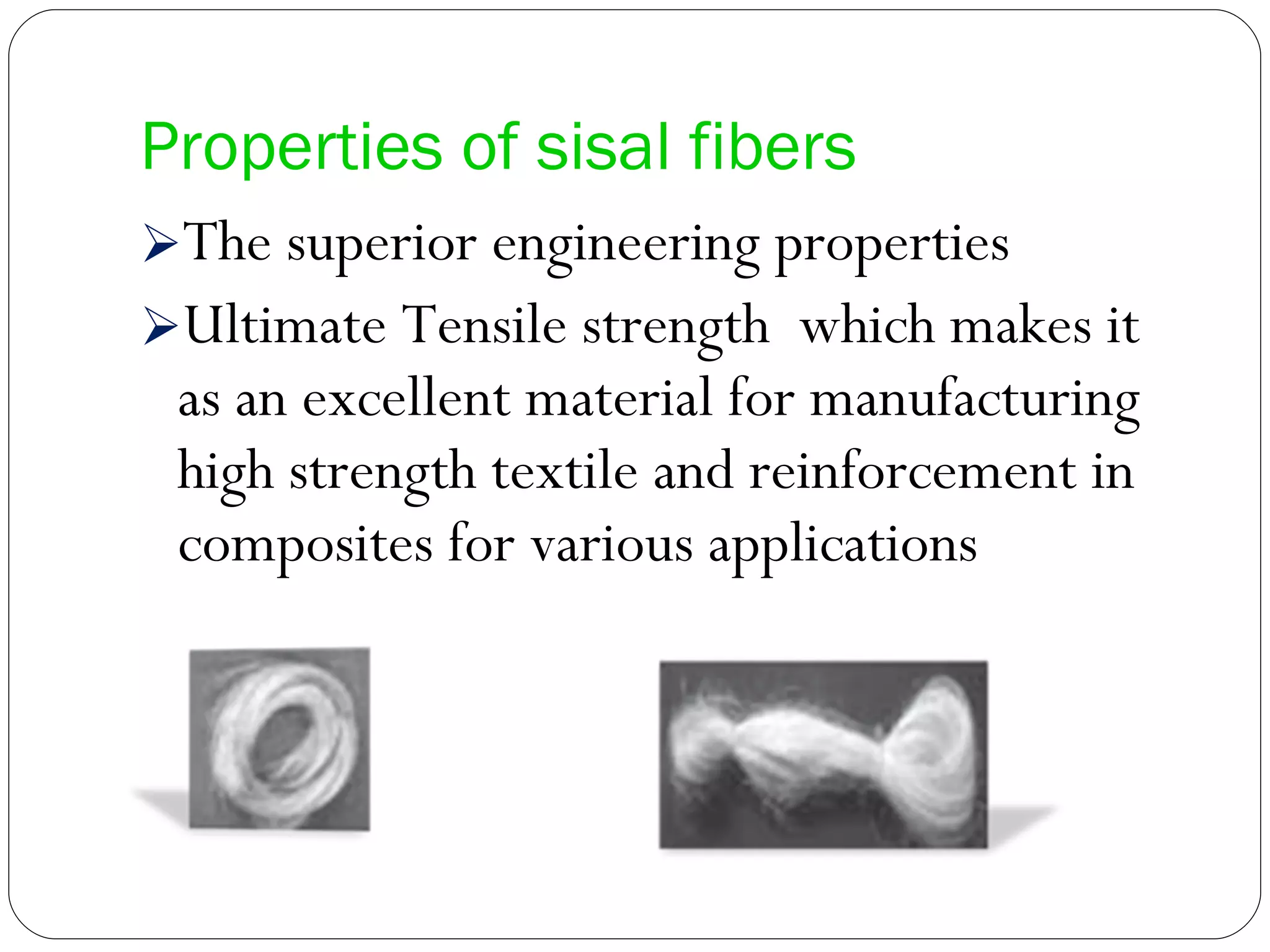
Properties of sisal fibers The superior engineering properties  Ultimate Tensile strength  which makes it as an excellent material for manufacturing high strength textile and reinforcement in composites for various applications
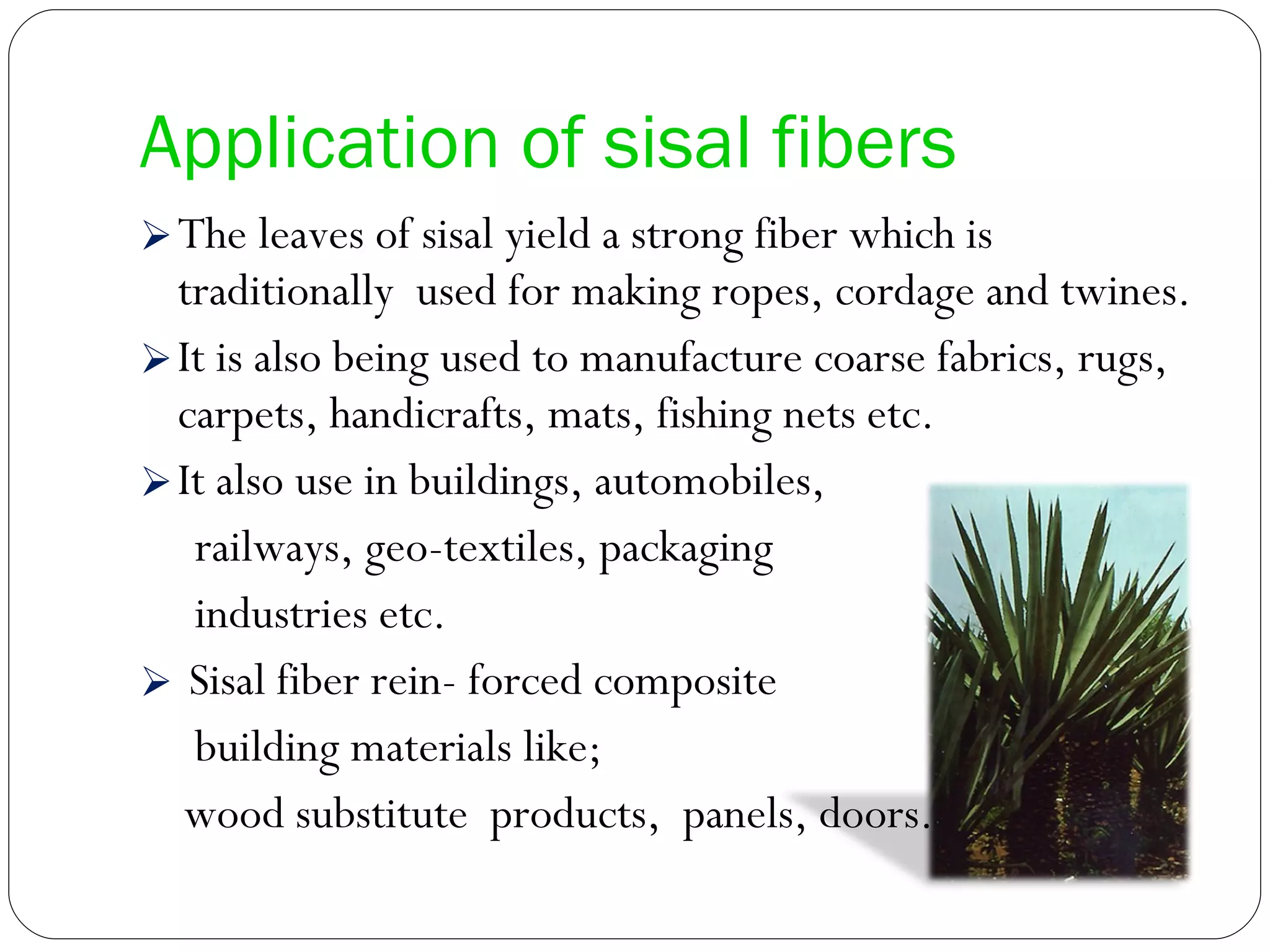
Application of sisal fibers The leaves of sisal yield a strong fiber which is traditionally  used for making ropes, cordage and twines.  It is also being used to manufacture coarse fabrics, rugs, carpets, handicrafts, mats, fishing nets etc.  It also use in buildings, automobiles, railways, geo-textiles, packaging industries etc.  Sisal fiber rein- forced composite building materials like;  wood substitute  products,  panels, doors.
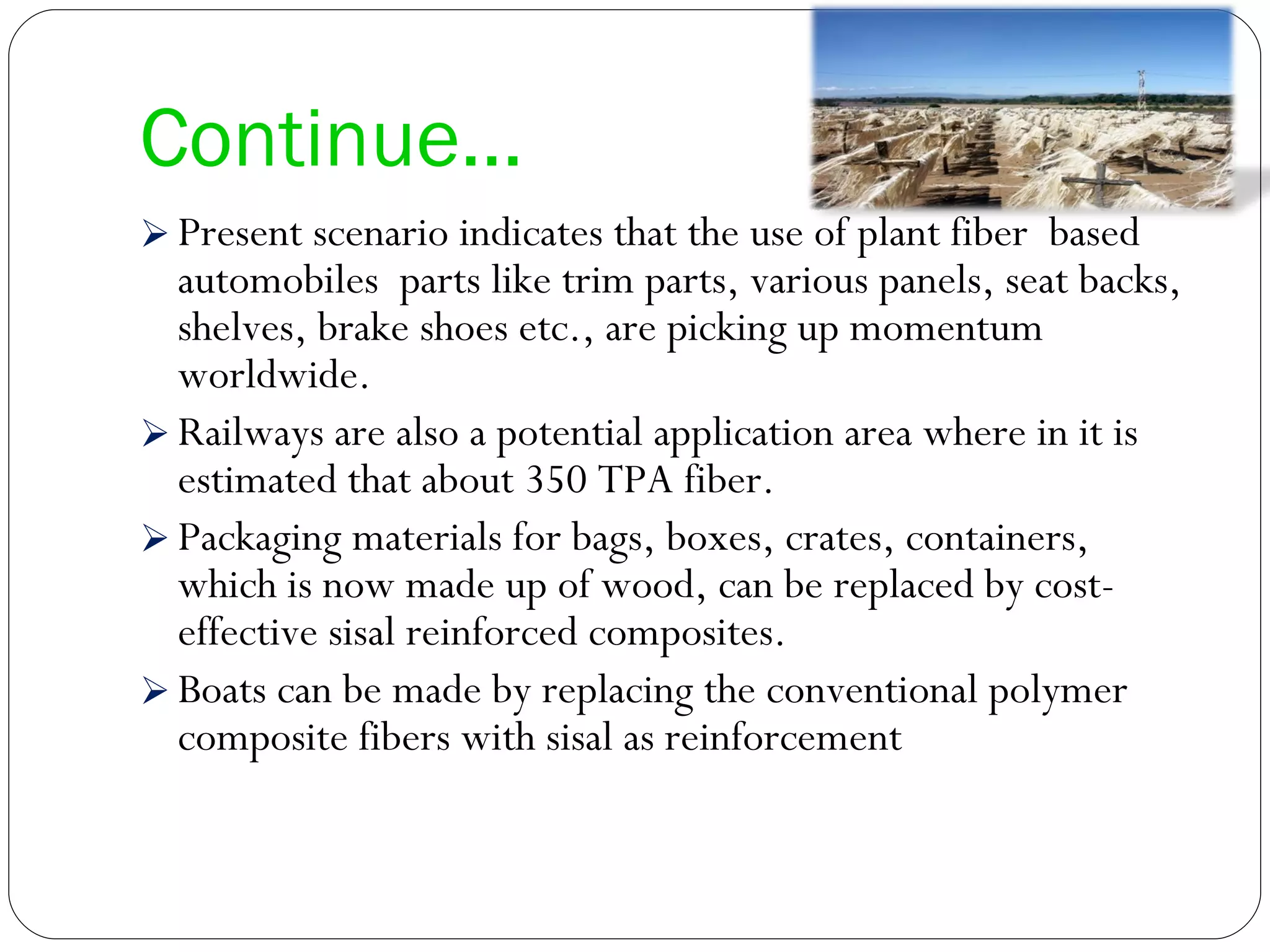
Continue… Present scenario indicates that the use of plant fiber  based automobiles  parts like trim parts, various panels, seat backs, shelves, brake shoes etc., are picking up momentum worldwide. Railways are also a potential application area where in it is estimated that about 350 TPA fiber. Packaging materials for bags, boxes, crates, containers, which is now made up of wood, can be replaced by cost-effective sisal reinforced composites.  Boats can be made by replacing the conventional polymer composite fibers with sisal as reinforcement
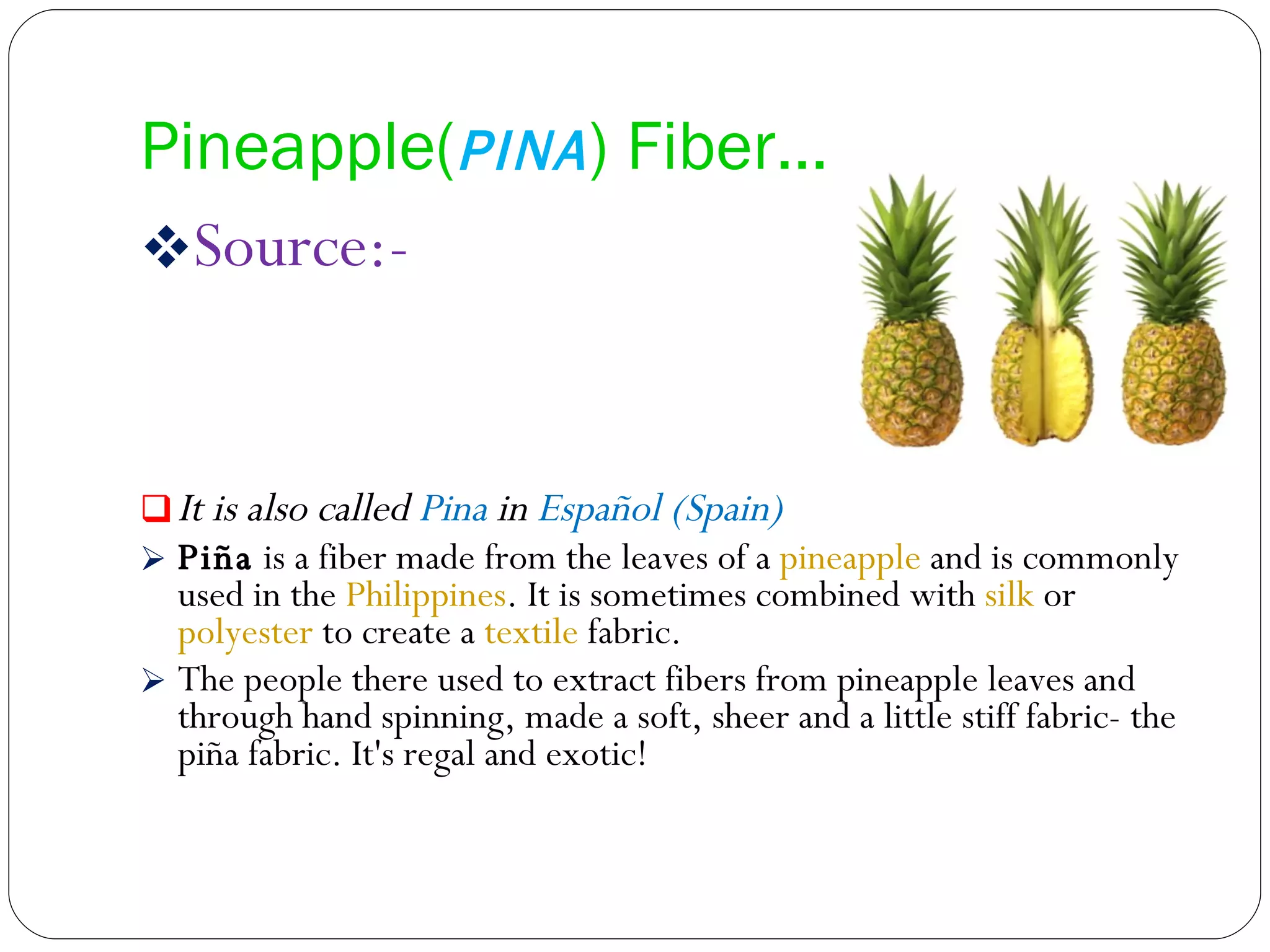
Pineapple( PINA ) Fiber…  Source:- It is also called  Pina  in  Español (Spain) Piña  is a fiber made from the leaves of a  pineapple  and is commonly used in the  Philippines . It is sometimes combined with  silk  or  polyester  to create a  textile  fabric. The people there used to extract fibers from pineapple leaves and through hand spinning, made a soft, sheer and a little stiff fabric- the piña fabric. It's regal and exotic!
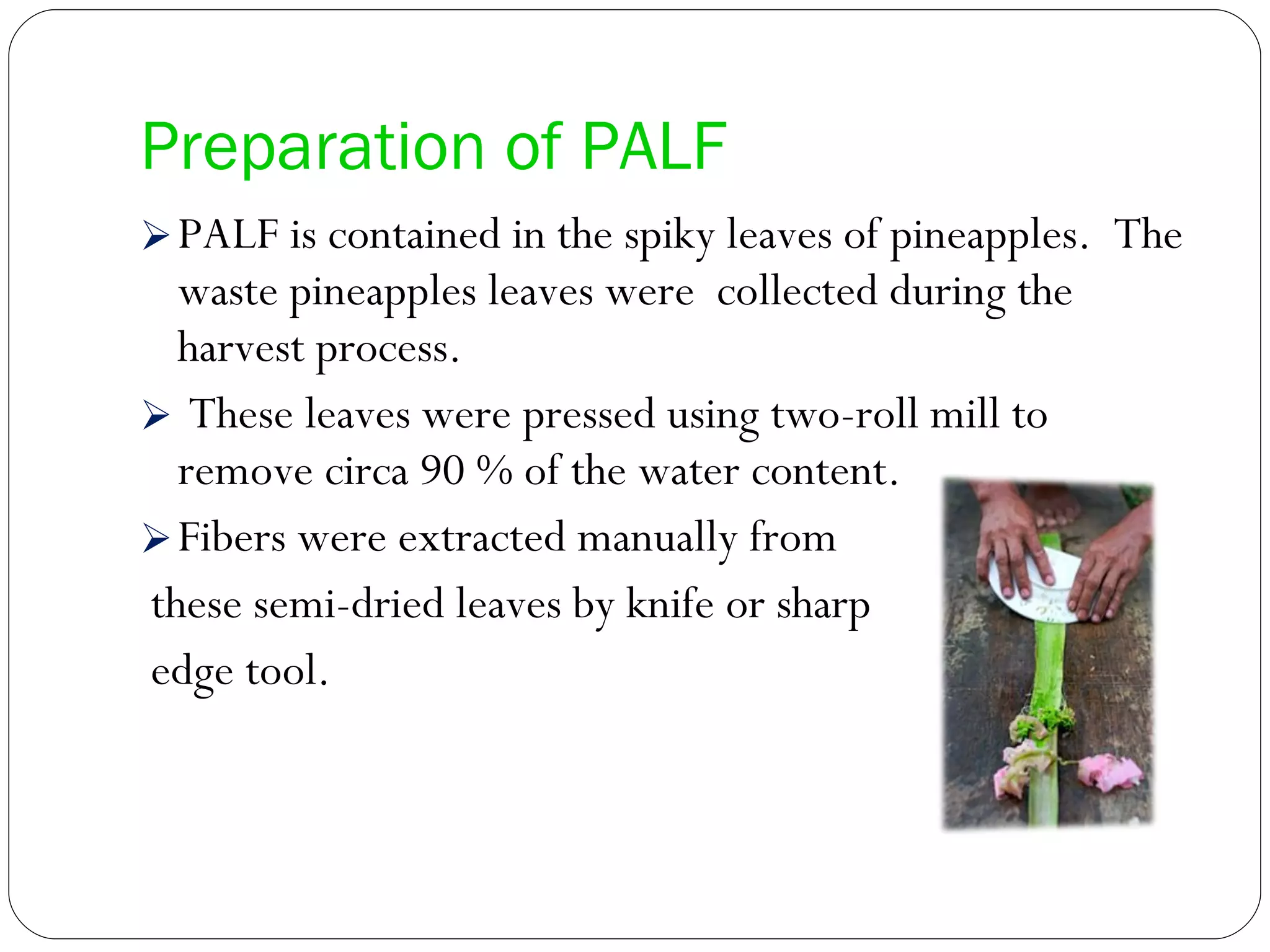
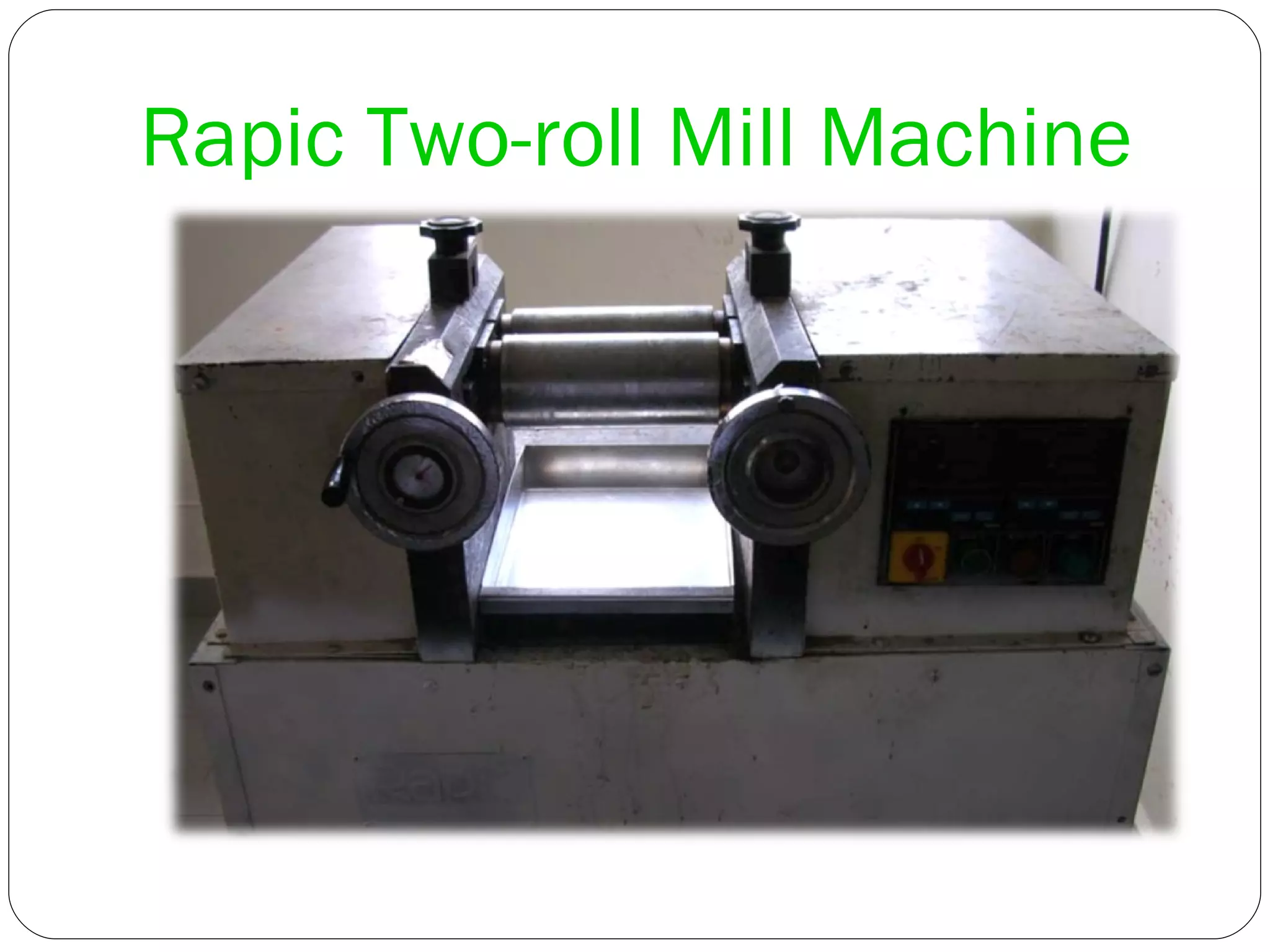
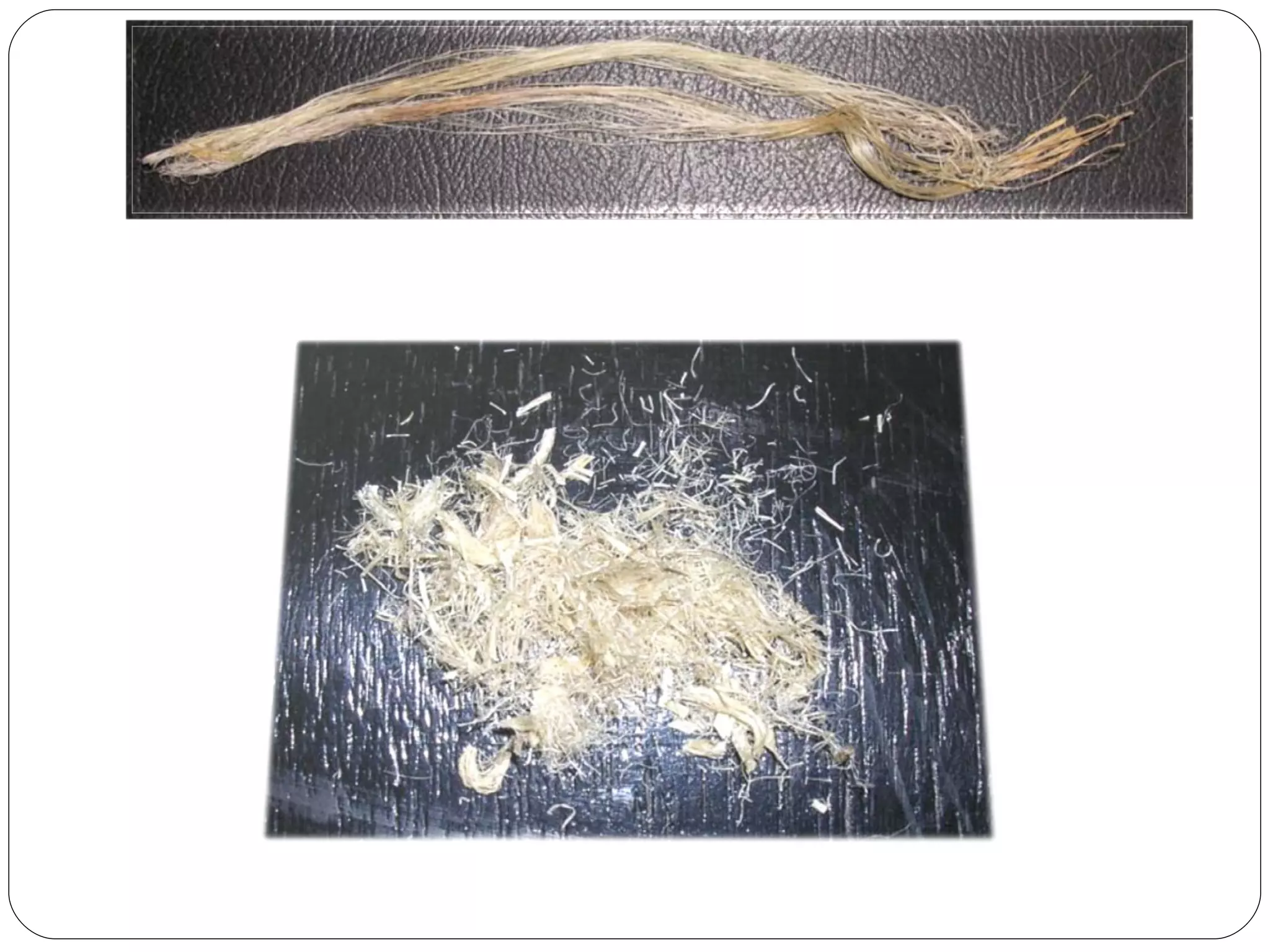
Preparation of PALF PALF is contained in the spiky leaves of pineapples.  The waste pineapples leaves were  collected during the harvest process.  These leaves were pressed using two-roll mill to remove circa 90 % of the water content. Fibers were extracted manually from these semi-dried leaves by knife or sharp edge tool.
Rapic Two-roll Mill Machine
 
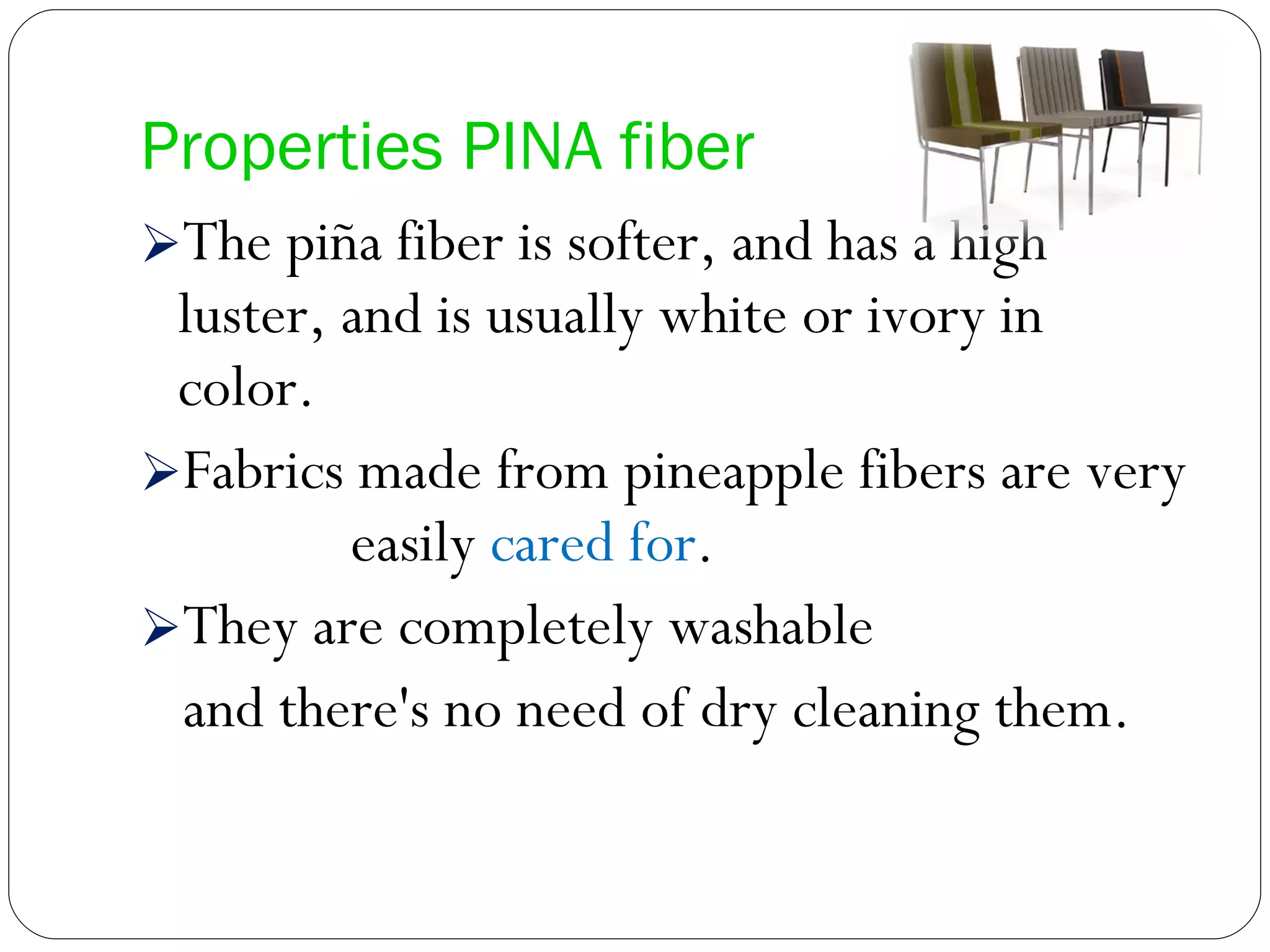
Properties PINA fiber The piña fiber is softer, and has a high luster, and is usually white or ivory in color.  Fabrics made from pineapple fibers are very  easily  cared for .  They are completely washable and there's no need of dry cleaning them.
Continue…
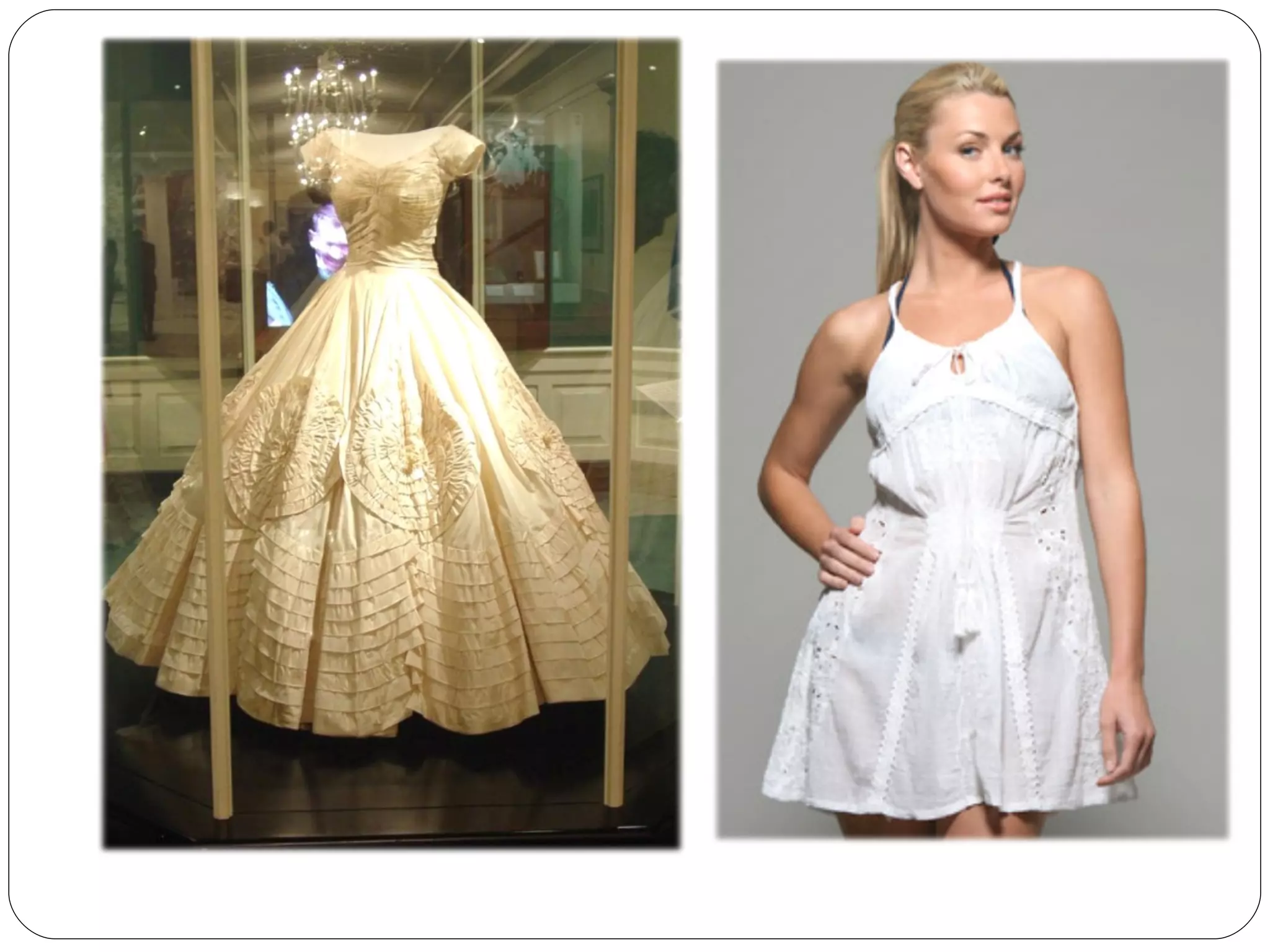
Applications of PINA fiber The most wide application of pina fabrics is in making  traditional dresses. Wedding attire for men, and blouses for women.  Other dresses such as kimonos, panuelos, gowns etc. are also made from it.
 
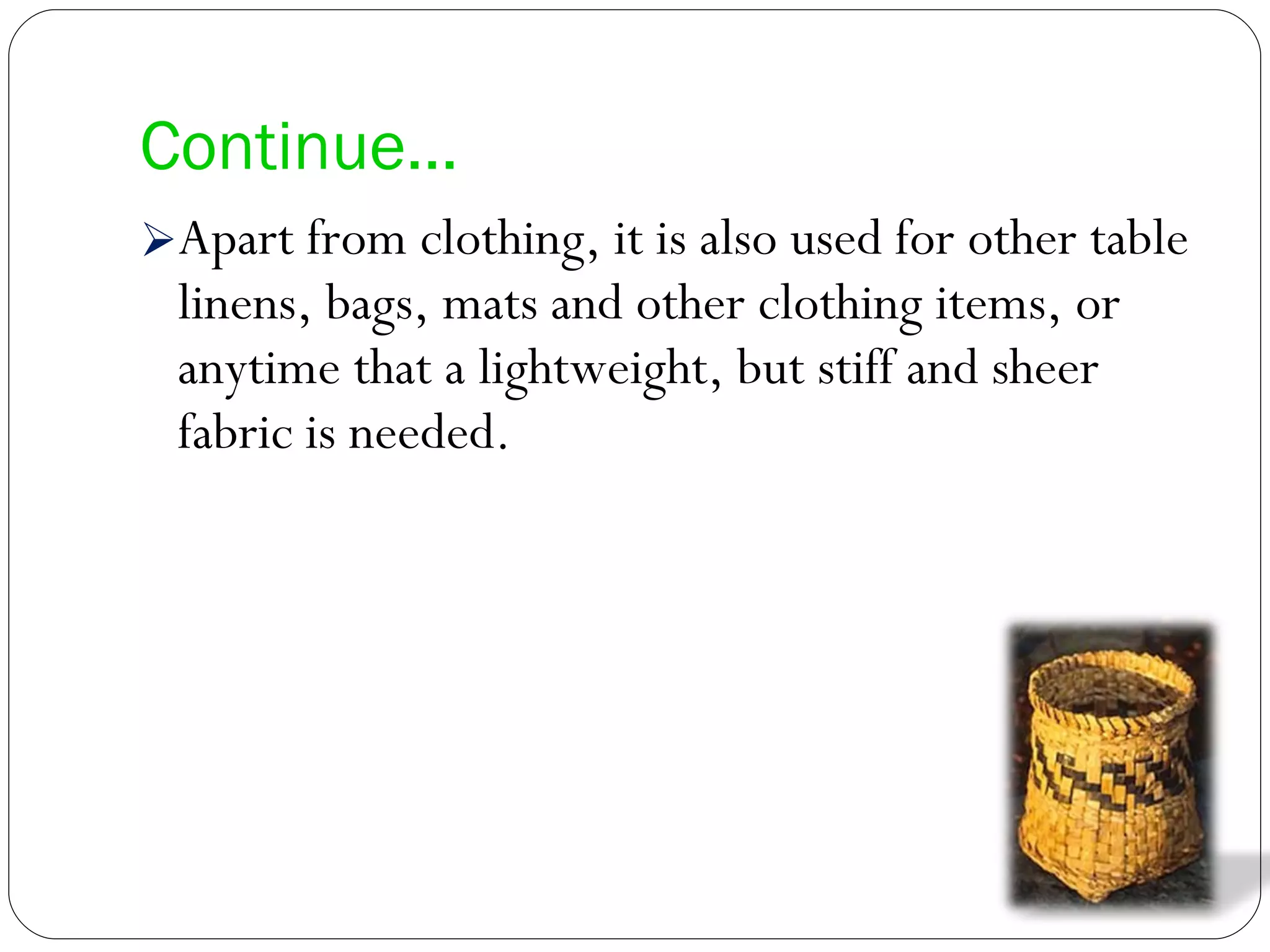
Continue… Apart from clothing, it is also used for other table linens, bags, mats and other clothing items, or anytime that a lightweight, but stiff and sheer fabric is needed.
Trade names:- None found at this time. Piña is often just referred to as  pineapple fiber. Piña is a  Spanish  last name with the  Portuguese  equivalent being  Pina.
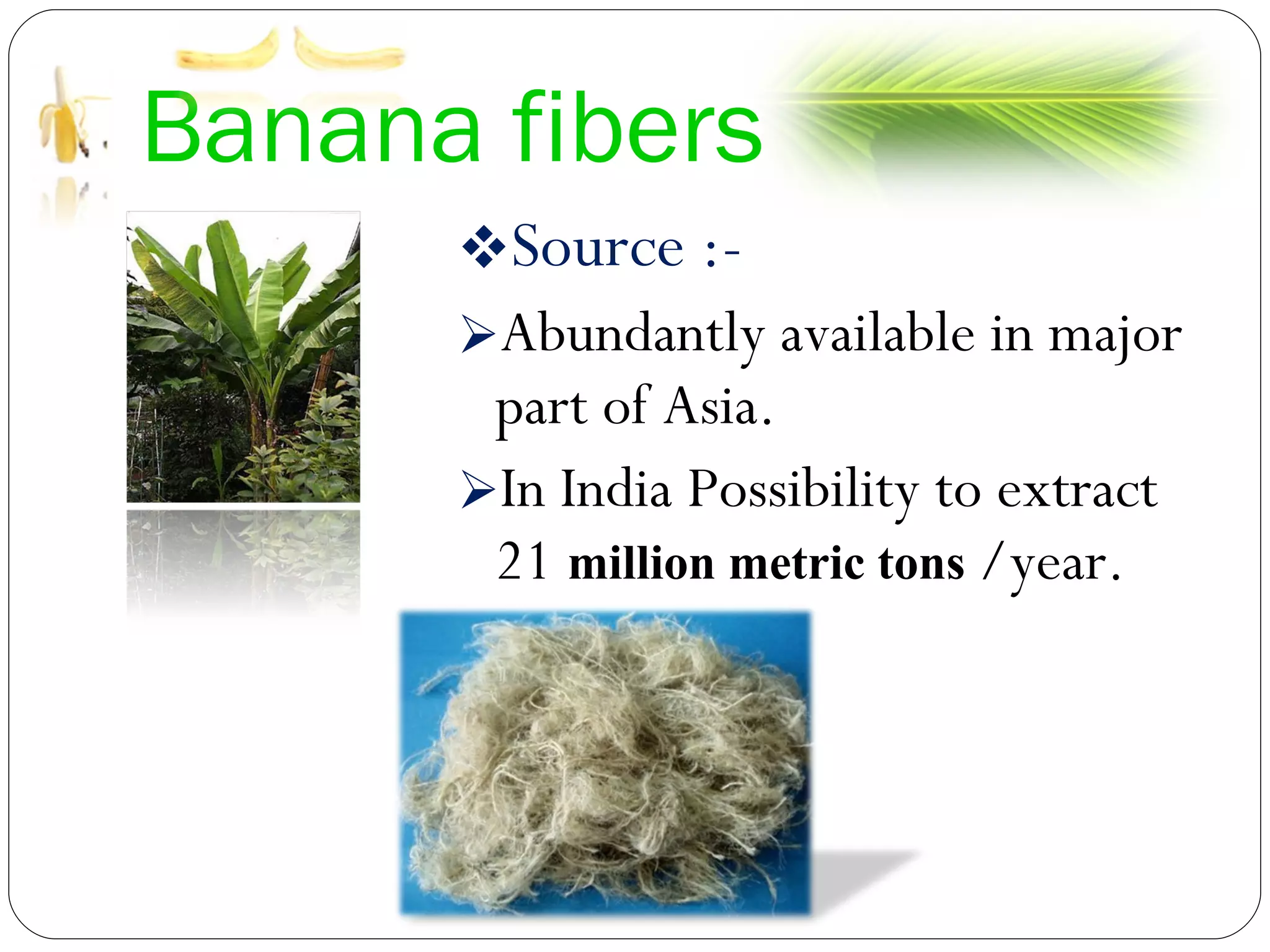
Banana fibers Source :- Abundantly available in major part of Asia. In India Possibility to extract 21  million metric tons  /year.
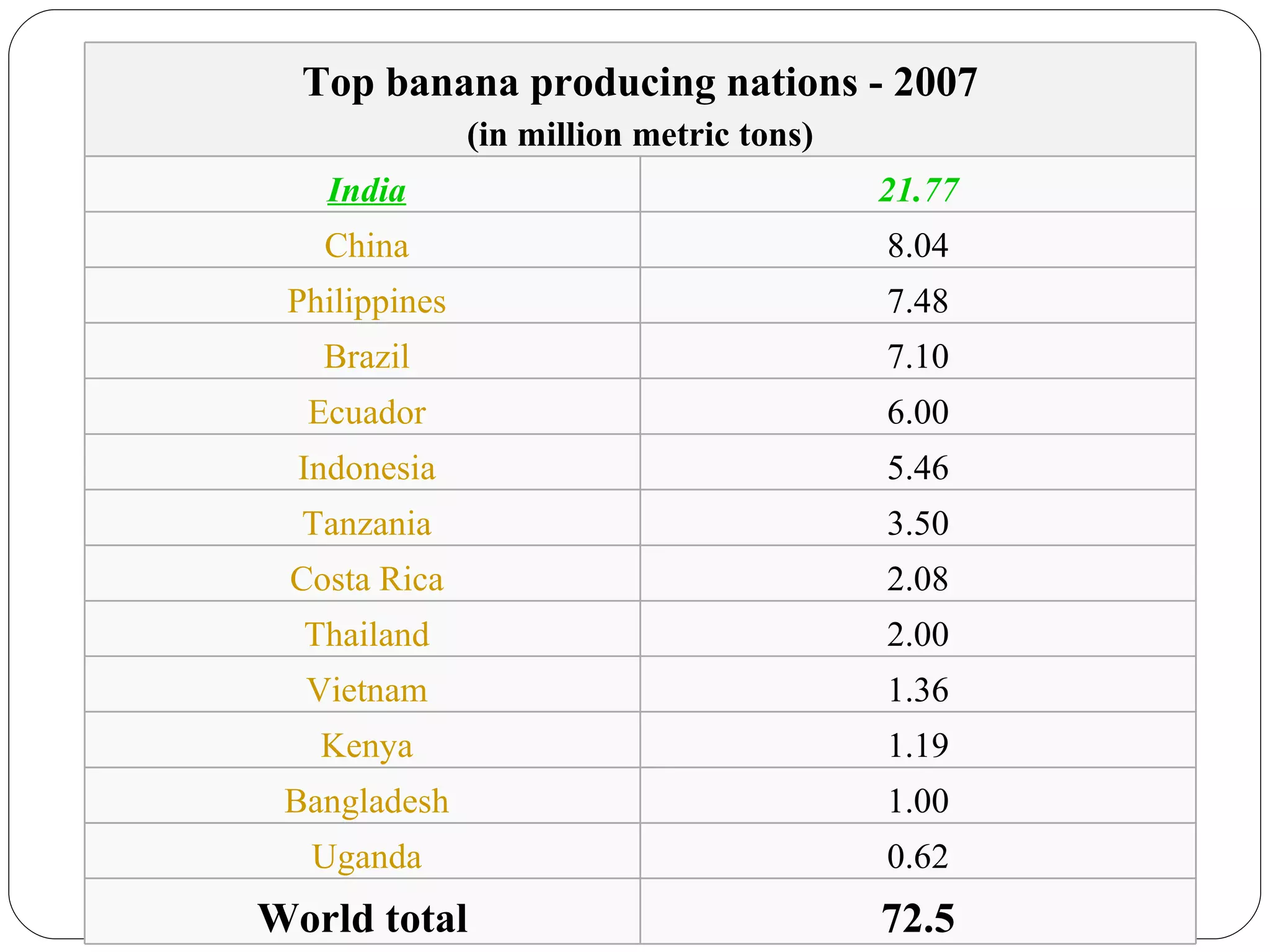
Top banana producing nations - 2007 (in million metric tons)   India 21.77   China 8.04   Philippines 7.48   Brazil 7.10   Ecuador 6.00   Indonesia 5.46   Tanzania 3.50   Costa Rica 2.08   Thailand 2.00   Vietnam 1.36   Kenya 1.19   Bangladesh 1.00   Uganda 0.62 World total 72.5
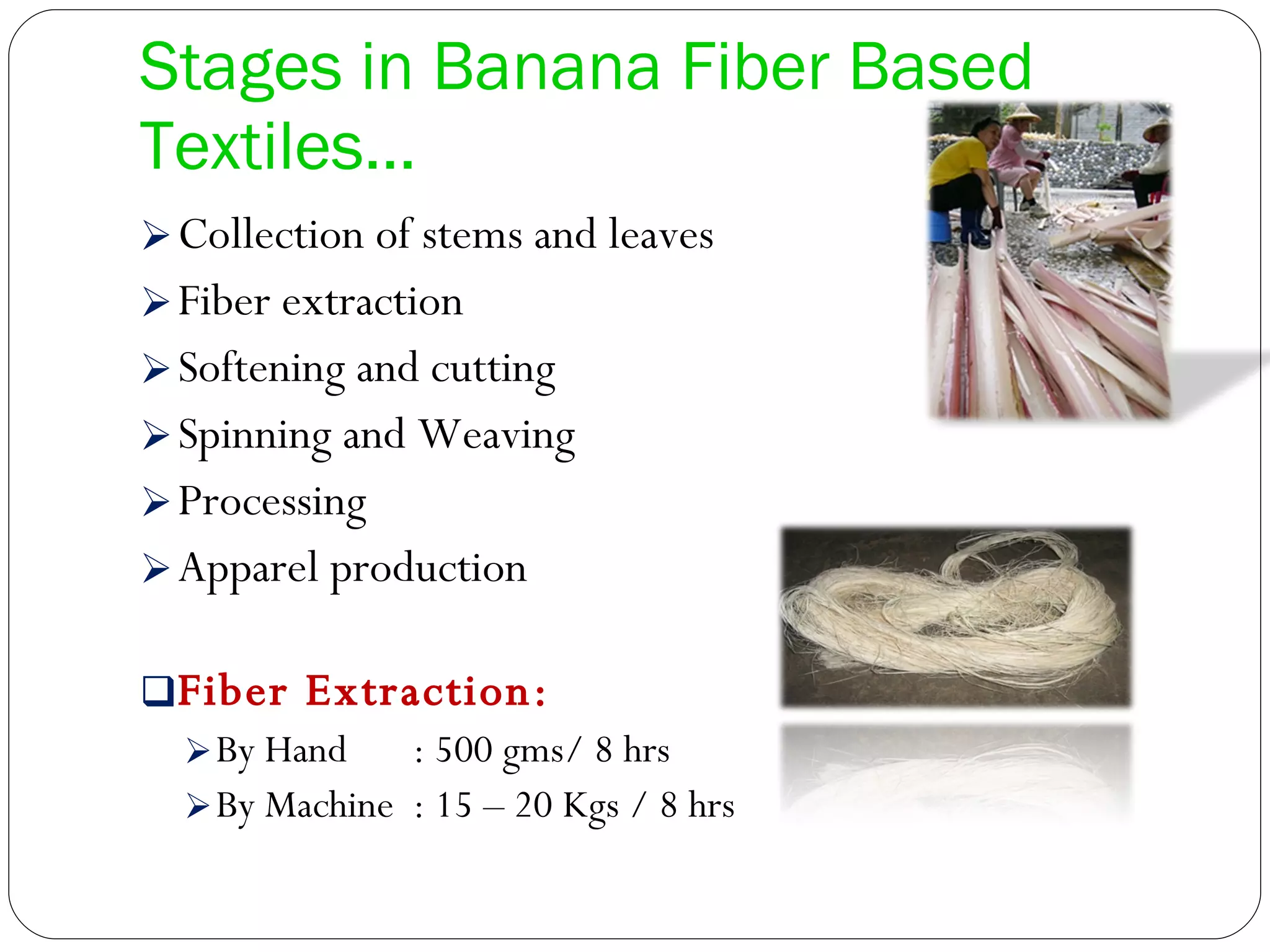
Stages in Banana Fiber Based Textiles… Collection of stems and leaves Fiber extraction Softening and cutting Spinning and Weaving Processing Apparel production Fiber Extraction: By Hand    : 500 gms/ 8 hrs By Machine  : 15 – 20 Kgs / 8 hrs
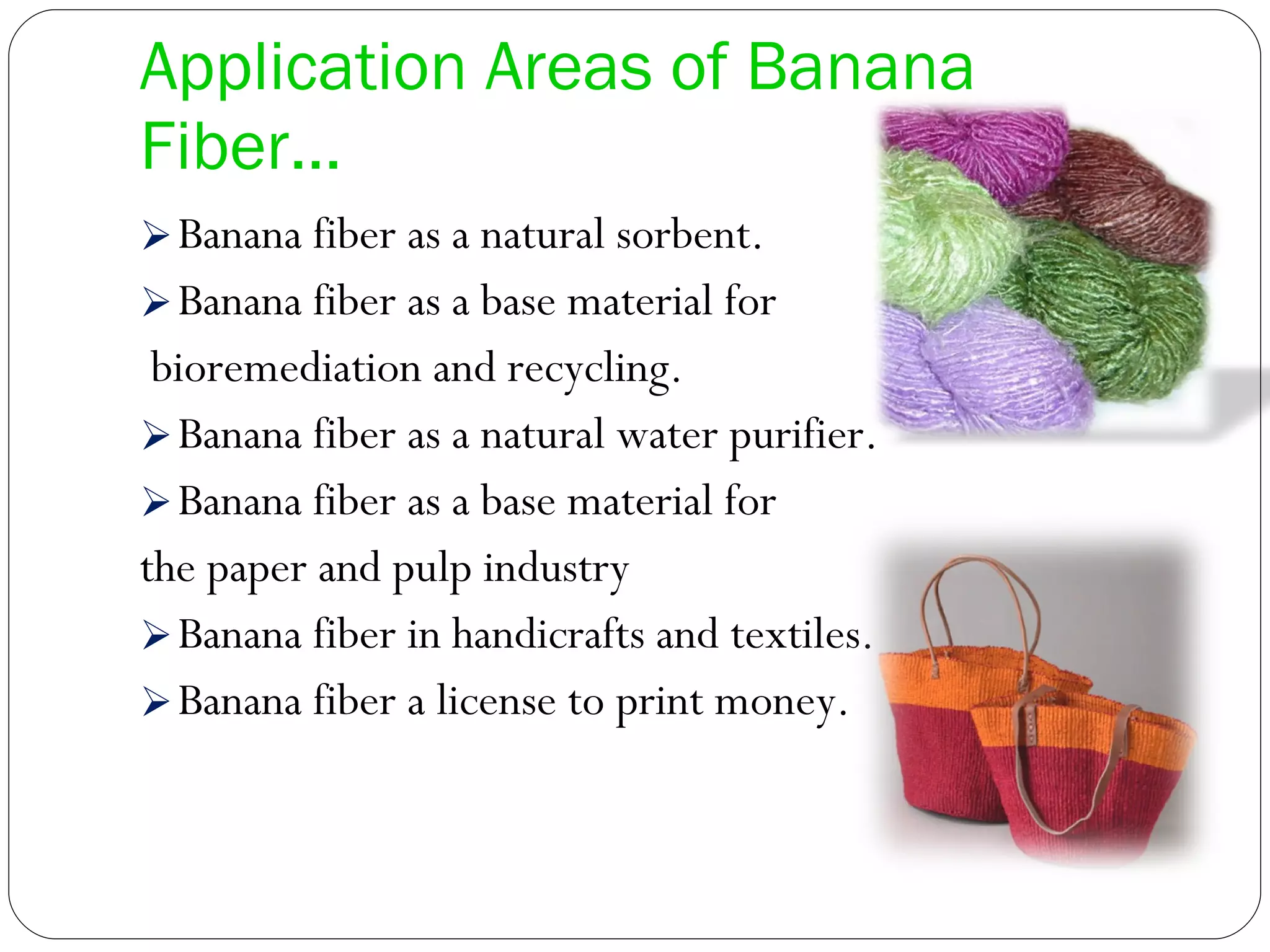
Application Areas of Banana Fiber… Banana fiber as a natural sorbent. Banana fiber as a base material for bioremediation and recycling. Banana fiber as a natural water purifier. Banana fiber as a base material for the paper and pulp industry Banana fiber in handicrafts and textiles. Banana fiber a license to print money.
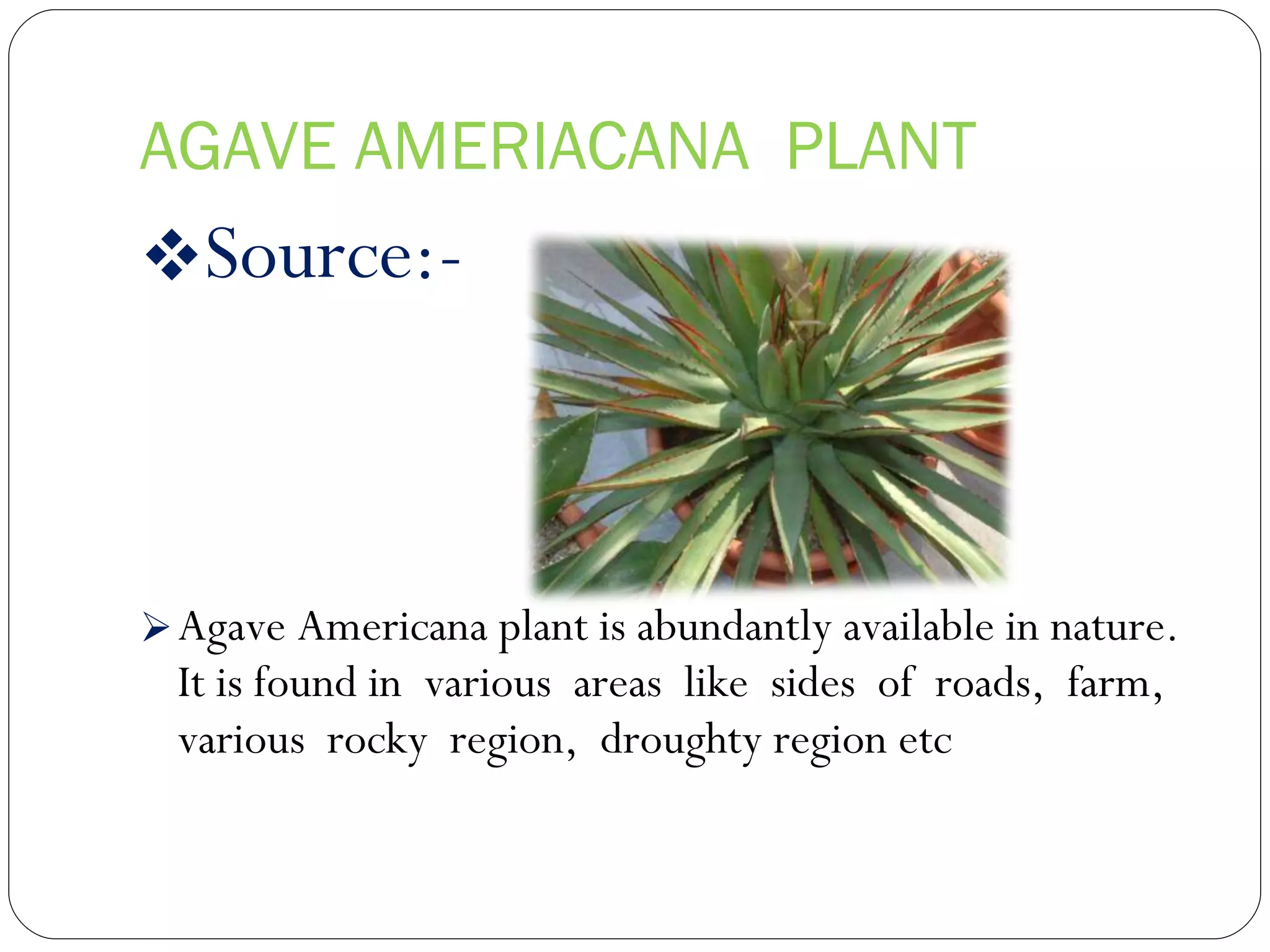
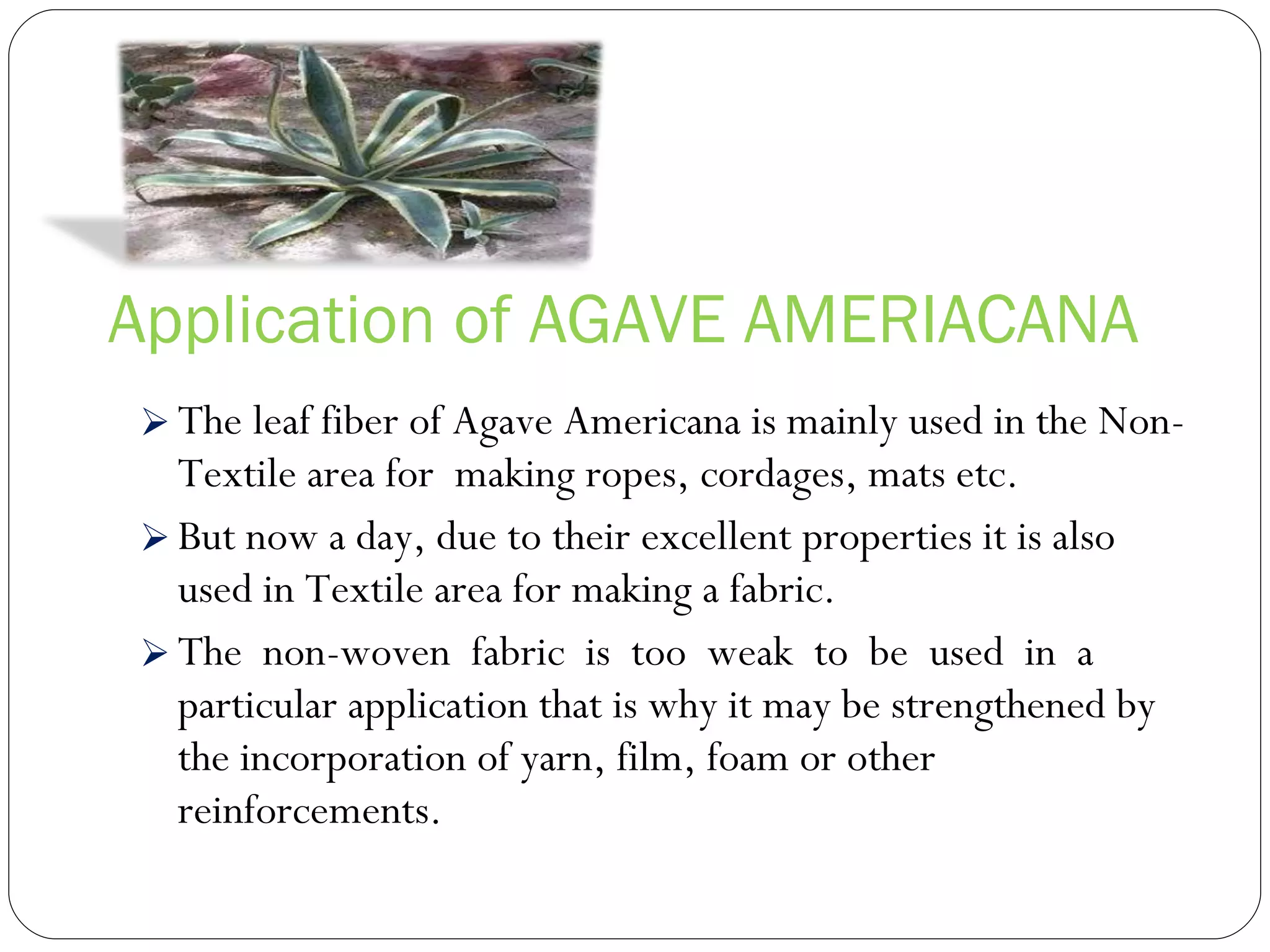
AGAVE AMERIACANA  PLANT Source:- Agave Americana plant is abundantly available in nature. It is found in  various  areas  like  sides  of  roads,  farm,  various  rocky  region,  droughty region etc
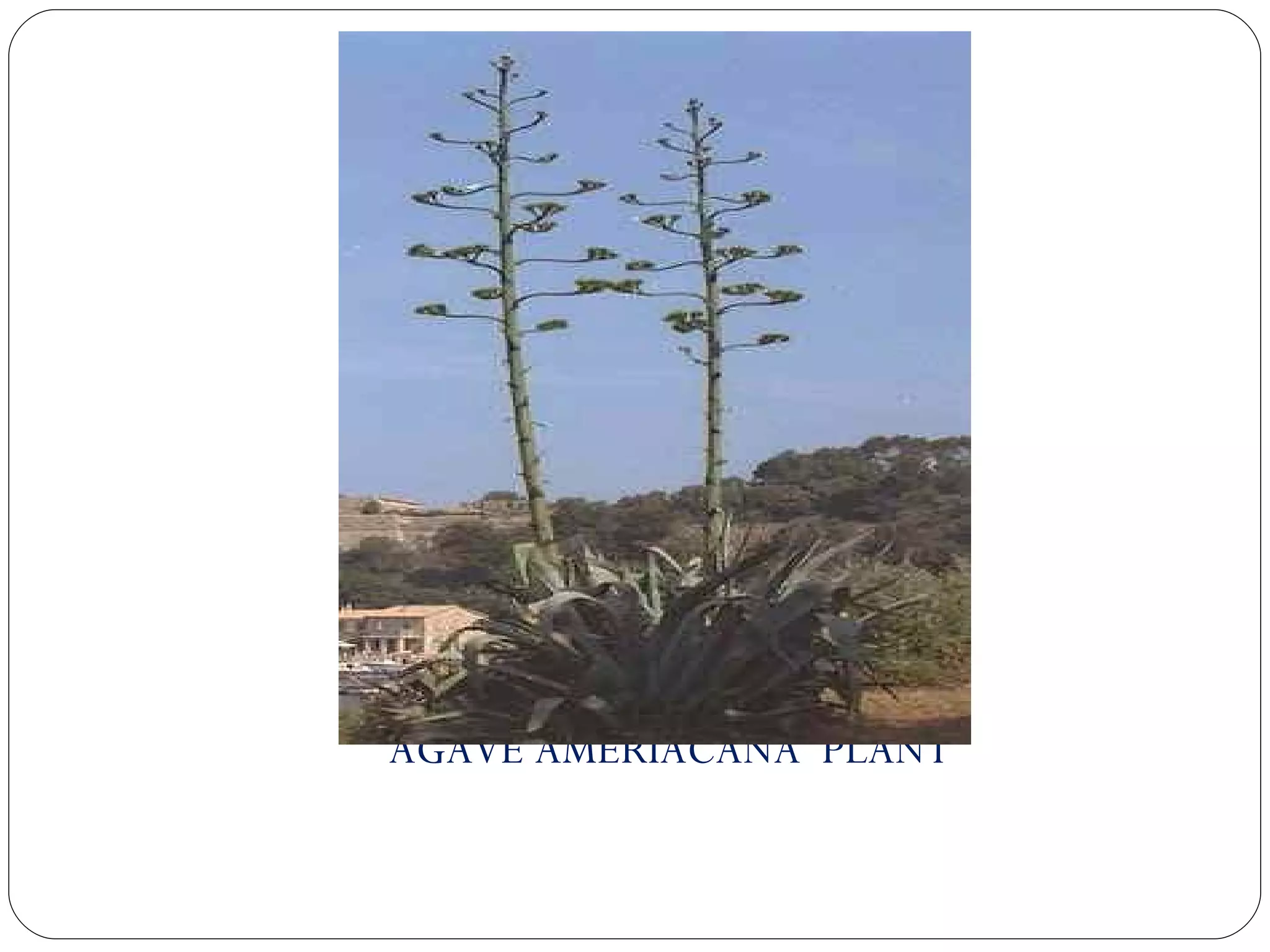
AGAVE AMERIACANA  PLANT
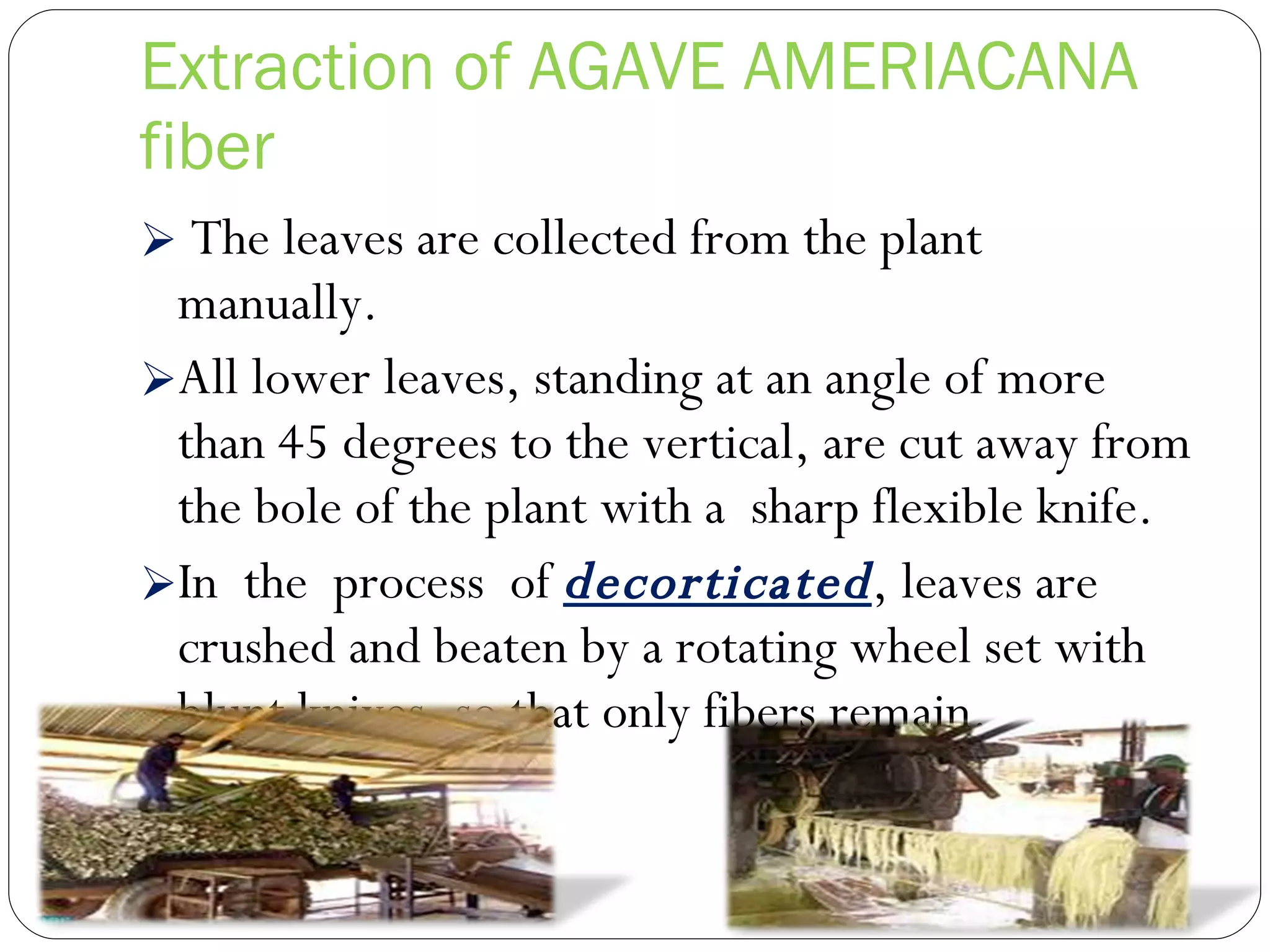
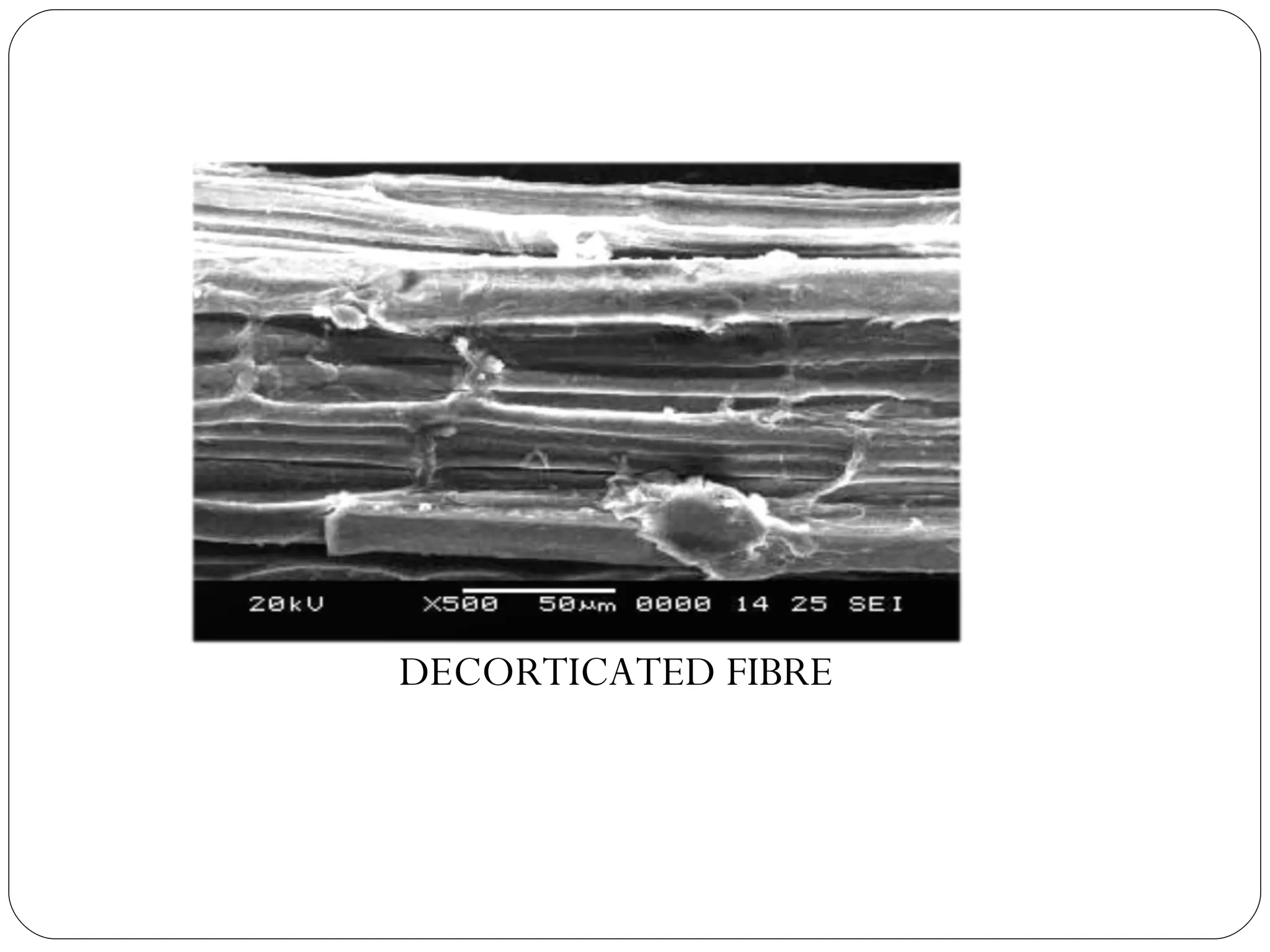
Extraction of AGAVE AMERIACANA fiber The leaves are collected from the plant manually.  All lower leaves, standing at an angle of more than 45 degrees to the vertical, are cut away from the bole of the plant with a  sharp flexible knife.  In  the  process  of  decorticated , leaves are crushed and beaten by a rotating wheel set with blunt knives. so that only fibers remain.
DECORTICATED FIBRE
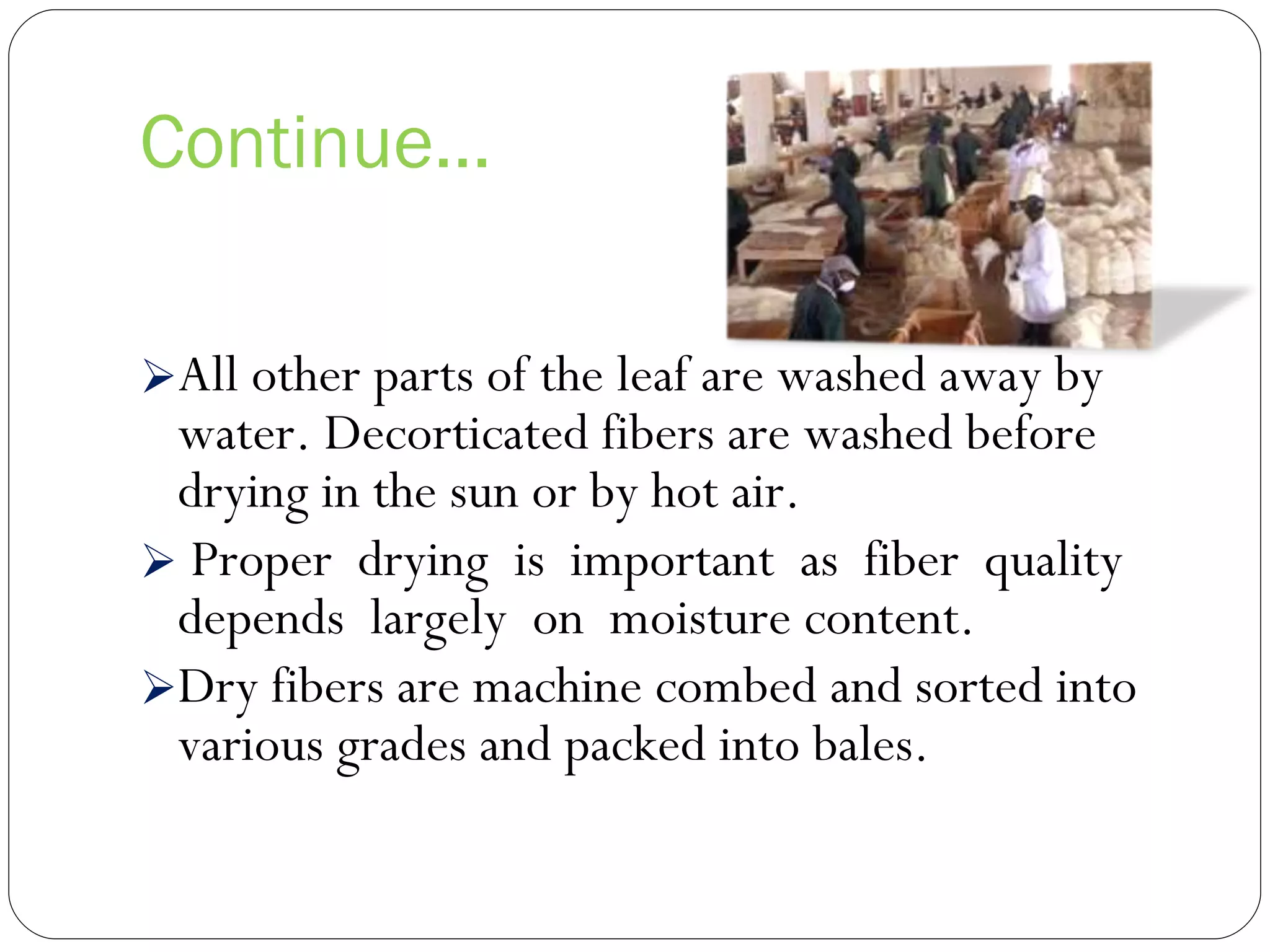
Continue… All other parts of the leaf are washed away by water. Decorticated fibers are washed before drying in the sun or by hot air. Proper  drying  is  important  as  fiber  quality  depends  largely  on  moisture content. Dry fibers are machine combed and sorted into various grades and packed into bales.
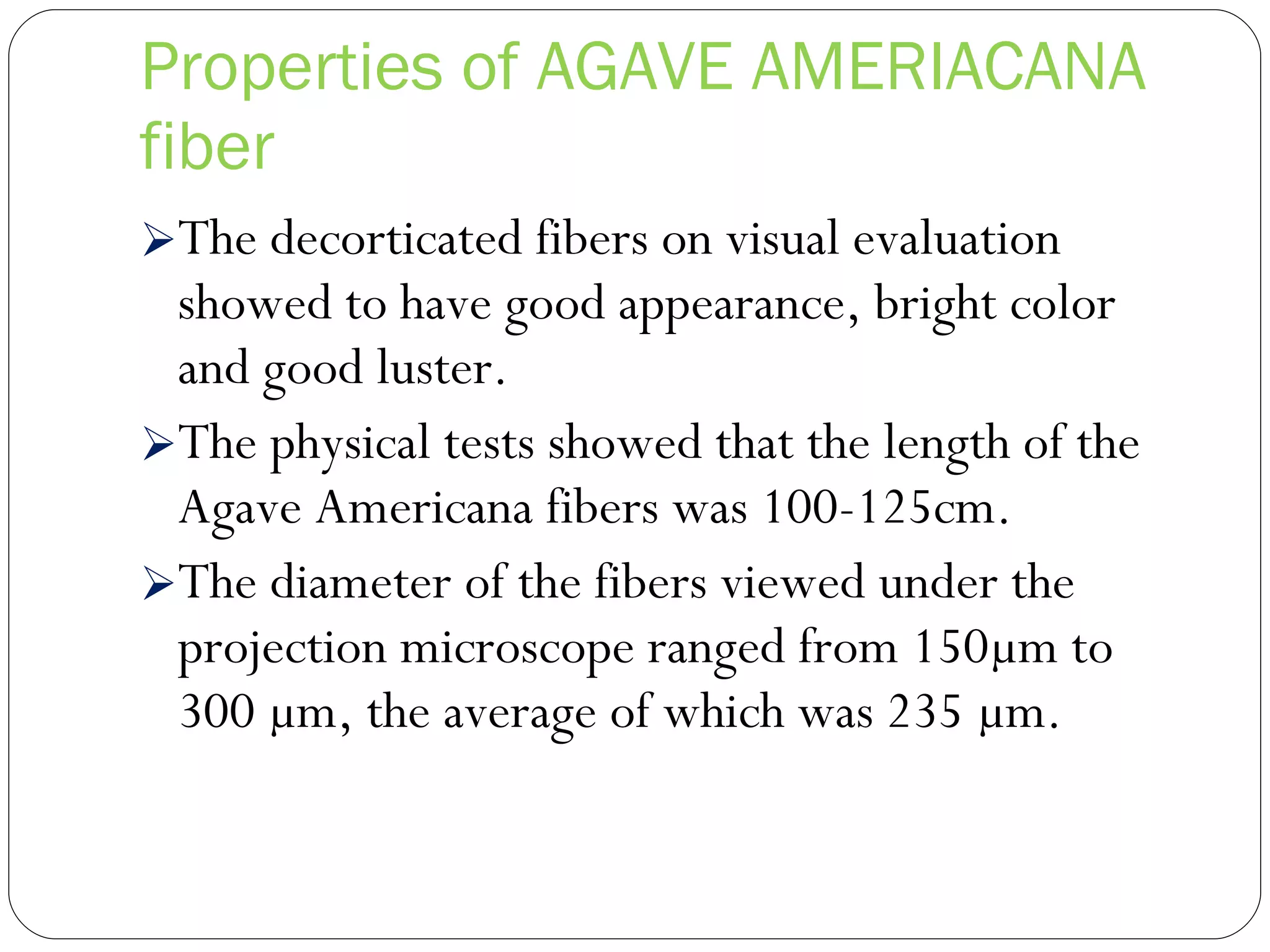
Properties of AGAVE AMERIACANA fiber The decorticated fibers on visual evaluation showed to have good appearance, bright color and good luster. The physical tests showed that the length of the Agave Americana fibers was 100-125cm. The diameter of the fibers viewed under the projection microscope ranged from 150µm to 300 µm, the average of which was 235 µm.
Application of AGAVE AMERIACANA The leaf fiber of Agave Americana is mainly used in the Non-Textile area for  making ropes, cordages, mats etc. But now a day, due to their excellent properties it is also used in Textile area for making a fabric. The  non-woven  fabric  is  too  weak  to  be  used  in  a  particular application that is why it may be strengthened by the incorporation of yarn, film, foam or other reinforcements.
References: Zarapkar, K.P. (2004),  Zarapkar System of Cutting, Navaneet Publication (I) Ltd., Dantali, Gujarat, Pp. 172-174. Indian Textile Journal-2003, Non-Woven Fabric Application.   Non–Wovens  By BTRA [Monograph Series]   www.altavista.com   www.pfaf.org   www.ibiblio.org   www.google.com   www.nnfcc.co.uk www.fibre2fashion.com http://www.adventurenetwork.com/ http://www.resil.com/ www.indiantextilejournal.com/articles/ www.techexchange.com/thelibrary.html
Conclusion From the above discussion we conclude that the leaf fibers are more economical  than other plant fibers for eg. Cotton,silk,etc. They are abundantly available almost everywhere. It can be easily blended with man made and natural fibers. The great merit of these fibers is that it can be  recycled.
Final leaf processing presantation(2010)

  • 1.
  • 2.
    Presentation Outline IntroductionDifferent leaf fibers References conclusion
  • 3.
    Introduction Fiberis a unit of matter characterized by flexibility, fineness and high ratio of length to thickness and its attitudes certain properties such as … Adequate strength. Resistant to condition and counter during wear and processing. Absence of undesirable color. Property of debility.
  • 4.
    Types of plantfibers Beast fiber. ( jute, hemp, bamboo etc. ) Leaf fiber. ( pineapple, ramie, sisal etc. ) Seed fiber ( coir, cotton, kapok etc. )
  • 5.
    Why LeafFibers ? Enhances the environment. Lower cost. Naturally glossy. Lightweight. Blend very efficiently with other fibers. Very soft, even softer than hemp. Very good texture, even better than silk. They are eco- friendly like other plant fibers.
  • 6.
  • 7.
    Chemical composition ofsome leaf fibers
  • 8.
    Physical properties ofsome leaf fibers
  • 9.
    Sisal fibers Source:-Sisal is a perennial hardy plant, which unlike the other fibers is not a seasonal crop. It can establish and easily grow in all states of India covering sub humid to arid and semiarid regions, which cover major parts of India.
  • 10.
    Continue… It canalso survive in almost all soil types and its input costs are least for its survival, regeneration and maintenance on sustainable basis. Sisal tolerates prolonged droughts and high temperatures also.
  • 11.
    Extraction of Sisalfiber Sisal fiber is traditionally extracted by retting . A biodegradation process involving micro- bio decomposition of sisal leaves, which separates the fiber from pith. The fibers are washed and processed further. This process takes 15-21 days for a single cycle of extraction and degrades the quality of fiber.
  • 12.
    Properties of sisalfibers The superior engineering properties Ultimate Tensile strength which makes it as an excellent material for manufacturing high strength textile and reinforcement in composites for various applications
  • 13.
    Application of sisalfibers The leaves of sisal yield a strong fiber which is traditionally used for making ropes, cordage and twines. It is also being used to manufacture coarse fabrics, rugs, carpets, handicrafts, mats, fishing nets etc. It also use in buildings, automobiles, railways, geo-textiles, packaging industries etc. Sisal fiber rein- forced composite building materials like; wood substitute products, panels, doors.
  • 14.
    Continue… Present scenarioindicates that the use of plant fiber based automobiles parts like trim parts, various panels, seat backs, shelves, brake shoes etc., are picking up momentum worldwide. Railways are also a potential application area where in it is estimated that about 350 TPA fiber. Packaging materials for bags, boxes, crates, containers, which is now made up of wood, can be replaced by cost-effective sisal reinforced composites. Boats can be made by replacing the conventional polymer composite fibers with sisal as reinforcement
  • 15.
    Pineapple( PINA )Fiber… Source:- It is also called Pina in Español (Spain) Piña is a fiber made from the leaves of a pineapple and is commonly used in the Philippines . It is sometimes combined with silk or polyester to create a textile fabric. The people there used to extract fibers from pineapple leaves and through hand spinning, made a soft, sheer and a little stiff fabric- the piña fabric. It's regal and exotic!
  • 16.
    Preparation of PALFPALF is contained in the spiky leaves of pineapples. The waste pineapples leaves were collected during the harvest process. These leaves were pressed using two-roll mill to remove circa 90 % of the water content. Fibers were extracted manually from these semi-dried leaves by knife or sharp edge tool.
  • 17.
  • 18.
  • 19.
    Properties PINA fiberThe piña fiber is softer, and has a high luster, and is usually white or ivory in color. Fabrics made from pineapple fibers are very easily cared for . They are completely washable and there's no need of dry cleaning them.
  • 20.
  • 21.
    Applications of PINAfiber The most wide application of pina fabrics is in making traditional dresses. Wedding attire for men, and blouses for women. Other dresses such as kimonos, panuelos, gowns etc. are also made from it.
  • 22.
  • 23.
    Continue… Apart fromclothing, it is also used for other table linens, bags, mats and other clothing items, or anytime that a lightweight, but stiff and sheer fabric is needed.
  • 24.
    Trade names:- Nonefound at this time. Piña is often just referred to as pineapple fiber. Piña is a Spanish last name with the Portuguese equivalent being Pina.
  • 25.
    Banana fibers Source:- Abundantly available in major part of Asia. In India Possibility to extract 21 million metric tons /year.
  • 26.
    Top banana producingnations - 2007 (in million metric tons)   India 21.77   China 8.04   Philippines 7.48   Brazil 7.10   Ecuador 6.00   Indonesia 5.46   Tanzania 3.50   Costa Rica 2.08   Thailand 2.00   Vietnam 1.36   Kenya 1.19   Bangladesh 1.00   Uganda 0.62 World total 72.5
  • 27.
    Stages in BananaFiber Based Textiles… Collection of stems and leaves Fiber extraction Softening and cutting Spinning and Weaving Processing Apparel production Fiber Extraction: By Hand : 500 gms/ 8 hrs By Machine : 15 – 20 Kgs / 8 hrs
  • 28.
    Application Areas ofBanana Fiber… Banana fiber as a natural sorbent. Banana fiber as a base material for bioremediation and recycling. Banana fiber as a natural water purifier. Banana fiber as a base material for the paper and pulp industry Banana fiber in handicrafts and textiles. Banana fiber a license to print money.
  • 29.
    AGAVE AMERIACANA PLANT Source:- Agave Americana plant is abundantly available in nature. It is found in various areas like sides of roads, farm, various rocky region, droughty region etc
  • 30.
  • 31.
    Extraction of AGAVEAMERIACANA fiber The leaves are collected from the plant manually. All lower leaves, standing at an angle of more than 45 degrees to the vertical, are cut away from the bole of the plant with a sharp flexible knife. In the process of decorticated , leaves are crushed and beaten by a rotating wheel set with blunt knives. so that only fibers remain.
  • 32.
  • 33.
    Continue… All otherparts of the leaf are washed away by water. Decorticated fibers are washed before drying in the sun or by hot air. Proper drying is important as fiber quality depends largely on moisture content. Dry fibers are machine combed and sorted into various grades and packed into bales.
  • 34.
    Properties of AGAVEAMERIACANA fiber The decorticated fibers on visual evaluation showed to have good appearance, bright color and good luster. The physical tests showed that the length of the Agave Americana fibers was 100-125cm. The diameter of the fibers viewed under the projection microscope ranged from 150µm to 300 µm, the average of which was 235 µm.
  • 35.
    Application of AGAVEAMERIACANA The leaf fiber of Agave Americana is mainly used in the Non-Textile area for making ropes, cordages, mats etc. But now a day, due to their excellent properties it is also used in Textile area for making a fabric. The non-woven fabric is too weak to be used in a particular application that is why it may be strengthened by the incorporation of yarn, film, foam or other reinforcements.
  • 36.
    References: Zarapkar, K.P.(2004), Zarapkar System of Cutting, Navaneet Publication (I) Ltd., Dantali, Gujarat, Pp. 172-174. Indian Textile Journal-2003, Non-Woven Fabric Application.   Non–Wovens By BTRA [Monograph Series]   www.altavista.com   www.pfaf.org   www.ibiblio.org   www.google.com   www.nnfcc.co.uk www.fibre2fashion.com http://www.adventurenetwork.com/ http://www.resil.com/ www.indiantextilejournal.com/articles/ www.techexchange.com/thelibrary.html
  • 37.
    Conclusion From theabove discussion we conclude that the leaf fibers are more economical than other plant fibers for eg. Cotton,silk,etc. They are abundantly available almost everywhere. It can be easily blended with man made and natural fibers. The great merit of these fibers is that it can be recycled.