Sisal picture from Incipi
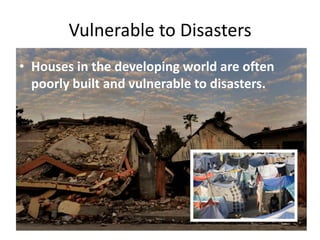
Vulnerable to Disasters
• Houses in the developing world are often
  poorly built and vulnerable to disasters.
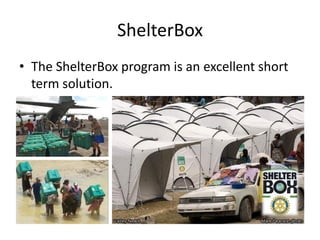
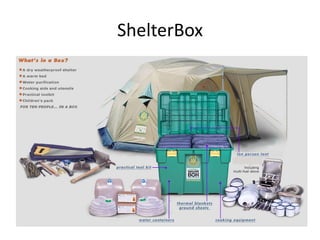
ShelterBox
• The ShelterBox program is an excellent short
  term solution.
ShelterBox
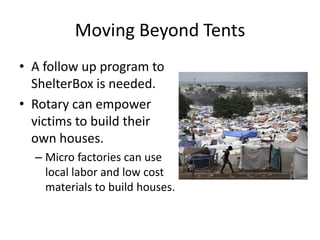
Moving Beyond Tents
• A follow up program to
  ShelterBox is needed.
• Rotary can empower
  victims to build their
  own houses.
  – Micro factories can use
    local labor and low cost
    materials to build houses.
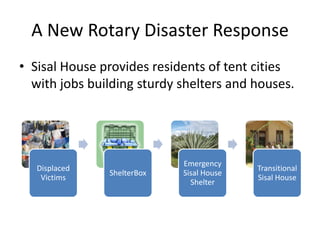
A New Rotary Disaster Response
• Sisal House provides residents of tent cities
  with jobs building sturdy shelters and houses.


                            Emergency
   Displaced                              Transitional
               ShelterBox   Sisal House
    Victims                               Sisal House
                              Shelter
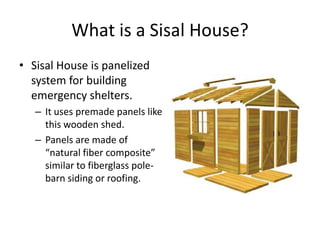
What is a Sisal House?
• Sisal House is panelized
  system for building
  emergency shelters.
   – It uses premade panels like
     this wooden shed.
   – Panels are made of
     “natural fiber composite”
     similar to fiberglass pole-
     barn siding or roofing.
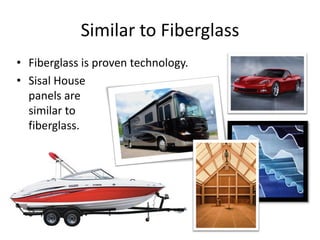
Similar to Fiberglass
• Fiberglass is proven technology.
• Sisal House
  panels are             are
  similar to
  fiberglass.
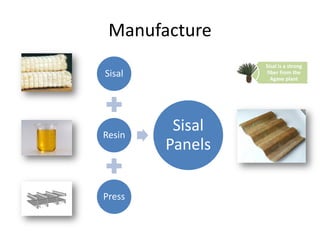
Manufacture
                 Sisal is a strong
Sisal             fiber from the
                    Agave plant


Resin
         Sisal
        Panels

Press
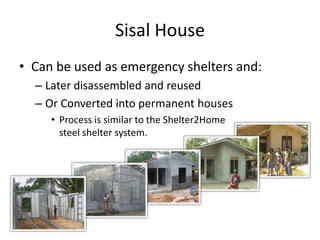
Sisal House
• Can be used as emergency shelters and:
  – Later disassembled and reused
  – Or Converted into permanent houses
     • Process is similar to the Shelter2Home
       steel shelter system.
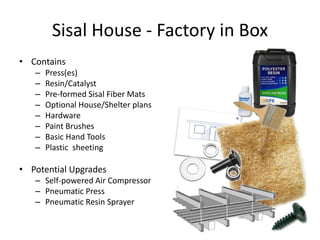
Sisal House - Factory in Box
• Contains
   –   Press(es)
   –   Resin/Catalyst
   –   Pre-formed Sisal Fiber Mats
   –   Optional House/Shelter plans
   –   Hardware
   –   Paint Brushes
   –   Basic Hand Tools
   –   Plastic sheeting

• Potential Upgrades
   – Self-powered Air Compressor
   – Pneumatic Press
   – Pneumatic Resin Sprayer
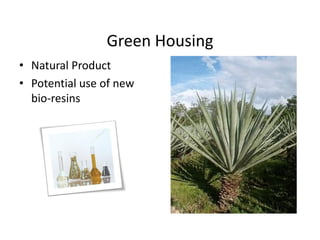
Green Housing
• Natural Product
• Potential use of new
  bio-resins
Economic Benefits
• Immediate
  – Local growth and processing of Sisal
  – Local sisal panel production
  – Local installers
• Potential / Sustainable
  – Export of Sisal House panels to disaster areas.
  – Manufacture of other products from roof tiles to
    furniture.
  – Larger scale local production for
    residential/commercial buildings.
  – Local production of resin. (Especially bio resins)
1st Steps
•   Create Press
•   Make “sample house”
•   Apply for Rotary District Grant
•   Develop Rotary International Partnerships
•   Learn more about the Sisal House Project or
    add your input at
    http://sisalhouse.incipi.com/
Potential Start Up Costs
• Sisal “Manual” Press
  – $300
• Exterior Walls & Roof for 20’ x 30’ house
  – Fiber, Resin & Catalyst: $900 - $1,000
• Additional Costs
  – Interior Walls
  – Hardware, Fasteners & Adhesives
  – Footing & Site Prep

Introduction to Sisal House

  • 1.
  • 2.
    Vulnerable to Disasters •Houses in the developing world are often poorly built and vulnerable to disasters.
  • 3.
    ShelterBox • The ShelterBoxprogram is an excellent short term solution.
  • 4.
  • 5.
    Moving Beyond Tents •A follow up program to ShelterBox is needed. • Rotary can empower victims to build their own houses. – Micro factories can use local labor and low cost materials to build houses.
  • 6.
    A New RotaryDisaster Response • Sisal House provides residents of tent cities with jobs building sturdy shelters and houses. Emergency Displaced Transitional ShelterBox Sisal House Victims Sisal House Shelter
  • 7.
    What is aSisal House? • Sisal House is panelized system for building emergency shelters. – It uses premade panels like this wooden shed. – Panels are made of “natural fiber composite” similar to fiberglass pole- barn siding or roofing.
  • 8.
    Similar to Fiberglass •Fiberglass is proven technology. • Sisal House panels are are similar to fiberglass.
  • 9.
    Manufacture Sisal is a strong Sisal fiber from the Agave plant Resin Sisal Panels Press
  • 10.
    Sisal House • Canbe used as emergency shelters and: – Later disassembled and reused – Or Converted into permanent houses • Process is similar to the Shelter2Home steel shelter system.
  • 11.
    Sisal House -Factory in Box • Contains – Press(es) – Resin/Catalyst – Pre-formed Sisal Fiber Mats – Optional House/Shelter plans – Hardware – Paint Brushes – Basic Hand Tools – Plastic sheeting • Potential Upgrades – Self-powered Air Compressor – Pneumatic Press – Pneumatic Resin Sprayer
  • 12.
    Green Housing • NaturalProduct • Potential use of new bio-resins
  • 13.
    Economic Benefits • Immediate – Local growth and processing of Sisal – Local sisal panel production – Local installers • Potential / Sustainable – Export of Sisal House panels to disaster areas. – Manufacture of other products from roof tiles to furniture. – Larger scale local production for residential/commercial buildings. – Local production of resin. (Especially bio resins)
  • 14.
    1st Steps • Create Press • Make “sample house” • Apply for Rotary District Grant • Develop Rotary International Partnerships • Learn more about the Sisal House Project or add your input at http://sisalhouse.incipi.com/
  • 15.
    Potential Start UpCosts • Sisal “Manual” Press – $300 • Exterior Walls & Roof for 20’ x 30’ house – Fiber, Resin & Catalyst: $900 - $1,000 • Additional Costs – Interior Walls – Hardware, Fasteners & Adhesives – Footing & Site Prep