Filtration, Diffusion, and
Osmosis
Jo Patrick Mabelin
BS Biology 3
Diffusion
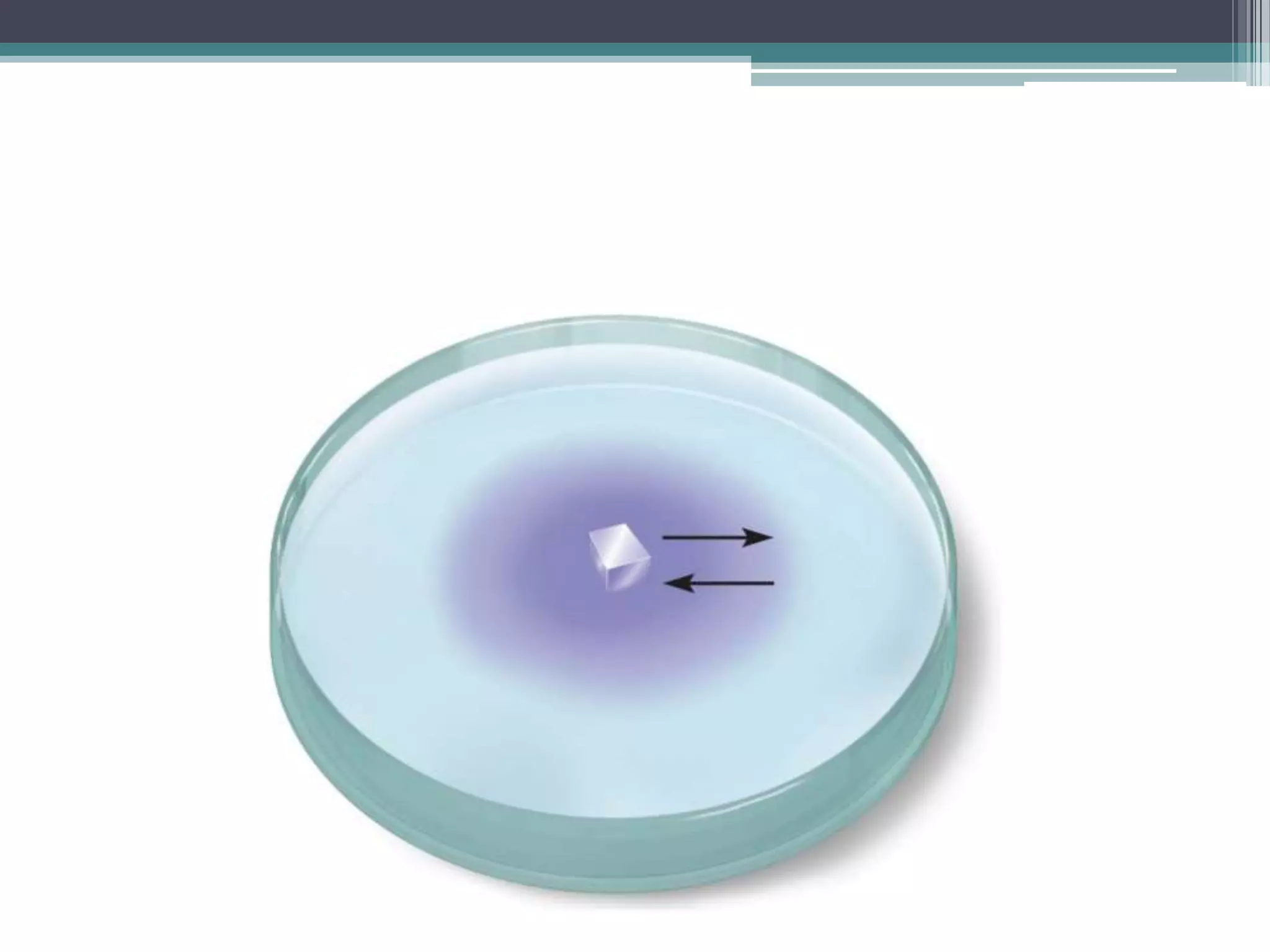
• Movement of particles
• Concentration of substances differ from one
point to another
• High concentration to Low concentration
• Factors affecting diffusion rate through a
membrane
▫ temperature - ↑ temp., ↑ motion of particles
▫ molecular weight - larger molecules move slower
▫ steepness of concentrated gradient - ↑difference, ↑
rate
▫ membrane surface area - ↑ area, ↑ rate
▫ membrane permeability - ↑ permeability, ↑ rate
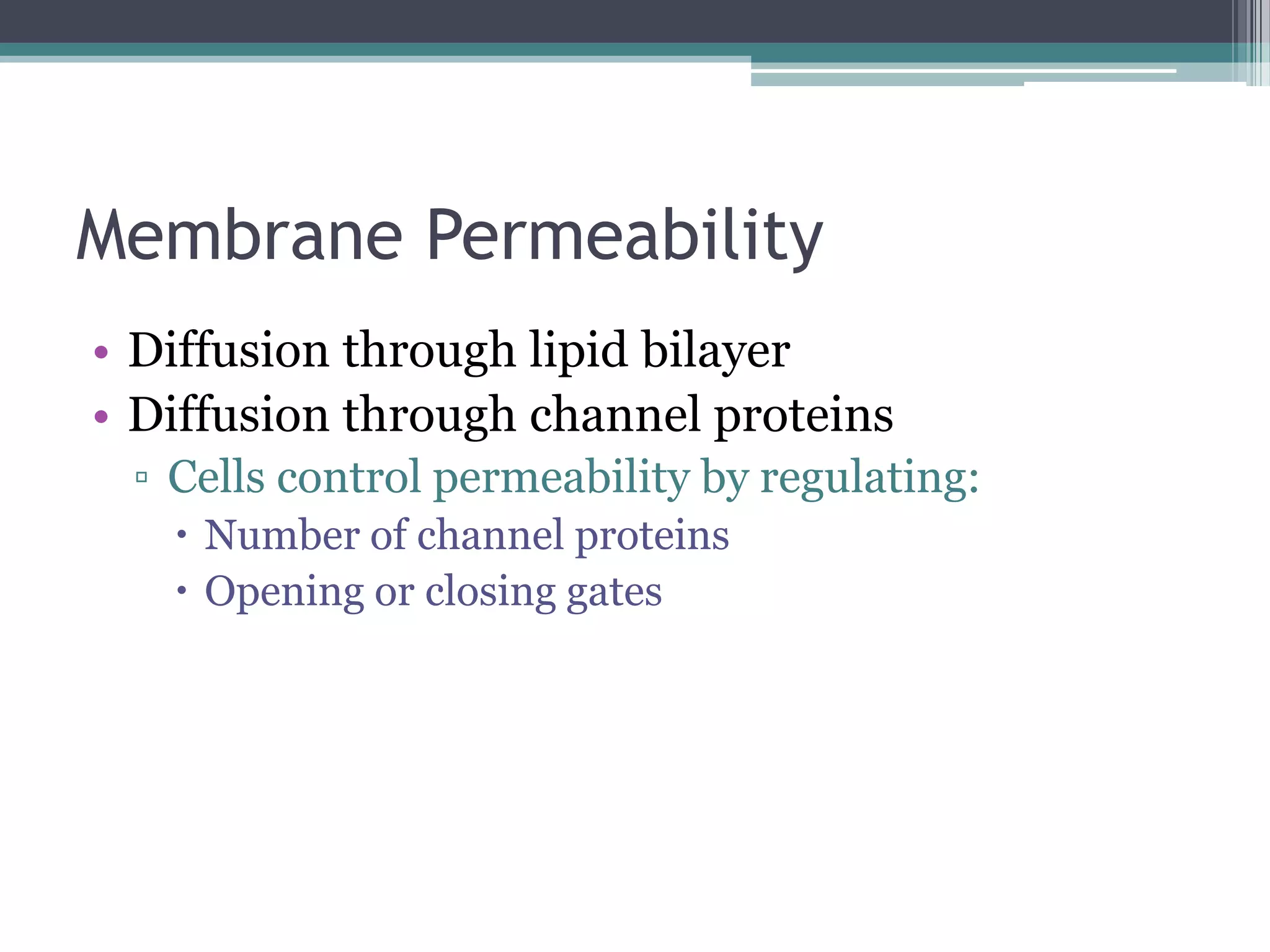
Membrane Permeability
• Diffusion through lipid bilayer
• Diffusion through channel proteins
▫ Cells control permeability by regulating:
 Number of channel proteins
 Opening or closing gates
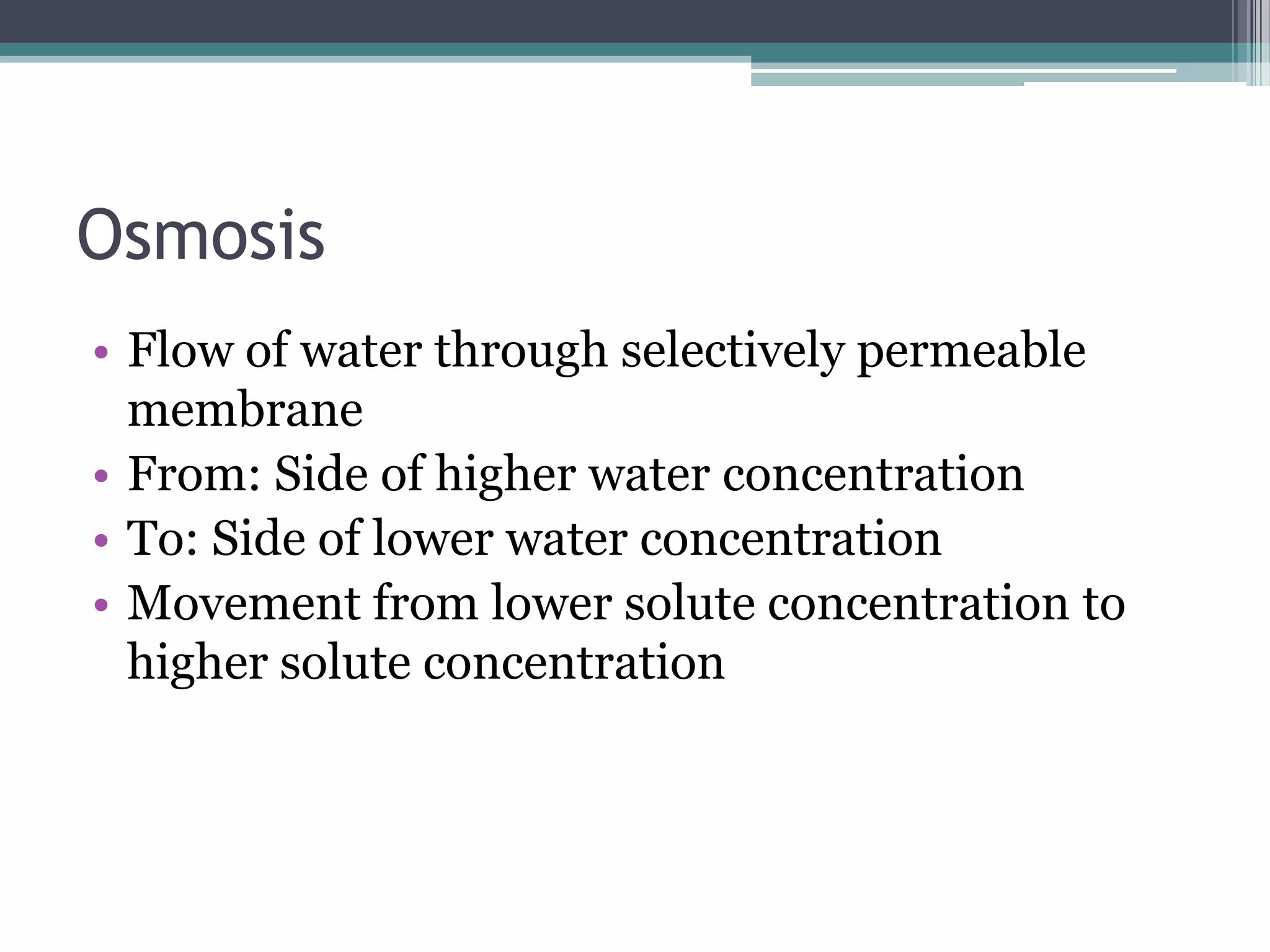
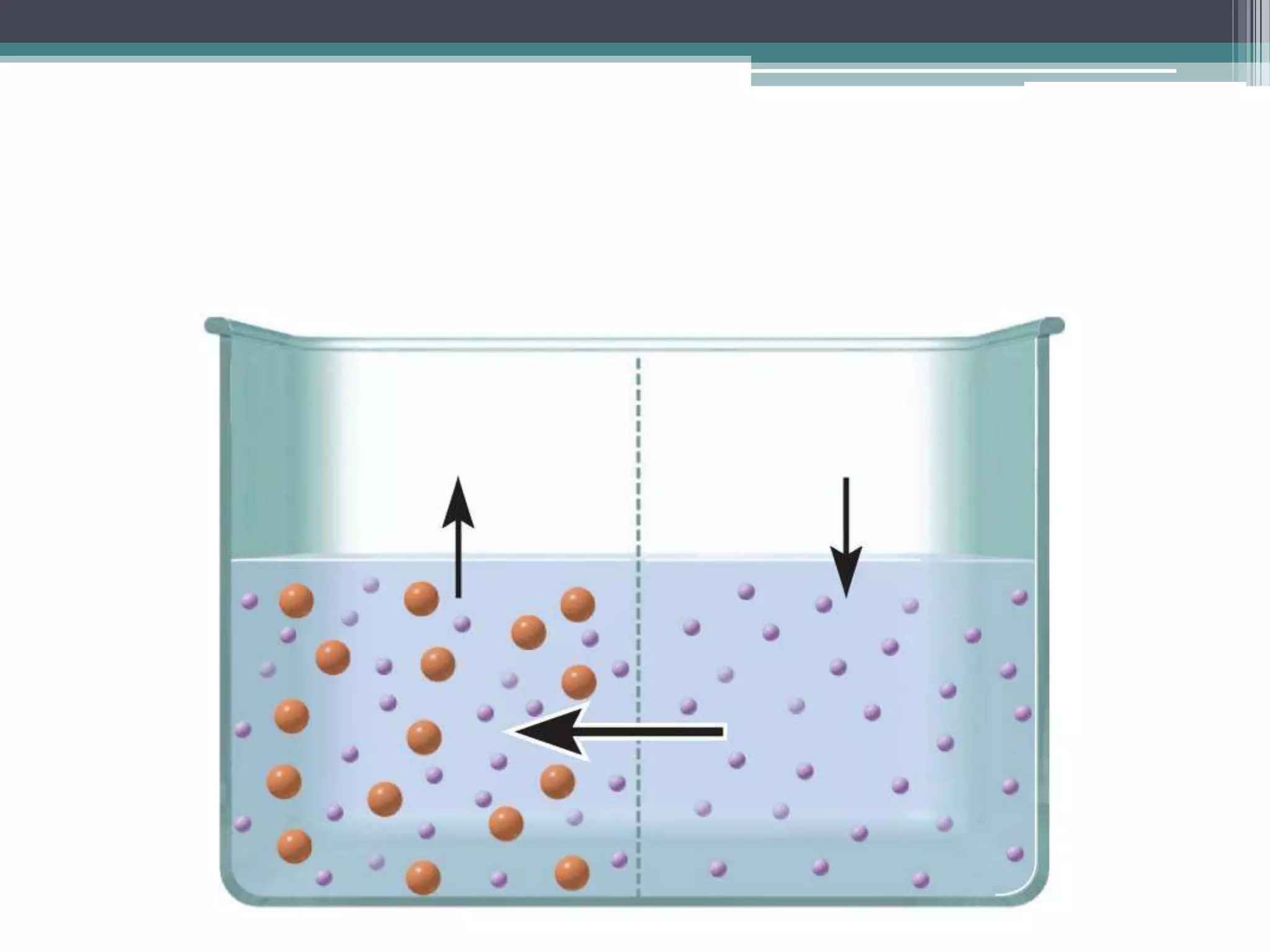
Osmosis
• Flow of water through selectively permeable
membrane
• From: Side of higher water concentration
• To: Side of lower water concentration
• Movement from lower solute concentration to
higher solute concentration
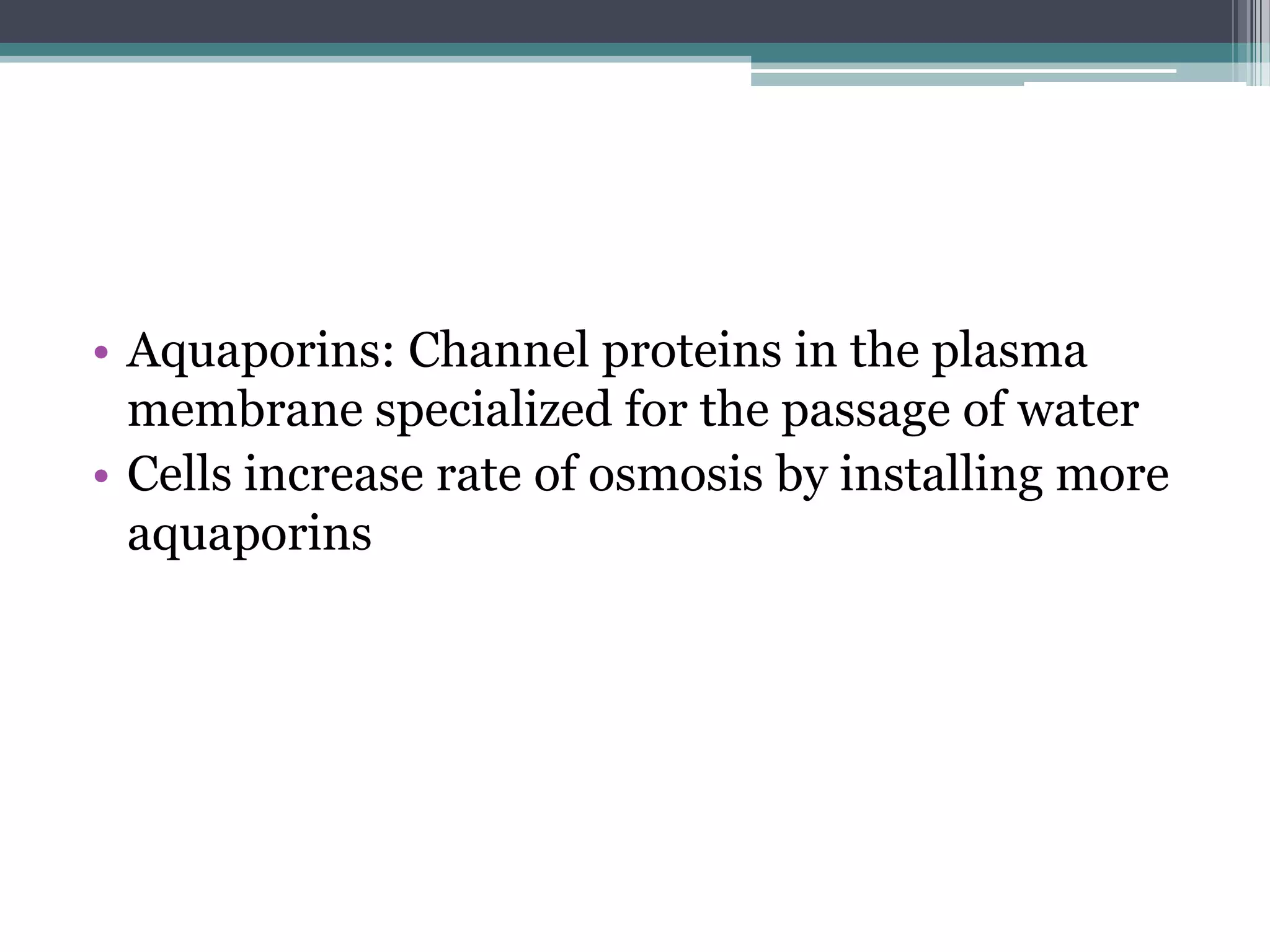
• Aquaporins: Channel proteins in the plasma
membrane specialized for the passage of water
• Cells increase rate of osmosis by installing more
aquaporins
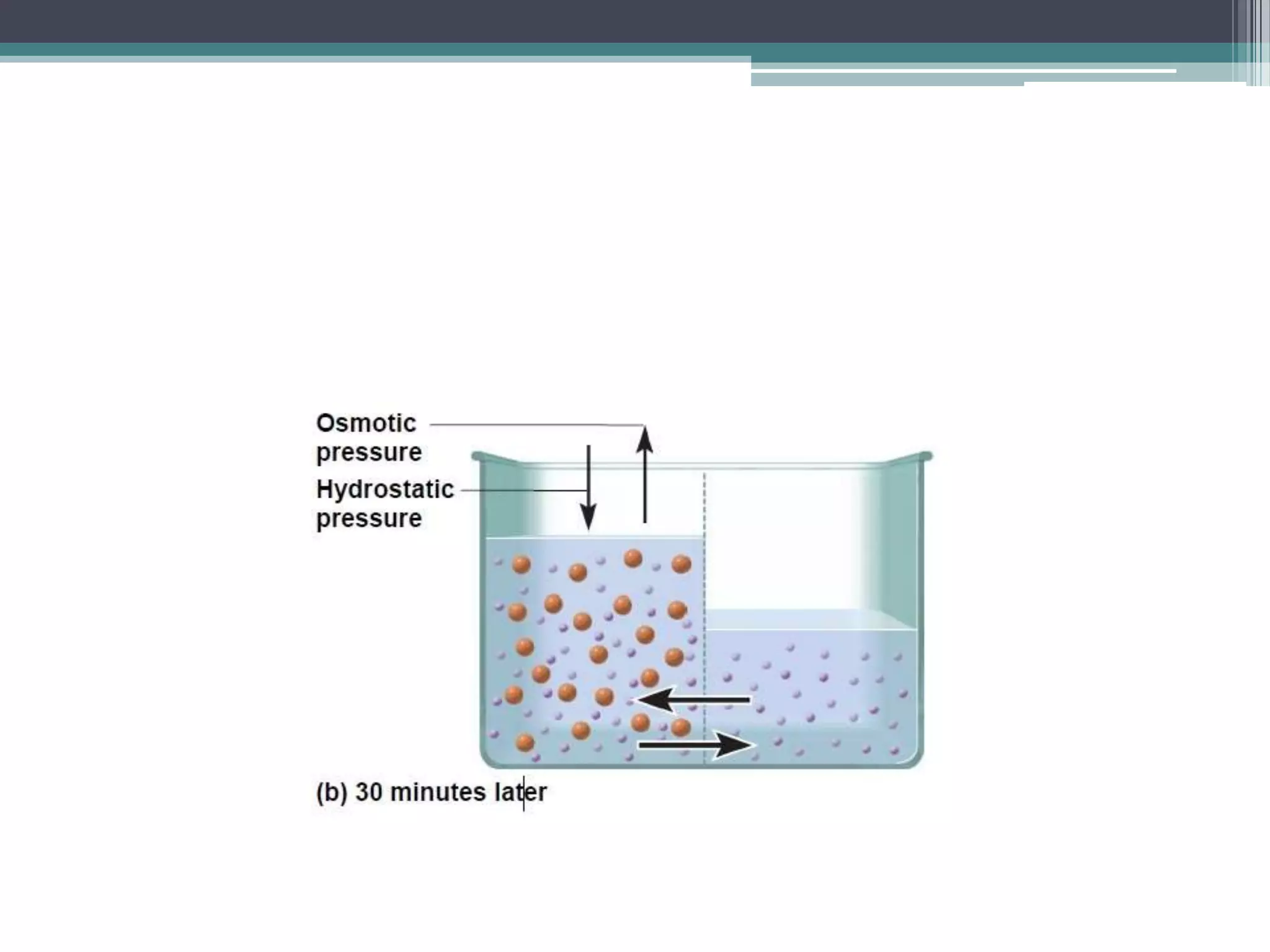
Osmotic Pressure
• Amount of hydrostatic pressure to stop osmosis
• Osmosis Slows due to hydrostaitc pressure
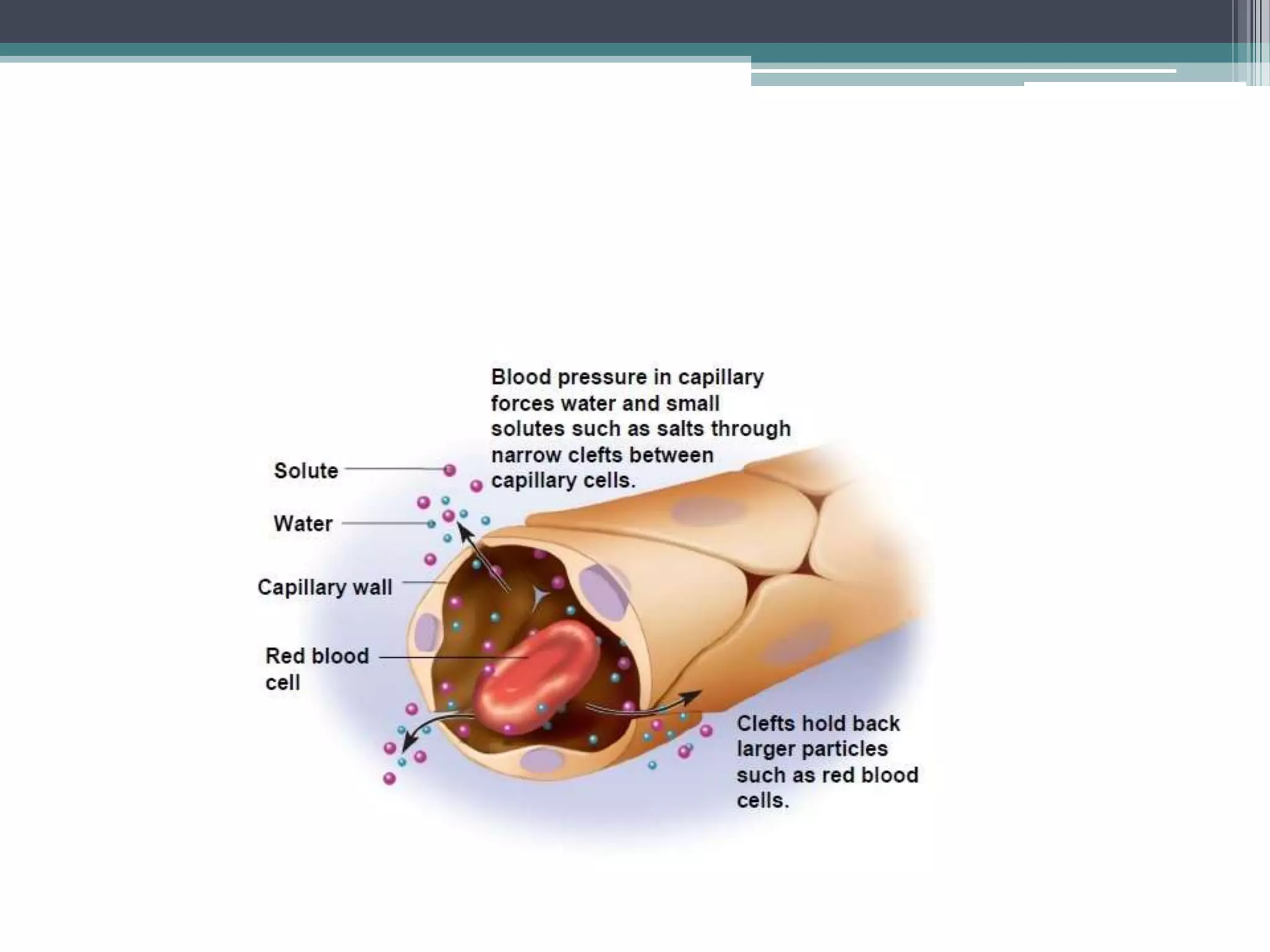
Filtration
• Water molecules and extremely small solutes are
forced to move through a selectively permeable
membrane by a hydrostatic pressure
Tonicity
• ability of a solution to affect fluid volume and
pressure in a cell
• depends on concentration and permeability of
solute
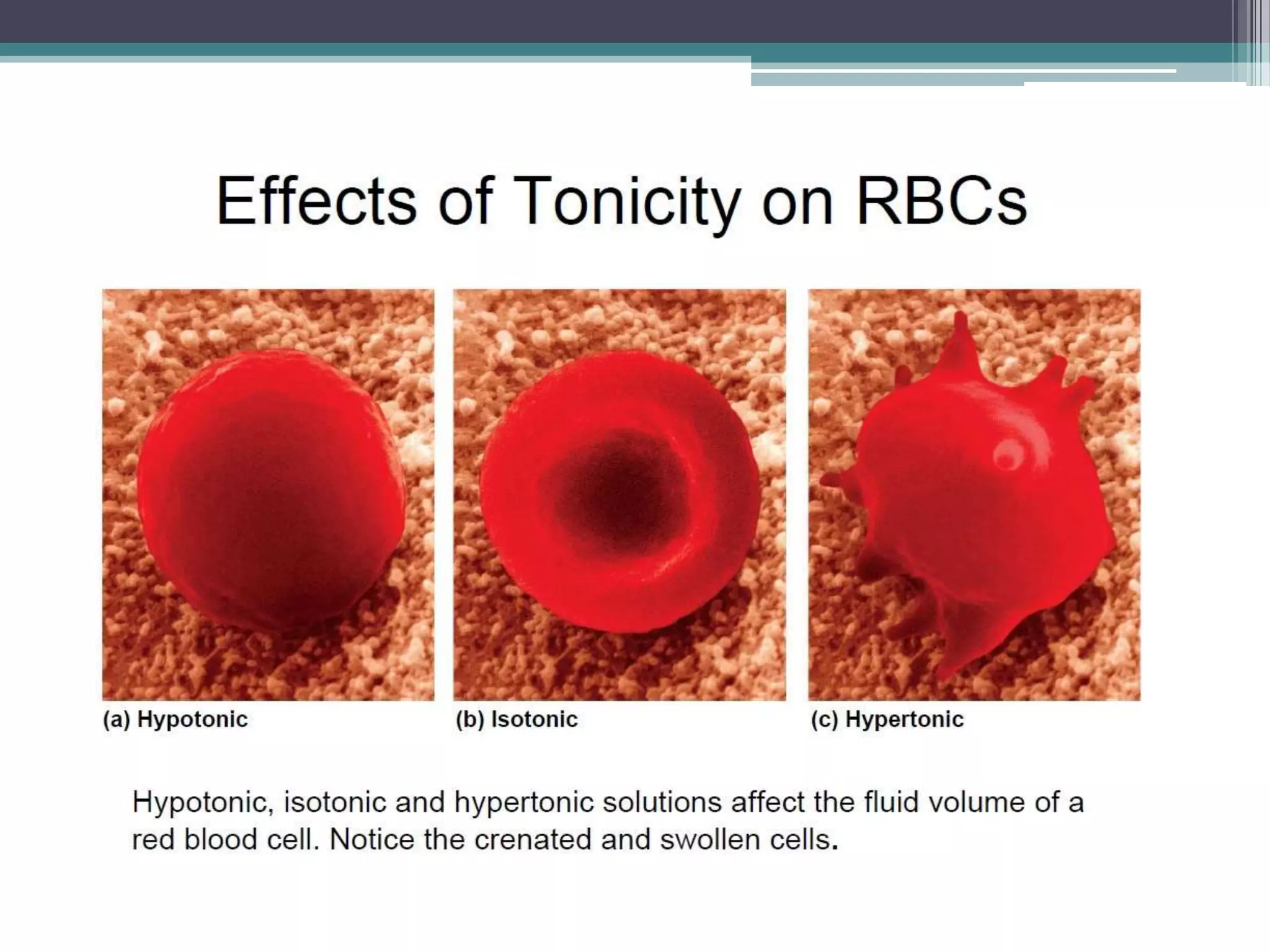
Hypotonic Solution
• High solvent concentration
• Cells absorb water, swell, and may burst
Hypertonic
• High solute concentration
• Cells lose water and shrivel
Isotonic
• Concentration of solute and solvent are level
• No changes in cell volume and shape
Filtration, diffusion, and osmosis

Filtration, diffusion, and osmosis

  • 1.
    Filtration, Diffusion, and Osmosis JoPatrick Mabelin BS Biology 3
  • 2.
    Diffusion • Movement ofparticles • Concentration of substances differ from one point to another • High concentration to Low concentration
  • 4.
    • Factors affectingdiffusion rate through a membrane ▫ temperature - ↑ temp., ↑ motion of particles ▫ molecular weight - larger molecules move slower ▫ steepness of concentrated gradient - ↑difference, ↑ rate ▫ membrane surface area - ↑ area, ↑ rate ▫ membrane permeability - ↑ permeability, ↑ rate
  • 5.
    Membrane Permeability • Diffusionthrough lipid bilayer • Diffusion through channel proteins ▫ Cells control permeability by regulating:  Number of channel proteins  Opening or closing gates
  • 6.
    Osmosis • Flow ofwater through selectively permeable membrane • From: Side of higher water concentration • To: Side of lower water concentration • Movement from lower solute concentration to higher solute concentration
  • 8.
    • Aquaporins: Channelproteins in the plasma membrane specialized for the passage of water • Cells increase rate of osmosis by installing more aquaporins
  • 9.
    Osmotic Pressure • Amountof hydrostatic pressure to stop osmosis • Osmosis Slows due to hydrostaitc pressure
  • 11.
    Filtration • Water moleculesand extremely small solutes are forced to move through a selectively permeable membrane by a hydrostatic pressure
  • 13.
    Tonicity • ability ofa solution to affect fluid volume and pressure in a cell • depends on concentration and permeability of solute
  • 14.
    Hypotonic Solution • Highsolvent concentration • Cells absorb water, swell, and may burst
  • 15.
    Hypertonic • High soluteconcentration • Cells lose water and shrivel
  • 16.
    Isotonic • Concentration ofsolute and solvent are level • No changes in cell volume and shape