TRANSPORT ACROSS THE CELL MEMBRANE
 Done by :
 1-Zain Ali
 2-Ghufran Taher
 3-Hala Fuade
 4-Ola Hussein
TRANSPORT ACROSS THE CELL MEMBRANE
There are 4 basic mechanisms:
1-DIFFUSION
2-OSMOSIS
3-FACILITATED TRANSPORT
4-ACTIVE TRANSPORT
MEMBRANE PERMEABILITY
• Biological membranes are physical
barriers, but which allow small uncharged
molecules to pass.
• They are described as semi-permeable
Because;
• Lipid soluble molecules and small
molecules pass through
• Macromolecules and charged ions do NOT
pass through
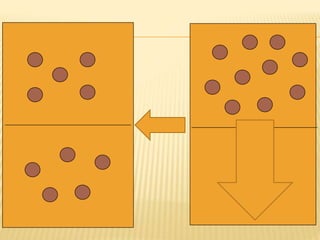
• Movement generated by random motion of
particles.
• Movement always from region of high
concentration to regions of low
concentration.
• Increased water pressure is caused by
water moving to decrease a concentration
gradient or concentration difference
between two areas.
DIFFUSION
OSMOSIS
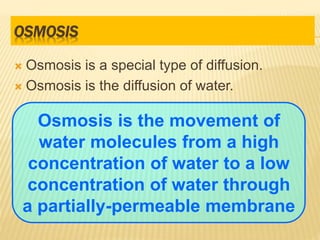
 Osmosis is a special type of diffusion.
 Osmosis is the diffusion of water.
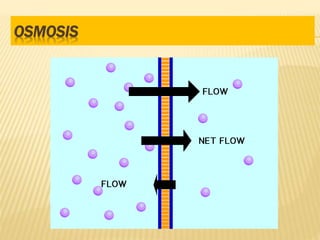
Osmosis is the movement of
water molecules from a high
concentration of water to a low
concentration of water through
a partially-permeable membrane
OSMOSIS
TYPE OF SOLUTIONS
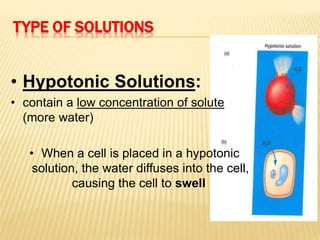
• Hypotonic Solutions:
• contain a low concentration of solute
(more water)
• When a cell is placed in a hypotonic
solution, the water diffuses into the cell,
causing the cell to swell
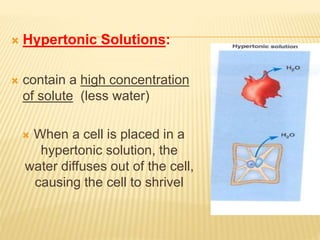
 Hypertonic Solutions:
 contain a high concentration
of solute (less water)
 When a cell is placed in a
hypertonic solution, the
water diffuses out of the cell,
causing the cell to shrivel
Isotonic Solutions:
 contain the same concentration of
solute( equal amounts of water)
 When a cell is placed in an
isotonic solution, the water
diffuses into and out of the cell at
the same rate
 The fluid that surrounds the body
cells is isotonic
• It is passive – does not require energy but:
• It uses carrier proteins
• Here the solute molecules “combine” with
carrier proteins in the membrane. These
carrier molecules speed (or facilitate) the
passage of the solute molecules across the
membrane.
FACILITATED DIFFUSION
• Movement is along a concentration
gradient (i.e. From higher to lower)
• Each type of transport protein will carry
only one type of molecule.
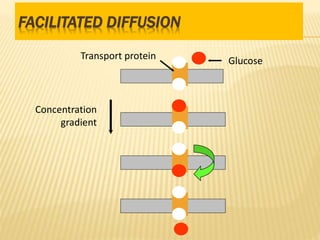
GlucoseTransport protein
Concentration
gradient
FACILITATED DIFFUSION
ACTIVE TRANSPORT
Active transport:is the transport of
molecules or ions across a
membrane by carrier proteins
against a concentration gradient.
Key facts
1-It requires energy from respiration
2-Factors that reduce respiration will also
reduce active transport: e.g. lower
temperature; lack of oxygen; metabolic and
respiratory inhibitors.
3-Active transport involves carrier proteins in
the membrane.
4-The hydrolysis of ATP releases the energy
required for active transport.
5-Cells involved in active transport have a LARGE
NUMBER of MITOCHONDRIA to provide the ATP
required via AEROBIC RESPIRATION.
Endocytosis and Exocytosis
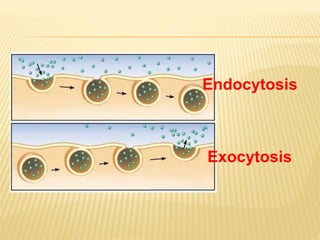
1-Endocytosis is the transport of large particles
into the cell in vesicles formed by invagination
of the cell surface membrane.
2-Exocytosis is the reverse process and is
used to secrete proteins, e.g digestive
enzymes, out of the cells.
Endocytosis
Exocytosis
Transport throught the cell membrane

Transport throught the cell membrane

  • 1.
    TRANSPORT ACROSS THECELL MEMBRANE  Done by :  1-Zain Ali  2-Ghufran Taher  3-Hala Fuade  4-Ola Hussein
  • 2.
    TRANSPORT ACROSS THECELL MEMBRANE There are 4 basic mechanisms: 1-DIFFUSION 2-OSMOSIS 3-FACILITATED TRANSPORT 4-ACTIVE TRANSPORT
  • 3.
    MEMBRANE PERMEABILITY • Biologicalmembranes are physical barriers, but which allow small uncharged molecules to pass. • They are described as semi-permeable Because; • Lipid soluble molecules and small molecules pass through • Macromolecules and charged ions do NOT pass through
  • 4.
    • Movement generatedby random motion of particles. • Movement always from region of high concentration to regions of low concentration. • Increased water pressure is caused by water moving to decrease a concentration gradient or concentration difference between two areas. DIFFUSION
  • 6.
    OSMOSIS  Osmosis isa special type of diffusion.  Osmosis is the diffusion of water. Osmosis is the movement of water molecules from a high concentration of water to a low concentration of water through a partially-permeable membrane
  • 7.
  • 8.
    TYPE OF SOLUTIONS •Hypotonic Solutions: • contain a low concentration of solute (more water) • When a cell is placed in a hypotonic solution, the water diffuses into the cell, causing the cell to swell
  • 9.
     Hypertonic Solutions: contain a high concentration of solute (less water)  When a cell is placed in a hypertonic solution, the water diffuses out of the cell, causing the cell to shrivel
  • 10.
    Isotonic Solutions:  containthe same concentration of solute( equal amounts of water)  When a cell is placed in an isotonic solution, the water diffuses into and out of the cell at the same rate  The fluid that surrounds the body cells is isotonic
  • 11.
    • It ispassive – does not require energy but: • It uses carrier proteins • Here the solute molecules “combine” with carrier proteins in the membrane. These carrier molecules speed (or facilitate) the passage of the solute molecules across the membrane. FACILITATED DIFFUSION • Movement is along a concentration gradient (i.e. From higher to lower) • Each type of transport protein will carry only one type of molecule.
  • 12.
  • 13.
    ACTIVE TRANSPORT Active transport:isthe transport of molecules or ions across a membrane by carrier proteins against a concentration gradient.
  • 14.
    Key facts 1-It requiresenergy from respiration 2-Factors that reduce respiration will also reduce active transport: e.g. lower temperature; lack of oxygen; metabolic and respiratory inhibitors. 3-Active transport involves carrier proteins in the membrane. 4-The hydrolysis of ATP releases the energy required for active transport. 5-Cells involved in active transport have a LARGE NUMBER of MITOCHONDRIA to provide the ATP required via AEROBIC RESPIRATION.
  • 15.
    Endocytosis and Exocytosis 1-Endocytosisis the transport of large particles into the cell in vesicles formed by invagination of the cell surface membrane. 2-Exocytosis is the reverse process and is used to secrete proteins, e.g digestive enzymes, out of the cells.
  • 16.