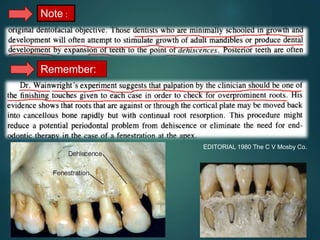
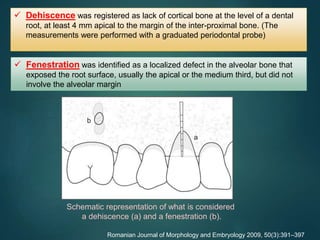
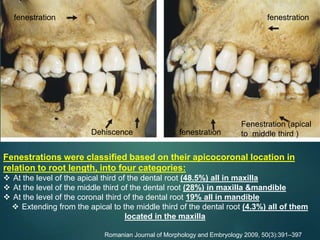
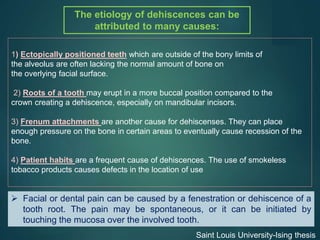
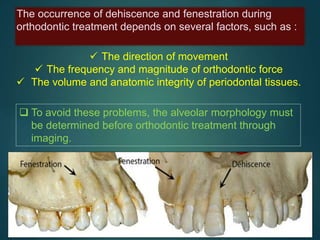
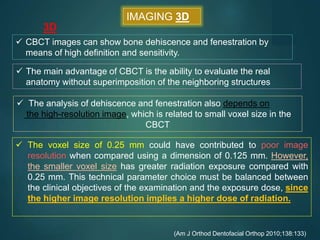
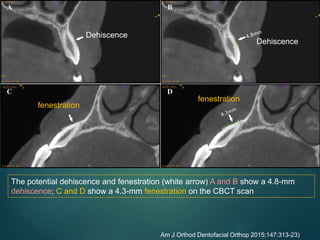

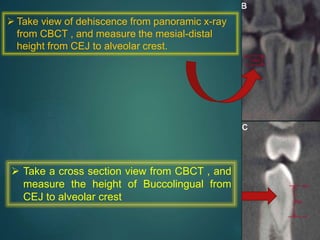
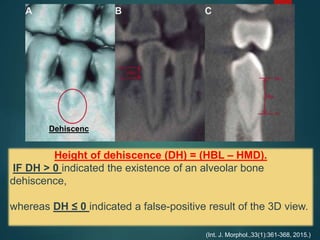

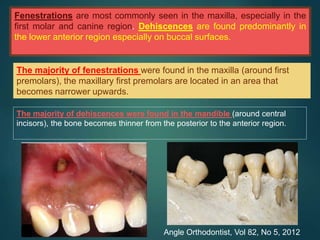
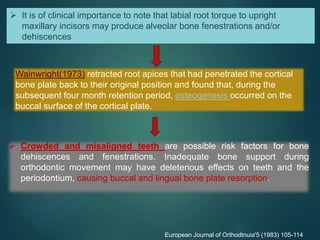
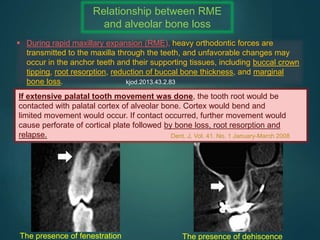
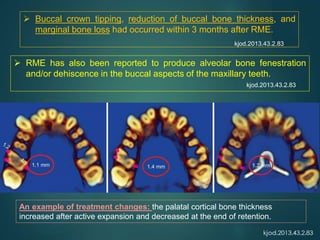
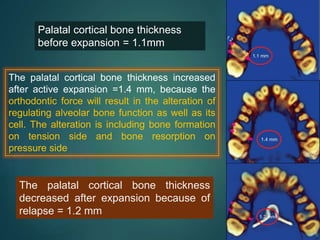
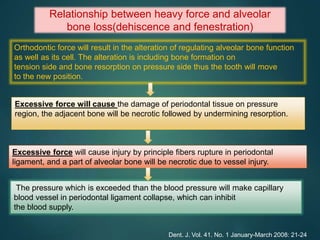
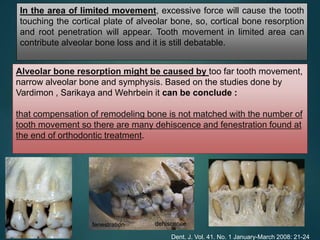
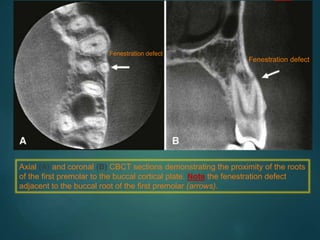
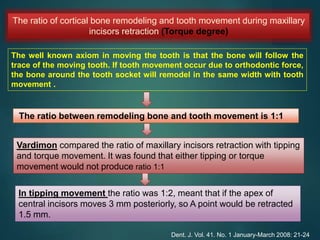
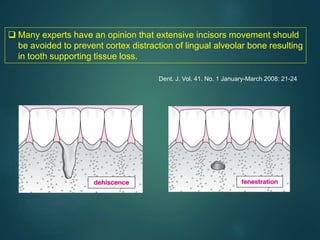
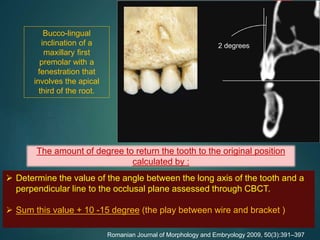
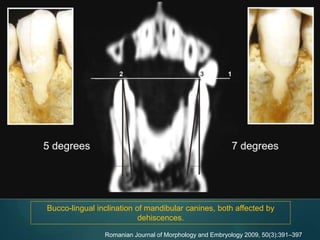
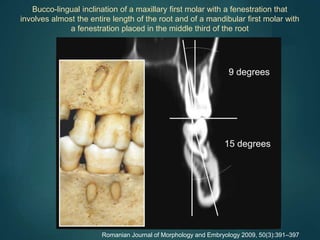

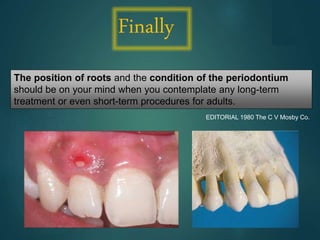
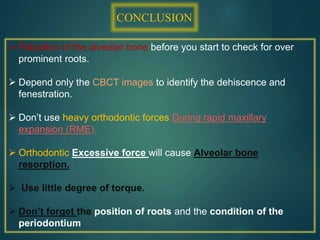


The orthodontist can avoid fenestration and dehiscence by determining alveolar morphology through imaging such as CBCT prior to treatment. Heavy forces, ectopic tooth positions, and movement beyond the limits of the alveolar housing can cause bone loss. Fenestrations are more common in the maxilla, especially around molars and canines, while dehiscences occur more in the mandible around incisors. Rapid maxillary expansion can also cause fenestrations and dehiscences. Maintaining an appropriate force level and following the limits of the alveolar bone can help minimize these risks.


![CASE_PRESENTATION_ON_subdural_hematoma(SDH)[1 FINAL PPT]-1.pptx](https://cdn.slidesharecdn.com/ss_thumbnails/casepresentationonsubduralhematomasdh1finalppt-1-260129172522-d405d375-thumbnail.jpg?width=640&height=640&fit=bounds)


