Female Reproductive
            System
Terms
   Ovaries- the female reproductive organs that produce eggs
    and the hormones estrogen and progesterone.
   Vagina- the female reproductive organ that connects the
    outside of the body to the uterus and receives sperm
    during sexual intercourse.
   Fallopian Tubes- the female reproductive organs that
    transport an egg from the ovary to the uterus.
   Uterus- the female reproductive organ that provides a
    place to support a developing human
   Menstrual Cycle- a monthly series of hormone controlled
    changes that prepare the uterine lining for a pregnancy.
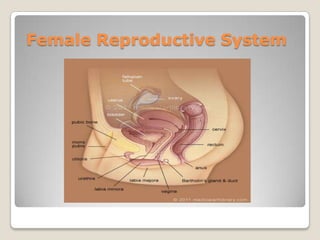
Female Reproductive System
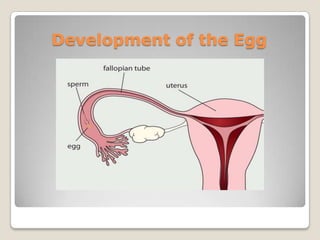
Development of the Egg
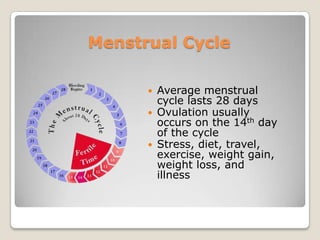
Menstrual Cycle

         Average menstrual
          cycle lasts 28 days
         Ovulation usually
          occurs on the 14th day
          of the cycle
         Stress, diet, travel,
          exercise, weight gain,
          weight loss, and
          illness
Problems That Occur
   Cystitis
   Vaginitis
   Delayed Puberty
   Menstual Cramps
   Premenstrural syndrome
   Toxic shock syndrome
   Endometriosis
   Ovarian Cyst
   Cervical Cancer
 Cystisis- inflammation of the urinary bladder.
 Vaginitis- vaginal infection by fungus, bacteria, or protozoa,
  can come from STD’s
 Delayed Puberty- Late puberty due to anorexia, endocrine
  problems, excessive weight loss and or over exercise.
 Menstrual Cramps- cramps due to hormone substances during
    menstruation.
   PMS- mental and physical changes related to menstrual cycle.
   Toxic Shock Syndrome- Poisoning of body from bacterial
    toxins
   Endometriosis- growth of tissue from uterine lining outside the
    uterus.
   Ovarian Cyst- failure of follicle in ovary to rupture and release
    an egg
   Cervical Cancer- abnormal division of cells in the cervix, could
    have came from an STD
Breast Cancer
 Usually occurs with older women
 Can often be treated
 Have routine mammograms
The End

Female reproductive system

  • 1.
  • 2.
    Terms  Ovaries- the female reproductive organs that produce eggs and the hormones estrogen and progesterone.  Vagina- the female reproductive organ that connects the outside of the body to the uterus and receives sperm during sexual intercourse.  Fallopian Tubes- the female reproductive organs that transport an egg from the ovary to the uterus.  Uterus- the female reproductive organ that provides a place to support a developing human  Menstrual Cycle- a monthly series of hormone controlled changes that prepare the uterine lining for a pregnancy.
  • 3.
  • 4.
  • 5.
    Menstrual Cycle  Average menstrual cycle lasts 28 days  Ovulation usually occurs on the 14th day of the cycle  Stress, diet, travel, exercise, weight gain, weight loss, and illness
  • 6.
    Problems That Occur  Cystitis  Vaginitis  Delayed Puberty  Menstual Cramps  Premenstrural syndrome  Toxic shock syndrome  Endometriosis  Ovarian Cyst  Cervical Cancer
  • 7.
     Cystisis- inflammationof the urinary bladder.  Vaginitis- vaginal infection by fungus, bacteria, or protozoa, can come from STD’s  Delayed Puberty- Late puberty due to anorexia, endocrine problems, excessive weight loss and or over exercise.  Menstrual Cramps- cramps due to hormone substances during menstruation.  PMS- mental and physical changes related to menstrual cycle.  Toxic Shock Syndrome- Poisoning of body from bacterial toxins  Endometriosis- growth of tissue from uterine lining outside the uterus.  Ovarian Cyst- failure of follicle in ovary to rupture and release an egg  Cervical Cancer- abnormal division of cells in the cervix, could have came from an STD
  • 8.
    Breast Cancer  Usuallyoccurs with older women  Can often be treated  Have routine mammograms
  • 9.